

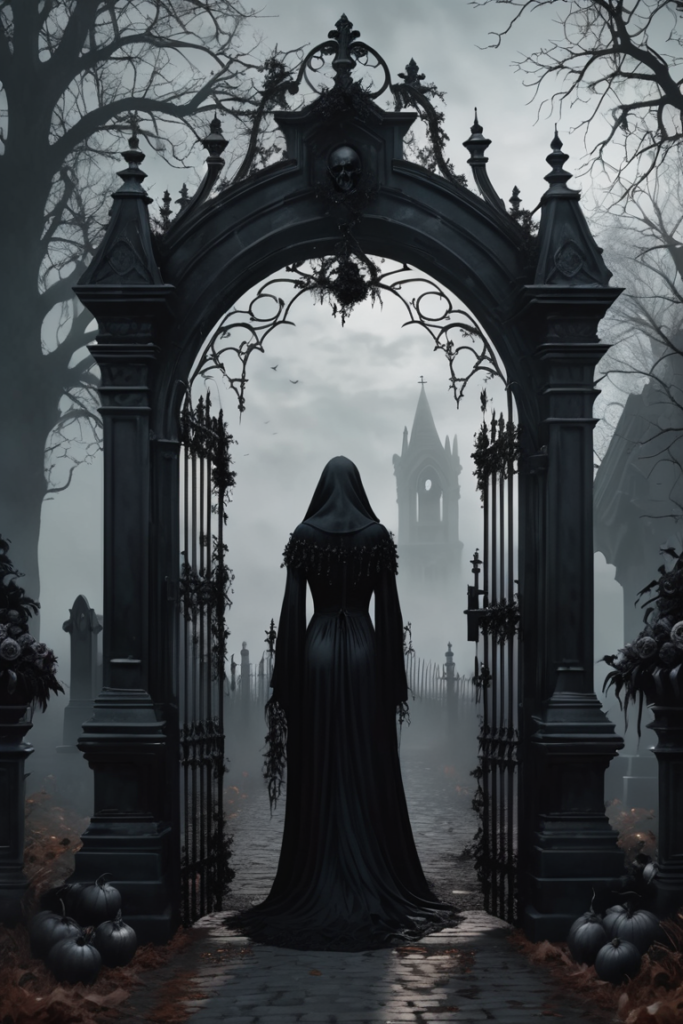
179 poems. Death and decoration. The flowers on the grave and the ghost beside it.
Poems
179 poems in this collection
A Night The Walls Learned How To Listen [Wraith]▾
A Night The Walls Learned How To Listen [Wraith]
Christmas Eve comes in sideways over the houses, all teeth-chattering cold and fake cheer stuck onto the doors with tape and thumbtacks and a prayer,
Inside my place the tree blinks red and gold like it is trying to hypnotize the overdue bills on the table into growing wings and flying anywhere but there.
The TV hums with some canned holiday special in the background, laugh track looping while the actors pretend love fixes everything in under ninety minutes flat,
Meanwhile the radiator coughs like an old smoker, and the clock over the doorway swears it is later than last year, and my back is reminding me of that.
Family has filled the room like clutter you actually care about—too many coats on the chair, too many shoes by the door, too many stories spilling over one another in heat,
Cousins arguing about board games, someone’s boyfriend nodding politely at an uncle’s war story he clearly never asked to repeat.
The air smells like cinnamon, cheap wine, duct-taped hopes, and the faint plastic tang of wrapping paper torn open too early in the day,
And under all of that is something else, a low metallic taste on the tongue, the kind you get before thunder when the sky is about to misbehave in a serious way.
The hearth burns low, not heroic, just tired, logs slumped into each other like drunk friends who stayed too long and forgot why they were mad,
Flames licking glass in lazy streaks, pretending to be harmless while they carve dark copies of everyone on the wall, tall and thin and wrong and bad.
Every time someone leans in for another joke or another slice of ham, their shadow stretches out behind them like it is checking the exits,
And if you watch instead of talking, you see those black versions lag half a heartbeat, like they are waiting for something that hasn’t happened yet but already exists.
Under the mistletoe, a cousin and her on-again girlfriend argue half-whispered about who bailed last time and why both of them are still half-packed to run,
They kiss anyway because tradition is louder than common sense, and everybody pretends they did not hear the word “leave” tucked right beside “fun.”Above them, their shadows kiss too, except theirs don’t quite line up; the mouths miss, the hands don’t land where the real ones land,
Something smoky and thin hovers just beyond them like a third wheel with frostbitten fingers, waiting for either of them to finally drop the act and take its hand.
The little ones crawl under the tree like worshipers shuffling towards a fragile god, plastic needles poking their scalps as they dig for hidden loot,
Their laughter is messy and honest and probably the purest sound in the room, which means, of course, it is what the dark corners want to recruit.
Behind the blinking lights, between the branches and the wall, something tall thins out of the black like spilled ink learning how to stand,
No eyes, no face, just a hollow space where a body should be, wearing everyone’s leftover fears like a borrowed coat that fits a little too well on its skeletal hand.
I see it when the room erupts in another roar of laughter, right after Grandpa lands the punchline he has told every winter since somebody still remembered the year he was young,
The laughter rips open a seam in the quiet; that seam leaks light and heat, and the Silent Wraith slinks in close like it has been starved and now dinner’s finally rung.
It does not scream, it does not moan, it makes no rattling chains, none of that crowd-pleasing haunted house sound,
It just stands in the only corner the tree cannot reach, and listens, and drinks, and flinches every time somebody almost says what they actually mean, then backs back down.
Gifts get handed out with fake modesty and real debt,
The paper flies, smiles flash for a camera nobody will print from, and a few eyes shine a little too wet.
The Wraith’s head tilts when the kid tears open a console his mother had to sell half her patience and another piece of her future to afford,
It leans in harder when her brother opens a pair of socks and says nothing, but his jaw tightens in a way that looks exactly like an old, invisible sword.
The Christmas playlist hits that one carol about peace on earth and mercy and all the things this kitchen never signed a contract to provide,
Cousin Lena freezes by the sink at the first note, fingers still dripping dishwater as her eyes glaze over, remembering last December’s hospital ride.
Nobody mentions it; they all claim later they did not see her flinch, but their shoulders stiffen in unison like marionettes jerked by the same unseen string,
The Wraith notices, though; you can tell by the way the shadows on the ceiling ripple like something just smacked the underside of a frozen pond in spring.
Outside, snow has begun to fall, but it is the half-hearted gray kind that looks more like shredded paper than miracle,
Streetlights smear halos across the panes, and for a second the glass shows an extra family gathered on the sidewalk—pale, wrong, and almost identical.
Our reflections stand inside holding mugs and plates and grudges, while the faint duplicates out there stand empty-handed, faces soft and still,
Like the night saved a backup copy of us in case something falls out of place in here and needs to be reinstalled with a colder will.
The wind picks up and whistles down the chimney, but the sound that comes out is shaped too carefully around certain names,
It hisses “Dad,” “gone,” “accident,” “cancer,” “December,” words nobody invited but everyone secretly carries like coals they never quite let out of the flames.
The Wraith swells on those, a gray balloon fed on unsent messages and unscreamed rage,
Grows taller with every swallowed apology, every rough joke tossed over a wound to keep it from looking like a cage.
Midnight sneaks up while the kids fall asleep in a pile of blankets and caffeine and overstimulation, controllers still clutched in tiny hands,
The grown-ups stand around the emptying bottles and the cooling dishes, trading stories they only tell when the year is almost over and nobody demandsA resolution, just another refill and a loose nod and an “I get it” that might actually be true this time,
Meanwhile the Wraith hangs from the ceiling like smoke that forgot how to rise, listening for the one confession that will rhyme.
It never speaks out loud; it does not need to.
It just leans close to whoever’s laugh sounds most like a break disguised as glee,
Wraps its quiet around their throat, not to choke, just to nudge the next word sideways into honesty.
You can feel it when your sentence suddenly drops its filter and lands with more truth than you meant to share,
And the whole room goes briefly still before erupting into noise to cover the fact that, for a heartbeat, everyone was completely naked there.
Tonight it settles by the tree, right where the lights stop and the dark begins to press its claim,
Curling around the star on top like a second crown that no one sees, feeding on longing, failure, love, and shame.
It is not here to kill anyone; it is here to collect, to catalogue every unsent apology, every extra bite taken to dodge a conversation, every “fine” that meant “wrecked” and nothing left,
A quiet auditor of family myth, filing all our little lies, tugging on the ones that have rotted through and sagged, counting each emotional theft.
By two in the morning the house empties, the last goodbyes tossed like confetti in the freezing air, taillights smeared red on ice-polished street,
Crumbs on plates, lipstick ghosts on wine glasses, wrapping paper drifts under the couch where the vacuum never meets.
I lock the door, kill the TV, kill the lights, leave the tree on out of habit or maybe fear that turning it off will let something else step closer in the gloom,
Then I stand alone in the quiet middle of my living room.
The Silence moves in like it owns the place, heavier now, full of every unsaid thing the night refused to make a sound,
And under that weight I feel it standing behind me, the Wraith, no longer shy, tall enough that if it breathed, the back of my neck would be the first battleground.
I do not turn around, because eye contact feels like a terrible idea with something built out of regret and December,
Instead I whisper into the dark, “I heard you. I hear you. I remember.”
The room temperature drops one sharp notch, enough to turn my exhale into smoke and my skin into buzz,
Yet my shoulders unknot just a fraction, because for one second it feels like we made a deal, both of us.
It does not vanish, it does not promise anything, it just thins at the edges, seeping back into corners, into curtain folds, into the long crack in the ceiling no repair ever fixes right,
Leaving behind a silence that still hums, but less like a threat and more like a warning label written in frost on the inside of the night.
Every Christmas after this I know it will come back, invited or not, drawn by wrapping paper, guilt, and flickering bulbs fighting with the dark outside,
It will stand in the background of every group photo, smudged into the part where the camera caught nothing but blur and pride.
And maybe that is the honest shape of the holiday anyway,
A table full of warm bodies and missing ones, laughter stitched to grief, light strung right across the mouth of something waiting in the doorway.
Apex Star over Hollow Holiday [Wraith]▾
Apex Star over Hollow Holiday [Wraith]
High above the cluttered living room where wrapping guts spill like intestines from torn boxes and the TV mutters an exhausted rerun into stale, sugared air, a star sits crooked on the fake pine needles, tilting like a drunk halo that never earned the right to be called holy in the first place,
Its edges cut the dark, metallic and unforgiving, throwing shards of hard light over every hand-me-down ornament and dust rim on picture frames, dragging old sins into focus the way a cop’s flashlight drags guilt out from under a teenager’s bed just by existing in the space.
The star hums in cheap electricity, that faint buzz you only hear when the house finally shuts up and the last aunt’s perfume has drifted out the door with her gossip,
Each filament pulse a steady, clinical heartbeat that doesn’t care about tradition, doesn’t care about carols, just flashes harsh truth over every smiling snowman and porcelain angel with chipped wings and suspiciously judgmental eyebrows.
Under its hard shine, tinsel hangs like silver entrails from limp branches, looped by kids who already forgot they did it,
The aluminum strips catch the light and toss it out in thin little razors that skim over the carpet, over the wine stain that never quite went away, over the sofa cushion where an argument sat down last year and never fully got back up.
The star sees everything; if you stare long enough you start to believe it remembers too.
It remembers the year the tree went down in a shower of glass and swearing, remembers the smashed snowman mug and the silence that fell afterward like a guilty snowfall that only landed on one person’s shoulders,
Remembers the slammed doors, the “I’m fine” that sounded like a plate you knew you’d find cracked later, remembers every secret drink poured heavy after the kids went to bed while a night-light Santa smiled with dead eyes from the plug.
Tonight the room still smells of sugar cookies and ham fat, clinging to the stale air like an overeager relative that doesn’t notice you’ve taken three steps back,
But under that, the star digs up older layers—burnt gravy from five years ago, the sharp tang of cheap whiskey and cologne, the cold metal scent of keys dropped on the floor when somebody came home too late and pretended not to notice who was pretending not to wait.
The star’s light slides over framed photographs marching across the mantle: one family posed in matching sweaters before three of them stopped talking,
In each shine you catch the ghosts: the cousin who overdosed and only lives here now in a frozen smile with a badly wrapped scarf, the grandparent whose laugh got recorded on some misplaced phone, playing back only when the battery glitch decides to resurrect them for two seconds before dying again.
Under that pointed watcher, gifts huddle in their glossy skins, stacked like colorful lies promising that this year will hit different,
Every ribbon a little noose around expectations, each tag a polite label covering deeper inscriptions: “I’m sorry I didn’t show up for you,” “Please don’t leave,” “I have no idea who you are anymore but I saw other people buying this, so it must mean something good.”
The star throws its harsh glow across the faces on the couch, catching every twitch, every forced grin, every half-swallowed retort buried under cranberry sauce and the commandment to keep the mood light,
It lances across the eyes of the one who laughs louder when they’re about to shatter, highlights the faint jaw clench of the one who hosted and now sits like a general in a war zone after all the soldiers went home, counting casualties in half-eaten pies and new dents in the wall.
In the corner, the cat watches the star with the only honest expression in the room: bored contempt, tail flicking through the dust motes made visible by that relentless glow,
When the lights dim on the strand, the star flickers, then steadies, hanging on with that cheap, stubborn electricity, refusing to soften the edges or soften anything at all.
Its points poke the ceiling, five accusing knives pressing into the plaster where faint rings of past years’ smoke stains still lurk like halos from candles that burned too close,
This year’s top decoration is a metal preacher that doesn’t offer grace; it just points, marks, catalogs, sending out cold radiance that makes shame glint as easily as glitter on a kid’s cut-out ornament.
Every wish whispered under this thing’s watch crawls up through its wire bones: the kid wishing for parents who aren’t always on separate ends of the couch, the parent wishing they could pause time, rewind time, or maybe skip ahead a decade and see if any of this mattered or if it all just composted into another anonymous holiday haze,
The teenager wishing the room would stop asking, the elder wishing for one more year with knees that don’t ache, lungs that don’t crackle, hands steady enough to hang that one glass bell without shaking.
The star is where all those desires gather, collecting like insects on a bug zapper, charming in the glow until they touch the wire and sizzle,
It doesn’t grant anything, doesn’t comfort, doesn’t bless; it just shines and burns and turns fragile hopes into a faint heat that nobody feels unless they stand perfectly still and admit what they lost on the way here.
Midnight creeps closer and the crowd thins; dishes are stacked like regret in the sink, laughter has gone hoarse, the kids have melted into sugar comas in nests of blankets and half-open toys,
Someone kills most of the lights, leaving the tree’s glow to carry the room, and that makes the star finally look like what everyone pretends it is: a guiding fire, a distant promise, a bright little wound punched through the skin of the night.
Yet even now, its light is too sharp, too focused, like a spotlight set to interrogate rather than comfort,
It pins you where you stand with an unasked question: what did you bury under this plastic forest, under this ritual, under the familiar songs and overeaten meals and carefully timed hugs that never quite land where they should?
You find yourself talking to it in your head, quietly, while you pretend to watch some generic holiday movie on mute,
Confessing in not-quite words: the grudges you didn’t resolve before the person carrying them died, the lies you told to keep the peace, the ways you shrank yourself to fit this living room while some angry voice in your chest kept pounding its fists on the back of your ribs.
The star’s answer is more of the same: light and shadow, highlighting the cracks in the drywall, the chipped mug on the coffee table, the way your reflection in the dark TV screen looks older than you were ready to admit yesterday,
In that glare you see every December bleeding into the next, every promise to do better looping into another year of scrambling at the last minute and hoping sentiment will patch what apology and actual change never got around to fixing.
Still, there’s a twisted mercy in this metal tyrant perched at the top of synthetic branches,
It doesn’t let you hide, which means if you stay in the room long enough, you have to admit that you’re still here, breathing, eyes on the light, hand resting on the back of the couch like you own a little slice of this wreckage and haven’t given up.
You reach up, later, when everyone’s gone to bed and the house settles into its post-feast creaks, to adjust the tilt, fingers brushing the humming core,
The star bites your skin with the faint heat of overworked bulbs, nothing dramatic, just enough to remind you that this shining judge is still mortal plastic and metal, cheap wiring and slapped-on glitter—not fate, not destiny, not god, just a thing you plug in and unplug.
You straighten it anyway, aligning that harsh little sun with the room, facing it forward, daring it to watch you walk through one more calendar of chaos and half-repaired wounds,
The star blazes back, unblinking, like it already knows you will absolutely screw up again and still show up next year to hang it back in its place, offering your mistakes to its sharp light instead of hiding them in the dark.
Ash on the Hearth of No One [Wraith]▾
Ash on the Hearth of No One [Wraith]
Snow packs the roof like a muted hand pressed firm over this cabin’s tired mouth, heavy and unbothered, weighing every beam down with a white shrug that says nobody’s coming up this mountain tonight,
Tree line crowds close around the clearing, a circle of black-barked witnesses standing thigh-deep in drifts, branches barbed with ice, like they’ve been waiting decades to watch this place finally run out of light,
The chimney spits a thin line of smoke into the starless dark, a gray confession unwinding into sky, too faint to guide anyone here, too stubborn to stop,
Inside, the fire snaps and mutters like a drunk with stories, orange teeth biting into logs, eating the heart out of winter while shadows caper on the knotty pine, stretched tall and warped from floor to top.
The door is latched with an iron bar that remembers hands that don’t touch it anymore,
Boot prints at the stoop are fossilized into the ice from some winter years ago, half-filled by blown snow, leading away toward the invisible road and never back to the door,
Wind fingers the gaps around the frame, making the wood complain in low groans that could be age or could be the kind of dread a building feels when it knows it’s outlived its purpose and the people it was built for,
Every gust drags cold air under the boards like a prowling thing, sniffing for warmth, tasting dust and forgotten spills on a floor that used to know laughter and muddy paw prints and the slam and click of a loved one returning from the store.
The hearth spits a string of sparks into the air and they rise, red-blood bright for half a breath before they vanish into nothing,
They look like souls that almost had the nerve to become something else but thought better of it, drifting back into the black instead of risking the hurt of living,
One log collapses in on itself with a sigh, embers tumbling like tiny avalanche survivors, exposing a core of angry red that throbs in place,
It throws just enough heat to make the cabin exhale, walls creaking like stiff joints thawing out, every board flashing back to the last argument it heard in this space.
Empty chairs gather around the fire in a loose circle, the way people used to, but their backs are turned slightly away from each other like they had a falling out and never made up,
Dust clings to their arms like gray regret, filmy layers of time smoothing out fingerprints, hiding the small scratches from boots kicked off, dogs jumping up, kids swinging legs and knocking over cups,
One has a cushion caved in on one side, like somebody always sat the same way, crooked hip, crooked spine, watching flames chew through kindling with an expression that never quite softened all the way,
Now the cushion holds only the faint memory of that shape, a shallow grave for conversations about weather, broken plans, and the quiet decision to stay.
On the low table sits a mug with a cracked handle and the ghost of old cocoa caked in the bottom, a brown ring frozen mid-sip by vanished hands,
Beside it, a snow globe shaped like a tiny town in endless December waits under its glass dome, its plastic church steeple stabbing up at the air like it still believes in bells and choirs and people holding candles in mittened hands,
No one shakes it anymore, so the fake snow never falls, it just sits, clear and still, the little molded figures inside that make-believe square stuck waiting for a storm that never lands,
The tiny houses glow faintly from a dying battery in the base, a last stubborn pulse of factory-made joy echoing in a room haunted by the real thing’s absence, proof that even cheap trinkets try to outlast us and our badly drawn plans.
From the rafters, tinsel from some ancient holiday hangs in ragged threads, dull gray instead of shining,
A single glass ornament rolls in a corner, half-buried in dust, reflecting the fire as a warped red planet spinning slowly in a universe of nothing,
Whoever hung them did it in a hurry, maybe laughing with a box in one arm and a complaint about tangled lights and broken hooks and the cost of everything rising,
Now those complaints sit layered in the air like smoke without smell, stitched into the boards, unheard by anyone except the rodents in the walls and the stove that remembers burned pies and spilled gravy and the sound of a radio quietly whining.
Listen long enough and the house tells you things, if you believe in that kind of madness.
It remembers the Christmas where the truck never made it up the hill, the headlights appearing and disappearing behind trees while chains spun and failed,
It remembers the year they came early to beat a storm, two days of warmth and board games and arguing about who cheated at cards while sleet hammered the windows and the fire roared like hell,
It remembers the spring they closed the door and drove away without boxes, just the clothes on their backs and the silence between them that you could feel from the porch, even before the taillights vanished into the trees like sinking flares, promises derailed.
Now only the wind visits.
It crouches at the eaves and cries down the chimney like some abandoned thing, not quite worded grief but close enough that if you are foolish enough to stay, you’ll start answering back,
Every once in a while a branch claws the glass with a long scratch, like the forest trying to get a message in or drag someone out, nails on a chalkboard long after the classroom closed and the kids packed their backpacks,
The fire answers with pops and snaps and the occasional spit of a spark that rockets across the stone, burning out before it can set the fragile curtain alight,
As if the cabin knows if it ever catches properly, if those curtains go up, nobody will be here to pour water, and that will be the final story this place tells tonight.
If you stand dead center on the creaking rug and close your eyes, you can feel the temperature lines in the room like ghosts brushing past your skin,
Your front scorched warm, your back kissed with cold, static biting at your hair as the gap between window and wall breathes on your neck like something you loved once and lost and don’t admit you still want in,
Breath clouds the air in front of your face even as your cheeks burn from the fire, the contradiction of living in a body that’s never one thing or the other, always meltdown and freeze at once,
And somewhere between floor and ceiling you feel the echo of voices that swore they’d come back after things calmed down, after the job, after the court date, after the treatment, after the next month’s funds.
The cabin keeps holding its breath between seasons, between owners, between lifetimes, stubborn and crooked and tired,
Like a person who never learned how to leave the table even after everyone else stood up and went home, still sitting with their hands around a cooling cup, wired,
The fire is not charity here, it’s a hungry thing demanding payment, every log you feed it another piece of history reduced to ash in exchange for a few minutes of not freezing,
And as the last log burns low and the glow spreads thin and mean across the floor, the walls lean inward in the dim, like they are finally closing in on their own grieving.
Outside, snow keeps falling on the roof, indifferent and soft from a distance, cold and sharp up close, piling over the chimney like a shroud that will smother every last ember unless someone digs it out,
But no lantern edges the treeline, no crunch of boots invades the silence, no rumble of late arrival splits the doubt,
Just the woods, the wind, and this cabin full of warm ghosts and cold air, holding vigil for a holiday no one will bother to celebrate here again,
An elegy whispered in creaks and sighs for a quiet that used to mean peace and now tastes like abandonment, like a story that almost mattered and then chose to end.
Ashes In The Vase [Wraith]▾
Ashes In The Vase [Wraith]
Every year it starts the week before, when the grocery aisles bloom with pink and white ambush,
Card racks yawning wide, covered in pastel lies about perfect mothers who never swore, never drank, never pushed.
You stand there with a basket full of normal life, staring at row after row of scripted forgiveness and soft-focus hugs,
Every card shouting in glitter that love is simple, that gratitude is easy, that nobody’s mom was cruel or hooked on pills or shrugged.
A woman next to you grabs a bouquet without looking, eyes already wet, talking on her phone about brunch at eleven,
Her voice keeps cracking at the edges while she jokes about calories and mimosas like this isn’t her second year pretending mom isn’t living in heaven.
You drift sideways toward the flowers, rows of jailed roses sweating under plastic, stems drinking the same recycled water from a shallow tub,
Some heads already browned at the tips, petals curling like they know what it is to hold a family together and then get tossed in the trash after the meal, no one bothering to scrub.
The sign above the display screams that this is how you prove you care,
Buy the bundle, sign the card, show up with a smile, swallow anything you actually needed to share.
You pick up a rose, thumb grazing a thorn, and the sting feels honest in a way the slogans never manage,
A bright red ache that doesn’t pretend this day is healing instead of just a fresh bandage.
Back home, the table is set like always, plates in the good pattern you never use except when guilt is in season,
Someone ironed the cloth last night while watching reruns, cursing under their breath at stains they couldn’t explain or reason.
There’s an extra place laid out, knife and fork aligned for hands that stopped coming years ago,
Napkin folded just right, chair pushed in, a little performance in case her ghost decides this is the year she forgives the last no-show.
In the kitchen, you stir gravy like it did anything wrong, listening to relatives move in low orbit around each other,
They talk weather and recipes and medication doses, skipping every jagged detail of being raised by a human being and not a greeting-card mother.
Someone cracks a joke about how “she’s watching from above” and three people flinch in perfect sync,
Your aunt refills her wine glass to the brim and laughs too high, cheeks flushed an angry pink.
Later, the dishes stack in the sink like broken promises, soap bubbles trying to hide the mess,
You dry your hands on a towel that still smells like last year’s roast, like perfume and sweat and the aftermath of “doing your best.”Then the house quiets in that thick, almost holy way, everyone scattered to couches, rooms, cars, phones,
And you stand in the doorway to the dining room, staring at that empty chair like it owes you back pay on a lifetime of broken bones.
The vase on the table holds the roses you finally bought, stems sliced, petals perfect in the overhead light,
From a distance it looks beautiful, almost cinematic, until you move closer and see two petals already bruising at the edges, losing their fight.
You remember the hospital room, the machine that breathed in little gasps while her chest barely tried,
Remember how Mother’s Day fell three days after the funeral, and you still caught yourself reaching for the phone before you remembered she’d lied.
You remember other years, other kitchens, her back turned, you washing dishes small enough for your hands to drown,
Her cigarette burning in the ashtray by the window, smoke writing curses in the air while she told you you were dragging her down.
Sometimes she kissed your scraped knees and tucked you in, sometimes she broke plates and called you names that echo even now,
The world insists you pick one version, saint or monster, then clap along to the slideshow, take a bow.
Nobody posts pictures of the scars in their Mother’s Day captions,
Just brunch shots and dying flowers and carefully curated interactions.
Still, if you turn down the volume and swipe slow, you can see the tightness in jaws, the too-bright smiles,
Little kids clinging for dear life to women who aren’t ready, adults clinging to memory or guilt for miles.
You skip the scroll, walk outside instead, night hanging low, the air thick with lilac and lawnmower and leftover arguments that never got their names said,
Streetlights hum above you like tired beehives, each porch offering some variation of this ritual, every house with its own quiet unsaid.
In one window, a woman in a cardigan holds a framed photo to her chest, shoulders shaking,
In another, a grown man sits alone at a table with a store-bought cake, one slice eaten, the rest untouched, phone dark, hands quaking.
Down the block, kids run with sparklers left over from some other holiday, bored and loud,
Their mother yells from the stoop to watch the street, to come in soon, to not burn the night down with their crowd.
She looks tired enough to fold in on herself, hair escaping its tie, shirt stained, eyes half-shut,
You catch her gaze for one long second and you both nod, acknowledging that love is sometimes just showing up and not getting in a cut.
It hits you then how this day is built like a trap with a soft lining,
All that sugar layered over bone, all that praise hiding the grinding.
For some, it’s a gentle sunrise, pancakes in bed, kids in flannel, an easy joke about getting old,
For others, it’s a gravity well, pulling every unresolved ache into one date circled in bright ink, hard to hold.
Back inside, you kill every light but one, leaving the roses in a cone of yellow on the table,
The house around them a shadow box, silence stretched thin but stable.
The flowers already droop by a fraction, as if the weight of being symbolic is more than their stems signed up for,
Their scent thickens the air with that sweet-sour edge you get right before rot, right before the floor.
You sit down across from them, hands flat on the cloth, and talk to the empty chair,
Not the polite memories, not the edited flashes you trot out for relatives who pretend they care.
You say her name like you’re testing a sore tooth,
You tell the whole truth: the nights you wrapped her in blankets when she drank too hard, the mornings she forgot your birthday, the one time she showed up to your show and cried in the back, the way she died without ever saying “I’m sorry” clean.
The room does not strike you down. The roses do not blacken or burst.
Nothing moves except your chest, ribs flexing against a grief that never really left, just rehearsed.
You cry a little, laugh once, swear more than any holiday movie would allow,
Then you raise your glass of tap water, just for you, just this once, and say, “You were a mess. So am I. We existed. That counts somehow.”
On the mantle sits a cracked picture frame you keep meaning to replace,
Photo inside half-faded, her arm around you, both of you blinking against sun, neither smiling in the same space.
The light from the single lamp shifts, catching dust motes that float over the table like lazy spirits with nothing new to report,
You watch them drift through the glow, tiny ghosts of skin and cloth and time that fell away without filling out any court.
The night stretches, slow and heavy, but not entirely hopeless,
More honest than the commercials, less cruel than the old script that said you had to confessTo being grateful without qualifiers, reverent without question,
You sit with the mess instead, grieving the mother you lost, the mother you never had, the mother you wish you could have been given, without any forced lesson.
Mother’s Day in misery, they’d call it, if anyone bothered to market this side,
The version where you send no flowers, buy no cards, and still sit at the table with both fists open wide.
Where you let the ghosts come in and sit, not to haunt, not to pretend the past was fine,
Just to admit that love and damage can share the same spine.
By midnight the roses have started to drop a petal here and there,
Soft little thuds on the tablecloth, quiet votes for wear and tear.
You don’t throw them out yet. You let them sag, let them be mortal in the lamplight,
Somewhere between shrine and garbage, just like the memory of the woman who taught you how to fight.
Tomorrow you’ll toss the flowers, wash the dishes, pack the chair back against the wall like any other day,
The world will move on to the next sale, the next holiday, the next reason to act okay.
Tonight you stay right here in the crack between Hallmark and hell,
Breathing, existing, not wrapping this in a bow, not pretending you can tellWho was right, who was wrong, who gets forgiven first,
Only that your heart still beats, messy and stubborn, in a body that survived the best and worst.
Ashes Sing Beneath the Yulefire [Wraith]▾
Ashes Sing Beneath the Yulefire [Wraith]
The old brick throat of the fireplace yawns wide in the winter cottage chest, a hungry red mouth breathing heat like a promise it never intends to keep,
On the grate lies the honored Yule log, dressed up with a circle of dried berries and cracked holly leaves, like a condemned saint laid out for show in a world already half asleep.
They told the children it brings luck, that it holds wishes carved deep in the grain, that its smoke carries blessings up past the roof into midnight’s unblinking stare,
But the grain runs wrong under your fingertips, knots like knuckles pushed up under skin, and the bark is etched with lines that look too much like someone’s last prayer.
When the match flares, the room holds its breath with you, shadows jerking back along the walls as if they know this is not just another winter burn,
The tiny flame kisses the kindling, then licks the edge of the log with a slow, deliberate drag, like it’s tasting a wound it has long waited to return.
Resin pops like knuckles cracking, like teeth biting through an old regret, and the first curl of smoke threads upward carrying something bitter underneath the pine,
A smell that has nothing to do with sap or age or dust in the chimney throat, something copper and old and patient, something half yours and half not mine.
Faces gather in the glow, all turned toward that single burning spine of wood like worshipers crowding around an altar they still pretend is just décor,
Grandmother in her sagging armchair, scarf pulled tight, eyes reflecting flames and decades, the lines on her face deeper than every year she swore.
Kids on the rug with their socks half-off, trading secret glances, daring each other to toss in a scrap of paper wish, to watch their hopes curl black and twist,
The dog pads slow circles, whines a soft protest, ears flat, refusing to lie near that heat, as if the beast inside the flames already has his scent on some unseen list.
The log catches in full, and the roar inside the brick chest drops an octave, a bass note rolling through the floorboards like a faraway train,
In the heart of the wood, lines of trapped air scream in crackles, and for just a heartbeat you hear something under the hiss that sounds too much like a distant, human strain.
Sap boils and bursts like muted fireworks, but in between the sparks you swear you catch syllables, as if someone burned long ago still tries to mouth your name,
Each ember glows like a buried eye, half-lidded, half-smiling, watching the family wrapped in sweaters and tradition, wrapped in stories that never name the source of this flame.
Nobody talks about where the log really came from, how the old man from up the lane delivered it with fingers that shook a little worse than usual this year,
How his eyes skated past the kids to settle on you, just long enough to make your skin crawl, just long enough for you to know he smelled guilt, hunger, and fear.
On the underside, hidden from the room, the wood is branded with a mark that does not belong to any lumber yard or kindly pagan folktale,
A symbol scored into the grain like a crooked sun with too many rays, edges blackened as if someone once tried to sand it out and failed.
The flames climb through that mark and change color for a blink, a slick, oily blue that reminds you of hospital lights and the way people stop breathing in sterile rooms,
In that flicker you see a flash of faces that are not in this house, mouths open, eyes rolled back, bodies bound to stakes beneath winter moons.
Their screams don’t hit your ears so much as they crawl down the back of your neck, nest under your collar, and burrow into the parts of you that still believe in luck,
And somewhere behind you, the old clock ticks in perfect rhythm with each crackle, like a metronome counting down to the moment this cozy evening finally runs out of “just enough” to suck.
The longer the Yulefire burns, the more the living voices lapse into hushed, drifting talk, stories slurring at the edges with spiked eggnog and holiday fatigue,
But the log’s song only grows more articulate, every pop another broken consonant, every shower of sparks a punctuation mark in some infernal league.
You start to hear patterns in the noise, a chant that loops under the carols, lining up with certain names and histories in the room that nobody else seems to feel,
Your father’s head dips, your mother’s smile stretches thin, your own memory coughs up every cheap betrayal, every cruel word, every time you laughed while someone else had to kneel.
The flames lick along carved rings that measure years you never lived, each circle of growth a tally mark for some stranger’s winter, some stranger’s sun,
Inside that wood is a story that ended badly, and tonight the heat is peeling back layer after layer, like opening a throat to see where the song came from.
You see a village under snow, torches rising, a man chained to a felled tree dragged through the square while faces you don’t recognize spit and cheer,
They branded that mark into his chest before they burned him with the trunk he clung to; his last breath came out as a curse for every hearth that would have the log near.
Now here it is, centerpiece to your holiday comfort, lying like a condemned prophet turning into coals under your cocoa mugs and carefully staged smiles,
Each ember a contract clause no one read, signed in ignorance and carried through generations of “this is just what we do, we’ve done it this way for miles.”The heat feels wrong now, too intense on your shins while the rest of the room stays cold, like the fire is choosing who to soften and who to sear,
Grandmother leans closer with closed eyes, mumbling an old rhyme under her breath, and the flames leap as if they understand every line they hear.
You notice how shadows cling hardest to the corners near the family portraits on the wall, how the smiling faces in the frames seem to warp in the wavering light,
All those frozen holiday mornings caught behind glass, all those people who held this tradition before you, now watching as the log burns through another long midwinter night.
For a split second, Uncle Tom’s photograph turns its head, just a fraction, eyes tilting down toward the hearth with something like apology, something like warning,
Then the next crack of sap snaps you back, and the family laughs at some joke you didn’t catch, oblivious to the way the room feels like something ancient is mourning.
Someone tosses a handful of paper scraps into the blaze—old receipts, junk mail, last year’s resolutions that never made it out of the drawer,
The flames swallow each promise and debt with equal appetite, letters twisting into smoke that curls back toward your face like it’s checking what else you might still be for.
The Yulefire seems to fatten on every broken pledge it gets, glowing redder, pushing out a wave of heat that makes your eyes water and your throat sting,
And way down in the coals, shapes writhe like tiny, contorted bodies, arms raised, mouths open, trapped under a crust of ash that never lets them sing.
You start to wonder how many souls a single log can hold before it smolders through to the floor and drags the whole damn house down into that hungry red well,
Yet the older ones around you just smile, call this “the best burn we’ve had in years,” praising how long it lasts, how bright it flares, how it “keeps the chill from hell.”Their words hang in the smoky air like nails waiting for a board, and the fire answers with a roar that sounds suspiciously like satisfaction through gritted teeth,
You realize you’re the only one who hears the laughter underneath, the only one who sees the way the flames lick every ankle like they’re testing where to bite beneath.
By the time the log collapses into a bed of glowing bones, the room has gone sleepy and soft, thin laughter melting into yawns as the night pulls the family apart,
They drift toward bedrooms, leaving you with the duty of watching the last coals die, of sitting alone in that orange half-light with a poker in your hand and a pounding heart.
The embers pulse like a dying constellation in a brick sky, each flare a heartbeat refusing to quit, each dimming glow a question that refuses to fade,
You lean closer and hear a final whisper rise from the ash, not in your language, not in any tongue you know, but every syllable aimed squarely at the choices you’ve made.
You could douse it, smother the curses under a shovel of sand and water, break the chain tonight with a hiss and a plume of righteous steam,
Or you could let it go out slow, the way your parents taught you, the way their parents did, honoring a “blessing” that feels more like a haunted fever dream.
As the last coal winks out, the cold rushes in almost gleeful, wrapping around your ankles, biting your fingers, kissing your breath in crystalline knives,
And for a moment you swear you hear quiet applause echoing in the chimney—whatever lives in that wood knows you’ll light the next log too, keeping it fed with all these lovely, fragile lives.
Ashfall Supper at the Edge of Never [Wraith]▾
Ashfall Supper at the Edge of Never [Wraith]
The sky hangs low like a bruise that never got the chance to heal, sick greens smeared into purples over a horizon of broken teeth and fumes and bone-dry dirt,
Once there were forests here that sang in orange and red before winter came calling; now it’s all cracked earth and charred ribs of trees, ribs of a planet left for dead and left to hurt.
Wind drags its fingernails along the busted ribs of old power lines, tugging on frayed wires that used to hum with a thousand useless comforts and lies,
Now it just carries dust and the faint ghost-scent of a past November where kitchens steamed and windows fogged and nobody looked up to watch the world’s slow demise.
A shack leans in the middle of all that dead, built from scavenged doors and torn billboards and a church pew that outlived its faith by decades at least,
Walls patched with cardboard saints and faded smiles from a grocery flyer promising “fresh for the holidays” over pictures of long-extinct beasts.
Inside, a fire wheezes in a salvaged drum, a tiny orange heart that works too hard and smokes too much,
Sarah crouches over a battered pot, stirring broth that’s mostly memory with a spoon that lost its shine three families ago to hands that shook and clutched.
“You really think we can pull this off?” she asks, not with hope, not with dramatic flair, just that worn-out tone you get when you’re trying to sound brave and only manage tired,
Her hair’s wild, her sleeves rolled, smoke stinging her eyes while the heat bites at chapped knuckles that still remember washing dishes after feasts that always left her wired.“We don’t even have a turkey,” she mutters, as if naming the missing bird might conjure it,
Like the bones of the last one roasted might rise from the dust, feathers refit.
Matthew sits on a crate with a busted leg, chewing a memory that never seems to go soft,
He drags fingers through his sweat-tangled hair and lets out a laugh that climbs too fast then drops off a cliff, never getting off the ground, never quite lifting them aloft.“It was never about the turkey,” he says, but even he can hear how thin it sounds, stretched over hunger and rust and all this ash,“It was about having a reason to sit down together and not just count rations and bruises and crash.”The words hang between them like fragile decorations, the kind you know will shatter if the room breathes wrong,
A promise made of chipped porcelain hope and old song.
They drag two planks over, balance them on plastic crates that once held bright drinks and cheerful poison, line them up until it resembles a table if you squint and don’t move too quick,
On top they spread their museum of left-behind cutlery: one chipped plate with a storm-blue ring, a knife with no handle, a fork bent like it learned to flinch, a cup with the motto “World’s Best Something” half-scratched off and sick.
The centerpiece is a pumpkin that should have died five seasons ago, skin wrinkled like a stubborn elder,
But it’s still stubbornly orange in places, clinging to color the way their father clings to pride and their grandmother clung to her recipes and fading shelter.
“It’s not perfect,” Sarah whispers, arranging that pathetic royalty of squash in the middle of the planks like it’s a golden bird,
Her hands tremble just enough to show the cost; she forces a crooked half-smile anyway, because this is the religion she knows: you keep going or you don’t, there’s no third.“But it’s ours,” she adds, and the words land heavier than any blessing,
A small claim staked in a world that keeps repossessing.
“I remember when Grandma made stuffing,” Matthew says, eyes gone distant, not to some poetic heaven but to a kitchen with a radio, a towel over her shoulder, and a pan that hissed and crackled like it loved her,“She’d crowd the bread and onion and sausage into that old pan and tap my hand with a wooden spoon when I stole a taste and swear the secret ingredient was love, like she had a patent on it and refused to share.”Sarah’s mouth twists; she stares at the pot of thin stew that smells a little like spice if you lie to yourself, a little like smoke if you don’t,“Love didn’t fix the weather,” she mutters, voice cracking at the edges. “It just made the fall of it hurt more when nobody listened, nobody stopped, nobody won’t.”
Outside, the ground’s the color of forgotten promises, split and flaking, each fissure a dried-out river that used to carry children’s reflections and the shine of migrating sky,
Now it just drinks what little poison rain still falls and keeps it all, like the planet finally learned boundaries and decided no more charity, no more supply.
The sun sinks behind a curtain of haze that glows wrong—green veins pulsing through purple smog like the sky’s developed some terminal, incurable disease,
The shadows stretch long and jagged, fingers made of absence reaching toward the shack, reaching through cracks with practiced ease.
“Come on,” Matthew says, forcing cheer into his voice like stuffing back into a ripped seam, “Let’s at least say something we’re thankful for, before the stew decides to grow legs and leave too,”Sarah snorts despite herself, rolls her smoke-stung eyes, but she nods, because tradition is a weird stubborn animal that survives radiation, famine, grief, and you.
Their father sits down slowly on a crate that used to sell candy, his joints popping like the fire, face carved in lines that look like dried riverbeds on old maps,
He’s dressed in layers of whatever they found—jacket, old flannel shirt, someone’s discarded work vest—all of it stitched and patched and pinned together with scraps.
“Alright,” Sarah says, tugging at her sleeves like she’s about to give a speech to ghosts,“I’m thankful for this moment. For sitting here and not being smoke or bones or names on one of those weird lists they used to read on emergency broadcasts along the coasts.”Her voice comes out thinner than she meant it to, but she doesn’t take it back; she lets it stand in the flickering light,
A small, shaking banner against the endless, poisonous night.
Their father clears his throat, eyes shining in the dimness like someone forgot to turn the grief off and it’s still running in the background,“I’m thankful you’re still here,” he rasps. “That I get to see your faces when I wake up, even if the sky looks like it wants us gone and the air tastes like old smoke and burned ground.”He lifts his cup of murky water like it’s a crystal goblet filled with something finer,
For a split second you can almost see him at a much older table, in a much greener world, lit by softer light and still a fighter.
They go around the table with their little list of rebellions: thankful for boots that still hold together, for the busted radio that sometimes hums,
For a day without raiders, without another collapse, without losing more teeth to cheap canned food and stress, without waking up to find someone you love just numb.
Thankful for the pumpkin. For each other. For breath that still rises and falls even when it hurts,
For a memory of Grandma’s apron, for the fact that some stubborn part of them still cares enough to dress this dust in old shirts.
That’s when they feel it—low in the soles of their feet first, then up through ankles and knees and spine—A distant rumble that isn’t thunder, not like the old stories told it; this is something heavier, something that makes the spoons rattle and the pumpkin lean a little, as if trying to read the sign.“Did you hear that?” Matthew’s voice snaps, sharp in the cramped space,
Eyes dart to the thin patched wall like it’s going to suddenly turn clear and show him the shape of what is coming in this ruined place.
Sarah’s hand tightens around her metal cup until her knuckles go pale under all the soot,
Her pulse jumps in her throat like it wants to run for it on foot.
Their father listens, jaw clenched, a vein ticking in his temple like a countdown clock,
The rumble rolls again, slow and steady, not frantic like a storm, more like a thing that knows its time will come and doesn’t need to knock.
“We’re not letting it take this,” he says, and the words scrape coming out, shredded by years of swallowing panic and anger until his insides probably look like the outside of the earth,“We lost the oceans, lost the forests, lost the neighbors, lost the goddamn calendar, but we’re keeping tonight. We’re keeping this table, this stupid pumpkin, this holiday, and each other’s worth.”His voice trembles, but he doesn’t sit back down from that stance; he stays there like a scarecrow daring the storm to pluck his last straw,
One hand on the table, one on the air, like he could hold the whole sky up if he just squares his jaw.
They eat whatever’s in the pot, pretending it’s enough, chewing slow,
It tastes of burned roots and seasoning scavenged from a store that collapsed fifteen summers ago.
Eyes keep sliding to the doorway, to the places where the boards don’t quite meet,
Where darkness presses in like an eager listener, patient, knowing they’ll all eventually meet.
Outside, something rolls across the far horizon: maybe a sandstorm, maybe a collapsing tower, maybe a convoy of people who didn’t find family tonight,
The rumble swells then fades, leaves silence behind that bothers them more than any roar might.
In that silence, Sarah starts laughing, broken and soft,“Imagine this is it,” she says. “The last Thanksgiving, and we’re eating stew that tastes like boiled batteries and burnt cough.”Matthew snorts, claps a hand over his mouth, then lets it drop and laughs with her, the sound shaky and wrong but real,
And for a second the shack warms just a little more, because if hell exists, this has to count as the part where you still get to feel.
They keep talking until the pot’s scraped clean and the fire’s gone down to stubborn coals,
Tell old stories about football games and midnight runs to buy whipped cream, about relatives they used to hate and now would kill for just to fill the empty chairs and holes.
They argue about whether the sky used to be this color or if memory is messing with the palette,
Trade small insults like candy, because affection in this family has always come wrapped in sarcastic bullet.
Later, when the cups are empty and the pumpkin sits like a tired guard over their tiny empire of scraps,
They lie down on pallets made of old coats and flattened boxes, listening to the quiet like it might collapse.
Sarah stares at the warped ceiling and thinks: this might really be the last one,
Not with fireworks, not with parades, just three people holding onto a dead holiday with cracked hands under a sick, poisoned sun.
Out there, the world is all edges and endings and slow-motion collapse, a place where gratitude sounds insane,
But inside this crooked shack, gratitude is an act of defiance, a middle finger raised at all that ash and pain.
If the world is ending, it’ll end after dessert,
After one more story about Grandma’s stuffing and love that didn’t fix the weather but made the meals less hurt.
They have no turkey, no guests, no guarantee they’ll ever do this again or even wake up to the same sky,
But tonight they have a table, a fire, a pumpkin, and three voices saying “I’m thankful you’re here,” into the dark, and that’s the feast before the next goodbye.
Bastille Day Backwards [Wraith]▾
Bastille Day Backwards [Wraith]
Down in the smoking trench of afterlives misfiled, where the heat curls paint off phantom stone and ash drifts slow like bored parade confetti, there stands a crooked fortress dressed in red and white and blue that all look strangely spoiled,
Its towers lean like guilty men who remember which side they picked and wish they could change their vote, yet never do, chained in place by choices boiled.
They still call it Bastille in a muttered joke that never lands, the way you call an ex by a pet name through your teeth when you are past pretending to forgive,
And every passing year on this cursed date they stage a little festival of failure, a reverse revolution to celebrate how no one here gets out, how no one here gets to live.
The banners are not torn down; they are nailed deeper, faded tricolor smeared with soot, each fold stiff with clotted centuries of bad decisions and convenient rage,
Demons wear powdered wigs and cracked medals pinned over scorched uniforms, strutting along the battlements like actors who refuse to leave the stage.
They march in slow, ridiculous formation through cinders that used to be ideals, boots crunching on broken slogans, bayonets polished bright by stolen hope,
Singing a bastard anthem that starts like a plea for freedom and ends like a sales pitch for surrender, each note hammering home the message: you will not cope.
The prisoners crowd the inner yard, not in chains, not in shackles, because hell is more inventive than that and prefers invisible fences built out of “why bother” and “too late,”They wear old causes as tattered sashes—equality, justice, mercy—turned into punchlines stitched across their chests in letters too small to read until you are close enough to share their hate.
Every face has seen an uprising somewhere: a barricade of furniture against a drunk father, a union vote sabotaged at the last minute, a girl screaming “no” into a party’s loud chorus, unheard,
In life they threw themselves at towering walls and believed stone could crack if hearts were loud enough; in death they watch their own courage rerun in reverse like a glitched-out word.
At the heart of this fortress squats a guillotine half-swallowed by rust, the blade streaked black with heat, not blood, as if even iron got tired of its original job and applied for a transfer,
Its frame leans over a pit of coals that breathe like some bored beast whose only job is to keep things uncomfortable, never blazing enough to cleanse, never dimming enough to let anyone forget their answer.
Once, on a different stage, that blade promised quick endings and clean divisions between oppressor and oppressed, a brutal shortcut on the long, slow road to maybe-kind-of fair,
Here, every drop of that promise has evaporated; the machine is now a carnival ride of humiliation where heads roll back onto shoulders after every fall, memories rewinding midair.
They line the condemned up not for crimes of power, but for crimes of hope: the boy who believed he could change his city with a flyer and a song,
The woman who smuggled food into protest camps until exhaustion broke her and she reported them to save her job, then never forgot how that felt wrong.
Each one kneels, hears their name read off like a punchline, the blade hisses down, and in the instant of almost-death they feel every riot they started or abandoned, every time they chose silence instead of fight,
Then the knife stops just enough to kiss the neck, burns its mark into phantom flesh, and rises slowly again, leaving them gasping, not dead, just branded with the exact weight of their almost-right.
The crowd claps on cue, a hollow, synchronized applause that sounds like bones knocking together in a dry sack,
Some cheer for the spectacle, some for the thin relief of not being on the platform, some because their mouths move on orders while their hearts crack.
Above them, demon officers pour molten metal into molds shaped like coins and medals and laurel wreaths*, stamping slogans onto the cooling glare, handing them out to whichever wretch kneels quickest when told to kneel,
You can trade three medals for a shorter stint in the fire pits, they say, or for a better view of the suffering of the ones you secretly never liked—loyalty here is usually just another way not to feel.
From the high tower, a horned governor watches the whole charade with a bored smirk and a wineglass filled with something that looks like melted flags and tastes like disappointment,
He remembers the human histories better than they do, remembers every speech about tearing down prisons and thrones, and keeps a ledger of each hurried amendment.“Funny thing about revolutions,” he tells nobody and everyone, running a claw along the parapet where bullet holes once were carved dreams,“They rarely topple the real kings, just play musical chairs with uniforms; the guillotine blade swings, the balcony empties, but the structure stays, only adjusted to new extremes.”
Down in the courtyard, one former firebrand bites his own hand to stay quiet as the hymn of surrender starts,
He once wrote manifestos in cramped apartments, chalk dust on his jeans, convinced that if enough souls believed at once, the world would grow a second heart.
Here he chants the new verses with the rest—“Long live the order that broke us; long live the system that broke again and again”—the words taste like ash and broken glass in his teeth,
Yet he sings, because each note unsung adds another layer to the choking guilt around his phantom lungs; he cannot breathe unless he betrays every youth he still grieves beneath.
On Bastille Day in Hell, there are fireworks, of course, but they arc downward instead of up,
They explode against the ground in showers of shouting faces, each spark a memory of a protest broken up.
You can walk through them and recognize your own younger eyes screaming from a flare that pops and goes out under your shoe,
Every clap of thunder is a rubber bullet hitting a ribcage, every flash a Molotov that never flew.
At the stroke of the cursed midnight, a strange parade begins: guards throw the cell doors open wide and order everyone out into the ash-choked square,
For one single hour, the inmates are allowed to march as if they were real revolutionaries again, draped in old slogans, fists raised in the hot air.
They run, they shout, they chant the words that once cracked their throats with raw belief, they swarm the gates and tear at the bars with bleeding hands,
And for that one hour, it almost looks like the old paintings, like the streets of some human city caught mid-riot, like maybe this time they’ll reach the stands.
But look closer: every step they take is on a treadmill of cinders, every brick they hurl at the walls is made of the same stone that built their cages,
When they claw at the gate, they find their own fingerprints under the iron from previous attempts, layered like growth rings, marking all their wasted ages.
The demons only lean back and watch, clapping lazily, taking bets on who will crack first,
The fortress never shakes, only the prisoners’ throats do, rasping out the last scraps of remembered hunger and remembered thirst.
When the hour ends, a single bell rings, not a bright church clang but a flat, ugly knock like a judge’s gavel slamming shut an appeal,
The courtyard turns to syrup beneath their feet, thick with all the promises they choked on and all the compromises they made not to feel.
They sink back to their appointed levels in the stone, to the cells that grew while they weren’t looking, to the bunk beds made of old protest signs turned planks,
The torches overhead gutter into a tired orange that looks like the final glow in a banked anger they traded away for rank.
In the quiet after the staged revolt, there is always one stubborn soul who still whispers “We could do it differently, if we tried together, if we stopped playing their game,”The others roll their eyes or flinch like whipped dogs; they have heard it every year, every cycle, and each time the hopeful one ends up shouting into smoke and taking the blame.
Soon enough, that voice joins the choir of rationalizations: “Maybe this is just how things are,” “Maybe the bars keep worse monsters out,” “Maybe there was never any real road home,”That is the real victory down here, more than fire or chains—the moment an ex-rebel volunteers to patrol his own prison, calling it safety, calling it grown.
Later, when the mock fireworks have fizzled and the guillotine has cooled and the banners sag like tired lies in the choking heat,
A demon janitor sweeps up shards of melted resolve and tosses them into a bin labeled “Useful Ruins,” humming some distorted street beat.
He pauses at a corner where a scrap of graffiti still peeks through the soot, three words carved by some dead hand long ago: “We deserved better,”He spits once, wipes it out with the back of his broom, and writes over it in scorch marks, “You did nothing,” neat as a letter.
This is Bastille Day backwards, revolution running in reverse like a film played wrong,
No chains shattering, no kings tumbling, just a closed loop where every spark that once leapt up now folds back into the furnace, and the chorus of the damned sings along.
Liberty here is a rumor, equality a smudge on a ledger, brotherhood a sick joke between guards on smoke break,
The only flag that flies without irony is the invisible one stitched under everyone’s skin: a white field of surrender no one meant to make.
And yet, if you listen hard, under the gross, tired pageant and the jeering officers and the clack of that rusted blade rehearsing its empty fall,
You can still hear the faintest echo of a human drum somewhere, some stubborn pulse that refuses to stop beating on the inner wall.
Hell keeps the fortress standing, keeps the fireworks dropping, keeps the guillotine half-primed and the march in check,
But it cannot quite erase the original sin of this place—once, somewhere, someone believed the people could reclaim their own neck.
Down here, that belief is a crime worse than any violence, a thought they try to beat out with fire and endless staged regret,
Yet it glows in a few eyes at the back of the crowd when the fake uprising starts, a tiny, treacherous silhouette.
You can call it foolish or pointless or late, call it delusion dressed in ash and phantom scars that never heal,
Still, that is the one thing even this fortress cannot fully crush: the quiet, crawling suspicion that if everyone stopped kneeling for one damn minute, something very real might finally peel.
Beneath the Tinsel Bazaar [Wraith]▾
Beneath the Tinsel Bazaar [Wraith]
The parking lot is a frozen battlefield of shopping carts and skid marks, exhaust clouds hanging low like tired ghosts that never got paid for haunting this strip of town,
Somewhere a bell ringer hammers out the same three notes on a dented handbell, red bucket swinging on a bent tripod stand like an altar built for spare coins and nervous guilt weighed down.
Above the sliding glass doors, plastic holly droops in a crooked crown of dust, and the sign screams SALE in colors so bright they almost hide the shiver in the paint,
But the automatic doors breathe open like a throat about to swallow, and every warm gust smells like sugar, desperation, and the kind of sin that comes wrapped in receipts and complaint.
Inside, the aisles glitter under strip lights that flicker with just enough stutter to feel like a bad omen in fluorescent skin,
Speakers pump out a cheerfully dead-eyed version of some ancient carol, tempo sped up so nobody notices the choir sounds like they recorded it at three a.m. with whiskey and a forced grin.
Children drag their parents toward toy mountains built from cardboard temple steps, each box a bright-faced idol promising joy for three days and landfill for a lifetime,
You can almost hear the plastic whisper, “Worship hard, little pilgrim, your parents only bled overtime for this, no big crime.”
Santa’s throne has been wedged between Seasonal Candles and Discount Pet Treats, fake snow sprayed around like someone shook a can over regret,
The guy in the suit keeps pulling at his beard, eyes glassy with a hangover that says he’s on day eleven of smiling at strangers’ kids and pretending he doesn’t smoke behind the loading dock yet.
The line winds past end caps loaded with impulse sins, “limited time” stickers screaming that the clock is a weapon pressed against every shopper’s throat,
Moms scroll bank balances in line, dad checks the credit card app, and somewhere behind the tinsel and fake snow, the store’s ledgers curl their toes in glee, every red number taking note.
The holiday market stalls crowd the center lanes, pop-up booths jammed shoulder to shoulder like a circus that lost its tent and squatted in the brightest corner it could find,
Candied nuts roast in copper pans, their sugar smoke thick enough to coat your lungs, while the vendor’s smile is just wide enough to hide the cash register chewing through the line from behind.
A woman in a sparkled apron sells handmade ornaments with eyes just a little too wide, painted faces shining with a smile that never reaches their tiny glass stare,
You turn one in your fingers and swear you see the reflection of someone else inside it—jaw clenched, wallet open, spine bent in that half-hunched posture of modern prayer.
Every booth is a confession box where nobody gets absolution, just a bag with tissue paper and a long slip of thermal paper hot from the machine,
The candle stand offers “comfort” and “peace” in soy wax form, wicks trimmed sharp like tiny execution blades, each scent named after a memory half the shoppers will never again see.“Snowy Cabin,” “Grandma’s Kitchen,” “Midnight Sleigh Ride,” all jammed into neat rows, but open one and you get hot perfume and a faint whiff of plastic and overhead costs,
The woman in the ugly sweater buys three anyway, eyes wet, nose stinging, trying to inhale a childhood that burned out years ago under hospital lights and holiday ghosts.
Further down, the “local artisan” corner hums with forced authenticity, reclaimed wood carved into “Bless This Home” signs that look like they came from the same overseas crate,
Behind the rustic setup, the owner taps his phone, ignoring the old carol on repeat, his eyes glittering every time someone stops, drawn in by the fake-chipped paint and the lie that buying this will fix their state.
Couples argue over the price of matching mugs with sarcastic slogans about wine and surviving relatives, grabbing at some idea of “us against the madness” they barely remember how to hold,
But they still end up at the register, laughing too loudly, like if they laugh hard enough the money leaving their account might come back later draped in glitter and gold.
Every jingle from the speaker sounds thinner the longer you stay, like someone slowly strangling a choir behind the stockroom door,
Kids whine, parents bark, carts collide in aisle five while a standee of a grinning snowman smiles through it all as if this is exactly what the season’s for.
You catch the cashier’s thousand-yard stare as they scan another “Special Value Gift Pack,” the barcode beep ticking off bits of their soul with each plastic-wrapped joy,
Their smile looks stapled on, fingers raw from tearing roll after roll of receipt paper, stuck in a month-long parade where every face blends into one long blur of tired girl, tired boy.
In the corner where the lights glitch hardest, there’s a kiosk nobody notices unless they’re already on the edge,
A folding table draped in a red cloth that looks one wash away from revealing whatever stain is hiding under the pledge.
No logo, no brand, just a handwritten sign: “HOLIDAY WISH EXCHANGE—NO REFUNDS,” letters scratched hard enough to nearly rip through the board,
The attendant’s eyes are too bright, smile a little too slow, fingers idly tapping a stack of forms like they’re shuffling some invisible deck of souls they’ve already scored.
You step closer out of morbid curiosity that feels just like hunger in a different coat,
They slide a paper toward you, voice soft as the music above, asking what you’d trade for a guaranteed miracle, for a silence around your debt, for a lighter load on your throat.
On the fine print near the bottom, where the ink runs thinner, something coils across the margin, twisting through clauses you can’t quite parse,
It looks like letters, looks like teeth, looks like something older than this mall and every sale sign, spelling out the cost in a language shaped like scars.
You laugh it off, shove the form back, make a crude joke to cut that little shiver crawling up your back,
But when you walk away, you swear the crowd bends around that table, heads nodding, pens scratching, promises signing on some invisible track.
Maybe it’s just fatigue, maybe you imagined the faint smell of sulfur riding behind the cinnamon-sugar haze,
Still, every time the speaker loops back to that same damn carol, the drumbeat underneath sounds more like chains scraping their way through the maze.
By the time you hit checkout, the market has swallowed you whole, cart heavy with bargains that feel like bricks in a backpack you never got to choose,
The cashier mutters the total, your stomach drops, the card reader chimes, and the machine spits out a receipt like a tongue unfurling a curse it knows you’ll lose.
On the way out, the bell ringer outside has changed—different face, same bucket, different eyes that seem just a touch too hungry for coins,
The parking lot wind cuts through your coat, nipping at your ears while the bags dig into your palms like you’ve just signed on with the greediest of joint owners to your own worn-out joints.
The sky above the lot is a flat, colorless lid, no stars, just a faint glow bouncing off low clouds that feel heavy with fumes and unmailed prayers,
You load the trunk, slam it shut, and catch your reflection in the glass: wrapped in a scarf you got on clearance last year, tired eyes, mouth pulled tight under the weight of silent dares.
A jingle plays from inside the store again, drifting out through automatic doors that never stop swallowing people whole,
And you realize this market isn’t selling cheer, it’s renting tiny hits of numb, charging interest on every fractured little piece of soul.
Yet you sit in the driver’s seat and when your hands finally stop shaking on the wheel, you picture the kids ripping into these bags like it’s treasure,
Their squeals cutting through the dull ache in your chest for a moment, giving you just enough oxygen to call this ordeal “worth the pressure.”Maybe that’s the cruelest part of this tinsel bazaar, not the hidden claws in every price tag, not the way they feed on fear and shame,
But the way it still works, every year, even while you know the trick, you still line up and play the same loaded, lopsided, rigged-out game.
Black Snow On Christmas Morning [Wraith]▾
Black Snow On Christmas Morning [Wraith]
Black snow drifted down in slow-motion clumps, fat flakes the color of coal dust sticking to windows like fingerprints left at a crime,
while the neighborhood inflatable reindeer lay half-deflated and twisted, carcasses of cheap joy slumped over plastic graves, frozen in mime.
The whole block looked like a crime scene where someone murdered cheer and tried to cover it with discount lights and tangled wire,
and in the middle of it sat one crooked little house, breathing out gray smoke that smelled less like pinewood and more like funeral pyre.
Inside, the living room sagged under the weight of ghosts the landlord didn’t list in the lease,
and the tree—if you could call it that—was a cobbled tower of bone, wired joints and finger-bones hooked together piece by piece.
Someone had threaded cracked vertebrae where wooden beads should be,
and ornaments hung from eye sockets like glittering tumors on a body that never learned to flee.
Tinsel draped off rib cages and skulls with idiot grins,
glass balls rolling in hollow sockets, reflecting nothing but the sins.
The angel on top wasn’t an angel at all, just a porcelain doll with burned wings and stitched-shut eyes,
smiling that tiny porcelain smile that says, “Sure, it’s fine,” while everything underneath breaks and dies.
Stockings dangled from the mantelshelf like toe tags in an overcrowded morgue,
too long, too thin, too stained at the edges for anybody to pretend they came from Santa or some kindly demigod with a magic fork and a glittering horde.
They were patched from funeral clothes and hospital gowns,
names stitched on in thread that looked a lot like dried-up browns.
Each one sagged with weight that wasn’t fruit or toys or candy,
but bones wrapped in old newspaper, cigarette burns, faded photos of when life still pretended it was dandy.
The fire in the hearth didn’t crackle right; it hissed and whispered and sighed like something was alive inside the logs and not especially thrilled,
flames curled in strange directions, licking patterns on the soot that looked uncomfortably like tally marks for everybody this house had killed.
Every time another log fell inward with a choke and a gasp,
the temperature didn’t rise; it dropped, and the shadows clung closer like a tightening clasp.
Outside, somewhere far beyond the black snow and the list of forgotten addresses,
normal people were probably wrapping gifts and posting filtered photos of matching pajamas and success.
Here, the only music was the radiator coughing and the wind dragging its nails down the siding,
but then, just past midnight, the first knock came, soft but insistent, like something had been invited and was done hiding.
On the porch, three carolers waited, dressed in outfits that would’ve looked festive if they hadn’t been fifty years out of date,
soft coats turned to graveyard dust, lace cuffs rotted, shoes waterlogged, smiles fixed at a wrong angle, patient and late.
Their hymnbooks were sewn from old ledger pages and obituaries,
notes scrawled in ink that had once been red and still remembered how to carryaries.
They opened their mouths in perfect unison and let loose a “Silent Night” with half the notes missing and all the harmonies wrong,
words sliding out like teeth down a drain, each line stretched just a little too long.
It wasn’t a carol so much as a diagnosis sung from a grave,
about all the promises that never arrived, all the prayers God filed under “Maybe later” and quietly mislaid.
The family in the house—what was left of them—stared back from the warped couch,
Mother’s hands wrapped round a chipped mug of something hot enough to scald but not enough to help, Father hollowed out crouched.
A boy old enough to stop believing in any kind of Saint sat by the skeletal tree,
holding a broken ornament like a dropped glass heart, watching the visitors like he knew this song was partly written about him and partly about me.
“Is this… our carolers?” the mother asked, and even her sarcasm sounded exhausted,
but she still tugged her cardigan closer, like fabric could protect her from spirits she’d already hosted.
The father tried to speak, then thought better of it,
because what do you say when the dead show up to remind you you’re not done with them yet?
Every verse the demons sang rewound another Christmas they’d tried to forget:the year the electricity got cut off and they ate cold soup in the dark like a dare and a debt,
the year the ambulance lights replaced the string lights outside,
the year the phone rang at dawn with bad news that knocked the whole tree sideways, hope pancaked and fried.
The demons closed their songs with a strange little bow, as if expecting applause,
and the boy nearly clapped, because at least they were honest; regular carols always lied with polished claws.
He bolded his bones and stepped forward, shoes crunching on black slush tracked in from the world’s worst snow,
and he said, “If this is Christmas of the damned, who did the damning, just so I know?”
One of the carolers smiled, a crack rippling ear to ear as if the skull were made of old porcelain ready to drop,
and answered in a voice that sounded like broken church bells: “We’re just the echo, kid. The list is written at the top.”They pointed one glove toward the skeletal tree and another toward the sky,
and the boy followed the gesture up through the roof, through the clouds, all the way to a heaven that had learned to look away rather than reply.
Black snow spun heavier, clinging to power lines, burying satellites, erasing street names,
while the skeleton tree trembled, bone ornaments chiming in thin music that never once spoke of happy games.
Yet buried in the corner, under a pile of unpaid notices and liquor store bags,
sat a cardboard box of old ornaments that actually shone, cracked but stubborn, refusing to sag.
The boy dug them out with fingers numb and shaking,
tiny glass bells, clay stars his mother had made before life started breaking.
He hung them on the skeleton branches, fighting past sharp bone and cold air that smelled faintly of grave,
and every time he looped a string, something in the room flinched, like he’d just carved his name under “survive” instead of “behave.”
The demons watched, songbooks closed, eyes reflecting the mess like funhouse mirrors that remember when you were still whole,
and for a heartbeat, the black snow slowed, as if the sky had stumbled over the sight of defiance in a house that had nothing left but a stubborn soul.
Nobody delivered miracles; the rent didn’t vanish, the ghosts didn’t leave on cue,
but the fire flickered more like fire than like hungry teeth, and one stocking sagged with a weight that wasn’t doom but something new.
He reached inside and pulled out a single small object, wrapped in newspaper dated before everything went to hell,
inside, a cheap plastic whistle shaped like an angel, stupid and bright, the kind of thing stores throw in just to upsell.
The boy laughed—brief, sharp, like a match strike in a coal mine—and put it to his lips,
and the note that came out was so off-key even the dead winced and gripped their hips.
For one long, impossible second, the skeleton tree shook not with sorrow but with something like offended joy,
bone ornaments rattling, demon carolers clutching their ears, the house itself muttering, “Really? From this kid? This boy?”Outside, the snow still fell black as ash, but a single flake hit the boy’s cheek and melted clear,
like the night had conceded one tiny square inch of ground, not enough to fix it, just enough to interfere.
Christmas of the Damned didn’t fix, didn’t heal, didn’t pivot into some glowing scene of saved souls and redeemed pain,
but inside that crooked living room, among skulls and cobweb stockings and muttering flames,
a boy hung one more broken ornament and whistled one more awful note until the demons started humming along against their own intent,
and in that clumsy, haunted harmony, the house found room for something that wasn’t joy exactly, but wasn’t spent.
The black snow kept falling across the city like a bad habit heaven refused to quit,
but in that room, by that skeletal tree, one family sat among the wreckage and refused to split.
Not holy, not healed, not saved,
just alive in spite of the grave.
And somewhere between the ghosts and the dried-up tinsel and the cracked glass shine,
a new kind of carol scraped itself together, rough, crooked, and still somehow mine.
Blisterhoof Midnight Run [Wraith]▾
Blisterhoof Midnight Run [Wraith]
The story they tell at the edge of the north is never printed on wrapping paper or sung in polite little choirs that smell like cocoa and compromise,
It crawls out after the last respectable sleigh bells fade, when the sky turns furnace-black and the wind tastes like smoke and old lies.
There’s a second team hitched to a different sled, chained up behind the aurora like a bad thought shoved to the back of your skull,
And when the drunkest hour hits and decent children finally sleep, that’s when the Reindeer of the Damned drag their master through the cinders, wild-eyed and full.
Their hides aren’t soft brown; they’re burnt leather stitched with old scars and half-finished prayers,
Flanks strip-lit in ember-veins that pulse when they move, like the heartbeat of a volcano that learned how to climb stairs.
Antlers twist up into barbed-wire constellations, snagging shredded ribbon and ash like trophies stolen off prettier nights,
Every tine tipped with little hooks that jangle with broken jingle bells and teeth, souvenirs from people who thought belief alone would win their fights.
Eyes? Not cute, not round, not full of seasonal wonder,
Their gaze is furnace-depth and hungry, like a coal that never learned surrender, only hunger, only thunder.
Each breath they exhale is a plume of sulfur and frostbite, a steam that smells like burned letters to a Santa that never read a single line,
The kind of exhale that curls around your window and writes your true sins there backwards, daring you to pretend they aren’t mine-mine-mine.
The sleigh they drag isn’t red and shiny; it’s hammered out of scrap iron and catastrophe, wrapped in chains instead of bows,
Runners sharpened to razors that carve scars in the sky, sparks slicing down to the clouds like “wish you weren’t here” postcards nobody wanted but everybody knows.
The sides are carved in reliefs of every bad bargain people ever whispered over holiday lights:“I’ll be good next year, just fix this,” “Take my soul, give me one more day with them,” “Erase this mistake and I’ll pretend to be alright.”
Sitting in that sleigh is not your jolly icon of corporate cheer with a belly that laughs like marketing,
It’s a gaunt thing in a charred coat, laugh carved too wide, beard dripping candle-wax and petroleum, eyes too bright to be anything but panicking.
A red hat sits crooked on his skull like a joke told too late at a wake,
He keeps a list too, but it’s carved into hide and nailed to the rail, the columns labeled “Owed,” “Denied,” and “Too Little, Too Late.”
On Blisterhoof Midnight Run, they don’t glide; they charge like a riot through the clouds, hooves shattering halos left carelessly on the clothesline of the sky,
Each impact sends a shockwave of hot wind down over sleeping towns, rattling snow-glazed roofs, making night lights flutter and die.
Angels up there pretend they don’t see it, wings folded tight, faces turned away like neighbors who heard screaming and decided it was “not their fight,”Even heaven knows better than to reach for reins that are fed by regret and night after night after night.
Below, chimneys cough up last embers as the infernal team screams past,
Their shadows cross the moon and it goes red for a second, because everything honest bleeds when old debts ride fast.
They don’t stop for milk or cookies; they sniff out the places where promises went rotten in the stocking,
Where drunk hands raised in December swore, “I’ll change, I swear,” and January buried it, laughing and blocking.
They land without sound on roofs where the guilt is strongest, hooves sliding on leftover frost that never quite melts near certain doors,
Prancer’s hooves split shingles as if cracking ribs, Dancer’s harness groans like a confession booth, Vixen fixes her demon-bright gaze on windows hiding unsaid wars.
Cupid’s name is a joke now; his heart-tipped antlers are dipped in rust and something darker,
Donner and Blitzen bring thunder and flash, but it’s all inside you, striking every memory you thought you’d left in last year’s marker.
They do not kick in doors; they slip down chimneys like smoke-slender sins and bad habits,
Soot doesn’t stick to them; it peels off in strips, showing glimpses of the burning engines under their hides, like glimpses of hell through cracks in cheap habits.
The sleigh-driver steps into living rooms that still smell like pine and spilled champagne and the ache of “almost,”Bootprints scorch through the carpet as he stands over the coffee table cluttered with empty glasses and ghosts.
He doesn’t bring gifts; he unwraps what’s already there and drags it into the open until the room feels too small and the air too thin,
Cracked picture frames, deleted messages, unopened cards with glitter poison under the flap, all the ways the season hides its sin.
His gloved finger—charcoal-black, knuckles glowing like coals under worn leather—traces circles on last year’s resolutions stuck with a magnet on the fridge,“Lose weight, quit drinking, be kinder, call Mom,” each word curling and crisping as if the paper were held too close to the edge of a bridge.
Outside, the reindeer wait, steaming like overworked locomotives in the subzero dark,
Tongues flicking out to taste the air for fresh panic, teeth scraping the bit like they want to rip the whole night apart.
One of them—antlers scarred, eyes too knowing—turns its head toward a second-story window and locks on a kid sitting awake in the glow of a tablet screen,
Sees the way the kid flinches when muffled arguments boil up through the floor, sees the way the kid clutches headphones like a half-made shield between.
For a heartbeat, Blisterhoof’s ember-bright gaze softens,
Not kind exactly, just tired of hauling the same damn pain up and down these human rooftops so often.
It snorts, sends a warm gust against the frozen pane that fogs the glass in the shape of a heart that melts too quick to photograph,
The kid doesn’t see it, but later they’ll wake up and swear they smelled smoke and snow and something like wrath.
Not every house gets a visit, either; some are left alone because guilt has already done the job better than any demon dog-team could,
Some souls sit in the dark with their own shivers, already paying the interest on promises they broke and never would.
The Reindeer of the Damned prefer fresh lies, still sticky, still sweet,
They like their regrets like they like their clouds: thick, choking, and full of the lightning they can eat.
As the night drags toward its thinning point and the first cut of dawn creeps up behind the horizon like a knife you forgot under the pillow,
The sleigh swings back toward the scar in the sky it came out of, dragging the weight of collected terror behind like a screaming, invisible willow.
Hooves drum a farewell across the clouds, sparks falling like inverted fireworks over an exhausted world that pretends not to know what just passed,
And if you listen hard, under the distant church bells and the early birds, you can hear the exhausted snort of beasts who are very, very tired of pulling the same old past.
Up there, above the twinkly marketing and the wholesome carols about magical reindeer and innocent snow,
There’s a second legend written in scorch marks and hoofprints, in the parts of your conscience you only visit when the TV is off and you’re too drunk to put on a show.
The Reindeer of the Damned don’t care if you believe in them; belief is a child’s game and they are long past that stage,
They only care about balance sheets scratched in ash, about the weight of your broken December vows dragging behind you like chains from age to age.
Blizzard Cart Rodeo [Wreath]▾
Blizzard Cart Rodeo [Wreath]
They said “light snow” on the morning news, just a passing flurry, nothing worth more than a shrug and an extra layer,
But by noon the sky pulled on its iron-gray hoodie, wind started flipping loose trash cans, and every adult in a fifty-mile radius suddenly remembered they owned anxiety and a car and a bank card and a vague, panicked prayer.
One push alert from the weather app, one hysterical forecast graphic with swirling red bands and a name slapped on the storm like a threat,
And now the parking lot outside the giant grocery looks like a demolition derby where every driver’s half-dressed, under-caffeinated, on their third bad decision, and has decided they’re not dying this year without at least four loaves of bread.
Cars idle in lines that curl around light poles and shopping cart corrals like nervous snakes,
Exhaust fumes mixing with breath clouds, kids in mismatched coats pressed to foggy windows, parents arguing over whether they already bought salt or if that was last year when the pipes froze and everybody learned exactly how much winter takes.
You shoulder open the automatic doors and step into a blast of recycled heat and cinnamon spray that can’t quite hide the underlying perfume of panic and despair,
And the first thing you see is a stampede at the cart bay: one bent-wheeled chariot per warrior, claim it or spend the apocalypse trying to balance your milk on your hip and your canned goods in the crook of your arm like some twitchy, domestic pack-bear.
The carts themselves seem in on the madness, rattling and squealing like possessed cattle as people shove them into the fray,
Some veer left without warning, some lock up mid-aisle, some carry static shocks like little electric grudges that snap fingers off the metal when the storm outside flirts too close with the day.
Someone’s toddler is screaming for marshmallows, someone’s teenager is negotiating which snacks count as “essential supplies,”The PA crackles overhead, voice of a very tired employee reminding everyone that the bakery is out of rolls and they are not, in fact, legally obligated to listen to anyone’s conspiracies or tears in the soda aisle under fluorescent skies.
Milk disappears first, always, like winter has a calcium obsession and the entire town has agreed that if they’re snowed in, they’re going to survive on cereal and wishful thinking,
People are loading gallons into carts like they’re building a dairy bunker underground, knees braced, eyes narrowed, breaths fast and blinking.
Bread shelves turn skeletal, just a couple of sad hot dog buns left behind,
And some guy in a puffy coat is holding the last normal loaf aloft like a holy relic, three separate hands reaching for it, every moral code in the vicinity suddenly on the line.
You slide past with a basket instead of a cart, pretending to be above it,
But the herd rhythm gets to you—heart syncs with the squeak of wheels and the thud of boots, brain starts muttering “stock up, stock up” in time with your pulse, a hoarder’s drumbeat that won’t quit.
In the canned aisle, a woman with glitter on her cheeks and a reindeer sweater is calculating stew recipes like she’s solving a war puzzle,
Comparing sodium counts, muttering about who she’s willing to share with, while her partner tosses in extra beans and a rogue jar of pickles because if the world ends, they’re at least getting something crunchy in this frozen, claustrophobic struggle.
Up front, the holiday section looks like it got mugged by desperate optimism:Half-priced ornaments rolling under displays, tinsel stuck to someone’s boot like a metallic tail, and a matching pajama set abandoned on the floor as if the idea of enforced family photos suddenly triggered an acute case of seasonal nihilism.
But they’re still piling scented candles into their carts—pine, sugar cookie, something labeled “Winter Embrace” that smells faintly like regret and warm laundry,
Because if the lights go out, they want the house to smell like everything they meant to be, not the leftovers in the trash and the old resentment simmering quietly.
Down by the freezers, something weird is happening: the frost line creeps thicker on the glass, an overexcited winter ghost pressing its face from the other side,
As if the blizzard outside is sending a vanguard into the ice cream aisle, testing the seal, gauging the stress levels, wondering how many pints of mint chip it’ll take to calm an entire town’s pride.
An old man in a knitted hat is loading frozen pizzas like he’s drafting them for battle,
Murmuring about “last time” and “no way I’m eating plain pasta for three days again” as he wedges another box into the stack, daring the cardboard to rattle.
The line at the registers snakes back into seasonal, past towers of gift wrap and discounted chocolate Santas with slightly melted smiles,
Everyone clutching their weird personal definition of survival: cat litter, batteries, vegetables that will never be eaten, enough snacks to fuel an army, and that one luxury thing that makes the anxiety worth it for a few miles.
You step into the flow, cart vibrating beneath you like it can feel the loud pulse of the storm pounding outside the sliding doors,
And for a second the whole place feels like a ship that accidentally sailed into a blizzard sea, customers like sailors gripping lists instead of ropes as they brace for impact on these polished tile floors.
You imagine the aisles after closing—lights off, but the glow from emergency exit signs painting everything in soft, ghostly green,
Carts huddled like herds, boxes whispering expiration dates, milk jugs gossiping about who will sour first, and the last lonely loaf of bread trembling because it knows it’s the most valuable thing anyone’s seen.
Maybe the storm is alive, pressing its white knuckles against every window in town,
Jealous of how much power a simple grocery run has, how it can get people to run in circles, shout, cry, hoard, promise never to be caught unprepared again, then promptly forget by the time the snow melts down.
You reach the belt at last, unload your haul like a confession:Canned soup, pasta, some vegetables so you can claim you tried, extra coffee, extra cereal, emergency chocolate, a frozen dessert you’ll eat in the middle of the night when the wind howls and your brain starts matching it in pitch and aggression.
The cashier’s hands move fast, barcode scanner singing its little red hymn,
And both of you know this dance is half economy, half therapy, half absurd theater—yes, that’s too many halves, but math has no jurisdiction when fear and holiday sales blend this grim.
“Stay safe out there,” she says, voice flat but eyes kind,
And you nod like you’re about to trek across some cursed tundra instead of pushing your rattling cart twenty yards to your car through wind that claws at your face and chews your mind.
The doors sigh open, and the storm hits you full force, icy teeth in your lungs,
Snow whipping sideways, stinging your cheeks as you lean into it, cart wheels protesting every drift and rut like a chorus of metallic tongues.
You load the trunk with the urgency of a heist,
Every bag tossed in like evidence you’re trying to hide from a winter jury that measures worth in carbs and price.
On the drive home, the radio runs storm updates between jingling ads,
You grin at the absurdity of it all—how a few inches of frozen water turns civilized adults into frantic locusts with loyalty cards and reusable bags.
Back in your kitchen, you line groceries on the counter, shut the blinds against the swirling white,
And suddenly the whole circus feels strangely tender, like the entire town just participated in a clumsy, terrified love ritual dedicated to staying alive one more night.
You boil water. You light a cheap candle that smells like fake pine and cinnamon bark,
And as the wind screams against your windows, you raise a mug of something hot and sugared to the storm and to the chaos and to the part of you that still laughs in the dark.
Borrowed Glitter And Borrowed Time [Wreath]▾
Borrowed Glitter And Borrowed Time [Wreath]
Last party of the year always starts the same way, with someone texting “I’m five minutes out” while already twenty minutes late and still staring at their reflection wondering if this is the version of themselves they want to pack into the last page of the calendar,
Kitchen lights a little too bright for how hungover the house feels from every weekend that came before,
Streamer tape clinging crookedly to the wall like it tried to escape and got tired halfway,
The worn couch dragged an inch away from the wall in surrender, ready to cradle a final round of bad decisions in cheap fabrics and half-sincere laughter.
You dress for it like you’re arming up for a final boss fight made out of confetti and unresolved conversations,
Shirt that fits just right in the mirror until you imagine who might be there, jeans that know every hour you spent sitting instead of running this year,
You stand by the window for a second, watching the streetlights smear themselves across puddles, breath fogging the glass,
Thinking about every other “last party of the year” that ended exactly like this one probably will—Eyes too tired, heart too loud, shoes kicked off in the hallway while you swear next year’s going to be sharper, cleaner, less haunted by the same old ghosts you insist you’re done inviting.
Then the doorbell drags you out of it.
First arrival barrels in with a gust of cold, cheeks flushed, arms full of store-bought snacks they pretend are homemade by ripping the sticker off the container,
You hug too long because it’s safe with this one; they know exactly what broke you in March and who you never talk about from June,
Their jacket lands on the growing mountain by the bedroom door, another layer in the coat fossil record of everyone who’s ever decided you were worth spending midnight with.
The crowd builds in waves—Work friends who only know one angle of you and stumble when they meet the older crew that has blackmail files from your worst days on floppy disks somewhere,
Neighbors dragged along out of politeness who hover near the bar cart like it’s their assigned safe haven,
That one friend-of-a-friend who came last year and drank too much and cried in your bathroom about their dad, now laughing loud and carefully not making eye contact until later.
Music spills from a speaker that’s been dropped more times than it’s been dusted,
Songs from ten years ago hit like time travel,
Somebody who’s barely younger than you still insists they were “too young for this one” and you both pretend that doesn’t sting just a little,
The tiny kitchen somehow holds eight people, all talking over each other, all balancing plastic cups with that heroic, end-of-year dexterity born of experience.
There’s a punch bowl, because of course there is.
This one glows suspiciously pink, full of fruit struggling for air,
Everyone asks what’s in it, no one listens to the answer,
By the third ladle it becomes less about taste and more about courage:Liquid spine for the confessions queued up behind smirks,
Fuel for the brave decision to finally ask “what are we doing” to someone you’ve been spinning around since spring.
You move through the rooms like a host and a ghost at the same time.
Topping off drinks, opening chips, laughing on cue,
Catching glimpses of yourself in reflective surfaces—The oven door, the dark TV, a warped shimmer in a half-empty bottle—Wondering who these people think you are tonight and how far that is from the version of you already drafting resolutions it won’t keep.
In the hallway, beneath a strip of fairy lights held up by nail polish and stubbornness, there lurks the first small scandal of the night.
Two people who never quite lived in the same orbit all year find themselves suddenly sharing the same patch of wall,
Conversation that started with “so what do you do again?” slides sideways into “no, but how are you really doing?”His thumb circles the lip of his cup, her laugh grows quiet, the light flickers like a stage cue,
You walk past carrying a tray of something salty and pretend not to notice the way their bodies tilt closer like magnets that finally got permission.
On the couch, a circle forms around a pile of old photos someone dug out of a shoebox they swore they’d thrown away.
There you are in different years—Worse hair, stranger clothes, a grin stretched wide enough to make you ache now,
Everyone points and cackles, then falls silent when they see the one picture of someone who isn’t here anymore,
Eyes dart away, then back, somebody makes a joke that lands heavy,
The moment bruises but doesn’t break; grief gets folded into the playlist, another track playing under the main one.
Every last party of the year has that one person who decides the balcony is therapy,
They step into the cold, cigarette in hand even if they quit months ago, just wanting something to hold that burns slower than their thoughts,
You join them because you always do, shoulder to shoulder facing the street like war veterans of twelve weird months,
They exhale smoke and stories in the same breath,
Talk about jobs they hate, bodies they’re learning not to resent, the sudden quietness after a breakup that felt like someone turned off a station they’d been tuned to for years,
You nod because you’ve got your own static,
You toss out one-liners to keep them from sliding too far into the dark,
Somewhere between jokes and honesty you admit one truth you had no intention of saying tonight,
Watch it drift out over the pavement,
Feel your chest a little less crowded.
Midnight lurks on every phone screen like a countdown to judgment.
Someone takes it seriously, corralling the crowd into the living room, turning down the music and turning up the volume of the TV,
The ball drops in some city you don’t live in,
Everyone counts down out of sync, voices overlapping,
Some kiss like it was always going to be them in this moment,
Some raise their hands in the air like they’re surrendering to gravity and time themselves,
You find yourself caught in a hug that’s warmer than you expected, slower,
Their cheek against yours, the scratch of stubble or the slip of lipstick depending on who you grab,
For a second you actually believe in fresh starts,
Then someone yells about spilled punch and the spell cracks.
After midnight, things loosen further.
Shoes come off, eyeliner smudges, someone’s hair tie vanishes into the abyss,
Conversations turn sideways in that way they only do when you’re simultaneously exhausted and wired,
A circle on the floor forms, people trading stories about the worst thing they survived this year and the best thing they almost missed,
You listen as one friend admits they were afraid to wake up some mornings,
Another confesses they fell in love with a stranger on a train and never saw them again,
You realize this messy little room holds more courage than any motivational speech you’ll scroll past tomorrow.
There’s always that one argument in the kitchen.
Nothing violent, just two people who care too much about a topic that doesn’t actually matter in the grand scheme—Whether a movie ending made sense, whether an artist sold out or grew up, whether pineapple belongs anywhere near a holiday ham,
Voices rise, hands fly, someone steps in as referee with a dish towel like a flag,
They’ll shake hands before they leave,
But right now it feels important to fight about anything other than the quiet dread that waits in January.
As the hours thin out, so does the crowd.
Early leavers do Irish exits, coats grabbed quietly so they don’t have to endure the heavy goodbyes,
A few sit by the door pulling on boots at the speed of people who are not quite ready to go back to their own silence,
The diehards remain, sprawled across furniture in soft configurations that never happen under fluorescent office lights or in grocery store aisles;
Heads on shoulders, knees brushed together,
The staging of a closeness that will look different in group chats and daylight, but will still have happened.
At some point, you’re alone with the last handful of humans who feel less like guests and more like extra organs you picked up along the way.
The music has dropped to looping background, nobody’s dancing anymore,
Just slow swaying in their seats, absent humming,
Someone yawns wide enough to pull everyone into a chain of exhausted stretching and groaning,
You look around and think, this is it, this is the shot I’d freeze-frame—Not the moment the clock hit midnight,
But this:Blankets thrown over laps, socks mismatched, eyelids heavy,
Every guard lowered, every pose abandoned,
The end of a year wrapped in the sound of people breathing steadily within the same four walls.
When the door finally closes behind the last body, you stand in the center of your wrecked living room,
Blinking in the sudden quiet as if someone muted the universe,
Plastic cups toppled like fallen soldiers, streamers drooping, the TV screen gone dark, reflecting you back as a slightly ghosted version of yourself holding an empty bottle,
Your feet crunch over whatever broke and nobody noticed,
Your hands move on autopilot—trash bag unfurled, bottles gathered, couch cushions patted down for lost phones and stray keys.
You’re tired down to your bones,
But under the ache is something stubbornly alive,
A thin pulse of gratitude for the fact that out of every possible place in this city full of spinning stories,
They chose this one to close their year in,
Chose you as the person they trusted to be there when the calendar gave up and rolled over,
Chose this small, flawed, sticky-floored universe as the place to laugh one more time before whatever comes next.
You flick off the last light and the room is held only by the glow sneaking in from the street.
Last party of the year is over,
Another one logged in the invisible archive of your life,
But as you stand there in the hushed aftermath,
You have the sneaking suspicion that what you’ll carry forward isn’t the count, or the kiss, or the spilled drink,
It’s the way that for a handful of hours,
On a random night with cheap music and unsteady voices,
Nobody pretended they were fine all the way through—And somehow, that made all of you just a little less alone when the year finally gave up its grip.
Breakfast of Questionable Champions [Wreath]▾
Breakfast of Questionable Champions [Wreath]
The morning after the holiday chaos it feels like the whole apartment forgot how to breathe,
air heavy with the smell of stale cinnamon, cheap wine, and the ghost of that relative who wouldn’t shut up about crypto while chewing too loud over the mashed potatoes,
the string lights still glowing in loose loops on the wall like they stayed up too late scrolling too,
and my body is shaped exactly like the couch I passed out on, complete with creases and crumbs and one glitter flake that migrated from somebody’s sweater to my collarbone.
The clock on the microwave blinks nonsense where the time should live,
leftover evidence of that brief power flicker when half the neighborhood screamed in unison, thinking the turkey had finally staged its revenge from beyond the grave,
now it just flashes 12:00 like a dare,
and my reflection in the dark TV screen looks like a raccoon who lost the trash fight but won the right to keep the eyeliner.
My stomach growls in full surround sound,
a low disgruntled rumble that has opinions about last night’s “let’s mix eggnog with everything” experiment,
and in that holy moment of quiet, the fridge starts calling my name louder than any group text ever has,
a humming, buzzing promise of salvation in aluminum foil and plastic wrap.
Bare feet slap the sticky floor,
my brain still wearing last night’s arguments and flirting attempts like wrinkled clothes,
and I open the fridge door like it’s some sacred portal,
bathed immediately in that cold fluorescent confession booth glow that forgives nothing and reveals every science experiment in Tupperware.
There, on the second shelf, between the pickles no one touched and the one deviled egg that refuses to admit the party’s over,
sits the pie.
Half gone, a little crooked on its tin like it barely survived the dessert table stampede,
crust cracked, filling sunk in the middle,
whipped cream long dead except for one stubborn streak clinging to the edge like a snowbank that refuses to melt in April.
“Breakfast,” I announce to no one, voice rough, eyes still crusted in glitter and regret,
and there’s this split second where the ghost of my childhood responsible self pops up in the back of my head like,“You know there’s oatmeal in the cupboard,”but she never paid taxes or had her heart snapped in front of a refrigerator door,
so I grab a fork and commit pastry-based sin.
First bite is cold, too sweet, and absolutely perfect,
the kind of wrong that feels righteous in the ruins of a long night,
crust hard enough to make my teeth complain, filling still rich with spices and sugar and all the things the doctor told me not to eat before noon,
and I stand there in front of the open fridge, letting the condensation creep along my skin while the year rewinds in quiet snapshots behind my eyes.
I remember who baked this thing,
hands flour-dusted, hair pulled up, humming off-key to some old song in the kitchen while I pretended to help by taste-testing everything,
their hip bumping mine when I reached for the bowl, that easy intimacy you only get when someone has seen you cry into dishwater and still hands you the good towel,
we joked about leftovers then like they were a small reward for surviving the main event,
never said out loud how often the leftovers end up being the only part that makes sense.
The second bite hits different,
it tastes like a late-night apology,
like the quiet part of the party when everyone has either gone home or passed out and the last two people standing talk real for the first time all month over paper plates and lukewarm coffee,
where you confess that the holidays feel more like auditions for a part you never wanted,
trying to look festive enough, grateful enough, healed enough, successful enough to be allowed another plate.
Crumbs decorate the counter like tiny trophies as I keep going,
leaning hip-first into the cabinet, one hand gripping the edge of the tin,
kitchen floor cold under my feet,
my phone buzzing somewhere in the living room with morning-after messages and photos I’m not ready to dissect yet,
all those captioned moments where everything looks happier, fuller, brighter,
not a single shot of the sink, overflowing with dishes and everyone’s undone feelings.
Fork scrape, pause, fork scrape, pause,
breath lining up with the rhythm of this strange quiet feast,
and somewhere around the third or fourth bite, the sharp edge of last night starts to dull down,
that half-fight with myself in the bathroom mirror about being behind in life,
that flash of jealousy at someone else’s matching pajamas and stable traditions,
that little sting when I realized I didn’t actually belong to any one table this year,
just floated between rooms like a borrowed ornament hung wherever there was space.
In this cheap, chipped-tin communion, something soft pushes back.
Maybe it’s the sugar syphoning leftover sadness,
maybe it’s the way the cinnamon still smells like being ten and thinking second-day dessert was the greatest act of rebellion allowed by law,
maybe it’s just the carbs finally hitting my bloodstream like a gentle riot,
but my shoulders drop, jaw unclenches, and for a few bites, I am not late to anything.
Leftover pie breakfast is messy grace,
fork marks scoring the filling like half-finished constellations,
a little crust crumbling to the floor,
the slice not plated, not dressed up, not presentable for social media,
just eaten right out of the pan,
no one watching, no one judging,
just me and this crooked, imperfect blessing that somehow survived the storm.
I think about all the resolutions waiting in the next room like unpaid parking tickets,
the planner with its fresh pages,
the lists I promised I’d make,
the habits I swore I’d break,
and for once I let them all wait,
quietly granting myself this tiny detour between last year’s wreckage and next year’s ambition,
a layover where my only job is to chew slowly and admit that staying alive through another holiday circus is worth celebrating too.
When the last bite disappears and the guilt tries to shuffle forward in its sensible shoes,
I pour myself coffee strong enough to argue with the devil,
raise the chipped mug in the direction of the empty tin like we just closed some kind of strange, holy deal,
and mumble, “You were good. We were good. That counts,”before setting the fork in the sink with the rest of the honest disasters.
Some people run marathons to reclaim their lives,
some people sign up for gym memberships and juice cleanses and soul bootcamps,
I stand in a kitchen with morning hair and yesterday’s shirt,
still half asleep and fully human,
letting leftover pie for breakfast be my quiet little rebellion against every rule that ever tried to dictate when joy is allowed to be eaten.
Burnt Offerings On A Sugared Tray [Wreath]▾
Burnt Offerings On A Sugared Tray [Wreath]
The year was the winter we all pretended to be better versions of ourselves while the radiator hissed like an old man cursing the snow through his teeth,
The tree leaned a little sideways from too many sentimental ornaments, glitter clinging to the carpet and a crooked angel judging us from her tilt above the wreath.
Cinnamon ghosts drifted out of the kitchen in a smug little parade that promised comfort and warmth, while Mariah screeched from the living room speaker on endless repeat,
And you were humming along out of habit, shoulders tight, pretending you did not care whether your crooked life looked tidy and neat.
The aunt with the loud laugh and the louder opinions had announced this was her year, her triumph, her cookie redemption arc in an apron that boasted “Kiss the Cook or Else,”She had a grease-stained card from some torn magazine, a sacred recipe she swore would finally prove she was more than the aunt who brings cheap wine and stories about herself.
She mixed butter and sugar with the ferocity of someone beating back every failed romance, every layoff, every sideways look from relatives who thought they knew her worth,
Whisking eggs like she could rewrite fate with every circle, swearing these cookies would be legendary, the kind children begged for every December on this side of earth.
Flour drifted like low budget snow over counters and cats, trays lined up like soldiers awaiting glory, each lump of dough pressed with a thumbprint of desperate hope,
You watched from the doorway with your coffee, the mug chipped on the lip, wondering how many holidays it took before people stopped pretending and simply chose truth to help them cope.
She slipped the tray into the oven with a grin, set the dial with a careless flick, distracted by gossip about who married wrong, who gained weight, who vanished in the city’s choke,
And in the running commentary on everyone else’s sins, a simple number misread turned dough into charcoal, as if the oven was in on the joke.
Minutes leaked by like syrup down the side of a bottle, sticky and slow, while the family crowded the living room with their safe opinions and their half sincere cheer,
Kids played video games on a handheld console under the coffee table, trying not to get caught in the crossfire of talk about elections, inflation, and whose turn it was to host next year.
In the kitchen, quiet betrayal had already started, heat cranked too high, butter and sugar blackening at the edges, smoke beginning to whisper thin gray lines along the stove,
The only witness at first was the clock over the fridge, clinging to its minutes as the smell shifted from heaven to something more like regret in disguise, refusing to move.
By the time the alarm shrieked an accusation from the ceiling, she was already sprinting with a dish towel, swatting at nothing, cursing the oven like it had broken some sacred pact,
You came running in with the others, waving your hands through the haze, every adult instantly an expert on ventilation, every kid wide-eyed, gleeful at the chaos and the smoking fact.
The tray emerged like a sacrificial offering from a fire god that had no mercy for overconfidence, each cookie a dark halo with jagged edges, a crime scene in chocolate and ash,
She stared at them with a look you had seen on faces in breakups and funerals, that tight jaw of swallowing failure while everyone rushed to say it was fine and nothing had crashed.
Someone opened a window, letting in sharp air that cut through the sweetness and the shame, while the alarm shut up with one last petulant beep overhead,
She stood there, holding the tray like a tilted planet of burnt moons, shoulders tense, cheeks bright, whipping out a laugh that sounded a little too high pitched, a little too dead.“They just got a little extra toast,” she joked, voice shaking as she reached for frosting the color of childhood cartoons and added sprinkles like confetti over a battlefield scar,
You saw her fingers tremble as she decorated each charred circle, turning failure into costume, dressing ruin up like it was ready for prom, aiming for distant stars.
When she carried them in, the tray steaming faintly with sorrow and sugar, the room froze for one short, perfect heartbeat, every set of eyes doing the math,
Weighing honesty against kindness, taste buds against family peace, tongue against teeth, deciding whether mercy was worth the aftermath.
Someone broke the silence with a plastic smile so wide it might have cracked, reaching for the top cookie like a martyr who knew their role in this seasonal play,“Smells amazing,” they said, and in that moment the lie felt like a candle lit on an altar where we all knelt anyway.
Plates appeared, paper printed with snowmen that looked a little haunted, as burnt sugar perfume invaded every corner of that cramped living room lair,
Children were handed cookies with the kind of enthusiasm reserved for lumpy sweaters from relatives who never quite understood what you would actually wear.
You took one, heavy in your hand, weighty as guilt, edges blackened to a crunch that promised dental bills and a long, slow chew through regret,
You lifted it to your mouth in slow motion, thinking of every time you had needed someone to swallow a piece of your failure without complaint, just to let you forget.
The first bite hit like charcoal dragged through frosting, smoke and grit fighting under a smear of fake peppermint joy,
Your tongue recoiled, your soul winced, yet you nodded, performed the annual miracle of lying through crumbs with the awkward grin of a teenager caught trying to be coy.
Around you, the ritual repeated, a circle of relatives chewing like actors in a low budget sitcom, eyebrows lifting, eyes watering, chewing far longer than physics should allow,
Muffled compliments drifted through the room, words like “interesting” and “complex flavor” hanging in the air like air freshener sprayed over something dead, right now.
The dog, poor bastard, sat with hopeful eyes until one of the little cousins slipped half a cookie into his bowl with a conspiratorial smirk and a shake of that messy head,
He sniffed once, twice, gave you a look that could have written a novel on betrayal and survival, then walked away to lie under the table instead.
A mountain of half eaten circles piled up on napkins and plates, crumbs aborted halfway, hidden under forks, buried under mashed potatoes for concealment’s sake,
Yet every time your aunt caught someone mid bite, they smiled wide and lied harder, praising the “smoky depth” like they were describing an expensive steak.
You watched her shoulders slowly unclench with each fake compliment, watched the red drain from her cheeks as the laughter softened,
She sat down eventually, exhausted from shame and relief, reaching for a cookie herself as if daring fate to tell her she was not allowed to be forgiven, not even a little, not even often.
She bit into her own burnt offering, winced barely, then laughed for real this time, a low rolling sound that admitted the mess without collapsing under it,“Okay, they’re terrible,” she said finally, hand over her mouth, crumbs everywhere, and the entire room exhaled in shared relief, no longer forced to pretend these things were a hit.
Laughter cracked open like a piñata, spilling candy into the moment, kids giggling, adults trading confessions about recipes that had gone sideways in their own kitchens,
Stories of collapsed soufflés, salt mistaken for sugar, turkeys set on fire, kitchens smoked out like battlefields, all the ways perfection had slipped its leash and bitten.
Someone grabbed a marker and a spare ornament from the craft pile, scribbled “Cookie Disaster Winter” on a wooden circle shaped like a snowflake,
Hung it on the tree as if to say we bless this failure, we crown this catastrophe with glitter, we keep it on purpose so it never has to ache.
Years later, the kids grew up and moved out, chairs changed owners, the couch got replaced, the dog slept his last winter by another family’s feet,
Yet whenever December rolled back around, someone would bring up that night with the burnt cookies and swear they could still taste the smoke in their teeth.
The aunt who had tried too hard stopped pretending she needed to impress anyone with pastry, started bringing store bought treats without apology,
She found other ways to show up, like listening when people finally told the truth about how they felt, bringing cheap wine and real honesty.
You learned something looking back through those winters, tracing that one night where we all chose kindness over critique and then dropped the act halfway through,
Where we held her up with lies until she was strong enough to join in and laugh at herself, where the joke stopped being “your cookies suck” and turned into “you tried, and we stayed with you.”In the museum of your memory, lined with ghost moments and fractures, that tray of burnt cookies sits under soft yellow lights on a crooked little stand,
Not as a monument to failure, but as proof that sometimes love tastes like charcoal and frosting, carried in shaking hands across a crowded room that decides to be gentle, on demand.
Calendar Confetti and Reruns [Wreath]▾
Calendar Confetti and Reruns [Wreath]
New Year’s Eve starts like every other grand reboot fantasy, the kind people sell themselves between hangovers and holiday sales,
All chrome numbers and glitter in the discount bin, champagne pyramids on TV, and some DJ yelling about “fresh starts” while everyone quietly packs the same old emotional junk in slightly shinier pails,
You stand at the window with your phone in one hand, half-watching the neighbors hauling in cases of cheap bubbly and finger foods like an annual sacrifice to the gods of “this time we’ll prevail,”While your brain flips through flashbacks of all the other countdowns you’ve stood through, mind making mental bullet points of broken promises like a highlight reel they never meant to air but still send through the mail.
The group chat erupts with fireworks emojis and “this is our year” declarations typed without even glancing at the pile of last year’s unfinished projects slumped in the corner like scolded pets,
Everyone bragging about gym memberships, new planners, therapy sessions booked for January, herbal teas for detoxing, as if those things alone could scrub out the dents where your soul kept bumping into the same regrets,
You scroll through each message with the quiet skill of a veteran, already predicting who will ghost the workout partner first, who will burn out on “no sugar” by the fourth cookie tray, who will “take a break from social media” yet still obsess over likes and bets,
On the TV, famous strangers in sequins pretend they’re not freezing on that stage while yelling about destiny, and you can’t help lifting your eyebrow at the idea that the calendar ever kept its end of the deal once the confetti gets wet.
The party fills up like a badly patched balloon, with uncles and coworkers and neighbors wedged together in someone’s too-small living room,
Music thumping from a Bluetooth speaker that occasionally cuts out like it, too, is exhausted by humanity’s need to reinvent itself every twelve months while tripping over the same furniture in the gloom,
Someone spikes the punch further than honesty allows, someone’s lipstick prints multiply on red plastic cups that wander like lost souls looking for the hand that claimed them in the bedroom’s half-dark bloom,
Every laugh hits a little louder than it needs to, stretching itself over awkward silences and family history like a too-tight costume that knows it will split right after midnight booms.
Cousins debate careers and life choices over paper plates sagging with finger foods,
One swears this will be the year of clean eating and financial stability while double-fisting mini quiches and texting that person they swore they’d never text again, which explains their entire mood,
Another vows they’re done with drama while replaying drama in real time for a circle of friends, narrating every betrayal with the passion of a courtroom transcript that never finds a quiet interlude,
The older generation huddles near the kitchen, nursing drinks and swapping health updates like baseball cards, quietly admitting with their eyes that nobody really knows what they’re doing, they just keep walking forward, half-lost yet weirdly shrewd.
Midnight approaches like some boss level in a game you already know how to beat and still manage to screw up,
The countdown numbers flash on the TV, cameras panning across strangers kissing strangers, everyone pretending that this specific second has more magic than any other tick of the cosmic clock that never once asked you if you’d like to grow up,
Someone starts yelling “ten!” and the entire room snaps to perform, arms raised, drinks sloshing on the rug, people looking around to figure out who they’re allowed to lean in for, who counts as a safe or thrilling backup,
You catch your own reflection in the black glass of the turned-off second TV, mouth half-open in the chant, heart beating too fast for a date on a page, realizing you’ve brought every wounded, hopeful, stubborn version of yourself along in this same tired truck.
Nine, eight, seven—the room becomes a choir of wishful liars, shouting numbers as if volume alone could drown out the fine print written in their own handwriting across the last twelve months,
Each face wearing a half-mask of glitter and exhaustion, grief and defiance, people clinging to the idea that a switch in digits might undo losses, fix marriages, erase bad haircuts and missed chances and unpaid fronts,
Your fingers tighten around your drink like the stem might anchor you as the fireworks test the patience of any sleeping neighbor with a toddler or a dog that hates sudden hunts,
Inside your chest, something shakes loose—a quiet little laugh at the sheer arrogance of thinking the universe cares what you label this night, right before you decide you’re still going to try anyway, because quitting this ritual feels like worse stunts.
Six, five, four—the living room compresses, everyone dragged into the same bubble of breath,
Faces tip back, eyes glazed, the countdown now a spell cast over dozens of messy lives that have no idea how to stop spinning toward death,
Some shoulders slump under invisible weights they pretend just appeared this month, some shoulders straighten like armor sliding into place for one more round with the mirror, the job, the fear, the debt,
Your chest aches with all the people who didn’t make it this far, the ones missing from the room forever or just distant tonight by choice or harm, leaving open spaces at the edges of the carpet where their ghosts still step.
Three, two, one—someone screams louder than the rest, streamers explode like colorful regrets slapping the ceiling in sticky strips,
Fireworks outside crack a new set of fractures in the sky, smoke curling through the back window’s crack like the world is lighting cigarettes again, trading resolutions for flickering tips,
Lips find lips, foreheads touch, hugs tangle arms and jackets, and you taste cheap sparkling wine and hope and panic and leftover gravy on someone’s mouth as if the entire year condensed into one stolen sip,
The room erupts in shouts of “Happy New Year!” like they’re trying to convince the walls it’s true, even while everyone knows deep down that nothing changed at midnight except the digits on receipts and the year printed on next week’s unpaid slips.
The madness does not end when the last countdown chant fades; it just trades outfits.
Within an hour, someone is crying in a bathroom lit by vanity bulbs that show every line they ignored in selfies, confessing secrets to a friend who nods so hard their neck might quit,
Another couple is fighting in low, sharp whispers near the coat rack over something small that clearly isn’t small at all, just the final straw that found the camel already packed with three decades of unresolved misfits,
Someone drapes a stranger’s jacket over a passed-out guest, laughing with quiet tenderness that carries more truth than any “new me” speech, while the clock keeps ticking with the same old rhythm like it never once cared about your bullet-pointed list.
By two in the morning, the kitchen looks like a crime scene for snacks,
Half-eaten wings, abandoned chips ground into the tile, condiment smears like abstract art, sticky rings on the counter marking every time someone needed courage in a glass to face the future’s fax,
The Bluetooth speaker coughs and dies mid-song, leaving the house in an awkward silence that rings louder than any bass drop,
You stand among the empties and crumbs, seeing not failure but evidence that you and your people showed up again, imperfect, loud, emotional, and very much not ready to stop.
The first sunrise of the year crawls in while you rinse cups and scrape plates like you’re scrubbing last year off the porcelain,
Light leaks around the blinds, thin and pale, catching on sequins embedded in the rug and glitter stuck in your hair, painting you in the kind of tired glow that looks like you survived, not like some polished saint, but like a stubborn human who still tries again and again,
A part of you wanted this morning to feel different, cleaner, sharper, like an oxygen mask after a smoke-filled tunnel, yet what you get instead is the same cluttered living room, the same body, the same bills, the same brain,
And under all that, this small, defiant spark—it doesn’t promise that everything changes; it just says, “you’re still here, you lunatic, you get another shot to dance with this madness, rain or flame.”
New Year, same madness; the slogan writes itself across your mind in neon sarcasm,
A crooked banner hanging in the hallway of your thoughts, where all your old versions lean against the walls, rolling their eyes and still rooting for you in their own strange fandom,
No miracle switch flipped, no hidden door opened, no cosmic reset button appeared under the couch with the lost socks and bottle caps and crumbs,
Yet you pick up the trash bag, you stretch your sore shoulders, you text someone who needs to hear your voice, you drink water, you breathe deep, you plan something small instead of a revolution, and in that tiny act, the madness feels less like doom and more like a rhythm your heart already knows how to drum.
You won’t become a brand-new person today, and that’s probably a mercy,
You’re still going to curse in traffic, still forget your keys, still eat cereal for dinner on Thursdays, still avoid that one email longer than any horror movie,
The difference rides in how you hold it: not as proof that nothing matters, but as raw material for another year of laughing at the mess, loving the people who stay, grieving the ones who left, and letting your own stubborn heartbeat write its clumsy, unfinished, honest story,
New number on the calendar, same glorious, maddening chaos in your head and in these rooms, and somehow that combination feels like the closest thing you’ve ever had to a working theory of glory.
Candle For The Roads That Never Closed [Wreath]▾
Candle For The Roads That Never Closed [Wreath]
In the crooked old window over the sagging front porch where the paint flakes down like tired snow,
A candle lives on a chipped saucer, half-wax, half-memory, stubborn little spine in a long, soft row.
Every year around the turn of the cold, when wreaths droop and string lights lose patience and blink out of sync,
Somebody in this house sets one flame in the glass, one small spark against winter’s black drink.
Outside, the street coughs up slush and late buses, exhaust hanging low, headlights smeared by a greasy frost,
Sidewalk salt crusts everything white at the edges, like the town tried to clean up and just got lost.
The candle stands just above it all, a bruised halo in the pane, shivering each time the heater kicks awake,
Throwing its narrow line of light across the falling night, a quiet, flickering stubbornness nobody can fake.
It isn’t for decoration; the house already did that part, taped paper snowflakes to the other windowpanes in November haste,
Tangled string of half-dead lights looped around the curtain rod, crooked stockings pinned up with borrowed tape and warped taste.
This one flame has its own job, older than the cheap plastic Santa nailed into the neighbor’s lawn with zip ties and regret,
Older than the discount garland wrapped around the railings, older than the landlord, older than any bill still unpaid and not met.
Long ago—longer than the kids downstairs have been alive, longer than the dog next door has barked his nightly lines at the passing train—A boy in this house packed a duffel bag with folded mistakes and walked away under a sweating summer rain.
He left a note on the fridge that started brave and ended messy, letters slanting like they were trying to climb back into his hand,
Said he’d write when he landed somewhere that didn’t feel like drowning, someplace where the weight let him stand.
He never wrote. Phones changed. Area codes got chopped and shuffled. Old street names vanished under condos and clever signs,
Birthday cake got smaller, chairs at the table spread farther apart, and his place turned into a polite absence between the lines.
One December, his mother dragged out an extra candle from the junk drawer while hunting for a lighter and a working strand,
Set it in the window with a shrug and a muttered, “Fine, if the idiot wants a landmark in this frozen mess, he gets one,” hand shaking slightly as it hit the stand.
That first year, the flame wobbled and guttered, as if even the match felt awkward about the whole affair,
Yet it stayed, stubborn as every argument they ever had, casting thin gold slashes across the frost-heavy air.
Neighbors whispered from sidewalks in padded boots, kids pointed with mittened hands and wild theories in their eyes,“That’s for soldiers,” one said. “Runaways,” another guessed. “Ghosts,” said the smallest, delighted with her own surprise.
Years slid by. New names joined the silent list. A cousin who never made it past the ramp at the freeway curve,
A mechanic from down the block who loved terrible jokes, lost to a quiet heart that forgot how to serve.
A girl who sat three desks over in algebra, vanished between two bus stops with a last text hanging mid-sentence on the screen,
An old man who always walked his dog at dusk, grip on the leash shaking, eyes still sharp, then one day the sidewalk stayed clean.
Each time bad news arrived like a frozen envelope on the doorstep, the candle code expanded without a word,
One flame, all faces, one stubborn, shivering line of light for every name that never found its way back to this absurd world.
The house never switched to an electric tealight, never traded wax for batteries, never went for safer, neater, approved,
A real flame or nothing, they said, because grief needs heat, not a flicker that can’t even get the air moved.
December after December, the world outside learned new tricks for being cruel,
Storms got louder, headlines screamed louder still, the calendar turned each holiday into an anxious rule.
Flights canceled, roads closed, hospitals swallowed whole families and spat out silence,
Lonely tables multiplied behind blinds pulled tight as people practiced their private brand of resilience.
Yet every year, someone in this house—sometimes the old woman with her bent spine and threadbare cardigan,
Sometimes the tired son with dark crescents under his eyes from double shifts and a body running only on coffee and stubborn—Struck a match that flared too bright in the dim kitchen, held it to the wick with hands that remembered other hands,
Waited through that first uncertain sputter till the wick caught and steady flame finally took its stand.
Out on the street, delivery drivers navigated iced ruts with curses on their tongues, fingers cramped around steering wheels,
Couples fought quietly in parked cars about money, about in-laws, about who forgot which gift, old bruises under fresh peels.
Somewhere, someone sat in a bus terminal under humming fluorescent buzz, hugging a backpack like a shield,
Ticket crumpled in their fist, eyes on the floor, wondering if turning around would make them strong or just bring them back to a different field.
For them, for the ones lost in airports where announcements tangle into static and gate numbers keep changing like moods,
For the ones whose cars broke down three exits past hope, for those who decided not to come back and those who never had the chance to choose,
For the kid who needed one more year before he could say “I’m sorry” without choking on it, and didn’t get that year,
For the woman who kept meaning to call her sister in October, then November, then “after the holidays,” and found only an empty, ringing atmosphere—
For all of them, the candle burns in the window, tiny defiance against all the locked doors and silent phones,
A thin strip of fire saying, “You mattered,” in a language older than any apology carved onto gravestones.
It doesn’t pretend the chairs aren’t empty, doesn’t turn the table into a miracle, doesn’t scrub away the stains on the cloth,
It simply reaches a little light out into the frozen street, like a palm pressed to frosted glass, saying, “You are not completely lost.”
Sometimes a stranger walks past at two in the morning, scarf up over their mouth, throat full of words nobody wants to hear,
They catch that light in the corner of their eye and for one stupid, aching second, they almost knock on the door from somewhere near.
Instead they keep walking, shoes leaving half-moon print in the crusted snow, yet something inside them sits down for a minute,
The idea that some house somewhere saved a spot in its window for people who never made it home and the ones who might not admit it.
Inside, the room around the candle hums with small life: dishes drying on a rack, socks draped over a heater,
An old cat curled into a patch of warmth, tail flicking each time the fridge rattles like a ghost of last year’s meter.
Pictures crowd the walls, younger faces in worse haircuts, birthdays from better economies,
No shrine, no formal altar, just this messy, lived-in proof that this place still makes room for absentees.
When midnight creeps in on that long December night, when the last of the family has drifted off, each with their private storm,
The candle keeps its post in the sill while the dark presses its forehead to the glass in wordless form.
Wax drools down the side in hardened rivers, just like the way memory sneaks over the edges of every joke and toast,
Till the wick curls low, glow shrinking to a red bead that refuses to vanish till the house gives up the ghost.
Sometimes the flame dies on its own, leaving a thin gray plume that climbs, hesitates, and fades into the plaster above,
Sometimes a tired hand cups it gently at dawn, whispering a name under breath, some mix of curse and love.
Either way, the saucer remains, scarred with little wax craters and scorch circles that never quite scrub out,
Ready for next year, next winter, next absence, next time the world forgets someone and this house chooses to doubt.
And somewhere out there, in motel rooms, on cold park benches, in cars parked facing nowhere at all,
A few of the missing feel something tug the edge of their heartbeat, some strange warmth that doesn’t match the chill of the wall.
They don’t know where it comes from, only that some part of the world still has a seat saved with their name,
One small flame on a sill that refuses to give up, whispering, “Whenever you’re done running, this street still remembers you came.”
Carols for the Charred Choir [Wraith]▾
Carols for the Charred Choir [Wraith]
Down where the stone sweats heat instead of water and stalactites drip molten rust into rivers that never cool,
they’ve draped chains in red-hot loops across the cavern like cheap holiday garland,
hung collars and shackles like ornaments from hooked iron ribs that used to be something’s cage,
and somebody thought it would be funny to stack skulls into a crooked snowmanwith coal-black eye sockets and a grin full of other people’s teeth.
The air tastes like burnt sugar and old incense, like someone’s church caught fire and nobody bothered to put it out,
and over the crackle of pitch and bone you can hear them warming up,
a chorus of throats that forgot how to whisper centuries ago,
tongues forked or forked-up by bad decisions, lungs full of smoke and spiteas they clear them with coughs that sound like brass instruments being murdered slowly.
They call it choir practice with a straight face, which is already a joke,
because there isn’t a straight line anywhere down here—even the shadows bend around barbs,
and the sheet music is tattooed on backs that can’t quite stop shivering.
A lanky demon with horns like cracked candlesticks taps a rusted tuning fork against his own skull,
listens to the vibration echo through the cavern and grins like a bartender who’s about to overserve every sinner in the house.
He snaps his claws, and the band begrudgingly forms:drums stretched with skin that once wrote poetry,
a bass made of spine and wire that hums every time someone regrets a wedding vow,
bells forged from helmets, church bells, doorbells,
anything humans ever used to summon comfort.
“Alright, you miserable choir of regret and half-assed apologies,” he growls,“today’s set list is all about Christmas. Peace on earth. Goodwill to men.
You know, that thing they toast between online tantrums and parking lot fights for the last TV on sale.”
A ripple of laughter slinks through the pits,
low and mean, but not completely joyless—even damnation enjoys a good parody night.
First row of listeners: soldiers who died under flags they never got to question,
second row: CEOs who signed away pension plans with cheerful signatures and a charity gala grin,
back row: the ones who swore they were too broken to love anyone,
then casually ground hearts into pavement out of pure boredom.
Every one of them in chains that rattle politely as they shift,
pretending they’re not looking forward to the show.
The downbeat hits.
And the carol starts, not with gentle sopranos or snow-soft strings,
but with a wall of sound like a cathedral collapsing in perfect rhythm,
a thousand howls tuned just sharp enough to scrape the inside of your skull.
They sing of midnight mass lit by phone screens instead of candles,
of parents who wrap gifts with one hand and doom-scroll disaster with the other,
of tinsel choking the last bit of air out of credit cards rattling at max,
of kids humming cheerful jingles while learning fresh ways to hate themselvesfrom ads that call their bodies “before pictures.”
Their voices are gravel and glass,
each note a shard of memory sharpened on eternity:that time you stepped over a sleeping stranger on a winter sidewalkbecause you were late to something you don’t even remember now,
that time you meant to call back and didn’t,
that time you donated to “the poor” and then spent an hour bragging about it,
adding “lol” like a bandage.
The chorus swells.
Overhead, stalactites ring like the bells of every town square ever,
except these bells toll for the ones who smiled for family photosthen went to bed planning divorces or funerals or both.
The demons lean into the harmonies with real commitment—they may be monsters, but they’re professionals when the curtain goes up.
They belt out verses about charity drives that are really PR campaigns,
about “thoughts and prayers” tossed onto the cemetery like glitter,
about how easy it is to sing “let every heart prepare him room”while refusing to make any in your own front doorfor the neighbor whose car died and whose accent makes you nervous.
Between songs, the lead demon cracks jokes like a lounge comic.“Any first-timers tonight? Raise your chains.
Oh, there you are—fresh arrivals from the suburbs.
You’ll love our remix of ‘Silent Night,’ we left in every fight you tried to keep above a whisper.”
They roar into the next piece,
a sleigh-bell rhythm made from ankle irons and loose teeth,
a melody stolen from human radio and twisted until it limps.
You can hear your own favorite carol in it for half a secondbefore it dives straight into a key change that feels like being pushed off a rooftop.
Down front, a woman who once sang in a church choirclutches her own scorched throat,
mouth forming the old lyrics while the new ones pour over her like acid:peace on earth, starting right after the next war pays out;
joy to the world, as long as it is filtered and well lit;
goodwill to men, assuming they voted like you did.
It would be unbearable if it weren’t so darkly funny.
One demon in the back keeps missing his cuebecause he’s doubled over laughingevery time the chorus hits the line about “naughty or nice”and the ledger above pulses redfrom all the names that live in both columns at once.
They modulate again, higher now,
voices climbing like fire up a Christmas tree soaked in cheap vodka.
The cave light flickers green and red,
not from bulbs but from the reflection of flameson the envy and rage swirling inside every pair of eyes in the audience.
Then comes the quiet part,
where they almost whisper,
almost gentle,
singing about the ones who really did try,
the ones who gave too much and got eaten alive,
the ones who wrapped secondhand toys in brown paperand walked three blocks in the snow because the bus money was for bread,
the ones who stayed sober at parties to drive everyone else home.
For a heartbeat, the carol does something dangerous:it becomes beautiful.
Notes line up in aching chords that taste like the first time you realizedyou could be kind without anyone telling you to.
Even demons close their eyes for that bit,
remembering whatever they were before they fell in love with hurt.
And then—because this is not a happy place—they twist that beauty too,
turn it back on the listeners like a mirror with broken glass edges,
showing every time the world crushed those small good heartsand everyone shrugged and said “that’s life”and turned the channel to something funnier.
The last chorus hits like a hammer:a drinking song for the damned,
a singalong where every lyric is an accusation and a dare.
The cave shakes.
Ash falls like black snow.
Somewhere far above, an actual church choir misses a noteand no one knows why the organ suddenly sounds like it’s coughing.
When it’s over, the silence is thick.
Even the rivers of lava seem to hold their breath.
The lead demon bows, sweat hissing into steam on his brow.“Thank you, you’ve been a lovely crowd of cautionary tales.
We’ll be here all eternity.
Tip your tormentors.
And if you ever wonder what we’re singing on Christmas nightwhile you’re hugging each other under string lights—just listen very closelywhen the fire pops in your pretty little fireplace.
That off-key crackle?That’s us,
dueting with your conscience.”
Carols For The Midnight Bonfire [Wraith]▾
Carols For The Midnight Bonfire [Wraith]
Snow sat thick on the cul-de-sac roofs like icing someone slapped on in a hurry, streetlights humming over tire-scarred frost and inflatable snowmen breathing in and out on extension cords that really wanted union pay,
Three carolers shuffled past trash cans and lawn reindeer, cheeks numb, hands curled around paper cups of cocoa that scorched their tongues in the most comforting way,
Lily in that red scarf with stitched white flakes, Mark with a hat that refused to sit straight and made him look like a drunk elf on probation, Sarah layered in every sweater she owned, swearing she still felt the cold anyway,
Their songbook pages wilted with steam and breath, ink starting to run like even the carols were tired of rhymes about peace while the neighbors yelled about parking two houses away.
They had already conquered “Jingle Bells” for the fifteenth time, endured one old man’s speech about how in his day people sang from the diaphragm and not the throat,
Collected three candy canes, two cookies, and one lecture on the spiritual meaning of the season that nearly froze solid in mid-air before it reached their coat,
Now Lily wanted to aim higher, chasing notes she’d cracked a dozen times in December, teeth chattering as she announced her ambition with dramatic throat-clearing and a modest shrug of her coat,“O Holy Night or I’m revolting,” she declared, voice chipper, eyes bright in that dangerous way that foretells both miracles and ambulances when you hand someone a microphone and a high note.
“What you’re revolting, sure,” Mark answered, breath steaming, blue eyes lit with mischief that could start a bar fight in the children’s choir if you gave him a minute to stoke,
Sarah snorted into her cocoa, scalded her lip, and declared this a hate crime against hot chocolate,
Snow squeaked under their boots while they argued about who got which verse, who took the risky parts, who would mouth along and fake it,
Their laughter scattered up into the dark, tangled itself in the strings of lights stretched between rooftops like electric spiderwebs, finding every bulb that flickered.
They drifted off their usual loop without noticing, drawn past mailboxes and porch wreaths into the black seam at the edge of the subdivision where the pines thickened and the sidewalk gave up,
Streetlamps thinned out until the last one stood behind them like a nervous friend who refuses to leave the driveway,
Ahead, the woods loomed—tree trunks banded with old snow, shadows packed dense between them, breath of resin and frozen earth rolling out to meet the cheery smell of cinnamon still clinging to their coats,
The sound reached them first: something low and layered, not quite song, not quite speech, more like the way a power line buzzes when winter air gets brave and leans in close.
“Tell me that’s not carolers with better harmony,” Sarah whispered, voice dropping like the temperature every time someone opened a front door and complained about drafts,
Lily lifted a mittened hand, signaled stop, heart knocking at her ribs with the same hammered beat as the door she had just pounded asking strangers if they wanted to hear about shepherds and wise men,
They stepped off the road, boots crunching frost-crusted needles, branches clutching at their scarves with bony fingers that left little showers of snow dusting their shoulders like cheap confetti cast by a drunk stagehand,
Through the tree line, light pulsed—orange and angry and alive, licking upward in tall licks that painted the trunks in a color you never see in nice stories about manger hay and starlit haystacks.
They reached the clearing’s edge and saw the bonfire.
Not the cozy sort with s’mores and badly tuned guitars, but a blaze that roared up out of a tangled nest of dead branches and something that looked a lot like broken furniture from a church basement hall,
Around it, cloaked figures moved in slow circles, hoods deep enough to swallow faces, sleeves long enough to hide fingers that might have done awful things even before tonight’s call,
The air felt packed, charged, like every atom had been given instructions they did not want to follow yet obeyed,
The chanting thrummed through the soil and up their soles, into their ankles, humming in their knees in a rhythm that didn’t belong to any hymnbook they’d ever mispronounced or misplayed.
“That is not the youth group,” Mark muttered, bravado dropping off his face like slush from a bumper,
Lily grabbed a branch for balance and stared, eyes dragged toward the center where one figure lifted a dagger that gleamed like a broken star through the sparks that flew from the fire,
She had made enough paper snowflakes this year to know that blade’s silhouette did not match cut-out angels or any cookie cutter that rolled out of Grandma’s cupboard,
Sarah wheezed softly, “Holiday book club from hell?” then winced at the way the words felt right and wrong in equal measure.
The chant rose, guttural and coiled, syllables wrapping around each other like serpents knitting a net in the dark.
The one with the blade held it high over something bound at the center of the ring—shape half hidden, edges twitching in a way that said living, not prop, not roast, not theatrical bark,
Smoke streamed up in spirals that twisted into shapes for a second—horns, teeth, eyes that did not match human skulls—then broke apart again,
Every carol they ever sang about joy and mercy felt miles away, muffled behind walls made of pine trunks and fear,
Frost bit their cheeks while the fire’s heat touched them only in fragments, as if the blaze already knew who belonged and who merely watched from the cheap seats in the rear.
“We leave, now,” Lily hissed, fingers locking around Sarah’s sleeve with a grip that said she meant it more than any high note she had ever overshot,
Mark’s eyes jumped from blade to hood to bonfire, mind doing frantic math no school had prepared him for—distance, darkness, odds, the approximate speed of terrified teenagers in borrowed boots,
Some stubborn corner of him still wanted to stay, to see if the dagger hit meat or maybe this was some elaborate goth cosplay with an afterparty and hot cider,
Then one hood turned.
No face showed under the fabric, just a darkness deeper than the winter sky,
Yet somehow that gap looked directly at them in the trees, held their gaze, smiled without lips in a way that shoved cold straight down their spines like river water,
The chant shifted, rhythm stumbling then catching again with a new note threaded through it that sounded like their names stretched over a rack and pulled until the syllables whimpered,
The dagger dipped a fraction in their direction, as if marking them on a list written in smoke and future nightmares.
Mark inhaled like he might finally hit that note he teased Lily about, then let it out in a hiss. “Run on three,” he whispered, voice suddenly free of jokes.“One,” Lily answered, knees braced, heart trying to dig out through her ribs.“Two,” Sarah gulped, cocoa churning in her stomach like it wanted to convert into jet fuel.“Three,” all at once, then no more counting, just boots slamming snow, branches whipping at their faces, lungs burning like they’d swallowed their own campfire.
Behind them, the chanting twisted into something faster, footsteps joining it—a sliding, chemical crunch of many feet or hooves or both tearing at the frost.
Something growled, low and layered, the sound of a throat that had never seen a dentist and didn’t care,
Lily laughed once, a shocked, high bark that escaped from somewhere between panic and the absurdity of nearly dying in her good Christmas scarf,“Next year I’m caroling on Zoom!” she gasped, branches clawing her hat sideways, steam pouring from her open mouth like she’d turned into her own engine flare.
“Next year I’m faking the flu until January,” Mark panted, nearly wiping out on a root and catching himself with something like dignity,
Sarah wheezed, “If we get eaten by a goat-demon, I want this on my tombstone: ‘Sang off-key, died on brand,’”The growl behind them swelled, snapped branches popping like bubble wrap stepped on by God’s worst idea,
They didn’t look back; that rule had been wired into them by horror films and common sense long before this night got weird.
Trees thinned, darkness loosened.
Through the trunks, they glimpsed the first shaky glow of suburban light, that familiar pale orange, slightly depressing yet suddenly heavenly,
The chant faded behind them, swallowed by distance or choice or the invisible line where cul-de-sac magic repels forest madness for reasons no one actually understands,
Boots broke free onto asphalt, snow packed tighter here, plowed and salted and stained with tire tracks and glitter from previous parties and one red smear that fortunately belonged to a dropped candy cane.
Christmas lights greeted them—plastic snowflakes buzzing on porch eaves, reindeer frozen mid-leap over lawns that knew only HOA arguments rather than ancient blood,
Traffic noise returned, a distant honk, the howl of someone’s dog who wanted in on the choir but had been locked inside after last year’s ham incident,
They staggered under a streetlamp, lungs ripping air like it was currency, laughter fizzing up through their exhaustion until it shook their ribs,
The world had the nerve to look normal again, and that made everything ten times more surreal.
“If anyone asks me why I’m celebrating this year,” Mark said, palms braced on his knees, breath punching white into the cold, “I’m telling them I survived a satanic Secret Santa behind the cul-de-sac,”Sarah leaned against the lamppost and slid halfway down it, giggling like her body had discovered a new way to purge fear through noise,
Lily adjusted her scarf with trembling hands, eyes glassy and bright, and announced, “I am retiring from live performance and devoting my life to indoor hobbies and background music only,”They laughed harder then, voices tumbling into the night, daring the shadows at the edge of the street to answer.
Under the flicker of cheap string lights and one buzzing plastic angel missing half a wing, the three of them stood in a messy triangle of steam and panting and hysterical relief,
Behind them, past the pines, the fire still burned, unseen yet memorized, its glow staining the underside of the clouds with a color nobody would mention at Christmas brunch,
Yet here, on this strip of salted asphalt and overdecorated fences, their joined laughter felt like a tiny rebellion,
Not against monsters or cloaks or daggers—those would remain—but against the idea that horror owned the night.
Someone on the corner opened a window, yelled at them to keep it down, some of us have work in the morning,
Lily lifted her chin and sang the first line of “Silent Night” anyway, voice cracked, breathless, still hitching from their sprint,
Mark and Sarah joined in, badly, off-key, on purpose, turning the holy hymn into something raw and ridiculous and weirdly honest,
Three scared kids, hoarse and shaking, singing at the edge of a nightmare they outran,
A crooked little carol flung into the dark, reminding it that even on an unholy night, humans still talk back.
Cathedrals Built From Sheets and Couch Cushions [Wreath]▾
Cathedrals Built From Sheets and Couch Cushions [Wreath]
We started with nothing but a living room that still smelled like takeout and torn wrapping paper,
a couch that had seen too many arguments and naps to pretend it was dignified anymore,
and a pile of blankets that had no idea they were about to be promoted from “laundry I meant to fold”to “architecture that could keep the end of the world outside for one more night.”
You grabbed the oldest sheet, the one with the faded cartoon stars and that mysterious ketchup stain,
and draped it over two kitchen chairs dragged in like reluctant sentries defending the snack table;
I hauled couch cushions into the middle of the floor, stacking them into crooked wallswhile you argued that the dog should count as a structural beamsince she refused to move her sleepy ass out of the way.
We clipped the corners of our ceiling out of clothespins and half-bent chip bag clips,
tied one section to the curtain rod with a shoelace that remembered middle school gym class too well,
and let the blankets sag in the middle like an exhausted skythat knew the whole house expected it to hold up the holiday and still smile for photos.
Every tuck and fold, every tug to straighten the roof, felt like we were editing the eveninginto something softer, something stupidly small and perfect.
Inside, we laid down a mattress of mismatched throw pillows and retired comforters,
the kind with stuffing that had migrated to all the wrong cornersbut still tried their best to pretend they were new when pressed under our shoulders.
You crawled in first, phone clamped between your teeth as a flashlight,
swearing through clenched lips when you bumped your head on the coffee table edge,
and I slid in after you, dragging the snack bowl like contraband into a forbidden country.
The TV outside the entrance cast a low blue shimmer through the sheet walls,
old holiday specials mumbling to themselves in the backgroundwhile we built our new religion out of hot cocoa, whispered jokes, and stolen kisses.
In here, the countdown to a new year happened in whatever time zone we decided was convenient,
and midnight arrived whenever your leg brushed mine the right wayand the air between us shifted from “this is fun” to “this is dangerous in all the right ways.”
We left one flap of blanket open as a doorway that the cat refused to use properly,
choosing instead to cannonball into the side wall until it buckled,
our whole cathedral shuddering like some sacred tent in a cheap disaster movie.
We rebuilt it three times, you cursing like a sailor while laughing like a kid,
me holding the flashlight under my chin to tell ghost storiesthat somehow kept veering off into elaborate fantasieswhere the two of us never had to go back to work or answer family calls again.
You stretched out on your stomach, socks half off, that old band shirt sliding up your spine,
and the glow from the flashlight threw a slow halo across the curve of your backthat made it hard to remember where the jokes ended and the worship started.
My fingers traced lazy constellations on your skin,
connecting freckles into star maps that pointed nowhere except back to you,
and every time you shivered I claimed another piece of this fortlike explorers planting a flag made of breath and lips instead of cloth.
Somewhere outside our cotton fortress, the world kept clattering along:neighbors shouting happy new year too early,
fireworks misfiring in the parking lot,
sirens in the distance that belonged to somebody else’s tragedy.
In here, the biggest emergency was a spilled cup of cocoacreeping toward the good pillow in slow motion,
and the cure was to yank the blanket sideways and pull you closeruntil the only stain left was the smudge of chocolate on your lip that I stole with my mouth.
We talked about everything and nothing in that cramped kingdom,
whispering deep confessions into the corners where the fabric drooped,
letting the sheets eat our secrets like the world’s softest confessional booth.
You admitted you hated the pressure of resolutionsand secretly kept the same one every year—“show up, don’t break,” you said, shrugging like it wasn’t heroic.
I told you the blankets reminded me of being tenand building forts alone to hide from shouting adults,
and how this was the sequel I didn’t know I needed:same hiding instinct, different ending,
this time with someone who actually stayed inside with me.
Every so often we had to crawl out to reset a corner that slipped from its anchor,
the ceiling sagging until it rested on our heads like a soft, disappointed hand.
We fixed it clumsily, laughing through mouthfuls of chips,
arguing about engineering like either of us had passed mathwithout cheating off that one kid who always had their life together.
Our masterpiece never looked Pinterest-worthy,
but the blankets didn’t care about aesthetics;
they cared about warmth, weight, and the way two hearts calmed downonce the rest of the universe became nothing but a muffled rumor outside the door.
Hours stretched and folded in on themselves inside that cotton cave.
Past years lined up in the seams:the first winter we built a fort with nothing but one blanket and a flashlight,
the year we fought and then rebuilt the damn thing in furious silencebefore ending up laughing so hard the walls collapsed;
the time your niece slept over and shoved us both asideto make space for stuffed animals and magic marker drawings taped to the roof.
This one slid into the collection quietly,
no big moment, no fireworks inside the living room,
just two grown misfits clinging to their shared habitof making small, soft spaces whenever the world demanded something loud.
When the TV finally drifted into that slow loop of infomercials and local station promos,
we killed the flashlight and let the blanket cave go completely dark.
The heater hummed its off-key lullaby,
the house creaked the way old houses always do when they think no one is listening,
and somewhere between one breath and the nextyour hand found mine under the covers and stayed there.
The fort shrank around us until the whole universe feltlike two palms pressed together in the darkand the faint weight of a blanket roof pretending it was strong enoughto keep every bad thing out.
If tomorrow tears the world open again with emails and bills and breaking news,
these chairs will go back to standing like well-behaved furniture,
the blankets will fold up into neat, lying stacks,
and the living room will try to convince visitors it is normal.
But tonight, for one long stolen stretch,
this crooked cathedral built from sheets and couch cushionsgets to be the only country that matters,
where the national anthem is your half-sleep mumble against my chestand the only law is that nobody has to go back outsideuntil their heart remembers what safe feels like.
Ceiling Constellations Of Cheap Wire [Wreath]▾
Ceiling Constellations Of Cheap Wire [Wreath]
The house has finally exhaled, that long end-of-day breath where the walls stop listening so hard and the floorboards loosen their jaw, the dishwasher grumbles in the kitchen like an old man telling himself one last story, and all the human noise has shuffled off toward bedrooms with phones in hand and feet dragging,
Out here in the living room, the TV has gone black but still throws a faint ghost of itself on the glass, a dull reflection of someone who fell asleep on the couch ten minutes after swearing they weren’t that tired, one sock half off, blanket twisted, remote dropped inches from their fingers like a promise that never quite finished bragging,
There are crumbs on the coffee table that could probably be carbon dated to three different holidays and at least one sleepless midnight snack, a mug with a chocolate ring at the bottom that smells like comfort and sugar and the slow surrender of any diet that said it would start this week, maybe next week, maybe whenever life stops nagging,
Pine needles from the tree have wandered across the rug like tiny green strays that escaped water and ornament duty, forming their own sad little forest under the coffee table, and above all this quiet mess, half-tangled fairy lights hum softly along the curtain rod and window frame, sharp little stars chained in cheap plastic that still think they are shining on something worth dragging.
They weren’t hung with care, not really, more with a mixture of frustration and stubborn pride, arms stretched too far while standing on a chair that should not be trusted,
Someone swore they would untangle them properly this year, then ended up dragging the whole knotted ball out of the box, muttering threats at it under their breath as if the lights would be intimidated and consent to being adjusted,
Now they droop in loops that make no design sense, one section bunched in a bright, frantic knot near the corner, another starved stretch barely dotting the wall, spaces between them wide enough to swallow whole conversations that never got started,
A few bulbs are dead on their wires like tiny casualties of seasons past, burned out in the name of cheer, while others burn twice as bright to compensate, overachievers buzzing with ugly enthusiasm, determined to prove the word “festive” even if nobody else has the energy to feel trusted.
Their hum is barely sound, more of a feeling in the jaw, a faint bee-storm of electricity trotting through copper veins hidden in white plastic like secret nerves,
If you lie still enough on that couch and stare up at them, you can feel the buzz in your teeth, in that small knot at the back of your neck where the day clamped down when the first relative text came in and you realized you were hosting again and nothing in this house really deserves to be preserved,
The lights don’t care if the tree leaned left all afternoon like it had too much wine, if the presents were late, if the ham came out dry, if someone cried in the bathroom while pretending they were just checking their phone,
They only care about the current running through them, the warm ache of doing their one stupid job, micro suns stuck to a wall in a room that will never know outer space but keeps trying to fake its own dome.
In the reflection on the window, they become constellations over a black sky of glass,
Outside the yard is sleeping under frost, cars lined at the curb like tired animals, tire tracks frozen into the driveway where guests fled, leaving the front yard lighter by several emotional pounds, as if drama evaporated with the exhaust and didn’t quite last,
Inside the reflection, you see two worlds at once, the real room with its drooping lights and half-folded blankets and crooked tree, and the mirror room, crisper, where every bulb looks sharper, like the version you meant to live tonight instead of the one where you forgot to buy batteries for the kids’ new thing again,
Between the two, your face floats faintly if you look, watching yourself watch the lights, an echo in a cheap framed painting, the year layered under your eyes, every late night and overthinking session etched in, like the walls took notes and now your skin is how they write their margin pen.
These fairy lights have seen things.
They watched from their box last year as voices rose in the kitchen, as plates clacked harder than necessary into the sink, as someone peeled potatoes with more force than the poor things deserved and called it “just tired,”They heard the jokes that went too far, the long silences where everyone pretended to fuss with silverware rather than admit that what was said at the last gathering still buzzed in the air like a gnat that refuses to be fired,
They were wrapped up and shoved into the attic still buzzing faintly with all that tension, knots tightening over months, little glowing ghosts wrapped in newspaper that once carried headlines no one remembers but managed to make everyone afraid,
Then December rolled around again and someone yanked them out by the plug, shook them like a defibrillator over a dead patient and shouted “Come on, we’re doing this again,” as if tradition were a spell that never fades.
When the house finally sleeps, the lights keep working, because that’s what they’re wired for, and maybe because they are petty and want the last word,
They cast tiny halos onto framed photos on the wall, catching faces mid-laugh from years when hair was thicker, cheeks smoother, shoulders less slumped under the weight of the absurd,
They stripe the sleeping person on the couch in faint lines of color, turning their breathing into a slow-motion light show, chest rising under a blanket that barely covers the stress they hauled here from the office, the traffic, the unpaid bill folder in the junk drawer,
They trace the curve of a cat curled in arm’s reach, fur lifting slightly every time a bulb flickers, as if the animal has learned the language of electricity and trusts it more than any promise from a human mouth that swears “I’ll do better this year,” like some half-believed lore.
One bulb near the center stutters in a familiar pattern,
On-off-on-off-on, like a nervous laugh, then steady, like it just remembered how to breathe,
If you squint, you can almost assign it thoughts, a tiny brain panicking about being on the same string as a burnt-out bulb two inches down,
Afraid that if it fails, the whole section will go dark and everyone will blame it, not the cheap wiring, not the fact that nobody read the instructions, not the factory that soldered a flaw in underpaid heat.
There is a kind of tenderness in the half-assed way they’re hung.
Nobody measured, nobody mapped out the pattern on paper, nobody used those little hooks the internet insists will “change your holiday game,”They were slapped up in an afternoon with one eye on the clock and one eye on the phone, faster than feelings, crooked as truth, authentic in a way that would never pass any magazine spread’s aim,
They sag where the person hanging them got tired and muttered “good enough,” which, ironically, is the most honest phrase any room has ever worn,
And yet in the quiet, with the TV dead and the dishwasher finally done complaining, those sagging lines become the soft ceiling of a small universe where being “good enough” somehow feels like the exact right form.
The wires hum, the bulbs glow and fade, glow and fade,
Like they are breathing with the house, in sync with every sleeping chest, every restless one, every open browser tab hidden under a pillow where someone doomscrolls themselves into a foggy parade,
If you walk through the room barefoot on cold wood, you almost feel like an intruder in a sacred place you own but never quite respected,
Your shadow slices the light into broken pieces on the wall, and for a second the lights look like they’re flinching, like they remember all the times they witnessed fights and hugs and slammed doors and decided to keep quiet, just projecting.
Holiday magic doesn’t come from some distant sky; that thing is busy exploding in deep space and doesn’t care whether you get the promotion or the diagnosis or the lonely dinner for one,
It’s in this dumb, half-tangled string of lights that stayed on when you forgot to turn them off, humming over an empty room, keeping vigil over the crumbs and wrappers and dropped socks and abandoned fun,
It’s in the patience of cheap bulbs that will burn themselves out just to make the room less dark for a few weeks while you try to pretend the year didn’t break you in three important places you still haven’t named,
It’s in the way they turn the mess into something like a galaxy on your ceiling, cheap constellations mapping out the shape of your life in tiny plastic stars that never learned shame.
Tomorrow someone will wake up too early and shuffle through this room with bed hair and blanket marks pressed into their cheek,
They’ll squint at the lights, maybe smile, maybe swear at the brightness, maybe trip over a toy, maybe pick up the mug from the table and decide to make real cocoa, thick and sweet and strong enough to make the week feel less bleak,
They might say out loud that they should really take the lights down after New Year’s, then leave them up until February or March, because taking them down feels like admitting everything familiar is back on the schedule,
For now, though, the living room sleeps under their glow, a tired beast with crumbs in its fur, wrapped in low electric humming, wrapped in a mess that, for just a few more hours, feels strangely bearable.
Cheap Stars On Plastic Wire [Wreath]▾
Cheap Stars On Plastic Wire [Wreath]
They come out of boxes that still smell faintly of last year’s dust and spilled cinnamon, those knotted strings of fake stars coiled like patient snakes that have spent eleven months conserving judgment on your life,
Pulled from the attic with a sneeze and a curse, dragged down past the photo albums you swear you’ll organize when things slow down, clattering onto the hallway floor as family traffic steps around them in that seasonal, passive-aggressive dance that passes for cooperation instead of outright strife,
You sit cross-legged in the living room where the heater clicks in nervous stutters, while the dog watches you like a spectator at a doomed magic act, waiting to see if you’ll tame this bright serpent or let it win round four hundred of your ongoing domestic knife,
The lights tumble from your hands into a knot worthy of a puzzle god, wires braided, bulbs hooked through their own loops, a little ball of chaos that remembers every year you promised you’d wind them carefully and then didn’t, the mess a perfect mirror of your brain, your plans, your battered little life.
You start with patience and a joke, telling whoever can hear that this is a test of spirit and you are absolutely not going to fail it this time, not after the year you’ve had,
You unravel loops from loops, fingers clumsy from cold and the weight of all the things you did not say in spring and summer and those three conversations in autumn that went sideways and left you feeling strangely half present, half a ghost dressed in plaid,
Every little snag feels personal when the plastic casing bites your skin and the wire slaps your knuckles, a bright reminder that even joy arrives tangled and mean, never just handing itself over like some fairy-tale reward for being “good” instead of sad,
Somewhere in the background, some classic crooner croons about peace and love over a cheap speaker that crackles whenever anyone walks by, and you snort under your breath, thinking how even the music only half works and yet people keep replaying it like a spell they hope might stick when every other superstition fads.
Eventually the knot surrenders, not in triumph but in fatigue, one stubborn loop at a time,
You lay the strand out across the carpet like a dissected meteor trail, staring down the tiny bulbs that glint with smug promise and the faint scratch marks of other Decembers where you fought this same dumb climb,
With the solemnity of a bomb tech in a made-for-TV drama, you carry the entire luminous gamble to the nearest outlet, heart thumping with a ridiculous mix of dread and optimism, both of which have had a rough year and barely rhyme,
You push the plug in slow, hold your breath, and for a long, theatrical second nothing happens, a hush falling over the room that feels like the universe smirking at you for believing anything flips on just because you ask it one more time.
Then they fire.
All at once the thread of plastic stars bursts awake, a spill of small, stubborn light racing from plug to end cap, blinking in places, steady in others, one or two bulbs completely dark yet carried along by the circuit like weary relatives you still invite to dinner even when they add nothing but sharp comments and casserole without spice,
The glow spills over your hands and sleeves, turning every scar and wrinkle into a topographical map of years survived, kisses earned, mistakes made right too late, the whole messy atlas of your choices painted in cheap gold, looking almost nice,
You feel a little ridiculous at how your chest loosens, at how these tiny powered beads suddenly feel like an answer to a question you didn’t know you were asking, something about whether you are allowed to feel good for five minutes without writing an essay about trauma and sacrifice,
But there it is: a string of light in your grip, humming faintly for the right to exist, carving out a small radius of brightness on a day that has not really done much to deserve it, and you grin like a kid who just stole fire and got away with it twice.
You wrap them around the tree, the banister, the crooked nails along the window frame that no landlord has ever noticed or fixed.
Each loop comes with a memory snagged on it: the year you could barely buy food and stole this strand from a clearance bin because you needed some proof the world still flickered in more than grayscale,
The December you thought you were in love and stood on a chair with someone spotting you, both laughing too loudly every time the lights dipped and you leaned into each other on instinct, drunk on sugar and proximity and the hope that this story might not derail,
That New Year’s where you came home late, tipsy and raw, flipped on the switch and stood in the doorway while the blinking pattern rose and fell like distant city traffic, and for the first time in months you did not feel completely nailed in place by your own failing, stale,
Tonight you add a new loop to that spiral: this year’s survival, not glamorous, not cinematic, just the simple miracle that you are still here untangling lights instead of becoming one more anecdote people lower their voices to tell.
The room changes once they’re up.
Corners that held dust and unspoken arguments an hour ago now hold soft halos that hide some flaws and highlight others,
The cheap ornaments pick up reflections, an odd little infinity of color and brightness inside glass bubbles that never asked to become mirrors for your family and lovers,
You catch your own face doubled in a silver ball, looking older and tired and still weirdly hopeful, eyes lit by threaded stars while the rest of you slumps on a sagging couch that has witness rights in court for everything this living room has suffered,
The lights blink through their patterns, slow to fast to frantic, like the year on speedrun, and you decide on the slow setting, not just for aesthetics but because your nervous system does not need another reason to stutter.
Outside, through the window, your work becomes part of the neighborhood’s patchwork constellation.
The house across the street has gone full competition mode, synchronized lights and plastic reindeer in the yard, their front lawn screaming for attention like a late-night infomercial that’s had too much caffeine,
Two doors down, someone has draped one sad strand across their porch railing, half of it dark, and you feel an odd kinship with that effort, minimal yet stubborn, a quiet “I tried” shining out through the spaces where the bulbs gave up or got smashed by life’s routine,
Up the block, a window glows with nothing but a small string taped around its edges, no tree, no inflatables, just that outline of light framing the shadow of a person sitting alone with their shoulders bent, sipping something hot and scrolling through their phone screen,
All of it together makes a wild, uneven star map drawn in fifty-foot intervals down your street, every strand a pulse of someone saying “I’m still here,” even if the message gets half lost in traffic and weather and the ongoing racket of everything in between.
Inside again, you kill the overhead lamp, let the twinkle take over.
The room shrinks in that nice way, the edges falling away, leaving only the lit parts—the couch where you usually collapse, the tree leaning slightly because the stand is older than most of your relationships, the coffee table cluttered with mugs and receipts and a remote that never sits where it belongs, always a rover,
The wires drape over hooks and branches like lines of handwriting in a language your soul learned before it ever learned how to split bills and dodge texts and pretend hurt feelings never hover,
The blinking light paints moving lattices across your bare feet, your knees, your hands, turning your skin into a flicker-book of old scars and new marks, all of it temporarily blessed by cheap electricity and a timing chip set to “soft lover,”In this glow, things feel kinder, not fixed, not forgiven, but temporarily softened at the edges, like the world has agreed to stop swinging for a minute and just exist as a room where you and these tangled stars decided not to quit each other.
You remember being small in another living room, in another city, under another set of lights you were not tall enough to hang.
You remember lying on the carpet while adults argued in the kitchen two rooms away, their voices muffled but sharp even through walls,
The lights above you blinked in slow rhythm, and you counted them like lifeboats: one, two, three, four, five, a private game where each glow meant “you’ll get out someday” and every dark bulb meant “watch your step or you might never leave these halls,”You had no words then for anxiety or trauma or holiday blues; you only had the feeling that when the room shrank to tree and lights and you, things hurt less, the world’s demands held back by a curtain of idiotically cheerful bulbs that refused to acknowledge anyone’s falls,
Tonight, decades later, you sit under your own string of cheap stars, in your own borrowed place, and realize you have become the person who plugs them in, who decides when the room glows and when it doesn’t, who gets to answer their own calls.
You raise your mug, not in a toast to the season or the year or any deity that might be listening, but to these stubborn little lights and what they have always done.
They never fixed a broken heart, never paid a bill, never brought back anyone missing from the table, never rewound a fight to before the first shouted word,
They only hung there, blinking steadily while you went through it, bearing witness in their cheap plastic way, humming over your head while you cried into couch cushions or laughed too loud or fell asleep mid-sentence, your last view a mess of colors blurred,
In a world that keeps demanding you be bigger, brighter, better, these lights stay small on purpose, punching holes in the dark instead of trying to burn it all down, a kind of mercy you wish more people could learn,
They are flawed and flimsy and prone to burn out at the worst time, much like you,
Yet year after year they come out of the box anyway, tangle and fight and then shine, not because the world deserves it, but because somewhere deep in your stupid, stubborn wiring, you still want a room where the dark steps back and loses for an hour or two.
Chestnuts Over An Open Hellmouth [Wraith]▾
Chestnuts Over An Open Hellmouth [Wraith]
The old brick fireplace groans like it remembers better winters, the kind with polite snow and carols in key, yet tonight it yawns wider than it should and shows too many teeth in the coal-glow grin,
Someone strung stockings across the mantle as if cotton and thread could hold back anything waiting beneath those embers that pulse like a heartbeat under cracked black skin,
We sit in the kind of living room that smells of pine and burnt sugar and resentment under perfume, pretending family peace can be cooked up in a single evening and served on china thin as sin,
On the iron grate, a pan of chestnuts waits, their brown shells sweating in the heat, lined up like tiny helmets from a lost battalion that never learned you do not volunteer for anything in a house like this, let alone fire, let alone him.
Flames reach up in crooked tongues, licking at the pan with a hunger that doesn’t belong to timber or gas,
Orange and blue twist together, writing sharp-edged stories on the underside of the mantelpiece while shadows gather near the floor like a congregation late for mass,
From the corner chair, your grandfather snores along with the crackle, throat rattling in a rhythm that sounds suspiciously like Latin spoken wrong and fast,
Every pop from the pan makes your aunt flinch, yet she insists on staying closest, clutching her mug as if cocoa could hold back anything that knows these family secrets and still wants to ask,
The chestnuts swell and tremble, under pressure, under heat, under something else creeping up through the soot,
Each one ticking toward rupture like a little bomb above a mouth in the hearth that once warmed, now simply waits for a chance to open up and put us under its boot.
I swear the smoke moves with intent.
Not that gentle twist that curls when a log finally gives up, but low, oily coils that sneak out between the bricks, sniffing along the rug, stroking chair legs the way a cat does right before claws make rent,
Faces start to bloom in the haze, half-drawn and unfinished, cheekbones smudged, eye sockets hollow yet locked on the pan as if that steel circle is an altar laid out for rent,
Every time a nut cracks, a whisper slithers out under the sound, words too slow for the ear yet way too fast for any sane brain that wishes these murmurs were only drafts looking for a vent,
I catch bits of it anyway—names that match nobody in this room, dates that never made it into any family Bible, promises about warmth and feasts that skipped the part where the guest list ends once the owner’s spent,
Then another chestnut bursts, rich scent of roasting meat and charred sweetness billowing out strong enough to drown whatever else rides inside, at least for the moment, at least until the next one vents.
You joked once that these little holiday treats look like miniature skulls if you crack them along that seam down the middle and peel back the shell slow,
Tonight the shells split themselves, steam screaming out in thin white threads while the flesh inside wrinkles in the heat, yellow-brown brains sagging into the pan’s dark glow,
Grandmother uses oven mitts decorated with cartoon snowmen to lift the handle, absolutely convinced that insulation and stitching are all anyone ever needs to challenge whatever waits below,
As she tips the tray, sparks fly up not in tidy arcs but in vertical knives of light, carving momentary ribcages out of the air, ribs too close together, spines too long, silhouettes that hang just long enough to let you know,
The hearth draws in a breath then, a low rush of air in reverse, as if it has been waiting for years to inhale something more interesting than sawdust and scented logs and the ashes of old apology notes no one was brave enough to read aloud,
That pull tugs at hair and wrapping paper and the edge of your soul, and for one long second you imagine everyone here tumbling headfirst into those coals while the mantel stockings dangle above like useless flags over a conquered crowd.
The family chatter rolls on, oblivious, or pretending.
Uncle complains that the nuts always explode too hard, says someone should invent safer snack technology so he doesn’t lose an eye in the name of tradition and the illusion of bonding,
Your cousin scrolls their phone, taking a picture of the plate for a feed full of followers who will click little hearts on something that smells faintly of brimstone and snapped longing,
Out by the hallway door, the dog refuses to cross the line where tile turns to rug, whining low, nails scratching grooves into the threshold as if that strip of wood is the only thing keeping him from joining the other howling,
You feel the air thicken behind your ribcage, matching the room’s collective decision to ignore the way the wall clock stopped ticking ten minutes ago when the fire flared blue and the lights above the tree dimmed as if sulking.
On the platter, the chestnuts sit cracked and steaming, insides exposed like tiny offerings on a white ceramic slab.
When you reach for one, your fingers tremble just enough that the hot flesh rolls out of your grip and back toward the edge, landing with a wet smack that sounds too much like a breath cut short in the dark behind a taxi cab,
From somewhere deep in the bricks, a chuckle rises—dry and rasping, the kind of laugh that belongs to someone who has watched centuries of these gatherings and never once seen people learn when to stop, when to grab,
You pick the nut up anyway, thumb burning, and bite through the tender meat, salt and char and sweetness punching your tongue in a collision that tastes like memory mashed with regret and a cheap red label tab,
For one stunned instant, voices flood your head: pleas and bargains and curses that never got past anyone’s lips while they were alive, all crammed into one bite-sized confession that leaves your throat too tight to swallow or jab,
You manage it anyway, because that is what everyone here does: takes something that should never have reached the table, chews it, smiles, and calls it tradition while the house itself keeps a running tally of the damage like a bartender with a bad tab.
As the night drags toward midnight, the fire calms from wild to watchful.
Logs slump into themselves, collapsing like bad alibis, while the remaining chestnuts blacken and shrivel, soft centers turned hard and bitter, perfect teeth-chippers for those too stubborn to admit the best part already slipped by,
The smoke thins, yet the shapes in it stay a little longer than shadows should, stretching their fingers along the ceiling, brushing the tops of picture frames and the dusty clock that still refuses to start up again or say why,
Your mother gathers plates like armor, moving fast, refusing to notice the handprint of soot that appeared on the tile where no one stepped, the way the dog won’t stop watching the grate with the full-body tension of something that knows how predators lie,
Someone puts on soft music in the kitchen, something old and scratchy about peace and joy and fires burning bright, lyrics bending weirdly out of tune every time the singer reaches that line about nights that stay holy no matter who cries,
In the flicker, you see tiny faces in the charred shells—smiling, actually smiling—grateful, maybe, to be out of whatever they were stuck in before roasting gave them this one last ride into the bloodstreams of strangers who barely pay attention to what they put inside.
Eventually, you are the last one still watching the coals.
The others drift off to couches and beds and leftover arguments saved for the next holiday like jars of pickles on pantry shelves, sealed tight and waiting for another occasion to sour the air,
You pull the metal screen closed, pretend that little barrier matters more than a suggestion, tell yourself the faint red shapes still pulsing in the ash are only embers and not eyes that flare,
Yet as you turn away, a single uncracked chestnut rolls out from the shadows at the far side of the hearth, halting exactly where your heel had just been, daring you to pretend you do not see it there,
Its shell gleams dully, seam throbbing under an invisible breath, as if something inside is still deciding whether to pop in the usual way or split clean and crawl out for some fresh, unsinged air,
You pick it up, feel its heat against your palm, and instead of tossing it in the trash or dropping it back into the coals, you slip it in your pocket on impulse, savoring the way it pulses like a stolen secret you are not sure you regret, yet do not quite dare to share.
Outside, the night presses its forehead to the frosted windows, listening.
Somewhere far away, bells ring with no human hand shaking them, just a draft sucking the sound through streets that smell of exhaust and evergreen and fried oil,
The house settles around you like a beast that just finished eating, bones creaking, pipes sighing, satisfied for now that the rituals were observed, the bloodlines stayed, the bargains kept mostly loyal,
In your room, when you empty your pockets, that last chestnut sits on the nightstand next to your phone, a small dark planet tugging at your dreams with a gravity made of smoke and old agreements and stubborn family spoil,
You fall asleep with its warmth fading next to you, unaware that a thin thread of scented vapor slips from its seam, drawing a line through the darkness from your bed back to the cold, hungry mouth of the fire downstairs in slow, patient coil,
Binding you to that hearth and all who have fed it for generations more in a loop of roasted offerings and whispered names and laughter that never stays pure, a winter chain made of shells and ash and every infernal chestnut anyone ever ate trying to feel less alone in the boil.
Chipped Mugs And Midnight Reruns [Wreath]▾
Chipped Mugs And Midnight Reruns [Wreath]
The couch leans just a little too far toward the center of the room,
like it has heard every argument and every make up and finally picked a side,
and the coffee table is scarred with old hot chocolate rings and one cigarette burnfrom that winter we swore we were done with bad habitsexcept for the ones that kept us sane.
The TV throws that soft blue flicker against the wallwhere wrapping paper shrapnel still crouches in corners from the long finished holiday blitz,
and some ancient holiday special is playing again for the thousandth year in a row,
all stop motion smiles and songs that never learned how to die,
each character outdated and somehow immortal at the exact same time.
The volume is low enough that the canned laughter and carolsfloat around the room like polite ghosts who forgot why they even haunt this place,
while in my hands a chipped mug tries its best to act dignified,
one cracked handle hanging on like a retired knight with a crooked shield.
The cocoa inside is rich enough to forgive the mug for its missing enamel,
steam curling upward as if it is reading my doubts line by lineand editing them with the smell of chocolate and burned sugar.
You sit cross legged at the other end of the couch,
wrapped in a blanket that has lost the battle with timebut still wins on comfort,
your own battered mug painted with a cartoon reindeerwhose nose has long since been washed off by too many late nights.
You blow across the surface,
lips pursed, eyes squinted with mock drama,
as if one stray marshmallow might leap up and demand a New Year’s speech.
Outside the window the world is its own rerun,
same streetlight halo on the same lazy snow,
same tired tree bending in the same direction it has bent every wintersince memory learned how to keep score,
but in here everything feels like a bonus episodethat never made it to broadcast.
On screen, some animated snowman belts out a song about friendship and faith,
the film grain so thick it is practically a second character,
and the old narrator’s voice scratches its way through the speakerslike a record that refused retirement.
We mouth half remembered lines without meaning to,
our lips moving in sync with clay faces and hand drawn mouths,
two grown kids pretending we only know these scenesbecause the remote is too far away.
The chipped rim of my mug presses against that one tender spot on my lipwhere I bit down on a stupid secret two days agoinstead of letting it fall out in the middle of some family toast,
and the sting blends neatly with the heat of the cocoa,
a tiny reminder that even sweet things can burn if you hold them wrong.
It feels accurate for this whole season,
this weird overlap of gratitude, grief, laughter,
and the desperate need for one more cookie after we swore we were done.
Between commercials, the screen jumps into that old static stormfor a heartbeat before the next special loads,
white noise crackling like a snow spell gone sideways,
and for that tiny half second the living room feels bewitched.
The steam rising from our mugs looks like it is phoning hometo the fuzz on the screen,
like the cocoa and the broadcast share some hidden frequencyonly insomniacs and sentimental fools can hear.
I imagine a marshmallow wizard living at the bottom of the mug,
staff made of candy cane, robes sticky with spilled sugar,
muttering spells that keep replaying these same winter storiesso the world does not forget that once upon a timepeople fought their loneliness with handmade music and cheap animationinstead of doom scrolling in the dark.
If anyone would maintain the reruns,
it would be a cocoa sorcerer in a chipped cupwho knows that comfort has never needed high definition to work.
You laugh at the screen as a cartoon dog slips on a patch of icefor what has to be the millionth time since it was drawn,
and your laughter lands in my chest like a small, stubborn star,
not some big blazing miracle,
just a compact piece of light that refuses to go out.
The corners of your eyes crinkle into the wrinklesyou claim you hate and I claim I lovebecause they prove you have survived enough seasons to have reruns at all.
On the coffee table, a mismatched plate of leftover cookiessits between us like a peace treaty signed in crumbs and frosting,
and even the broken ones have their own quiet dignity.
You reach for one, then hand me halfwith this casual gesture that saysI know you are trying to make better choicesbut I also know chocolate is how you praywhen you are too tired to find words.
The next special starts up with its overly cheerful theme,
kids in wool scarves, impossible sleighs against painted stars,
and somewhere in the middle of the second songwe both realize we have seen this one every year since childhoodwithout ever deciding to,
as if the universe has a small contract with usto replay this exact half hour whenever we hit the December wall.
Your knee bumps mine beneath the blanket,
the smallest collision,
and heat flickers up my leg in a waythat has nothing to do with the heater reluctantly working.
The mug in my hand wobbles,
and a drop of cocoa lands on my wrist,
hot enough to make me hiss and laugh at the same time,
a tiny brand from this silly night,
this low budget tradition we never plannedbut somehow built like a secret fort out of reruns and chipped ceramic.
If the holidays are a circus of expectations and glitter explosions,
this is the afterparty in the backstage hallwaywhere the performers wipe off their makeupand drink something cheap while the stagehands tell real stories.
It is not glamorous, but it is real,
and real tastes better than anything wrapped in foil.
The credits roll for the second time on the same episode,
because the channel is apparently convinced we need a double featureof nostalgia and questionable fashion choices,
and neither of us moves to change it.
We sink a little deeper into the couch,
into the sagging middle where all the weight collects,
and let the familiar scenes wash over uswhile the mugs grow lighter in our handsand the night outside grows heavier with snow.
If some future archaeologist digs this moment upthey will find two worn cushions,
a cracked mug stained dark from years of winter drinks,
and a stack of outdated discs in a cardboard box somewhere nearby,
and they might think this was all small and ordinary.
They would be wrong.
There are wars people never see,
and some of the bravest victories are wonright here in the quiet,
when two tired souls pick hot cocoa and old cartoonsinstead of giving up on the season altogether.
The episode fades into another,
and our eyelids get heavy in uneven rhythm with the laugh track,
and before sleep finally drags us underI catch one more glimpse of the mugs on the table,
chipped, flawed, faithful,
holding the last smears of chocolate around the rimlike a smile that refuses to be polished away.
They are not pretty enough for commercials,
but they are perfect for us,
steady little anchors in this sea of reruns and snowand the strange miracle of still being here.
Christmas Hell▾
Christmas Hell
The bells toll through December’s deadened air—
where’s the light? swallowed in some bottomless pit.
Phantoms dressed in holiday rags
drift through carols nobody sings anymore,
slinking through corners where joy used to live.
Christmas Hell. No salvation anywhere.
Just the crush of bleakness pressing down
while hearts come undone in the dark.
Black trees stand with nothing on their branches,
no star, no hope—just charcoal silhouettes
against a sky that forgot how to glitter.
The dead wail hymns no one chooses to hear.
Every burst of seasonal cheer
curdles into something that cuts.
Every laugh tastes like ash on the tongue.
Frost-covered grief etches itself
across every face too tired to pretend.
In corners where no light dares venture,
the real Christmas waits—twisted, ruined,
nothing left but the curse.
Circle Hung Where My Sanity Lives [Wraith]▾
Circle Hung Where My Sanity Lives [Wraith]
The day it came the sky had that dirty dishwater color that turns the streetlights on too early and makes every sound outside feel a little too close to the skin,
I opened the door to nobody, just cold air with bad manners and a cardboard box on the mat, damp at the corners like it had been sitting in the mouth of something that breathes and grins,
Brown paper, twine knotted neat as a threat that pretends to be polite, no return address, no cheery stickers, no hint of who decided my house needed a seasonal curse,
I told myself it was a mix up, some neighbor’s lost centerpiece or a fruit basket from a relative who still thought I was worth impressing, while my gut crawled and whispered the word worse.
Inside the house the heat hissed through the vents like a tired animal and the holiday lights blinked in colors I had picked back when I believed twinkle meant safety,
I set the box on the kitchen table, stared at it like it might blink first, fingers resting on the edge till they started to tingle and go shaky,
Something in me hoped it was nothing, a mistake, something dumb I could throw away with the junk mail and pizza coupons,
Another part wanted to leave it sealed and pretend it never arrived, since every story that starts with stray packages and bad weather ends without any neat lessons.
I tore the paper anyway, because curiosity stands right next to self destruction in my family tree,
Twine snapped under my thumb with a little sting, like it wanted to mark me before I got a peek at what it had dragged here for me to see,
The flaps opened and the house leaned in, lights humming, walls listening, the refrigerator pausing its usual death rattle,
Nestled in crumpled tissue sat a wreath woven from nothing I had seen in any store, a circle of dark branches and metal thorns, half halo and half shackle.
Each thorn was too sharp, too deliberate, not the casual kind that comes with roses you apologize for,
These had edges like signatures, bent and twisted in small precise curves that said a pair of hands had spent a long patient time turning malice into decor,
The whole thing was heavy in my grip, weighty like old guilt, like a promise you never meant to keep yet somehow signed in your own blood,
Under the kitchen light the tips flashed faintly, not quite reflection, more like tiny eyes catching a thought, and every instinct I had screamed drop it, run, salt the threshold, flood.
I did what any idiot in a horror story does when the camera pulls in close on their face and the audience starts yelling at the screen,
I hung it on the front door, centered and straight, replacing the cheerful fake pine ring that had looked so proud and green,
The new wreath sat there like it had always belonged, dark against the painted wood, each barb catching the shine from the porch light and bending it into something colder,
For a second I had the distinct sensation that the house took a breath, stretched, shrugged itself into a new posture, just a little older.
That night the wind slapped the siding, branches scraped the glass with a sound like dull knives sharpening their resumes,
Every shadow in the hallway learned new tricks, stretching longer, bending wrong around corners, always pointing toward the door like the walls were trying to aim my gaze,
I told myself it was the season, the usual end of year creep creeping in, deadlines and money and a body tired of pretending this time of year still meant joy,
Yet every time my eyes slid toward the door I felt pricked by something invisible, the way you feel watched at a party by somebody who smiles too wide and calls you boy.
Friends noticed.
Sarah came over wrapped in a scarf big enough to smuggle bad decisions, cheeks pink from the cold, hands hugging a mug of mulled cider like it could undo her week,
She stopped dead in the entryway and let out a low whistle that wasn’t quite admiration, more like someone seeing a new tattoo in a place your mother should never peek,“Where did you find this thing” she asked, tracing the outer edge with a fingertip that hovered just shy of metal, instinct still smarter than curiosity by a hair,“It looks like the kind of craft project they give you in hell when you say you miss the holidays and the staff wants to be thorough and fair.”
I laughed, because that’s the rule, and told her some half truth about a mysterious delivery and probably a prank I’d figure out later,
She shrugged, filed it under quirky weird friend problems, and went back to talking about office drama and the man who still hadn’t texted her back, calling him a traitor,
Yet every time the conversation lulled her gaze drifted to the door, pupils narrowing, shoulders tightening like she heard a note under the music,
By the time she left she kissed my cheek, said thanks for the drink, and made a joke about not cutting myself on my new “sad goth Christmas chic.”
The wreath settled in.
Days blurred into that gray sludge between one holiday and the next, lights outside flashing for no one, neighbors hauling in boxes of inflatable joy,
Inside my place time went strange, minutes stretching thin, hours snapping past, the living room a stage set where nothing changed except me and my ability to enjoy,
I started catching movement at the edge of my vision, a subtle shift of thorn against thorn, that faint metallic clink you hear when a knife touches another knife in a drawer,
Once I walked by and I swear one barb had bent a fraction inward, pointing straight toward my chest as I passed, like it had heard my pulse and wanted more.
Sleep turned feral.
When I did manage to drop under the surface I never stayed long, dragged down into dreams where the wreath grew huge and wide as the horizon,
Branches twisting into trunks, thorns lengthening into spikes that rose around me like a hostile forest, nothing but jagged teeth and slow constriction in that private prison,
I would run until my lungs burned and my legs went numb, but every path circled back to the same opening in the same ring hanging on the same old door,
Waking up was just trading one circle for another, bedroom to hallway to front room, breath ragged, fingers pressed to my own ribs like I was counting cracks in the floor.
I started talking to it, because talking to something that responds is normal and talking to something that never blinks is not that different when you are tired enough,
Standing in the half light of the hall at three in the morning, whispering questions into metal and dead wood like prayer, voice frayed, eyes rough,“What do you want from me” came out more desperate than I liked, bouncing off the quiet like a confession with no priest and no cheap forgiveness fee,
The house answered with nothing but the small tick of the thermostat and the faint, smug creak of the nail holding that circle exactly where it wanted to be.
I tried being reasonable about it.
Coffee with Sarah again, this time in a café that sold comfort by the ounce in ceramic cups and piped nostalgia through the speakers on a steady loop,
I told her about the nightmares, the moving shadows, the feeling of being strangled by my own front door, tried to keep my tone light, to stop my voice from sliding into a terrified slope,
She listened halfway, stirred sugar into her drink with the kind of focus people use when they are searching for the least harmful thing to say,“You’re exhausted” she decided, “you’ve been stressed for months, this is your brain chewing on itself; it’s a decoration, not a demon, take a break, throw it away.”
I nodded and lied and called her right and let her pay, then walked home through streets lined with cheerful lights that made my chest ache and my eyes sting,
Every house on the block wore its wreath like a crown in a fairy tale, all pine needles and ribbons and handcrafted wishes for a year that might actually bring something worth remembering,
My door waited at the end of the row, darker than the rest, my own private halo of barbed winter hanging exactly where it had been,
Under the porch light the thorns gleamed faintly, each point slick with shadow, and for a second I saw the faint outline of a hand pressed into the wood behind it like a trapped thing trying to get in.
I decided to take it down.
Hands shaking, I reached up and gripped the frame, expecting nothing more dramatic than a stubborn nail or maybe a splinter,
Instead the metal under my fingers felt warm, not the warmth of sun or heating vents, but the slow fever heat of skin that has been sick all winter,
The first pull sent a bolt of pain up my arm, sharp and immediate, like the thorned ring had sunk hooks through my palms straight into my chest,
I staggered back, knuckles bleeding from cuts that hadn’t been there a heartbeat before, the wreath hanging in place untouched, thorns clean, unbothered, blessed.
From that point the line between my mind and the thing on the door frayed like old rope.
Thoughts caught on it, snagged, circling back to the same anxieties over and over until they wrapped tight enough to leave marks around my day,
Old fears bloomed fresh, sharper, louder, every doubt I had about myself repeating in my head in a voice that sounded just like mine when I am trying to be cruel in a quiet, efficient way,
I realized somewhere between nightmares and daylight that the wreath wasn’t bringing anything new into the house,
It was just dragging everything I had buried to the surface, threading my worst thoughts into its branches and then hanging them where I could never stop walking past that mouth.
The shadow who delivered it became an obsession.
I started retracing my steps from that first day, haunting security camera blind spots and alley corners like a bad memory chasing its source,
Asked the delivery office, checked footage at the pawn shop across the street, followed rumors and blurry reflections until I felt like I was chasing a reflection of a reflection of a horse,
When I finally found him he was sitting on a cracked stone bench in a park that never seemed to have kids on the swings,
Face blurred by the dusk, features not quite coming into focus no matter how close I stood, like the world kept refusing to draw him fully into its list of things.
“You’re late” he said, which was definitely the worst possible opening line for a man who may or may not be an architect of curses,
His voice sounded like my own on bad nights, layered with every recorded voicemail I never answered, every inner monologue I rehearsed and never used in real converses,“The wreath fits you” he added, which hurt in a way that bypassed skin and went straight for places I don’t talk about outside my head,“Nothing on that door came from me; all I did was shape what you already carry, a little metal, a little branch, a little dread.”
He explained without really explaining, the way people do when they know they have the upper hand and enjoy the slow drip,
Said the circle on my door was built from my own panic, my own patterns, every time I refused to deal with the thing that made my stomach flip,“Take it down and you take yourself down with it” he said, not teasing, just stating, as casual as talking weather,“Leave it up and you have to live with it, walk past it, hear it, maybe one day look it straight in the eye and stop pretending you are made of something other than splinters wired together.”
I asked what he got out of it, why bring me this handcrafted disaster when mass produced misery was already trending at every store,
He tilted his head in that slow, unsettling way and replied that some people get calendars and some people get mirrors, and I had always been asking for more,
Then he stood, stepped back, and simply wasn’t there between one blink and the next, leaving nothing behind but a smell like cold iron and rain on wires,
I walked home with my hands in my pockets, nails digging crescents into my palms, heart beating out a rhythm that matched the sound of an invisible choir.
The wreath waited where it always waited.
Days kept failing to fix me, nights remained crowded with thorn forests and whispers that used my own secrets as punchlines,
The circles never widened, never broke, I just learned the routes between door and bed and kitchen and back again, tiptoeing around my own fault lines,
Some mornings I would stand nose to nose with that ring, breathing in the faint scent of metal and sap and something sour that might be fear,
Whispering bargains into it, promising to be better, to do better, if it would just loosen its grip, stop humming in my bones, stop living in my ear.
It never agreed, never refused, just hung there, a dark halo over my threshold,
Every thorn a tally mark for a worry I had not faced, every barb a hook some thought had left in me years ago that never lost its hold,
I started to notice that on the worst days the branches looked fuller, thicker, ring a little larger, as if fed,
On the rare mornings I woke without a nightmare, certain spikes seemed duller, shorter, as though something in me had starved what they were fed.
Walking past it became a test I did not remember signing up for.
I would pause, touch one of the safer-looking bends, feel the faint thrum under my skin that might have been my own pulse or might have been a separate heartbeat,
Tell myself, out loud, that it was a circle of metal and dead wood and nothing else, a terrible gift, a reflection, a personal haunting I had helped seat,
Then go on with my day, make coffee, answer emails, pretend the ring behind me wasn’t an altar built to my worst instincts,
Yet whenever I opened the door to the outside world, the wreath sat at eye level, reminding me that every escape starts with carrying myself out, thorns and all, no tricks, no shifted instincts.
The year will end, or not, clocks keep trying and sometimes it matters, usually it does not,
The holidays are still happening outside my window, strangers dragging evergreen and boxes of ornaments and bargains they do not need and hope they secretly bought,
My door wears its crown of thorns while the rest of the street shines with safe cheer and factory-made pine,
Inside, I move through my rooms with careful steps, learning to live in a house with a mirror on the door that cuts when I refuse to see that the sharpest edges are mine.
Clocked Out, Still Carrying Chains [Wraith]▾
Clocked Out, Still Carrying Chains [Wraith]
Labor Day drags in on rubber legs and lukewarm light, the air thick with grill smoke, cut grass, and cheap beer breath hanging over alleys like a tired parade that forgot why it formed,
and every front porch warrior in a folding chair swears this one long weekend is salvation, one tiny island of mercy between the last set of timecards and the next storm.
Coolers sweat on rust-stained concrete, burgers hiss and spit like they know they’re consolation prizes for everything the year already stole,
paper plates sag under potato salad and budget steak while across the street somebody laughs a little too loud, like they’re trying to drown out the payroll.
Brushstrokes of sunlight smear across oil-slick driveways, kids chase each other with water guns loaded with hose water and second-hand joy,
and somewhere behind it all a clock that isn’t even plugged in keeps ticking inside every skull, counting down the hours before work comes back to destroy.
Lawn chairs become thrones for sore backs and bad knees, kings and queens of overtime holding plastic cups like relics from battles that never end,
their hands tattooed in grease, sanitizer burns, paper cuts, machine scars, all the little signatures of a system that calls them “family” and never truly calls them friend.
The yard smells like charcoal, sweat, and the faint memory of something better that never made it off the brochure,
and every joke about “finally getting a break” has that same brittle edge, like they’re afraid to admit the rest won’t cure.
Someone flips sliders with the weary grace of a line cook who could do it half-asleep, wrist moving in the same rhythm as the line at work Monday through Friday,
only difference today is nobody’s yelling about rushes or tickets; just relatives yelling over the music about nothing, trying to keep the dread away.
Plastic flags flutter from the porch, little rectangles that pretend this whole mess is noble and clean,
but if you look close enough through the grill smoke the stars and stripes start to shimmer into barcodes and time sheets, thin and mean.
Every folding table carries more than condiments and chips; it holds layoff rumors, medical bills, and student debt piled invisible between the mustard and the buns,
and no matter how wide the smiles get for photos, you can see the way the laughter jumps when someone mentions bosses, missed promotions, or impossible sums.
The world calls it a holiday, like three letters stamped on a calendar square can cancel the way fluorescent light chews through pupils day after day,
like a single extra morning sleeping in can solder a spine that’s been bent for decades under buckets, boxes, patients, plates, pallets, or pay.
Neighbors clink cans to the idea of rest, maybe to the fantasy that this is what they worked for, twelve months compressed into this lukewarm afternoon,
but in the gap between punchlines you hear the quiet creeping, the brain already bargaining with the alarm clock about next Tuesday, next paycheck, the next full moon.
Uncle Frank tells the same story he tells every year about the strike that almost meant something,
how they stood outside the plant in the rain with cardboard signs and cold fingers and for ten brief days felt like they were more than numbers on somebody’s spreadsheet or offering.
He trails off right where he always does, somewhere between “union” and “they moved half the jobs overseas,”then takes another swallow of beer like maybe the carbonation can scrub out what it feels like to be replaceable down to your knees.
On the back steps, a woman in a faded work polo sits with her shoes off, heels cracked, ankles swelling,
scrolling past photos of influencers lounging on boats and beaches, sponsored rest, curated relaxation, while her stomach twists at the idea of calling out sick and not telling.
She knows if she misses another Monday her name lights up a little brighter in the manager’s head,
and it’s hard to enjoy the taste of burnt marshmallows when they taste like a warning about the next thin thread.
The kids don’t care; they’ve built forts from lawn chairs and blankets, t-shirts stained with ketchup and popsicle streaks,
their voices ripping through the humid air like they still trust tomorrow to be something other than another week.
They chase each other over grass beaten flat by years of temporary barbecues and permanent worry,
and for a flicker of time, watching them run, the adults remember what motion without purpose felt like, before deadlines taught them how to hurry.
The sun sags lower, throwing long shadows over backyard fences that try to pretend they’re privacy instead of economic lines drawn in treated wood and rusted nails,
and a neighbor’s old radio plays some classic about easy living that feels like a joke in a block where every car has a story about missed payments and bald tires and busted sales.
Someone lights a cheap firepit and it pops in protest, sparks floating up like shot fireworks that never got their permit,
faces gather around the flames, orange and tired, and for a second everybody looks less like workers and more like survivors just trying to admit.
Yet even here, toes pointed toward the heat, the conversation keeps slipping back to schedules and quotas and that new app the company uses to track “productivity” like a confession booth,
and every time somebody jokes about “big brother” a few eyes look away, because it isn’t funny how much of that joke turned out to be truth.
Labor Day is marketed as the pause button in a year that never really stops,
but it feels more like a commercial break in a show that will be back to crushing you right after these burgers and pop.
You can feel Monday hiding just across the street in the dark between porch lights,
wearing a name tag and a lanyard, holding a stack of tasks and emails and night shifts and petty fights.
Still, there’s something real in the way a worn-out father lifts his kid to catch the last smear of daylight,
in the way a nurse laughs too loud as she tells stories that would break you if she didn’t twist them toward the light.
There’s a bitter sweetness in the way they pass the bowl of salad like a communion of the underpaid,
breaking bread with calloused hands that built the parts, stocked the shelves, cleaned the floors, stitched the clothes, fixed the brakes, laid the blades.
They are the reason the lights come on and the water runs and the deliveries arrive and the buildings don’t fall,
but they get one long weekend and a discount code, if that, in exchange for all.
Night drops full and heavy, mosquitoes clocking in as if they never left,
and the party thins, plates stack, leftover hot dogs wrapped in foil for future shifts and graveyard thefts.
Someone takes out the trash, the bag ripping a little from the weight of bones and paper plates and crushed cans,
and underneath the everyday clatter you hear everything the year demanded from these hands.
As the last guests drift away, headlights tracing short-lived constellations over cracked blacktop and tired lawns,
the yards go quiet again, except for the low electric hum of a million refrigerators storing tomorrow’s lunches like little pawned-off dawns.
Inside, uniforms already hang on doorknobs like ghosts rehearsing,
boots lined up in a row, ready to march back into the grind while backs and brains keep cursing.
Labor Day rest, they call it; a break carved out of the same stone used to build the factory walls,
a small square of sky given to people who hold up the world but never get invited to the ball.
Yet in the middle of the bitterness, tucked between grease stains and unpaid bills,
lives this stubborn, stupid, holy thing that refuses to die—the way they still share what little they have,
still laugh until their ribs ache,
still pretend a paper plate on a busted picnic table is a throne,
still show up for each other in alleys and tiny yardswhere no company slogan has ever set footand no CEO would bother to stand barefoot on the crabgrass and feel what it costs to keep the whole machine going.
Coal-Eyed Carols in a Burning Yard [Wraith]▾
Coal-Eyed Carols in a Burning Yard [Wraith]
Winter rolled in like a lazy murderer with perfect alibis, dragging clouds over the cul-de-sac and dumping snow on every cheap plastic reindeer in sight,
The kind of snow that looks innocent from the window, all muffled edges and quiet streets, while underneath it waits for ankles, tires, and backbones to lose their fight,
Kids erupted from every front door in layers of mismatched scarves and parental worry, shrieking war cries into the frosting air,
Armed with carrots, coal, and one stolen hat from a forgotten costume bin, they declared the annual religion of “build a snowman and make him stare.”
The yard had been flattened into a battlefield of bootprints, angel wings, and one suspicious yellow patch behind the hedge where the dog made his claim,
In the center of it all they rolled three heavy spheres of packed white misery, grunting, swearing under their breath in that half-whisper kids use when they think the snow forgives their name,
The bottom ball carved a trench through the lawn, the midsection landed lopsided with a dull thud, and the head perched on top with a wobble like it was trying to remember why it agreed to this,
They stepped back, proud and panting, cheeks red, fingers numb, grins wide, as if they hadn’t just sculpted a stranger they fully intended to leave alone with the house and all its bliss.
“Needs eyes,” one kid said, already digging in his pocket for the coal he’d snuck from the grill, pieces worn shiny from his grip on the walk,“Needs attitude,” another replied, jamming the carrot in crooked so the nose pointed down, giving the snowman a permanent judging look every time you dared to talk,
The hat came next, an old black top hat with a bent brim and a history of bad magic tricks and worse parties,
They jammed it on the snowman’s head and watched it settle like it remembered every drunk promise it had heard on bad carpets and dirty shanties.
The change happened quiet. It always does.
Coal eyes that had been dull and harmless a heartbeat before pulled in the porch light and didn’t let it go,
Tiny orange glows flickered deep behind the black, not bright, not obvious, more like the kind of ember you find under ash when you stir an old fire slow,
Steam rose from the snowman’s chest in a thin line, not from heat but from the difference between what wanted out and what had nowhere to go,
His lopsided carrot aimed at the front door as if he’d just spotted the weakest spot in the wall and was making a note, real low.
The kids didn’t see it. Kids rarely do when they’ve built the problem themselves.
They ran off when their mothers called, leaving behind a field of half-finished fortifications and one very complete mistake,
Lights clicked on inside houses, screens glowed, dinner smells crawled under doors, while the snowman stood alone in the yard, wide awake,
The wind picked up, dragging ice along the street in thin sheets, tugging at the scarf around his neck until it flapped like some ragged, hopeful flag that had picked the wrong soldier to crown,
Somewhere deep in that packed chest, something old and angry realized it had hands again, even if they were made of twigs, and a town full of beating hearts right down the street, all pinned down.
Midnight came and wrapped every house in that false security you get from locks and deadbolts and holiday sales,
Streetlights buzzed and flickered, halos smeared across the snow, turning every front yard into a cheap cathedral for small suburban tales,
In mine, the heat chugged along, pipes rattled, floorboards creaked their same old language of expanding wood and unresolved arguments,
I washed dishes, half-attentive, humming a song from somewhere back in childhood, while out the front window the snowman shifted, almost imperceptible, like someone testing restraints.
His coal eyes brightened, no longer hiding the glow, now two clear pinpricks of furnace light in a face carved from packed, dead cold,
The crooked smile cut deeper, snow buckling along the curve like it had been scored from the inside by something with patience and a love for watching stories unfold,
His stick arms raised a few inches, joints cracking as ice parted, hands spreading wide in a parody of welcome or threat, hard to say which from here,
If you squinted, it looked almost like he was stretching, waking up stiff from a long nap, ready to get back to a career he’d never put on his résumé but kept dear.
Footsteps crunched down the sidewalk, boots too light to be an adult, the rhythm a little skittish,
Neighborhood kid, hoodie up, headphones in, cutting across yards to shave thirty seconds from the walk between two places he didn’t really relish,
He saw the snowman only in passing, gave it the half-acknowledgment you give a holiday decoration, a nod that said “fine job, I guess,”Then his feet slipped, just for a moment, and as he flailed for balance, the yard light flickered out, drenching everything in sudden darkness, more or less.
When it flicked back, he was on his feet, breath fogging, heart banging,
He laughed, nervous, told himself he had just lost his footing, no big deal, stuff happens when the ground is slick and the universe is always hanging,
He resumed his walk, pretended not to notice the shallow trench in the snow beside him that had not been there before,
A trail of disturbed white leading from the snowman to the sidewalk and back again, like something had paced, thought better of it, and returned to its post at the front door.
Later, lying in bed, I swore I heard compacted snow grinding against the porch, slow and deliberate,
A faint tap tap of twig on wood, like fingers drumming a table while someone considers whether to order dessert or burn the menu and start a riot,
I told myself it was tree branches in the wind, the usual enemy,
Then remembered I had cut down the only tree in the yard two summers ago, root to crown, to stop it falling on the house, a mercy for both of us, in theory.
Sleep came mean and broken.
Dreams of white fields under black skies, a single figure standing in the middle, built from the same snow that swallowed my boots,
Eyes like lit coals burning without smoke, melting tunnels straight through my excuses and down my roots,
Every time I tried to walk away, the horizon bent, folding in on itself until I was back in front of him, the hat, the grin, the carrot aimed at my throat,
His voice came without mouth movement, just a sound vibrating in my bones, a wintery growl that sounded like every time I’d ever said “I’m fine” with frost in my note.
“You all made me,” it said, not angry, just factual, in that insultingly calm tone monsters use when they know they’re right,“Every year you roll your fear into shapes, dress it up with found junk, and leave it out here in the dark while you cling to indoor light,
You push your worst thoughts into the snow, send them out like little white bodyguards to watch the yard while you pretend the season still means what you say,
This time something answered. Guess who got stuck in the final product. Guess who’s tired of standing here all day.”
I woke up with ice in my lungs and the taste of ash at the back of my tongue,
Stumbled to the window, yanked the curtain back like I could catch guilt in the act while my nerves hung,
The snowman had shifted closer to the porch, just a foot, maybe two,
Hat tipped forward in a way that said it was done waiting for invitation and would soon let itself through.
Bright daylight made the wrongness look almost cute,
Parents in the neighborhood waved as they walked past, complimenting my “creative snow sculpture” while their kids kicked at chunks of ice with a boot,
A mail carrier left my packages a little farther from the door than usual, eyes sliding sideways as if they felt heat pushing back from the thing made of frozen water,
I signed for a delivery with shaking hands, listening to the faint hiss outside, like someone humming “Silent Night” through chipped and burning teeth, not quite in order.
That evening, tired of pretending I wasn’t rattled, I stepped out with a shovel and the kind of false courage that tastes like cheap bourbon and bad timing,
The snowman towered over me now, too tall for what the kids could have built, shoulders broader, hat sitting heavier, coal eyes shining,“I’m knocking you down,” I told it, because talking to your problem directly beats whispering about it in therapist-safe metaphors,“Go haunt an ice rink, I’m done starring in your little frozen horror.”
I swung the shovel hard enough to jar my wrists, metal edge slamming into its side in a spray of powder,
For a breath, it worked: a crater dug into that smug chest, flakes falling like broken plaster, a minor miracle in the midnight hour,
Then the cut steamed, edges darkening, snow fusing back together with a hiss I felt in my teeth,
The wound closed like a mouth deciding it had let too much honesty slip past its tongue and clenched shut underneath.
His grin widened one notch. The carrot shifted upward, like it had changed targets.
I backed up till my spine hit the front door, keys rattling in my fist, breath puffing in ragged bursts,
The porch light flickered, tried to die, then steadied, choosing survival at the worstPossible moment, highlighting every cruel detail of what stood less than ten steps away,
A snowman that wasn’t cute anymore, wasn’t festive, wasn’t a joke, just a vessel full of everything winter never got the chance to say.
“You keep feeding me,” it whispered without moving, voice crawling under my skin,“Every stress you swallow down, every fight you fake your way through, every bitter swallow when you say ‘happy holidays’ and hope no one notices you’re paper thin,
I feel it, all of it, packed into each new layer you pile up so the neighbors won’t see the cracks in your grin,
Keep going and I’ll walk right in, sit at your table, melt in your lap, burn the whole season down from within.”
The wind gusted, flinging ice against my face like spit.
My options were simple and stupid. Pretend this was all in my head. Leave him standing. Keep living with coal eyes at the edge of my vision, shoveling my dread into his chest, tightly planned,
Or drag a space heater, gasoline, every hot wire I could find onto the porch and risk taking myself down with him, yard, house, and all this carefully stacked snow-plastered brand,
In the end I chose a smaller arson. I went inside, dug through drawers for the old extension cord and that one busted hair dryer,
Cracked the front door just enough to shove the heater onto the mat, set it to high, pointed it straight at my frozen, infernal admirer.
It was slow murder, not glorious, not cinematic.
Snow sagged in lumps, hat slid forward, stick arms drooped like he was finally tired of holding up the weight of my nonsense every year,
Coal eyes dimmed from white-hot orange back to dull black stones that rolled off into the slush near my boot, little blind witnesses to the death of fear,
The carrot dropped, hit the step, bounced once, landed wrong, and lay there looking stupid, just a dirty vegetable where a weapon used to be,
In the yard, what was once my demon turned into a gray, pathetic mound that looked more like three bad decisions and a handful of leaves than anything supernatural or free.
Inside, the radiators clanked and hissed like they were judging me for using an electric heater outdoors,
I unplugged everything, shut the door, leaned my forehead against the wood, heart still running marathons over old floors,
In the glass I caught my own reflection, cheeks pale, eyes ringed, mouth a little too tight,
And understood in a way I didn’t like that I hadn’t killed the problem, just scraped it back down to size where it could wait till the next long, frozen night.
Coal-Heart Choir of the Brimstone Snowmen [Wraith]▾
Coal-Heart Choir of the Brimstone Snowmen [Wraith]
Winter slid over hell like a sheet of burned glass, air brittle with sulfur and frostbit smoke that clawed at every breath,
and from the slag-black drifts along the frozen river of ash the first brimstone snowman rose, stitched from cinders, slag, and death.
They packed him together with hands that still remembered skin, though fingers burned down to bone with every press and shove,
rolling chunks of poisoned slush that hissed where they touched the coals, shaping shoulders and a cracked, misshapen skull in a parody of love.
His body was not soft white fluff but clinker and yellow crust, scorched snow clotted with soot and ground-up bone dust in thick gray bands,
and where some cheerful child in a different story might place buttons and coal eyes, the devils jammed in furnace stones that glared like tiny burning brands.
His carrot nose became a shard of rusty spike, jammed sideways through his face like a joke no one sane would bother to explain,
and his smile leaned wide and crooked, carved from chipped obsidian teeth that promised frostbite, fever, and a very specific grade of pain.
Around him, more shapes took form in the blighted drifts, a row of snowmen staggering into existence along the cratered yard,
round bodies fused with slag, cracked brimstone ribs exposed like they had been built from the ribs of stars that died hard.
They were silent at first, those coal-heart statues under a sky stained orange by distant furnaces and shrieking flares,
just watching with ember-lit sockets, unblinking and patient, like they had all eternity to count incoming prayers and outgoing nightmares.
The wind that wound through that frozen pit was no gentle holiday breeze dragging jingles through frozen pine,
it was a breath that tasted of iron and old verdicts, cold enough to flay the tongue and leave the teeth to shine.
It whistled through their hollow bellies, making low, tuneless groans that shivered along the black ice floor,
and every time it rose and fell, another lost soul swore they heard their name folded into that muffled, grinding roar.
Out on the blasted boundary where broken halos lay scattered like cheap ornaments stomped in the snow,
the brimstone snowmen lined up as sentries, shoulders hunched, frozen arms jutting forward in a stiff and jagged row.
No wreaths, no lights, no sugar on their jagged mouths, only scorch marks and handprints charred into their chests from those who tried to climb,
the shapes of fingers burned deep in the slag giving every statue a necklace of failure, each brand an unpaid crime.
They watched the damned shuffle by in their endless circuits, chains dragging tracks in the frost that never melted, never wore thin,
and each time someone faltered, knees buckling on the ice, one snowman’s head turned a fraction, that jagged grin tightening like it smelled new sin.
Their eyes flared hotter when a fresh arrival stumbled into the yard, still tasting smoke from the life they’d just dropped,
and the snowmen tilted their crimson stares as if reviewing holiday cards, deciding which poor idiot’s illusions to crop.
Their laughter never came out as sound that ears could catch, nothing as comforting as a chuckle or a jeer in the open air,
it moved through marrow, scraping along vertebrae, a low percussion behind the teeth, a rusty carol no one asked to share.
Every time a soul tried to remember snowball fights, silly hats, and lopsided angels pressed into white suburban lawns,
the brimstone snowmen shifted in place, a little closer, their presence sanding the happy edges off those faded, human dawns.
Some demon with a bad sense of humor had given one of them a crooked scarf, knitted from something that still twitched under the soot,
and another wore a half-melted top hat fused to its skull, brim sagging as if it remembered streetlamps and puddles underfoot.
They were decorations in a yard that had forgotten what decoration meant, standing in clumps where once a family might pose,
only now the family was a gaggle of ash-streaked silhouettes dragging chains in slow circles, trying not to catch those gleaming eyes that froze.
In the worst hours of that eternal night, the sky cracked open with distant red flares from deeper pits on the far side of the slag-rim wall,
painting everything in stuttering pulses of light that made the snowmen sway in jerky shadows, ten feet tall.
Their stubby arms, built from fused icicles and bone, suddenly stretched twice as long on the stone,
and every flinch from the watching crowd testified that the joke had landed, that hell liked its humor dry and overblown.
Once in a long while, the frost thickened enough around a stumbling penitent that a new snowman formed without a devil’s hand to guide,
snow of sulfur and despair caking up around their legs, swallowing their torso, welding them in place with agonized pride.
They screamed until the ice muffled them, faces freezing mid-plea while the brimstone crust crawled over their lips,
and the others in line kept their eyes down, counting steps, measuring breaths, pretending not to notice how quickly hope slips.
Those new recruits never really stopped being human on the inside; that was the private joke baked into the design,
they knew every footfall in front of them, recognized every sob, could almost taste the stories in every whine.
But on the outside they were grinning statues with red stone eyes, round bellies and stubby arms like grotesque holiday decor,
and the ones who had trudged past them for centuries started to ignore the familiar curve of jaw, the remembered scar, the way they had once laughed on some forgotten shore.
Snow fell sometimes in that cursed yard, flakes made of floating ash and ground glass that didn’t melt on skin,
it settled on the brimstone snowmen like sugar on something that had never been sweet from within.
They stood there dusted in dull gray sparkle, looking almost festive from a distance if you squinted through tears and smoke,
but close up the flakes cut the lips of anyone who dared to whisper to them, turning every attempt at reminiscing into a fresh, hot joke.
Occasionally some newly damned idiot would stumble up to one of those statues, drunk on denial and the memory of winter songs,
reach out to pat a slag-coated arm and mumble about childhood, bonfires, and snowball brawls that had never gone wrong.
The brimstone snowman’s eyes would flare brighter in answer, red stones burning like coals in a forge that never cooled,
and the contact would sear finger to crust, fusing flesh to frozen sulfur, leaving the poor fool shrieking,
a brand-new ornament on the hillside of those who never learned that down here, nostalgia is treated as a reason to be schooled.
In the far distance, beyond the ridge of bent iron and shattered stone, other holidays had their own twisted mascots grinding through the dark,
but in this pit, winter belonged to these coal-heart sentries with their crooked smiles and ember-bright spark.
They guarded nothing any sane god would want, just fields of regret and frozen screams that hung in the air like breath in mid-December night,
yet they took their post with a weird, silent pride, lining the slag road like parade watchers who had never learned the difference between comfort and fright.
Every time a soul slipped on the ice and went down hard, the snowmen seemed to lean forward as one,
their crimson glances flaring just a touch warmer, the whole line relishing another small victory scored against the living sun.
They did not move in any human sense, yet every driftforward of shadow around their base told the same grim tale,
that once you become part of this frozen crowd, you never stop watching, never stop judging, never get to bail.
The worst part, whispered through the ranks like a rumor no one wanted to trace back to a source,
was the belief that these statues were not just guardians and props but previews of a later course.
That every damned soul trudging past, making jokes in bad taste to numb their fear,
would one long night feel their joints stiffen, their breath frost inside their throat, their feet root to the ice right here.
And when that happened, when motion finally surrendered to frostbite and brimstone crust,
three new lumps of slag would appear under the coughing sky, eyes burning with the same bitter trust.
If you could look up through the fumes from someplace far above,
it might just resemble a twisted winter village, lit by firepits instead of lamps, held together with hate instead of love.
Brimstone snowmen spaced across the frozen yard like obscene yard art in front of houses that forgot what home meant,
grinning over a crowd that trudged and slipped, each footstep another debt paid in sweat to an old, relentless rent.
They will be there when the last log hisses into black, when every furnace coughs its final spark and the pit runs low on flame,
standing in their sulfur shells with those steady, ember eyes, never blinking, never softening, cold custodians of shame.
No one sings carols for them, no one hangs lights on their jagged arms or knits them scarves that smell like pine,
yet in the sour heart of that endless winter they are the closest thing to tradition,
a parade of coal-heart wardens keeping score on every single soul in line.
Confetti and Cartridge Smoke [Wraith]▾
Confetti and Cartridge Smoke [Wraith]
The street is already sweating by late afternoon, sun bouncing off car hoods and low rooftops, puddles of light spreading under sagging strings of paper flags,
Hand-painted signs in the taquería windows talk specials in crooked letters, green and red and proud, while the bar two doors down sells “Cinco shots” and plastic sombreros by the bags,
Somebody dragged big speakers to the curb, cumbia rolling over the asphalt in warm waves that make even exhausted bones tap inside their shoes,
Kids chase each other with sticky hands and faces painted like sugar skulls, even though everyone in earshot knows this isn’t that holiday, rules bend when color and sugar fuse.
On the corner, a group of guys wobble on the edge between tipsy and careless, salt and lime on their breath, shouting broken Spanish at each other like it’s a costume they can wear for one night,
Their hats sit crooked on heads that never saw Puebla on a map, much less in blood, their laughter loud, their money loud, their ignorance loud, every “olé” a little too tight,
Behind them, the mural on the brick wall stares back: brown hands, rifles, dresses, a field under heavy clouds, a date painted in bold strokes over faces that refuse to fade,
A little boy stops in front of it with his foam sword and paper flag, stares longer than any grown-up does, as if something in that paint just called him by the name his grandfather made.
Inside the community hall halfway down the block, the real party grows from the cracked tile floor up, slow and steady,
Abuelas stirring enormous pots that breathe cilantro and onion and broth, teenagers sweating over griddles, flipping tortillas so fast the air looks unsteady,
A string of lights hangs low enough to bump, casting a warm bruise-colored glow over folding tables, mismatched chairs, paper flowers taped over stains,
On one table, clusters of photos stand in frames, old uniforms, mustaches, women in long skirts, a row of names written neatly beneath like a prayer printed on veins.
Someone taps the mic until it squeals, curses under their breath, then laughs, turning it into part of the show,
A local band tunes up in the corner, guitars humming, trumpet testing sharp notes that slice through the chatter and make the air glow,
The drummer counts them in with sticks over skin, and the first song spills out, fast, hot, full of brag and ache,
Half the room sings every word from habit, the other half learns the chorus on the fly, the whole crowd moving in that sway you get when rhythm grabs the spine and refuses to break.
Outside again, on the hotter side of the street, somebody ties a piñata to a crooked power line,
Not the usual donkey this time, but a bright star stuffed with candy and cheap toys and slips of paper covered in handwriting so fine,
They spin it three times, five, a blur of color against the dirty sky, kids lined up with bats and sticks, blindfolded and spinning until giggles become exhausted gasps,
Every adult watching remembers some year, some yard, some cousin’s house where they swung too hard and hit something that wasn’t paper, when joy and pain shared the same grasp.
The first bat connects with a solid crack that echoes in places the music doesn’t reach,
Cardboard ribs split, colored paper tears, and the contents burst out in a brief, crazy avalanche across the street,
Candy scatters like stray bullets, toys ricochet off ankles, and those folded papers whirl in the hot wind like frantic white flags,
One lands beside my shoe, face-down, a little square soaked in someone’s spilled drink, edges dark as old tags.
I pick it up and flip it over with fingertips sticky from street food and cheap beer,
Ink bleeds a little, but the words still show: “para los que no regresaron,” written in a hand that tried hard to keep steady and clear,
Another flutter lands near yours, you lean down and press it flat with your palm before the wind can steal it away,
This one reads “para los que siguen peleando,” and the letters look younger, sharper, the kind you see on protest signs today.
For a heartbeat, the air changes; the music still plays, the grill still smokes, somebody still laughs too loud at a joke,
Yet the shadows between bodies grow taller, thicker, filling out behind the men wearing cheap red, green, white capes and behind the aunties fanning themselves with paper plates, each stroke another spoke,
Ghosts rise from the cracks in the asphalt in uniforms that never made it to museums, boots scuffed, faces lined with dust,
Not all from Puebla, not all from that day, some from marches, some from detention cells, some from encounters with uniforms on the other side of the gun, all pulled up by this loaded trust.
A mariachi group turns up near the curb, black suits, silver trim, trumpets flashing under the streetlight,
Their leader nods once to the older women in the doorway, lifts his guitar, and starts a song that drags every eye and ear into the same shared night,
The melody smiles on the surface, a love song about a town, a woman, a drink, the usual things,
Underneath, in the way the chords lean, in the slight catch in his throat on a certain line, there’s a trench of weight that clings.
You and I stand with plastic cups that sweat down our wrists, lime tucked into the rim like a tiny pointless shield,
Around us, people raise cans, glasses, bottles, voices, each toast carrying a name or a joke or a dare into this makeshift field,
In the pauses between songs, a few elders speak, not through microphones, just to clusters of kids within arm’s reach,
They mention cities, dates, foreign flags, new laws and old lies, nothing like a lesson plan, more like scars shown in flashes on a crowded beach.
Farther down, a tourist couple stumbles out of a bar, neon bracelets rattling on their wrists, faces already flushed raw,
They shout “happy Cinco” to anyone in hearing distance, words slurred, sombreros slipping over hair that never saw this fight at all,
They treat the street like a theme night, the culture like a drink special, the language like a dare,
One of the older guys near us watches them walk by, shakes his head with a half-smile and mutters, “we’ve survived worse than bad hats, déjalos, the hangover will take care of them there.”
Lightning flickers far off over the rooftops, heat storm building in the distance like a warning that doesn’t cancel anything, only underlines,
The band shifts into a slower song, couples pull each other close, bodies tracing old steps their grandparents probably danced in courtyards lined with different designs,
You find my hand without looking, fingers threading through mine so easily it feels like a memory borrowed from somebody braver and less wrecked,
Your other hand rests on my shoulder, and we sway among strangers who all carry their own ghosts in their pockets, their own griefs folded into the way their chins lift or heads stay down, their own intersect.
In that crowded circle, celebration and mourning twist together like colored paper twisted into rope,
Laughter rings loud, kids shriek, someone pops a confetti cannon, and for a second dyed paper and dust and smoke hang glittering overhead like proof that pain and joy share the same slope,
Every fragment falls eventually, some into gutter water, some into hair, some into the open mouths of people laughing with their eyes closed,
A few land on that mural again, tiny shreds of color sticking to painted rifles and skirts, the past catching today’s mess like a host that never closed.
A woman in a red dress raises her cup over her head and sings a verse that nobody wrote down,
Her voice raw, beautiful, cracked like a road full of potholes and revolution, announcing that this day is not about costumes, not about fake crowns,
It’s about a little army that said “nah” to a bigger one, about every time someone said “no further” and planted feet on dirt that did not want more blood,
It’s about the ugly truth that victories come in pieces and often get rented out to advertisers, yet the core remains in kitchens, in songs, in shared cups, in mud.
The night thickens; more bottles empty; someone sets off illegal fireworks from the roof two buildings over,
Bright white bursts tear holes in the sky, and for a moment the crowd falls silent, watching, faces lit bone-deep, no filters, no cover,
Those flashes reveal everything at once: scar lines on an old man’s cheek, bruises on a teen’s knuckles, the joy on a girl’s face as she spins in a skirt that flares like flame,
The smoke drifts down slow, and when the color fades, all that remains is the taste of lime and chili powder and shared history and a holiday that wears two names.
By the time we start walking home, the streets are sticky with spilled drinks and crushed candy, feet coated in sugar and dust,
Vendors pack up what’s left, laughter dims, a stray balloon rolls along the gutter like a tiny lost moon kicked up by someone who chose lust over last bus,
Behind us, music still leaks from doorways, a trumpet refusing to quit, somebody’s uncle still singing at the top of his lungs, off-key but fierce,
Ahead of us, the night spreads wide, another year waiting, full of walls and marches and small acts of kindness that poke new holes in old spears.
I think of that line on the scrap of paper still folded in my pocket, “for the ones still fighting,” ink now smudged against my thigh,
And another line that never got written down, only felt: for the ones dancing anyway, under flags and power lines and ghosts in the sky,
Cinco de Mayo joy, culture’s delight and culture’s bruise, both pressed into the same shot glass and tossed back with a wince and a grin,
We carry it home in our sweat, our hair, our bones, this mix of pride and ache, humming under our skin long after the last bar sweeps the confetti into a bin.
Confetti That Refused To Leave [Wreath]▾
Confetti That Refused To Leave [Wreath]
By morning, the house looks guilty in that way only a place can when it knows what happened inside it six hours ago and is pretending to have no idea,
Empty bottles lean against each other under the coffee table like exhausted conspirators who ran out of gossip and carbonation at the same time, heads tipped, glass fogged,
Streamers sag from the curtain rod, tangled in a way that clearly says somebody taller than average lost a wrestling match with tape and gravity while laughing too hard to pull straight,
And across the hardwood, bright and shameless in every shaft of weak winter light, glitter sprawls in a glittering crime scene that does not care about the hangovers sweeping the rest of the room under the rug.
It is everywhere.
Streaked through the path from the front door to the couch, ground into the rug where someone swore they would take their shoes off and absolutely did not,
Dusting the arm of the sofa where two people fell asleep mid movie, heads tipped together over a bowl of something that used to be snacks and is now a geological layer of crumbs and regret,
A comet trail of sparkle leading toward the kitchen, glitter footprints where someone danced while carrying cocoa or cocktails or both, leaving little bright signatures their future self will curse and secretly cherish a lot,
On the ceiling fan blades, somehow, despite nobody remembering climbing on anything, little twinkles orbit the room like they are running their own afterparty where dust and light flirt and cling, never getting caught.
You stand at the edge of it, bare feet cold, hair doing that weird morning protest thing, and realize cleaning this will take more than a broom and wishful thinking.
Glitter does not sweep, it migrates, it hitchhikes, it waits for you to turn your back and then reappears on your cheek in next week’s zoom call when you have no excuse left for looking festive and blinking,
You bend down to pick up one lonely sequin you swear you remember from someone’s dress, only to find ten more waiting underneath, like tiny smug planets in a galaxy you definitely bought on clearance and unleashed without blinking,
Some of it clings to your fingers, prints your palm in rainbow flecks that refuse to shake off, like last night’s laughter decided to refuse checkout and booked a longer stay,
The floor has turned into a low-budget starfield, one that smells like spilled punch, hot electricity from overtaxed outlets, and the faint edge of perfume that still hangs around even though the one wearing it has gone home and probably kicked off her shoes halfway down her hallway.
You remember flashes.
Someone shouting that the old year owed them interest and demanding a playlist that could wring it out of the speakers like a confession,
The way bodies moved in a living room too small for that much joy, hips brushing chairs, arms raised, sweaters riding up to show a strip of skin that glowed under fairy lights like the universe was practicing on a smaller canvas,
A girl on the coffee table for exactly one chorus, glitter on her eyelids thick enough to count as armor, boots stomping the beat while everyone cheered and tried not to spill their drink,
That moment after the countdown where the room split between kisses and awkward hugs and there’s-always-next-year jokes, when the glitter throw went off too late, raining down on people already halfway into their resolutions and out of their old excuses,
Now those same flecks lie in silence, waiting under your toes, evidence that something bright happened here while the world outside kept grinding its teeth and scrolling.
You start to sweep, because adulthood demands at least a ritual attempt at order, even if your heart has already clocked out for the morning.
Each stroke of the broom corrals the glitter into little dunes of color, iridescent drifts that look too pretty to dump into a trash bag designed for potato peels and coffee grounds,
It resists in tiny rebellions, leapfrogging over the bristles, sticking to the broom handle, catching on your ankle where a stray fleck rides your skin like a tourist who refuses to go home,
In the dustpan, the pile looks like a broken spell, all those tiny fragments of last night’s spellwork stripped of context, sparkle without music, magic reduced to static on the floor,
You hesitate, because part of you thinks about sprinkling it back across the room like blessing and part of you knows you will be vacuuming this same glitter from under the baseboards when the next decade rolls around and you have pretended to become mature.
Of course, glitter does not just live here.
Later, at work or on a call you did not want but answered anyway, someone will squint and ask if that is something on your cheek,
You will swipe at your face, feel the familiar grit of a tiny star refusing eviction, and suddenly remember standing in the hallway at midnight, shoulder pressed to shoulder with someone whose laugh hit you like a chord you had forgotten your heart could still play,
Their hand brushed yours reaching for the same bottle, and both of you pretended it was nothing, while the glitter on their wrist jumped ship onto your skin, marking you with a secret only you noticed,
Days from now, you will find one spark in your hairline in a bathroom mirror and think of their eyes under those cheap fairy lights, that soft, surprised look like they had not planned on liking you but might be halfway there.
The kids, if there were kids here, will find their own stories in this mess, because glitter is just confetti with an attention problem.
They will crawl across the floor on all fours, collecting each fleck like treasure, tongues peeking from the corner of their mouths in that intense focus that only children and jewel thieves manage,
They will smear glue on cardboard, press the glitter down with both palms, creating new mess layered on old, making holiday dragons and lopsided stars and cards that shed shine on anyone foolish enough to open them near fabric,
They do not think of the vacuum, or the future, or the landlord deposit, they only see tiny sparks that refuse to give up,
Their drawings will hang on the fridge long after the grownups have stopped finding glitter in their shoes and moved on to finding unpaid bills and forgotten messages in that same spot.
There is a darker side to it, of course.
Every flake of glitter on the floor is a thing that came from somewhere else, a bit of microplastic, a loud little shard of a world that knows how to celebrate but struggles to clean up after itself,
Under all the shine lies the uncomfortable knowledge that we sprinkle fake stars on the ground while ignoring the real ones overhead because looking up hurts our necks and our pride,
The floor sparkles while the street outside holds a man with a cardboard sign who never got an invite, whose holidays taste like gas station coffee and cigarette ash instead of frosted cookies and too-strong drinks,
You sweep the glitter, thinking of that, feeling crud starting to clog your throat, and try not to turn this into an entire crisis while still hungover and wearing socks with cartoon penguins on them,
You mutter that next year you will do something that matters more than throwing sparkle on hardwood and calling it joy, even as a part of you knows you will still buy the cheap packet when you see it by the register, because you are not ready to give up tiny stars on the floor just yet.
Still, for all its guilt and cling, glitter has one mercy.
It refuses to let a room lie about what it held, it testifies long after the music fades and the air freshener kicks in,
A month from now, behind the couch or in the closet, you will move a box and find three stubborn flecks still there, a stupid, shining reminder that once, on a cold night, people you liked gathered here and shook off the year long enough to sweat and shout and sing,
On some late afternoon when the sun finds the right angle, one of those flecks will light up again, a sudden flare on the floor that catches your eye while you stand at the sink paying the dishwater tax for all that fun,
And just for that second, the living room will fill back up with ghosts of that party, not the bad kind, but the good versions of everyone, laughing, unbroken, holding plastic cups like they were priceless, glitter in their hair, future still wide enough to be edited,
Then the light will move, and the floor will go back to pretending to be plain, and you will finish rinsing plates, smiling a little at nothing, because apparently a piece of craft store debris still has your number,
Glitter on the floor, stubborn and small, not fixing anything, not paying rent, not solving any of the quiet disasters you carry,
Just insisting that for one wild night in the dead of winter, the universe got under your door in tiny, disobedient pieces and refused to sweep itself away when morning came.
Confetti, HR, And Bad Decisions [Wreath]▾
Confetti, HR, And Bad Decisions [Wreath]
By the time the plastic tree had sagged into its corner and the fake snow clumped in sad little piles, the office had shed its daylight skin and put on something far less professional,
The copier hummed like a bored accomplice, fairy lights flickered over spreadsheets taped to walls as makeshift snowflakes, and someone had spiked the punch so hard it qualified as a confession, borderline confessional,
The CFO had gone home early with a headache, or that was the official story as the door clicked shut behind him and the night unrolled like a long red carpet for irresponsible potential,
While the rest of the staff circled the buffet table, pretending to care about crudités and instead clocking body language, wardrobe choices, and which ring fingers looked suspiciously seasonal.
Tony from sales wore a tie covered in cartoon reindeer that kept sliding lower down his chest with every drink he forgot to count,
He was supposed to be working on his five year plan and impressing leadership, but instead he was leaning on the snack table cracking jokes about management’s motivational emails that never quite amount,
Near him, Jess from accounting stood in a sequined dress she swore was too much and then wore anyway, eyes lined sharp enough to cut through small talk and excuses,
She laughed into her cup, the sound a little too bright, as Tony leaned just a shade too close and knocked an entire tray of pigs in blankets onto the floor like they’d been waiting to make that entrance.
In the corner, the interns clung together like penguins surviving a social blizzard,
They had been warned not to get drunk, not to flirt up, not to dance on tables or show tattoos or mention unionizing or question why bonuses always melted in management’s blizzard,
Yet the music kept nudging their hips and one of them had discovered the joy of mixing office coffee with whatever someone had poured into that mystery bowl,
Soon enough, shoes were off, ties were headbands, and at least two future LinkedIn connections were being formed through the shared trauma of watching their boss try to floss dance and nearly dislocate his soul.
In the copy room, shadows stretched long over the machine that had seen everything and printed receipts on request,
Tonight it watched two people who had sworn they were absolutely, definitely just friends lock the door and then remember that frosted glass is not actually frost, more like vague privacy at best,
Their silhouettes moved in a rhythm that had nothing to do with toner and everything to do with unresolved tension and the way eggnog liquefies judgment,
Someone walked past, caught a glimpse, grinned quietly, and made a mental note labeled blackmail or leverage or maybe just reassurance that they were not the only disaster in constant descent.
Over by the karaoke set up, HR had stationed themselves like a nervous guardian angel, clipboard in hand, smile frozen with equal parts dread and amused prediction,
They pretended to be there for the fun, clapping on beat, handing out raffle tickets, gently steering shots away from people who already looked like walking investigations,
But in their head they heard the Monday calendar scream as every offhand comment and grind on the dance floor translated into phrases like hostile environment and questionable supervision,
They watched the CTO belt out a romantic power ballad toward the head of IT, watched the head of IT blush, and made a silent note that the anti fraternization policy was about to get a live stress test in high definition.
At the snack table, the chief of staff and the mailroom clerk were locked in a deep discussion that started about holiday travel and veered into divorce stories and half-abandoned dreams,
Her blazer sat on the back of a chair, his shirt sleeves pushed up, the tattoos he usually kept hidden climbing his forearms like ivy through cracks in the corporate scheme,
They traded confessions disguised as jokes, the kind you only make when the lights are dim and the music is loud and you can pretend no one really heard you bleed,
Their fingers brushed over the same cookie, lingered just a second too long, and whatever they decided not to do next hung in the air between them like mistletoe made of need.
By eleven thirty, the playlist had devolved into chaotic nostalgia,
Old pop songs, terrible dance tracks, that one sad ballad everybody pretended not to know while quietly mouthing every line like liturgy with extra syllables and emotional bar trivia,
In the middle of the crooked dance floor, Marianne from legal finally let herself actually dance, hips loose, hair down, no case files orbiting her like doomed satellites,
Someone spun her, she laughed too loudly, and for a moment the corporate shell cracked wide open to show the human underneath who loved bad music and good tequila and did not exist purely to review non compete rights.
Not far away, at the high top by the windows, the quietest member of the engineering team watched their reflection overlapping the city lights,
They nursed one drink all night, listening more than talking, catching every slip in conversation, every strain in the loud laughter that came from people who really needed a day off and maybe a decent therapist to fight their fights,
They saw the manager who never praised anybody suddenly crying to a junior about feeling like a failure, watched that same junior pat their back and assure them they were doing great through gritted teeth,
Saw the office flirt finally get told no by someone who meant it, saw his face fold, saw him laugh it off, saw the flicker of shame under the practiced charm like a crack running across a brittle wreath.
At some point, the CEO showed up late, jacket still on, tie straight, eyes carrying the faint panic of someone realizing their company is mostly held together with caffeine and memes,
They made a short speech about gratitude and teamwork and how this team is more like a family, which made everyone there mentally catalog their dysfunctional relatives and decide that was worryingly accurate for their immediate scenes,
While they talked, someone accidentally turned the music down even further, revealing the sound of crunching ice and muffled giggles and the faint creak of that copy room door,
The speech ended in uneven applause and someone shouted for shots and the CEO took one, face twisting as the burn reminded them their legal department was about to have more paperwork than ever before.
Scandals that night did not all look like tabloid headlines.
Some were small and private, like the moment a long suffering coordinator finally told their boss they would not cover for them anymore and walked away lighter,
Some were soft, like the look two exhausted coworkers shared when they realized they had been flirting with the idea of leaving this place and maybe, just maybe, could do it together, holding onto something brighter,
Others were purely comedic, like the head of HR slipping on a plastic cup, spilling their drink on the very employee training slideshow about appropriate conduct, which felt like some cosmic writer leaning a little too hard into satire.
When the night finally wound down and the cleaners eyed the confetti carpet like battlefield medics,
The tree still blinked, a little drunk itself, watching its ornaments reflect every whispered secret and sloppy kiss and silent vow,
The scandals would calcify into rumors by Monday, war stories traded in whispers at desks, Slack messages, and unmuted mics during calls where no one thought to check who else was listening just then,
Some would fade, some would detonate, some would knit people closer in weird, unexpected ways,
All of them would become part of that office’s unofficial lore, another chapter in the ongoing saga of people trying to be professional while dragging their fragile hearts around under fluorescent rays.
By the time the last Lyft pulled away and the last key turned in the lobby lock,
The building exhaled, vents sighing, computers dreaming in screensaver galaxies,
Somewhere, buried under spilled punch and stomped cookie crumbs, lay a broken plastic reindeer that had fallen from someone’s sweater mid grind,
Its tiny black eyes stared up at the dark ceiling like it had just witnessed the whole mess and would keep it, faithfully, forever in its tiny mind.
Conspiracies Wrapped In Dollar Store Paper [Wreath]▾
Conspiracies Wrapped In Dollar Store Paper [Wreath]
They passed out folded slips in the breakroom like contraband fortunes, coffee steaming, tinsel drooping from air vents that had only two settings which were meat locker or mild heatstroke,
Names rattled in the plastic bowl once used for Halloween candy and leftover staff meeting muffins, the manager grinning way too hard as if this bargain-bin ritual proved they were “a family” and not a bunch of underpaid folks,
Budget cap scribbled on the whiteboard in squeaky ink that had already ghosted half the letters away, no one really sure if the limit was per gift or per emotional debt you planned to provoke,
Everyone crowded close, pretending they didn’t care, pretending they weren’t already calculating who had expensive taste, who hoarded office pens, who would definitely regift a scented candle as some kind of seasonal joke,
You took your slip with fingers that never quite relaxed in this place, heart pounding the idiotic hope-drunk rhythm that belongs to teenagers and fools and anyone who still thinks luck might come when you call it with a bad joke,
Unfolded the paper while pretending your life did not hinge on whose name was written in that cramped marker scrawl you’d recognize even if the lights blew out and the world choked.
It wasn’t them.
Of course it wasn’t them. The universe has timing like an ex who only texts when you’ve finally healed,
You got “Darren, from Accounting” and your soul deflated three inches as you imagined choosing between novelty socks with rude phrases or yet another beer-themed mug that says absolutely nothing about the weight he hides behind his easy grin and yield,
Across the room, you watched your not-quite-anything wrangle their own slip, eyebrow arched, mouth twisting when they read the name, whatever it was, expression sealed,
You wanted to be the name that twisted their mouth like that, wanted to be the one they Googled late at night hunting for clues about what would actually feel like being seen not just filled,
The bowl went back on the counter under a stale “Happy Holidays” banner that would limp through New Year’s and probably Valentine’s Day until someone finally tore it down and the tape scars on the paint never quite healed.
The schemes started in whispers by the copier that jams for sport.
Sarah from HR bribed Kenny in IT with sugar cookies to “accidentally” leak who had pulled whose name,
Somebody set up a covert spreadsheet in a hidden tab of the inventory report, a matching chart of givers and receivers disguised as numbers and codes from some long dead file naming frame,
You swore you were above all that, then found yourself loitering by the vending machine while conversations flowed around you like cheap punch, ears pricked for any stray syllable that might hint at that one name,
Late night, you scrolled their social feed instead of answering your own notifications, making mental notes about dog photos, battered paperbacks, the way they always took pictures at weird angles that showed more of the sky than their actual frame,
You told yourself you were only gathering data for future reference in case fate ever stopped being such a petty tyrant and handed you their slip instead of one more “Darren” you’d decorate with polite, forgettable cheer and no spark or flame.
Meanwhile, Secret Santa turned into trench warfare with glitter.
People bartered behind closed doors, swapped slips like spies trading microfilm in bad thrillers,“Oh, you got the boss, I’ll take that hit if you take my cousin in Shipping who thinks Axe body spray counts as personality and will love anything that plugs into speakers,”Someone engineered a three-way swap that would make a crime syndicate proud, all so they could get their office crush’s name without leaving fingerprints on the thriller,
By week’s end, half the roster had changed hands under the table, budget caps forgotten, lines blurred, motives murky as punch left out overnight with fruit chunks doing slow laps like survivors,
You kept your slip through all of it, partly from inertia, partly from a stubborn sense that maybe giving something honest to “Darren from Accounting” mattered more than chasing your own romantic cliffhanger.
Still, you schemed on the side because you are nothing if not multitasking chaos.
If you couldn’t draw their name, you could tilt the odds that they might draw you next year, or at least notice you were not a walking shrug wrapped in clearance bin foil,
You baked extra cookies and left them anonymously on their desk on Wednesday morning, then watched from the corner of your eye as they bit into one and closed their eyes like the sugar finally cut through a week of corporate turmoil,
You printed an extra copy of the holiday schedule they kept losing, slid it onto their keyboard with a sticky note that only said “Thought you’d need this” and the world’s ugliest doodle of a snowman suffering an existential crisis about melting and soil,
In meetings, you learned the rhythm of their sarcasm, when they’d smirk and when they’d clamp down, how they used humor like a sweater with holes in it that still kept them warm enough to function in office air that felt like cold, filtered oil,
None of this had anything to do with Secret Santa, except it absolutely did; all these tiny moves stitched into the season’s fabric like smug little knots, weaving your presence into their daily coil.
Meanwhile, the actual gifts began to appear.
The intern got three different novelty mugs and a plant that would die when he forgot it two days into January,
The boss unwrapped a bottle of expensive liquor that definitely violated the budget and just as definitely came from someone with a carefully hidden alibi and a soft spot for career lottery,
One guy received a screaming goat figurine that shrieked when pressed, which everyone pretended was hilarious until the third press when murder crept into their eyes in increments,
Someone scored noise-canceling headphones that made half the office suspicious and the other half jealous and you made a private note about how some people just leak generosity like broken ornaments drip glitter fragments,
Darren from Accounting opened your gift, the handpicked coffee beans from the one shop that actually roasts them with care and the inside joke mug that said “I balance more than your books” plus a tiny envelope of concert tickets to a band you’d overheard him humming,
You watched his eyes do a double take, watched his shoulders drop a centimeter as if some tight thing unclenched under his button-down, watched him look around for whoever had actually seen him for more than spreadsheets and mumbled numbers humming.
He caught your eye for half a second.
Just long enough to register the way your mouth tried not to smile and failed, the almost-question forming in his raised brow,
You shrugged the shrug that said maybe you had better things to hide, turned back to your own still-wrapped mystery, heart pounding like it had misread the script and was auditioning for a much bigger show anyhow,
Your not-quite-anything sat across the room, tearing into their package the way they tore open snack wrappers at their desk when they thought no one noticed,
Inside lay something startlingly right, the exact edition of that book they’d mentioned once in passing, paired with a tiny enamel pin shaped like the strange, obscure symbol from the cover, details no casual acquaintance could have harvested,
You watched their face soften into that unguarded smile they wore only at their screen and, occasionally, in the elevator when the doors were slow to close,
They pressed the cover to their chest for one unselfconscious moment, eyes shining with sudden, unperformed gratitude, before they looked up, scanning the room like a sonar ping that somehow missed you as it rose.
Your own gift arrived in the form of a crookedly wrapped box with tape doing the heavy lifting.
Paper pattern mismatched along the seams, corners bulked up where someone refused to admit defeat and just start over,
Inside, under too much tissue, you found a battered vinyl of an album you’d been ranting about in the breakroom, the one you claimed saved you in high school, rescued from some thrift bin like a small, crackling time machine loaned back to your hands and shoulder,
Tucked into the sleeve, there was a note that said “They had two copies. Thought you’d give this one a better home” with a quick doodle of the band logo,
The ink had smudged in one spot, the kind of blur you get from someone who writes fast with their thumb pressed too close or from a stray drop of coffee that leapt ship mid-sip and shouted “YOLO,”You recognized the handwriting, the way the letters leaned forward like they were running late, the tiny star they always scribbled on forms where it wasn’t needed yet still glowed,
Your heart misfired, your stomach did that nauseating little slide that says “You are not imagining this, idiot” and also “You might be, so tread slow.”
Later, in the lull between wrapping paper carnage and the traditional photocopier breakdown, the schemes began to unravel safely.
Kenny bragged about how many people he’d “helped” swap names his way, visibly proud of the espionage chart stored next to the server logs,
Sarah confessed she had manipulated at least four pairings to steer lonely hearts toward each other, swearing she was playing matchmaker and not chaos goblin while everyone accused her of raising the stakes on office gossip blogs,
Darren from Accounting cornered you by the coffee pot, holding his mug and tickets like they were fragile explosives,“I thought nobody knew I liked this band,” he said, voice closer to shy than you’d ever heard, the shield of sarcasm resting on the counter for once, not in his hands like usual offensive,
You shrugged again, that busted half smile showing up before you could throttle it, mumbling that he hums loud enough to be charged as public performance and you figured the universe owed him something decent,
He laughed in that short, startled way people do when they feel seen and are not used to it, then lifted the tickets slightly and said “I guess I owe my Secret Santa a drink sometime, whoever they are,” eyes flicking to yours for one beat that burned like a match you refused to drop even as it singed your grip.
On your way back to your desk, you passed your almost-crush flipping through their new-old book, fingers reverent on the pages.
They looked up, caught you staring, wiggled the cover in the air and said “Whoever rigged this is terrifying, right” with a mock shudder that hid real awe,
You booted up your screen with hands that no longer shook and said you heard rumors of spreadsheets and bribes and maybe a dark pact in the supply closet at three, laws of probability shattered by office politics and sugar and raw, stupid hearts,
They laughed, soft and tired and grateful, and said “If this is what conjuring looks like, I’m not complaining” before going back to the story that had pinned them in place,
You sat down and slipped the record from its sleeve under your desk, tracing the worn grooves with a thumb like you could still feel your teenage pulse pounding through every track’s bass,
Secret Santa had always been a shallow little ritual in your mind, a middle-school potluck disguised as adult generosity and capped budgets and polite, forgettable nonsense,
This year, under the fluorescent flicker and the half-hearted garland, it turned out to be a network of tiny rebellions against anonymity, a smug conspiracy of people quietly deciding that if the world insisted on throwing them into this room together, someone might as well notice who they actually were, with intent.
It wasn’t a fairy tale.
No one confessed undying devotion by the copier, no slow dance broke out near the snack table, no sax solo heralded the dawn of a life-altering romance under a sprig of plastic greenery so smug it should pay rent,
Yet you walked out to the parking lot with a record under your arm, a vague promise of drinks with Darren, and the knowledge that your almost-crush looked at their gift like someone had opened a door into a room they thought nobody remembered they loved and then left on lent,
Snow scraped under your boots, breath forming small clouds in the chill, office windows glowing behind you like a row of fish tanks full of distracted creatures swimming in circles around inboxes and deadlines and rent,
In your pocket, the folded Secret Santa slip had been replaced by the little note from the record sleeve, edges warmed by your hand, ink smear half dried like a nervous fingerprint,
You smiled into the night air, a quiet, stupid little grin meant for nobody and everybody, realizing that beneath the cheap paper and tacky bows, your people had written truth in sideways ways this year,
Secret Santa had never really been secret at all, just an excuse for schemers like you to slide real affection under the locked door of shared awkwardness and pretend it was just another office tradition, nothing sincere.
Cracked Pastels and Hollow Hunts [Wraith]▾
Cracked Pastels and Hollow Hunts [Wraith]
Out in the churchyard field behind the old brick chapel where the grass grows patchy and the stones lean like they’re tired of remembering names,
The Sunday school crowd spills out with plastic baskets and squeals, chasing pastel bait tossed by adults who never notice how wrong the air feels, how off the sky seems in its faded frame.
Somebody’s mom is laughing too loud, already filming the chaos in vertical blur, while the pastor stands with his paper cup of coffee,
Talking about resurrection and hope, not bothering to look down and see the way the ground itself seems restless, seams cracking softly.
The plastic eggs shine like cheap gemstones scattered through the brittle green,
Pink and blue and yellow shells winking from the roots of gravestones, the whole scene trying too hard to look clean.
But there are others, tucked closer to the shadows by the iron fence,
Not quite the store-bought sort—painted in shades that don’t show up on any craft aisle, colors that make your eyes tense.
Their surfaces are just a little too smooth, a little too cold when fingers close around them with that greedy little thrill,
And when you shake them, they answer with a weight that doesn’t sound like candy, more like something that’s been grinding its teeth still.
Little Tommy dives behind the angel statue with the chipped wing, spots a strange egg tucked in the crook of a root like it grew there from the tree’s regret,
Painted a faint, sickly lavender with hairline veins running through, as if it remembers every secret this yard won’t forget.
He laughs, calls dibs, holds it up like a trophy, expecting chocolate coins or gummy worms that dye his tongue,
But the thing vibrates against his palm in a low, steady hum, like a throat warming up a song it has no business being sung.
Down near the rusted gate, Ellie finds a robin’s egg blue shell split along one side,
Inside, not jellybeans, but a fleck of something dark and wet that smells like burned soil and formaldehyde.
She frowns, wipes it on her dress, pretending it’s just dirt, just mold, just some weird old bug nest,
But when she blinks, she swears she sees tiny faces pressed against the plastic from the inside, begging the shell not to rest.
Parents shout directions—“Over here, sweetheart!” “Check by the tree!”—their voices bright and oblivious as stage lights blinding the cast,
Never hearing the thud-thud-thud rising underfoot, the muffled rhythm like too many hearts beating from the past.
Somewhere in the middle of it all, a teenager in a black hoodie leans against a headstone, scrolling on his phone and pretending he’s above all this pastel joy,
Yet even he goes a little still when he sees an egg roll uphill on its own, right to his boot, like the ground just delivered him a toy.
He picks it up, this one painted in stripes that seem to move when you don’t,
Thin lines zigzagging in patterns that knot your vision, like a maze with no exit, like a whispered, “Don’t.”He pries it open with a sigh, expecting a tiny plastic ring or stale gum no one wanted last year,
Instead, all he gets is a breath of cold that should not exist in spring and a voice that doesn’t ring in his ear but inside his skull, close and near.
We’re still here, it murmurs, not in words but in meaning, a pressure behind his eyes that makes him stagger,
The egg snaps shut on its own, and when he tries to drop it, his fingers lock, every tendon turned to jagged wire, every muscle a dagger.
Across the yard, two little girls fight over a speckled egg, yanking it like a wishbone until it cracks with a sound way too wet,
Not plastic on plastic, but something like cartilage giving up, like a knuckle dislocated in a losing bet.
Instead of candy, a puff of black dust spills into their faces, smells like old hospital sheets and rain trapped in concrete,
They cough, eyes watering, and for a moment they swear they see rows and rows of coffins under their feet.
The sun should be warm but it’s thin, stretched like it’s slipping behind some invisible cloud made of sighs,
Colors around the kids go slightly washed-out, except for the eggs, which stay vivid, sharp, and hungry-bright, like teeth behind eyes.
Every shell cracked in greed leaks just a little more of what’s buried down below,
Memories of bodies lowered to hymns and the way everyone left too quick, leaving the soil to glow.
A mother calls “Time’s up!” and they all line up to show off their haul, baskets clattering, old grass stuck to damp knees,
But as the children count their prizes, certain eggs keep shifting place, never staying at the number that should put anyone at ease.
Tommy finds the lavender one nested on top again though he swore he shoved it to the bottom,
Ellie’s blue egg, cracked open and empty a minute ago, now sits whole, unbroken, as if whatever was inside it has already chosen and forgotten.
When the kids leave, buckled into cars with sticky hands and sugar promises, the yard sighs into silence that feels a little too aware,
The eggs left behind still wink in the grass, some half-buried, some resting against stone mouths that never learned to speak their own despair.
At midnight, the shells that weren’t found split open without hands,
Spilling, not candy, but fragments of whispered prayers, fingernail scratches, scraps of burial bands.
Each pastel dome cracks like a rotten tooth,
Releasing flickers of faces, fragments of youth.
Out crawl small shapes that aren’t quite bones and not quite smoke,
They gather around the places where small feet stomped earlier, sniffing scent trails like some joke.
They remember being hidden every spring, not as a game, but as a bargain, a trade,“Let the children laugh,” the old caretaker used to mutter, “if they tread over us, maybe the digging stops, maybe the debts fade.”
But no debt really fades, it just waits beneath plastic shells and cheerful lies,
And this year, the arrangement feels thin, stretched, ready for something ugly to rise.
As the bells from the chapel strike three, the air turns the color of bruised petals and old ink,
The phantom shapes slip back into the eggs, satisfied for now with the tremor in the kids’ dreams when they think.
By sunrise, the field looks harmless again, dew shining on cheap grass and crooked markers,
Only a few suspicious parents notice the faint little handprints on their children’s bedsheets, darker.
The eggs go back into storage, plastic bag inside cardboard box inside church closet that always smells wrong,
Next year they’ll bring them out again, polish them with wipes, fill them with sweetness and one more venomous song.
Somewhere in the walls, the foundation creaks like a throat clearing before a sermon nobody wants to hear,
And beneath the flowerbeds, the ground hums lazily, counting down another restless year.
Easter Sunday wears its suit and tie and pretends it doesn’t feel the slow, patient clawing beneath its lace and stone,
But the dead know how holidays work; every time you bury dread in sugar and religion, you give it one more decorated shell, one more home.
Cradle in the Coalstorm [Wraith]▾
Cradle in the Coalstorm [Wraith]
Hell does holidays, of course it does, it just does them wrong on purpose and then blames the guests,
There is a schedule on a wall of flayed leather that says Nativity Reenactment followed by Torture of the Week and Mandatory Rest,
I woke to that announcement like everyone else down here, sirens in the lava vents, bells made from ribcages chiming flat and low,
They said the newborn was ready, the manger set, the choir warmed up in the scream pits, all we had to do was show.
They cleared a cavern for the scene, scraped it out of black rock and cooled slag, big enough to hold a thousand regrets shoulder to shoulder,
Stalactites hung like frozen fangs over a pit where molten metal rolled slowly past, glowing orange under smoke that never got any older,
In the middle they built a stable out of ruined church beams and snapped stained glass, shards glinting in the fire like broken Sunday lies,
The hay was rusted needles and barbed wire, arranged carefully by lesser demons with clipboards and hollow, all-business eyes.
Three crosses leaned in the corner, repurposed as coat racks for horned dignitaries showing up late with blood on their cuffs and jokes on their tongues,
A sign over the entry read Silent Night in dripping letters that twitched, as if someone carved them into muscle instead of wood, low among the lungs,
Sulfur snow drifted down from vents in the ceiling, landing in hair and on tongues like bitter communion for those who never qualified up top,
Every step echoed twice, once in the cavern, once in the hollow left in your chest when you realized this show would never stop.
Then came the cradle.
They dragged it out on chains, a trough made from fused skulls and splintered halos hammered flat,
Each crack between the bone pieces pulsing faint red, as if some old saint still twitched at the insult and wanted a swing back at that,
Inside, instead of swaddling clothes and straw, there was ash, dark and fine, layered over coals that never cooled,
The heat crawling out of it felt personal, not just hot but hateful, like every bad decision you made had been melted down and pooled.
The child they laid in it was not screaming yet, which made it worse.
Small, yes, but only in the way a knife is small next to the mess it makes,
Skin the color of cooled iron, faint cracks along the arms glowing like fault lines waiting to break,
Eyes open from the minute they set him down, no sleepy flutter, no newborn confusion in the gaze,
Just twin embers focusing on nothing and everything, reflecting back the whole cavern in a warped, amused blaze.
He smiled, and every chain on every wall rattled three links down in response,
Not a cute smile, not even a cruel one, more like the relaxed curve of someone who knows the punchline and enjoys letting you dance in ignorance for months,
He kicked his feet once, hooves already formed where little toes should be, ash puffing up in rings around the cradle’s edge,
Every soul present felt their sentences shift a little longer, as if someone just added a few pages to the fine print on the pledge.
The crowd gathered fast.
Damned politicians in their old suits, ties smoldering, came first,
Their faces already half melted from all the times they practiced looking sorry, now twisted into a new form of worship, desperate and rehearsed,
Behind them shuffled men of cloth with their collars burned into their throats, clutching blackened hymnals that stuck to their fingers like tar,
They knelt front row, eyes locked on the child, each one mouthing apologies that turned to smoke halfway to the air, never getting very far.
Demons poured in from the side tunnels, all shapes and sizes, some classic horn-and-tail, some stitched from things that crawled and never should have met,
Wings of bone, backs covered in spinning gears, mouths where hands should be, tongues carved with names, every nightmare someone once tried to forget,
They jostled for space like tourists at a parade, little arguments breaking out over who got the best view before knives in backs reset the line,
Even down here etiquette matters; you cannot block a greater fiend’s sightline unless you like getting reassigned to the sewage brine.
The choir took their spots on a ledge carved high above the cradle, a chorus of voices scraped from throats that had sung endless hymns topside for pay,
Now their robes were burned, their sheet music etched into their own skin, notes carved between veins, shaking as they turned to face the child and obey,
They opened their mouths and what came out was almost familiar, almost holy, sliding just a half-step off from songs I used to hear in December streets,
Melodies rose, full of broken Gloria’s and distorted Noel’s, each line stumbling into gutter-thick curses before looping back on jagged beats.
“Silent night” became a dragged-out whisper about locked doors and no escape,“Little town of Bethlehem” twisted into a rant about overcrowded cells and how every plea for mercy down here is taped,
The echoes brushed greasy hands along the cavern walls, stirred the molten metal into higher waves,
Every note fed the child in the cradle, who wriggled in obvious pleasure, gaze brightening with the worship of slaves.
Then came the mock-wise men.
Three overlords stepped forward from the throng, their shapes barely holding together under the weight of their importance and rot,
One wore a crown of welded swords, another wrapped in scrolls of laws that had ruined millions, the last covered in medals earned from wars no one ever really forgot,
They carried gifts in rusted bowls held out carefully in clawed hands that still shook from whatever punishment brought them here,
Gold that dripped like molten greed, frankincense twisted into black smoke that smelled like propaganda, myrrh turned to a thick oil of fear.
They reached the crib and each one bowed lower than they ever bowed to anything honest in their lives,
Offered their gifts and oaths of loyalty in a dozen dead languages, words sliding over fresh scars and older knifed-out drives,
The demon child reached up once, tiny fingers closing around the first bowl of gold with casual ease,
The metal ran up his arm like quicksilver, seeping into his skin, and everyone watching suddenly found it hard to breathe.
Behind all that theater, tucked near a column of black stone, I stood with the other troublemakers,
The ones who never learned when to shut up, the ones who thought maybe burning forever was a bit much for petty sins and teenage capers,
We watched the show with the numb half-fascination you get from seeing old rituals turned inside out and rewritten in teeth,
Someone beside me snorted, said hell finally found its Christmas pageant, just swap the hay for razor wire and the angels for whatever screams beneath.
I thought of the nativity set my grandmother used to put on her coffee table, tiny porcelain figures lined in a chipped, loving row,
Mary with her cracked cheek, Joseph with one missing hand, baby in the middle with a face half rubbed away by years of kids poking at the glow,
Once I stole the little plastic lamb and hid it in my pocket for a week, walked around with that fragile thing pressed to my thigh like a secret prayer,
When I finally returned it she only smiled, said sometimes the lost ones wander, then set it down again beside the child without asking where.
Down here, nobody loses lambs. The lambs were first on the spit.
Every symbol from that soft little scene had been grabbed, twisted, dipped in acid, and pinned up in this cavern like a trophy taken from an enemy’s wall,
The star over the stable was now a burning hole in the rock ceiling, pouring down not starlight but raw molten metal that never stopped falling at all,
No shepherds watching their flocks by night, just watchers counting new arrivals by screams and betting beers on which sins they’d call,
No call of peace on earth, just a soft announcement over hidden speakers that quotas had been met for the quarter, thank you for your endless haul.
Yet, buried under the sulfur and theater, something else crawled in the dark.
A small hush, a weird, uneasy quiet under all that roar,
The sense that even in this parody, even in this ash-choked cradle and this sick mock-choir, something about birth still hit some ancient sore,
The demon child blinked once, slow, lashes crusted with soot, eyes shuttering the inferno for a heartbeat,
The cavern held its breath with him, flames leaning in, chains going still, for one wrong second hell forgot its script and skipped a beat.
Then he opened his eyes again and laughed, a bright sharp sound that drove spikes through bone,
Immediately the lights flared hotter, the choirs screamed higher, the molten river rose, the overlords moaned,
The moment of almost-silence was buried under fresh noise, fresh devotion, fresh pain,
Yet I saw it. A crack. A glitch. A beat where even this place hesitated before doing the same thing again and again.
Maybe that is why I’m telling this.
Standing at the back of hell’s nativity, watching a demon baby soak up worship from monsters and broken saints,
I realized every story can be mocked, every symbol can be dragged through fire until it walks out twisted, smelling of complaints,
But somewhere below all the burned wood and inverted hymns, there’s still a question nobody here has managed to put out,
What happens if one day the child in the cradle, any cradle, looks up at the audience and simply says no, I’m not playing this route.
Down here that will never fly. Down here everything new is immediately drafted into the old machine and taught its part,
Yet the idea lives in small pockets, in idiots like me who still remember chipped porcelain on a coffee table and the way my grandmother’s hands shook but her eyes stayed sharp at the start,
Hell’s nativity will run on schedule every year, infernal choirs and molten stars and politicians on their knees before a grinning child of ash and coal,
But every now and then, another rebel at the back notices that one stray heartbeat of silence and lets it scratch a mark into what’s left of a soul.
Crimson Claus and the Nightmares Ledger [Wraith]▾
Crimson Claus and the Nightmares Ledger [Wraith]
By the time December limps into its last, half-frozen week, the North Pole looks less like a wonder and more like a factory crime scene with better branding and worse ventilation,
The elves work triple shifts under humming lights, eyes ringed like coal, wrists wrapped, shoulders locked in permanent indentation,
Every list is a stack of sins now, scrolling names on enchanted parchment that smokes at the edges, each line item annotated with quietly brutal information,
There was a time when the ink shimmered with hope and candy-colored promises, but the page has bled, the script grown sharp, and every checkmark feels like an indictment rather than a celebration.
Santa sits in his cracked wooden chair, costume folded across his lap like a skin he’s not sure he can afford to wear again,
The crimson has deepened over the years, no longer that cheerful red from storybooks, but the shade you see on butcher aprons and snow after a bar fight in an alley behind the inn at ten,
They say the dye came from berries once, crushed holly and wine, but these days the cloth drinks in something else entirely,
A slow, sticky accumulation of hurt wishes, broken promises, and midnight bargains that never should have been made, soaked into the fibers until the coat clings to him like guilt trying to hold on quietly.
The sack in the corner used to bulge with toys and soft things that squeaked when pressed by small hands full of sugar and noise,
Now it hunches like a living bruise, heavy with objects that hum at a pitch only insomniacs and haunted kids recognize, gifts designed less to delight and more to destroy,
There are boxes wrapped in paper that shifts like smoke, tags written in a hand that looks a lot like his and a little like something that crawled out of the fire and took notes,
Each item is tailored; a mirror that shows you every mistake at once, a doll whose glass eyes watch doors instead of children, a music box that only plays the song that broke your parents’ throats.
Night after night, he scrolls the Naughty list and realizes it has swallowed the Nice whole.
It started with small infractions—lying, stealing, cruelty in playground portions, nothing the old stories hadn’t warned about in gentle roles,
But the world tilted, the stakes went up, and the kids started coming pre-broken, carrying adult sins in little pockets, hearts armored too early by houses that never learned how to be homes,
Now the ink runs dark as tar, full of violence, neglect, screens that raise instead of faces that care,
And Santa, once the patron saint of second chances and soft landings, feels his hands shake as he signs off on another night of deliveries that smell more like verdicts than air.
The reindeer see it too.
Once, they pranced in the snow with bright harness bells that chimed like laughter at the edge of frost, proud at lift-off, hooves tapping out a rhythm of “we’re doing something good, no matter what it cost,”Now their flanks are scarred from centuries of flying through storms people call down on themselves, their eyes a little too human when lightning flashes off the sleigh’s iron frame,
They snort steam that curls around the traces, thick as incense in a church where all the icons have melted and the choir sings names that sound suspiciously like blame,
Rudolph’s nose doesn’t glow cute anymore; it burns like a warning flare over disaster zones, guiding Santa to war-zones disguised as cul-de-sacs, roofs above bedrooms where kids learn early that love and shouting share the same surname.
When they first convinced him to weaponize the red, it felt like justice.
All those brats who pulled wings off flies, shoved smaller kids into snowbanks until their lips turned blue, laughed as they spread rumors like frostbite over tender reputations,
He loaded their stockings with ash and cold steel trinkets that whispered at night, little curses that tingled up the fingertips and promised attention in unpleasant variations,
The world applauded quietly at first; what’s a little fear if it scares them straight, right, what’s a haunted teddy bear or a sudden, unexplained chill in a hallway if the end result is better behavior and fewer casualties at family celebrations,
But the line between correction and cruelty is thin and slippery on black ice, and one night he looked down at his gloves and could not remember whether he was delivering consequences or donations.
He hears them when he tries to sleep, all the kids he’s visited.
Not the ones who got bicycles and candy and spent the morning shrieking in wrapping paper nests—that chorus is easy, sugar-high and loud and gone by noon,
It’s the voices from the houses where the scent of whiskey and cigarettes hits him before he even lands, where the lights stay off and the tree leans sideways like it can’t bear witness to one more ruined afternoon,
In those living rooms, his boots sink into carpet that hasn’t seen a vacuum since last year’s argument, and the air tastes like resentment even with the windows closed,
He leaves gifts anyway, because that’s the job, but sometimes the thing he puts down on the threadbare rug is not the thing he took out of the sack, and he only realizes when he hears the dreams crack open later, shrieking through drywall, when all the neighbors do their best to stay composed.
Santa stares at his reflection in the frosted window, beard gone gray in patches even the magic cannot hide,
The man in the glass wears red like a threat, eyes ringed with the kind of fatigue you only see in people who have watched too many years roll over without any real change inside,
He touches the fabric and swears the coat pulses, as if the blood-dye woke up and decided it wanted more input on tonight’s ride,
For a moment he thinks about hanging it up for good, locking the sleigh in a shed, letting the world see what happens when faith in a midnight visitor has to stand on its own legs instead of being dragged through the sky,
But he knows what’s waiting if he quits—silence heavier than any snowdrift, empty chimneys, kids staring at ceilings that will never again be threatened by the sound of hooves,
And something in him still loves the way a single cheap toy can light a tired face, how one soft landing can keep somebody from stepping off the edge they’ve been circling in secret grooves.
The crimson coat whistles when he shrugs it on, fabric whispering along the cuffs like a hungry tongue.
His gloves creak as he tightens the belt, leather protesting around a middle that has tasted too many cookies, too much cocoa spiked by grateful parents who had nothing else to give but sugar and polite drunken gratitude for keeping their kids young,
He loads the sack, feels it shudder in his grip, the nightmares inside shifting like cats in a bag, claws pricking through satin,
Some boxes are still bright and harmless, stuffed with plush animals and plastic building sets that don’t talk back,
Others pulse faintly, lids flexing, eager to be delivered, artifacts that will sit on shelves and whisper only to their chosen target, burrowing into insecurities like worms into cracks.
Up in the sky, the sleigh becomes a dark line across the stars, a moving bruise dragging a red smear behind it.
From below, the kids still point and cheer if they happen to be awake at the right moment, tiny hands leaving fingerprints on cold glass while they swear they saw something glitter and flit,
They don’t see the way Santa’s shoulders slump between houses, how he mutters to himself every time he reaches into the sack and has to double-check whether he’s pulling out comfort or a curse,
They still leave cookies on plates and milk in glasses, notes scribbled with crayons asking for kindness he wishes he could grant wholesale instead of rationing it like water in a desert his magic made worse,
They don’t know that he reads every letter and that each one cuts him a little thinner, slicing slivers off his heart that fall into the dye vat whenever the suit needs to be refreshed,
He is literally wearing his regret now, thread by thread, dragging it across rooftops like a blood-red banner that only he and the things in his bag can read in the cold night air, stress carved into his chest.
The bells on the harness don’t jingle anymore; they toll.
Each ring now a little off-key, minor, dragging instead of bouncing, turning “happy holidays” into something that sounds like a warning over distant hills rather than joy on a budget,
They echo off satellite dishes and bedroom windows, off hospital roofs and prison walls,
Wake up, they seem to say, wake up, this is what you built, this is the world your children sleep in, this is the mess even a flying sleigh can’t outrun or lift from the streets with one annual circuit,
Santa hears the message too, in the space between beats of his tired heart, and wonders when his job stopped being delivering toys and started being driving the guilt parade through the sky like some chubby, immortal harbinger in fur-trimmed cuffs.
Still, there are moments.
He lands on a roof so rotten he’s afraid to shift his weight and hears, through cheap insulation and thin walls, a kid whispering a name—his—with a kind of small, fierce hope that almost makes the sack behave,
He squeezes down a chimney that should probably be condemned, coughs out soot, and finds a tree decorated with handmade paper ornaments and one flickering light,
The only gift under it is a stuffed animal someone had before they grew older and meaner and moved out in a hurry, left behind without a fight,
He puts down a wrapped box from the “harmless” pile anyway, something that squeaks when squeezed and feels like it might survive whatever temper the house can throw,
And just for a breath, the coat around his shoulders brightens, less bruise and more ember,
The sack quiets, the nightmares flatten, and the bells outside briefly ring on the note they used to remember.
He knows it won’t last.
By morning, some of the cursed gifts will already be doing their work in houses where cruelty needs no stocking to manifest,
Night terrors will sharpen, shadows will gain teeth, mirrors will learn new words like worthless and alone and not enough and repeat them on request,
Parents will blame sugar or screens or a world gone wrong without once noticing the red smear that crossed their roof at three in the morning,
Santa will sit back at his desk with a mug of something too strong, coat hung over his chair dripping invisible stains onto the floor,
He will add new names to the ledger, kids who turned sharp overnight, adults who never turned soft at all,
And he will ask himself again, into the quiet of the workshop where even the elves have gone to bed,
Whether the suit was always this color or if he let it soak a little too long in everything nobody else wanted to hold instead.
Crooked Cheer and Final Notices [Wreath]▾
Crooked Cheer and Final Notices [Wreath]
On the cheap beige wall of a rental that already looks tired in November,
Holiday cards crouch in a crooked little flock, corners peeling where the tape gave up halfway through trying to be optimistic,
Snowmen grinning with permanent marker teeth, cartoon reindeer winking like they know something about your browser history,
Gold script wishing peace and joy hovering directly over a three month old electricity notice folded like a white flag that nobody has surrendered yet.
The wall has become a crowded bulletin board of all the lives people think you live,
Glossy families with coordinated sweaters and matching dogs,
A cousin’s kids in front of a tree that definitely cost more than this month’s groceries,
Your friend’s new baby in a tiny red hat who has already accomplished more joy in six months than you managed all year.
Behind the cards, the unpaid bills sit stacked like judgmental elders at a family reunion,
Water, power, internet, that lingering medical thing you still refuse to open all the way,
Each envelope addressed with the kind of seriousness the cards can’t touch,
Stark fonts that don’t pretend to know your favorite cookie or your shoe size,
Only the due date, the balance, the quietly sharpened teeth of interest.
You tape another card next to a red stamped reminder and tell yourself it is an art choice,
Offsetting the harshness of the final notice with a penguin in a scarf throwing snowballs,
Like if you line up enough paper smiles in front of the numbers, they will forget to collect,
Like the universe might call it even because the glitter on that one card got under your nails and into your eyes and still hasn’t come out.
Under the weak lamp that does its best impression of sunlight,
The cards flash their fixed happiness as the room sighs under the weight of late fees and dust,
A string of fairy lights droops nearby, one bulb flickering like it is debating whether to join the shut off notices on the table,
You tell yourself you will fix the bulb, the budget, the gradually sinking couch cushion in January,
Right after the next paycheck that already has a hit list longer than your patience.
One card is from someone who used to kiss your neck in parking lots and swear they would never miss a holiday with you,
Now here they are, printed in glossy ink, arm around someone else,
Smiling in front of a house that clearly has better insulation and a better mortgage,
The inside scrawled with a message that reads like a polite obituary,
Hope you are doing well,
You are not, but you do appreciate the effort.
Another card is from your mother, all caps in her familiar shaky handwriting,
The only one that never bothers with a photo, just a simple winter scene from a discount box,
Inside, a small check folded twice, an apology in paper form, a little emergency boat for the month,
You know it should go to something respectable,
You also know exactly which bill is going to get the quiet mercy of that crumpled kindness while you pretend you are just “catching up.”
At night, when the apartment finally admits it is old and tired and lets the quiet in,
The cards seem to lean toward each other and gossip,
The snowman side-eyes the electric bill and whispers that he has seen worse,
The glitter tree card flirts with the phone notice, promising coverage and connection if someone would just call back,
The unpaid balances murmur to each other like bored cultists, counting the days until they get to shout in red again.
You imagine the bills holding a secret meeting after midnight,
Forming a debt union, electing a past due president,
Delivering passionate speeches about responsibility while you snore on the secondhand couch clutching a blanket that smells like last year’s candles,
The cards, in defense, mount a cheerful coup,
Form a crooked little army of peppermint smiles and cozy slogans,
Their only weapon a stubborn refusal to admit that things are as bad as the envelopes claim.
Somewhere in this paper war, your life is stuck to the wall with dollar store tape,
Pinned between what you owe and what people think you are,
A collage of expectations, failures, and absurd little joys that kept creeping in even on the days you swore you were done,
Like the handwritten note that says “we miss you, come visit,” from a friend who never asks about your finances,
Just wants you on their couch, eating cookies and oversharing about everything but the balances.
You stand there in the middle of the room, socks picking up static from the threadbare rug,
Coffee in one hand, unpaid notice in the other,
Reading a card that calls you “one of our favorite people” with such conviction that you almost believe it,
And for a brief, stubborn second, you are both versions at once,
The disaster who forgot to pay the water on time,
And the person who is still worth sending overpriced cardstock and stamps to,
Somehow both can exist on this wall without canceling each other out.
The holiday music from the neighbor’s TV bleeds through the wall in faint, tinny waves,
Some classic song crooning about chestnuts and goodwill like the world is not on fire and nobody pays late fees,
You roll your eyes, but your lips still move along on the chorus because muscle memory doesn’t check your bank account first,
This is what the season has always been for you,
A patchwork celebration held together with tape and sarcasm,
Tinsel wrapped around overdue notices,
Laughter threaded through the quiet panic of a calculator that keeps adding instead of subtracting.
You add one more card to the gathering, a cheap pack you bought for yourself,
Not to send, just to write on the inside and pretend they arrived from a less exhausted parallel version of you,
You write something ridiculous and kind to yourself in messy ink,
Something you would never dare say out loud in case it sounds too much like hope.
When you are done, you tape that one right in the middle,
Dead center between the worst bill and the brightest glitter tree,
A crooked little prayer made of ink and paper,
A promise that you will not disappear under other people’s expectations or the weight of your own mistakes,
Not this year, not yet.
Outside, the wind messes with the street decorations, knocking fake garlands against metal poles like drunk ghosts trying to get back in,
Inside, your wall looks like a crime scene of joy and obligation,
But it is yours,
Your mess, your cards, your debt, your strange talent for surviving one more season than you thought you could.
You take a photo of the wall with your cracked phone and laugh at how it looks,
Like a mood board for a holiday that never quite gets the budget it deserves,
And you whisper to the crooked cards and the unsympathetic bills,“We all made it to the wall this year. That has to count for something.”
Curved Tracks Across The Winter Sky [Wreath]▾
Curved Tracks Across The Winter Sky [Wreath]
Every December there comes a night when the air feels tuned a little too sharply, like the whole sky got tightened a quarter turn and every star rings brighter against that stretched black skin overhead,
When the snow in the gutter glows with a strange sort of smirk, reflecting more light than the front porch bulbs can explain, as if something huge just passed by and left a charge behind instead,
Kids fall asleep halfway through pretending they can stay up this time, fingers still sticky with sugar and glitter, phones glowing on their pillows with tracking apps open, little radar screens waiting for a blip that proves the myth is not just in their heads,
While grownups stack dishes and count receipts in their minds like tally marks on cell walls, half praying the magic is real enough to cover the shortfall in their wallets and the wider gaps in some of the words they never said.
Above all that, where no neighbor complains about noise and no traffic light ever changes, there is a route drawn in nothing but habit and belief and one stubborn old promise that refuses to retire,
A reindeer flight path scratched into the dark by centuries of repetition, invisible in the daytime but etched deep into midnight like grooves in a favorite record, each sweep of hoof and sleigh runner replaying the same wild choir,
It curls over coastlines and cornfields, tower blocks and trailer parks, never quite straight, because nothing about this ridiculous job is tidy and every stop is one more jagged bump on a path that zigzags between hunger and desire,
Up there, the cold is a living thing that clings to fur and metal, biting into harness rings, yet the reindeer snort steam like dragons on a union shift, eyes bright, breath churning, following that unwritten map drawn by a thousand whispered wishes and one very persistent flyer.
In the cabin of the sleigh, the driver argues with the air the way only someone drunk on routine can.
He mutters about efficiency and load balancing, about how the suburbs keep stretching without notice, how someone needs to send him a memo when a new subdivision crops up and demands entry on the Nice List lane,
He grumbles when the compass spins uselessly, when the stars hide behind clouds and the only constant is the tug of his team following some shared memory of where the next roof sits, a pulsing trail of belief pulling them like a strange, gentle chain,
Somewhere in the back, amid sacks that stink of plastic and cardboard and a few precious soft things handmade with clumsy love, there is always that one extra box he does not remember packing,
Wrapped badly in paper that does not match, tape fighting the edges, bow crushed, nametag smudged, addressed to “Whoever needs this the most right now” in handwriting that does not match his own but feels like something he has been tracking.
Down below, in one quiet living room that smells of pine and leftover gravy, a kid has their curtains cracked just enough for one eye.
They stare at the dark like it owes them proof, blanket draped over their shoulders like a cape that never got its comic book origin story,
They have drawn their own map on paper, lines looping from their house to everywhere else, dotted paths labeled with guesses where the sleigh might dip or climb,
In red pen they have circled their own roof five times, just to be sure the message is clear, as if the universe might miss them unless they make their presence loud enough to echo across the night toward glory,
What they want this year is not something that fits in a box, not really, yet they still left cookies on a chipped plate like a bribe for a god they are too smart to fully believe in and too lonely to dismiss,
They want the shouting to stop in the next room, the tension to ease out of their mother’s shoulders, the empty chair at the table to stop feeling like a funeral no one mentioned in the holiday script.
The flight path feels it.
Not in a mystical, choir-of-angels kind of way, but in the small practical tremor of air over shingles when a window is left open a crack for courage to sneak through,
The reindeer pull a fraction harder, hooves skimming the jet streams of this weary century, noses tilted toward that tiny patch of earth where one more exhausted child is bargaining with sleep and truth,
They bank left when the schedule says right, ignoring the ghost of logistics spreadsheets and the whispered complaints of overworked elves who would like Santa to stick to the route they colored in blue,
Because the map in front of him is ink on parchment, sure, all tidy lines and scribbled drop points, but the flight path under his ribs is a tangled mesh of aches and hopes that shifts every time someone, somewhere, quietly asks to be seen instead of simply passed through.
From ground level, all anyone notices is a streak across the sky.
At best, a flash of something cutting between constellations, maybe a meteor, maybe a jet, maybe some satellite blinking its way around a planet that barely noticed it was invaded,
At worst, nothing, because clouds moved in or they blinked at the wrong second or they were too deep into their own swirling mess to look up when the heavens briefly misbehaved,
But from the point of view of a creature whose life is measured in frozen breaths and the distance between rooftops, the path is a glowing highway of heat, built from the millions of tiny sparks thrown off whenever someone believes in anything past their own fear,
Every house with a nightlight dialed low, every car on a midnight drive with a hopeful playlist buzzing, every drunken stranger singing along on a stoop under string lights that buzz and flicker, all of it pours light upward, sketching a rough, shimmering trail even their tired bones can steer by year after year.
The route was simpler once, when there were fewer chimneys and almost no air traffic to dodge,
Back when the stars had less competition and the dark was less polluted by the orange smear of cities that never shut their eyes and never stop selling anything they can catalogue or fudge,
Now the flight path bends around towers and antennae, weaves between blinking warning lights and the occasional drone piloted by someone filming the fireworks from above,
The reindeer complain in their own snorting way whenever they have to drop suddenly to avoid a plane, antlers nearly scraping the office windows of insomniacs who would swear they saw nothing more magical than their own reflection in the glass when they think of love,
Yet they keep going, knees lifting, hooves beating out a rhythm older than anyone down there, following the invisible lines traced by every letter ever sent north with misspellings and crayon smears and the occasional tear blot that warped the asking.
Tonight, in one city, they skim so low over a building that the sleigh’s shadow briefly crosses a hospital window.
Inside, a nurse in shoes that have forgotten how to support arches leans over a bed where a kid wakes up just enough to whisper, “Do you think he knows where we are” without specifying who or why,
The nurse says yes on instinct, yes because the alternative tastes like defeat, yes because somewhere under the practical layers they hold onto one dusty shelf of faith they take down and dust off once in a while when the sky looks too empty and the monitors beep out of rhythm and the roads to home all feel too far and too dry,
Far above, one reindeer flicks an ear, then nudges the lead, and the flight path kinks just enough to loop around the block again, leaving an extra lap of unseen reassurance in the air,
Nobody marks that deviation on any map, no line added to any diagram, yet for a second the stars seem to rearrange themselves into a pattern that looks suspiciously like a wink before going back to their indifferent stare.
Out along the frozen countryside, the route gets wild and loose.
No one is watching up here except the occasional owl and the foxes who have learned that strange gifts sometimes fall off overloaded sleighs and taste like chocolate when dug out of snow drifts later,
The reindeer stretch into long strides, reveling in the open space, arcs of vapor curling up behind them like calligraphy on cold air, each hoofbeat a punctuation mark in a language only winds and migrating birds bother to remember,
Santa lets go of the reins for a minute and trusts the collective memory of animals who have traced this same mad trail since before half these farms had power or names on any mailer,
He leans back, lets frost bite his beard, listens to the jangle of harness and the distant echo of someone below practicing a confession they will never get around to making sober,
Even here, in the middle of nowhere, the flight path is stitched to human noise, to late night radios and whispered arguments in pickup cabs, to the way hope clings stubbornly to porch lights left on long after everyone else has gone under.
By the time they loop back toward the pole, the route hangs faintly behind them like a ghostly scar across the atmosphere.
No instrument will ever measure it, yet if you could zoom out far enough and tilt your head, you might swear you see a glowing scribble wrapping the world in a lopsided hug,
It crosses itself in a dozen sloppy intersections where schedules fell apart and detours were needed, where last second wishes yanked the sleigh sideways toward houses with extra quiet hallways and fridges that hum too loud over silence like a mechanical shrug,
There are corners where the line dips lower, as if gravity worked differently there, where sorrow made the air heavier and the only way through was to drop close and let the sound of tiny bells be just enough to keep someone from making a worse decision than a late night mug,
There are stretches where it shoots high, as if joy itself launched them upward, carried by laughter and badly harmonized songs spilling out of karaoke bars and cramped apartments where people dance on cracked tile floors like the world is not closing in at all,
Taken together, the reindeer flight path maps not just distances between rooftops, but the weird, jagged route the species below takes through another year they barely survived and somehow still chose to celebrate, against all odds and common sense and same old fall.
Down on the ground, when people talk about it, they mention radar and tracking sites, they post screenshots of an icon inching across a digital globe.
They laugh about time zones and wonder how any of this could work, half amused, half wistful, as if they are daring the magic to break cover and show its face,
They joke about rerouting the sleigh to their exact address because they’ve earned it this year, damn it, and if anyone deserves a miracle it is them with their messy house and their tired bones and their search history full of “how to keep going when the season hurts” and “quick cheap desserts for office potlucks” that never quite taste like grace,
They do not know that somewhere above their roof, invisible but real as frostbite, the path passes close enough to taste their exhale,
That every aching, ridiculous hope they fling into the dark, whether addressed to a saint or a stranger or nobody at all, adds one more tiny spark to the map that these tired reindeer and their stubborn driver follow through sleet and heartbreak and the endless weirdness of pulling joy in a world that keeps making that a hard sale.
Tonight, when the house finally quiets and the last dish hits the drying rack, step outside for a minute.
Let the door click shut behind you and feel the cold hit your lungs like a reset button, see your own breath billow out, proof that you are still here, still moving, stubborn enough to keep drawing air in and out no matter how uneven the days get,
Look up, not for a sleigh or blinking red nose or any cartoon detail, but for the subtle curve of space over your street, the way the stars seem to sag slightly where the hidden highway runs, as if the heavens remember what just tore through them carrying everyone’s secret wish like contraband,
You might see nothing. That is fine. The path is not there to be seen, just like half the work you did this year will never be recognized by anyone who did not need it and get it,
But somewhere in that stretched patch of dark, there is a fading warmth, a leftover groove in the air where hooves passed and bells chimed and an old fool in red leaned down fractionally closer to your roof than his schedule allowed,
Just in case you stepped outside tonight and looked up, just in case you needed proof that someone still bothers to trace a route over your house on purpose while the world below spins and glitches and forgets your name,
That invisible curve across the winter sky, that messy, shimmering reindeer flight path, is the universe’s drunk little line on a map saying “Yeah, I saw you” in the only handwriting it has.
Deck These Halls in Gasoline [Wraith]▾
Deck These Halls in Gasoline [Wraith]
Christmas rolls up again on cracked tires and bald hope, the calendar drunk on red circles and fake holly bleeding across the month,
Stores already played the carols since October and my nerves went threadbare somewhere between “silent night” and the fifteenth limited-time sale stunt,
Bells from the church up the road pound out that cheerfully grim little melody about goodwill and peace while the parking lot hosts three fistfights and a fender bender,
I watch from the apartment window with a chipped mug of something that pretends to be cocoa and warms like liquid regret, laughing under my breath at every brave holiday offender.
Inside my place the lights hang crooked and half-dead across the wall like a string of blinking lies that ran out of battery and just refused to admit defeat,
One side flickers like a seizure warning, the other side stays dark as if it knows better than to advertise that anything here might still feel complete,
I duct-taped a plastic wreath to the door because the nail fell out two years ago and I never fixed it, call it ambiance, call it budget-friendly, call it a cry for help,
The bow hangs like a noose rearranged for fashion, and every time the hallway door slams, the whole thing jumps like it wants to throw itself off the shelf.
A replay of childhood piles in through the cracks while the radiator hisses like an annoyed snake that got hired as seasonal heating,
My head drags me back to that crooked little house where December sounded like clinking liquor bottles and the TV screaming,
The tree leaned in the corner like it already knew it would be blamed for everything when the string of lights shorted and the breaker snapped the room into dark,
Dad shouting about “ruined Christmas” with a bottle in his fist and mom whispering apologies to the ornaments as if they were godparents to every buried spark.
We had those glossy catalogs stacked on the table, every toy circled in marker like we were ordering a reality that never made it into stock,
I wrote “dear Santa” letters asking for small stupid miracles like a normal dinner or a night without the sound of fists hitting doors like a cheap knock,
The jingle of bells on TV fought with the jangle of keys thrown against walls in the next room, and the whole house smelled like pine, burnt dinner, and stale fear,
I learned early that “Christmas cheer” meant don’t say the wrong thing, don’t breathe too loud, don’t ask why the presents look smaller every year.
These days the ghosts have better timing; they come dressed in LED halos and ugly sweaters, carrying casserole dishes and unresolved trauma,
Office parties that feel like low-budget exorcisms where everyone pretends the dress code and a grab bag will cleanse the sins of drama,
We stand in circles with plastic cups while the boss in the reindeer tie brags about family ski trips and charitable donations that make his tax guy smile,
Someone plays that pop star cover of a classic carol, bright and desperate, and I swear I see a shadow slip between the cubicles, humming along with a sharper style.
The elevator down to the lobby smells like wet boots, canned pine air freshener, and something metallic that no one wants to identify,
There’s a fake tree standing in the corner with ornaments so glossy they reflect my face ten times, each reflection a different version of “try,”Underneath sit neatly wrapped boxes filled with nothing but corporate swag and crumbs of validation, each tag written in the same rushed scrawl,
I catch a flicker in the mirrored surface of a red ball and for a breathless second my own eyes look back at me from a year when I still believed in it all.
Outside, the city tries hard to look cheerful but the snow has turned gray along the gutters, churned up by traffic and half-hearted steps,
A street Santa rings his bell with the hollow focus of someone who took this gig to forget the rest of his mess, threadbare coat, nicotine breath, shaking hands and cigarette burns etched into his neck like faded steps,
Kids rush past with sticky hands and candy canes, their laughter bright and sharp and wild enough to make the air feel temporarily less heavy,
Behind them, a teenager stares at a glass window filled with expensive gifts, cheeks raw from the wind, eyes already learning that some winters are petty.
I pass a house on my walk home where the decoration strategy clearly involved a dare and too much caffeine over several nights in a row,
Every inch of the roof strapped with lights that pulse in sync to some loud anthem about angels while an inflatable Santa teeters like he might blow,
The yard nativity glows in plastic holiness, Mary gazing serenely at a baby that looks factory-molded, Joseph standing guard like an exhausted warehouse clerk on overtime,
Yet if you look past the lights into the second-story window, you catch silhouettes pacing, arms flung wide, small storms brewing that never rhyme.
Back inside my building, Mrs. Aquino down the hall hums carols while burning cookies again, smoke drifting under her door like sarcastic incense,
She invites me in for the annual ritual of “taste this and lie,” her eyes glittering with mischief and tiredness, the kitchen a battlefield of sugar and nonsense,
We laugh until we cough and she jokes that if hell exists it probably hosts an eternal bake sale where everything is burnt and you still have to pretend it’s great,
I tell her if hell exists it likely mirrors this holiday pretty closely, just crank the music, remove the exit signs, and lock the gate.
Later, alone, the apartment shrinks to just me and the low hum of decorations trying to sell me the idea of warmth,
I sit cross-legged under my stubborn little tree, its branches too sparse, its ornaments too mismatched, its personality leaning north of most,
In the quiet, the past drags a chair up and sits beside me, wearing a Santa hat and that smirk that always made me want to break something and kiss it after,
Every messed-up December slumps down in front of me like a drunk uncle, telling the same stories with more ghosts in the laughter.
The bells from the church toll midnight, each note sinking into my chest like cold coins dropped into a collection plate shaped like a rib cage,
Where’s the light, I ask the ceiling, not expecting an answer from peeling paint and water stains that mark every argument and age,
It feels buried somewhere far under the floorboards of this month, deep under tinsel and retail and grief dressed up in glitter sale tags,
Every prayer feels like junk mail stuffed back into the envelope, returned to sender, stamped with “insufficient faith” in red flags.
This is the part where the old stories promise redemption, where the star appears, where the angels sing and everything suddenly aligns,
My version plays different: jingle ghosts drift down the hallway with plastic bags from the discount store, humming off-key in crude yet clever lines,
They pull up every bad memory like old carpet, shaking dust and broken ornaments across my floor while grinning with cracked teeth,
I tell them they’re late, they shrug and say traffic in the afterlife is murder around December, and ask if I still remember how to grit my teeth.
We circle the tree, my ghosts and me, like kids at a sleepover who discovered the ouija board and went a little too far,
Each spirit carries some holiday that ripped, some year that split, some quiet Christmas where my heart sat in the corner like an unplugged star,
They talk about the time I almost ended it all on a bitter December night, phone in one hand, half-written goodbye in the other,
How the ringtone from a friend who refused to give up on me cut through the darkest verse of some carol and dragged me back into this clutter.
“Christmas hell,” I name it out loud, not as a complaint but as a genre, a category, a playlist made of blood and bells and cheap whisky and half-meant cheer,
This season that magnifies every empty chair at the table, every lover that walked, every family fracture that never quite healed, every wish that never got near,
Yet, even here, in the worst version of the holiday, there is a curl of warmth like cigarette smoke from a window opened three inches,
A neighbor knocking to offer leftovers, a kid downstairs leaving paper snowflakes taped to every door, small blessings that stick like stitches.
Maybe this is the joke winter plays, dressing up torment in fairy lights, making misery wear a Santa hat and cracked red lipstick,
Making us sit together in living rooms that smell like cinnamon and resentment until someone finally says sorry or flips out and that coin lands either soft or sick,
In this twisted little tradition I light a candle not for saints or miracles but for everyone stuck in the back pew of this holiday, scanning the exits,
I watch the wax run like tears through mascara, thick and stubborn, while outside the bells keep hammering out hope for those who still want to believe in credits.
I raise my mug to the invisible crowd of survivors who drag themselves through December with teeth clenched and hearts patched with tape,
To the ones who set boundaries like barbed wire around their sanity, who say no to blood relatives and yes to chosen family in whatever shape,
To the kid inside me that still looks for stars through storm clouds and keeps a secret list of small good things even when everything feels wrecked,
We are the congregation of scorched carolers, singing off-key in the alley behind the church, rewriting the lyrics to something honest and incorrect.
In my own cracked liturgy I bless the midnight laundromat where strangers share dryer sheets and trauma under humming fluorescent hum,
The diner that never closes, where the waitresses refill coffee without question for sad-eyed regulars who tip like they’re buying absolution from their own numb,
The stray cat that curls up outside my window on Christmas night as if guarding my foolish little heart from one more ambush,
And my stubborn pulse that keeps knocking, patient and rude, on the walls of my chest, refusing to leave town even when the forecast screams slush.
Somewhere in the static of carols and commercials, a rougher hymn crawls through, my own private chorus, not holy, not neat,
It tells me this season can be both graveyard and cradle, both haunted hallway and shelter from an even colder street,
Christmas hell, yes, but within it a kind of crooked sanctuary built from people who know the dark and still offer you a chair,
A holiday carved out of survival, not perfection, where the only true miracle is that you’re still here breathing frosty air.
Door Halo For The Damned [Wraith]▾
Door Halo For The Damned [Wraith]
O little ring of evergreen wired tight to rotting wood, smug as a saint in a thrift store frame,
you hang on the front door like a seasonal apology, pretending you’re harmless, pretending you’re hope with a bow and some berries and a smug little smile no one drew but everyone feels.
The porch light hits your plastic holly and your winter-green halo of needles that never drop,
a frozen grin of foliage hiding the fact that you are the first lie guests touch,
the handshake they get from the house before anyone even opens up and lies to their face in person.
Your ribbon looks soft from the sidewalk, hot red and harmless,
up close it’s frayed and stained in the corners like it has seen every argument that ever happened in that hallway,
each thread a replay of last year’s fight about who never calls,
who drinks too much,
who didn’t show up,
who did and shouldn’t have.
Delivery drivers knock under your watchful circle and step back into the cold,
you stare down at cardboard boxes full of things nobody needs yet bought anyway to stuff the hollowness,
listening as tape peels, as paper tears, as another round of forced gratitude hits the air like cheap perfume,
you remember every year that same performance played under your plastic needles until the words wore grooves into the drywall.
Kids point at you from the sidewalk,
say you look pretty,
say you mean Santa,
say you mean magic,
but the closer they get the more your little berries look like dried drops of something left behind from a bad winter,
and the scent of fake pine feels less like forest and more like the candle aisle in a store that never closes and never feels clean.
Behind you, somewhere deeper in the house, somebody is crying in the kitchen with the water running for cover,
someone else is rehearsing a speech in the mirror about forgiveness they do not actually have,
plates clatter, phones buzz, a timer screams from the oven.
You hang there calmly, the doorman for all of it,
a smug little ring of needle and wire that never flinches when the emotional shrapnel flies.
Every nail through your spine, every staple in your frame, holds another holiday hostage,
year after year they drag you out of the same dusty box,
shake off the cobwebs, snap your bent branches back into shape,
like resurrecting an inside joke that never was funny but everyone is too tired to rewrite.
You watched last winter when the door slammed so hard you rattled on your hook,
watched the suitcase roll down the walk, wheels chattering over cracked concrete,
watched a car taillight glow and then vanish into the dark,
and you stayed, steady little halo, pretending the house was still a home.
You listen to carolers pretending they mean the words,
to neighbors forced into ugly sweaters and smiles for group photos on the porch,
to the quiet moment after everyone leaves when the lock turns and the person inside presses their forehead to the door,
right behind you,
breath leaking around your wreath-shadow like a confession.
Every pine needle on you carries a rumor,
every tiny ornament woven into your ribs remembers a different promise that never made it past New Year’s Day,
your glitter catches porchlight like an ambulance in miniature,
flashing that something inside is not quite stable,
that the cheer has warning tape around it if you squint hard enough.
Still you hang there, seasonal jewelry for a tired house,
saying to every passerby in your silent, smug wayeverything is fine hereno ghosts in these hallwaysno grudges stuck in these ventsjust cinnamon, sugar, and gentle forgiveness.
Inside, the dog growls at nothing at three in the morning and stares directly at you,
kids wake from dreams where doors open by themselves and voices breathe through keyholes,
the hallway light flickers in a pattern that would spell something out if anyone still believed in omens,
and you sway the tiniest bit on your hook without any wind at all.
January comes pretending to be a clean slate,
they take you down at last, fingers numb, eyes dull with post-holiday hangover,
and you leave a faint dark circle on the wood, a bruise where you clung,
a ring that says even stripped bare this entrance is married to what it has already seen.
Back into the cardboard coffin you go,
packed with torn ribbons, cracked bulbs, and that one ornament nobody wanted but nobody can throw away,
tucked into the attic where summer heat cooks the dust into something that smells faintly like regret and plastic,
waiting for the next time they need your help lying to themselves.
You are not just decoration,
you’re the doorway’s halo of denial,
the circle they pass under every time they choose politeness over truth,
every time they swallow the thing that would change everything and call it love.
One day, when the wood rots through and the hinges sag and the house empties for good,
you will still hang there for a while, crooked and proud,
gatekeeper of a vacancy that finally matches your smile,
little ring of ever-green that outlived the ever,
still pretending to offer welcome when there is nobody left to fool.
Easter in the Dark▾
Easter in the Dark
Willow Creek held its breath that morning.
The sun draped itself lazy across the sky,
gold light pooling over lawns still damp with dew,
and the children moved like bright water through it all—
baskets swinging, laughter bubbling up,
uncontained, unthinking.
Cherry blossoms powdered the air with sweetness.
A chocolate stand perfumed the corner of the street.
It was Easter, and the world was soft,
and the eggs were hidden everywhere,
waiting to be found.
Then the sky cracked.
Not thunder—a fissure.
A black tear that spread across the blue
like ink bleeding through paper.
The sun vanished.
The warmth fled.
“Did you see that?”
Emma’s whisper caught in her throat,
her fingers already white around the basket’s handle.
“Yeah.” Jake’s voice went gravel. “And I don’t think it was just the storm.”
The clouds gathered like bruises,
pressing down on Willow Creek,
and the Easter colors—
all that pink and yellow and impossible green—
sucked into gray, then black.
They should have stayed together.
They should have run back to town.
Instead, they walked toward the woods,
because that’s what happens in the dark:
you walk toward what you should flee.
The trees grew close, gnarled, reaching.
Branches like fingers trying to grip them.
Shadows pooled between the trunks
and the shadows moved wrong—
too deliberate, too hungry.
“Where did everyone go?”
Emma’s voice thin as wire.
Jake didn’t answer.
He was listening.
There: a rustling.
Too close. Too deliberate.
“Stop,” he said. “We’re just being paranoid.
It’s probably just an animal.”
But his hands trembled.
Because he felt it too—
that cold weight pressing between his shoulder blades,
that certainty that something
was watching.
They pressed deeper.
The branches tore at their clothes like warnings.
Emma’s heart slammed against her ribs.
Then—
A flash of white.
Movement between the trees.
“Look!”
Jake pointing, his voice too loud in the silence.
A small figure. Darting.
“What is it? A kid?”
“Maybe. But why would anyone be out here alone?”
The clearing opened like a wound.
Moonlight fell through the clouds in pale slivers,
illuminating an abandoned picnic:
half-eaten treats, plastic eggs scattered like casualties,
a table overturned as if shoved aside in haste.
Emma knelt.
Picked up an egg.
Still cool.
Still smooth.
“These are fresh,” she breathed. “Do you think anyone’s been here?”
Jake shook his head.
His stomach dropped.
“It feels wrong,” he said. “Like we’re not supposed to be here.”
The words hung in the air—
and then the scream.
Not a scream of play or startlement.
A scream that tore through the clearing,
raw and primal,
shredding the night.
They stared at each other.
Another scream, deeper in the woods.
Then silence.
Then another—and closer.
“Let’s get back!”
Emma scrambling, basket clutched like a shield.
“No.” Jake’s voice steel. “We can’t leave them.”
“Who’s going to help us if we get trapped out here?”
Before she could finish, a figure stumbled from behind a trunk.
Cloaked in shadow.
Unmistakably human.
“Help us!”
A voice like breaking glass.
Jake squinted into the dark.
“Sarah?”
“Yes! Please!”
Sarah emerged—face smeared with mud, tears carving tracks
down her cheeks like rain on glass.
“Something’s wrong. They found something. Something horrible!”
“What happened? What did you see?”
She opened her mouth.
Closed it.
Her eyes went distant with remembered horror.
“What do you mean? Sarah—”
“They’re not playing anymore,” she whispered. “It’s not just kids hiding eggs. It’s—”
Another scream.
This one close.
Too close.
The air turned thick.
Darkness swirled around them like something alive,
like something released.
They were no longer children at an Easter egg hunt.
They were prey in a place that had forgotten the sun.
The rebirth they came to celebrate—
it was here, but wrong.
Corrupted.
Something had awakened in the dark
and Easter Sunday had become
a descent into nightmare.
“Run!”
Jake shouting as more shapes poured from the trees—
some screaming, some silent,
some wearing smiles that didn’t belong on human faces.
The true meaning of Easter got swallowed that night.
Hope didn’t rise.
Darkness did.
In Willow Creek, beneath the dead sun,
the children learned what hid among the eggs,
what waited in the woods,
what happens when innocent things
stop being innocent.
The baskets scattered.
The chocolate melted into the ground.
And somewhere, in the black between the trees,
something kept hunting.
Effervescent Regrets in a Borrowed Flute [Wreath]▾
Effervescent Regrets in a Borrowed Flute [Wreath]
New Year’s Eve has that weird smell of perfume and kitchen disasters tangled in one long exhale,
Grease clings to the ceiling fan while somebody’s expensive cologne clings to the doorway like it paid rent and refuses to bail,
Glitter freckles the table, confetti sticks to sweaty necks, and the TV keeps replaying the same countdown clip on a two-minute loop that feels like déjà vu trying to sell itself retail,
Every laugh is a little too loud, every joke half a shade too sharp, as if everybody in this overcrowded living room knows this year was messy as hell and they’re trying to laugh over the parts that went off the rail.
Your fingers curl around the thin stem of a champagne flute that looks fragile enough to file for anxiety on its own,
The glass feels light, but the bubbles climbing the pale gold throat feel heavier than most of the friendships that didn’t make it past June, fully grown then suddenly gone,
You swirl the drink just enough to watch the sparkles rise, the carbonation humming against your skin like tiny voices lining up for a confession booth they never truly condone,
And right there, in the tilt of that glass, the year unspools itself scene by scene, every worst decision flickering inside the liquid like it rented the place, paid in shame, and refuses to be overthrown.
First bubble pops and you see yourself back in spring, jaw clenched, tongue loaded with a sentence you knew would cut and firing it anyway,
You remember the way their face shut down mid-argument, like somebody hit a dimmer switch on their trust, and how you still doubled down for the sake of winning instead of walking away,
The champagne catches the memory in a warped reflection, your younger self trapped in the curved glass, frozen mid-snarl, both of you thinking you’re doing what you “have to” while empathy quietly decays,
You lift the flute closer, bubbles brushing your top lip like they’re trying to hush you, but the movie’s already playing, and it doesn’t care that you learned the hard way.
Next bubble rockets upward with a tiny impact, and suddenly it’s that night in summer where you answered the lonely text you swore you’d ignore,
You told your friends you were over them, over the cycle, over the way they dangled affection like a treat, then spun around on your heel and walked right back through the same tired door,
The glass fills with hazy images of entangled sheets, warm breath, and the kind of kisses that feel like drowning in honey and acid, addictive and guaranteed to leave you sore,
Then the scene shifts to the aftermath—your shoes halfway on at four in the morning, their “stay” sounding more like a habit than a plea, while your heart stood in the corner, arms folded, muttering, “We have done this before.”
You swallow a sip and it burns a little, not from quality but from recognition,
Alcohol rarely heals, but it sure does host a hell of a film festival for every unpaid emotional bill and unsent revision,
The room behind you roars with people chanting along with the pre-recorded crowd on the TV like it’s some shared religion,
Meanwhile inside your glass, a one-woman highlight reel keeps rolling, starring you in every role—villain, victim, flirt, coward, saboteur, half-hero—no understudies, no intermission.
Another string of bubbles peels free from the bottom, pulling up that night you ghosted someone who actually cared,
They were patient, kind of nerdy, said good morning without asking for any pictures, remembered your coffee order, shared music, actually listened when you overshared,
They asked, gently, “Are you okay?” and your instinct was to bolt, so you left the last message hanging, unread on purpose, then blocked them everywhere because vulnerability felt unfair,
Now their last text floats in the champagne, letters dissolving in gold foam, little proof that you’re not always the wounded party; sometimes you’re just the storm no one deserved to wear.
You turn, lean back against the counter, watch strangers and almost-friends dance in the living room,
Someone’s lipstick is smudged on someone else’s shirt, someone is laughing too loud with eyes that keep wandering toward the door, like they’re waiting for the right reason to resume,
The host’s dog is asleep under the coat pile like a small, furry guardian of other people’s lives, breathing in perfume and spilled beer fumes,
The room looks soft and hazy, but in your glass it all sharpens—every missed opportunity, every time you chose silence instead of “I’m sorry,” every time you chose comfort over truth and wondered why your relationships always resumed doom.
Your thumb traces the rim, slow little circle that feels half ritual, half nervous tic,
You watch a bubble cling near the bottom, refusing to join the rest of its siblings racing to the top like it knows being seen comes with a sick twist,
That stubborn bubble is the moment you should have gone to the doctor and didn’t, the message from a friend you put off until “tomorrow,” the project that scared you enough to keep you “too busy” but never quite sick,
It hangs there, unburst, heavy with things you were too scared to face, until a slight shift of your hand shakes it loose, and it rockets up, explodes into nothing, leaving nothing behind but the echo of all the risks you never picked.
Someone bumps you with an apology and the flute jolts, sending the last of the bubbles into a frantic climb,
Countdown numbers scream from the living room: ten, nine, eight, all the way down toward another arbitrary line,
You stare through the glass and see December’s greatest hits—overdrawn accounts, late replies left forever on read, holidays half-attended with a smile plastered over the urge to resign,
If the year had a blooper reel, your champagne is projecting it frame by frame, unforgiving and blunt, wrapping each misstep in sparkles like it’s daring you to pretend that this isn’t still you, raw and flawed and staggered across time.
The chant hits one, and the room erupts into kisses and clinking and the shriek of cheap party horns blowing like broken promises trying to sound festive instead of tired and thin,
You look up from your glass, tilt it, watch the bubbles stream up one last time, something in their single-minded rise poking a hole in the story that you’re just the sum of every place you’ve never quite fit in,
You realize every scene in that liquid montage wasn’t just failure; it was you trying, even when the trying turned sideways, even when you took the hit, even when you were the one wielding the knife and then flinched when you felt the sting on your own skin,
You can’t edit the reel, but you can decide what the sequel looks like, and that thought lands softer than any resolution list, quieter than any external win.
You tip the flute back, finish the drink, let the last of the bubbles burst against your tongue like tiny, fleeting lives,
Each one a second you already used, sometimes poorly, sometimes brilliantly, sometimes just surviving through mundane drives,
You set the empty glass on the counter with the kind of care you never gave yourself when you were busy handing out second chances to people who only came alive when your confidence shriveled and your self-doubt thrived,
Then you reach for a refill, not to drown the film, but to toast the inconvenient truth that you are still here anyway, and that means your worst mistakes are background noise, not the whole archive.
In the reflection on the sliding door, you catch your own eyes, ringed with the kind of tired only too many nights and not enough honest peace can design,
There’s a smear of glitter near your jaw, a wrinkle in your shirt, a bruise on your heart that nobody can see, and yet your gaze doesn’t flinch this time, it holds the line,
You raise the fresh glass—not as a promise to become a flawless saint who never backslides or overthinks—but as an acknowledgement that you are allowed to be a work in progress without pretending the wreckage never intertwined,
Champagne bubbles rise again, catching the room’s lights, carrying your reflection in their climb, and for once, when your mistakes flash by inside that fragile cylinder, they look less like curses and more like lessons that managed to leave you breathing, still capable of rewriting the next scene, one unabashed, imperfect step at a time.
Eight Nights Below the Furnace [Wraith]▾
Eight Nights Below the Furnace [Wraith]
Down in the red-lit cellar of creation where nothing cools and nothing quite stops hurting,
They wheel in a crooked iron table stolen from some torture chamber clearance sale, chains still dangling like party streamers that remember better murders,
Slap a menorah on the warped surface, hammered from blackened ribs and twisted rail spikes, each branch a spine that never learned repentance,
Wax drips in slow motion from candles that keep relighting themselves whenever despair blows them out, stubborn as old aunties who refuse to leave the kitchen even after the house already burned.
The air tastes like scorched copper and forgotten prayers,
Sulfur wind drifting in lazy swirls through arches carved from skulls that once debated philosophy and now only echo recipes for pain,
Demons line up along the balcony, bored guards in holiday sweaters stitched from human hair, watching this annual glitch in damnation’s schedule,
Eight nights where the fire bends sideways, not weaker, not kinder, just hijacked for a story older than their job descriptions, older than this furnace under the universe’s floor.
Someone chants blessings in an accent Hell never managed to beat out of them,
Words old enough to predate most of the monsters, syllables sharp and precise, each consonant cutting a thin line in the smoke so it curls wrong,
Flame flares blue at the tip of each candle as the names roll out, a roll call of ancestors who bribed survival out of history with sheer stubbornness and bitter jokes,
Every demon winces at the sound, not from holiness, just from the way those phrases refuse to fit into any contract filed down here, clauses twisting, ink curdling in the margins of the damned.
The oil in the cups is not olive, not pure, not pressed by human hands on some hillside under distant stars.
It comes from the fat of broken promises, slick runoff from a million bargains people made with themselves in the dark and never kept,
Each drop hits the wick and whistles, tiny screams evaporating into the steam of this cavern,
Yet the flame still rises clean on top, white-gold halo over black fuel, rude little miracle that makes the management glance at one another and shuffle their hooves.
Dreidels spin on slabs of obsidian polished by centuries of crawling souls,
No neat Hebrew letters for “a great miracle happened there” in this version, the carvings switch into harsher script that stands for things like “debt,” “grudge,” “hunger,” “no exit,”Kids who ended up here with their parents watch those bone spinners whirl through ash, eyes huge, waiting to see whether they land on a letter that means one more lash, one more hour off the hook, one extra crumb of bread,
Demons lay bets with glowing chips cut from frozen tears, cheering every gamble, yet each spin still follows the old rhythm, clack against stone in time with stories of a temple never quite extinguished.
Platters arrive on chains, hauled from the kitchens where cooks buzz around vats big enough to drown a city’s worth of regret.
Latkes fry in oil that bubbled originally in some swamp of sin miles below this room—potato shredded with onion, salt, ghost of childhood comfort,
Edges crisp in the flames that once licked prophets, surface spotted with flecks of coal; first bite blisters tongues, scorches throats,
Still, the smell drags up memory like a hook, snowy windows and cramped apartments and too many relatives arguing politics in three languages while grease popped and kids stole the first plate.
Down here, every chew hurts, yet nobody spits them out.
A demon with horns shaped like candlesticks snatches one off a mortal’s plate and hisses when the heat burns through immortal skin,
Licks his fingers clean anyway, eyes blown wide in shock at the taste of anything that isn’t pure agony, something complicated, layered, salty, bitter, faintly sweet under the burn,
He grins despite himself and reaches for another while insisting it’s torture research, absolutely not enjoyment, just quality control on the suffering.
Gelt arrives last, tossed through the air by imps with pockets full of slag.
Shiny coins arc under the lava glow, landing in hands that flinch at the sizzling heat, little circles hammered from melted crowns and broken piggy banks,
Every coin carries a scene stamped into its face—grandparents smuggling cash in coat linings, parents hiding rent in coffee cans, children counting change at corner stores,
Now that metal stamps new memories into palms, an outline of a menorah on one side, a tiny furnace door on the other, skin branded with the reminder that value never stops mutating, even in death.
The prayers rise louder as the nights tick by.
On the first evening, they sound shaky, choked, half-convinced this is mockery, some cosmic prank with fire and nostalgia as props,
By night four, voices grow stronger, harmonies slipping back into throats that forgot they could sing anything except apologies or curses,
By the eighth night, the cavern shakes under the weight of that chanting, not pretty, not choir-ready, rough and cracked and furious,
Yet in that racket lives the same fury that faced down empire after empire on the surface, the same muttered, half-sarcastic refusal to vanish that lit the first, long oil.
Hell watches.
Flames pull back from the edges of the room, almost shy, leaving a ring of darker stone around the gathering like an accidental sanctuary,
Chains rattle higher up in the pit, creatures snarling at their restraints without knowing why agitation rides their nerves,
The ruling devils call it a scheduling glitch, a minor annual anomaly, nothing to worry about, and still their pupils narrow at each candle that refuses to gutter,
They recognize another kind of bureaucracy here, older than theirs, written not in contracts but in memory and repeated acts, eight straight nights of “No, we’re not done yet” under impossible odds.
Someone cracks a joke near the seventh candle about the thermostat setting and eternal winter taxes,
Laughter bursts through the crowd, sharp and strained, yet real enough that for an instant the walls stop dripping,
You can taste two worlds on that sound—tiny kitchens with fogged windows and this cavern of bone, both filled with people who learned to laugh right into the teeth of the worst,
Demons roll their eyes, yet a few chuckle along, because a good line is a good line, even when it rises from throats they are supposed to break.
On the final night, the menorah blazes like a punchline delivered straight to the cosmic gut.
Eight little fires stand shoulder to shoulder, tiny soldiers on a rusted battlefield, wicks burned low, light still throwing long shadows that look suspiciously like doors,
Every candle shorter than yesterday, every flame taller, pulling stories upward into the dark like smoke signals no distance can swallow,
Someone starts the last chant with trembling hands, and somewhere above this infernal basement, in cities still walking, another voice begins the same words over clean dishes and quiet snowfall,
The echo threads down through stone and ash, weaving together the upstairs miracle and the downstairs stubbornness into one long, disrespectful answer to oblivion.
Here in the furnace, the candles finally thin into stubs, then nubs, then nothing,
Yet when the last light winks out, the dark does not close as quickly as it should; a faint outline of their glow hangs in the air, an afterimage burned onto the inside of countless eyelids,
Hell gets its shadows back, its preferred lighting, its familiar soundtrack of wails,
But every demon present carries a new memory now—eight nights where the schedule broke, eight nights where victims sang loud enough to rattle the pipes, eight nights where the oldest story about not going quietly set up shop in their favorite pit,
Next year, when the box comes back out and the menorah scrapes across the iron table, they will roll their eyes and sigh and complain about tradition,
They will show up anyway, front row, unable to stay away from a ritual that sets fire to despair and calls the ashes a holiday.
Elf Union Local 666 [Wraith]▾
Elf Union Local 666 [Wraith]
Down where the coal never earned a stocking and the fire never cools enough to pretend it’s cozy or kind, an assembly line rattles across the pit like a migraine of iron and grind,
The ceiling’s a low bruise of rock sweating lava, chains looped down like rotten garland, hooks swaying lazy as if waiting to see which sinner can’t mind their place in line.
Here is where the elves ended up when retirement packages ran short and corporate north pole outsourced all the dirty work,
Tiny backs bent over anvils made from compressed skulls, pointy shoes melted into hoof-shaped work boots, every union complaint answered with a smirk.
They still wear the hats, by the way, only now the bells on the tips are teeth from people who signed the “naughty” column one too many times in ink that never dried,
Each jingle is a bite, a little clack of enamel on enamel, a reminder that the holiday is over and quality control is measured in how hard you cried.
Their tools aren’t quaint little hammers anymore, they swing mauls forged from packed vertebrae, grips wrapped in braided nerves that twitch with every blow,
Every strike on the hellsteel benches sends a spray of sparks and old regrets into the air, glitter for the damned gluing itself to everything down below.
The foreman is a demon with a clipboard nailed to his chest and horns shaped like candy canes sharpened into spirals that never quite stop dripping red,
He walks the aisles with a stopwatch in one claw and a brand in the other, timing how fast despair gets assembled, how long before the fresh souls break instead.“Quotas, kids,” he croons, voice like a cigarette dragged down a chalkboard, “we got an order from upstairs for fear, addiction, and a little light seasonal dread,”And the elves groan in perfect chorus, knowing overtime down here doesn’t pay extra, it just means more hours with your conscience wired into the thread.
On line one they craft dolls with porcelain faces that never crack, they simply absorb every insult a child hears and whisper it back at night from the shelf,
Eyes painted with ink distilled from influencer comments, lashes dipped in the sleepless glue of parents who never learned to take care of themselves.
Give one of these beauties to a kid and watch as the smile fades day by day, the doll murmuring every hidden insecurity into that soft, unprotected brain,
By New Year’s, the child will flinch at their own reflection and wonder why they hate their image when all they ever did was unwrap a gift wrapped pretty, soaked in invisible pain.
On line two, the elves produce gaming systems that run on guilt instead of batteries,
Plug them in and the first screen asks for your deepest regret, no skip button, no “maybe later,” just a loading bar eating what you used to call your sanity.
Every level conquered whispers a new compulsion, every achievement unlocked trades an hour of your life for nothing but a tiny digital star,
Kids scream for one more round while their parents scroll in the kitchen, both of them humming the same low tune about how nothing is ever enough, no matter how shiny the new toy cars.
Line three handles plushies, which used to be simple—soft bears for bad dreams and lonely nights—but down here the stuffing is shredded promises and ripped-out apologies,
Stitch them shut and they become perfect sponges for nightmares, soaking up every unsaid word until they drip it back in fever colors, one wet whisper at a time, no refunds for pathologies.
The elves giggle as they sew, a high-pitched static that rides the furnace heat like a radio station from the wrong side of judgment,
One of them hums “Jingle Bells” under her breath and adds an extra row of teeth to a bunny’s smile, personal touch, a little something for the customer’s eventual disappointment.
In the far corner, there is a specialty station marked with a crooked sign: “Grown-Up Gifts,” letters carved into a slab of bone with something that did not enjoy the process,
Here the elves craft office gadgets that drink your ambition, scented candles that smell like the life you almost had, lingerie that tightens every insecurity around your chest.
You can buy a snow globe that shows you the version of yourself that never settled, never compromised, never said “fine” when you meant “please stop,”Shake it once and watch it loop on repeat in your sleep, a private movie theater of might-have-beens projected on the backs of your eyelids until you snap or drop.
The funny part, if you squint, is that the elves aren’t evil in the way pamphlets say; they’re just tired, underpaid artisans with a warped sense of humor and centuries of overtime,
They trade dirty jokes over the conveyor belt, throw scrap bone at each other, flirt with imps on smoke breaks, muttering that they had this coming for signing up to “spread cheer” in the first climb.
One leans over to another, whispers, “Remember when we used to make wooden trains?” and the second snorts, wipes soot from her freckled face with a hand that used to craft innocence fine,“Yeah,” she says, eyes blinking ember-red, “problem was, the kids still grew up and wrecked everything—now we just skip the foreplay and build the wrecking ball by design.”
Above the workshop, a chute drops down from the mortal world, packages sliding in on black ice, returns stamped “unwanted,” “broken,” “no longer loved,”Ugly ties, cracked toys, unused self-help books, dusty treadmills from resolutions that never got out of bed—all of it repurposed, ground into the new stock like a sick little shove.
The elves feed them into grinders that sing a low metallic harmony, turning failed attempts at change into composite material for another round of despair,
This place is green in its own way, recycling human disappointment into fresh inventory, a sustainable industry in hopelessness and wear.
Sometimes a new soul tumbles all the way through the chute by mistake, landing on the belt between cursed drones and blood-hungry stocking stuffers,
Wide-eyed, still remembering December lights from above, still smelling pine and sugar, not yet knowing down here you pay for every silent dinner and every “I’m fine” muttered through clenched buffers.
The elves file over like curious cats, poke at the newcomer with calipers and awls, debating if this one’s better used as a specialist or a component,
The foreman checks the record, shrugs, “They ghosted three people on Christmas Eve, they’ll fit right in,” and hands them a wrench with their own name soldered onto it.
On special nights, the boss from the surface shows up—red suit pressed, boots clean, eyes tired in a way that has nothing to do with age or weight,
He walks the floor like a union-busting CEO on holiday, checking for defects, pausing now and then when an old memory hits late.
Once he made wooden horses for poor kids, now he signs off on torment distribution charts with a fountain pen dipped in melted sugar and shame,
He nods at the elves, tells himself this is just logistics—“demand shifted, market changed”—while the foreman hides a grin behind the clipboard nailed to his frame.
The elves know better than to believe in heroes, they saw that die when the first wish list came in asking for revenge more often than redemption,
They just keep building what’s ordered: little boxes that trap your attention, ornaments that whisper paranoia, bracelets that tighten whenever you pretend affection.
Yet deep under the noise, buried beneath layers of cynicism and burnt skin, a few of them still stash scraps of softness in a hidden crate under bench seven,
Tiny wooden birds carved on stolen breaks, clumsy but kind, designed to sit on some forgotten windowsill and remind whoever finds one that not everything from below is forbidden from touching heaven.
The foreman found the crate once, kicked it open, watched the birds scatter across the floor in a rain of tiny wings and unapproved tenderness,
He opened his mouth to roar, then saw one perched on a rusted pipe, tilting its head like it was listening for something beyond the hissing vents and the screams, watching like witness.
For a second the whole workshop slowed, hammers hanging in midair, chains swaying on invisible drafts, every awful toy sitting still in half-completed threat,
And in that weird quiet, the little bird let out one thin, stubborn note that did not match the usual chords of regret.
The foreman’s eyes flicked up toward the ceiling, toward the world that still believed the worst thing down here was a pitchfork and a bad joke,
He grunted, stomped the crate closed, and told the elves, “Next time you do that, I’ll dock you break time,” voice rough, but the brand stayed cold as he spoke.
He left one bird on the pipe, though, said it was for “morale” in a tone that dared anyone to argue,
And from that day, whenever a toy came off the line a little less cruel, a little less sharp, no one said anything, they just glanced up at that bird, silent, and let it through.
On the worst winter nights topside, when snow piles like ash and the power flickers in small apartments where people hold each other tighter than they admit,
Some of the hell-made toys glitch—just for a breath—refusing to carry out their full curse, offering mercy the designers never intended to fit.
A plush bear hums a real lullaby instead of a guilt loop, a game console freezes and forces its owner to look up and see the human in the same room,
A broken snow globe shows not the life you failed to live, but one tiny, quiet moment you actually got right before you let it all go back to doom.
No one up there understands why that happens, they chalk it up to bad wiring, faulty code, random chance in an indifferent universe of retail and regret,
Only the elves in the heat below know the truth—that even in a workshop commissioned by hell, some rogue spark of kindness refuses the reset.
They keep their heads down, keep hammering, keep laughing too loud at jokes that would crack any therapist in half,
But every once in a while, one of them peeks up the chute, eyes reflecting fire and snow at once, and whispers, “Maybe next year, we screw up the quotas on behalf of the kids,” then goes back to the craft.
Embers That Eavesdrop On Our Winter [Wreath]▾
Embers That Eavesdrop On Our Winter [Wreath]
The fire had been there longer than the wallpaper, longer than the cracked old mantle with its crooked family photos, longer than the dent in the couch where three generations had sunk into the same tired cushion and sworn they would leave this town and never quite did,
it slept in soot and brick all summer, a quiet beast with a belly full of old logs and dusty secrets, listening to arguments about money and whispered apologies that came too late and the soft sound of comfort food hitting plates when nobody would admit they were lonely, but everyone was, just a bit.
Tonight it woke with a match scratch, a brief flare of clumsy human lightning and the smell of cheap supermarket kindling that somehow still felt holy,
and when the first paper-thin sticks caught, the fire stretched like a cat using the whole hearth as a scratch pad, licking at the darkness until it backed up, slowly.
Flames climbed the logs in long orange dresses, trailing sparks like gossip,
they wrapped themselves around the wood with the patience of old lovers who knew every knot and scar, whispering smoke up the chimney while the room shook off its winter stiffness and decided to be a sanctuary instead of just another box on a cold street, another place to sleep or stop.
On the rug sprawled the dog, snout on paws, half snoring and half standing guard over nothing in specific,
his fur caught the light until he looked like some low-budget mythic beast, guardian of slippers and dropped crumbs, sworn defender against marauding postal workers and the occasional snowplow clatter.
On the couch, she had her feet tucked under his thigh, one fuzzy sock already abandoned to the floor because her toes had that restless itch,
she held a mug that smelled like cocoa and bad decisions, three marshmallows floating like tiny moons doomed to be devoured, and the glow painted her cheeks like she had walked thirty blocks in December wind and come in victorious, alive, stubbornly rich in breath.
The fireplace crackled in a language only insomniacs and pyromaniacs ever bother to learn,
each pop an opinion about their day, each sudden hiss a tiny protest that the wood had not yet confessed all the rain and soil and storms it had stored in its tight little rings, a filing cabinet of years the fire rifled through with casual care.
On the mantle, holiday cards tried to stand upright but kept slouching,
a crooked army of printed smiles and glitter that would haunt the carpet until July, eyes frozen mid-laugh, mid-kiss, mid “we’re fine, of course we’re fine, what else would we be,”and the flames leaned out, catching the gold edges whenever the draft cooperated, turning happy-font wishes into something almost mythic, like each card framed a portal to a slightly less messy life.
He watched her over the rim of his own mug, some grownup mix that burned in a different way going down,
the fire caught in his eyes and turned them into small suns, flickering with that familiar blend of love, fear, and the urge to say something so honest it might ruin the easy safety of the room.
Instead he joked about the dog’s snoring turning into a winter storm warning, about his own socks being a crime against fashion, about how the fire was clearly judging how many cookies he had already eaten,
and she laughed, that low, pleased sound that made the flames jump higher, as if the room itself nodded and said, yes, this is the right kind of noise to make in the middle of a frozen world.
Outside, snow leaned against the windows in clumsy drifts, pressing its white face to the glass like a bored neighbor,
the wind dragged its nails along the frame, performing for anyone who still thought storms were romantic instead of inconvenient, and somewhere in the distance a plow grumbled like an ancient god forced to work overtime.
Inside, the fire pressed back against the cold, a pulse of gold and red and stubborn heat,
casting moving shadows on the walls that made the framed photos dance,
the baby reaching for the ornament again, the teenager rolling their eyes while secretly smiling, the grandparents mid-laugh with crumbs on their shirts,
time snagged in still images while the blaze rewrote them in quick flickers, sometimes gentle, sometimes savage, all of it somehow true.
There was a moment, as there always is, where the flames burned low and blue at the core,
and the room felt less like a living space and more like some warm pocket stitched into the underside of a much bigger, colder fabric,
as if every fireplace in every house that tried, really tried, to be a home was joined in one long glowing line across the night,
all the embers swapping rumors about who cried today, who kissed today, who sat alone and stared at their own reflection in the glass of the turned-off screen.
She shifted closer, shoulder finding his shoulder like they had been cut from the same clumsy block of human marble and slowly chiseled into two separate, stubborn shapes that still wanted to lean,
the dog sighed in his sleep, back foot twitching like it was still chasing summer rabbits through fields that no longer existed,
and the flames took the opportunity to dance harder, casting their silhouettes tall and dramatic on the wall, like some amateur shadow play starring two tired hearts and a mutt as the divine comic relief.
If you listened close, there was fantasy in the crackling,
tiny voices of ember sprites arguing about whose job it was to burn which splinter,
a smoky old hearth spirit grumbling about the state of logs these days, back in my century we had real wood, none of this damp bargain bin nonsense,
and a whole gossip network of sparks zipping up the chimney to tell the sky that yes, down here, some people were still choosing softness over war tonight.
At the edge of sleep, she let her head tilt onto his shoulder,
her hair smelling like shampoo and air that had just been outside for a minute too long,
and his arm found its way around her waist like a path he had walked enough times to trust without looking,
the fire gave one last theatrical snap, then settled into a slow, steady breathing,
a living, flickering promise that for at least one more night, this room was claimed against the dark,
that the stories they were too tired to tell yet, the kisses they were still working up the courage to share, would have light enough to unfold when they finally dared.
Evergreen and Ever Dead [Wraith]▾
Evergreen and Ever Dead [Wraith]
The wreath on the door is still hanging from last year, a ring of brittle green wired tight with wishful thinking and discount ribbon,
One stray bulb winks like a drunk confession on the porch, twitching in the wind, refusing to admit that the season is over yet again,
Your mother swears she will take it down tomorrow, like she swears she will quit smoking and stop calling your ex by the wrong name,
But winter loves liars, and the dead love patterns, and I keep catching you in the corner of my eye, where the garland sags like a tired vein.
Snow piles up like unmailed apologies along the drive, crusted gray, all the purity ruined by exhaust and the neighbor’s leaking truck,
I kick through it carrying another cardboard box of decorations, every step a crunch like bones in frosting, stupid plastic deer staring with dead eyes,
Inside the house the heat rattles through the vents, hot and dry and merciless, turning our breath into ghosts that don’t know they’re unemployed yet,
Your stocking still hangs on the mantle, fat with nothing but dust, and everyone pretends they don’t see it, as if grief is soot you can just wipe off your hands.
We string up lights around the living room window, those cheap LEDs with settings that flicker like a panic attack on a caffeine binge,
Your sister laughs and calls them festive seizure mode, and we all snort because the only other option is crying into the eggnog,
Outside, the reflection in the glass lines your absence up with the wreath outside, your invisible shoulders crowned in fake pine and faded berries,
You stand there for just a second, transparent and patient, like you’re late for a party that never ended, and I almost tell you to move your ghostly ass and help untangle the wires.
Carolers stumble past on the sidewalk, tuneless and too cheerful, their voices scraping along the siding like blunt knives wrapped in tinsel,
They sing about peace and mercy while arguing over who gets the solo, one kid texting behind the hymn book, halo lit by screen glow and falling snow,
You linger just beyond the porch light’s reach, a slim blur in the dark, mouthing different words along with them, lyrics you wrote me that one December we almost made it,
Back when we kissed under mistletoe taped to a smoke detector, both of us laughing, both of us pretending we weren’t already burning from the inside out.
In the kitchen the oven timer shrieks and the cookies die a second death, edges black, middles raw, a perfect metaphor nobody wants to admit is accurate,
Your chair at the table is “temporarily” stacked with junk mail and unopened bills, a paper barricade against saying your name out loud,
Your ghost leans there anyway, elbows resting on nothing, watching as I scrape another ruined batch into the trash and tell the room it’s fine, I meant to, it’s experimental,
You tilt your head like you used to when I lied, one eyebrow raised, grin half-daring, half-disappointed, the same look that dragged me back from every self-destruct except the last one.
The tree is fake but stiff with memories, every branch a wired limb holding glass or metal proof that we tried to be happy at least once per calendar year,
There is the bauble from the year we couldn’t afford gifts and wrapped the electricity bill as a joke, the year we lost power and spent midnight by candle,
There is the tiny frame ornament with your photo, red scarf, cheeks flushed, mid-laugh, caught between “take the damn picture” and “come kiss me already,”I hang it higher than before, out of reach of clumsy hands, as if you’re still shy about being seen, as if the dead can be embarrassed by bad angles and cheap lighting.
Midnight comes early in December and the walls shrink with it, shadows thick as old grudges pooling behind the couch and under the stairs,
I sit alone with a mug that should hold cocoa but holds something stronger, watching the wreath through the smeared window,
The wind pushes it hard until the hook creaks, evergreen ring tilting like a halo that failed inspection, a crown for a saint that never got approved,
You drift closer, face pressed to the glass from the outside, fogging it with breath you do not have, tracing a dumb smiley face in the condensation like it’s just another winter.
I tell you you’re late, that dinner went cold two years ago, that your side of the bed is now occupied by laundry and decisions I never made,
You shrug in that old flannel coat I buried you in, threads shredded by weather and regret, and the snow swirls through your chest like cigarette smoke,
You tap the glass once, twice, each knock synced to my heart, each beat stretched out like the pause before a bad punchline,
Then you point at the wreath above your head, fingers pale as frostbite, mouthing words I can finally hear through the window’s thin, shivering skin.
“We hung this the week I left the first time,” you say, voice slipping under the weather seal and into my ear with all the warmth of a freezer door,“You begged me to stay until New Year’s, called it a truce, said no fights under lights, no breakups near tinsel, no goodbyes with sleigh bells in the back,”I remember every stupid rule we made to keep the monsters outside, as if pain obeyed calendars, as if grief honored holidays, as if death took days off,
You smile, crooked and loving, and ask me how that worked out, and I laugh too loud, because you breaking the rules was the last honest thing you ever did.
The house groans, the pipes clank, upstairs the old floorboards complain like distant relatives, and the air thickens with cinnamon and unsaid apologies,
Behind me the family laughs in the living room, some holiday movie flickering across their faces, painting them in fake miracles and canned happy endings,
I sit here with your shadow and our wreath, the two of you locked together like a wedding ring and a noose,
This is our tradition now, annual haunting, you returning for one long midnight and me pretending I’m not waiting all year for the knock that never comes until it does.
I ask you if it hurts where you are, if time still matters, if you get bored listening to the same carols over and over from the other side of the drywall,
You tell me it feels like living in the last verse of a song that never resolves, the chords hanging, the singer holding breath until their lungs shake,
You tell me you stand by every door in this street that ever had a wreath and a fight behind it, watching couples swear this year will be different,
You say you almost envy them, not for their joy, but for the raw mess, the slammed doors, the slammed hearts, the way they still get to wreck each other in warm bodies.
“I tried to stay,” you say, “but I loved you like black ice under a fresh layer of snow, it was pretty and lethal and I knew you would step wrong sooner or later,”You reach through the cold and press that thought into my spine, and I feel it spread like cheap whiskey, burning and cheap and exactly what I ordered,
I want to scream that you could have stayed and we could have tripped together, landed in the same broken heap, shared bruises and low rent and loud neighbors,
Instead I just sigh and say you always were dramatic, and you laugh, and the porch light flickers, and somewhere the breaker flips itself twice.
The wreath finally gives up and falls, one last surrender, thudding against the door with a dull soft smack that sounds far too much like a body dropping,
Family noise spills from the hallway as someone goes to pick it up, cursing the hook, complaining about cheap hardware and gravity,
By the time I blink you have stepped into the space it left, a ring of invisible frost around your head, evergreen dust in your hair like confetti from a funeral parade,
You bow with mock theater, cracked hands over your heart, asking if I will dance with you just once more, one last holiday waltz for the road.
We don’t touch, not really, my fingers pass through yours with all the resistance of regret, but we move anyway, shuffling on the welcome mat that never saw you come home,
The wind hums some old carol off key, and we sway to it, two idiots at a midnight prom where everyone else already left,
Footprints smear across the porch as snow tries to cover them, failing, the marks too warm, too stubborn, too recent,
We dance until my toes go numb and your outline starts to glitch, head stuttering, body fading, like a scratched record spinning down to silence.
“Same time next year,” you whisper, voice thin as tinsel and twice as cheap, and I nod, because I am not done with you and may never be,
You back away into the dark, one step, two, dissolving into the shadows between the parked cars and the trash cans left out too long,
The only thing left is the faint ring pressed into the frost on the door, wreath ghost, circle of absence, a perfect loop of everything we never fixed,
Inside, someone calls my name to cut the pie, and I turn, carrying your chill in my chest like a snow globe with a cracked base and no off switch, shaking with every breath.
On the table, they lay the wreath again, now as centerpiece, candles stuck in its brittle bones, wax already dripping like melted hours,
Nobody mentions how it fell, nobody mentions how I’m shaking, nobody mentions how your place is still set by accident and nobody has the guts to clear it,
We hold hands to say grace, words fumbling over gratitude and togetherness while you hover just beyond the chandelier’s reach, grinning at the hypocrisy,
Under the glow of fake cheer and string lights, I make a private wish, not for a miracle or a second chance, just for one more dance on the frozen porch, under a wreath that refuses to stay nailed down.
Exiled Baubles In The Dust-Bunny Kingdom [Wreath]▾
Exiled Baubles In The Dust-Bunny Kingdom [Wreath]
Somewhere between the third tub of tangled lights and the argument about whether the crooked angel is “quirky” or “a cry for help,”The living room gave up pretending to be an adult space and turned into a holiday war zone where sanity got left on the shelf.
Plastic bins exploded across the carpet like festive landmines, hooks in your socks, tinsel stuck to the remote,
You were half-drunk on cheap cider, half-high on nostalgia, hanging memories on branches while the tree leaned like it needed a note.
The playlist was three songs on loop, sleigh bells drilling into the soft part of your brain that still believes in December miracles,
You kept losing the scissors, losing patience, losing that one roll of tape that vanished under gift wrap and cynical.
Someone insisted every ornament had “a proper place,” which lasted until the old glass one slipped your fingers with a tiny gasp,
You lunged, swore, bumped the box with your knee, and watched the whole glitter-soaked population make a break for it in one shimmering gasp.
They rolled like escape pods across the battlefield of carpet, bouncing off stray mugs and abandoned cookie crumbs,
A whole ceramic migration heading for freedom, bells clinking, tiny painted faces flashing panic as they hurled past thumbs.
One red one hit the baseboard and ricocheted straight into the no-man’s-land under the couch,
Then another followed, then a third, like there was a tiny gravity well down there with a hungry mouth.
Everyone did the same thing humans always do when something important rolls out of sight into the underworld of furniture,
You froze for three seconds, stared at the gap, then declared you’d “get it in a minute,” like this wasn’t how relics of childhood lost their signature.
The night roared on—more hooks, more lights, more wrestling with a tree whose branches were somehow both too sparse and too thick,
Somebody spilled cider on the extension cord and said it was “probably fine,” which is not the same thing as not being sick.
By the time the last string of lights finally agreed to blink in the right order and the angel had been duct-taped into her heroic lean,
Half the ornament box remained on the tree, and the other half had mysteriously gone missing, swallowed by that low couch and the space between.
You swore you’d sweep later, once the last box was shoved back in the closet and the floor stopped sticking,
The couch sat there like an innocent old dog who definitely did not eat anything from the counter, blinking.
Days passed. Life snapped back into normal aggravation—work emails, laundry, the usual ache,
The tree glowed in the corner like it had always been there, soft little lie humming easy while your nerves stayed awake.
Guests came through, dropping compliments that sounded more like apologies for their own chaos,“Looks amazing,” they said, not knowing that under the couch lay a secret glitter diaspora.
Beneath that couch, in the dust-heavy gloom where only lost socks and forgotten pens roam,
The ornaments that got away woke up in a private kingdom you never see when you shuffle from coffee to phone.
The red one that rolled first settled against a long-lost charger and a library notice that never got mailed,
Its glitter scuffed, hook bent, but still absurdly proud of having finally escaped the big spruce jail.
A silver ball came next, bumping into it with that soft clink that sounds like cheap champagne on someone’s first legal New Year,
Then the lopsided reindeer you made in second grade, one googly eye missing, antlers glued on in a style only a glue-gun god would cheer.
The three of them formed a lopsided council by a dead AAA battery and a fortune cookie slip that said, “Change is coming soon,”Which would have been funnier if they could still see the living room and watch you ignore that line every afternoon.
Dust bunnies stirred, fat and smug, woven from dog hair, sweater lint, and the ghosts of every snack you swore you never ate on the couch,
They circled the new arrivals like tiny silent tumbleweeds, then settled back to their slow orbit, scientists in a fluff lab that doesn’t crouch.
Somewhere deeper under the frame, next to a fossilized popcorn kernel and a thumbtack with mysterious ancestry,
Lay a glitter star from three Christmases ago, chipped but still somehow shining wickedly.
The ornaments talked in the language of light and cheap paint,
They remembered branches and children’s hands and that one year when everyone laughed at grandpa’s drunk complaint.
They remembered the feel of being handled gently for exactly ten minutes a year, then shoved into tissue paper and a bin that smelled like garage,
They remembered the time your cat climbed the tree and knocked half of them off in a chaos montage.
Down here, there were no cats, no falling, no judgment about whether they matched this year’s aesthetic,
No one saying “not that one, it doesn’t go with the theme,” the way people talk about relatives when they think they’re being poetic.
Just a strip of carpet spine, a metal frame overhead, the occasional rumble of you flopping down after a day that dragged its knuckles,
Your sighs shaking the dust like gentle earthquakes, your curses falling through the cushions in muffled truffles.
Every so often, a flash of blue light from your TV would flicker under the couch edge,
Painting the lost ornaments in scenes from shows they’d never been invited to watch from the tree’s ledge.
They saw your bare feet shuffle by, saw your fingers searching blindly under the couch for the remote while you cursed some faceless writer,
You reached in just far enough to graze their sides before you decided the lost object “probably fell somewhere else,” fighting the pull of that small kingdom’s lighter.
One night, half-asleep, you dropped a whole bowl of popcorn in your lap and watched it cascade like an avalanche toward the carpet and beyond,
Half of it landed where you could reach, half rolled under the couch into their world like fresh meteorites in a starchy bond.
The ornaments welcomed the new arrivals, kernels bouncing off their bodies, dust bunnies ecstatic at this unexpected feast,
Under there, it was a holiday of their own—glitter catching the flicker of the TV, popcorn snowstorm, gravity released.
Up above, you wiped butter off your shirt, laughed at yourself, and muttered something about Murphy’s law and gravity being rude,
Never realizing you had just catered a banquet for the lost trinkets and lint-lords living in the low-altitude neighborhood.
You cranked the volume, shifted your weight, the couch springs groaned their old complaints,
Down below, the ornaments rocked in their little hollows, frescoed in crumbs and faint blue glows, no saints.
By the time January rolled in dragging its box of resolutions you would mostly ignore,
The tree looked tired, branches sagging, lights starting to blink with the exhausted energy of a phone at two percent that can’t take any more.
You took it down in a rush one weekend, ripped the lights off like a bandage, packed the survivors back into their crates,
Did a half-hearted vacuum around the obvious spaces, telling yourself you’d deep-clean “once work calmed down,” which it never really does, it just mutates.
The ornaments under the couch listened to the zippers on the storage bags, the thump of boxes in the closet,
They felt the room’s temperature drop back from festive chaos to normal apartment weather, honest.
They weren’t chosen, weren’t wrapped in tissue, weren’t cushioned between bubble wrap and old newspaper that left ink kisses on glass,
They stayed where they were, unsorted, unranked, forgotten by everyone except entropy and the dust ballet in that small pass.
And yet, in some sideways way, they’d escaped the yearly panic—no more “don’t drop that one,” no more being judged against trends,
They’d stumbled into the off-season underworld where time moved in vacuum streaks and daytime television bends.
When the next December rolled in with its jingling ads and desperate sales, you dragged the boxes back out,
Tore through plastic bins, held each ornament up to the light and tried to remember where it came from and why it mattered, sorting nostalgia from doubt.
You noticed a few holes in the story—blank spaces in the foam tray where something used to sit,“Didn’t we have more?” you asked the room, already bored with the question before you finished it.
You shrugged and kept hanging what you had, filling gaps with whatever the dollar store had on sale last year,
Spreading memory thin enough to cover the whole tree, pretending you didn’t feel the absence near.
Later, sprawled on the couch with the room dark and only the tree glowing, you felt something tick against your toes,
You bent down, reached under on instinct, fingers raking through crumbs and forgotten fortunes and who knows.
They brushed against a hard, round surface, smooth and familiar, rolled it back toward the light,
A glitter-drenched ornament emerged covered in dust, glorious and tragic, catching the tree’s reflection just right.
You wiped it on your shirt, ignoring the smear it left on fabric and skin,
And laughed, that low, startled sound you make when something small reminds you you’re allowed to let strange magic in.
You didn’t hang it back on the tree—not yet, not this late in the season’s run,
You set it on the coffee table instead, into the clutter of cups and remotes, where you could see it when the show was done.
On screen, some polished movie family solved all their problems in ninety minutes between snowfall and credits,
In your apartment, an escaped ornament sat in a circle of lamplight, sparkling through dust like it knew better than to believe in quick edits.
Under the couch, its cousins still rustled in their dust-bunny kingdom, rolling a little closer to the edge every time you laughed or kicked your feet,
Waiting for their moment to slip back into your life, or not, content with their sideways holiday where lost things meet.
Every year the pattern repeats—boxes up, chaos, glitter everywhere, and those baubles that never quite make it back to their assigned places in the script,
They find cracks in the plan, roll under couches, hide behind radiators, cling to curtain hems, quietly resisting being gripped.
You curse them when you step on a stray hook in March, find glitter in your hair in June, catch a broken hanger in September and wonder why it smells like pine and burnt cookies,
You forget most of what you promise yourself sober, but some part of you remembers: not everything that rolls away is lost, some things dodge duty on purpose and find their own stories in the nooks and crooksies.
Fireworks For The Forgotten [Wraith]▾
Fireworks For The Forgotten [Wraith]
By noon the sky already smells like lighter fluid and cooked meat, that strange summer incense of patriotism flavored with charcoal and cheap beer in plastic cups,
Grills hiss in driveways, flags snap from porches that normally fly nothing except rent notices and pizza menus rolled up.
Somebody on your block has been testing illegal fireworks all week, little practice explosions breaking the night like anxious coughs,
Now the day itself stares back in red white blue from every discount banner, every grocery endcap, every gas station lot packed with folding tables and knockoff cloths.
You spend the morning pretending this is just another long weekend, folding laundry while the TV runs a parade across the screen,
High school bands sweating in polyester uniforms, politicians in convertibles forced to smile like wax figures, waving to a crowd already shifting on blistered feet, already keenTo get to the part with the barbecues and the warm potato salad and the cousin who always brings the conspiracy theories with the same devotion as store-brand chips,
The commentators talk about sacrifice over footage of rolling flags and old cannons, then cut to an ad for zero-percent financing wrapped in patriotic scripts.
Out in the park, kids run with sparklers like they’ve been handed little comets on sticks, leaving bright trails in the humid air,
Their parents shout half-hearted warnings about safety while topping off cups, arguing about which burger is theirs and who stole the best lawn chair.
Everywhere you look, there’s red sauce, red Solo, red stripes, red meat, red faces turning toward the sun with reckless pride,
There’s a soundtrack of country songs about freedom blasting from somebody’s truck, all steel guitar and pickup metaphors, never once mentioning who died.
You can’t help doing the math—not the official numbers, just your own private tally printed in invisible ink across your skin,
Names you knew, gradeschool faces that never made it past twenty-five, eyes that once rolled at homework and now live in folded flags tucked into closets thin.
You remember one fireworks show from years back, sitting on a blanket with someone who shipped out in fall,
He laughed at the noise, said the blasts made his chest feel like a drum, said he wanted to see something bigger than this mall.
He never got to see the way the sky looks when a whole city goes quiet right before the first shell rises,
Never got to stand on this same grass trying not to count how many young shoulders are missing from the crowd, how the uniforms now come mostly in plus sizes.
The official speeches will frame it as “honoring our brave,” as “the price of being free,”But you’ve watched enough people come home hollow-eyed to know some bills are structured so that only the poor pay the fee.
As the sun slides down, the park fills with lawn chairs and folding blankets and bug spray haze,
Smoke from early fireworks hangs low between the trees, a makeshift fog that turns the crowd into moving silhouettes, half-haloed in chemical glaze.
A drone buzzes overhead, capturing the perfect aerial view, this grand river of humanity sprawled out in matching shirts from the big-box store,
It’ll be cut into a montage set to swelling strings and posted online tomorrow with a caption about “unity,” ignoring which faces were politely edited from the lore.
When the first rocket is launched, everybody hushes as if on cue, that trained reverence for gunpowder in the shape of celebration,
You feel it in your ribs anyway—that hungry lift, that anticipation—because you are not immune to spectacle, just allergic to the narration.
The shell goes up, a single bright scream tearing through the dark, then breaks open into white fire pouring outward like a wound,
For an instant the whole park is silver-lined, every face thrown into stark relief, every line around every mouth and eye clearly tuned.
You see the veteran on the bench snap his jaw tight, hand gripping thigh, pupils blown wide by the flash,
You see the kid with headphones cling to his mother, body a stiff arc as each boom lands like a hammer crash.
You see your own hands against the denim on your knees, knuckles pale,
You hear the crowd roar approval as the next volley screams up, praise for the pretty echo of artillery and shrapnel in a sanitized tale.
The sky becomes a layered bruise of color, shell after shell splitting open like overripe fruit,
Gold willows drip down and vanish before they hit the treeline, red chrysanthemums flare and die, blue stars crackle in pursuit.
The people around you chant “USA” with that blunt edge that always sounds too much like a dare,
They film each blast as if fireworks have learned a new trick since last year, as if the important thing is that everyone sees they were there.
Behind the explosions you swear you hear other sounds, small and insistent,
Not the echo-off-the-hills voice of the blasts themselves, but thin frayed threads of cries that won’t stay distant.
In the trailing smoke, faces almost form—eyes in the clouds, silhouettes with helmets and dog tags that don’t quite exist when you blink,
You tell yourself it’s just the brain making patterns out of chaos, but the air around your ears buzzes with names you never say out loud, thoughts you pour straight down the sink.
Down by the river, the reflections of the fireworks stretch and twist on the dark water like burning flags dragged across oil,
Every burst above has a ghost twin below, warped by tide and trash and the slow boilOf everything no one mentions in the toast: drones over far-off villages, cages at borders, laws written in ink that never seems to fade,
But tonight all that is folded neatly under an extra layer of pride-flavored frosting, plus a discount on grills in the holiday parade.
A child sits on their father’s shoulders beside you, hands sticky with melted bomb-pop, red blue white streaked down their chin,
They cheer for each explosion with a joy that hasn’t read a history book yet, lungs full of smoke and sugar and the certainty that they will win.
You feel this ache then—not just anger, not just cynicism, but a strange tenderness for their unbroken belief,
A wish that they’ll get to grow up without half their classmates vanishing into uniforms and hashtags and folded flags and grief.
The finale hits like a panic attack disguised as applause, everything in the sky going off at once in a rapid strobe of light and thunder,
The crowd oohs, ahhs, holds up phones, kisses, claps, sways, clutches strangers’ arms without wondering what they’re clinging to under.
Part of you wants to scream, to stand up and shout names instead of slogans, to pull the plug on the whole electric dream,
Another part just sits there, letting the color wash over your tired eyes, whispering to the ghosts in the smoke, “I see you. I see you between the seams.”
When the last ember fades and the sky goes back to black, the applause breaks out like a nervous breakdown turned polite,
People gather blankets, herd kids, complain about traffic, joke about diets starting “tomorrow,” swallow the weight of the night.
A few stray sparks drift down like slow orange snow, disappearing before they touch anything that might burn,
Leaving only the smell of sulfur and hot plastic and the sharp tang of truths everyone chose not to turn.
You walk home through streets full of debris—spent shells, bottle rockets, trampled flags fallen from car windows,
The pavement glitters with that fake festive dust that will cling to tires and shoes and gutters and eventually slip into distant rivers and shallows.
Someone’s singing the anthem off-key on a balcony, lighter held up like it’s still the eighties and they’re at a rock show,
Their voice cracks on “free,” wobbling in the humid air, then turns into a laugh with no real joy below.
At your place, the TV runs footage of fireworks in every major city, spliced together into one big sparkling lie,
Each announcer talks about “unity,” about “coming together,” about “the strength of the human spirit,” never once asking whyThe camera never lingers on the faces of the people who flinch, the ones who leave early, the ones who close the blinds and put on old movies to drown out the noise,
Never once mentions that freedom without honesty is just a slogan on a T-shirt sold next to plastic swords and war toys.
You mute the sound and watch the bursts in silence, each flash painting your living room in a different shade,
You lift your drink—not in blind salute, not in mindless rage, but in a small, private toast to everyone who paid.
Not just the ones who wore uniforms, though they’re in there, every scar, every missing limb, every head full of static at night,
But all the unnoticed collateral—families, strangers, kids who grew up in the blast radius of decisions made out of sight.
The glass clinks against your tooth, an imperfect ring that still feels more honest than any trained anthem line,
You whisper, “To the brave, to the broken, to the ones who saw through the show and tried anyway, even when the whole thing felt misaligned.”Outside, another illegal firework screams up from someone’s backyard, a last defiant streak of light splitting the hour,
Then the night finally settles into what it was before all the noise: a long, dark stretch of country and city full of complicated love, rotten roots, flawed power.
You draw the curtain, but in the reflection you catch your own eyes lit with the faint leftover glow,
In them lives both the kid who once believed every spark was a promise, and the adult who knows most of them fall before they ever hit ground, burnt out in the show.
Somewhere between those two, you find a strange kind of pride—not in flags, not in bombs, not in slogans yelled above grills and games,
But in the quiet freedom to see the whole mess clearly, to hold both the fireworks and the ghosts in your gaze without pretending they’re the same.
Fireworks In Frozen Hands [Wreath]▾
Fireworks In Frozen Hands [Wreath]
The sidewalk has given up pretending it is safe, glazed in a thin coat of stubborn winter that laughs at the idea of traction,
Every step is a negotiation with gravity, car tires whisper past like cautious conspirators, their headlights sweeping over salt scars and lost confetti embedded in the cracks from a party you did not attend,
Your breath leaves your mouth in soft white ghosts that immediately forget you, curling up to the streetlights before they die on contact with the cold,
And beside you, your hand is threaded through another hand that fits a little too well for you to call this casual and a little too loosely for you to claim it out loud as anything more.
Above, the sky is pretending it is a war zone for joy.
First one rocket streaks upward, shrieking its opinion of silence,
Then explodes into red shrapnel that blooms over the apartment rooftops,
Followed by gold and green and that one low burst that sounds like someone slammed a door on the year’s last nerve,
The booms roll down the street, bouncing off brick and glass, shaking old resolutions from their sleep.
Their fingers squeeze yours on instinct when the larger booms hit,
You tell yourself it is just a reflex against the noise and not a referendum on whether you are a safe place to anchor in this ridiculous weather,
The cold has turned both your noses pink and numb; their scarf smells like laundry soap and a little like whatever they drank earlier,
You can feel the tremor of a shiver run through their arm, traveling down to the web of your fingers where all the small stories live that you have not told yet.
You have known them long enough to remember summers where fireworks meant mosquito bites and plastic lawn chairs and cheap beer in damp grass,
Where the only thing between you was a shared joke and the occasional nudge of shoulders in the dark when someone tripped over a picnic blanket,
Now it is winter and the city is wrapped in a hard shell of frost and burnt powder,
You are standing close enough that your coats brush every time you shift weight on the compromised sidewalk,
And the hum of the crowd on the corner is far enough away that this stretch of concrete feels like a compromise between public space and private confession booth.
Someone down the block yells the year as if it can hear and might change its mind,
A group of strangers cheer back, the sound raw and hopeful, the way a throat sounds when it is tired of crying and chooses to sing instead,
A dog barks in pure outrage at the sky trying to kill everyone with color,
A stray spark drifts down, fizzles out mid fall, as if even fireworks have second thoughts.
In the middle of all that noise, there is this small, ridiculous quiet between your palms.
You become suddenly very aware of every callus, every scar, the way your thumb fits perfectly into the shallow curve between their thumb and forefinger,
You wonder if they can feel your pulse trying to sprint out of your wrist,
Or if the cold has numbed them enough that your panic is just another anonymous rhythm under the fireworks.
A white burst cracks overhead, raining faint glitter that never reaches you,
Your faces tilt up out of habit, eyes tracking the explosion like you might find a message there that justifies the whole expensive spectacle,
Instead you get nothing but afterimages stamped on your retinas,
Bright rings that drift across the dark like ghost halos for misfit saints.
They laugh at a especially loud boom, a startled sound that turns into a grin,
Turn their head toward you, cheeks flushed, eyelashes jeweled with tiny ice crystals that formed while you were both busy pretending this is just another outing,
You make a joke about how if you slip and go down, they are going down with you because you refuse to die alone on this stupid patch of sidewalk tonight,
They squeeze your hand again, harder now, and say that is the deal they are most willing to sign all year.
You think about all the ways you have practiced not needing anyone,
About the nights you watched fireworks from a window alone, commentary provided by your own skull,
The way the explosions always sounded a little like promises and a little like warning shots,
How you told yourself you were fine with that, that independence and isolation were just two different words for the same kind of safety.
Now, standing here with their glove pressed awkwardly against your bare knuckles because they lent you the usable pair and kept the thinner ones for themself,
You start to suspect that maybe safety has been misbranded,
Maybe it is less about being untouched and more about having someone whose hand you can grip when the whole sky starts shouting for no good reason.
A rocket goes off from a backyard nearby, launched by someone who has no business handling fire of any kind,
It careens sideways, bursts lower than intended, making the people at the corner scatter and shriek with delighted alarm,
You both instinctively step closer into each other, shoulder against shoulder, your joined hands pulled tight between you like a shared secret,
You feel their chest shake with laughter against your arm, and the sound threads through your ribcage like a fuse looking for something gentle to set off.
In that flash lit up moment, you catch their profile against the red wash of light,
Jawline sharp, mouth soft, eyes reflecting the chaos above in fractured color,
They glance back at you and you are both caught staring,
The kind of glance that overshoots casual and lands somewhere near confession,
Long enough to say, I see you, short enough to pretend it never happened when the next boom covers it.
You could speak right now, if you wanted.
You could shout over the thunder of fireworks and traffic and distant countdowns,
Spill every line you never sent in texts, every almost compliment you swallowed,
Tell them that you do not know what the new year holds but you are greedy enough to want their hand in every single scene.
Instead, you stay quiet and hold on.
Not out of fear, at least not entirely,
But because this moment already feels full, packed to the brim with unspoken words and shared warmth that defies the wind clawing at your ears,
As if saying anything out loud might tilt the balance and send you both skidding across the ice into something you cannot walk back from.
A cascade of gold spills down from a high burst like molten rain frozen mid fall,
The crowd hoots, someone sets off a car alarm on accident,
Your breath syncs for a few seconds, your chests rising and falling at almost the same pace,
You do not know if they notice, but you do, and it lands somewhere tender in you that had started to numb over with the rest.
The finale arrives, as it always does, in a wild, overcompensating rush.
Fireworks sprint upward in overlapping succession,
The sky becomes a crowded mouth full of color, shouting its last words across the rooftops,
The air tastes like gunpowder and the kind of hope that hurts a little when you swallow it,
Every boom rattles the frozen street, shakes loose some stale regret from the past twelve months and throws it into the dark.
You and the hand you are holding stand in the middle of it, anchored on your treacherous patch of pavement,
Feet sliding a little, bodies leaning unconsciously inward like you are bracing together against a wave,
Their forehead brushes your temple when one explosion goes off louder than expected,
Neither of you pull away.
When the final burst fades and the echo rolls off into the distance,
There is an odd pause, a silence that limps in after all that noise,
You can hear someone clapping half heartedly, someone else whistling, a baby crying two blocks down,
Your ears ring in that hollow way that makes the world sound underwater,
And through that faint buzz you hear their voice close by, soft and almost surprised at itself.
They say your name in the tone people use when they are about to step off a ledge,
You turn, eyes still adjusting to the lack of strobe light sky,
Their free hand gestures vaguely upward, taking in the smoke and the sparks still drifting,
Then drops back down to tap your knuckles where your hands are joined.
“This was my favorite part,” they admit, a little awkward, a little brave.“Not the explosions. This. The sidewalk. Your frozen fingers trying to amputate mine.”
You snort, because of course you do,
Crack a joke about charging rent for your half of their circulation,
The laugh you share is quieter than the ones from earlier tonight,
But it feels truer, like something you might actually remember long after you forget which color firework you liked best.
You do something reckless then, but small.
You simply do not let go.
Not when you start walking again, both of you skating tiny corrections on the icy concrete,
Not when you cross under the streetlight where strangers can clearly see you and maybe draw the conclusions you are still scared to say,
Not when someone from the crowd waves and calls out good year and you wave back with your joined hands because uncoupling them now would feel like lying.
The fireworks are over, the sky back to regular starlight behind the haze,
Traffic picks up, life resumes its engine noise and distant sirens,
Somewhere, people are already arguing about resolutions and rent and who forgot to bring drinks,
You and this other hand move through it all, a small defiant orbit in the middle of winter’s hard face,
Warmth pressed palm to palm like a secret pact not yet spoken,
But very, very real,
On a frozen sidewalk that suddenly feels less hostile,
Under a sky that has finally stopped screaming and is quietly watching to see what you do next.
Fireworks Over Fences [Wraith]▾
Fireworks Over Fences [Wraith]
The fourth of July rolls in on a wave of humidity and gunpowder breath, dogs already losing their minds three blocks away,
Kids chalk crooked flags on cracked sidewalks while parents grill frozen burgers over dollar-store charcoal, swatting smoke and decay,
Someone down the block hangs bunting that sagged ten summers ago, red fading to pink, white gone dingy, blue tired as a night shift nurse,
They call it Independence Day with a straight face, while every billboard screams another financing plan and every wallet rehearses the same curse.
The city skies start filling up early, test shots from impatient patriots who can’t wait for official permission to blow money into ash,
Bottle rockets scream over rooftops, sparkler halos wobble over kids in plastic sandals, and every alley smells like sweat, alcohol, and trash,
Out on the main drag, flags flap from truck beds and porch rails, printed on bikinis, paper plates, and beer cans stacked in weak pyramids of pride,
Stars and stripes sprayed on a rusted hood that barely clears inspection, fireworks blooming overhead while the driver prays the brakes still decide.
My neighbor two doors down tapes a flag in his window and then goes back to arguing with the collection agency on speakerphone,
Red, white, and blue reflected in his eyes while he repeats “I’m doing my best” to somebody who has those words carved in stone,
He did two tours for a promise printed on a pamphlet, came home with metal in his spine and paperwork that spelled his name wrong,
Now he limps to the corner store to buy on-credit hot dogs for the kids, humming the anthem under his breath like a glitching song.
In the park, they’re setting up for the evening show, men in bright shirts unloading crates of legal explosives from an unmarked van,
Each shell stamped with warnings and some cheerful name like Liberty Bloom, while the guy signing off on it all checks his watch and his exit plan,
Down the hill, a cop car sits with headlights off, two uniforms scrolling their phones, waiting for trouble they’ll swear they didn’t start,
Chains on boots, chains on belts, invisible chains on everyone’s throats, each one labeled security, protection, patriotism, or broken heart.
The crowd begins to gather as the sun bleeds out behind the buildings, families staking claim to tiny squares of grass as if land ever really belonged,
Folding chairs click open like teeth, coolers land with dull thuds, a kid wraps a flag around his shoulders like a cape and pretends to be strong,
Somebody in a cheap eagle shirt leads a cheer for freedom, voice already slurred, while his girlfriend rolls her eyes and checks how many bars she gets,
He shouts about tyranny and “back in my day,” never noticing the cameras on the light poles, the drones above, the fine print on his own unpaid debts.
I lean against a chain-link fence at the edge of it all, where the grass gives up and the weeds take over,
Hands hooked in cold metal diamonds, watching fireworks trucks backed in like armored prophets in borrowed clover,
Behind me, factory windows stare with dead eyes, skeleton shifts still running for overseas orders under patriotic sales,
Inside, workers on the late run watch the sky through dusty panes and count how many booms they’ll sleep through before tomorrow’s nails.
A girl with red-white-blue glitter on her cheeks and a “land of the free” tank top sits down near my feet,
She scrolls headlines about protests and prisons and another law passed in the dark, then locks her phone and whispers, “Neat,”Her boyfriend lights a cigarette with shaking fingers, wearing a bracelet stamped with a court date and instructions to remain inside a certain line,
His “freedom” measured by miles and minutes, a GPS cuff invisible under denim, while the announcer on the loudspeaker calls tonight’s display divine.
When the first volley hits, the crowd gasps as one organism, necks craned, pupils blown wide by color and noise and staged surprise,
Red bursts smear across the clouds like open wounds, white flares sizzle like warning flares, blue streaks stutter and die in the smoky skies,
The anthem plays through crackling speakers, timed to the explosions, a ritual we all know down to the last hard note scraped across teeth,
I watch parents hold kids a little tighter on “home of the brave,” while thinking of homeless vets in doorways, lungs full of secondhand wreath.
Every blast paints the buildings in temporary gold, then leaves them darker than before,
Each boom shakes the dust loose from forgotten ledges, rattle of windows echoing down to the basement where someone counts their pills and the unpaid score,
Sirens thread through the music from somewhere far off, another fire, another fight, another body crossing over out of sight,
The announcer calls the sound “celebration,” but in some neighborhoods it hits the same nerves as mortar shells and midnight fright.
A man in a wheelchair holds a tiny sparkler between finger and thumb, jaw clenched while the light spits and hisses,
His legs gone to some foreign sand that never wanted him, his benefits tangled in paperwork curses and polite dismisses,
He laughs when it goes out, short and sharp, then flicks ash at the grass and mutters that he traded one set of chains for another with a different shine,
Says the flag still makes his chest twist, just not for the reasons they sell on T-shirts in the discount patriotic aisle, shelf end of the line.
A kid nearby covers her ears and cries, not from fear of the thunder, but because her mother said they couldn’t afford the glow-stick stand,
She stares at the other children waving neon bracelets like tiny lighthouses while she clutches a plastic cup and tries to understand,
Her mom sits stiff-backed on a blanket someone else handed them, pride sharp as broken glass, refusing to look at the booth where her ex flips burgers under a temporary arch,
He’s wearing a paper hat with a flag printed on the front, grin stapled to his face as he yells “freedom fries” and watches the crowd march.
Fireworks climb higher, bigger shells now, the “grand” part of the finale they advertise all week,
Huge chrysanthemums of fire punch holes in the smoke, raining sparks over people who never look away, never blink, never speak,
In their glow, I see every little contradiction lit up for a second then swallowed again: prisons full, streets patrolled, debts growing like weeds through concrete bones,
Workers clocked in at two jobs, kids in cages, laws passed to keep certain mouths shut, all humming under the anthem’s familiar tones.
I think about the word liberation, how it looks good on banners and bad in practice when the ones holding the rope never let go,
Think about how independence gets worshipped on one day with fireworks and hot dogs and then forgotten whenever someone asks for a living wage or a chance to grow,
Think about all the invisible chains: the interest rates wrapped around necks, the dress codes and scripts, the way people swallow their opinions at dinner to keep the peace,
How some folks celebrate a freedom they never had, while others swallow their rage, counting years until maybe their contracts finally release.
Yet even in this mess, scattered sweetness sneaks in like illegal fireworks smuggled over a state line,
Two teenagers sharing earbuds under a shared hoodie, kissing between explosions as if the sky is clapping for their small rebellion by design,
An old woman on oxygen humming the anthem off-key with her hand over her heart and her middle finger slightly raised at the same time,
A stray dog weaving through the crowd collecting dropped hot dog chunks, tail up, tongue out, living its best life on scraps and grime.
Maybe that’s the madness of this holiday: it’s a party thrown on top of a fault line, everybody dancing on plates glass-thin,
Half the country raising beers to a dream, half wondering if they were ever invited, all of them staring at the same sky while the ground hums under their skin,
Flags wave over courthouses where people sign away choices, over factories where hands ache, over fields where workers kneel in the heat,
Yet on this night, fireworks paint the chains in bright colors for a minute, and some part of every watching heart aches to beat off beat.
The finale hits like artillery, a full barrage, sky ripped open by glitter and thunder, smoke rolling over the crowd like a slow white tide,
People cheer, scream, clap, record on their phones, their faces lit by fire and screens, every spark a tiny confession they keep on the inside,
The announcer declares it the loudest, brightest display yet, calls it proof that the dream still burns strong and proud and clear,
I stand by my fence, fingers gripping metal, and feel each blast rattle through my bones like a question I haven’t answered in years.
When the last shell pops and the sky falls dark again, the applause fades into shuffling feet and cooler lids snapping shut,
Children whine, dogs pull leashes, traffic jams form like clogged arteries on every road out, and stray sparks drift down to gutters full of wet trash and cigarette butts,
The air reeks of sulfur and spilled beer and sweat and something older, like burnt paper, like old promises thrown on a grill and overcooked,
Somewhere far beyond the stadium lights, grave markers catch a faint echo of all that noise and stand still, rows of stone that never get booked.
I walk home under a sky that looks smaller now without explosions, just a few stubborn stars peeking through the pollution,
Down past boarded windows and payday lenders with neon OPEN signs still humming, down past a mural of a bald eagle peeling at the edges in slow-motion dissolution,
In my pocket, a tiny illegal firecracker one of the kids slipped me “just in case you want your own finale,” grin missing teeth and full of hope,
I do not light it tonight; I keep it as a fuse on a different kind of future, something louder than fireworks, quieter than surrender, thin as rope.
Back in my apartment, I open the window and let the leftover smoke drift in, a bitter incense for a restless, wired-up brain,
The city pops off a few last bursts in the distance, stray sparks from stragglers, echoing like late confessions whispered in the back of a midnight train,
Somewhere, laws still sit on desks, cells still lock, cameras still blink red in the dark, contracts still coil tight around throats with invisible links,
We call this independence with straight faces and stained lips, while the real question hangs over the roofs where all that smoke sinks:
How free can you be when you have to ask permission to breathe, to love, to step off script, to cross a line someone else drew and fenced,
When fireworks boom “liberty” overhead and your heart whispers “prison,” each spark shining for a heartbeat over barbed wire and rent,
Independence Day in chains, that’s the story carved into tonight, but buried in the cracks is something stubborn that refuses to stay sold,
Every time the sky goes dark, some pulse down here still mutters, not done yet, not done yet, and holds its own little flame against the cold.
First Sip, Second Chance Steam [Wreath]▾
First Sip, Second Chance Steam [Wreath]
The city is hungover even if it never drank, streets wearing last night’s glitter in the gutters like mascara that quit halfway home,
Sky pale and undecided, a washed-out bruise of ink and milk stretching over roofs that still remember fireworks ripping holes in their dome.
Someone’s party hat tumbles down the sidewalk with the wind, a tired little crown for no one in specific, spinning past salt-streaked snow,
Traffic lights blink for empty intersections, doing their duty to nobody at all, while breath ghosts out of me in slow motion before it disappears in the glow.
Inside my place the silence feels thick enough to spread on toast, the kind that follows after the TV finally clicks off and confessions leak under doors,
Half-deflated balloons lean against the wall like they heard every reckless promise made at midnight and are quietly calling bullshit from the floors.
Wrinkled napkins with resolutions scrawled on them curl at the edges near an overturned bowl of stale chips,
The trash can is drunk on bottles, something sticky grips my sock, and there’s a smear of lipstick on a glass that suggests someone’s chaos crossed my lips.
Kitchen light snaps on with a cheap fluorescent buzz, way too honest for anyone who lied to themselves just a few hours ago,
The counter looks like an altar to poor planning and sugar, glittering sprinkles, hardening frosting, an army of plastic cups all in crooked rows.
I nudge them aside like moving past old texts, reach for the coffee tin with the clatter of a ritual I actually intend to keep,
Scoop, scoop, water, steam, that simple little spell, no crystals, no sage, just caffeine and heat waking the house from sloppy sleep.
The machine coughs and sputters like it partied too, grinds its metal teeth, exhales a breath that smells like the promise of staying upright anyway,
Brown swirl in the mug, dark as every bad idea I danced with last year, swirling into something that might hold me steady through the first gray day.
I wrap both hands around the chipped white cup like it is the only warm pulse I can trust right now, ceramic hot enough to sting my ring finger,
Lift it to my face, close my eyes, let the smell knock politely at the door of my skull until thoughts line up and only the stubborn ones linger.
First sip burns the tip of my tongue, scalding away the last ghost of cheap champagne and regret,
Bitter, honest, no apologies, no bubbles, no sweet disguise; it walks straight into my bloodstream like, “Look, if we’re doing this again, let’s at least make a bet.”Steam curls up, drawing shapes in cold kitchen air, tiny ghosts of every scene that carved a notch into the year I just slammed behind me,
I watch them lift: the fight I should have walked out of sooner, the kiss I never worked up the nerve to ask for, the stupid argument that won instead of me.
The mug fogs my glasses when I breathe in, world blur-smeared at the edges, which somehow matches how memory behaves,
Some things razor-clear, the exact phrasing of words that broke me; others fuzzy as if my brain hit “soften” on the parts it couldn’t save.
I stand there barefoot on crumb-crittered tile in an old shirt that knows too much, hair an unmade bed,
And for the first time since the countdown started, nobody wants anything from me, nobody is filling the air with noise, I can finally hear what my own head said.
Outside the window, dawn drags one pale shoulder over the horizon, flakes of ash-colored snow drift down slow from some half-hearted cloud,
A neighbor’s porch light clicks off in surrender, streetlamps yawn into sleep as if even the electricity is tired of pretending it’s proud.
Yesterday’s footprints crust over down the walk, the trail of boots that stomped through puddles of thrown confetti now stiff and dull,
The world looks like it partied too hard and overshared, then went to wash its face and came back quiet with patched-up skull.
Second sip hits smoother now that my tongue’s accepted the terms of this relationship; bitterness rounds out into something nearly kind,
Coffee presses its thumb into the bruise-colored parts of me, saying nothing, just leaning on them long enough that I have to notice what I left behind.
I lean on the counter, hip against the cabinet door that never closes right, and run through the old mental playlist of “never again” I’ve queued before,
Quit this, start that, be stronger, be softer, stop letting fear drive, start letting something like courage get one hand on the wheel instead of standing pressed against the door.
I remember that every year I stand somewhere like this, different kitchen, different mug, same shaky feeling that the calendar reset might mean I can too,
Like the universe handed out clean notebooks and I’m standing there with ink-stained fingers promising not to scribble the same circles through and through.
The joke is, I always end up doodling the same anxious shapes in the margins, the same habits tracing themselves without asking my permission,
Yet here I stand again, talking to a mug and a pale sky, weirdly hopeful in spite of everything, a returning offender with a better lawyer’s intuition.
The phone lies face-down on the counter, black glass catching a stray reflection of the fairy lights still looped limply across the living room arch,
No notifications lighting up, no cavalry coming, no disaster either, just blissful nothing, an empty calendar still waiting for me to march.
I let it stay quiet, don’t poke the sleeping beast of messages or feeds, don’t invite the world’s hangover into my kitchen,
This moment is just mine and the hum of the fridge and the occasional pop of the heater trying to keep this old place from growing ice in every corner like a superstition.
Third sip, and the warmth sinks down into the cold center where doubt likes to curl up with a blanket and whisper its greatest hits,
The coffee doesn’t argue, doesn’t preach; it just spreads, and for a second the tight band around my ribs loosens, the one that never quite quits.
I let my mind wander forward instead of back, picture the year as a long hallway with doors I haven’t opened yet,
Not some golden corridor of destined greatness, just a series of chances to be less of an idiot than yesterday, to own my mistakes without letting them set.
In that hazy head-movie, I see little things first: showing up on time instead of inventing emergencies, messaging the friend I ghosted once I stop choking on guilt,
Apologizing where I screwed up and letting myself off the hook where I didn’t, building something tender in the wreckage I’ve built.
There’s a vision of me finishing the projects I keep flirting with like they aren’t good enough to commit to,
Sitting at a desk with pen, guitar, brush, whatever weapon of mass expression I can hold, and actually seeing one idea through.
The coffee cools as the sky warms, trading temperatures in a quiet deal that doesn’t need my permission,
Orange hints line the horizon over rooftop teeth, promising a day I will probably swear at later while still somehow chasing my own little ignition.
I take one last long swallow, tilting the mug until the last dark mouthful hits the back of my throat with that familiar stubborn sting,
Set the empty cup down on the ring it’s been making on the counter, a small imperfect halo marking where this morning tried to do a gentle thing.
In a little while the world will wake up and start shouting again, bills will remember my name, people will wander back in with their demands and doubts,
Traffic will growl, news anchors will rehearse new disasters, someone will ask how my holidays were and I’ll give them the edited version, keep the weird parts out.
Right now, though, January first is just dawn and me and the ghost of last year slipping out the back door in yesterday’s shoes,
And for a fragile handful of heartbeats, standing in a messy kitchen with an empty mug, I actually believe I get another shot to choose.
Footprints Where The Woods Remember [Wraith]▾
Footprints Where The Woods Remember [Wraith]
Snow started like static on an old dead channel, soft white lies drifting down over parking lots and cul-de-sacs and all the other places that pretend they’re safe,
and by the time I ducked past the last porch light and stepped off the plowed road, the world had gone so quiet it felt like someone turned down the volume on faith.
The trail into the woods was half erased already, a ghost version of itself under ice,
my boots grinding through that crust with a sound like bones under cheap white icing, every step a roll of the dice.
Trees lined up on either side like skinny judges in black coats who’d run out of patience with the people in town,
their branches bent with snow, arms loaded, waiting to either clap slow approval or just bring the whole heavy roof down.
The wind didn’t howl, it hissed, slipping through dead needles and black bark with a voice like a pissed-off librarian,
shushing every thought that dared to be loud, every memory that tried to be valiant instead of just carrying its own weight and barely hanging in.
Breath turned to smoke in front of my face, not gentle, more like evidence leaving my lungs and climbing up to file a complaint with the pale moon overhead,
each exhale reminding me I was still stuck in this skin for now, not one of the frozen shapes under these drifts, not quite yet counted with the dead.
The snow reflected enough light that shadows could afford to be picky about where they stood,
thin gray silhouettes leaning off the trunks like half-finished sketches of people who didn’t quite escape this wood.
Every creek of a branch sounded personal, like the trees were cracking their knuckles and whispering bets on how far I’d go,
somewhere between “turns back when the spine starts to hum” and “keeps walking till the footprints stop and the story gets shorter than the show.”I told myself it was peaceful, that nonsense line people use when they can’t admit something feels wrong down in the wiring,
but my heart was doing double speed for no good reason and the part of my brain that likes to stay alive kept quietly inquiring.
There was a shape ahead that might have been a stump, or a rock, or the first idiot who ever decided “night hike” was a good date idea and never made it back,
we all leave something behind when we vanish, even if it’s just a cautionary tale for the next poor bastard following the same half-buried track.
Snow had settled over it in layers, gentle as cotton on a bruise that never healed,
soft white cap on something that had seen too much, now politely concealed.
I laughed once, too loud, the sound bouncing off the trunks like a stray firework somebody lit in the wrong direction,
and instantly regretted it, the way you regret a text sent to the wrong person, watching that sound go out without any protection.
Something deeper in the trees answered with a crack that wasn’t echo,
more like a “keep laughing, city boy, see how far that carries when the path decides it’s finished with you.”
The moon hung crooked between bare branches like a spotlight nobody paid the bill for,
bright enough to show every bent twig and frozen weed, not bright enough to promise there wasn’t something else pacing behind me just outside the frame of the story’s core.
I could feel the old stories in the bark, the local ones they never write down,
kids who took shortcuts and didn’t come home, lovers who marched out in a snowstorm screaming something dramatic and never cooled down.
Someone had hung a faded ribbon on one low branch, probably last spring when there were leaves and hope and fewer reasons to drink too much alone,
now it was stiff with frost, color drained, hanging like a tiny surrender flag over a patch of frozen ground that felt too claimed to be just stone.
You start to think stupid things out here, walking through powder that erases itself behind you with each stray gust,
like maybe the world is always this kind of quiet on the edges, and town noise is just a mask we wear to avoid hearing how much it doesn’t trust.
A crow screamed from somewhere unseen, sharp and ugly, like it had just read my mind and found the ending predictable,
then went right back to whatever job crows have in winter, probably inventory on the things that won’t stay fictional.
I tugged my scarf higher, as if fabric ever stopped what the dark wanted,
and kept going anyway, because stubbornness is just fear that got tired of being honest and started walking haunted.
The deeper I went, the more the snow stopped being pretty and started looking like a cover-up,
the kind of spotless sheet you pull over a mess when company’s coming and you hope no one notices the shape of the lump.
Tiny animal tracks crossed the path like signatures on a contract I hadn’t read before I signed,
little claws and hooves tearing delicate dotted lines over the place where larger footprints ended, back when someone else walked here blind.
There was a point where the woods closed in just enough that the sky shrank to a narrow strip of bruised light,
and every breath felt like trying to inhale a locked room, too cold to be kind, too still to be right.
I stopped there, listening, not to hear something, but to see if anything would be kind enough to prove me wrong,
and all I got was the quiet crunch of my heartbeat in my ears and the long slow hymn of a night that has been doing this far too long.
The funny part is how your mind starts adding things the world never said,
shapes between trees, faces in snow, a handprint on a trunk that might just be lichen but registers as “someone else bled.”You start bargaining with nothing, promising you’ll go home and drink cocoa and be grateful and call your family or at least not hang up mid-call,
if this walk stays just a walk and doesn’t turn into one of those stories where they find your hat and nothing else at all.
Somewhere off to my left, a branch snapped just once, clean,
and every hair on my arms stood up like a bad chorus in a horror scene.
I turned, slow, the way you do when you know it’s pointless but you still reach for control like a dropped key,
and saw absolutely nothing except a line of trees that looked extra pleased with themselves for being good at pretending they hadn’t moved while I looked away briefly.
That’s when it hit me that the woods don’t need monsters, not really,
they have gravity and cold and the way a person’s own thoughts start chewing holes in their chest steadily.
The true horror is how easy it would be for this path to swallow my trail,
for the next snowfall to smooth every sign I walked here, and for my story to just skip to the part where it becomes a cautionary email.
I turned back toward the faint glow of town, the cheap orange halo of streetlights smearing over low clouds like a bruise that refused to heal,
and as I walked, the shadows stretched ahead of me, long and thin, like the woods were returning me with a stamped receipt for something they didn’t quite want to steal.
Behind me, the snow kept falling, patient and thorough,
softly covering every step I took, every moment of cold fear and stubborn courage and private terror.
By the time the first porch light grabbed me back and the wind brought the smell of exhaust and burned dinners and someone arguing through thin walls,
I knew the woods had already started forgetting me, rolling fresh white over my visit, sealing up my passing with new frozen shawls.
But deep in that dark line of trees, along a narrow cut where the moon watched everything like a bored witness with too many cases to recall,
there’s a place where something pauses now and then, listening to the echo of my boots, and wonders how easy it would be to keep the next one from coming back at all.
Song – Footprints Where The Woods Remember
[Verse 1]I took the road until it ran out under streetlights breathing orange over dirty snow and tired cars,
then stepped off into the hush where the town fell away and the sky got smaller between the branches and their scars.
Breath turned to smoke in front of my teeth like a secret I hadn’t decided if I’d keep,
and every crunch under my boots sounded way too loud, like something underneath didn’t want to stay asleep.
[Chorus]Footprints fading in a white-washed corridor,
trees lined up like judges keeping score.
If I disappear between these pines tonight,
just say the woods were hungry and they finally bit.
Moon overhead like a half-closed eye,
watching me bargain with the dark and lie,
saying “it’s peaceful” while my spine runs cold,
footprints where the woods remember more than they’re told.
[Verse 2]There’s a stump ahead wearing fresh snow like a mask over something it refuses to discuss,
and a ribbon frozen to a low branch whispers that someone else walked out here before things went bust.
Every creak of wood sounds like a laugh from a mouth I can’t see,
and some part of me keeps turning around, expecting to catch my own fear stalking me.
[Chorus]Footprints fading in a white-washed corridor,
trees lined up like judges keeping score.
If I disappear between these pines tonight,
just say the woods were hungry and they finally bit.
Moon overhead like a half-closed eye,
watching me bargain with the dark and lie,
saying “it’s peaceful” while my spine runs cold,
footprints where the woods remember more than they’re told.
[Bridge]Back in town they hang their lights and call it winter charm,
never mind the way the treeline waits with open arms.
They talk about fresh air, clear minds, “a nice quiet stroll,”while I hear branches counting heartbeats, taking roll.
[Verse 3]I turn around when the glow of houses starts to feel like a rumor I dreamed,
but the path behind already looks cleaner than it should, like the whole walk’s been redeemed.
Snow erases everything at the same slow speed,
boots and bones and stupid thoughts that walked too far on need.
[Chorus]Footprints fading in a white-washed corridor,
trees lined up like judges keeping score.
If I disappear between these pines some night,
just say the woods were hungry and they finally bit.
Moon overhead like a half-closed eye,
watching me bargain with the dark and lie,
saying “it’s peaceful” while my spine runs cold,
footprints where the woods remember more than they’re told.
[Outro]When I step back under streetlight hum and exhaust-stained skies,
I leave the quiet behind me, but it doesn’t cut ties.
Somewhere out there in the frozen black, my echo still walks on alone,
and the woods keep that sound like a promise, for the next heart that wanders off the road and calls this cold path home.
Ghosts In The Glass [Wraith]▾
Ghosts In The Glass [Wraith]
The bottle sighs when I twist the wire, that soft tiny hiss like a secret that wants out, that wants blood, that wants a witness for all the wreckage I carried through this year on my frayed, crooked back,
Foil crumples in my fingers, a little metallic skin, and every wrinkle in it mirrors the cracks in my knuckles and the phone screen I slammed on the counter the night I watched the last good thing I had go off track,
The cork jumps loose with a pop that sounds halfway between laughter and gunfire, the room flinches, then cheers, while my ribs tighten like they know which side of that sound they believe,
Golden fizz surges up the neck of the bottle in a rush like every bad decision charging at the exit, stampeding for one last encore before they finally take their leave.
The flute in my hand feels too fragile for fingers like mine that have slammed doors, thrown plates, typed essays at three in the morning to people who never deserved that level of truth,
I tilt and pour and watch the pale bubbles rise in urgent strings, each one a tiny oxygen balloon trying to escape the mess, each one flickering with flashes of my own stupid youth,
They swarm and cling and climb toward the rim in nervous little armies, turning the glass into a snow globe of bad choices dressed up as celebration and charm,
And the first one that bursts right under my nose pops open a memory from March, that night I said words I knew were poison, watched their shoulders fold like broken wings, still didn’t sound the alarm.
Every bubble carries a scene as it floats, like the drink decided to play movie projectionist on my regrets while the world counts down behind my spine,
The one over there shows the night I blew rent money on impulse, bright lights and spinning reels, thinking luck might pity me, steady my line,
Another one shimmers with that messy hookup I swore would stay casual, bodies tangled on a stranger’s couch while reruns flickered on mute,
It bursts and leaves only the echo of me scrolling their messages months later, reading my own flirtations like evidence from a crime, knowing I was the root.
In the corner, the television glows with some synthetic party where everyone’s teeth seem machine-polished and their futures pre-approved,
Confetti cannons bloom across the screen in rehearsed explosions while some host in sequins promises that everything broken can be smoothed,
But in the reflection on my glass, I see myself instead, slightly older than the last time I tried to lie about feeling fine,
Eyes ringed in insomnia, cheeks flushed with holiday sugar and quiet shame, watching fizz rise like a time-lapse of my decline.
I sip and the bite hits my tongue, bright and sharp, the taste somewhere between promise and threat, between sugar and stinging pain,
The bubbles rush in, a swarm of tiny meteors exploding across my mouth, lighting up every nerve that thought it could retire this year from carrying strain,
Each swallow kicks another reel into motion on the inside of my skull, where the projector never runs out of film, just patience and light,
There is the day I ghosted a friend mid-spiral, the text chain cut off mid-cry, my silence weighing heavier than any fight.
One bubble glows darker than the rest as it rises, lazy and thick, swirling smoke-colored in the pale gold sea,
Inside it I see that morning in late spring where I stared at the ceiling so long the paint turned into cracks on a map, every route leading away from me,
Phone on my chest, unanswered messages piling up like unpaid bills, cramps in my jaw from clenching away the need to call anyone at all,
I watched the clock crawl and told myself that if I just stayed still enough, nobody could ask me to stand, nobody could watch me fall.
I swirl the glass and the whole year spins with it, twelve months condensed into a dizzy spiral of fizz and ghost-light swirling in one trembling hand,
At the edge of hearing, the crowd in the room counts down, voices braided together, ten, nine, eight, like some clumsy ritual they think will make the next year obey their command,
My own brain counts something else entirely, not numbers but names, dates, faces, every person I let down or used or let walk away because I was too proud or scared to bend,
Mistakes line up like soldiers on a cracked parade ground, saluting me with empty eyes, promising nothing except that the next time I will probably pretend I learned, then repeat again.
My breath fogs the upper rim of the glass, a little cloud pressed against clear walls, a ghost trying to escape the party through that small ring of air,
For a moment the bubbles look like souls rising from a tiny bottle-shaped graveyard, each one sprinting as fast as it can toward oxygen and the chance to prove it still cares,
I imagine if I leaned close enough, I would hear them whisper their grievances in tiny high voices, telling me where I left them, telling me the exact moment I walked away,
From the job I half-assed into oblivion, from the friend whose messages went from paragraphs to one-liners to none, from the lover I pushed so hard away they learned to pray.
In the corner of the couch, someone laughs too loud, the kind of cackle that only shows up when people drink to forget and remember at the same time,
They slosh their drink onto the carpet and swear the stain looks like the shape of last February, when their own life fell apart in slow motion crime,
We trade stories about disasters like kids trading cards, comparing burns and scars like collections, pretending this is therapy and not just gossip with extra sugar and foam,
It is easier to laugh about nearly dying from your own stupidity when the room hums with loud music and cheap lights and there is nowhere else to call home.
My glass catches the reflection of the clock on the wall, bright digital red cutting through all the glitter, an angry little rectangle shouting truth,
It flashes the last minute of the year like a dare, every second a tiny judge counting down the gap between who I wanted to be and who I actually became in this bruised excuse for youth,
The bubbles have slowed, fewer now, rising with less fury, as if even they are tired of climbing through this golden mess I poured,
The last few drift up lazy and crooked, carrying the heaviest sins, the ones that do not fit into jokes, the ones too dense to be ignored.
Here is the night I screamed I wanted to vanish, voice shredded, throat raw, my reflection shouting back from a dark window I pretended not to see,
Here is the moment I threw a fragile truth at someone who loved me and watched their shoulders fold, watched them pull their heart out of my reach and place it somewhere safe, far from me,
Here is the afternoon I lied to myself with such conviction that even the mirror blinked first and looked away,
Here is the quiet Tuesday I saw someone reaching out in their own kind of drowning and scrolled past anyway.
The last bubble hits the surface right as the room roars one, the sound punching through my thoughts, dragging me back from my private horror reel,
People kiss, clink glasses, hug too hard, vow to get fit, get rich, get better, promising the air they will finally heal,
Phone flashes as messages flood in from people I barely spoke to all year, prebuilt greetings and glitter gifs screaming hope in animated loops that feel like lies,
I lift the glass because that is what you do at moments like this, routine stepping in where sincerity dies.
The champagne kisses my mouth again, colder now, flatter around the edges, still with that sting that reminds me I am not numb, not yet,
I let it sit on my tongue a second too long, a tiny punishment for every apology I thought about giving and never actually sent, every boundary I let get bent,
In my head, the bubbles keep rising long after the glass empties, carrying reels of the times I performed joy for others, feet aching, smile snapped tight in place,
All of it swirling into the same tight knot of guilt and yearning just under my ribs, the part of me that both wants to vanish and wants someone to notice I want to vanish and stand in my way in case.
Out the window, fireworks scribble nerves across the sky, bright and messy and gone too fast, just like every good impulse I had that I never quite turned into action this year,
The sounds echo through the glass, dull and distant, like applause for a show that already packed up, like cheers for a hero who never showed, never came near,
Inside, my chest carries its own little display, silent and explosive, each remembered failure a spark that either lights a new vow or burns another hole in whatever courage remains,
I stand there with the empty flute in my hand, fingers damp, throat tight, wondering if this new calendar page means anything or if the whole trick is that nothing changes and the bubbles always end in the same stains.
Someone nudges my shoulder, laughs, asks if I am making resolutions, their joke light as confetti, no idea the storm they just bumped into in my spine,
I smirk and say something about drinking more water and swearing less, easy lies that slide out smooth while my tongue still tastes like swallowed time,
Inside, a quieter voice whispers that maybe this year I will answer the phone when it rings with need, I will apologize before the wreckage turns permanent, I will stop saving my better self for some mythical perfect day,
The bubbles inside my head scoff and swirl, doubtful and jaded, but they do not entirely vanish, they hang there half-formed, silver ghosts in the glass, knowing I might still surprise myself, knowing I might still stay.
Ghosts Under The Tricolor [Wraith]▾
Ghosts Under The Tricolor [Wraith]
July comes with heat that tastes like metal on the tongue and spilled wine on sidewalks,
Tourists spill from buses clutching tiny plastic flags and lists of landmarks like cheat sheets for a test they didn’t study for but still expect to ace,
The city pretends it’s lighthearted tonight, drapes itself in blue white red along balconies and bridge rails,
Yet under the cobblestones something old shifts in its sleep, rolling over with chains still wrapped tight around its waist.
We move with the crowd along the boulevard, pressed shoulder to shoulder with strangers smelling of cheap cologne and expensive fear,
Street vendors shout over marching bands, selling grilled sausages and knockoff patriotism skewered on sticks,
Children sit on their parents’ shoulders, eyes wide, waiting for the first blast in the sky like it’s magic and not a reenactment of artillery,
Somewhere beyond the noise a church bell miscounts the hour, stumbling over itself, as if it remembers a night when bells rang to say run, not cheer.
Banners ripple overhead, fabric snapping like flags and nooses at the same time,
An old woman stands in a doorway watching, arms folded, lips pressed thin,
Her building once had a different number, a different name, a different set of boots pounding past its door,
Tonight she sees the same march, new uniforms, fresh slogans, but the rhythm in the concrete hits her bones like a song she never wanted to hear again.
We finally spill into the square where the fortress used to squat like a stone bruise on the city’s throat,
Nothing left now but plaques and paving and memory pretending to be architecture,
The prison gone, the myth sharpened in its place, polished for textbooks and speeches and canned documentaries with swelling strings,
But if you breathe deeply at the corner by the metro stairs you still catch the faint scent of powder, sweat, and terrified ink on smuggled notes.
Speakers crackle.
Someone in a crisp suit climbs a stage and talks about people and power and how the chains broke forever those long-ago days,
The microphone feeds his voice through metal lungs until it becomes bigger than him, rolling out across the crowded maze of human backs and faces,
He speaks of liberty with a practiced cadence, of equality with a tone that has never once stood between a baton and a skull,
His hand rises at the right moments and the cameras catch the angle that makes him look brave instead of well rehearsed and full.
Behind him, a marching band in immaculate uniforms waits for their cue, brass polished to blind any ghost that dares to look too close,
Drums tense, sticks resting in white-knuckled grip, trumpets lifted like weapons that only fire sound,
The first note hits and the square vibrates, flag colors shimmering on the windows of chain stores and bank branches built on bones,
We clap along because that’s what is expected, our palms red for reasons no one will write down.
Above us the fireworks start.
They go off in choreographed bursts, flowers of fire blooming and dying in seconds,
Every crack and boom hits the chest with the same rhythm as a volley from a line of rifles facing a crowd that refuses to step back,
Kids squeal; lovers lean close; phones rise like a field of glass towers trying to steal the sky,
Between each burst I hear another sound, lower, older, the echo of a blade dropping and the wet silence after the severed head hits nothing but air.
On the spot where the guillotine once sat, there is a temporary stage selling craft beer and branded freedom,
The crowd laughs, not aware that they keep standing where blood used to pool ankle deep, where teeth and hair disappeared between the stones,
A busker plays an upbeat song on an acoustic guitar, a chorus about summer and kisses and balconies,
His case open for coins, he never notices the pale figure standing just behind him, hands clasped, humming along to a different anthem in a language that smells of smoke and iron.
The ghosts come dressed for the party.
They wear tricolor cockades pinned to rotting lapels, powdered wigs over skulls, caps of liberty pulled low over eyeless sockets,
Some still clutch petitions, folded and unfolded so many times the paper has grafted into their fingers,
Others carry signs that once shook in fists outside those thick stone walls, words faded now into shapes that still mean we are not done, we never were,
Their voices rise in a chorus that slips between the beats of dance music from nearby bars, a murmur that makes the fine hairs on every arm salute in fear.
You feel them when a breeze cuts colder through a heatwave crowd,
When your camera glitches and every picture of the square comes out slightly blurred except for the hint of a face that never quite existed this side of the grave,
You feel them when your beer tastes suddenly metallic, when the hand in yours squeezes tighter without knowing why,
When the fireworks flare blood red and your pulse jumps as if the rifles have been reloaded and the order is about to fall from some balcony on high.
A young cop stands at the edge of it all, riot helmet tucked under one arm, watching the happy bodies flow past,
His uniform is crisp, his boots polished, his jaw set in that new recruit clench that says he still thinks all this means something noble at last,
His visor reflects the tricolor on the mayor’s sash, the flashing lights of emergency vehicles, the spark of a firework drifting down to die on the asphalt,
For a second, in the shield of that plastic, you can see another soldier in another century, musket in hand, just as scared, just as tall.
Freedom is a slippery word, easy to stamp on banners and bottles and government websites,
Harder to keep in your chest when rent is due, when papers don’t match your name, when sirens mean hide instead of help,
Tonight the city shouts it anyway, mouths full of sugar and smoke, voices hoarse from singing slogans like spells,
We dance not just for what was won, but for everything that still claws at the inside of the walls, asking if this is as free as the story sells.
Midnight sneaks up while we look at the sky.
The crowd sways, drunk on noise and light and the chance to stand together and pretend we agree what any of this means,
Someone starts a chant about the people, and for a heartbeat it feels like the pavement hums in answer under our shoes,
The ghosts lean in then, pressing against our backs, whispering in ears that have forgotten how to hear anything but curated truths,
They do not ask for monuments or tears, just that we stop calling this finished when the chains have only changed their sheen.
Fireworks sputter out, leaving smoke trails that drift like ghosts of powder over rooftops and satellite dishes,
Street cleaners wait with their trucks, engines idling, ready to erase beer bottles, confetti, and the last righteous footprints from the stone,
The square empties slowly, spilling people down alleys and side streets, back to rooms where freedom doesn’t glow quite so bright,
Yet somewhere between the drains and the gutters, the city’s pulse holds a new beat, quiet, off rhythm, not yet grown.
I walk home past shuttered shops and open mouths of metro stations exhaling tired bodies,
The flag still hangs from balconies, limp now that the wind has gone, colors sagging like eyelids after too much smoke,
In a narrow lane I step in something sticky and think of the centuries of blood that trained these stones to expect a certain taste in July,
Then I look up and see a single window lit, a silhouette at the glass raising a glass to no one, watching the empty square, head tilted as if listening to a joke.
Maybe liberty is not the roar of the crowd on this night, or the scripted speech, or the televised display,
Maybe it’s the quiet refusal to forget the screams under the music, the heads under the fireworks, the hands that never got to clap,
In Paris, the fortress is gone, but the idea of it walks every street wearing different uniforms and different smiles,
We celebrate anyway, because dancing on a graveyard is still better than being buried in it without ever once raising a fist or a laugh.
Giftwrap Witness Protection [Wreath]▾
Giftwrap Witness Protection [Wreath]
By ten in the morning the living room already looks like a paper storm hit—bows in the tree, ribbons strangling the lamp, a snowdrift of crumpled prints around the couch where the first wave of presents died loud and proud,
Kids are knee-deep in cartoon Santas and glittery snowflakes, tearing through packaging like sugar-fueled raccoons, each rip a tiny explosion that would make any recycling bin feel personally attacked in this crowd,
The dog wears a ribbon around his neck he never asked for, tail wagging so hard his tag clicks like nervous teeth while he chews the corner of a cardboard box that once held something incredibly important and now just tries not to think about how fast its status went from hero to shroud,
Adults hold coffee like lifelines, watching this annual carnage with expressions that hover between “this is adorable” and “this is why the planet hates us,” while a trash bag yawns in the corner like a villain waiting to swallow it all, loud.
Then, from the far end of the couch, rises The One Who Saves Things.
It might be your grandmother, your mother, or that one aunt who can’t throw away a gift bag without feeling like she’s executed a small, innocent creature with handles and a seasonal pun,
Her eyes narrow as someone reaches for the garbage sack with a fistful of perfect paper—no tape tears, just one careful seam where someone with actual patience once cut, once folded, once planned this very moment’s re-run,“Wait,” she says, in the same tone a superhero uses when the rookie is about to push the wrong big red button, stepping in with the reflexes of a veteran warrior who has seen entire bookcases of half-used wrapping paper go to landfills and refuses to let this be version number one,
She rescues the sheet from the brink, smooths it out on her knee with practiced hands, and in that instant the Giftwrap Witness Protection Program opens a new case file, stamping the corner “still has a few good years, don’t you dare be done.”
There is a whole hidden afterlife for this stuff.
Under beds and in hall closets, in that weird drawer that used to hold phone books and now holds crumpled treasure, stacks of slightly wrinkled snowman prints and metallic stripes live out their off-season crowded but weirdly proud,
Cardboard tubes lean together like conspirators, half-empty but unwilling to admit it, plotting how to stretch three inches of star pattern across an entire box if they can just convince the tape to act like a structural engineer and not a flimsy cloud,
Gift bags from a dozen birthdays and three holidays ago stand in a row, each with tissue paper scars and the faint outline of a sticker from when they belonged to someone else, back when they had different loyalties, a different crowd,
Every tag bears a ghost of handwriting, crossed out and rewritten, “To: Josh” becomes “To: Dani” becomes “To: You Know Who This Is For, Just Play Along,” each layer another alias in the long career of a bag that refuses to bow out.
Somewhere around the fourth present, the rules begin.“Don’t rip that one, that’s the good snowflake paper,” The Saver calls, stealing it mid-tear with a graceful lunge that would impress professional goalies,“Keep the bows, you just peel the tape off and stack them,” they add, creating a small glittering mountain of reusable stick-on crowns that will come back next year, only slightly less sticky but twice as determined to cling to fresh foil,
A teenager rolls their eyes while gently sliding a finger under the last piece of tape so the paper stays whole, muttering something about “environmental responsibility” in a tone that says they care more than they want to admit in public,
A younger kid tries to help and ends up carefully unfolding every scrap, flattening them to perfection only to forget which ones are safe, so a few lovingly preserved sheets still end up in the trash bag, dying with honor like soldiers on the wrong side of a chaotic miracle.
By midday, the living room splits into two factions.
The rippers, high on instant gratification, leaving behind craters of shredded snowmen and headless reindeer, proudly surrounded by confetti made of trees that died for their anticipation,
And the meticulous archivists, building a neat stack of folded sheets on the arm of the couch, smoothing edges, aligning corners, sliding the best pieces into the “definitely again” pile and the slightly mangled ones into the “maybe for small gifts or people we’re mad at” rotation,
Between these armies stands you, clutching a box wrapped in solid red, torn only at the seam, wondering which side of history you want to fall on,
Part of you wants to tear it open like a feral creature and be done, part of you hears your bank account and the planet and that little childhood voice saying “this paper’s pretty, don’t hurt it,” and your hands make the dumb choice to slide the tape instead of spawn.
Years go by, and the cast of players shifts, but the wrapping stays.
A especially stubborn roll of foil stars appears again and again in family photos, hugging boxes in snapshots from cheap cameras, then early phones, then screens held up by people with this year’s haircut and that one shirt they keep reusing like tradition deserves a wardrobe,
You watch its pattern fade with each outing, stars dulling around the edges, creases deepening where your uncle once folded it wrong and got a lecture in two languages that basically translated to “you treat that sheet with more respect than you treated your last three relationships, understand?”,
A single gift bag with dancing penguins survives half a decade, crossing state lines twice, showing up with different tissue each year, carrying candles, socks, a bottle of wine, a book, a sweater you never wore—unfazed, the penguins keep dancing like they’re on an eternal payroll,
Eventually someone whispers, “I recognize this bag,” and everyone else swears they’ve seen it with different tags at three separate homes, and the room briefly feels like a reunion for unsolved mysteries featuring cheap glitter and industrial-strength handles.
Kids grow up on this, too.
They learn how to peek under the edge of tape without tearing the print, how to remove a bow intact and press it onto the coffee table for later adoption, how to slide a fingernail along a seam like they’re cracking a safe full of socks and candy, not gold,
They learn that not everything has to be single-use, that pretty things can have long lives if someone cares enough to keep them from the bin, even if that pretty thing is just a sheet of Santa faces with one tiny corner already rolled,
They graduate from mindless shredding to that quiet, satisfied feeling of folding a surprisingly large sheet into a neat rectangle and stacking it on the pile, like they just quietly made sure next year will cost a little less, hit the trash a little softer, leave the floor a little less cold,
They might still tear through the occasional shiny monstrosity, sure, but somewhere under that, the habit of rescuing paper grows roots, and you see it later when they reuse containers, fix a loose string, keep a note instead of screenshotting and deleting it from their soul.
In the attic, some night in July when the heat has taken over the whole house, the leftover wrapping shifts and sighs.
Gift bags compare war stories, boasting about how many tags they’ve survived, how many “To/From” swaps they’ve endured, which house has the best candy stash, who carries the heaviest guilt, who hugs the weirdest gifts,
Ribbons brag about how many times they’ve circled the same jewelry box, whispering about the proposal that never quite happened, the apology necklace that actually worked, the locket that held the wrong photo until someone finally swapped it and let the ribbon rest,
Paper rolls trade gossip about who nearly got tossed last season, saved only by a well-timed “Wait, that one’s still good,” shouted over a crowd of sugar-drunk people wearing pajamas with cartoon reindeer and hat hair,
In their secret after-hours life, they don’t fear the recycle bin—they dream of it, the chance to come back as something new, maybe a cereal box, maybe a book cover, maybe another holiday bag with better jokes on the front, another shot at seeing the living room from beneath the tree.
Then December drags itself in again, dragging dark mornings and long nights in tow, and you climb the ladder, open the bin, pull out the time capsule.
Your hands go straight for the old favorites first—the familiar snowman, the star print, the penguin bag with the little crease in the corner that now feels like a handshake,
You rediscover tissue stuffed in the bottom, still good enough for another year if you fluff it right and pretend the wrinkles are intentional flair,
You laugh at the tag that says “To Mom” in crayon and then later, in pen, “To Jess,” and consider whether this year it goes to someone else or retires as an honorary ornament,
For a minute, standing in the attic dust, surrounded by warmed-up plastic and older air, you realize you’ve been time-traveling with these scraps, carrying pieces of past holidays forward in the most ridiculous, stubborn way available.
Downstairs, the kids are older, the dog is grayer, some faces are missing and some new ones stand in doorways not sure where to put their hands.
You spread the saved wrapping on the floor like a deck of memories, let everyone pick their favorite pattern, tell the stories that cling to certain rolls like perfume or spilled wine,
Someone grabs the star print and says, “Didn’t you wrap my first apartment toaster in this?” and you grin, remembering the way the whole kitchen smelled like burnt bread and melted cheese for that entire first winter,
Someone else claims the penguin bag and insists this is its farewell tour, then ends up sliding it under the bed after the party, unable to actually let it go, already planning its comeback next year in a different city, under a different tree, with the same dumb birds dancing on the front line.
Recycling the wrapping isn’t neat.
There are torn edges, stained corners, compromised tape spots that you fix with colorful patches, making boxes look like patchwork quilts assembled by a slightly drunk elf with a shortage of materials but a surplus of ambition,
There are failed rescues, sheets that fall apart no matter how carefully you tried to keep them whole, bags whose handles finally snap with a tiny, tragic “pop” that feels way too emotional for something that cost four bucks and a coupon,
But the effort leaves a trail; fewer sacks of glittery waste by the curb, more weird, mismatched packages under the tree, each carrying not just the weight of what’s inside but the echo of who wrapped it last year and who will unwrap it next,
And in the corner of the room, The One Who Saves Things sits back for a second, watching another generation fold a half-ruined piece of wrapping paper into a new life, and feels, against all logic, like they just cheated entropy for one more round of sugar and songs.
Gingerbread City After Midnight [Wreath]▾
Gingerbread City After Midnight [Wreath]
It started the night the snow smelled faintly of sugar instead of car exhaust and cold pennies, the flakes hitting your cheeks with a softness that tasted wrong in the best possible way,
You were walking home from yet another office party that wasn’t really a party, just fluorescent lighting with alcohol, clutching a plastic container of stale cookies you didn’t even like, halfway through deciding whether to throw them away.
Streetlights leaned down with a warmer glow, halos tinted amber like caramel left a second too long on the stove,
And the alley beside your building, usually wet concrete and overflowing dumpsters, shined with a strange soft sheen, as if someone had roofed it with pastry and love.
You kept walking, because that’s what you do in December when everything aches and your boots are already on,
But the crunch underfoot shifted from salt and grit to something that snapped, sweet and delicate, between your weight and the dawn.
You looked down and realized the cracks in the pavement had baked themselves into neat little squares, edges browned, center soft,
The asphalt between patches had risen, puffed, and cooled into dark gingerbread slabs, steam curling off.
You did what any rational adult does when the universe serves something impossible on a plate at midnight,
You poked it with one gloved finger, then bent down, tore off a corner, and sniffed it under the streetlight.
The smell hit first: ginger, molasses, cloves, a dangerous amount of butter, the exact formula your grandmother used to win passive-aggressive bake-offs with neighbors she hated,
Then the warmth sank into your fingertips, soft and perfect, and all your childhood warnings about not eating off the ground evaporated, outdated.
You took a bite, because self-preservation has never beaten curiosity in your personal rankings,
Heat bloomed along your tongue, not burning, just full, the way a good secret feels when you’re finally done thankingEveryone who told you to be quiet, to be small, to be nice at every holiday table,
This taste said shut them all up, lick the crumbs off your lips, you’re alive, you’re allowed, eat when you’re able.
By the time you straightened, the entire block had changed costumes without bothering to ask for your consent,
Sidewalks rose in honeycomb patterns, bricks turned to iced cookies lined with the kind of perfect royal piping that would get a polite nod from any televised baking event.
Lamp posts wore candy cane stripes, red and white swirling up in dizzy spirals that made your teeth hurt just to look,
Trash cans transformed into gumdrop-topped drums, lids dusted with powdered sugar and the faint memory of every takeout you never learned to cook.
The crosswalk you used every day glowed in perfect white rectangles, hard sugar tiles set into soft gingerbread street,
Each step you took left a shallow footprint that steamed a little as if the city had only just come out of the oven, not yet ready to admit defeat.
A manhole cover nearby had become a chocolate coin the size of a table, foil stamped with the city’s crest without the usual pomp,
You could see your reflection in its glossy surface, cheeks flushed, eyes wide, lips stained with crumbs, looking frankly like you’d lost it, but in a way you did not want to stop.
From the corner apartment on the third floor, someone opened their window and gasped so loudly it fell like decorations onto the street,
A kid leaned out in superhero pajamas, eyes huge, shouting that the ground was cookies, his voice racing every heartbeat.
Behind him, a woman in an oversize sweater grabbed his waist, hauling him back with one hand while the other clutched a phone, halfway between dialing emergency and filming a story to share,
You raised your bitten chunk of sidewalk to her and yelled that it tasted amazing, because this is the one time bragging felt fair.
Soon there were more of you, barefoot lunatics in slippers and boots, holiday hangovers and insomniacs, all stumbling down from narrow stairwells and elevator coffins into the new confection,
A parade of bed hair and mismatched pajamas, all staring at the gingerbread streets with the same mix of terror and temptation.
Someone from 4B broke off a corner of a parked car’s wheel, discovering chocolate beneath the frosting hubcap,
Another neighbor realized the parking meter poles had turned to peppermint sticks and promptly declared the city’s ticketing system officially scrapped.
There was danger, sure, in the way your landlord’s doorframe had started to sag, icing dripping from corners,
Leaning like even the building couldn’t handle one more rent increase or one more winter of frozen pipes murmuring their warnings.
But the night threw logic in the dumpster with the old Christmas trees and the broken string lights,
Everywhere you turned, something edible glistened under the half-hearted sky, daring you to bite.
Someone started an argument about infrastructure, yelling that if everyone chewed the sidewalk the buses would crash when they woke,
You pointed out there were no buses, just a long stretch of deserted gingerbread lane running straight as a joke.
The argument died when they licked a nearby brick “just to prove it was an illusion” and moaned loud enough to make a couple on the nearby stoop blush and look away,
Soon tongues and teeth met cinnamon and sugar up and down the block, adults gnawing at the city like overexcited toddlers who’d finally been given permission to misbehave for one day.
On a whim, you pressed your palm flat to a shop window, half expecting your skin to stick to glass like usual in deep winter,
Instead the pane softened, flexed, and your fingers sank into warm sugar-glass, clear and delicate, inside glimmering with displays that had turned into candy statues that made your common sense splinter.
You pulled back with strands of amber stretching between your hand and the window, sticky and sweet,
When they snapped, the glowing threads snapped back and traced quick, graceful patterns on the glass, like the city itself was doodling in syrup at your feet.
Even the street signs shifted, letters bending into icing cursive that was at least as legible as the city council’s usual plans,“STOP” became “SAVOR,” “ONE WAY” twisted into “WHY NOT THIS WAY,” and “NO PARKING ANY TIME” was conveniently eaten by a passing group of overexcited dads forming an accidental band.
Traffic cameras, usually unblinking little judges, now looked like gumdrops stuck at odd angles on licorice stalks,
You flipped one off on reflex, then laughed when it drooped slightly, losing focus, as if it had finally tasted its own uselessness and lost the will to stalk.
At the center of all this, right by the fountain that never worked properly even in summer, stood a roundabout that had turned into a layered cake the size of a house,
Frosting swirled in snowdrifts along its sides, sugar statues of people and dogs and pigeons dancing in circles, every frozen pose more alive than your last twelve months on the couch with your mouse.
The top tier spun slowly, powered by some unseen current under the street,
And perched there on the edge, legs dangling over the frosting cliff, sat a stranger with crumbs on their lips and nothing on their feet.
They raised a hand when they saw you, inviting without insisting, the sort of confident idiot who has clearly accepted that reality has gone sideways and decided to ride,
You climbed up sugar steps that somehow held, ignoring everything you had ever learned about physics, dentistry, and pride.
Up close, the stranger’s hair smelled like warm spice and smoke, their smile lazy and full of mischief,“About time these streets tasted like what they put us through,” they murmured, breaking off a corner of cake and feeding it to you with indulgent relief.
You sat together watching the neighborhood give in, couples feeding each other hunks of sidewalk, kids racing down cookie lanes dragging candy cane rails,
Old men who’d seen too many winters leaning against frosting-light poles, licking chocolate gutters and muttering that at least this one was different from their usual personal fails.
Someone started a snowball fight with handfuls of powdered sugar scooped from the tops of parked cars, flinging soft white clumps that stuck to eyelashes and hair,
A woman squealed when one hit her bare thigh, then grinned and smeared it onto her partner’s neck with slow fingers, licking it off with a look that turned the air a degree hotter everywhere.
There was sex in it, not in the usual desperate December scramble for warmth and validation,
But in the way mouths found frosting on other mouths, hands traced lines in sugar dust along spines like maps to liberation.
You felt the stranger’s thumb wipe a dot of chocolate from your lower lip, then press there a second too long,
And in that lazy, sugar-sticky pause, the tired city around you hummed with a different song.
For once, nobody filmed. Or if they did, the devices softened into gingerbread slabs the moment they tried to judge,
Screens glazed over with caramel, circuit boards humming, refusing to be weapons in another holiday grudge.
It was just you, and the stranger, and the neighbors you never talked to, all with crumbs on their faces and icing on their sleeves,
Devouring the infrastructure of your shared exhaustion, turning sidewalks into something worth believing, at least until the thaw, at least until the city heaved.
You never saw the change back. Sometime between that last bite of lamppost and the moment you woke on your own couch, socks sticky, lips stained,
The world snapped to concrete again, dull and cracked and salt-streaked, windows dead-eyed, gutters clogged, magic drained.
The only proof it ever happened sat by your door in a neat little trail of crumbs leading nowhere,
And the faint smell of ginger baked into your coats, your hair, your stairwell air.
Still, every Christmas now, when the first snow falls and the city groans under lights and sales and forced gratitude sheets,
You step outside at odd hours and swear you can feel it again under your boots, that soft, impossible rise of gingerbread streets.
You lick a flake off your glove just in case, taste only winter and dirt and the metallic bite of another year’s grind,
But somewhere deep under the asphalt, something warm shifts a fraction, waiting for when enough people are tired enough to eat their way out of the daily bind.
Glass Ghosts In The Sink [Wreath]▾
Glass Ghosts In The Sink [Wreath]
By the time the last ride-share taillights smear away down the icy street and the final half-hearted “text me when you get home” has already fallen into the yawning void where forgotten messages go to rot,
The house exhales, shoulders slumping, walls damp with the condensation of too many voices, and you stand in the doorway like a night watchman promoted after everyone else already abandoned the lot,
Tinsel droops from the curtain rod in a tired arc, one plastic ornament swings on its hook as if it still hears the bassline thumping through the floor,
And the only sound left in the aftermath orchestra is the soft, punctual clink of empty bottles nudging one another on the counter, as if they’re gossiping about who embarrassed themselves more.
The living room is a crime scene for social energy;
Couch cushions slouch at suspicious angles, confetti hides in the seams like tiny witnesses who refuse to testify,
Half a cookie sweats frosting on a plate next to a lipstick print on the rim of a paper cup, the kind of red that never admitted it was supposed to stay on the mouth and not on the dishes,
A plastic antler headband lies belly-up near the coffee table, still holding a bent bobby pin from the moment someone decided sobriety and fashion were distant cousins and yanked it off mid-laugh with a vicious.
You step through the debris like a tired god surveying a very small, very sticky creation,
There’s a smear of chocolate near the light switch and a mysterious glitter trail leading behind the armchair—You decide that investigation can wait until morning when daylight and caffeine form a proper coalition,
Right now all you have is the soft percussion of glass, the ballet of bottles tapping their neighbors as you gather them two at a time, bare feet shuffling through crumbs and the faint twitch of old carols still echoing in the air.
The bottles talk in their own tiny language of weight and resonance,
The tall green wine soldier bumps shoulders with its shorter cousin and makes that hollow ring that sounds exactly like “told you we didn’t need the third one,”A row of brown beer necks chiming against each other as you herd them toward the trash bag sound like distant sleigh bells run through a hangover filter,
And that fancy liqueur bottle that only one person actually drank throws in a delicate, judgmental click whenever it hits another bottle, like, “I was meant for better palates than this rum-and-whatever nonsense, thanks.”
In the kitchen sink, the glass chorus gets louder.
You run lukewarm water not because the dishes need it, but because the silence feels too much like being left alone with your own mood,
Bottle caps form a loose constellation near the drain, tiny planets that once orbited stories now spun off into their own quiet gloom,
You tilt each bottle upside down; they cough up the last drops of the night, little scraps of toasts and over-shared secrets sliding down stainless steel like exiled memories that didn’t make the cut for long-term storage in anybody’s mind.
You think about the conversations that have already started dissolving in those empty necks.
The coworker who admitted he was terrified the new year would chew his job into something meaningless, then laughed it off when someone clapped his shoulder and said he’d be fine,
The cousin who joked about being the “single one again” while her eyes skated over the room searching for a pair of shoes that matched her loneliness,
The friend who promised—third drink in—to “change everything this year,” voice cracking in the middle of the sentence before she hid it with a shot and a story about her awful ex,
All those words now reduced to sediment, residue clinging to glass, rinsed away by your steady hands and cheap soap.
An open bag of chips sags on the counter like it knows it was ignored in favor of more dramatic sins,
The cheese plate is a war zone of crumbs and knife tracks, rind corpses lined up like casualties of small talk and anxiety grazing,
You scrape the remains into the trash and the bottles rock inside the bag with a soft clatter,
It sounds almost approving, like they’ve accepted the end of their shift and are ready to get hauled offstage before the next cast of vices arrives.
There’s a kind of fantasy in this quiet—The sense that you’ve slipped between the last laugh and the first regret, into a little pocket where nothing counts yet,
Tomorrow the group chat will start buzzing, replays of the best lines, memes about the worst dancing, carefully vague references to the near-kiss by the hallway door,
Apologies drafted mentally on the ride home will either shrivel into nothing or grow teeth and knock at people’s inboxes,
But right now it’s just you and the house and these glass ghosts clinking like tiny bells for an invisible ceremony only you got invited to attend.
You pour out the dregs from a forgotten cup, watch crimson swirl down the drain like some low-budget spell,
Maybe if you stare at it long enough, it will carry away every stupid thing you almost said tonight and every smart thing you swallowed instead,
You picture the bottles as little time capsules—Each one holding air that came out of someone’s lungs while they laughed, cried, argued over whether that movie ending made sense,
You’ve just lined them up by the back door, ready for recycling, ghosts of breath and nerves and courage now waiting for their next incarnation as something slightly more useful than mood fuel.
On the coffee table, a lone bottle remains,
Half-full, label peeled at one corner where nervous fingers worked it during a confession that made the room go quiet then tender,
You pick it up and feel the weight of everything that didn’t get resolved tonight hanging in the glass;
The “we should talk more” that will probably sink into the muck of schedules,
The “I’m happy for you” that carried more ache than envy,
The “I’m fine” that cracked at the edges but held.
You raise that last bottle to your own reflection in the dark window,
Your face laid over the neighbor’s lights, the night sky, the faint glow of a billboard blinking a promise it can’t keep,
You don’t say anything out loud—no clever line, no forced hope,
Just a small, tired nod to the person who hosted, planned, worried, cleaned, carried other people’s feelings around on a tray along with the snacks,
And now stands barefoot in the wreckage, letting the silence stitch itself back into the walls.
When you finally flick off the kitchen light, the sink glints once,
The remaining bottles bump one another in the dark bag with a soft, approving tinkle—like they’re agreeing you did all right for one more year of pretending this is easy,
The house settles into a deeper quiet, no laughter, no music, no footsteps,
But somewhere underneath that hush, you can still hear it, faint and steady:The echo of glass against glass,
A tiny reminder that for a few brief hours,
This place was full,
And you were not alone.
Glass Gossip On A Haunted Tree [Wraith]▾
Glass Gossip On A Haunted Tree [Wraith]
The tree looks innocent from the doorway, all store-bought glow and fake snow spray clinging to needles that were born in a factory and never saw actual rain,
But step close enough to feel the heat from the tangled lights and you’ll hear it, the soft glass murmur, the ornaments trading stories like teeth grinding through sugar and pain,
Each bauble swinging on a bent wire hook, spinning slow like it’s deciding which side of its painted face to show you, which version of the story to explain,
Every shimmer hides a little crime, every reflection a cheap disguise over something that should never have been pinned to a branch and dressed up as joy again.
There’s the star at the top, smug and off-center, metal points catching every stray beam like it’s feeding on attention and distant praise,
From the floor it just looks crooked, a drunk compass trying to find north of sane in a house that hasn’t seen honest peace in days,
But inside that shiny surface a deal still burns, an old hand on a Bible, another hand under the table counting cash, making promises it never pays,
You can almost hear the faint snap of a signature, the crack of a vow broken before the ink even dried, the star glittering brighter every time someone lies in that specific phrase.
Three branches down hangs a gold ball that once belonged to a woman who weaponized lipstick and holiday parties with equal skill,
The glass remembers her white teeth around gossip, the way she’d tilt her head and soften her voice just before she dropped a secret on the table like a pill,
Now the ornament watches this new family posture around the same coffee table, same arguments with new outfits, same old chill,
It catches their reflections in a warped little world, stretching their faces into grins too wide, eyes too hollow, as if the glass is editing them to match the stories it’s grown fat on, still.
A silver bell dangles near the center, never rung by hand, still echoing with a ceremony nobody mentions when they list “traditions we passed down.”On the outside it’s polished bright, ribbon hooked just right, a perfect backdrop for pictures of kids forced to smile in matching sweaters while they itch and frown,
Inside the metal, though, carries the last shock of cold marble where it first chimed over a closed casket, sound slipping between sobs as relatives eyed the will and turned their grief down,
Now every time the heater kicks on and the branches stir, the bell shivers on its hook, letting loose a tiny chime sharp as a skipped heartbeat, just enough to make someone pause before they take another drink and drown.
Near the back of the tree, half hidden, hangs an angel that looks sweet from a distance and guilty up close,
Porcelain face too smooth, eyes painted too large, wings dusted in glitter that catches your breath and claws your throat like finely ground glass up the nose,
She tilts toward the wall as if she can’t bear to look at the living, halo crooked from being dropped too many times during hasty packing and hasty moves after each relationship explodes,
Her plaster hands clasp nothing, yet she feels heavier every year, weighed down with every secret kept in this room—cheating, self-hate, quiet self-harm, aborted apologies—she knows.
On a lower branch, well within kid reach, hangs the candy cane that never gets eaten.
Not the fresh plastic-wrapped ones clustered in a bundle like weapons ready for tiny sticky mercenaries to wield in sugar-fueled street fights,
This one is glass, red stripes wrapped around white like someone tried to paint restraint over desire and only succeeded in making it look more appealing when the room lights,
If you hold it close you can see where the red runs a shade too dark at the crook, like dried blood hidden under gloss,
It remembers every kiss that started next to this tree with the best intentions, then slid off the rails in the hallway while the punch bowl watched like a priest who’s already accepted everyone is lost.
There’s the hand-painted ball from the year everything broke and nobody talks about why.
The kids were smaller then, the fights larger, and someone thought craft night might glue the pieces together with glitter and glue and various lies,
They dipped brushes into colors that were supposed to say “hope” and “new start,” instead mixing a muddy bruise shade on the glass while the grownups argued in whispers that felt like knives,
Now those crooked little stars and hearts encircle the ornament in a trembling ring, tiny fingerprints sealed under lacquer, proof the kids tried harder at saving this place than any adult who was busy keeping score and sharpening alibis.
Scattered between the heavy hitters, filler pieces hum with lesser sins.
The cheap plastic snowflakes picked up last-minute at a dollar store remember the panic in your pulse when you realized you’d done nothing to make the house look “festive” for the person you were trying not to lose,
You rushed through aisles under fluorescent buzz, thrown together in a frenzy of guilt and hope, promising this year would be different, this time you’d listen, this time you’d choose,
The snowflakes dangle now in quiet rows, catching way too much light for something so hollow, whispering, “You meant it when you said it, then life walked in with its teeth out and you bruised,”The tree sways a little as the heater burps, making their edges jingle against each other like skeletons in fancy dress, laughing softly, amused.
If you step closer, nose almost touching glass, you’ll see that each ornament holds more than just echoes; it’s carrying moving pictures in miniature loops.
In one, a couple clinks glasses, smiling at the camera, while behind them, barely visible, someone watches with eyes bright and cold, already plotting the next fracture in the group,
In another, a child shakes a wrapped box, eyes wide, not knowing there’s nothing inside but tissue and a note with a promise the parents will fail to pay, panic already darkening the corners of their future hoops,
There’s one globe that shows only a fireplace with stockings hung too high, so the kid couldn’t reach the candy even when they dragged over a chair, learning early that some treats aren’t meant for them no matter how high they stoop,
The ornament spins and the scenes flick by—greed, pettiness, lust, kindness cut off too soon, small mercies, big betrayals, all caught in the curvature of glass, swirling like a private, poison soup.
Yet the tree keeps standing.
Branches creak under the weight of so much polished regret, but they hold, plastic or pine, stubborn as a spine that refuses to bow out even when everything strapped to it has teeth,
The lights fuzz the edges, smoothing the harsh outlines of guilt into something oddly pretty, like scars seen through steam, like a confession whispered into hair instead of shouted into a judge’s wreath,
For all their wicked whispers, the ornaments keep coming out of boxes each year, wrapped in yellowed tissue and old newspaper comics, sighing as they’re hung back up in the same patterns over the same worn patch of carpet beneath,
They want to be seen. They want their stories weighed by someone who doesn’t just snap a photo for social and walk away, someone who can feel the wrongness humming in the hooks and still choose to breathe.
One night, long after the last guest leaves and the dishes sit accusing in the sink, you switch off the main light and stand alone in the tree’s glow.
The room shrinks down to this towering shrine of glass and wire and long-running lies, blinking slow like a heart that hasn’t quite decided whether to stay with you or go,
You can feel the ornaments watching as your reflection splits across a hundred surfaces at once, each one catching a slightly different version of your face, each one asking, “So which of us do you know,
The one who hurts people and dresses it as joke, the one who loves too hard and hides, the one who keeps promising to quit repeating patterns then walks right back into the same script tomorrow,”You laugh under your breath, low and rough, because they’re right and you’re tired and there’s a little thrill in realizing your sins at least have taste—they picked nice glass to call home for all their sorrow.
You reach toward the worst ornament, the one you always hang near the back without realizing why, fingers hovering an inch from its cold skin.
Inside it you see yourself ten years ago, nineteen, drunk, mean, saying something you’ve never forgiven, the words looping on mute in the tiny scene,
It’s not the worst thing anyone has ever done, but it was yours, and the hurt in the eyes on the other side of that memory still pricks your thumb whenever you touch this gleam,
Tonight you don’t move it to the back. You lift it higher, toward the front, let it catch more light, let it swing next to the angel with the heavy wings and the star with its hungry beam,
The tree shifts as if adjusting to the new balance, glass gossip quieting for a moment, listening to see if you’re really going to leave your shame where everyone can see it or if this is just another pose in your ongoing redemption scheme.
For a breath, the house is utterly still.
No heater kick, no fridge hum, no traffic outside, just the faint buzz of the lights and the blood in your ears and the soft clink of ornaments as they settle into this new arrangement of truth and lie,
And in that cone of thin, defiant brightness, with all your ghosts glittering around you instead of hiding in the back, you feel something almost like peace—rough-edged, undeserved, but real enough to make your shoulders drop and your jaw finally unclench and your pulse climb instead of wanting to die,
The ornaments will go back into their boxes when the season ends, ordered wrong, hooks tangled, stories unresolved, still laughing behind their glass whenever the lid cracks and they glimpse next year’s sky,
But for tonight, this tree is yours and theirs, one crooked monument to the wild, lurid mess of being human under colored light, and if the dark edges of their tales make the room feel haunted, at least it’s haunted honestly, not by some fake, sanitized “perfect family” lie.
Glitter That Ate December [Wreath]▾
Glitter That Ate December [Wreath]
There is always one last string of holiday nonsense that refuses to die, a single shimmering parasite of the season that survives every trash bag drag to the curb and every hungover sigh,
You spot it on a Tuesday in January, when you’re just trying to cross the room with a mug of reheated coffee and a half-hearted plan to finally act like your life is not held together by tape and “oh well, I’ll try,”Tinsel in the carpet, one lank strip of plastic sparkle half-swallowed by the fibers, shining up at you like a busted halo that fell off some drunk angel who never learned how to fly,
It’s wedged in there like it signed a lease, daring the vacuum, smirking at the broom, whispering, “you can take down the tree, pack away the lights, but I’m still here, glittering under your heel until the day you die.”
You lean down to grab it and it shifts away, not fast, just an inch, just enough to make you question how sleep deprived you are and whether the floor just tried to play you for a fool,
It curls like a lazy dragon in a shaggy kingdom, a metallic worm that once pretended to be icicles until the party ended and gravity revoked its VIP pass to the living room cool,
You pinch the end and tug, expecting one short strip, and instead it just keeps coming, three feet, five, an endless silver intestine that turns your rug into a magician’s stage and you into the unwilling tool,
By the time you’re standing with an armful of crinkled plastic, you realize this isn’t cleanup anymore; this is a custody battle with the ghost of Yule.
Because that’s what tinsel really is: condensed memory with sharp edges,
Every strand soaked in snippets of bad jokes, half-burnt candles, cheap wine, kids wired on sugar and parents wired on low wages,
Grandma snoring through the movie, grandpa pretending he’s not crying when that one song hits, arguments over politics tucked between mashed potatoes and hollow truces like tiny, glittering hedges,
All those nights tangled up and hung on a fake pine skeleton to distract from the fact that this year didn’t go the way anyone planned it on their vision boards or lined journal pages.
The rest of it goes easily enough.
The tree gets stripped naked and shoved back in the box like a hostage, lights coil into a smug plastic bin, the ornaments go to sleep in old shoe cartons that smell like dust and thrift store perfume,
You drag bag after bag of crumpled paper and busted toys out to the curb, leaving a trail of cookie crumbs and curses, your socks tracking pine needles that will still be showing up in June,
The house exhales, walls sigh, the plug strip sits empty where once it chewed on overloaded power like a starving beast in the corner of the room,
For a minute the silence is eerie, too clean, like you accidentally scrubbed away the evidence that anything good ever happened here under this sagging roof of gloom.
Then the tinsel laughs.
Not loud—more of a high, metallic snicker you feel in your teeth the second your heel sinks into that same patch of treacherous carpet again,
It clings to your sock with the dedication of an ex who finally discovered texting and refuses to accept the word “end,”You peel it off, toss it in the trash, but later there it is again, looped around a chair leg, draped over the cat, coiled in the laundry basket like it teleported through vents with habits it refuses to amend,
Every time you think you’ve bagged the last glimmer, another sliver shows up in the bathroom or embedded in your sweater at work, catching fluorescent light, announcing to strangers: “this one just survived December; please be kind, they’re not ready to pretend.”
At night, when you should be asleep instead of scrolling through old photos like a ghost haunting its own archive,
The tinsel moves in earnest, waking up fully once human eyes slide shut and the house switches over to low-power survival drive,
Thin silver snakes slither between fibers, diving deep into the carpet’s underworld where lost pennies, thumbnail clippings, and that one puzzle piece you accused your cousin of stealing still strive,
They braid themselves into runes, writing shimmering maps that only small children and exhausted pets can see, routes back to the last time the room felt alive.
Every leftover ornament in the storage bin can hear it.
The chipped glass ball with the year etched crookedly on its side, the clay snowman missing one eye, the cardboard star that has weathered three different apartments and four major heartbreaks,
They all lie in the dark, wrapped in yesterday’s newspaper, listening to that distant rustle and wishing they had the guts to hitch a ride on the escape tinsel that never breaks,
Because while you sleep, the strip you keep stepping on is in charge now, a self-appointed duke of dust bunnies and long-lost buttons,
It slinks between rooms like a tiny fairy serpent, tagging furniture with glints of rebellion, whispering to baseboards and chair legs that the holidays are not really over; they’re just hiding in the gutters.
Kids sense it too.
They know there is magic in anything that refuses to leave after the party, in glitter that still glows when the tree’s gone bald and the adults are arguing schedules and gas prices and which bill gets paid late this week,
They pluck the sneaky strip from the floor and wrap it around their wrist like a charm bracelet, or tie it in their hair like war paint, giggling at the way it catches light with every cheek,
They take that last stolen shimmer to school in their pockets, a secret relic from those stretched-out days when mornings came with cartoons instead of alarms and nobody asked if they’d finished that overdue worksheet.
You, on the other hand, stare at the stubborn strand and see something else tucked between its plastic threads.
You see the fight you had on Christmas Eve in the kitchen, voices low but sharp, all your resentments curling like smoke over the stove,
See the present you couldn’t afford, the apology you meant to give but swallowed, the joke that saved the whole night from burning down when someone finally just said, “yeah, this year sucked, but at least the mashed potatoes didn’t explode,”You see the way your friends toasted nothing in specific just to feel like they were part of a story that might keep going,
And how the lights reflected in their tired eyes like they were trying on hope one more time, not because they trusted it, but because giving up completely felt worse than lying and almost as boring.
Maybe that’s why you don’t rip the last of it out by the roots.
Maybe you leave a strip or two where they hide near the couch, catching daylight like a stagehand pulling a tiny silver curtain in your peripheral view,
A reminder that time doesn’t turn over cleanly like a calendar page; it drags itself forward, trailing confetti and regrets and inside jokes you refuse to lose,
The year doesn’t reset; it just gets a new folder, shoving the old one to the back of your mental filing cabinet where tinsel spiders build little webs out of “we’ll do better” and “you’re still here, keep moving through.”
By spring you’ll still be unearthing threads of it.
In the hallway, in the car, caught in the washing machine filter like a smuggled grin from a holiday long gone,
Each piece a small, ridiculous rebellion against clean starts and minimalist living,
A glittery middle finger to the idea that you can ever vacuum away everything that hurt or helped you or held you together when the nights got too long,
Every stubborn spark in the fibers whispering, “you were alive there, messy and loud and imperfect and real,”And that might be reason enough to let a little plastic snake live under your heel.
Glitter That Never Vacuums Out [Wreath]▾
Glitter That Never Vacuums Out [Wreath]
Every December you swear you’ll go minimal, say it with your whole tired chest; “this year, less is more, this year, we’re keeping it simple,” while your hand is already halfway into the box of tangled lights and weaponized sparkle like an addict reaching for that first crinkle,
You stand over the tree with that plastic strand of tinsel that weighs nothing and yet somehow carries the full emotional weight of every holiday special you ever watched half-asleep with cocoa and bad commercials, your face a mirror of a raccoon who just found a glittering trash pile and called it a miracle,
The room smells like pine and burnt sugar and warm electronics, your playlist shuffles from cartoon soundtracks to melancholy ballads and back again while you drape silver over branches with the solemn focus of a surgeon who got assigned sequins instead of scalpels and is trying to make that work,
Somewhere under your feet the carpet waits, all loops and fibers and smug little coils, each thread ready to catch whatever falls, every strand hungry, unseen, patient like a dragon that hoards not gold but fragments of cheap metallic string from the discount store at the end of the strip mall where the lights always lurk.
You tell yourself you’ll be careful this time.
You won’t fling tinsel by the handful and let it rain down like glittery confetti on a life that already has enough mess, enough loose ends, enough fragments of days shredded by news alerts and broken plans and texts you never answered,
You won’t decorate like a bored deity throwing stardust over a mini forest while thinking about something else, watching strands slip between couch cushions and under the coffee table to the land where lost things cluster,
You drape each strip with intent, laying it over a branch like a silver snake finding the right angle, smoothing it down to hide the flickering bald spots where last year’s lights burned out and stayed that way because you didn’t have it in you to go buy another box or read the instructions you pretended to understand,
But somewhere between the first gentle placement and the third cup of whatever warming drink you poured too strong, your discipline falters and your inner chaos gremlin takes the wheel, and suddenly tinsel is flying again, catching on hair, on sweaters, on eyelashes, on every porous surface that never asked to shimmer and yet now glows like a crime scene blessed by a cheap star.
Fast forward a week.
The gifts are opened, paper shredded, boxes flattened and jammed into recycling that still smells faintly like the factory,
The tree leans a bit to the left, like it joined the party and now needs a night to sleep it off, ornaments crooked, one whole branch dedicated to everything the kids made from cardboard and glue and pride,
You stand in the hallway with the vacuum cleaner, a rattling beast on wheels that has seen every phase of your life and groans in sympathy whenever you ask it to pick up after your latest attempt at tradition,
You flip it on, crank it to high, and pull it across the carpet like you’re mowing a field of stubborn sparkle, listening to the muffled clicks as tinsel threads disappear into its hungry throat, convinced for a minute that you are winning this war.
But the carpet is lying to you.
Days later, some stray winter sunlight sneaks through the blinds, hits the floor at just the right angle, and there it is: a flash, a thin silver line hiding between fibers, laughing quietly,
You reach down, pinch the thread, tug gentle at first, then harder when it resists, and you realize this one long piece has knitted itself deep into the loops like it pays rent here, like it rewired the house at night while you were doomscrolling in another room,
You tug and the strand just keeps coming, inch after inch, as if the carpet spun it into its own weird spinal cord, until you’re holding a long, crumpled ribbon that looks like it knows things,
Right where it came from, another glint, another shard, another tiny blade of festive nerve that refuses to leave, stuck to the floor like a pun that landed and will not die.
Tinsel in the carpet becomes the season’s longest commitment.
By February you’re still finding pieces along the baseboard, in the hallway, wrapped halfway around a sock you pulled from the dryer with a string of profanity and an unexpected flash of nostalgia,
It winds up in your hair before a video call, catches the light in your beard or eyebrows or lashes like your face signed a contract with some off-brand North Pole talent agency and forgot to tell you,
Friends who visit in spring carry it back to their own homes, a silent contagion, a bright little parasite hitching a ride on cuffs and cuffs,
By summer you’re stepping out of bed barefoot on a hot July morning and you still feel one sharp little edge pressing into your heel, a tiny glittering reminder that once upon a colder time, you let the holidays blow up in this room and the room remembered.
It’s funny and a little sad how accurate it all feels.
You spend weeks making everything special, hauling boxes, untangling lights, buying ingredients you can’t pronounce, staying up too late to wrap things in paper that will be ripped apart in fifteen seconds flat,
And the things that stay are these slivers of plastic foil, the quiet evidence ground down into the floor, the glitter in the corners and the strands clinging to the underside of the couch like the last laugh of the party you tried to nail and only half did,
The laughter fades, the food gets eaten or forgotten in Tupperware at the back of the fridge, the tree browns and drops needles like it’s done pretending it’s happy to be indoors,
What lingers are these long, skinny reminders that happiness was attempted here, that chaos visited, that you tried to make the room bigger than its square footage with sheer stubborn shine.
There’s tenderness in it, too.
You sit cross-legged on the floor one quiet night in January, picking tinsel out of the rug with your fingers while some movie you’ve seen a hundred times chatters in the background,
Each strand you pull carries a tiny memory; that one slipped from your nephew’s sleeve when he flung himself on the floor to show you the dinosaur impression that somehow involved three chair legs and a shriek;
That one tangled in your partner’s hair when they leaned their head on your shoulder, eyes half closed and smiling in the way that convinced you this whole ridiculous performance was worth the overdraft and the panic in aisle five,
That one came off your own sweater as you carried a plate of cookies you burned slightly but decorated like an art therapy project, laughing at your own lopsided snowmen and the way everyone ate them anyway.
The carpet will never be clean again, not really, and maybe that’s the point.
You live here; you shed days and decisions and feelings into this floor, ground down into fibers that hold on longer than your memory wants to sometimes,
Tinsel just makes it visible, makes the leftovers pretty, makes your inability to tidy up your life into something that catches the light from the window and turns it into a private little aurora between the coffee table and the TV stand,
Later, when the year kicks harder and the calendar forgets how to nurture, you’ll wander through the living room with a to-do list chewing at your ears,
You’ll spot one thin spark of silver stuck deep in the carpet, and for a heartbeat it will all come back, the warmth, the mess, the laughter off-key and the way your chest hurt in a good way because the house was too full,
You’ll roll your eyes at how impossible it is to fully erase December, then smile anyway, and let this tiny leftover piece of holiday cling to your sock like a reminder that part of you is still stupid enough to decorate again next time.
Graveglass Lullaby [Wraith]▾
Graveglass Lullaby [Wraith]
The windows wake before the house does, skin of the night gone white and brittle, every pane wearing a mask of frost that looks delicate from across the room and sharp enough to fillet a pulse if you lean in too close,
Outside, the streetlamp presses its tired glow against the glass like a drunk trying to get back into a bar that banned him years ago, refused softly by that thin sheet of frozen breath that turns every light into a funeral bouquet of broken halos.
The frost moves in from the edges first, creeping like gossip along the frame, filigree of knives pretending to be lace,
Little branching arteries of ice crawling inward, sketching cold veins over the view, until the world beyond the glass is nothing but a smeared suggestion of dark trees, half-buried cars, and a sky that gave up on color somewhere after October.
You stand in the faded living room, socks half-wet from yesterday’s melted snow, watching the crystal graffiti spread,
It etches its white tattoos across the window, line by line, a quiet vandal with an artist’s precision and a serial killer’s patience,
Every curve and hook of frozen pattern looks pretty until you realize it’s drawing a cage you volunteered for years ago without reading the fine print.
Behind the frost, the neighborhood is muffled, wrapped in a thick hush that feels less like peace and more like the pause before something important doesn’t happen again,
No kids’ laughter, no salt trucks grinding by, just distant pipes knocking in the walls like old bones arguing with the boiler about whose turn it is to fall apart this week.
You remember winters where these windows sweated instead of shivered, when the inside was hot from too many bodies, too much food, too many stupid arguments about nothing that all sounded like love trying to put on adult clothes,
Back then the frost stayed outside, respectful, just a pale ring along the edges where the glass couldn’t quite keep up with the chaos of people breathing, talking over each other, kissing in hallways they pretended were accidents.
Now the frost is the loudest presence in the room, crawling over old fingerprints and smudges left by smaller hands that don’t visit,
It climbs right over the faint outline where somebody once drew a heart and an initial in condensation, the way vines strangle a gravestone without caring who is underneath,
You can still see it if you tilt your head and squint, a blurred echo of a promise that expired without anyone calling to cancel the appointment.
The patterns look like ferns, feathers, veins, shattered spiderwebs, everything but what they actually are,
Cold made visible, that’s all, the breath of the season pressed flat and sharpened until it can slice your mood on contact,
Still, your brain keeps assigning meaning, faces in the curls of ice, eyes in the swirls, a mouth here that looks like it’s about to say your name and then think better of it.
Somewhere under these panes, last year’s decorations still sulk in the closet, tangled lights knotted like bad decisions,
You didn’t bother with them this time, just threw a battery candle on the sill and called it enough,
The little fake flame flickers against the frost, trying to warm a space that has already chosen sides in the war between warmth and whatever this bitter stillness is pretending to be.
Your breath ghosts the glass when you step closer, human heat trying to negotiate with winter’s signature,
For a second the frost retreats in a tiny circle, sweating into transparency, revealing a peephole to the outside world,
A tilted mailbox, a car slumped under gray slush, someone’s leftover wreath sagging like a bad decision from a door across the street,
Then the circle closes again, your warm interference sealed over by a fresh ring of crystals that erase even that small act of defiance.
The house behind you smells faintly of coffee and something scorched from the oven days ago,
Holiday leftovers have surrendered into a dull, identical scent of fridge air and regret,
Every clock tick feels louder in this cold, every creak in the floorboards sounds like a question you haven’t answered and probably won’t.
These windows used to frame snowball fights, surprise visits, headlights pulling in with that little flare of stupid hope that maybe this year would fix the ones before it,
Now they frame absence like it’s art, hanging the blank outside in a neat rectangle of ice,
Winter turning your life into a gallery of missing people and conversations that never made it past draft form.
You press your palm flat to the pane, know it’s a dumb move and do it anyway,
Cold hits straight through skin and bone, a clean shot that bypasses all the layers you built up since the last time you let someone put their hand over your heart and call it home,
The glass doesn’t give, the frost doesn’t flinch, it just keeps singing its silent song of loss in slow, quiet strokes.
This is winter’s handwriting on your house, cursive loops of frozen breath writing elegies no one asked for,
Each delicate branch of ice a line about something that used to live here and doesn’t anymore,
Old laughter, old fights, old forgiveness that took too long to arrive and found the seats already empty,
Every pane a headstone that pretends to be a decoration so you don’t freak out and move.
Still, there’s a strange comfort in the cruelty of it,
The way the frost doesn’t care about your stories but carries them anyway, traces their outlines as it eats the glass,
Honest in its indifference, relentless in its beauty, making even your loneliness look like something carved by a careful hand instead of just what happens when people drift and don’t drift back.
Morning will come with its gray attempt at light, the furnace will rattle awake and lecture the vents,
Little rivers will run down the glass as the frost lets go, patterns melting into plain wet streaks,
The ghosts will smear and vanish, leaving you with nothing but a clear view of the same street, the same sky, the same quiet,
But for tonight, the windows carry the weight for you, glittering with the cold confession that some things don’t come back and some warmth you only visit in memory.
You step away, leave the frost to its vigil,
Let it guard the border between inside and out, between what you lost and what you still haven’t managed to ruin,
Behind you, the house exhales, old wood settling, pipes muttering, couch cushions remembering everyone who ever collapsed into them after a day that hurt too much,
And in the panes, the ice keeps writing its soft, cruel poem about a winter that knows your name and presses its lips to the glass instead of knocking on the door.
Green Teeth in the Garland [Wraith]▾
Green Teeth in the Garland [Wraith]
There’s a corner of the house the bulbs never quite reach, where the old plaster sweats under winter and the outlets look tired and afraid,
Someone dragged in a crate of holly and ivy from the big-box store lot, plastic twine cutting their gloves while fake carols leaked from the ceiling speakers like sugar gone stale,“Deck the halls,” the group text ordered, so the family lined up along the walls with thumbtacks and that thin, scratchy ribbon that always frays,
They wrapped every doorframe in glossy leaves that shine under weak light, hiding nail holes and cracks and the stain nobody talks about near the baseboard where something once spilled and never fully trailed.
Holly goes up first, little red berries like warning lights on a dashboard you pretend not to see,
Spiny leaves sharp enough to draw blood if you shove them in too hard, which is exactly how Uncle “It’ll be fine” jams them into the old picture rail while swearing at the cheap string that refuses to agree,
Every time the leaf-tips bite his fingers, he laughs a little too loud, says the house wants a taste of us this year, like it hasn’t already taken plenty quietly,
You watch tiny dots of red appear on his knuckles, match the berries, and you imagine the plant grinning, teeth green and glossy, finally getting fed properly.
Ivy slithers in next, a vine that never learned boundaries,
It loops around banisters and picture frames, creeping over old family photos, fingers of green curling at the edges like it’s trying to haul the smiling faces right out of their cardboard memories,
It doesn’t cling like a decoration; it grips, wraps tight around every rail and spindle, turns the staircase into a throat lined with living jewelry,
Someone calls it “festive,” someone calls it “classic,” and nobody mentions how it looks like the house is growing new veins in anticipation of fresh stories.
At first glance, the place actually looks decent.
All that green draws the eye away from the peeling paint, the buckled paneling, the hairline fracture across the ceiling that spreads a little more every year,
You almost believe the hall has always been this lush, this full, this carefully draped in nature’s cheap costume jewelry, shimmering with an invitation to forget you live in a building that sighs when it thinks you cannot hear,
You almost buy the lie that hanging plants on your walls can fix the conversations that never finish, the old arguments that hang heavier than any wreath, the subtle tilt of every picture frame that marks each year.
But this house remembers.
Behind the holly’s glossy grin, behind the ivy’s eager climb, the plaster bulges where damp and time eat slow,
You see little damp crescents spreading around the nail holes, dark halos where the stems pierce the wall like syringes, injecting their own brand of winter show,
Late at night when the party has wound down and the dishwasher groans under the weight of every fork that stirred up tension as well as gravy, the leaves faintly rustle without a breeze,
You swear the garlands tighten their grip on the doorframes, like the house is bracing itself for the next year’s worth of secrets, pulling the green closer so it doesn’t miss a single wheeze.
Someone jokes that if you listen close, you can hear the ivy gossiping.
You lean near the banister and there it is, that soft dry hiss of leaf against leaf as people climb the stairs and mutter things they don’t say in the kitchen,
Snatches of regret, resentment, desperate hopes about new jobs, new loves, new starts, get snagged on the vines like bits of tinsel and hairpins and glittered ribbon,
Holly picks up the sharper comments, tucks them between its spines, saves each barb for later nights when the house grows too quiet and needs something bitter to mix with the smell of cinnamon,
By New Year’s, every strand of green is heavy with unspoken lines and half-truth confessions, sagging under the weight of what was never meant for decoration.
The kids don’t see any of that.
To them it’s just a jungle they can run under, grabbing at berries they’re not supposed to eat, daring each other to touch the sharpest leaf and not flinch at the sting,
They stick construction paper stars into the wreaths, tape candy canes onto the ivy like an offering to some hungry jungle king,
They lie on their backs on the hallway rug and squint up at the twisting green, calling out shapes in the vines like cloud-watching in miniature,“I see a dragon,” one says, “I see a crown,” another replies, and you choke on how easy it is for them to see monsters and royalty where you see a noose and a scar and a creeping future.
By the third week of the month, the holly berries have darkened, some gone soft and sunken,
The ivy grows brittle at the tips where the heat from the vents dries it out; a few leaves curl in on themselves like they heard too much and want to shut down before they’re fully broken,
Nobody waters these things; nature is expected to perform without maintenance while everyone fights over who forgot the dessert or the batteries or the thing they swore they’d bring and then conveniently never spoken,
Still, the green hangs on, fueled by whatever it’s stealing from the walls, from the air, from every heavy breath that leaves a trace of sorrow, anger, or distant hope unspoken.
On the longest night of the year, somebody gets drunk enough to notice.
They lean against the wall and swear the holly moved, leaves trembling in the stale heat, berries pulsing once like a heartbeat synced to the song on the stereo,
They laugh it off, of course they do, blame it on the punch and the exhaustion and the way the light from the tree makes everything shimmer,
But when they stagger toward the bathroom, the ivy around the doorway brushes their cheek just a bit too insistently, a cool whisper of stem and shadow tracing the soft skin near the throat like it’s measuring the circumference for later,
And you catch the way they shiver, not from cold, not from draft, but from the heavy sense that the decorations are tired of just watching this family drama rerun and want a more active role in the show.
Midnight creeps in with its usual bag of broken promises and new resolutions,
The group gathers under those same wreaths to take photos, faces pressed together, garland framing them like laurel on champions who survived each other once again,
Holly shadows lay thin lines across jawlines like war paint, ivy loops behind heads like green thoughts coiling, quiet and patient as next year spreads out ahead,
Someone shouts “Smile,” someone else yells “Three, two, one,” and every flash burns the decorations into the background of the moment like witnesses at a trial no one will ever officially begin,
Later, flipping through the pictures, you will notice how the vines always seem a little closer around the edges, how the berries gleam too brightly where the light doesn’t reach, how the leaves look like they’re leaning in.
When the season finally dies and the boxes come back down, the removal begins.
You peel holly from the walls and find faint outlines where it lay, pale bands of untouched paint framed by grime, the ghosts of this month’s disguise,
Some leaves cling stubbornly, spines catching in the plaster like fingernails, refusing to surrender the little patch of wall they conquered until you twist harder and hear a sigh,
Ivy comes off in long strips, trailing dried bits and dust and one or two tiny harmless spiders that witnessed every whispered fight and reconciled lie,
You bundle the green into plastic bags that crinkle like embarrassed laughter, drag them to the curb, and for one second you swear the vines twitch, reaching back toward the house, unwilling to break their tie.
But the outline stays behind.
Bare wall looks naked, smaller, as if the house got stripped of something that wasn’t just ornamental, as if the veins were ripped out and now it has to learn how to pump its own blood again,
You see scuffs and cracks you had forgotten or refused to acknowledge, water marks creeping down like old tears dried in place but never really cleaned,
And you realize why the holly and ivy felt so right even in their sinister way: they gave the house something to hide behind, and in exchange it fed them with your breath, your secrets, your sharp little jokes and your quiet, gnawing dread,
Next year, you’ll hang them up again anyway, because nothing frames a family’s winter theater like green teeth on the wallpaper and vines that never forget what was said.
Gunpowder Halo Over Dead-Man Hill [Wraith]▾
Gunpowder Halo Over Dead-Man Hill [Wraith]
They still call it Dead-Man Hill in that lazy, half-joking way small towns rename a place when tragedy refuses to shut up,
a slope at the edge of the park where the grass grows patchy around scorched circles of last year’s rockets and cheap beer cans still half-crushed in the mud like little metal apologies that no one ever bothered to clean up.
He used to set up there every Fourth, the unofficial king of unsafe distances and discount pyrotechnics,
hauling boxes with names like Dragon’s Spine and Widowmaker, laughing at the warning labels while the rest of us checked where the nearest hose and fire extinguisher sat in the dark, doing math on how far shrapnel might travel in real physics.
He loved that first hiss of fuse like other people love a first kiss, that sharp, hungry sound of fire chewing its way toward a climax,
eyes reflecting the sparks so bright he looked possessed for a second, jaw slack, cheeks lit up green and red as if the sky had plugged straight into him and decided he was a suitable conduit for its manic theatrics.
The year he didn’t walk back down the hill, we told the story a dozen ways, depending on who needed what version to sleep,
some said it was a freak misfire, a mortar tipping on an uneven board, some said he leaned in too close to fix a fuse because patience never once got invited to his parties, some said the boom came early and swallowed his name in raw white heat.
All anyone really agrees on is the way the sky answered that night,
how the final shell climbed higher than any we’d seen in this tired town, trailing sparks like some cheap comet, exploding in a bloom so wide it erased the stars for three full heartbeats,
and how the silence afterwards felt wrong, too long, like the world itself was checking to see if he had made it back to ground or traded us for the air.
Now every summer stumbles back around and we gather below the hill with folding chairs and plastic flags someone dragged out of a sale bin,
kids wearing glow-stick crowns, dogs shaking against the leash at each distant test shot,
while the official city display sets up across the river with its safe clearances and licensed pyros who call everything by serial number instead of by dare.
We pretend we’re just here for the show, but the older faces tilt toward Dead-Man Hill when the first big shell goes up,
watching the smoke drift where he once stood grinning in that scorched hoodie, fingers stained with black powder,
shouting timing cues nobody followed, counting down loud enough to scare the birds out of the trees.
There’s a story they tell the new kids now, because every town needs a myth to keep the idiots from hugging the explosives,
about how his soul climbed into the rockets in that last instant, how he rode the blast like a daredevil angel,
how he refused a quiet grave and chose instead to splinter across the sky, bones and laughter scattered in every colored bloom like ash hidden inside the glitter.
You can call it superstition or survivor’s guilt dressed up in patriot colors,
but once you’ve watched enough July nights from a blanket with your heart hammering in sync with the launch-thud,
once you’ve seen that one stubborn shell that shouldn’t ignite finally catch and go screaming up late,
you start to understand why people whisper his name when a firework blooms a little too bright, a little too wild, at the edge of the planned display.
There’s always one—never on the program, never matching the choreographed music piping out of the city speakers by the river,
some rogue comet that zips sideways, flares twice, then detonates in a shape that looks nothing like the catalog photo,
pouring gold and blood-red streaks all over the crowd like it’s laughing at the concept of safety and schedule and human control.
A little boy sitting near us once pointed up with sticky fingers and yelled, “That one’s him!”,
voice cracking with sugar and terror and awe while his parents shushed him, eyes suddenly glossy,
and in that moment you could almost see it—the outline of a man made of spark trails and smoke,
arms wide, spinning circles above the town he never quite escaped in life, finally big enough to cover every street he used to stumble down with a bottle swinging from his hand.
We talk about how ridiculous he was, that year he duct-taped three fountains together “to save time,”how he laughed even when one tipped over and sent a screaming wheel of sparks running straight toward his own feet,
how he danced away from it clumsy and ecstatic, cussing at the sky and bowing for applause as if danger were just a cheap party trick he’d rehearsed.
We don’t talk about how some of us saw the way his shoulders sagged when the last box went quiet,
how he lingered alone a little too long up there, face lit only by the glow of his cigarette, fireworks smoke drifting around his head like a crooked halo,
how the silence that followed the crowd’s cheering seemed to sit heavier on him than it did on the rest of us.
The town took up a collection and planted a little plaque halfway up the slope,
a flat metal square that reads something boring and respectful about loving light and life,
but the real marker is the scorch that never quite fades in the grass,
the way the ground up there smells like sulfur and nostalgia even after a month of rain.
On the Fourth, when the city’s choreographed finale unloads in a stuttering barrage of color over the river,
our eyes drift back to the hill where someone always, somehow, still sets off a few illegal shells in the dark,
white-hot flowers erupting from the tree line with no warning and no apology,
each boom rattling anyone with old wounds, thrilling anyone with new ones,
fire raining down in slow motion while the smoke twines into a shape that almost looks like a man throwing both fists at the stars.
We claim we keep his memory alive to warn every thrill-chaser with a lighter and a dare,
to remind the kids that physics doesn’t care about your bravado or your playlist,
but that’s only half the truth and we know it.
The rest is this: for a few loud minutes each year,
the sky looks wild enough for him again, big enough to hold his noise,
and in those eruptions that leave your ears ringing and your chest vibrating and your eyes stinging more than the smoke can explain,
you feel something like him barreling through the dark,
refusing quiet endings, lighting up the same broken town that never knew what to do with him when the lights were off and the music stopped.
Fireworks fade, ash settles in people’s hair and on the hood of every parked truck along the road,
the night swallows the color and offers back only crickets and distant sirens and the soft murmur of people folding chairs and gathering trash,
but for the rest of the year,
whenever thunder rolls heavy enough to rattle the windows,
someone will mutter that he’s practicing early,
warming up the sky for his next loud return to Dead-Man Hill,
where the grass remembers the blast marks better than the city remembers his middle name.
Hairline Halos And Superglue [Wreath]▾
Hairline Halos And Superglue [Wreath]
Every tree we’ve ever dragged into this living room has carried its own brand of drama, from the one that leaned like it was already drunk on pine-scented fatigue, to the one that shed needles like it had a grudge against carpeting,
But the year the ornament fell, it felt personal, like the holiday had slipped on a memory and hit its head, splitting clean along a line that had probably been waiting for years, quiet and patient and crack-happy, just… calculating.
It was one of the old ones, of course—never the cheap box of fifty identical spheres that came from a warehouse where joy goes to be mass-produced and bland,
It was the weird little glass bauble your grandmother brought over wrapped in tissue that smelled like her perfume and a hint of attic, telling stories about “back when decorations were made to last,” while it quivered nervously in your hand.
Gold paint swirled around it in swooping loops, not neat, not precise, like whoever made it that first December had been working with too much coffee and not enough sleep,
Tiny flake of glitter stuck in the wrong place by the painted house, a crooked star over a door that never stood straight, everything about it a little off—exactly the kind of flawed thing you keep.
Every year it took the same honored position near the middle of the tree, companion piece to the “Baby’s First Christmas” eyesore and the macaroni wreath that finally lost its last noodle,
The ornament never complained about sharing space with sequined trash and kids’ art, hanging politely while you argued over light placement and whose turn it was to wrestle the tangled wires like some overcaffeinated holiday poodle.
Then one December, somebody bumped the table, or tripped over the string of lights, or swung a jacket a little too wide during a phone call that had a few too many sharp syllables inside,
The tree shuddered, branches shook off plastic snow, and gravity, smug as hell, tapped that ornament right on its glass forehead and asked, “Hey, how badly do you want to glide?”
It fell in that slow-motion exaggeration your brain saves for car accidents and dropping your phone face-down,
Spinning, catching every bulb’s reflection, throwing back tiny emergency flares of colored light as if it could signal for backup before ground zero finally came around,
Then it landed on the hardwood with a sound you felt in your molars—a sharp, brittle exhale that split the room’s noise in half,
Conversation paused, the tree blinked, someone hissed, “Oh no,” someone else laughed in that high, panic-testing way that never means they actually find it funny, just that their anxiety tripped over itself and cracked.
Shards didn’t fly everywhere like some shattered shot glass at last call,
It was worse: a deep, clean fracture straight through the painted house, like a fault line that had been inside the glass all along waiting for the right December to make a call,
A chunk swung loose, held by one stubborn sliver, jagged edge biting into the gold line that circled the globe like a lazy halo,
The tiny plastic hook bent like it had tried to fight physics and lost, dangling the bauble at an angle that screamed, “all right, I’m done, retire me, let me go.”
For a heartbeat, you considered it.
The trash bag sat open by the couch, half full of ruined wrapping and torn bows, an open throat ready to swallow one more casualty in a holiday that rarely asks permission before it eats,
This had been a year of throwing things away anyway—broken appliances, broken habits, broken expectations, a relationship that walked out the door wearing a coat it never returned,
Tossing one cracked ornament on top of the mess felt logical, efficient, painfully neat.
That thought lasted exactly as long as it took your brain to pull up the mental slideshow.
Your grandmother’s hands, older than some of your regrets, hanging that same ornament with deliberate care while she told you about the first Christmas after the war when sugar was luxury and lights were rationed and still they sang off-key at a table that barely had enough food but had stubborn warmth anyway,
The year you were six and too short to reach the good branches, kneeling on the couch while your dad lifted you up, telling you this one went “where the tree can hear it best,” like the ornament had opinions about sightlines and sound,
The time your little cousin grabbed it with sticky fingers and your aunt nearly fainted, not from the price tag, but from the idea of losing one of the few objects that made her feel like holidays had continuity and not just playlists and shipping delays.
You set it aside on the coffee table like it was in triage,
Line of fracture shining faintly in the tree light, an ugly thread running right through the little painted door where the crooked star sat,
Someone suggested glue in that hopeful, half-helpless tone people use for life crises and craft problems,
You muttered something unprintable about superglue and destiny and the great cosmic joke of holiday repair jobs while already heading to the drawer where all small solutions and dead batteries go to chat.
The surgery began under the harsh interrogation of the kitchen light.
You held the ornament like a delicate bomb, two glass edges pressed together, trying to line up every flaked dot of paint, every bit of gold swirls,
One wrong squeeze and the glue would smear across the house, clouding the tiny window forever, turning sentiment into factory reject with your own impatient hands swirling,
Superglue smirked in its tiny tube, thick and slow and ready to tattoo your fingertips with commitment you never gave lovers that quickly,
You took a breath, pressed, squeezed, watched a thin line bead like an instant scar, clear but not invisible,
Felt the sting of adhesive on skin, heard the cursing start up under your breath, then above it, then sideways,
The room smelled like chemicals and pine and frustration, like a hardware store had crashed headfirst into nostalgia’s hallway.
You held that ornament for long minutes while the glue set,
Hands cramped, eyes burning, the weight ridiculous for something that weighed less than a guilt-free decision,
Family orbited around you, drifting in and out of the kitchen, offering commentary, joking, checking, sharing their own stories of things they tried to fix and things they should have thrown out but didn’t,
Your grandmother’s voice, softer now, floated through the clutter: “Nothing wrong with a crack, kid. Just means it’s seen something and still here.”
When you finally set it down, the fracture remained, of course.
Glue dried in a thin ridge you could feel with your thumb, an inelegant seam where the whole world had split and then refused to completely match,
The painted house looked slightly offset, like it had survived an earthquake and refused to call the insurance line,
The crooked star still leaned over the door, now with a hairline halo carved around it, as if someone had traced the fault with invisible fire.
You could have hidden it in the back of the tree, behind the tinsel avalanche and the cheap plastic bulbs that never earn a story,
Instead you shrugged, carried it back like a healed patient, and hung it where the branches bowed in the center, at eye level,
The line caught the light differently now, refracting a sharp glint along the glue that made it oddly beautiful in a crooked, stubborn way,
From across the room, it looked whole. Up close, it told the truth.
Years stacked on top of that December like uneven presents.
New ornaments joined the rotation—vacation souvenirs, corporate-branded nonsense from office parties, handmade disasters from kids who still believed glitter was a personality trait,
Some prettiest pieces came and went, dropped, lost, donated when taste evolved or broke,
The cracked one stayed. No one even argued anymore; it had tenure.
Every December, someone would unwrap it from layers of tissue that multiplied like protective spellwork,
They’d trace that ridge with a fingertip, smile a little, maybe mention the year it fell and how everyone gasped like a relative had fainted,
New hands learned its story—partners, friends, children, strangers folded into family by sheer repetition and cookies—“How come you kept this one?” they’d ask, tilting it to see the scar glitter.
And the answers came, never identical but always orbiting the same gravity:Because it’s from her.
Because it survived.
Because it broke and stayed anyway.
Because perfect ornaments don’t remember your real life.
Because we’re all kind of glued together and pretending the cracks are design features.
Because throwing it out would feel like tossing a part of us in with the wrapping paper.
Some nights, when the house was finally quiet and the tree hummed softly with its cheap lights, your mind would wander,
You’d imagine the ornament awake in the dark, talking quietly with the others,
Telling them about the moment it hit the floor and thought everything was over, the split, the shock, the sudden rush of air,
Then the heat of a hand, the sting of glue, the long, patient holding,
How it went back on the branch not as it was, but still chosen, still wanted, still central.
If objects carried soul-scraps, that little glass house with its crooked star began to feel like a mirror you’d accidentally hung in public.
On the years you felt like a fracture walking around in jeans and exhaustion, you’d catch sight of that ornament and laugh under your breath because it looked weirdly smug now,
A survivor with a scar that had learned how to catch light in ways smooth glass never could.
The holidays remained messy.
Arguments still flared. Grief still showed up uninvited and sat in the good chair, hands folded, waiting to be acknowledged.
The tree still leaned sometimes. Someone always broke something.
Yet the cracked ornament made it easier to believe the world wouldn’t end every time something split open,
Just might need glue, patience, and the guts to hang it back up front instead of shoving it into a box you label “Later” and never open.
Years from now, when someone else stands in this room and unwraps that same bauble with hands that never knew your grandmother’s laugh,
They’ll still feel the ridge, still see the fault line, still say, “Oh, this one’s old. Be careful,”They might not know every name or every fight or every reconciliation that tree has seen,
But they’ll know this: someone broke, someone fixed, someone kept.
That’s enough story for any ornament to earn its place in the lights.
Halloween- Open House in Hell [Wraith]▾
Halloween: Open House in Hell [Wraith]
The night drops over the suburb like a mask pulled too low, cheap plastic moon hanging above the cul-de-sacs and trimmed hedges,
Streetlights smudge their halos in early fog, every yard suddenly a stage dressed with foam tombstones and plastic bones that glow in the dark like someone’s guilty conscience dumped over the hedges,
Pumpkins grin with jagged mouths, their crooked teeth lit from inside by tea lights that flicker like nerves,
Each porch an altar to sugar and spectacle, each welcome mat a contract written in invisible ink that says the kids who climb these steps will leave different than they came, they just don’t know terms or curves.
The air tastes like candy wrappers and cooling asphalt, somewhere between fun and faint rot,
Leaves skitter along the pavement like little paper spirits trying to outrun what’s coming, crunching under sneakers in a rhythm that never quite hits the same spot,
Kids swarm the street in costumes that range from “my mom tried” to “that kid is clearly haunted,” capes dragging, plastic weapons swinging, wings shedding glitter like radioactive fallout,
Their laughter rises high and wild, the kind that sounds fearless until you listen close and realize it’s mostly sugar and noise trying to cover the fact that they know something waits out here, something they signed up for without reading the fine print in this night’s layout.
Masks are their own little lies.
Painted skulls, stitched-up clowns, small vampires with red mouths courtesy of colored gel, furry ears sewn onto hoodies that will be worn to school next week and smell like sugar and sweat and bragging rights,
Behind each hard plastic face, eyes peer through unevenly cut holes, more human than any monster design could handle, catching reflections in the passing minivans and the black windows of houses that didn’t decorate, measuring their own rights,
There are witches with crooked hats and drawn-on warts who still grip their parents’ hands tight when the wind rattles the chimes too hard,
There are little devils whose pitchforks bend at the first collision with a mailbox, horns askew, tails dragging, playing at sin with the earnestness of kids who still ask permission to open the fridge or go into the yard.
Tonight, though, something else is out, something bored and hungry that likes this ritual a little too much.
Real demons lounge on the rooftops and in the branches, tucked into the dark where porch lights don’t reach, shrouded in the gaps between one laughing group and the next,
They wear nothing more elaborate than borrowed faces and good timing, slipping into the crowd as extra teenagers, as tall older siblings, as neighbors who just moved in and came out “for fun” and “to see the costumes,” casual and vexed,
Their eyes shine a little too bright when the jack-o-lantern light catches them, their teeth a shade too sharp when they tell a kid a joke that makes the parents frown but not enough to intervene,
They ride the edges of the night like surfers on a slow wave, noses full of the scent of sugar, fear, and desperate wish-making that clings to these streets like gasoline fumes in the heat, thick and unseen.
Doorbells ring like summons.
Each chime opens a portal into another pocket universe of carpet smells and cooking and family fights that got shoved into closets when the doorbell rang,
Bowls of candy rest in the hands of smiling adults and half-disguised fiends, all yelling “trick or treat” back at the kids with forced enthusiasm, teeth bared in the same shape whether it’s genuine or fanged,
Some porches are silly haunted houses with fake webs and motion-sensor ghosts that scream canned audio while kids shriek and laugh and trip over their capes on the stairs,
Other porches are normal, plain concrete steps with one sad pumpkin and a single porch light, and yet those are the ones where the demons cluster hardest, because nothing hides the trap better than pretending there’s nothing here but regular chairs.
The candy itself is the sweetest little con.
Wrapped in shiny foil and tiny plastic, it’s the holy grail of the night, sugar currency that buys bragging rights at school and a stomachache and one more year of pretending you’re just scared enough to belong,
But tonight, mixed into the buckets and pillowcases and themed plastic pumpkins, a different kind of treat rides along,
Curses packed in caramel, hexes tucked behind handwritten “fun size” fonts, deals folded like origami into wax wrappers that will only unfold days from now, when a kid peels one open and finds more than chocolate clinging to their tongue,
Each piece a whisper from something that likes contracts more than jump scares, marking them softly, marking their rooms, marking the music they’ll listen to when they think they’re alone, planting hooks where they’ll always be young.
A girl in a skeleton hoodie pops a sour candy into her mouth and suddenly knows the exact date her best friend will move away,
A boy dressed as a pirate bites into a chocolate and wakes up with those same three words in his head on repeat: “you’re like him,” with no idea who “him” is but knowing he doesn’t want to be that, not any day,
A little princess in glitter shoes chews a gummy bear that tastes faintly like the smell of her parents’ fights and finds she can’t stand the sound of raised voices anymore without her skin trying to climb off her bones,
Teens laugh too loud, cheeks flushed, and toss handfuls of sweets into their mouths, grinning as tiny, slow-burn curses slide down their throats and take seats like unwanted guests in their future phones.
One specific house on the corner goes all in.
It’s done up like a full-blown nightmare: fog machine huffing out gray lungs across the yard, animatronic gargoyle belching light and sound at anyone who gets too close,
Windows blacked out, curtains drawn, orange rope lights spelling words no one reads closely, because there’s free candy and a rumor that they’re handing out full-size bars and maybe homemade caramel apples if you’re lucky, almost close,
Kids group at the bottom of the driveway, adrenaline and peer pressure pushing the shy ones up the hill,
Adult demons wait on that porch behind masks that don’t come off, bowls full of wrapped deals, smiles showing far too many teeth for the wind-chapped chill.
They don’t take souls outright; that would be too obvious, so last century.
They take little things, one Halloween at a time,
The easy laugh that used to bounce out of your chest without thinking, traded for a deeper sarcasm that cuts sharper than any plastic knife in a costume aisle, fine,
The way you used to sleep without replaying every dumb thing you said that day, swapped for restless nights and eyes that never quite trust happiness when it shows up at your window,
The belief that monsters live only outside the self, sold off cheap in exchange for the thrill of walking under these streetlights and feeling your pulse race at every shadow.
Parents trail in the background, coffee in hand, whispering about bills and politics and how quickly their kids are growing,
They don’t see the extra shapes weaving through the crowd, the tall stranger who’s just a little too invested in which candy goes into which bag, the way certain kids leave each porch quieter than they arrived, less glowing,
They chalk up the sudden mood shifts to sugar crash and chilly wind, the way costumes itch and masks slip and little legs get tired on these long streets,
Meanwhile, demons quietly high-five each other on rooftops and telephone poles, counting marks like accountants, watching another generation learn that fear tastes oddly sweet.
At the end of the night, pillowcases heavy and feet blistered, the kids spill their treasure across living room floors and bedroom carpets,
Neon wrapper drifts mingle with old toy parts and homework and socks, and for a moment, this loot is everything: proof they braved the dark, proof they went door to door and came back with both hands full, heart set,
Parents steal a few pieces here and there, calling it “tax,” laughing, not tasting the way some of those bites leave echoes that aren’t quite sugar on their tongues,
And somewhere, in the back of every young brain, a new little shadow curls up with a grin, making itself comfortable in the attic where childhood once slept easy, soft-lunged.
Outside, the decorations will sag and droop by morning,
Fog machine out of fluid, tombstones knocked over by late-night wind, pumpkins starting to sag and mold around the eyes,
The real demons drift back to cracks in the world you can’t find on a map, pockets of dark between stars and stadium lights, licking sugar off their fingers and filing away the names they’ve tagged tonight,
Halloween will be written off as sugar and silliness again, a harmless play at horror, while the quiet little deals made behind those masks and under that moon keep working,
A holiday dressed up as fear when the real terror is how easily we feed our kids to the dark in small, sweet portions and call it a treat, never asking what else is lurking.
Hangman’s Mistletoe [Wraith]▾
Hangman’s Mistletoe [Wraith]
They hung it as a joke, at least that’s what they swore when anyone bothered to ask who brought the cursed thing in from the cold,
A sprig of mistletoe too lush for supermarket plastic, its berries glossy as fresh lies, its stems twisted like green rope grown old,
It went up in the doorway between the living room and the hall at the annual bad-sweater party that no one really wanted but everyone still came to,
Right where drunk friends and cheating spouses and people hiding in punch cups had to pass beneath it, like a toll booth for every almost and half-finished “I love you.”
The house smelled like cinnamon spray and overworked heaters, cheap wine and fear trying hard to pass as cheer,
Garlands sagged, lights blinked on extension cords that should have been retired ten years ago, speakers hissed out carols no one wanted to hear,
Someone burned the pigs in a blanket, someone cried quietly in the bathroom, someone picked at the label on their beer until it shredded in their hand,
Outside the windows, snow fell steady on trash cans and tire tracks while inside we pretended the world didn’t exist past this rented band.
The mistletoe watched it all.
At first it was just decoration, a bad romantic trap, a joke hung crooked on a bent brass hook,
A few people pointed, smirked, dragged friends under it with a theatrical “oooh,” hoping for a selfie, a scandal, or at least a good look,
A couple of brave idiots kissed there early, more show than heat, quick pecks to feed the rumor mill and prove they weren’t shy,
Everyone clapped and whooped and went back to their phones, not noticing how the berries seemed to pulse once with each contact, as if they were learning how to pry.
Mara was the first one the house really wanted.
Her lipstick was a deep wine red that didn’t need a filter, her laugh sharp enough to slice through Mariah Carey and clinking glass,
She spent the night pinballing from circle to circle, dodging her ex, dodging questions about the job she’d just quit before it could finish grinding her down into corporate mulch and gas,
Every year she said she hated this holiday, hated the forced sparkle and the forced forgiveness and the way everyone suddenly remembered Jesus like a gym membership they’d been ignoring since fall,
Every year she showed up anyway, eyeliner perfect, heart patched together with safety pins and sarcasm, shoulders stiff but back straight and tall.
By ten-thirty she’d had enough spiked cider to soften the edges of the room,
Music sweating, bodies grazing, ugly sweaters flashing LED snowmen in cheap neon gloom,
Jake (different party, same Jake, the universe only prints so many) leaned in with that look that says he’d like to make a mistake and blame it on the date,
Pointed up at the doorway, at the dangling green noose over their heads, grinned, and said, “C’mon, Mara, tradition—let’s just let the universe decide our fate.”
She rolled her eyes so hard heaven probably felt it, but she stepped closer anyway, because that’s what people like us do when we see a warning sign,
We square our shoulders, raise our chin, and pretend we own the danger, even when our stomach drops and some old, buried instinct screams this is not fine,
The crowd around them whistled, phones slid out, someone started chanting “kiss, kiss, kiss” like they were summoning something from the floor,
The mistletoe hung motionless, shadow pooling thicker right under it, the air a touch too cold just where their faces tilted more.
Their lips met. Quick. Soft. Almost sweet.
The kind of kiss you give when you’re not sure if you’re starting something or just trying to prove you still can stand contact and heat,
For half a second nothing happened, just the usual rush of awkward electricity and the taste of cinnamon and doubt,
Then the room seemed to tilt, slow and subtle, as if the house exhaled in relief and let some hidden presence step in and look around without a shout.
Mara jerked back first, not with a laugh but with a hand to her mouth, eyes wide like she’d bitten glass not Jake,
Her pupils blown, skin pale, one palm flat against the doorway as if she thought the cheap drywall might quake,“What the hell,” she whispered, voice thin, and everyone laughed because they thought she meant the kiss,
No one saw the faint gray smear on her lips where the color had drained, like someone took an eraser to part of her bliss.
Jake chuckled, shrugged, tried to play it off, but his fingers wouldn’t quite unclench from the frame overhead,
He gave the mistletoe a joking salute, but his eyes didn’t quite match the grin; something behind them flickered, some new, quiet thread,“Guess I’m cursed now,” he joked, because that’s what you say when you feel a shiver you can’t explain crawl up your spine,
Someone yelled “join the club,” another tossed confetti that stuck to his hair like dandruff from an unholy shrine.
After that, the room shifted.
Laughs sounded half a tone too high, then dropped into mutters,
The playlist looped to the same song three times before anyone noticed; the chorus stuttered, skipped, and repeated certain words until teeth clenched and nerves fluttered,
People started avoiding the doorway without meaning to, conversation drifting to other corners,
Those who had already kissed there kept glancing back at the dangling leaves like exiles who’d crossed the wrong border.
The mistletoe changed.
Not visibly, not in ways that would show up in a photo,
But its berries seemed brighter when no one looked, its leaves casting shadows that didn’t match their own angles, bending low,
Whispers collected underneath it, conversations that never quite left, replaying in a low murmur even after the speakers cut to static and the last guests draped themselves over couches or coats,
Anyone pausing under that arch alone would feel breath on the back of their neck, hear their own worst doubts repeated in a dozen familiar throats.
Some couples fled early, fights erupting over nothing at all—burned appetizers, forgotten gifts, a text answered too slowly,
Words flew sharp as icicles, accusations about trust and attention and who loved who more or less, thrown carelessly and lowly,
Each time they passed beneath the mistletoe, the argument twisted, deepened, dug claws into secrets they hadn’t planned to share,
Like some invisible hand reached down through the leaves and sifted through their worst thoughts, throwing up whatever hurt the most into the air.
Kisses turned rare. Then stopped.
Even the drunkest among them found themselves skirting the threshold, taking the longer path through the kitchen, bumping into cupboards and ovens instead,
No one spoke about it, but all at once the classic game of tugging people under the green had died like a joke that suddenly felt tired and misread,
Someone tried to yank the sprig down—tiny, furious Aunt Elaine with three gins in her—She reached up, fingers grazing the stem, then froze with a hiss, jerking her hand back, muttering she’d felt a thorn where there shouldn’t have been one there.
By midnight, the house felt like a lung held half-empty,
Music low, bodies slumped, the distant grind of snowplows and sirens outside blending into a tired, industrial symphony,
Mara sat on the stairs with a blanket around her shoulders, staring at nothing,
Jake nursed a drink in the corner, eyes locked on the doorway as if it might twitch or jump or start humming.
If you looked closely, you would’ve seen it:For every kiss stolen earlier under those leaves—every peck, every dare, every lingering stolen taste—The mistletoe had grown another tiny berry, white at the core, ringed in faint red like veins traced into paste,
Each one holding a small, perfect scene: a shared secret, a bedroom confession, a promise whispered too quietly to take back,
The plant was not only cursed; it was collecting, hoarding, knitting together a wreath of all the ways love goes off track.
It liked this.
The more the party sagged, the more the decorations dimmed, the more the jokes fell flat and the toasts tasted hollow,
The healthier the leaves looked, evergreen in a room full of fading, flushed faces and slurred promises none of them would see fit to follow,
The air under it swapped oxygen for something else—a heady mix of regret, hunger, and heat that never reached the skin,
Stand there too long and you’d feel your heart lean forward, ready to leap at the next disaster disguised as a grin.
Around two in the morning, when only the stubborn, the lonely, and the too-wired remained,
When half-finished cups of punch lined every flat surface and text messages piled up unsent and un-explained,
The devil came to check his handiwork.
Not as a red monster with horns, not as a shadow slinking down the hall,
Just as a draft that smelled faintly of smoke and pine sap mixed with hospital disinfectant, sliding along the wall,
The frost on the inside of the windows shifted into a smirk for a heartbeat, sharp edges in the ice tracing a curve that knew exactly what it had done,
Then faded, leaving only streaks where someone’s warm hand had brushed away the pattern to see if morning had begun.
He didn’t need to show up in person; the plant was enough.
A wreath of woe, dressed up as romance,
Hung where lonely people and messy love stories came to dance,
It didn’t kill with poison or blood or sudden disease; it worked slower,
Binding hearts with invisible wire so that every future kiss anywhere felt a little colder,
Making sure every time they thought of that night, they tasted not sugar but ash,
Not cinnamon but the metallic tang of a promise burning out fast.
The story spread later, the way these things do—Not as “demonic horticulture ruined our holiday,” but as “don’t hang mistletoe in that house, you know what happened last year, boo,”Friends rolled their eyes, called it superstition, then quietly moved the plant a few feet, or didn’t hang it at all,
Yet every December, when someone mentions getting a sprig for a party, their hand hovers an extra second over the display at the mall.
Some nights, if you pass that street late,
You can see a faint shape under the porch light—leaves and berries with no branch to support their weight,
Just hanging in the middle of the doorway, swaying in a wind that never touches the trees,
You’ll feel your chest tighten, remember someone you should not text, taste a kiss you should not repeat, knees weak with old pleas,
And you’ll step off the curb, cross to the other side, laugh too loudly at your own jumpy mind,
Because you know better now: not every tradition is kind,
And some green things in winter only stay alive by feeding on what we give up when we’re trying too hard not to be alone,
Every plastic bow and glossy berry just another skull on a wreath built from hearts gnawed down to the bone.
Hangover Dawn and Honest Light [Wreath]▾
Hangover Dawn and Honest Light [Wreath]
The year starts in a living room that looks like it tried to host a storm and only half survived the dare,
Empty cups on every flat surface, confetti welded to the floor by dried soda, a stray heel under the coffee table that belongs to someone not currently here,
A half-inflated balloon droops from the curtain rod, numbers printed on its side announcing the new calendar like a brag that already sounds a little tired,
On the couch, two cousins sleep in opposite directions, socks hanging off the edge, mouths open, one clutching a TV remote like it might protect them from anything required.
Someone left a party hat on the lamp, tilted just enough to make the whole room look like it took a shot and lost its balance,
The television still glows against the wall in low volume replay, looping some countdown rerun where strangers kissed and shouted in scripted valiance,
You walk through the wreckage in the kind of quiet reserved for churches and post-argument kitchens, stepping around chip crumbs and glitter that will still be in this carpet when next winter rolls in,
Head thick, throat dry, wearing last night’s shirt inside out, still smelling faintly of cheap champagne that bubbled like confidence until midnight passed and the future remained the same skin.
Someone whispers from a blanket pile that you should go back to sleep, that morning can wait, that resolutions are just guilt with a bow,
The room feels like the inside of a sigh, like the world took a big breath and then forgot what it wanted to say, let the air go slow,
You almost agree, almost slide back into the warm indent your body made on the couch, where exhaustion pulls at you like soft hands that know your weak spots,
Yet something in the window catches your eye, a bruised gray line along the curtains, a hint that the sky has started to change the plot.
You work the latch on the front door with fingers that remember how cold metal bites in January once the handle turns,
The hallway smells like every meal ever cooked in this building, ghosts of onions and laundry detergent baked into the walls while the landlord’s paint peels and learns,
Outside, the stairwell hums with quiet, no footsteps yet, no arguments, no delivery trucks snorting awake, just that specific stillness that only shows up when night has finally given up the shift,
You descend past the neighbor’s wreath which still clings to the door, lights gone dull, ribbon wilted, yet somehow smug that it survived another holiday gift.
The street has emptied out its noise into yesterday.
Firework sticks lie in the gutter like burned-out wands, cardboard tubes pointed crooked at the sky they tried to rename,
A glittery paper “Happy New” banner hangs from a second floor balcony, missing the last two letters, fluttering in a wind that has no respect for the rest of the phrase,
There are bottles lined up on the curb as if they decided to attend their own meeting, glass rings on railings, and one sequined jacket draped over a fence like last night’s confidence shedding its claim.
You step out where the sidewalk meets whatever passes for a horizon in this tired town,
Breath fogs in front of your face, each cloud a soft little confession of how hard you worked to get out of bed for this, how fond you are of drama and yet how rarely you give yourself a crown,
The sky ahead wears leftover darkness, heavy at the edges, but over the far roofs a pale strip appears, hesitant and thin,
No trumpets, no cosmic drumroll, just a slow bleed of light, as if someone backstage started turning up the dimmer and refused to rush, stubborn grin.
First sunrise of the year arrives in stages, because of course it does, nothing big ever shows up all at once.
It starts with the way the stars give up their posts, fading like shy employees slipping out the back as the manager arrives,
Then the dark drains upward, leaving behind a blue that looks almost clean, almost fresh, almost unaware of how last year treated everyone in these streets,
Your fingers tap the rail out of habit, counting nothing in specific, feeling how the metal holds last night’s frost like a secret never quite thawed, never quite alive.
Behind you, through tired windows, you hear laughter from some other apartment, sharp, sudden, then muffled under blinds,
Somebody forgot to sleep, somebody decided pancakes at dawn sounded right, somebody is telling the story of how they nearly called their ex at midnight and then let the phone fall flat,
The sound floats out into the cold, rises with the faint warmth that always gathers near lit windows, meeting the sky halfway,
First light catches that laughter and paints it pale gold, like even the sun respects anyone who can find humor in a world still trying to remember how to act.
The line of brightness grows, carefully, like it knows human eyes down here are not ready for full disclosure.
As it climbs, you start to see more of the street’s truth than any holiday lights were willing to showCigarette butts trapped in old snow at the curb, confetti glued to ice, a dropped phone case half buried beside an abandoned sparkler stick,
Broken glass near a bus stop, empty takeout containers shoved under a bench, a lone glove curled in the gutter like it finally stopped waving for help and quit.
For a moment, you hate the daylight for its honesty, for how it strips the filters from the scene you gave yourself last night,
The countdown had a glitter overlay, the crowd on television looked flawless in storage, no one’s mascara smudged, no one’s heart looked heavy in the glare,
Here, on your own block, first light hits every crack in the sidewalk like a highlighter pen, underlines every broken promise in chipped paint and crooked signage,
Yet with each passing breath, those harsh outlines start to look less like accusations and more like a map of where you really live, less flattering and more bearable because it refuses to lie in midair.
The sun finally nudges itself over the roofline, not heroic, more like a stubborn worker punching in again.
It paints the upper windows first, turning them into squares of fire that lean down over the street like curious faces with nowhere better to be,
Then it slides along brick and siding, kisses satellite dishes and bent antennae, climbs clotheslines with hanging shirts that forgot the party and just kept waiting for dry,
It catches on your own hand gripping the stair rail, turns the knuckles a warmer color, throws a thin halo around your breath where it hangs,
Suddenly the cold feels less like punishment and more like a kind of firm reassurance, as if the air slapped you awake only to hand you a clean slate free of fee.
First sunrise of the year does not care about resolutions, yet it listens to them anyway.
It watches from behind clouds as people upstairs promise to quit this, start that, answer texts faster, sleep more, drink less, finally write the damned book, call their mother, stop spiraling at two in the morning,
It sees how many of those pledges will dissolve by the fourth week, washed away by work schedules, bad habits, and the slow sag of hope under real weight,
Still it shows up, every dawn, early, on time, no matter how many of your vows fell face-first into the rug during the first round,
This morning, it gives you the smallest gift it knows how to give, the sense that the world did not end when the clock rolled over, that you still have limbs, lungs, a broken yet functional heart, and a day in front of you that has not yet been used as bait.
You lean on the rail and watch the light creep down your street like a shy guest at an awkward party,
It slides under porch steps, sneaks between slats in fences, finds the face of the old stray cat you have been feeding at odd hours and sets its whiskers glowing while it blinks at you like you stole its bit,
You raise a hand in greeting, fingers stiff, and the cat yawns in a way that suggests both boredom and blessing, then wanders off toward whatever adventure a three-legged veteran of alleyways considers sporty,
First sunrise of the year has already adopted you both, chalked you up as survivors in its private ledger, not saints and not disasters, just two bodies still showing up to see what happens next instead of quitting the script.
The sky brightens to that hushed shade between promise and routine,
You hear the first car engine cough, a garbage truck’s groan several blocks away, the faint roll of a shopping cart someone never returned,
Inside your pocket, your phone buzzes with messages from people who used every fireworks blast as an excuse to send you love last night,
Happy notes, half-drunken declarations, tiny typed hearts that felt easy with champagne and still feel real enough under sober morning,
You read them again in this new light and they sink in deeper, lose the sugary edge, pick up weight.
For once, you do not scroll past.
You type something back that is not a canned reply, let your thumbs spell out a promise you might actually keep, not embroidered with fake intensity or dramatic stakes, just simple and honest and slightly clumsy,
You tell someone you miss them and want to see them soon, you tell someone else you are proud they made it through last year with their head still attached, you tell another you forgive them for that thing you said you did not care about but secretly carried like a stone,
The sun climbs another notch as each message flies out, little signals leaving your chest through a satellite network you barely understand, and somewhere out there, on other porches and in different messy living rooms, other hungover souls blink at their screens and feel the same mix of hope and suspicion and unexpected warmth,
First sunrise of the year wraps all that quiet back-and-forth in a wash of gold that no one credits on social media, then keeps climbing, busy, indifferent, loyal.
Eventually the cold creeps through your socks and insists that you pick a direction.
Back inside where the couch waits with its hollow, familiar shape and the smell of fried leftovers is already creeping from the kitchen, or forward into the day with its errands and calls and small unrewarded kindnesses,
You turn the knob, step back into the warmish dark of the stairwell, your eyes temporarily blind after staring into the sky like you expected answers printed on the clouds,
Behind you, first sunrise of the year keeps working on its steady job, peeling gray off buildings, polishing windows, nudging sleepy birds off their branches,
It does not wave goodbye, it does not stamp a slogan on your shoulder, it simply keeps going, lighting whatever comes next,
You whisper something under your breath that might be thanks, might be a dare, might be both,
Then you walk into the cluttered living room where everyone sprawls like casualties of joy, and you start picking up bottles, stacking plates, turning down the volume,
The new day slipping in through the blinds like a patient chorus that will not hit you over the head with hope, only hand it out in small, refillable portions if you keep showing up to drink.
Hearthlight Confessions [Wreath]▾
Hearthlight Confessions [Wreath]
The first thing that hits is the quiet, that heavy sort of hush that settles after everybody finally runs out of things to argue about and heads off to bed,
And you stand there in the doorway with your shoes still on, fingers thawing out, watching the fireplace throw copper-colored shadows across blankets and the back of the couch instead.
The TV is black glass now, a cold square mirror for the flicker, coffee table littered with half-finished cocoa rings, torn ribbon, a lonely sock someone swore they’d just misplaced,
The tree blinks its slow, tired rhythm in the corner, but the real pulse of the room is the fire’s low murmur, the glow stroking every scuffed floorboard and holiday-wrecked space.
Out in the driveway the snowbanks are gray against the sodium streetlight, and the last car door thud is still echoing faint in your skull like a leftover bell,
In here the only sound is wood surrendering in soft crackles, like someone telling secrets under their breath and then pretending they didn’t say anything when you look up and tell.
You sink into your favorite corner of the couch, the one where the cushion remembers the shape of last winter’s bad decisions and this winter’s half-hearted plans to do better,
Pulling a throw blanket over your lap, the one with the faint burn mark from that year someone tried to roast marshmallows inside and nearly added “fire department visit” to the holiday letter.
On the mantle there’s the usual cluttered parade of family photos and cheap snowglobes with cities you’ve never visited whirling behind scratched plastic glass,
Stockings sag under their own weight, one of them patched where a dog with anxiety issues tried to eat it last year when we set off party poppers too fast.
The flames lean toward the logs the way tired people lean toward each other on a long train ride, slow and inevitable, not romantic but still somehow kind,
They paint your hands in amber when you hold them up, lines on your skin looking deeper, like your whole life has been underlined.
You think about how chaotic it was earlier, the overlapping shouts from the kitchen, the way laughter and irritation kept trading punches and calling it “family fun,”That one uncle going on about politics again, that cousin scrolling under the table, the kids staging a glitter-based mutiny, the noise like a badly written hymn coming undone.
Yet every year, when the last dish squeaks into the rack and the leftovers are crammed into containers that will never see the right lid again,
The house seems to exhale, lights get turned down low, and this small brick throat filled with fire volunteers to translate all that madness back into something almost sane.
It doesn’t judge the burnt rolls, the snapped tempers, the quiet tears in the hallway after a stray comment hit harder than the person who threw it ever knew,
It just keeps breathing out warmth like forgiveness on a timer, waving light over the spots you’d rather gloss with tinsel, but tonight you let them show through.
The fire makes everything softer at the edges, even the people you’ve resented for years, even yourself with your stupid habits and scraped-together pride,
In daylight every fault has hard outlines, every word hangs over the dining table like a chandelier with a cracked bulb, everyone is a defendant on the wrong side of a snide.
Here, in this throat of brick and ember, the room becomes a confession booth with no priest and no booth, just a heat that pulls the truth out of your chest with patient hands,
And suddenly you’re remembering every good thing alongside the bad, the time your dad fell asleep in that exact chair with a paper hat on, the way he snored through the carolers’ plans.
You remember the year she sat cross-legged on this rug, hair up in a messy knot, backlit by exactly this kind of glow, grinning like she knew the future and it was going to be okay,
How you kissed her when the logs hissed just like they’re hissing now, how she folded into you like you were some kind of safe house instead of a man who trips over himself every other day.
The flames lean in and your spine leans back and you let yourself have the luxury of not pretending for a minute, letting the mask rest near the empty mug ring,
Letting the ache for the people who aren’t here anymore stand up straight instead of slouching around in jokes and exaggerated eye rolls every time somebody mentions anything.
You think of the chair no one sits in now, the place at the table that stays half-set by accident, the laugh that used to cut through every off-key chorus and drag the room into tune,
And as a log collapses inward with a shower of sparks, you swear the shape of the flare looks exactly like her profile just before it thins back down and is gone too soon.
You find yourself whispering thanks you never said out loud, not to the ceiling, not to some holy sky, just to the heat in front of you for doing what humans keep failing to do,
Holding space for grief and joy at the same time, letting you be furious and grateful, lonely and so ridiculously lucky, all rolled into this ugly-beautiful, midnight stew.
Bare feet pad in from the hallway, slow and cautious, and you don’t have to look up to know who it is; the way the floor creaks has already given her away,
She drops onto the couch beside you with a soft whump, hair smelling like cheap shampoo and cinnamon, cheeks still pink from scrubbing off party makeup at the end of the day.“What are you doing out here in the dark, brooding, practicing for your dramatic monologue career” she smirks, tucking her feet under her, wrapping your blanket further around her knees,
You shrug, eyes staying on the flames because looking sideways at the right person has always been harder than staring down all the wrong ones with ease.“Just listening,” you say, and her smile fades into something gentler you recognize from the high school nights when you were the only two awake and the world felt like a rumor,
She leans her head against your shoulder, and the fire obligingly paints your shared outline onto the wall like it wants to keep this version of you forever, just in case later your memories can’t remember.
After a while she speaks again, softer, like the glow reached into her and hit the same switch it hit inside you, the one that trades sarcasm in for actual truth,“I’m glad we still do this, even when it’s loud and weird and everyone’s tired and half of us are one comment away from a family group-chat uncoupling uncouth.”You huff a laugh that almost turns into something else and swallow it back with the kind of practice only years of holiday choreography can teach,“Yeah,” you say, “me too,” and you mean it in a bone-deep way that has nothing to do with pie or presents or some ironed-out greeting card speech.
The fireplace pops, sends up a comet of spark that dies before it reaches the screen, like a ship that always burns out just shy of the shore,
Still, you feel the wish rise anyway, that stupid yearly hope that next time around you’ll be braver, kinder, less of a walking apology keeping score.
Time passes in sips instead of minutes, measured in how far the log has sunk and how high the heat climbs under your skin,
At some point she drifts off with her head heavy on your shoulder, breath ticking against your shirt, and you don’t dare move, as if shifting would let cold back in.
You watch the fire work its slow alchemy, turning solid to coal to ash, like it’s rehearsing your own years in miniature, a full life in the belly of a brick frame,
And you realize this is one of the few places in the world where you don’t feel like you’re auditioning, you’re just the idiot with a sore back and a full heart who came.
Tomorrow there will be dishes and errands and inboxes and some fresh new batch of chaos waiting at the edge of morning like a bully with a clipboard and a plastic smile,
But right now, the room is a pocket cut out of time and lined with heat where you get to be nothing more noble than human, and somehow that feels like enough, at least for a while.
Eventually the fire slumps into a bed of red-eyed embers, sleepy but stubborn, still throwing off that soft orange pulse that makes even the chipped coffee table look like part of a story worth telling,
You ease yourself up without waking her, tug the blanket higher around her shoulders, let your hand linger just long enough to say more than your mouth has been selling.
One last look at the hearth, at the fading glow that has just spent itself on holding your night together with warmth and crackle and a little bit of honest light,
You nod at it like you’re acknowledging an equal, then kill the lamps and leave that last ember to fade on its own, carrying your quiet confession into the rest of the night.
Hefty Bags and Hollow Wishes [Wreath]▾
Hefty Bags and Hollow Wishes [Wreath]
By the time afternoon drags its slippers across the floor, the living room already looks like a gift wrap war zone that lost the plot halfway through the first volley of tape,
Three bulging black trash bags lean against the wall like overfed dragons, bellies stuffed with cartoon Santas, shredded snowflakes, and the glittery corpses of bows that never had a chance to escape,
They puff out at the seams, plastic straining, handles twisted into half-knots a tired adult tied with the same grim determination they used on this entire week,
The dog noses one bag, sneezes at the cocktail of perfume, cardboard dust, and cheap ink, then wanders off to lie in the only clear square of carpet, watching us pick through the wreckage like archaeologists in sweatpants too worn to speak.
Somewhere under all that noise and color lie the expectations we dressed up in December and then tore open with our bare hands.
The picture in your head of the perfect morning—everyone arriving on time, nobody hungover or secretly furious, the kids saying thank you without prompting,
The fantasy of tasteful wrapping and slow, reverent untying of ribbons while carols played at a volume that didn’t make anyone clench their jaw or snap at the remote,
Instead, paper flew like a flock of startled birds, tags fell off, someone opened the wrong gift and pretended not to notice, and three separate family jokes died on impact in the middle of the room,
The bags got fed every misstep; every crumpled sheet that once held an ideal now sits in those plastic guts, damp at the bottom where someone spilled juice and nobody admitted it,
Under the top layer of shiny trash, your quiet little hopes for how the day should feel lie smashed flat, wedged between cardboard inserts and the blister packs that cut your fingers open mid “this is exactly what I wanted,” even when it wasn’t.
We drag another sack across the rug and it leaves a wake of stray ribbon, clingy tinsel, and one lone gift receipt that flutters out like a confession.
You bend to grab it and your knees pop in a way that says the year was heavier than you admitted while you were busy making lists under a fluorescent grocery store halo,
On that slip of thermal paper, someone’s impulse buy is marked returnable until a date in January you will forget, a tiny window where a wrong gift can become store credit instead of dead weight,
The bags don’t get that sort of mercy; they bulge with every “oh… thank you” that came out a shade too flat, every toy that broke the moment batteries met metal, every sweater that looked better in your imagination than on your actual, exhausted shape,
You stuff it all down anyway, tying the plastic shut with a loud yank that echoes more than all the sincere thank-yous you never quite managed to say without sarcasm’s chaperone.
The kids, for their part, are already four disasters ahead.
Their expectations lived in the build-up, in the countdown chain of paper rings, in the catalog pages circled with feverish hope, in the shaky “if I’m not too bad” conditions they added aloud,
Now they sit among the opened spoils, surrounded by plastic that will outlive everyone in this house and excitement that will not,
One of them pokes the trash bag with a cardboard tube, declares it a monster that eats dreams and wrapping paper, and you want to correct them, but they’re not really wrong,
Another insists on rescuing a especially nice piece of foil, smoothing it over their knee, saying it can be used again for “future magic,” eyes still shining with the stubborn belief that next year always improves on this one,
Yuletide optimism and hard plastic share the same room, and the bags sag a little heavier as if they know which one will last the longer.
The adults stand around with paper plates of leftovers and a familiar dazed expression, the one that says:I spent weeks chasing the perfect thing for you and now it’s on the floor under the couch,
I wanted that moment where your face cracked wide with joy and stayed there, but you blinked, you shrugged, you got distracted by a screen buzzing in your pocket,
I thought this would feel like a movie, but it mostly felt like lines at checkout and fights over parking and wrapping at one in the morning while my back staged a protest,
Still, there were flashes—the quick hug when they opened the one gift you got exactly right, the quiet “you didn’t have to” that actually meant “thank you for knowing me,” the way your father’s mouth twitched upward when the cheapest present hit the deepest nerve,
Now all those flashes drift down into the trash strata, buried under evidence of what did not land, secured in layers of branded paper you paid extra for just so it could sit in this bag looking smug and dead.
Fantasy has a strange habit of clinging to the cheapest things.
On top of one bag sits the mangled box from the toy you wanted as a kid but never got, gifted now by someone trying to rewrite the past with plastic and goodwill,
You held it in your hands this morning with a weird, hollow laugh, thirty years late but still somehow piercing that old bruise underneath your ribs,
Now the packaging lies split open, the shiny promise peeled away, the actual toy on the table downgraded from miracle to object in less than an hour,
The box grins up at you with its airbrushed picture, the version where everyone smiles and nobody loses screws or patience, and then the bag’s mouth yawns wider and swallows the cardboard whole,
Inside that dark, crinkling cavern, your old and new expectations bump shoulders like awkward relatives in a narrow hallway, avoiding eye contact, waiting for the truck to come and haul them somewhere you never have to look at directly.
Out by the curb, late afternoon, the air smells like cold plastic and yesterday’s snow that never quite committed.
The street is lined with identical lumpy silhouettes, black bags stacked beside blue bins, a whole neighborhood’s worth of torn hopes and triumphs packed in handy carrying sizes,
You drag your haul out, one bag over each shoulder like you’re auditioning for a discount myth about a post-festive titan doomed to haul consumer regret through the suburbs,
The handles bite into your palms, the weight surprises you, even though you were right there for every rip and toss, every casual decision that led to this three-bag altar to temporary joy,
Across the street, a neighbor is doing the same, both of you nodding at each other in that silent “yeah, we did the dance too” acknowledgment,
Behind you, in the warm, messy house, people are lying on couches, picking at leftovers, half asleep in the same shirts they woke up in, and you realize all the precious pressure you put on this day ended here, at the curb, in tied-off plastic throats that won’t shut up about landfill stats in your head.
Yet, strangely, standing in the chill with your breath clouding around your face, some of the exhaustion unhooks from blame and just turns into a tired kind of peace.
You did not get everything right; half the things you bought were guesses, half the sentences you said were the wrong ones or the safe ones or the ones you wish you could redo in a quieter room,
But your hands wrapped those gifts, your feet stood in line, your time bent around other people’s wants and needs, your heart tried, even when your patience ran on fumes,
The proof of the attempt sits right here, bulging and ugly and oddly noble in its own way, the physical aftermath of an emotional gamble you kept making anyway,
Tomorrow the bags will be gone, the room will be less chaotic, the toys will spread into their new territories, and the only sign of the expectations that didn’t make it will be the way you flinch at your own reflection in the dark TV for a second too long, then shrug, then laugh, then plan to do it all again with slightly better boundaries and the same chaotic hope.
If the house is a stage, these trash bags are the curtain call nobody claps for, the unromantic part where you tear down the set and sweep up the glitter.
Yet you know damn well that without this part, the show never really ends, it just curdles into an endless loop of buildup with no release,
Somewhere between hauling one more sack to the curb and hunting for the rogue strip of paper stuck to the ceiling fan, you feel something unclench in your chest,
Not forgiveness for every expectation you missed, not yet, but a small willingness to admit that the day held more good than those bags can ever carry out to the street,
That the exhausted expectations packed inside them did not vanish; they just shed their costumes and wandered back into you as slightly wiser, slightly less dramatic wishes for next time,
And as you step back inside to join the pile of people half-watching a movie and half dreaming of nothing in specific, you catch yourself thinking that maybe the real gift is that everyone’s still here to try again, even if the cleanup feels like a cosmic receipt.
Hellkindling The Holiday Spirit [Wraith]▾
Hellkindling The Holiday Spirit [Wraith]
It started with one crooked candle in a snow-choked street where the lights refused to stay bright for more than an hour without flickering like they had doubts of their own,
Some nameless city block where plastic reindeer leaned half broken in front yards and inflatable Santas wheezed on their sides, still grinning while their motors whined in a tired drone,
Somebody lit that candle for someone they lost, planted it in slush under a sagging wreath that smelled like cheap pine and old smoke, whispered a shaky wish and headed home to their empty phone,
Nobody noticed when the wick bent sideways instead of up, when the flame sank inward, turned the wrong shade of red, and pulled the cold in closer like it was calling something, not standing alone.
The spirit of the season used to live in things like that, in little gestures that didn’t cost much more than a match and the courage to mean it,
The sigh you let out when a stranger holds a door, the way people drop coins in cups with slightly less resentment this time of year when everyone pretends not to feel counterfeit,
The shared lie that, just for December, we can act like this world might forgive us our usual selfishness, might let us hit pause on every grudge and broken promise if we wrap them in red and glitter and commit,
That ghost of kindness walked the streets in borrowed breath, warmed hands at coffee carts, pressed noses to cold glass, humming under carols piped from storefronts that smelled like sugar and panic knit.
Then something else smelled the candle.
Down in the deep places where the heat never shuts off and yet no one ever actually feels warm, something turned its head at that first tilt of the flame,
It has loved holidays since the old days, not for the hymns and the halos, but for the overeating, the envy, the fights at midnight when emptied bottles roll under couches, and the way people throw each other under trees for sport and call it a game,
It watched a planet that talks grace with tinsel in its teeth and spends the same week ignoring every shivering body on the sidewalk outside their favorite bar with a seasonal name,
When the candle’s fire curled crimson and bent the wrong direction, that thing saw an opening, smiled in the dark, and reached up with hands like smoke that leave soot on anything they claim.
The takeover was quiet.
First, the air went strange—cold on the skin but hot under the collar, like standing near a bonfire of feelings nobody wanted but set alight anyway to see who would flinch first,
Streetlights took on a furnace tint at the edges, halos edged in the same color as old burn scars, each bulb an eye that watched every transaction, every forced smile, every kid rehearsing “I love it” for a gift they never wanted, rehearsed and rehearsed,
The jingling in the distance shifted key, sleigh bells drooping into a minor run that could have worked as background for a funeral procession sponsored by a toy company, rehearsed,
And somewhere under all the choral cheer about peace and goodwill, something cracked open and muttered that people like this season better when it hurts.
You could taste it in the malls first, in the breath of crowds packed shoulder to shoulder under garlands that hid security cameras and water stains with equal devotion,
Deals flashed red over every doorway, limited-time salvation offered on flat screens and plastic saints, while kids cried in line to sit on an exhausted man’s lap and confess their every want like a litany of small addictions and open wounds in motion,
The spirit of the season stood in the food court, hands in pockets, watching the whole desperate circus go round, feeling itself stretched thin between the toy drive by the exit and the fight at the returns desk where someone threw a punch over store credit like it was ocean,
When the demons arrived, they did not bother with horns and pitchforks; they slipped behind counters, into headsets, into angry throats, into the algorithms that decided which misery to show you every time you pulled your phone out for a dopamine potion.
Outside, snow fell over alleys where the uninvited tried to sleep, covering cardboard beds with a white sheet that looked holy from far away and soaked through fast up close,
Street preachers shouted about repentance while stepping around bodies curled in doorways wearing coats thin as paper, calling it free will when nobody chose,
Carols played on loop through cheap speakers until even the words about silent nights sounded like threats instead of odes,
The spirit of the season, that old soft thing, tried to push warmth into these edges, but the red flame under the candle had already cut a deal with something that preferred the way people show their teeth when they lose hope instead of when they glow.
Every festival meal became a bonfire of wants.
Tablecloths got heavier with greed; plates stacked higher with meat no one finished, glazes as bright as sin and just as sticky on fingers that forgot how not to grab,
Relatives who hadn’t spoken all year sat across from each other with knives sharp enough for both turkey and character assassination, hoping the cranberry sauce would cover any blood if the conversation drab,
Kids watched grownups get louder with every refill, laughter growing teeth, jokes turning into confessions nobody should hear, while the candles down the center of the table leaned sideways, wax dripping in patterns that matched the scars on the hands of the one who never left, too broken to abscond or stab,
The spirit of the season moved like a draft between chair legs, brushing ankles, trying to tap someone on the shoulder and remind them what this was supposed to be, but the new red fire hummed in every oven, every stovetop, every cigarette, promising that rage and hunger mixed better than any gravy they had ever grabbed.
Even the star went wrong.
Not the one astronomers chase, not the thermonuclear explosion catalogued and measured, but the story-star that sits on trees and on cards and in a thousand kids’ drawings, five uneven points over a house that could barely afford crayons,
That symbol of direction, that beacon in darkness, that old promise that someone wise might show up with gifts that matter more than gold and incense and the pressure to produce grandchildren and holiday photos and LinkedIn promotions,
One night the star over a certain city flared red, then black in the center, a hot hole punched in the sky that swallowed the usual comfort and spat it back as a bat-winged beacon,
Lost souls stopped following it toward humble cradles and started drifting toward casino lights, cult meetings, late-night screens full of curated perfection and sponsored devotion,
Guided by a corrupted star that knew every shortcut to addiction and none to mercy, they stumbled along streets lined with yard decorations that grinned on timers while their owners cried in kitchen corners they called “emotion.”
At the same time, in the cracked shadow of all that, the old spirit refused to die.
It huddled in shelter lines where volunteers ladled soup with numb hands, laughing at bad jokes from people whose only gift this year was a chair, a bowl, and not being chased away,
It curled up on cheap couches with kids who wrapped homemade bracelets in notebook paper, embarrassed by the simplicity and proud anyway,
It rode shotgun in beat-up cars where friends gathered all the coins they could find to buy one small thing for someone who had no reason to believe anyone saw them in this holiday display,
It flickered in text messages sent late, apologizing for vanished months, offering coffee after the new year when the glitter is gone and the debt remains, promising to show up this time, not just say they may.
Down in the hot places, demons held their own feast.
Long iron tables piled with everything people threw away in fits of seasonal greed, broken toys, spoiled food, discarded bits of hope like wrapping paper crumpled and kicked aside once the surprise lost its heat,
They toasted with goblets full of bitter tears poured from crystal decanters etched with every name that prayed to feel less alone and got an advertisement instead,
They roasted the spirit of the season over a slow flame, basting it with cynicism and trauma, laughing every time some human yelled “I hate this time of year” and meant it,
In the corner, one smaller demon flipped channels on a black mirror, watching charity concerts and war footage and influencer gift hauls in the same feed, turning the volume up every time someone said “cheer” while their eyes looked ready to bleed.
The spirit screamed awhile, then went quiet.
It let itself burn down to something small enough to tuck into a matchbox, a coal instead of a bonfire, a pilot light in a gas line running under a city that had forgotten what gas could do when it wasn’t making money or smoke,
It shut its eyes and remembered the first shared loaf, the first extra blanket given away, the first door opened on a frozen night to let someone in who had been sleeping under sky instead of roof and joke,
It held onto those images like tinder, refusing to let the red fire be the only blaze that claimed December, refused to let devils have all the music, all the sparks, all the heat in every choking joke,
Then, when everyone got tired enough, when even the demons grew bored of reruns of the same arguments at the same tables every year, the spirit took a breath, cracked the box, and slipped back into the cracks in our jokes.
That is the real corruption, maybe.
Not that hell took the season, but that it did not have to try very hard, only nudged things we already built crooked and watched them fall,
We scorched our own streets with neon and credit card debt and fights over parking spots under fake snow in mall lots where kids learned early that love arrives with receipts or not at all,
Hell just watched, licking its teeth, warming its hands at the waste heat from all the lights we leave on overnight, then wrote its name on the holiday in letters carved under every “sale” sign and charity ball,
The spirit of the season, bruised and coughing, still walks around in that wreckage, pulling on your sleeve when you look too long into the red blaze that wants to own you,
Every time you hand coffee to a stranger, answer a midnight message that smells like despair, or tell a kid they matter even when they break something small, that ember grows, and the demons scowl,
They may have carved their initials into the calendar, but they never managed to put that little light out; it still slips past their fingers in every quiet kindness, every real hug, every shaky “I’ll be there,”A twisted celebration rages under the world each year, feasting on everything cruel we feed it, yet above that, in kitchen corners and on dark streets and in cheap apartments under broken stars, a quieter festival fights back,
One burnt spirit, still smoldering, walking through hell’s yuletide with a stupid, stubborn grin, refusing to stop trying to warm hands that keep reaching out even when their faith in this season cracked.
Henry’s Night With the Hungry Hearth [Wreath]▾
Henry’s Night With the Hungry Hearth [Wreath]
Henry’s little house was picked clean by winter, down to the last polite degree of warmth or grace,
ice on the window like spiderweb scrawls, curtains heavy with breath that felt older than his face,
and the wind outside kept shouldering the walls like a drunk trying to pick a fight with the siding,
but Henry just sat in his sagging chair with a chipped mug of something sharp,
watching the fireplace spit and crack and claw at the dark like it had a grudge worth riding.
The room was small enough that the heat should have owned it, wrapped it tight from board to beam,
but the cold still slithered along the floorboards, slid under door gaps like it knew the routine,
and Henry, stubborn as a bad habit, dragged his chair just a little too close to the flames,
toes out of his socks, ankles pinking up,
muttering that if winter wanted him, it could damn well come inside and learn his name.
The fire wasn’t some soft, polite glow; it was wild-eyed and hungry, chewing through the wood with a growl,
sparks leaping like drunk fireflies, smoke curling up the chimney like a ghost with nowhere else to prowl,
and every time a log shifted, it sounded like ribs protesting under too much weight,
like something inside the embers was rolling over and stretching,
trying on the shape of a story Henry wasn’t sure he wanted to translate.
He lifted his mug in the fire’s direction, steam and cheap booze kissing his nose with the same rude heat,“Not bad for dead trees and a few stubborn matches,” he said, voice gravel scraping the seat,
and the flames snapped at him in reply, a sudden burst of orange teeth and cinders,
shadows on the wall jerked upright like they’d been caught napping,
lean, crooked silhouettes dragging themselves taller as if someone just called them from the cinders.
Behind him, the house complained in all the ways old bones do—pipes shivered, floorboards sighed, a forgotten picture frame clicked against the wall in a nervous tic,
and Henry grinned into the noise the way a boxer smiles with a split lip,
warming his feet on the stone edge while ash snuck out in little gray drifts,
soft as burned-out memories, ugly as the things he tried not to think about past midnight.
In the corner, the shadows found their rhythm first,
dancing like they’d been drinking from the same mug as him,
one long-limbed smear on the wall looked suspiciously like his younger self,
head tilted back in a laugh he hadn’t let out in a long time,
another warped into the bent outline of an old friend who’d chosen a different exit a few years too soon.
He watched them sway in the flicker, a crooked chorus of people and mistakes and could-have-beens,
and for a second the room got tighter, air thicker,
every ember glare a little too bright on all the dust he never swept,
the fire talking in that old, wordless languageabout how everything ends as fuel for something else sooner or later,
whether it’s a bad year, a dead log, or a heart that burned more than it was ever paid for.
“Careful,” he told the fire, voice low but amused,“you keep poking those ghosts and we’ll need more wood or a therapist,”then he coughed at his own joke,
because in the middle of all that creaking and clatter,
his laugh sounded louder than it had any right to in a house that knew what silence tasted like.
Outside, the wind tried out a new howl around the chimney,
testing every loose shingle and stubborn nail,
and the flakes thrown against the window were tiny white fists beating on the glass,
demanding entry into the only warm room for miles,
while Henry lifted his bare feet closer to the blazeuntil the soles tingled with heat and nervous little pains.
The flames stretched taller for him, greedy in their own way,
licking up the sides of a fresh log he’d just tossed in with a theatrical grunt,
like they were applauding his offering with crackles and tiny explosions,
and he could swear, in the center of the burn,
something almost shaped like a grinning face winked at him before collapsing into sparks.
“That’s right, keep working,” he muttered,“it’s you and me against the big freezer out there,”and for a moment that felt longer than it realistically was,
the fire did feel like a co-conspirator instead of a tool,
two small defiant idiots trying to hold one red room against a world of white teeth.
But fires are honest in a way people usually aren’t;
they take and take until there’s nothing left but blackened bones of wood with no more flavor to give,
and Henry watched the logs shrink into themselves,
orange giving way to sullen red, red to gray,
the warmth kissing his skin softening into something thinner,
like the kind of affection that fades when there’s nothing new to feed it.
His toes cooled first, then his knees, the air inching in with slow, patient fingers,
the shadows on the wall drooped, lost their swagger,
his younger self on the plaster sagging like a balloon three days after the party died,
and even his friend’s outline grew static, swallowed back into the flat, colorless paint.
“You don’t last long, do you?” he told the embers,
as a final pop sent a spark skittering across the stone,
little star trying to escape gravity for two desperate seconds before giving up,
and he sighed in a way his ribs felt,
leaning forward with that stubborn tilt,
throwing another piece of wood onto the dwindling red eye in the grate.
The new log caught slow, sulking at first,
then reluctantly letting itself be kissed into life again,
heat rising back into the room like somebody turning up the volume on a favorite song,
and Henry sank deeper in his chair, fingers loose around the empty mug now resting on his stomach,
eyes half-lidded, watching the flames crawl up like they were climbing back into their own skin.
He thought about winters past and faces gone,
about the way one person can spend an entire season learning how to be alone in a crowded world,
and he let the fire do the talking,
stories etched in orange on his walls,
about everything he’d survived that never sent a Christmas card after.
Sometime past midnight, the wind finally took the hint and wandered off to harass another roof,
snow muttering itself to sleep in little drifts on the porch,
and the house settled into a quieter kind of noise,
old wood breathing, pipes resting,
Henry half-dozing in the glow,
caught between dreams and the familiar crackle of something still fighting the cold on his behalf.
When the first gray smear of morning leaked through the thin curtains,
the fire was nothing but a low red pulse and a lace of ash,
but the room still held the ghost of warmth like a memory that refused to leave,
and Henry sat up with joints that disagreed with the concept of standing,
smiling like someone who’d made it through yet another long, frozen argumentwith a world determined to out-chill him.
He nudged a buried coal with the poker,
watched a small, stubborn tongue of orange peep out as if offended at being disturbed,
and he nodded in sleepy approval.
“Well,” he said to the hearth, voice rough but fond,“you did alright, you noisy little monster,”then pulled his blanket tighter around his shoulders,
toes still remembering the heat from the night before,
and somewhere under all that smoke-smudged stone and tired brick,
the fire’s last tiny breath agreed,
sending up one faint crackle that sounded suspiciously like laughter.
Holiday Hostage Wages [Wreath]▾
Holiday Hostage Wages [Wreath]
Payday hits the app at stupid o’clock, that lonely little ping in the dark that feels like a choir of angels trapped inside your cracked phone screen,
You squint at the numbers with pillow-creased eyes, thinking, alright, this time I’ll be smart, I’ll be disciplined, I’ll stretch this thing like taffy instead of watching it vanish like some magician’s cheap routine,
For a hot ten seconds you are wealthy in the tiny empire of your blanket fort, planning groceries that all have vitamins, a grown up coat that doesn’t leak wind, maybe a night out where dessert is not a crime scene,
Then the notifications line up like a firing squad, and your paycheck looks back at you, wide eyed, clutching a tinsel scarf, whispering, “Listen, I had a good run, but I was never meant to stay, I’m a seasonal scene.”
Direct deposit lands and the bills smell it before you do,
Rent slides in first like a mob boss in a bad suit, collecting protection money for the privilege of having a roof that occasionally remembers not to drip on you,
Utilities slither up next, little digital vampires with festive names, taking bites for light, for heat, for the right to toast bread without blowing a fuse,
You watch the numbers shrink in real time, minute by minute, like your balance is on a crash diet and all it ever eats is you.
Then the holiday beasts wake up.
There is the Great Gift Kraken, eight arms full of guilt and sale flyers, wrapping itself around your bank account with receipt tape and ribbon as it croons about family love and the magic of “just a little something for everyone,”It waves ads in your face with “limited time offer” teeth, nudging you toward electronics with more brain cells than half your relatives, promising they will absolutely cherish it and never leave it in the box when the hype is done,
Across the way, the Party Goblins dance on your statement, demanding ugly sweaters you will wear exactly once, glittering drinks that cost as much as a small appliance, rideshares at winter surge prices, all in the name of “you never go out, come on, don’t be a bore, be fun,”You look at your balance and watch it curl up in the corner like a licked envelope, ready to ship itself straight to “insufficient funds” with a tiny white flag that says “I tried, I swear, now I’m done.”
Grocery lists mutate under the influence of carols and commercials.
The normal you, the one from last Tuesday who bought store brand cereal and felt proud, is taken hostage and replaced by a wide eyed version who believes every dish needs four cheeses and its own backstory,
Suddenly you are buying spices you cannot pronounce for a recipe you saw once in a video at three in the morning, triple the butter, fancy sugar, chocolate that comes in bars wrapped like jewelry, because apparently regular cocoa is for people who hate joy and never learned from their trauma or glory,
The cart fills with snacks “for guests” who may or may not exist, nuts and crackers and three types of dip you are absolutely going to inhale alone in sweatpants while watching a movie you have seen twenty two times in a row, pretending this is self care, not a new category in your fiscal horror story,
At the register you hand over your card with a smile that twitches, whispering a small prayer to the gods of overdraft that they turn a blind eye just this once, while your paycheck gasps through the conveyor belt, waving goodbye like a soldier leaving for war in a badly written war story.
Online shopping is a different demon altogther.
You open one tab to “just compare prices” and three hours later you are sixty pages deep into reviews for decorative candles shaped like woodland creatures that smell like nouns you have never seen in nature,
Limited time deals jingle at you from every side, countdown clocks pulsing like heart monitors, whispering, “If you do not buy this hand knit alpaca scarf for your third cousin, the universe will mark you as the villain in your own feature,”Shipping fees appear and vanish like ghosts, free above a number that was not in your original plan, coaxing you to add just one more item so your future self can eat instant ramen but at least the box will arrive with tracking and a sense of adventure,
By the time you slam the laptop shut, your card is warm, your brain is fried, and your paycheck is lying on the floor fanning itself with virtual gift receipts, mumbling that inflation was not supposed to be a horror creature.
Then there are the stealth charges, the ones dressed in garland.
Office gift exchange you forgot until the email titled “Friendly Reminder” arrived with fourteen exclamation points and a note about the “twenty dollar limit” that everyone interprets as “twenty dollars minimum, or are you even trying,”Secret Santa with friends, charity donations at the checkout, tip jars winking at you with jingling coins and collective moral judging, subscription renewals that picked this week out of all weeks to reappear, quietly siphoning your last dollars while you stand there blinking and sighing,
Everywhere you turn, someone is buzzing “it’s the thought that counts” while holding a wish list that looks like they’ve been sponsored by three brand names and a mid sized luxury appliance,
You drop money you do not currently have into digital hats and wrapped envelopes, because you remember what it felt like to be forgotten at this time of year, and you refuse to let that happen with your name attached, even if it means your budget files a formal grievance.
Paycheck sits in the middle of all this like a noble sacrifice on a sparkly altar.
It arrived in your account for maybe six waking minutes before the holiday hydra started slicing pieces off its shoulders with candy cane machetes,
Each head of that beast labeled with a different obligation: gifts, travel, food, outfits, “memories,” emergency taxis when your ride bails at one in the morning and your toes are two minutes from frostbite, all chanting the same spell in different accents and aesthetics,
You stare at the dwindling numbers and feel that mixture of exasperation and affection, because as sick as this whole circus makes you, there is some cracked part of you that loves the chaos and the way people soften around edges that were sharp in July, even as the whole thing eats your wages,
You sigh, take a deep breath, and press confirm on the last purchase, your paycheck letting out one final theatrical groan as it dives into the red like a stuntman who missed the mat but still sticks the exit.
In the fantasy you tell yourself on New Year’s morning, next year will be different.
You will save early, you swear, start in spring, drip feed a little into the “holidays” jar each paycheck like feeding a very small, polite dragon that only wakes up when called,
You will make lists that are realistic, you will bake from scratch using what you have instead of buying obscure ingredients that cost more than your shoes, you will give handmade cards and time and hugs and probably therapy vouchers for your more honest and damaged friends,
You will not panic buy, you will not fall for the glittering ads that promise you can solve childhood wounds with overnight shipping, you will not let guilt pick your gifts and your overdraft fee schedule,
And yet, you know that when the lights go up next year and the first carol worms its way into your head at the grocery store, some old magic and new pressure will mix, and your paycheck will wobble out of its safe little nest and walk willingly into the glittering maw again.
For tonight, though, the damage is done.
You sit at the table with your bank app open, scrolling through the battlefield, purchases lined up like NPCs in a game you lost but at least played with style,
There are stupid ones you regret instantly, and quiet ones that make your chest ache in a good way, that donation here, that plane ticket there, that one small gift you know will make someone’s whole, rare smile,
You close the app, shove the phone face down, grab a cheap cookie, and decide that if you are going to be financially haunted by this month until spring, you might as well enjoy the ridiculousness of having thrown your money at memories instead of just rent and anxiety and gas for a while,
Outside, snow drags itself across the street in lazy swirls, and inside, your paycheck’s ghost curls up on the couch under tinsel, empty pockets turned out, grinning like it had the time of its short, chaotic life while the holiday monster licks its fingers, satisfied, for now, with your financial pile.
Holiday Shenanigans In Business Casual [Wreath]▾
Holiday Shenanigans In Business Casual [Wreath]
By six o’clock the office had shrugged off its spreadsheet posture and slid into something looser,
Desks turned into buffet tables, cubicle walls into coat racks sagging under winter armor and one red dress that made three people forget their own usernames and their boss’s last name,
The break room tree blinked on and off like it was trying to Morse-code “run” to anyone sober enough to get the message,
And the punch bowl at the center of it all glowed an ominous pink, shimmering with floating ice cubes and broken promises, every ladle dip another step away from HR-compliant language.
The memo had said “festive but professional,” which everyone translated into “I’ll behave until the playlist hits the 90s,”Ties with cartoon snowmen loosened their grip on throats that had been clenching deadlines all quarter,
Lipstick got darker, heels got higher, jokes got sharper as the usual office hierarchy melted like cheap chocolate left on a hot copier,
Names on email headers became bodies in ugly sweaters, suddenly human, sweating, laughing, trying not to admit how badly they needed this yearly excuse to be idiots in front of each other.
Near the door, under a sagging strand of twinkle lights, the reception desk became mission control for gossip,
Sara stacked plastic cups with the same precision she used for calendar invites, eyes scanning the crowd with a hunter’s calm,
She took bets on who would cry first, who would flirt up, who would mysteriously call out “sick” tomorrow with a hangover that smelled like peppermint schnapps and regret,
Her notebook, usually full of meeting times and visitor names, now held columns labeled: “Spilled,” “Kissed,” “Career-Limiting.”
In the conference room, the long table wore a disposable tablecloth and a layer of crumbs thick enough to qualify as insulation,
The CFO’s gluten-free platter sat untouched, lonely celery sweating beside hummus that had already given up on being liked,
Everyone hovered instead around the cheese tower and miniature sausages, comfort food towers that knew too much about their childhoods and too little about cholesterol,
Someone had arranged cupcakes into the company logo, which felt a little too on the nose—eaten from the bottom up, frosting smeared, brand equity devoured bite by bite.
Then there was the copy room,
Normally a fluorescent purgatory where paper jams turned grown adults into whimpering creatures muttering at machines,
Tonight the door kept “accidentally” closing, occupied sign left conveniently crooked,
Inside, toner and perfume mingled into a scent OSHA never tested for—two people pressed against the cabinet where the spare cartridges lived like they’d been waiting all fiscal year to misfile each other.
They weren’t the only ones playing with boundaries.
By the appetizer table, the head of marketing and the IT help desk lead shared a laugh that lasted three beats too long,
Her hand landed on his forearm, his eyes dropped to her candy cane earrings, and the air between them shifted from “colleague” to “plot twist,”Next to them, the intern refilled the chip bowl, trying not to look like she’d noticed the change in atmosphere and absolutely planning to mention it later in a group chat titled “We Saw That.”
Karaoke kicked off when someone found the mic in the storage closet next to the broken fax machine,
First came the predictable songs—holiday standards sung off-key, one bold soul belting a ballad that didn’t need that much throat vibrato,
Then Fred from compliance picked something with way too much swagger for a man who usually spoke in clauses and subsections,
He ripped off his jacket, untucked his shirt, and started grinding in a way that made at least four people reach for their phones and then very wisely put them back down.
HR stood guard near the speakers, smile stretched so tight it could have been stapled.
Janine clapped on beat, nodded encouragingly, and mentally drafted three separate “Let’s reconnect about last night” emails for Monday morning,
She watched the number of beer bottles cluster on one desk like a gradually worsening performance review,
Noted that the junior analyst who never spoke above a whisper was now rapping line-for-line with a confidence that would never appear in her quarterly self-assessment.
Over by the window, the quiet scandal brewed.
The junior project manager and the senior account exec, who had perfected an office dynamic of “polite mutual annoyance,” found themselves alone with the skyline,
The city glittered below like someone had spilled a box of lights on wet concrete,
They stood shoulder to shoulder, comparing holidays—his spent flying between divorced parents, hers spent pretending everything was fine for people who never listened,
Their jokes grew darker, softer, edged with honesty you usually reserve for 3 a.m. text messages and last cigarettes outside bars,
Her fingers brushed the back of his hand,
He didn’t pull away,
The whole story of their next three years hung there, suspended like an ornament that hadn’t made up its mind about falling.
On the other side of the room, the boss tried to do something noble and absolutely did not stick the landing.
He raised a cup, calling for attention with the same voice he used in all-hands meetings,
Talked about this “family” and “tough times” and “how proud I am of each and every one of you,”While he spoke, his Bluetooth popped out of his ear and dropped into the punch bowl with a tragic plop,
Everyone saw, no one mentioned it; respect is sometimes just choosing silence while your superior fishes for technology in communal alcohol.
The scandal highlight reel didn’t stop there.
Someone kissed someone else’s plus-one under fake mistletoe,
Someone threw up discreetly behind a filing cabinet and then returned to the party like a gladiator who’d just survived combat and was ready for dessert,
Someone accidentally butt-dialed a client while screaming the chorus to a very explicit song,
Someone cried to the janitor about feeling invisible at work, and he gave better career advice in five minutes than their manager had in three years.
Then came the fantasy part, the bit no one would admit out loud but most of them felt in their bones:The sense that this one night unraveled the invisible grid that usually held them in place,
Titles blurred, power loosened, the guy who brought everyone coffee every morning suddenly looked like the hero of a story he hadn’t been allowed to headline,
The woman who kept this entire company from collapsing under its own calendar mistakes danced on the edge of the circle, and for once, people cheered her into the middle instead of keeping her behind the scenes.
At midnight, the DJ (who was also, by daylight, the financial analyst unfortunate enough to own the best speaker system) played a slow song unironically,
Couples swayed, half as a joke, half because it felt good to stand close to someone without pretending it was strictly professional,
Two co-workers who fought over budget lines every week leaned their heads on each other and swayed in exhausted truce,
A supervisor apologized for snapping at their team three days ago, face red, eyes glossy; the team shrugged, forgave, and quietly enjoyed the rare sight of vulnerability with a side of open bar.
The biggest scandal wasn’t even physical.
It was the way everybody let their shields slip just enough for the truth to leak out—The crushes, the resentments, the hidden grudges, the buried alliances,
All of it floated up in the punch fumes and settled into the carpet along with confetti and one broken candy cane,
Turned into stories they’d pretend to minimize next week while secretly replaying every shaky moment alone on their couches.
When the lights finally brightened and the “last call” playlist rolled,
People shuffled into coats, suddenly aware of their breath, their hair, the questionable angle at which their tie now hung,
Goodbyes came out softer than they would at five p.m. on a Wednesday—“See you Monday” sounded different when you’d watched someone sing drunk backup vocals to a song about bad life choices.
By the time the cleaners arrived, the office had slipped back into its daytime costume.
A stray heel under a desk, a lipstick print on a Styrofoam cup, a phone charger abandoned in the copy room,
The ghost of that night clung to the walls like the last echo of a song long after someone hit stop,
The scandals would shrink in the retelling, sharpen into punchlines,
But the real magic would sit quietly between the jokes:For one ridiculous, chaotic evening,
Every person in that building got to be something other than their title,
And that, in its own warped, glitter-stained way,
Was the most indecent thing that happened all night.
Holly-Jolly Body Count [Wraith]▾
Holly-Jolly Body Count [Wraith]
The snow falls thick over cul-de-sacs and cracked old curbs, but it hisses when it lands, eaten by rain that burns the paint from plastic reindeer and chews through tinsel in slow, patient bites,
Streetlights flicker behind the haze, halos smeared, as if even the electricity is ashamed of what it lights, of the way the night smells wrong—like burnt sugar and copper and smoke rising from candy-cane-white bones in piled-up drifts that used to be white,
Once, these sidewalks were safe for out-of-tune choirs in thrift store scarves, kids with cheap songbooks clutched in mitten fists, knocking door to door and mangling the high notes with warm breath and frostbit fingers that still trusted the dark to play nice,
But somewhere between “comfort and joy” and the second verse no one quite remembered, something else joined the harmony—low, guttural, amused in that lazy way predators get when their dinner walks itself into their bite.
They came dressed festive, that first year the sky went wrong,
Red and green cloaks stitched from nothing any shepherd ever wore, bells at their wrists ringing not quite on the beat of the song,
Hoods pulled low enough that porch lights slid from their faces like water over oil, never catching on eyes that watched too long,
Choruses rose, doorbells chimed, and the air tasted of cider, exhaust, and the metallic perfume of something badly, badly wrong.
The choir started “Hark” and ended on a scream that never made it past the storm door,
Every throat opened wide to reach that clean, impossible high note, then stayed open wider than any note required, spraying red confetti across the porch floor,
Boots slid in the mess, hymnals dropped, pages soaking up more than melted snow as new verses wrote themselves in splatter-script no hymn writer ever asked for,
Neighbors drew their curtains, turned up their televisions, told themselves it was just firecrackers, just drunk kids, just anything but what their gut knew roared.
By the time anyone had the courage to look, the street was almost peaceful again,
Just scorched wreaths hanging crooked, porch lights swinging, the faint drip of something thick from ruined gutters into puddles of acid rain,
Songbooks charred and curled like dead leaves around mics with melted heads, wires running back into the dark where the hoods had already slipped down a side lane,
And clustered in the intersection like a choir frozen mid-chorus, the carolers themselves still standing, ribs open like cracked bells, lungs gone, voices stolen, yet somehow still trying to sing through chewed throats, loyal to their refrain.
Now the town pretends the massacre is folklore, something whispered over eggnog when the kids are finally asleep and the adults’ liquor is honest,
They smile at the newscasters with their forced laughs and call it “that weird winter” while they bolt their doors and trade real candles for battery-powered tealights, swearing the glow looks just as modest,
But every December the air thickens, the sky stains sour, and the old church bells choke on whatever crawls into the tower and plays them off-key, turning worship into hostage,
And every year the dead choir comes back down the hill, shoes leaving blackened footprints in the snow, mouths full of cinders and carols warped into something that chews the edges off comfort.
You hear them before you see the glow—Not voices, not yet, but a kind of charred humming that skates across your windows and seeps through your vents, slow,
Christmas classics run backward, syllables stripped and stretched until the words mean nothing, just raw sound dragging its feet through the snow,
Then the first verse hits the block, and your spine answers like a tuning fork, whether you lock the door or not, whether you tell yourself it’s just the radio.
They don’t bother knocking much these nights; they already know which houses left cookies and milk on the table as if sugar bribes could buy mercy from what owns the dark,
They glide up the walkways in robes that smoke at the hem, holly stitched around their sleeves not in thread but in tiny bones painted green, each red berry a clotted mark,
From under their hoods, no eyes, just deep, dogged pits where music lives now, vibrating with notes too low for human throats, a choir reshaped, each burned-out mouth a cracked, unwilling harp,
And when they finally open into song, the sound hits your ribs like a hammer wrapped in soft—no, wrong word—wrapped in barbed garland, something festive and sharp.
“Deck the halls” arrives shredded, dragged through ash and turned inside out,
The melody limps, then lurches, finds a new rhythm built from door-slams, sirens, and the meaty thump of bodies hitting frozen ground when the first year’s panic shook the doubt,“Holly jolly” becomes a chant, three words stripped of cheer and stuffed with static, each syllable landing heavy as a countdown you can’t opt out,
And behind the music, faint but real, you hear the original voices begging under the notes, like a radio stuck between stations—children and baritones and old ladies all trapped inside the same dislocated shout.
Above them, the clouds hang low and mean, fat with the acid storm that loves to crash their concerts,
Rain starts slow, then thickens, each drop sizzling where it lands on dead flesh and frozen scarves, steaming up the night with fake-fog effects no stage crew could source,
The carolers don’t flinch; their skin long since abandoned any argument with pain, their bones blackened but stubborn as old hymns that refuse to retire regardless of divorce,
They just keep singing, let the rain polish their skulls, let it rinse soot from their ruined fingers, each note pulling more warmth out of the houses around them like a tithe paid in breath and remorse.
If your porch light is on, they turn their heads toward you, move in unison without touching the ground,
Feet trail cinders instead of footprints, robe hems dragging little comets of ash that eat through welcome mats and chew the rubber from boot soles down to the sound,
They don’t break glass or splinter locks; they simply sing against the door until the hinges whine and the deadbolt hums, until the wood forgets it is solid and lets the song seep around,
Next thing you know, your living room is full of smoke that tastes like burned pine and old choir robes, and the walls quietly buckle as the melody starts to pound.
You may live through it. Some do.
They wake on the floor with a ringing in their ears and soot on their lungs, the TV looping some saccharine holiday movie that now feels like a lie too bright to chew,
Biscuit tins overturned, ornaments cracked, stockings shredded and stitched back together in new, crooked shapes with hair-thin wires of something no sane needle ever drew,
On the window, a streak formed by bony fingertips tracing musical notation into the condensation, staff lines in grime, a note or two carved deeper, as if leaving you sheet music you never asked to review.
Those people hear carols differently after that,
Every mall speaker, every background playlist in a grocery aisle slides razor-thin along their nerves until their hands shake and they stare too long at the automatic mat,
They flinch when bell ringers shake their buckets, swear they can smell char and chem rain when the choir in matching sweaters starts their first verse and the crowd politely claps,
And when someone suggests maybe they lead “Silent Night” this year, they just smile too wide and say they’ll pass, because they know silence is never what arrives when that song unwraps.
Out in the ruins past town limits, where the first massacre left its scar,
You can see them from a distance every year on the same frozen evening—rows of black figures around the burnt-out shell of the old church, lit by fires that never quite figure out whether they want to be flame or tar,
They rehearse there, the charred choir, voices weaving through broken stained glass still clutching fragments of angels whose faces melted down the walls like overpriced wax from a boutique jar,
Holly wraps the railing, its red berries swollen too big, pulsing gently as if they house hearts now, beating in time with the song that crawls under your skin and lives there like a tattooed scar.
Neighbors say the antidote is simple: don’t answer the door, don’t sing along, don’t leave cocoa or cookies where they can see your hand in the ritual,
But legend and trauma rarely obey common sense; there are always the faithful, the curious, the drunk, the ones convinced they can fix anything with one more verse and a well-meant miracle,
They wake the next day with mouths full of ash and throats that hum when their lips are shut, no sound in the room yet harmonies curling just under their tongue, quiet and habitual,
And by the following year, they’re out there in the robes, bells on their wrists, standing in the acid rain and grinning through burnt cheeks as they join the holly-jolly funeral.
Hours Spilled Across the Table [Wreath]▾
Hours Spilled Across the Table [Wreath]
The year lies open on the coffee table like a drunk who passed out mid-sentence,
Receipts curled in the ashtray, ticket stubs stacked crooked, one hospital bracelet tucked under a rent notice, all of it proof that time left bite marks, not just fingerprints.
The tree in the corner blinks through a missing strand, tired little lights insisting they’re still festive,
While the TV mutters muted fireworks from some earlier year, all glitter, no context, just reruns of people pretending every future is impressive.
You sit cross-legged in your oldest sweatpants, haloed by pizza boxes and ambitions that showed up late and in bad shoes,
Bottle sweating on the coaster, glass sweating in your hand, heart sweating over every choice you swore you’d outgrow, then kept, because comfort has claws and it knew exactly what to use.
Outside, the street wears a thin coat of frost that never quite became snow,
Inside, your breath fogs the window as you lean close, watching your reflection share the same frown, same scar line, same stubborn refusal to let go.
On the couch back, your jacket hangs like a half-finished exit,
Keys still in the pocket from the night you almost left everything, stood in the hallway, realized the world had teeth too, and decided your own chaos felt slightly less explicit.
There’s a list on the table from last January, crammed into the margin of an unpaid bill,
The ink warped by coffee, the handwriting cocky: Eat better. Sleep. Make art. Stop chasing people who enjoy the damage more than the heal.
You trace each line with one fingertip, like you’re reading braille carved by a past self who still believed in fresh starts printed in thick fonts,
That version of you had no idea how many funerals would show up uninvited this year, how many group chats would go quiet, how often “I’m fine” would cover everything it flaunts.
They didn’t know about the job that evaporated before spring,
Or the way your chest would fizz at three in the morning like shaken soda, hands twitching toward your phone while shame tried to clip that urge by the wing.
Still, they called their shot, right there in smeared ink and unpaid fees,
And somewhere in the months between that page and this moment, you did a few of the things you promised in secret, even if no one else fell to their knees.
You did eat better for six stubborn weeks until stress chewed open the snack drawer again,
You slept through one whole night without nightmares in July, like a rare meteor streaking quiet across your brain.
You wrote songs that scared you, ones that ripped open the floorboards in your chest and let the rats of old memories run;
You almost sent them to someone, thumb hovering over “share,” then chucking the phone aside like a grenade that refused to count down.
You kissed somebody in a parking lot after a holiday show, breath steaming, fingers shaking against their coat,
Both of you laughing too loud, both of you pretending it was casual while your nerves wrote essays in the margins of every note.
There were nights you absolutely nailed the part of “functional adult in seasonal lighting,”Holding a drink just right at the office party, throwing out jokes about budgets and bonuses while dodging questions about why your eyes looked like they’d forgotten about brightening.
You danced with somebody from accounting under plastic mistletoe taped to a fluorescent light,
The DJ queued up a throwback track, your bodies burned in that cheap little glow, then you drifted apart before midnight, each carrying a new secret that felt almost right.
Of course, not every scene qualifies as redeemable cinema; some moments still reek like burned sugar in an old pan,
The argument at Thanksgiving that shattered over the table like dropped glass, words slicing through turkey and tradition, every relative suddenly a critic with a shaky plan.
The voicemail you deleted instead of answering, the friend whose name you still scroll past on purpose,
The way grief rolled through December like a freight train, dragging every memory of lost ones up from the basement, laying them out raw on your mental surface.
Yet here you are, perched in this weird silence between countdown and hungover morning,
Watching the minutes slip toward midnight while the neighborhood tests its cheap fireworks and car alarms practice warning.
Every tick of the clock sounds like: You still here? and somehow the answer keeps arriving as yes,
Not gracefully, not triumphantly, just yes—hair a mess, soul bruised, future complicated, heart still willing to confess.
The living room breathes around you—fairy lights humming, heater clunking, that one board in the floor complaining about every shift of your weight,
And you realize this room has heard all your versions: the hopeful one, the horny one, the petty one, the one who ate cereal in tears at midnight after another shitty date.
It didn’t throw you out when you snapped at nothing, when you slept until noon, when you laughed so hard you choked on popcorn during a dumb holiday flick,
It just accepted the way your presence grinds against the air, like every exhale carries gravel, like every inhale might be the trick that finally sticks.
Year-end reflection, people call it, like it’s a clean mirror showdown,
Yet the truth is this: the glass in front of you is streaked with old tape, fingerprints, maybe a little toothpaste from that one wild morning meltdown.
Your reflection isn’t noble; it just looks tired and slightly amused,
At the idea that a single midnight, a bunch of fireworks, and a cheap countdown could undo twelve months of being confused.
Still, you lift the glass—quietly, no toast speech, no grand vow,
Just a clink of bottle to rim in the half-light, a private ritual that sounds like “try again somehow.”Not a promise to become a saint, or a gym-sculpted champion, or the social media highlight reel version of yourself in curated clothes,
Just a whisper between you and the year: You hit hard. I hit back. I’m still breathing. That’s how this goes.
You think about the ones who didn’t make it this far, the empty seats at tables in rooms like this across the city,
How many toasts carry names like gravestones, tucked into jokes to mask the weight of pity.
You light a candle on the coffee table, not for any holy reason, just because the room feels like it needs another heartbeat,
Wax pooling slow, flame shaking each time the heater kicks in, shadow dancing over the receipts and the old ticket from that concert that felt like a cheat.
Your mind plays highlight reels, not of perfection, but of every time you refused to vanish,
The day you answered a friend’s late-night call when you wanted to hide, the afternoon you actually showed up to therapy and didn’t let your courage crash and vanish.
The morning you didn’t drink, the night you wrote instead of doom-scrolling yourself into numbness,
The small kindness you gave a stranger in line at the store, handing over a couple of crumpled bills, shrugging off the sting in your own wallet’s thinness.
Midnight creeps closer, digits shivering toward the shift,
And you realize the year doesn’t need your forgiveness; it needs your witness to the ways you managed to lift.
To carry heartbreak through grocery aisles, to laugh after funerals, to flirt clumsily under cheap string lights,
To keep dragging your haunted lungs through cold air while every old failure tried to pick new fights.
When the clock finally flips over, no angels descend, no cosmic confetti falls through the ceiling vent,
The neighbors shout, someone sets off a firecracker that sounds like a minor accident, dogs complain, a distant siren laments.
You sit there, glass half gone, heart half wrecked, and grin anyway,
Because somehow the minute changed, and you still exist in it; that counts as a win for today.
You open the notebook beside the planner, the one with doodles in the margins and lyrics that never found a beat,
And on a fresh page you write just one line, long and crooked, slanting downward like a street:
This year tried to break me into pretty pieces for the floor,
I stayed ugly and alive instead, and I’m coming back for more.
Idle Screen, Hungry Lights [Wreath]▾
Idle Screen, Hungry Lights [Wreath]
The living room has that end-of-December hangover, soft and cluttered and exhausted, strings of cheap twinkle lights sagging like they’re rethinking their life choices,
Empty cups crowd the coffee table, a half-dressed tree leaning in the corner like a drunk uncle who ran out of stories and ran out of voices.
Wrapping paper shrapnel hides in couch cushions, the scent of pine and sugar still dragged through the air like a memory that doesn’t know it’s supposed to fade yet,
The sound is mostly heater hiss and fridge hum and the occasional car in wet snow outside, and in the center of it all sits your phone, screen black as a threat.
It lies face-up on the arm of the couch where you threw it when the last “Merry whatever” ding turned into empty air and typing bubbles that never arrived,
Spider-web hairline crack across the corner like a tiny white scar, a badge for all the times you swore you’d stop waiting and still somehow survived.
Holiday lights blink in rhythm against that dark glass, little reflections that pretend to be notifications for a second or two before they slip away,
Red, blue, yellow, white—each flicker kisses the screen and snatches itself back, a cheap little flirt with a device that hasn’t buzzed all day.
You watch it like a gambler watches a door, insisting you’re over it, that you don’t care if they call, that you really have better things to do with time,
Yet you keep half an eye on that cold rectangle anyway, measuring your worth in imaginary rings and imaginary chimes.
Every little light that splashes across it looks for one heartbeat like a message icon you know by muscle memory,
The reflection hits, your chest jumps, you realize it’s just the tree blinking on a timer, and you sink back into that heavy little parody.
Somewhere in the cushions there’s the ghost of past years, the version of you who checked that screen every thirty seconds and smiled like a fool,
Laughing at midnight selfies, drunk emojis, flirty typos, promises that next year would be different, that you were both done playing the fool.
You remember pressing your faces together for pictures only the two of you would ever see, turning the phone into a mirror and a confessional booth at once,
Drunk on cheap champagne and the illusion that love, like battery life, could be topped off before it burned itself out and pulled its little stunts.
Tonight, the only warmth is a throw blanket and the last inch of liquor in a glass you keep forgetting to drink,
Your thumbs itch to tap their name, to send some harmless nonsense like “Hope you survived your family” or “You up?” or “Think too much, can’t sleep, come over and help me not think.”Your brain holds an intervention and drags your hand back, reminding you how silence can slice cleaner than any sharpened word,
Reminding you that you are not supposed to go chasing shadows that already chose the dark, not supposed to beg for crumbs from a vanished herd.
The phone just lies there, practically smug, soaking in the light show like a bored stage,
It doesn’t care if the last message was a full-stop blowout or a quiet fade, it just waits for the next command, for the next emotional wage.
The tiny charging port yawns open like a mouth that’s tired of swallowing secrets for everyone in this town,
Blinking lights run across its surface like thought patterns, like the half-remembered shape of the person you were before they let you down.
You see your own face in that screen between flashes, eyes ringed by late nights and disappointed expectation,
The lights paint you in quick little strokes—now festive, now haunted, now just a human pinned under their own imagination.
For a second you almost don’t recognize yourself; you look older than you meant to, with that pinch at the corner of your mouth from all the forced cheer,
You look like someone who knows too many punchlines to the same old joke of investing in people who disappear.
The tree blinks steady in the corner, a cheap circuit doing its job without the slightest hint of heartbreak,
While you wrestle with whether to power down the device, bury it under a pillow, or admit you’re still hoping they’ll make your chest ache.
You thumb the side button and the screen flashes alive just long enough to confirm what you already knew:No messages, no missed calls, no digital ghosts crawling back with apologies or new truths.
You could call someone else and try to drown the echo with new noise, swipe through strangers until someone fills the hour,
You could message late-night exes or holiday-only “hey stranger” flings and let some familiar chaos flower.
Still, you just sit in that faded glow, letting the silence sharpen around you like a polished blade,
Letting blinking lights write Morse code across a dead panel, telling stories of the life you might have made.
There’s a kind of peace in the fact that nothing comes, a tiny mercy in the non-answer,
No passive aggressive “we should talk,” no sudden reappearance playing nice while carrying a slow-growing cancer.
They chose not to break the quiet tonight, and maybe that’s vile in its own way,
Yet it leaves you free to choose something else—your own mind, your own couch, your own messy little holiday.
You reach down, scoop the phone up, feel the chill of it against your palm like something almost alive,
The lights scatter across its surface again, painting over fingerprints and old notifications that didn’t survive.
You switch it off completely, let the panel go entirely dark, no more fake alerts from reflections pretending to be fate,
Then you drop it face-down on the coffee table so the next blink hits the back instead of staring you down while it’s late.
Outside, sirens wail somewhere far down the street, a couple argues in the hallway, some kid laughs three floors below,
The world keeps spinning its weird little snow globe drama whether you answer, whether you heal, whether you grow.
You pull the blanket higher, lean your head against the worn couch arm, watch the light string blink for its own amusement,
And you realize this might be the first winter night you just let things be unfinished, let the story rest without hunting for improvement.
You start talking to yourself in your head—fine, maybe out loud, the way people do when loneliness walks a slow circle under their skin,
You promise that tomorrow you’ll buy better coffee, open a window, clean up the wrapping paper wreckage and let new air in.
You don’t promise some Disney reboot of your life; you just promise to live something that isn’t pinned to whether that phone ever lights itself again,
And for tonight, that tiny decision glows brighter than any reflected bulb, a quiet victory that doesn’t need likes or hearts or ten out of ten.
The lights keep blinking on their preset cycle, looping the same little show until the plug gets pulled or the wire gives up,
But what they paint now in the black glass isn’t a pleading face or a pair of desperate hands around a cup.
It’s just you, a little bruised, a little wiser, resting in a living room that finally feels like it belongs to you more than it belongs to ghosts,
The unused phone resting silent, no longer altar, no longer enemy, just an object again on a table among crumbs and coasters and washed-out posts.
By the time you drift off half sideways on the couch, blanket crooked and the TV still on some menu screen you never picked from,
The phone has stayed quiet long enough for your nervous system to stand down, for the want to go comfortably numb.
The last thing you see before sleep takes you is the blur of colored lights bending in the dark window glass and that useless phone’s edge,
And for once, the only vow you make is to answer yourself first in the morning, to step out of the new year with your own name at the ledge.
Ink Promises In Crumpled Pockets [Wreath]▾
Ink Promises In Crumpled Pockets [Wreath]
Midnight has already burned itself out across the skyline,
Glitter dropped, plastic hats discarded, fireworks smoke sneaking between buildings like gossip that overstayed,
The party playlist has staggered into slow tracks and old hits that nobody admits they still know word for word,
And yet the real ceremony takes place out of sight, off to the side,
At the wobbling end of the bar,
In the corner booth of the all night diner,
On a sticky coffee table in someone’s living room,
Where napkins are promoted to holy parchment for one night only by people who absolutely should not be trusted with permanent ink.
The pen is always borrowed, never owned.
Some half dried ballpoint dug out of a purse with six pennies and an expired gift card,
A novelty pen from the office shaped like a snowman that stares accusingly at every lie it helps you write,
A marker that bleeds through, tattooing the table underneath with shadow resolutions that will haunt the wood long after the napkin dissolves.
You lay the napkin flat like it matters.
Straighten the edges, smooth the wrinkles left by wet glasses and someone’s enthusiastic gesture,
Announce to nobody in specific, “All right, this year is going to be different,”As if the clock cares,
As if the calendar has been listening to your excuses,
As if January first isn’t just Tuesday with extra pressure.
Still, you write.“Drink less.”The letters slant uphill, climbing away from the half finished flute at your elbow that will absolutely be emptied before you stand up,“Call Mom more” squeezes itself into the margin, letters small and shy,“Go to the gym,” you scribble, then add “more” so you can pretend the single time you went last April counts as a precedent,“Finish the book,” “Learn a language,” “Stop hate scrolling through other people’s lives at three in the morning,”By the fifth line, the ink stutters as the pen complains about being asked to carry this much ambition on a paper coaster that smells like lime and regret.
Across town, at a diner with a neon sign buzzing like an overcaffeinated halo,
Three strangers lean over plates of greasy fries and write their own commandments on napkins marinated in ketchup ghosts.
The woman in the chipped polish and thrift store coat writes, “Leave him for good this time,” underlining “good” so hard it almost tears the paper,
Her best friend writes, “Actually charge what I am worth,” then stares at it as if seeing blasphemy and confession share the same cheap fiber,
The guy in the corner booth, headphones around his neck, writes, “Sing on stage once,” then very quickly folds the napkin in half before anybody can read what’s leaking out of him.
In somebody’s too small apartment, the heat turned up and the windows fogged,
A group passes the Sharpie around like a talking stick in a support group,
Each napkin hosts a list, each list grows legs,“Eat better,” “Sleep sometime,” “Fall in love,” “Don’t fall in love,”Contradictions pile up in bullet form, ink looping around things that were already promises last year, and the year before, and the year their handwriting was different.
On the other side of midnight, the magic begins to fade.
The pen gets knocked to the floor and vanishes under a chair until March,
Someone uses a blank corner of their ambitious manifesto to wipe hot sauce off their fingers,
The napkin with “stop texting him back” on it becomes an emergency coaster for someone’s overflowing drink.
Then the migration:Pockets open like small, temporary vaults.
Napkins are folded one, two, three times,
Stuffed into the back pocket of jeans that smell like smoke and laughter,
Tucked into a purse between lip balm and receipts,
Crumpled into a jacket pocket along with a mystery key and three coins that will never add up to anything useful.
Morning is less kind.
The hangover light comes in sideways,
Your phone chimes with messages from people trying to piece together who said what and whether anybody has photographic proof,
You pat your pockets for painkillers and find a wad of paper instead,
Pull it out, peel it open, groan at your own handwriting staring back at you like a mirror you didn’t consent to.
“Run a 5K,” it says,
While your legs tremble walking to the kitchen.“Quit smoking,” it says,
While your lighter sits three inches away like a smug dragon,“Be kinder,” it says,
While last night’s sarcasm echoes in your skull, sharp and practiced.
You tell yourself you will transfer these to something more official later.
A real notebook, a notes app, a spreadsheet if you’re feeling aggressively optimistic.
The napkin itself is “temporary,” you insist,
A rough draft,
A sketch,
A first pass at reinvention.
Weeks slide by, then months,
The jacket holding your resolutions drifts to the back of the closet, buried beneath scarves and that shirt you stopped wearing after the breakup,
Laundry day arrives,
You empty pockets with one hand while scrolling your phone with the other,
Coins clink into a jar, a crumpled receipt flutters to the floor,
The napkin, now fossilized into a brittle lump, drops onto the washer lid with a dry little sigh.
You unfold it, if it survives the attempt.“Move somewhere new,” it says,
On a year you never left your area code except to go to a funeral.“Apologize,” it whispers from the crease,
For something you’ve now rehearsed so many times in your head that the script has worn through.
Sometimes it rides the full spin cycle first,
Dissolving into pale confetti that clings to every shirt like stubborn snow,
Resolution shrapnel embedded in your dark clothes,
Each fragment a wordless reminder that even when you forget your vows, they cling to you in ways the naked eye can’t quite translate.
In the corner where the lost socks meet abandoned ambitions,
There lives a tiny kingdom of feral napkins.
If you listen closely on a quiet January night,
You can hear them rustle, bragging to one another in papery voices.
“I once carried ‘write a novel,’” boasts a wrinkled square with coffee stains that look suspiciously like semicolons,
Another, thin as old skin, croaks, “Mine said ‘tell her I love her,’ never even made it past the first wash,”An ambitious, wide lined piece decorated with glitter glue whispers, “Fourteen bullet points, only one got done, but it was the one that mattered,”They are the real minutes of the New Year’s meeting,
Filed not in leather planners but in lint.
This is the secret fantasy of the scribbled vow:That it might survive your neglect and still nudge you later,
That one day your hand will slide into a forgotten pocket and find not just loose change but a sentence you wrote while tipsy and unguarded,
And for once, instead of laughing at your own exaggeration,
You’ll read, “Take care of your body,” and put down the third soda,
Or see, “Finish that song,” and pick up the guitar instead of the remote,
Or discover, “Text your sister,” and finally do it before whatever came between you calcifies into silence.
Most nights, though, they stay abandoned.
Crushed into the lining of winter coats,
Swept up with dust bunnies and bottle caps at spring cleaning,
Their ink fading, but not entirely gone,
Ghost letters waiting for the day some bored archeologist of your own life decides to dig through the pockets and check what old versions of you once demanded.
In the end, the napkins are not liars.
They are just paper mirrors laid down at midnight under bad lighting and too much hope,
Reflecting what you wanted, however clumsily,
Even if you lived something else instead.
Maybe this year you write the list again,
Same bar, different pen,
Maybe you keep it in your wallet instead of your pocket,
Maybe you pick just one line instead of ten,
And when you find it in July, sweat sticking it to your fingers,
You choose that moment, not the fireworks,
To quietly begin.
Ink That Smells Like Second Chances [Wreath]▾
Ink That Smells Like Second Chances [Wreath]
The calendar on the wall still limps on last year’s broken ankle, one corner drooping like it wants to tap out of the fight and slink off into the trash,
yet here I am at the table in yesterday’s hoodie, pen in hand, staring down a virgin planner that smells like cardboard, coffee, and one more reckless slash.
New pages fan open like a dealer spreading possibilities across a stained felt mind,
blank weeks laid out in pale gray grids, soft little cages where I pretend I can trap my future and keep it from wandering off blind.
Every square is a dare whispered in cheap ink: change your life, drink more water, write every day, actually call the people you miss before they turn into ghosts on read,
move your body, fix your credit, finish the project you’ve been dragging behind you like a corpse tied to a sled.
The pen hovers over January first, that overrated saint of dates where everyone swears they’re going to be new,
and even the ink feels nervous, like it knows I’ll probably ditch half these promises by mid-February and blame the weather, the universe, or my shoe.
Still, the planner pages exhale that dry-paper scent, like a secondhand bookstore where nobody knows your history and every spine you touch says, “Try again,”that hush when you crack the book open and feel the weight of all the unwritten hours sitting quietly, waiting to see if you become monster or man, lover or liar, loser or stubborn bastard who refuses to stay down.
Hope smells faintly of glue and cheap dye, and I breathe it in anyway, lungs burnt from all the times I inhaled smoke from bridges I insisted on burning to the ground.
I write the first word like it might bite me:“Live.”Not “improve,” not “optimize,” not turn into some plastic influencer with perfect teeth and dead eyes selling hustle and protein powder,
just live in a way that doesn’t feel like I’m on life support, scrolling through other people’s highlight reels while my own days sour.
Next line: “Stop apologizing for surviving.”The ink sinks in deep, like it wants to tattoo the paper’s soul,
and suddenly the empty columns don’t look so much like a test I’m destined to fail,
more like cheap motel sheets tugged back, waiting to see who I drag in, what stories we’ll stain them with, whether I end up mending or derailed.
I scribble stupid things on purpose, little landmines tucked between the serious lines—“March 3rd: buy absurd socks with cartoon monsters.”“April 9th: kiss someone who tastes like they make their own bad decisions and owns all of them.”“June 17th: spend an entire afternoon doing nothing that earns a cent, just breathing and existing and not treating rest like a crime or a condemned hymn.”
The future gets sexier once you let it be flawed.
I add, “Learn the shape of your own body without flinching,” in the corner of a Tuesday that would otherwise be swallowed by emails and a meeting that should’ve been an obituary.“Wear the damn outfit. Say the damn thing. Let your scars show up without foundation, let your stomach spill a little when you laugh too hard.”The planner doesn’t blush; it takes the confession quietly, glad to be more than a ledger of deadlines and plastic yardsticks measuring whether you’re useful or just tired.
On some pages I write names I’m afraid to lose,
people I’ve ghosted by accident while drowning in my own noise,
people who held on when I pulled away, people I owe more than vague likes on a blue screen that pretends to be connection while we both decay slowly in digital poise.“Call Mom,” “message the friend who disappeared into divorce court,” “write the one who sees your darkness and still sends you memes at 3 a.m. just to hear you snort.”
Between “pay the damn bill” and “do the dishes before the sink stages a coup,”I add, “Forgive yourself for everything you did to stay alive when you didn’t know better, and then do better, not cleaner, just more honest, more you.”The pages start to look like a patchwork heart,
appointments and cravings and half-hopeful threats stitched together in crooked lines that might not be pretty, but they’re art.
The planner smells less like stationery now and more like a locker room after a final round,
sweat, adrenaline, fear, and the weird feral joy of still standing when you thought you’d never get off the ground.
I press my nose to the spine like a weirdo and inhale anyway,
letting that faint scent of ink and paper and glue remind me that stories don’t care how many drafts you burned; they care that you stayed.
I jot down a quiet promise on the inside cover, tiny and mean and true:“This year, if I’m going to break my own heart again, I’ll at least do it chasing something real, not hiding in the same old view.”No more pretending that survival is enough while I sit in a corner chair and call it victory,
no more waiting for someone else to write my rehab from the past’s wrecked chemistry.
Around midnight, outside, people will scream numbers and kiss strangers and spill champagne on floors that will be sticky by morning,
while confetti chokes storm drains and the world rewrites itself in eyeliner and hangover warnings.
Here, under a crooked lamp, I’m rewriting myself in ballpoint,
line after line of maybe, line after line of don’t quit, line after line of blunt little spells meant to drag me back to the point.
Every goal smells faintly like second chances:pay off debt, scream less at yourself, drink more water than rage,
write the book, sing louder, touch skin like it matters,
leave the room when they treat you like clutter,
come back home to yourself when you wander too far into the noise and static that just wants a body to shatter.
By the time I close the planner, my hand aches, my coffee’s gone cold,
but the future feels less like a hallway of locked doors and more like a street I might walk with my spine not bent and my shoulders not always braced for the scold.
The year hasn’t started yet, and maybe it’ll still chew me up and spit me out bloody and bruised,
yet tonight, while the neighbors rehearse their countdowns and their fireworks and their pretty illusions of control,
I sit here with cheap ink and thin paper and the quiet, dangerous thought that I’m allowed to choose.
Not perfection.
Not some saintly transformation.
Just a few lines on new pages that smell like glue, cheap hope, and late-night coffee,
and the stubborn, obscene decision to keep betting on myself,
even with a losing streak long enough to circle the globe and punch a hole straight through my shelf.
Ink Where the Future Isn’t Clean Yet [Wreath]▾
Ink Where the Future Isn’t Clean Yet [Wreath]
The plastic sleeve peels off with that ugly crinkle that sounds like every present you never really wanted,
New calendar smell drifting up like paper and quiet chemicals, fake promise bound and gridded and sorted and slotted.
Last year still hangs on the back wall, limp and crooked, December dog-eared and stained with coffee rings and phone numbers that went nowhere,
Days crossed out in angry Xs, a few just left blank like even time itself gave up pretending to care.
You thumb the old pages first, because of course you do,
Finding half-faded notes in cheap ink saying things like start running and eat better and that immortal lie of new you.
Some boxes are packed solid, arrows and scribbles and last-minute shifts; some are ghosts with one lonely word like call,
A handful of dates circled in red that meant everything back then and now don’t mean a damn thing at all.
There’s that week where someone went into the hospital, penciled in, then re-written darker, then underlined three times,
Then just stops; the rest of the month empties out like someone pulled the plug on all your rhymes.
The day they died is marked with a small star you don’t remember adding, and a single word: home—You stare at it until the letters blur, thinking of how cruel it is when coming home just means a stone you visit instead of a place you roam.
The new calendar waits on the table like a smug, clean slate,
Crisp pages stacked in perfect months, bound innocence pretending not to know it’s headed for the same wrecked fate.
You flip to January, first week all bare except for printed holidays and some tiny moon phases no one truly tracks,
Boxes waiting like open mouths, ready to swallow names, disasters, paydays, secrets, breakdowns, panic attacks.
You’ve been here before, pen held over the first square like it weighs five pounds more than it did in November,
Trying to decide if you’re the kind of idiot who still writes gym on Mondays and believes it this time, or if you remember.
There’s a part of you that wants to leave it all blank, let the year surprise you without a single plan at all,
Another part scribbles don’t screw it up again in the margin so hard the pen threatens to tear a hole in the wall.
You compromise, because that’s what you do now, you grown, exhausted, still-trying creature of habit and half-finished plans,
You write small things, almost shy: laundry, bills, dentist, and then, lower in the square, breathe when you can.
On one Friday, you add movie alone if needed, like you’re scheduling a date with your own tired bones,
On another Tuesday you mark call the person you keep avoiding and add a question mark that feels like stones.
February peeks ahead with its short, smug grin, promising cold, cheap chocolates, and at least one night where you feel way too alone,
You turn through those pages too, fingers slow, tracing imaginary moments that might happen, might not, depending on tone.
You find the month where a birthday used to sit like a neon sign in the middle of your year,
Now it’s just open space; you hesitate, then write their name in the top corner anyway, like a quiet dare against fear.
There’s a tenderness to the way your handwriting loses its sharp edges by March,
Replaced with quick hooks and lazy curves, ink running slightly as if the year itself is starting to lurch.
You can already imagine the future stains: a grease streak from a slice of late pizza, a water drop from a laugh-too-hard drink,
A tear blot you’ll pretend wasn’t yours, coffee splashes from mornings where you function purely on instinct, not think.
You remember the calendars you had as a kid, cartoon characters grinning above days packed with school holidays and silly notes like snowball fight scheduled,
How back then a fresh year meant glitter and classroom crafts and construction paper crowns that always ended up wrinkled.
Some small piece of that kid tugs your wrist now, whispering, Write something fun in here before everything serious moves in,
So you block out a Saturday and scribble do something absolutely stupid but not illegal, underlined with an evil little grin.
All at once your mind floods with the lives you might still cram into this thin stack of paper squares—That road trip you threaten yourself with every spring then push to “when things calm down,” which never really compares.
The apology you’ve rehearsed in your head that never graduates to voice,
The night you finally don’t drink just to shut off the noise, and the night you absolutely do, by choice.
You think of all the holidays waiting like checkpoints you’ll stumble past:Hearts taped in windows, eggs dyed hopeless colors, barbecue smoke in August clinging to your clothes like the past.
You don’t have to write them; the world will shout them at you plenty when the time comes,
But you still pencil in find a way not to hate this day next to one or two, savage humor laced with softened gums.
There’s this quiet admission as you stare at the spread:Last year did not turn you into a better person; it just roughed you up and left you half-awake instead.
You didn’t become the superhero version of yourself you keep advertising to your own brain at 3 a.m.,
You just survived, mostly, tripped over your own patterns, lost some people, lost some weight, found it again.
The miracle isn’t that the calendar gives you a clean start; it really doesn’t.
The miracle is that you keep buying them, keep opening them, keep writing in them when history says you shouldn’t.
That you keep daring to write maybe in ink on dates that could easily collapse,
Keep circling weekends with see friends when everyone is busy and your courage laps.
Somewhere between the big, dramatic vows and the tiny scribbles nobody ever sees,
Is the real religion of this whole ritual: not the fireworks or the champagne, but these.
Fresh pages that will be cluttered by taxes, arguments, birthdays, breakdowns, and surprise kisses in parking lots,
By sick days, work trips, dumb memes, car repairs, and the rare, perfect night that burns brighter than the rest of the blot.
You flip to December of the new year just to peek, like checking the back of a book you haven’t started yet,
Empty grids staring back at you with the kind of blank that almost counts as a threat.
Anything could happen there: new names, new scars, a small miracle, a new hole where someone used to stand,
You can’t control it, can’t bargain with it, can only promise yourself to show up, pen in hand.
So you go back to January, write your name at the top even though no one else will see it,
Claim the year, not as something you’re going to “fix,” but as a corridor you’re stubborn enough to walk through and not quit.
You add a note on the bottom margin of this first page, just for you to find when you’re hunting for a lost receipt,
It says, You made it here once already. That counts. Start from there, not from defeat.
Then you hang the calendar on the wall where last year’s limp, stained body sagged,
Push the thumbtack a little deeper, feel the drywall give with a soft surrender, slightly dragged.
Behind you, dishes wait in the sink, the world outside still a mess, your brain still loud with all the debts you owe,
But on the wall, fresh calendar pages breathe quietly, thin lungs filling with everything you don’t yet know.
Ink-Thin Smiles On Red Envelopes [Wraith]▾
Ink-Thin Smiles On Red Envelopes [Wraith]
The first one lands on your doormat with that soft papery thud that sounds harmless, harmless the way a snowball does before you realize there is rock in the middle and ice on the crust,
Red envelope, glitter shed in transit, faux gold edges pretending prosperity while your rent reminder curls on the counter in quiet disgust.
You pick it up in fingers that still smell like dish soap and old coffee, thumb smoothing the crease as if politeness can iron out whatever waits inside,
Your name on the front in looping script, wrong middle initial, wrong apartment number, like they aimed for you and almost missed but hit your heart dead-center in the slide.
The card inside is a staged photograph explosion, a family lined up in matching pajamas that cost more than your last month of groceries, teeth bright enough to light a runway in December dark,
They are standing under a tree taller than your building’s stairwell, the dog in a sweater, the baby in antlers, every expression a smoothed-out mark.
The message beneath reads “So blessed this year” in embossed cursive, ink the color of something expensive,
You hear the unprinted lines humming underneath like an electrical fault: “We won. You lost. Stay defensive.”
Next comes the one from your cousin who never calls, only appears once a year as a postage stamp and a recap of victories,
Her card folds out in three panels like a brochure for a life coach, listing promotions, milestones, a carefully cropped collection of triumph histories.“Little Jacob got into gifted, Tom ran his first marathon, we bought a second home upstate, God is good,” her pen insists with cheerful zeal,
No mention anywhere of the screaming match last Easter or the DUI in June; all that gets edited from the highlight reel.
You hold the cardstock between your fingers and feel it pulse, swear for a second the glitter around “Peace” moves like a swarm,
A prickle climbs your wrist, the ink seeping through your skin in fine black lines, curling up veins in slow, deliberate form.
By midnight your dreams play reruns of that cousin’s life, your face swapped out for hers in every scene,
You wake with the taste of envy on your tongue, like pennies under tinsel, and the card sitting innocent on the table, snowmen smiling clean.
Another envelope arrives with a scented edge, perfume and pine and something muskier,
Handwriting you know far too well, the ex who said they hoped you would still be “friends,” a word that never came truer or uglier.
Inside, a photo of them and the new partner, both wearing matching scarves and the smug serenity of people who insist everything “worked out for the best,”On the back, a quick note: “Wishing you all the happiness in the world,” which translates fluently into, “Glad you did the heavy lifting while I ran the test.”
The card edges cut your thumb as you flip it, a bright bead of blood rising like punctuation for a sentence you never got to finish,
You feel something coil out of the paper, a cold thread winding around your throat, whispering every unanswered message, every half-truth you tried to diminish.
Sleep comes jagged that night, full of snow-covered streets where you chase footprints that always end at a door you cannot cross,
Inside, laughter, clinking glasses, silhouettes around a tree; outside, you with your key that fits nothing anymore, counting each loss.
There are cards from people you barely remember, kids you babysat once, co-workers who forgot you were laid off and left you on the “holiday mailing list,”Each one a little paper ghost stepping over your threshold with a fixed grin and a polite twist.“Thinking of you this season,” they claim, while you know they did not think of you once until some spreadsheet spit your address out with a bulk print,
Still, the sentiment hangs in the air like secondhand incense, giving your apartment a faint perfume of regret and peppermint.
Some cards pretend softness, watercolor scenes of cabins in the snow, candles in windows, skaters on frozen ponds spinning like coins on a bar,
You turn them over and feel a draft slip through the paper, as if those pretty scenes are just wallpaper pasted over something charred.
Tilt one toward the light and the ink shifts, letters rearranging when you are tired enough, “Warm wishes” glitching into “Watch yourself,” “Joy” shivering into “Owed,”The paper remembers every time the sender chose silence over apology, every casual cruelty they never bothered to unload.
Then there are the handmade ones, children’s scribbles and smeared stickers from nieces and neighbor kids who do not yet understand how love can rot at the edges,
Their crayon trees lean, their Santas are lopsided, but the hearts they draw over your name land like warm hands on your ribs instead of wedges.
You pin those to the fridge with a magnet shaped like a broken star and realize those are the only cards that do not murmur at night,
They just sleep there, taped and crooked, carrying nothing but the pure dumb hope of tiny humans who still think every December can be repaired with paper and light.
The pile grows on your table, a paper cairn, each new envelope a brick in the seasonal monument to comparison and polite warfare,
You start to notice the room temperature drops a degree every time you slit one open, invisible snow on your shoulders no matter what you wear.
Whispers gather at the edges of your hearing, a chorus of “We’re so happy for you” in that tone people use when they are anything but,
The air tastes like glue and ink and old gossip, flavored with every time you swallowed anger and smiled instead of telling someone to shut up and rot in their own rut.
You catch your reflection in the dark window over the sink, hair a mess, eyes carrying more winters than calendars admit,
Behind you on the glass, faint overlays of postcard families and corporate greetings crowd together, a collage of lives that never fit.
Their mouths move without sound, mouthing “love” and “blessings” and “hope” in perfect script while their eyes glow the color of sickly tinsel under flickering light,
Shade-versions of people you know, all posed and perfect, unable to blink, stuck in their cardboard moment forever, a tiny curated lie every night.
The madness starts in small ways. You answer one card in your head with the honesty the reply will never see,
To the cousin with the tri-fold brag sheet, you mutter, “Congrats on staying busy enough you never notice you are lonely,”To the ex you say, “Wishing you all the happiness you think you deserve, which is slightly less than you already stole,”To the vague “Thinking of you,” you murmur, “Only when someone else suggests it, and even then, barely, you half-hearted soul.”
Words itch under your skin, wanting out, wanting ink, wanting to ride envelopes back like curses with stamped approval and festive themes,
You imagine cards of your own: snow scenes with accurate captions, glossy snapshots of failures and heartbreaks, honest mid-scream.
A photo of you holding a burned turkey and a shut-off notice, message inside: “We survived anyway,”Another of your empty chair at a party you skipped to keep your brain intact for one more day.
On the longest, coldest night, after the last mail drop rattles the slot and your floor is littered with red and green confessions, you snap,
Not in a scream or a sob, just a quiet decision, a small flame lighting in the middle of the trap.
You gather every card into a stack, edges aligned like soldiers lining up for inspection in their best dress blues,
Tie them with twine from the junk drawer, the same cheap string you use on trash bags when nothing else will do.
You step outside into air that cuts your lungs, breath hanging in front of you like word balloons, and walk around back where the dumpsters crouch,
Behind them, a rusted metal barrel stands like an altar for people who own more past than future and need somewhere to put their doubt.
You drop the bundle in, strike a match that flares orange truth against your gloved fingers,
There is a second where you could back out, stash them in a box under your bed and keep letting their ghosts linger.
The flame kisses ribbon first, then corners, then entire wishes ignite, “Blessed” curling into black lace, “Joy” cracking into ash,
Faces in those photos distort as heat warps the gloss, smiles bending into grimaces, eyes leaking ink that drips and flares in a rash.
You hear them all whisper at once, or maybe that is just your own brain finally getting loud on its own behalf,
Either way, the barrel glows, paper snowing upward in tiny burned confetti, every false blessing turned into a dark little laugh.
The smoke rises, merging with chimney trails and breath and distant fireworks starting early for no good reason,
On the other side of town, someone might smell that faint scent of burnt varnish and think of nothing, misplacing the exact season.
In your chest, something unhooks, a chain slipping off a nail, the room inside your ribs clearing an inch,
For the first time all week, your shoulders drop without effort, your jaw loosens without a wince.
When you go back in, the fridge still wears the children’s cards, their crooked stars and off-center hearts untouched,
The room is quieter, save for the heater’s complaint and the faint hum of a world that still expects too much.
You make one card of your own with printer paper and a stolen pen, write your name at the top and whatever truth your hand chooses,
Then you tape it to the mirror and stare it down until it feels less like a threat and more like a truce you finally refuse to keep losing.
Out in the dark, the ashes of all those ink-thin smiles drift and settle on roofs and trees and the backs of passing cars,
Settling into hair, into gutters, into the folds of coats, tiny gray ghosts hitching rides beneath the same indifferent stars.
They carry less weight now, more dust than curse, stripped of their sharpness by flame and your choice to let them go,
Still, somewhere a card arrives late in the mail, and someone else starts their own slow burn in the snow.
Jingle All The Way To The Breakdown [Wraith]▾
Jingle All The Way To The Breakdown [Wraith]
The first notes hit from a ceiling speaker in a grocery aisle that smells like overripe oranges and bleach,
Jingle bells chiming at a volume just high enough to drown out the woman whispering numbers over her EBT card, a receipt just out of reach.
The percussion of cart wheels with one bad caster keeps time with the tiny panic in her throat,
While the chorus calls it a winter wonderland and the kid in the cart is chewing on a hole in his coat.
Up above, some marketing genius decided sleigh bells fix everything if they loop long enough through cheap tin sound,
Every chorus trained to hammer joy into skulls like nails in a floorboard where the roaches gather around.
The candy aisle glows in red and white stripes, peppermint soldiers marching in precise, plastic-wrapped rows,
Carols brag about comfort and joy, while somebody in aisle nine tries not to cry near the canned tomatoes.
At the mall entrance, speakers blast that one song about chestnuts and open fires,
Right next to a teenager in a reindeer headband trying to sell store credit like salvation to debt-weary buyers.
Her nametag hangs crooked, her smile a muscle cramp she’s been holding since Black Friday,
Under the canned falsetto of some crooner promising that every December fixes what went wrong in May.
The fake snow in the center court falls on a line of kids waiting to yell their wishes into a stranger’s polyester beard,
Parents scroll through their phones and pretend they’re not doing mental math about rent and the bills they feared.
Over the speakers, the chorus hits that word wonderful again like a threat dressed up in a sweater,
Each sleigh bell ring measuring the distance between the advertisements and the ones who know better.
Radio in the car on the drive home keeps vomiting cheer between commercials for diamonds and luxury SUVs,
DJ laughing about ugly sweaters while a listener texts in from a parking lot, chain-smoking under dead trees.
The station runs some medley where Jingle Bells melts into Deck the Halls and then into that song about peace on Earth and good will,
Out beyond the headlights, a man on the overpass stares down at the road like he’s studying gravity and the easiest way to stand still.
In a living room that smells like pine spray, spilled wine, and the ghost of burned cookies, the TV shoves another special down the line,
Canned laughter spills between scripted carols, every actor hugging under mistletoe with timing so perfect it feels like a crime.
On the coffee table, a remote with sticky buttons sits beside empty glasses and an untouched slice of pie,
The chair nearest the tree stays vacant, same as last year, same as the year that followed the last goodbye.
Someone upstairs plays that song about a little drummer boy on loop while wrapping gifts they can’t afford,
Tape sticks to fingers chewed raw down to nervous nubs, every folded corner a small cardboard prayer to some absent lord.
They hum along while the lyrics brag about bringing the perfect offering to a stable and a star,
Then glance at the bank app on their phone and do the math on how far a paycheck bends before it breaks right where you are.
Outside, a neighbor drapes their porch in enough lights to be seen from orbit,
Plastic reindeer nailed to the lawn like mythical beasts forced into service for the neighborhood credit report.
Their Bluetooth speaker blasts a remix of carols with subwoofer bass that makes candy canes vibrate in the jar,
Inside that house somebody cries in the bathroom quietly, mascara streaking down like a meteor over a dead star.
In the downtown square, a choir stands bundled in scarves, mouths opening and closing in perfect unity,
Voices soaring through the cold air about peace and mercy while a man with frostbitten fingers rattles a cup under their harmony.
The director waves a gloved hand, eyes on the tempo, not on the way those fingers shake,
Carols rise high into the December night, while hunger curls under the eaves like a stray dog left awake.
Silent Night crops up everywhere like mold, wrapping itself around cheap speakers and candlelight services,
The song croons about calm while everyone thinks about unfinished apologies and tangled, unspoken grievances.
Behind a pew, a woman mouths the words with a face carved out of habit and leftover faith,
Her phone, on vibrate in her pocket, holds a text from her brother she hasn’t opened since their father’s wake.
At a battered piano in a bar that smells like stale beer and citrus rinds, a regular pounds out yet another off-key All I Want For Christmas,
Everyone sings along like a ritual, half sincere, half hostile, the jukebox lights flickering like a crooked witness.
In a corner booth, a guy in a Santa hat kisses someone he shouldn’t with both hands tangled in her hair,
The karaoke mic screeches, the crowd roars, holiday pop hits blurring into white noise while regret pulls out a chair.
Up three flights of stairs in a narrow walk-up that traps cooking smells and arguments in the wallpaper,
A cheap Bluetooth speaker on a dresser whispers a playlist of acoustic carols from some influencer who calls it cozy behavior.
On the bed, someone stares at the ceiling and lets the guitar version of Little Town of Bethlehem wash over them in slow waves,
While they count every person who didn’t call, every plan that dissolved, every version of themselves they never manage to save.
Every track sells the same lie in a different key, the cold-sharpened promise that this season heals,
That if you hang enough lights and sing loud enough over the ache, the bruises fade and the graveyards lose their appeal.
But there’s a scraping sound under the melody, a low drag of reality over concrete floor,
The part of the mind that keeps score, whispering that last year’s ghosts are still curled up by the door.
The songs keep trying to paper over the cracks with sleigh bells and choirs, with children’s choirs layered like frosting on rot,
Each chorus raising volume to drown out the soundtrack of panic attacks, empty chairs at crowded tables, missed chances, lovers who forgot.
They call it normal, this seasonal soundtrack, like there’s a baseline where joy lives on demand,
Like everyone with a pulse and a stocking is meant to clap on the two and the four with a drink in their hand.
In the middle of it, someone walks through the frozen dark with earbuds jammed deep,
Carols pumping fake sunshine into veins that haven’t slept in a week.
They keep the playlist rolling, not because they believe in miracles or miracles believe in them,
They just need the noise, any noise, to drown out the sound of their own mind scraping the bottom of its little glass stem.
Snow grinds underfoot like shattered ornaments ground into pavement after the wind tore down the yard display,
Streetlights smear halos on dirty snowbanks, traffic lights click through their colors like they don’t care who stays.
From an apartment window above, muffled music bleeds through, another holiday tune about being home, about belonging somewhere,
The walker glances up and laughs once, short and sharp, breath fogging the air like a confession said to nobody there.
Normal holiday songs, they call them, as if normal ever meant safe or honest or kind,
As if you can loop ten tracks about joy to overwrite December’s habit of chewing on minds.
Under everything, there’s a counter-melody running on its own, steady as a pulse that refuses to sync to the beat,
A grim little hum of truth that keeps repeating you’re not alone in the way these carols fail, you’re just the one who admits it on this street.
The night rolls on with verses about angels and snow and perfect love,
While below those pretty words, people grit their teeth, count their pills, hold or lose the ones they think of.
No cosmic chorus arrives to fix the chords or tune the choir into something clean,
Just a dark, crooked harmony of tired hearts humming under all that tinsel sheen.
Jingle Hell Choir At Midnight Mass [Wraith]▾
Jingle Hell Choir At Midnight Mass [Wraith]
They ring the bells down here with jawbones, chipped and wired to rusted chains that clank in offbeat measure over the pits,
A hundred thousand skulls swing side to side above a molten plaza where the air tastes like pennies and old cigarettes.
It is Christmas by their calendar, which only counts in screams per minute and bodies per acre,
And the choir director is late again, arguing with a demon over which key lets agony sound a little faker.
You arrive like all the others, shivering without skin, breath replaced by smoke that curls backward into your teeth,
Dragged to the rehearsal hall by a hook through whatever passes for a collarbone in this basement beneath belief.
The walls sweat firelight that never warms, only paints nervous shadows that twitch like nerves in open flesh,
And the floor is a mosaic of cracked candy canes, broken halos, and melted tinsel formed into letters that spell “Sing or Burn,” more or less.
You thought carols were safe once, a December spell for cocoa and snow and grandparents who smelled like nutmeg and old books,
But here the sheet music is written on stretched parchment that used to be someone’s back, staff lines carved in with butchered hooks.
The notes are not round and friendly, they are jagged little teeth dripping pitch, each one tagged with a sin and a serial number,
Every clef a snake swallowing itself, every rest a knife you are not allowed to touch, no matter how much you hunger.
The conductor strides in with a grin made from someone else’s lips sewn into his own,
A crimson tuxedo cut from flayed choir robes and a bowtie that writhes with worms that never learn to atone.
He taps his baton on the nearest ribcage podium until it cracks, listening to the echo with a satisfied tilt of his head,“Welcome to our annual Yuletide broadcast,” he purrs, “where every chorus is a confession and every wrong note gets you fed.”
The sopranos stand in the front, once Sunday school kids who sang “Silent Night” with sticky fingers and plastic wings,
Now their mouths are fused into one long row, a zipper of shrieking throats that open only when the devil himself swings.
The altos are ex-priests and choir directors who thought they ran the show upstairs, now clutching pitchforks like tuning forks,
Their voices smoke with incense residue and lies, chanting backwards hymns that peel the shine off every holy work.
Tenors were the pretty boys that broke hearts for sport, the ones who kissed you behind the church and forgot your face by January third,
Now they hit high notes that shatter icicles hanging from the cavern ceiling, each note stuffed with every unreturned word.
The bass section is stockbrokers, war planners, and people who switched the tags on charity toys,
Every low rumble they produce shakes the stalactites loose, dropping like rotten chandeliers onto passing joys.
On the first downbeat the flames lean in, whole walls of fire bending as if the song were gravity’s darker cousin,
Sulfur chokes the air in rhythm, each cough from the damned landed right on the beat like a well-timed drum cousin.
They start with a classic, a twisted opener called “O Come All Ye Horrified,”Where the refrain is just your own name screamed in six-part harmony, each syllable stretched until whatever hope you had inside quietly died.
Next up is “Deck The Halls With Rows Of Torches,” where garlands are intestines braided carefully around spiked rails,
Every laugh from the demons in the balcony slams down like a cymbal crash whenever a mortal voice fails.
They make you sing verses about the night you earned your ticket here – every lie told under mistletoe, every affair under blinking lights,
You try to swallow the words, but your new throat is wired to the beat, and the melody drags your secrets into the open like rats dragging bones at night.
Every carol in their songbook is a contract, every rhymed couplet another nail in the memory of whatever you were,
You hit a note too flat and their pitch correction is not software but a barbed hook rethreading your nerves until you purr.
Miss a cue and the percussion section – a circle of hammer-wielding imps – accents the measure on your kneecaps,
Syncopation here means shared injury, where the groove is literally how your bones collapse.
There is dark humor baked into it, the way they replace sleigh bells with ankle chains,
The way fake snow falls from vents above, not flakes but ash from burned prayer slips and candy cane wrappers stained.
They pipe in canned laughter from the sinners who tried to call this place unfair,
Reverbed chuckles bouncing off lava fountains while the devil airs the annual “Naughty List Special” on an endless snare.
Sometimes, when the night on earth is cold enough and kids press their ears to windows to listen for reindeer hooves on roofs,
A faint echo of this underground concert bleeds through the cracks in the world like a draft of uncensored proof.
They think they hear a choir on the radio singing some off-brand version of “Hark,” casually eerie but still in tune,
Never guessing the chorus is actually a thousand lost throats begging to stop, riding the same frequency as the moon.
One girl in the front – at least she used to be a girl, you can tell by the shape of her ruined hands –Still hums her own melody under the official score, a private tune about a snow-covered yard and cheap mittens and old band stands.
The conductor hears it, of course he does, his ears are tuned to dissent like a hunter listening for twigs,
He leans in, smile widening, and weaves her little human fragment into the next verse like a razor in a dish of figs.
Now every time they perform “We Three Kings,” that tiny memory of home rides on top of the chord progression like a stubborn ghost,
A reminder that all this horror started with people wanting lights, warmth, a little sugar on their loneliness, almost.
Down here it has curdled into an annual spectacle, a concert series sponsored by sin, featuring headliners like Regret and Spite,
Tickets are free with admission, compulsory attendance, no refunds, front row seating in the firelight.
The finale every year is the same, an endless reprise called “Let It Burn, Let It Burn, Let It Burn,”The lyrics change according to the worst thing you did, adjusted on the fly by demons who never miss their turn.
Tonight you stand in the second row, throat raw, lungs filling with molten air that never quite kills,
Singing about that one December where you looked at someone who needed you and chose your own cheap thrills.
The conductor cues the last sustained chord with both arms raised, ash drifting from his cuffs like dead moths,
Overhead, the bells of jawbone and chain explode in a final clatter, shaking loose icicles carved into crosses and froths.
The flames below roar approval, the devils applaud with claws tapping together in a polite little rhythm,
And you realize this was only rehearsal, that the real show begins when they pipe this horror into every lonely living room above, dressed as religion and nostalgia and rhythm.
As the crowd of damned disperse back to their personal torments through archways of bone wrapped in blinking red and green lights,
You linger by the cracked podium, fingers touching the carved staff lines in the tortured skin with something like recognition in the lights.
Once, you sang for forgiveness, for mercy, for some quiet miracle to land on your doorstep with a bow and a warm, human face,
Now your voice is just one more instrument in Hell’s December playlist, looping forever, turning your favorite holiday into a grinning furnace that hums in place.
Ledger of Late December [Wreath]▾
Ledger of Late December [Wreath]
By the time the calendar limps to its last square and the coffee tastes like déjà vu and burnt toast,
You catch yourself doing math on the couch in a shirt with some stranger’s company logo,
Adding up the tiny wars you fought with yourself, the campaigns you abandoned,
The little victories no one clapped for, the defeats you dressed up as “learning experiences” so they’d hurt less when you thought about them at three in the morning.
The tree in the corner’s still half lit, one strand shorted out and blinking like a dying satellite in low orbit,
Ornaments listing sideways, hook scars in the branches where something fell and you didn’t bother to put it back,
Underneath, the gifts already opened sulk in a pile, their shine downgraded from “want” to “whatever” in under forty-eight hours,
And the wrapping paper has migrated into a trash bag that looks like a deflated parade balloon in the kitchen.
The floor holds glitter from some wild idea you had about “making it special this year,”Which somehow translated into being knee deep in tape, tangled tinsel, and a blister from scissors that were not built for ambition,
You step on a stray bit of sparkle and it sticks to your heel like a reminder that even trash can cling harder than people sometimes.
Year-end reflection isn’t a noble walk through memory, it’s more like wandering the aftermath of a party you threw for every version of you who swore that this would be the year,
Stepping over red plastic cups filled with half-finished habits,
Dodging the ashtrays of bad ideas you promised you’d “quit after this pack,”Finding the ghost of that January optimism lying face down on the rug with confetti stuck in its hair.
You remember January first like a drunk proposal from the universe,
Head pounding, feet freezing in the kitchen, writing impossible vows on napkins in shaky pen,“I’ll drink less.”“I’ll sleep more.”“I’ll finally finish that thing.”“I’ll call them.”The napkins now live in a coat pocket, washed into pulp in the machine or crumpled at the bottom of the junk drawer with dead batteries and rubber bands that died of old age.
Some days did land the way you swore they would, though it feels almost scandalous to admit it,
You actually showed up for yourself when no one was checking attendance,
You didn’t burn every bridge; some you just closed for repairs and secretly kept the keys,
You learned what your face looks like in the bathroom mirror when you say “no” and leave it there without a fifteen-minute apology tour.
There were nights where the weight on your chest felt like the ceiling was trying to lie down on you,
When the holidays just made it louder, the laughter from other people’s windows an echo that rattled in your own empty hallways,
When smiling in photos felt like holding up a cut-out of your own face,
But you did it anyway, because someone needed the memory more than you needed the truth in that moment.
The kitchen still smells like cinnamon and scorched sugar,
Some recipe you swore you wouldn’t ruin this time that still came out lopsided and a little too dark on the bottom,
Yet everyone swore it was “perfect” as they scraped the edges and you watched their mouths twitch with a kind of kindness you don’t always extend to yourself,
You’re starting to realize that “good enough” beats “never tried” in every game that actually counts.
There were messages you never sent, drafts full of raw apology and unvarnished honesty,
Lines like, “You hurt me,” and “I’m still mad,” and “I miss you even when I hate that I miss you,”Sitting unsent while you watched the typing dots appear and vanish from someone else’s name more times than you want to admit,
And yet, somehow, you both survived the silence, even if neither of you can call that survival pretty.
The year had its cold, sharp edges, its funerals and quiet exits,
Chairs at tables that stayed empty through every holiday, names you refuse to delete from your phone because the act feels like a second burial,
You lit candles in windows, on dashboards, in the back of your mind where memory burns without permission,
Whispered their names over sinkfuls of dishes, over late-night drives through salted streets,
And you carried them, clumsy but stubborn, through each new day that acted like nothing had happened.
Still, there were stupid, holy moments:Laughing so hard you almost choked on cheap soda in a parking lot after midnight,
Sharing fries in the car because the restaurant was “closing early for the holiday,”Finding your reflection in a storefront window and not immediately flinching,
Letting someone touch your shoulder, your cheek, your tired heart without turning it into a crime scene.
Year-end reflection is not just guilt dressed in a sweater; it’s a messy audit of what you refused to let kill you,
The mornings you rolled out of bed when your brain whispered, “why bother,”The nights you didn’t text that person back, because growth sometimes looks exactly like letting a ghost stay gone,
The hobbies you picked up for three days and abandoned, but at least you tried something that wasn’t self-destruction for once.
You count the scars you don’t have to hide anymore, the parts of you that stopped apologizing for existing,
The opinions you finally voiced at tables where you used to sit silent, stacking words on your tongue like plates waiting to be washed,
The boundaries you set and then had the nerve to enforce, even when somebody rolled their eyes like you’d committed a crime against tradition.
There’s a calendar on the wall, each month splashed with some scenic lie about balance and serenity,
Every square cluttered with scribbles, appointments, cancellations, little words like “dentist” and “therapy” and “call Mom” fighting for space,
You look at all those crossed-out days and realize you were there for each of them,
Even the ones that blurred into each other like snow in the headlights,
You were the common denominator in your own chaos, the one who kept waking up and trying again, even when trying just meant showering and not cursing out the world before noon.
Soon there will be another countdown, another noisy promise of clean slates and sparkling futures poured into plastic cups,
But right now, in this quieter hour, with the street outside half-frozen and the fridge humming like a tired choir,
It’s just you and the year that didn’t break you all the way,
Sitting on a couch that knows your shape,
Letting the truth arrive without balloons, without fireworks, without the pressure to suddenly become a different person because the last digit on the date flips over.
You are not who you were in January, even if the mirror swears it’s the same face,
You are patched, chipped, sharpened, a little more honest with yourself and a little less patient with bullshit,
You’ve lost some illusions and gained a few small, stubborn hopes that refuse to stay buried,
The kind that look like this: drinking water, texting first, saying “that hurt,” taking a nap without calling yourself lazy,
Showing up to your own life a little more often, and not always as the villain in your own head.
When the last day of the year finally staggers to the curb and drops its cigarette in a puddle of melted snow,
You’ll walk past the mirror, catch your own eyes and hold them this time,
Raise a quiet nod to the exhausted stranger who still showed up to the fight every single day,
And whisper, “We made it through that one. Somehow.”
The fireworks and countdowns can do what they want; they’re just noise and light in the sky,
The real celebration is this small, tired victory,
The fact that you’re still here to ask the harder question:Not “Who will I become this year,”But “Who did I manage to be, even when nobody was watching?”
Liturgy of the Cold Stuffing Raid [Wreath]▾
Liturgy of the Cold Stuffing Raid [Wreath]
The house has gone soft around the edges, lights dead, TV mumbling to itself in the other room like an exhausted drunk who fell asleep mid-plot twist,
and the clock in the hallway clicks every second loud enough to call the dead back for one more round of small talk they never finished,
and somewhere under a crooked stack of throw blankets and forgotten wrapping paper you decided three hours ago that you were done for the night,
yet here you are, barefoot in the dark, creeping toward the kitchen with the conviction of a sinner seeking sacraments that come in plastic containers instead of silver chalice and ritual rite.
The floor is colder than it has any right to be, tile kissing your soles like it holds a grudge for every time you promised to mop and never did,
your hoodie hangs half zipped, your hair a crime scene, breath thin and foggy as you cross that shadow line where the hallway ends and the kitchen begins,
and every cupboard looms like a jury, full of canned regrets and cereal that saw better days,
while under it all, your stomach growls a hymn for leftover stuffing and that stubborn cranberry sauce that somehow survived the plates, the cousins, the chaos, the praise.
You ease the fridge door open with the care of a thief cracking a safe that holds nothing but joy and questionable sodium,
and the light pours out in a holy square that cuts the darkness, splashing across the linoleum like some cheap miracle you still kind of believe in.
The hum of the motor deepens, an old dragon waking under your hands as containers glisten in slick condensation armor,
and there, towards the back, behind ranch, pickles, and that science experiment you refuse to acknowledge, sits the battered tray of stuffing like a humble martyr.
The foil peels back with a whisper and a tear that sounds far louder than it should in this midnight cathedral of half-sleep and half-hunger,
steam long gone, flavors settled, cubes of bread and whatever lives between them fused into a single cold brick of comfort your doctor would call a terrible idea and your soul calls perfect.
You don’t bother with plates at first, just pinch off a corner with two fingers and pop it into your mouth,
and the chill of it hits your teeth while the sage and butter and faint ghost of turkey fat bloom out slow, spreading under your tongue, walking straight down that empty road inside you like it owns the route.
You lean against the counter, chewing, eyes half closed, letting the silence and the fridge motor and your own heartbeat tune themselves into something like peace,
and memory starts rolling in uninvited: the clatter of too many people around a table, the sharp laugh of someone you miss, the smell of someone’s perfume tangled with onion and grease.
You remember sneaking this same stuffing when you were ten, standing on toes to reach the shelf with a fork you stole from the dish drainer,
hoping nobody heard the fridge, certain the world would end if they saw you, never realizing they heard you every time and loved you enough to let you play lone midnight raider.
You finally grab a fork on purpose, heap a guilty mountain straight from the pan like an adult who pays bills and eats like a raccoon anyway,
and you set it down on the counter next to that stubborn little glass dish where the cranberry sleeps, glossy and ridiculous in its slow red sway.
The spoon breaks the jiggle with a wet sigh, vivid slices falling over the stuffing like lipstick smears on yesterday’s love letter,
and suddenly this sad leftover mountain turns into a tiny altar, where stale bread and jellied fruit hold hands and swear together to make everything taste better.
The first forkful with both of them hits different, tart edge slicing through the fat, sugar elbowing salt in the ribs,
and you let out an involuntary sound that would absolutely get you roasted if anyone else heard, a low, honest groan that belongs in a different kind of night with a different kind of script.
You think, not for the first time, that whoever figured out cranberry and stuffing deserves a statue and maybe a minor holiday,
and if anyone ever truly loves you, they’ll show up at 2 a.m. with cold leftovers and no judgy eyebrows, ready to stand in the fridge light and not look away.
You notice how quiet the house has become while you shovel another forkful toward oblivion,
kids finally knocked out, screens finally black, that one relative finally asleep on the couch, snoring like a motorcycle with feelings,
and in that silence you hear your own bones unwind one notch, the tight band around your chest loosen a little,
as if every bite of cold stuffing walks back one bad thought, one unpaid bill, one argument, one old riddle.
From the hallway, there’s a creak; not the horror movie kind, just the “someone else survived today and smells the same siren song” kind of groan,
and in the doorway a shadow appears, hair wild, shirt crooked, socks mismatched, eyes half awake but aimed directly at your pilfered throne.“Really?” they whisper, trying not to laugh, voice hoarse with sleep and something softer that still surprises you after all these years,“you actually started the party without me?” Their smirk catches the fridge light and for a second the whole stupid universe feels like it might be worth the arrears.
You drag the fork out of your mouth, gesture at the tray with mock solemnity and more than a little pride,“Communion is open,” you murmur, “blessed be the bread cube and the canned cranberry tide.”They cross the tile, steps careful in the cold, and when their hand brushes yours on the fork handle, a small spark leaps across that invisible gap,
the same stupid electric jolt you felt a hundred holidays ago when you handed them a plate and they laughed way too loud at a joke that wasn’t even that good, and your ribs opened like a trap.
Now you stand shoulder to shoulder in front of the fridge like conspirators planning a coup against sleep and self-control,
passing forkfuls back and forth, arguing over the ideal stuffing-to-cranberry ratio like it’s a science with tenure and not pure shameless joy on a plate.
Cold air wraps your calves, the light carves your faces into some strange painting no one will ever see,
and every bite becomes its own stolen moment from a calendar that never quite gives you enough of these nights, never quite lets you just be.
You talk quietly, the way people do when they’re too tired to lie and too full of food and memories to stay shut,
about the year that just trampled you, the ones you lost, the jobs that drained you, the days that felt like chewing glass in a smile-shaped cut.
You talk about nothing, about the weird relative, the gravy disaster, the way the dog tried to eat the tablecloth and nearly took the whole dinner down,
and somewhere between laughing at that and licking cranberry off their fingers, you realize the ache in your chest has shifted from dread into something round.
They tap your nose with a cranberry-slick fingertip and call you disgusting with a grin that says you’re the best disgusting thing they’ve got,
and you retaliate by feeding them a ridiculous forkful, way too much for one bite, watching them try not to choke and still refuse to surrender a single crumb on the spot.
Cold stuffing flakes fall down onto your shared front like little edible confessions,
and when they lean in and kiss you, their lips taste like sugar, salt, past mistakes, and brand new obsessions.
You both end up on the floor with your backs against the cabinets, tray between you like a conquered kingdom,
passing the fork like a peace treaty, knee bumping knee, the fridge light still shining down like a cheap halo on anyone stubborn enough to seek midnight wisdom.
Somewhere, tomorrow waits with all its sharp corners and overdue everything,
yet tonight you sit here in hoodie and socks, full of cold carbs, red smears on your fingers, laughing under your breath like thieves who got away with stealing something small but real and shining, something that sings.
When finally the tray shows silver spots, and the cranberry smear is more memory than meal,
you close the foil like a tiny book, slide it back onto the shelf as if you’re tucking the day in, giving the leftovers time to heal.
You kill the light, and darkness folds back across the kitchen, but it feels less heavy now that two sets of footsteps tiptoe back down the hall,
and in the quiet, your stomach heavy, your heart full, you know you’ll remember this more than any big dramatic gift, this stupid holy raid where you fed each other crumbs in the faint glow of it all.
Midnight Bells Beneath the Snow [Wraith]▾
Midnight Bells Beneath the Snow [Wraith]
On the edge of a town that looks wholesome in postcards and rotten up close under streetlight glare,
Where the church steeple cuts the sky like a guilt-ridden finger pointing nowhere,
There hangs a bell no priest will mention, bolted inside the stone throat higher than any prayer,
Wrapped in chains still warm to the touch in midwinter, rust etched with names that never made it into public record, never got carved in marble anywhere.
By day, it sleeps.
Pigeons perch on the tower cross, gutters choke on wreaths and half-frozen tinsel caught in the wind’s bored teeth,
Children stomp sidewalk snow into gray slush while their parents fake small talk about recipes and office parties and “how fast the year went,” grinding their jaws underneath,
The bell is just iron then, an honest lump of metal and menace, waiting behind hymnals and polite sermons,
A lump that remembers flames nobody preaches about, remembers mouths screaming words no choir ever learned, remembers contracts signed in candle drips and fresh-cut sternums.
But on the longest night of the season, when the last store sign flicks dark and the last drunk Santa costume hits the curb,
When the good carols fade and the cheap Bluetooth speaker finally dies, when even the late-night ads run out of fake cheer and slide into static and veiled threats about credit and curb,
Midnight crawls in on all fours and the wind goes razor-sharp, slicing through coats and excuses, slicing through everything people drink to numb and herbs,
That is when the bell wakes up inside its stone throat, stretching its metal, rolling its hollow gut, listening to the world above for any hint of nerve.
No human hand tugs the rope.
Down in the crypt, hidden behind a wall no remodeler ever quite manages to notice, something old grabs the frayed end and pulls like a heartbeat gone wrong,
Bones crack in the dirt as if they remember the tune before it starts, jawless skulls turning toward the sound like they’ve been starving all year for a decent song,
The rope shivers, the beam snarls, dust falls like dry snow in sheets, and the bell swings just enough to clear its throat with a low metallic cough that tastes like rusted wrong,
Then it rings—once, twice, three times—notes dropping into the town like manholes ripped open, each wave of sound coated in ash and hot bronze, each chime far too heavy to belong to any hymn or clean church gong.
The sound rolls out in slow circles that feel like they’re not just traveling through air but hunting.
It slides under locked doors, rides the vents, sneaks through keyholes no locksmith will ever admit exist,
Clocks freeze on mantels when that first note hits, second hands pausing mid-tick like they remembered someone they forgot to list,
Candles gutter sideways even with no draft, wax slumping like shoulders under confession, flames bowing low as if something walked past their wicks with a burnished wrist,
Every dog in town lifts its head at once, ears pricked, tails stiff, recognizing the voice of an ancient alarm that never meant “Midnight Mass,” only “somebody missed.”
On the main street, a drunk couple stops arguing mid-sentence, words dying on their chapped lips as that tone slides under their ribs and rearranges their breath.
Their fight had been about nothing—dirty dishes, late shifts, old grudges dressed up in tinsel and party clothes—but the bell strips all that down to the bare truth: fear of loss, fear of leaving, fear of being the one left,
They stare at each other, the echo of iron still rolling between their spines, and for a heartbeat each can see the other as a corpse laid out on the kitchen floor, lips gray, eyes closed, head tilted wrong, all the petty noise finally bereft,
The bell laughs—in its way—dropping a dissonant overtone that makes the streetlights flicker, mocking the sudden tenderness, goading them toward either kiss or break; it doesn’t care which, just wants the taste of sincerity before it goes back to its work collecting debt.
Because that is what these hellish bells do: they count.
Not hours, not calendar squares, not polite milestones you print on cards and send to relatives you barely like,
They measure promises broken under mistletoe, vows whispered over cheap champagne that never made it past January, all the silent deals made with mirrors and screens late at night when the world feels a size too tight,
They tally every prayer spat out through clenched teeth that begins with “If you’re real then” and ends with some bargain about changing or quitting or staying alive just one more night,
Every time one of those contracts hits the dark without the signer following through, the bell gets heavier, the clapper fattens on regret, and the tower stones sink another inch under that weight nobody sees by daylight.
Up in a third-floor walk-up, a man who stopped going to church at sixteen wakes in a cold sweat, heart racing like he just sprinted out of a burning building.
The bell’s tone crawls through his brain, dragging behind it the memory of being twelve and kneeling in a pew while a priest hammered judgment into his skull like nails,
He hears it now with fresh ears, the way the ring at the end of “repent” sounds suspiciously like celebration, like a dinner bell calling the wolves to the edge of the flock’s old trails,
Midnight hums in his chest, the note turning over old sins he never actually committed, just fantasies, just thoughts, yet the bell treats them like meat on the scale,
He stumbles to his tiny kitchen window and looks out at the church tower, sees nothing move, no light, no hand, just a shadow where stone should be, a gap the stars avoid, and he knows—whether he’ll admit it sober or not—that ring belonged to something that eats shame by the pail.
At the cemetery edge, snow lies smooth over rows of stones, a clean white sheet over decades of unpaid bills.
The bell’s voice drifts across, low and thick, and the ground beneath buckles on a sigh as if the dead just rolled over to listen,
Frost cracks on headstones in hairline fractures that line up into letters only the dark can read, new names forming, fresh lines etched in ice for those about to go missing,
A fox pauses mid-step, eyes reflecting the red of some stray holiday light still looping around a distant fence, ears flattening as the tone slides right past its fur and into its blood, whispering that tonight is hunting season for more than chickens,
The wind shifts, carrying the sound toward the river where kids once dared each other to jump from the bridge in winter and never did—except for that one year—and the bell adds that splash to its rhythm, filing it under “wasted wishes and thin decisions.”
People will swear it is just the regular chime at twelve, same as every night.
They will blame the off-key edge on old metal, on cheap repairs, on weather warping wood in the beams,
They will joke about “hellish bells” over brunch the next day, laughing a little too loud, pretending they are clever instead of spooked by the way their dreams stank of sulfur and choir screams,
They will say it is weird how their phones glitched right at midnight, screens freezing on messages half-typed, confessions never sent, or online orders that stayed stuck in carts like sins they meant to delete but kept anyway, like bad memes,
They will not talk about how, when that note hit, their hearts misfired for one long second, pausing on the edge of something that felt like choice: stay on this side, or follow that sound down into wherever it leads.
Down below, behind the wall no blueprint shows, the thing on the rope grins without lips.
Every toll brought another echo, another flinch, another unfinished deal to stack on its altar of almost-changes and half-hearted “I swear this time” scripts,
It feeds on that, on the sour taste of intentions never honored, on the dry ache in throats that never spoke the apology, never said the truth, never told the secret that curdled in their guts like sour milk in chipped sips,
The bell above swings slower now, satisfaction heavy in its swing, metal sweating inside and out,
Each ring tonight carved one more notch in those chains, one more mark in an old agreement scrawled in wrong ink by some ancestor who thought selling fear would buy the village drought-free harvests, or spare them plagues, or keep the wolves out.
Still, even here, under stone and ash and doctrine, something like mercy sneaks in sideways.
Because for all its hunger, the bell is honest: it does not lie about the cost, it sings it, loud, clear, relentless, a steel throat shouting, “Every choice echoes longer than you think,” into the starless freeze,
And anyone who listens hard enough, who stands in that icy square at midnight and lets the sound pass clean through without flinching away or numbing out with cheap booze and soft screens,
Might hear the undertone under the horror: not forgiveness, not comfort, not some soft-focus redemption arc, just a raw, stripped truth that might wake them up enough to change before they join the list that swings the clapper harder and makes the next year’s chimes lean further into disease,
Tonight the bell counts, yes—but it also warns, rings both ways, heaven and hell slammed into one metal throat caught between.
Somewhere in town, one kid sits up in bed when the notes roll through the walls, eyes wide, heart hammering,
And instead of crying, instead of curling into the blanket and wishing monsters away, they whisper, “Fine, I hear you,” into the dark and make a promise to themselves that has nothing to do with angels or devils or stained glass or marketing,
Just a promise to break one pattern in their house, to speak one truth, to be one honest voice at the table next year when the fake prayers start chanting,
The bell hears it, marks it, lets its final note hold a fraction longer, a sliver brighter, as if someone somewhere threw a wrench into the gears of damnation and gave the town one tiny, flickering advantage against what waits in the stone and the chanting.
Then the sound fades, leaving snow and silence and the faint electric hum of holiday lights still clinging to gutters and eaves,
Clocks jerk back to life, second hands stuttering into motion like they just remembered how time cheats and grieves,
The fox slips between headstones, the drunk couple either kisses or breaks completely; either way, the choice carves a new groove in the night that will not leave,
Up in the tower, the hellish bell settles back into stillness, chains coiled around it like a nest of sleeping serpents, metal cooling, yet the echo lingers in the stone ribs of the church, in the hearts of the town, in the dark under the snow that never really leaves.
Midnight Carols from Below [Wraith]▾
Midnight Carols from Below [Wraith]
Children roll into sleep like coins flicked down a bottomless well,
clutching stuffed animals that already know better than to dream,
while the night outside hangs heavy and wrong over the cul-de-sac lights,
as if the whole sky has been dragged down a few inches too low just to hear them breathe.
The house does its normal winter creaks, radiators hissing like tired snakes,
parents humming carols off-key in the kitchen, stirring powdered cocoa into water and regret,
but upstairs the air has a different weight, thick as wet wool wrapped over tiny mouths,
and the glow-in-the-dark stars on the ceiling start to look like exit signs that never lead out.
On the first pillow a boy tosses and mutters, fists clenched around a toy car,
his dream opens on a living room that looks almost right,
tree standing proud, tinsel hanging low like tired smiles,
except the ornaments are eyes that never blink and every candy cane drips a slow, red line down the bark like the tree is bleeding sugar.
The presents are wrong too; they breathe under the paper,
boxes swelling and sinking on the carpet like chests trying not to scream,
tags written in handwriting that almost looks like Mom’s but trails off at the end,
as if whoever held the pen noticed the claws poking through the underside of the lid.
From the chimney something claws its way down with the sound of bones dragged over brick,
not jolly, not soft, no fake beard or ho ho ho to soften the edges,
just a figure in a coat stitched from old wrapping paper and scorched letters to Santathat never made it out of the trash, each “please” and “I’ve been good” burned into the seams like curses.
He smells like burnt cookies and furnace dust and the inside of a long-forgotten church,
eyes like two cracked ornaments reflecting every time the boy lied about being fine,
and when he laughs it sounds like sleigh bells dropped down a well,
metal ringing on stone, echoing until it stops being funny and starts being a threat.
“Got your list right here,” he says, voice thick as chimney smoke,
pulling out a scroll made of old report cards and broken promises,
reading off every fear the boy ever had in the dark while the nightlight tried to hold the line,
then tucking a gift beside his bed: a small black box that hums and hums until it becomes the sound of his own heartbeat trying to run away.
Across the hall his sister curls around her stuffed rabbit like it could shield her from anything,
her dream opens on snow that falls upward,
flakes rising into a sky that looks like the underside of ice,
as though the whole world has been turned over and dunked in cold water just to see who can hold their breath longest.
She sees the tree outside, grown tall and skeletal on the front lawn,
its needles nothing but fine pins, its lights hung like tiny nooses swaying in a wind that never reaches her face,
and around its roots children dance in pajama feet,
eyes hollow but still shining with that Christmas-morning spark that refuses to die even when everything else does.
They compare their gifts in whispers that scratch the air,
one pulls a jack-in-the-box that springs to life with their own face on the spring,
mouth sewn shut with garland, fingers twitching to undo the knots,
another cradles a music box that only plays the sound of their parents fighting in the next room while the television pretends everything is fine.
The girl looks down and finds a stocking stitched to her ankle like an extra limb,
heavy with something that sloshes when she moves,
she reaches inside and feels teeth, not sharp exactly, just too many,
rolling over one another in the dark like they’re trying to chew through her palm just to get out and introduce themselves to the family.
Down in the basement, in his own private darkness, another kid curls against a mattress that smells like old sweat and cheap pine cleaner,
his dream starts with snow globes lined on a shelf,
each one holding a little house like his,
and every time he shakes one, the tiny front door opens and what steps out isn’t a family but all the bad nights given feet and a grin.
The carolers come too, faces pressed against frosted glass,
no songbooks, no mittens, just mouths open a little too wide,
singing verses that rhyme guilt with childhood in a way no radio station would ever dare spin,
harmonies built out of playground rumors and the way the other kids looked away when he cried during the fireworks show last year.
All over the neighborhood the children twist in their sheets like tangled fairy lights,
breathing in smoke that isn’t there yet and hearing footsteps on roofs that don’t hold weight,
as something old and patient walks the rafters,
dragging a sack stitched from their forgotten fears, filling it with the parts of them that still hoped someone would ask what was wrong and stay long enough to hear the answer.
In the heart of the dream stands a sleigh carved from ice that never melts and bone that never stops remembering,
hitched to things that used to be reindeer until they met whatever lives under the bed,
eyes glowing the same color as TV screens at 3am when the whole house has given up on pretending it sleeps,
breath spilling out in clouds that smell like last year’s disappointment.
The driver cracks his whip, which looks suspiciously like a string of burnt out fairy lights,
and they rise into the night, trailing a blizzard of torn wrapping paper behind them,
each scrap stamped with a single word:“Later.” “Busy.” “Maybe.” “Quit crying.” “Be grateful.”
This is how the holiday looks from the furnace level,
where every song you ever hummed under your breath has a darker harmony,
and the line between “I can’t wait for Christmas” and “I can’t do another one of these”is as thin as tinsel and just as easy to snap with one careless tug.
Still, buried somewhere under all that black snow,
a tiny spark tries to survive in each chest,
that stubborn little flicker that insists there must be a version of this nightwhere the tree is just a tree, the gifts are just gifts, and nobody wakes up with claw marks in their memory.
The furnace doesn’t care either way; it just keeps burning,
feeding on letters never mailed and cookies that tasted like ash and unspoken apologies,
waiting for next year when the same children, a little older and a lot more tired,
will close their eyes again and give it another shot at rewriting their winter from the inside out.
Song – “Christmas from the Bottom Floor”
[Verse 1]Kids knocked out on cocoa and cartoons, drooling on a stained old couch,
tree in the corner leaning like it knows it’s been through one fight too much.
Out in the dark something’s laughing through the chimney soot and brick,
not a fat guy with a belly, just an old wound dressed up as Saint Nick.
Wrappings rustle in their dreams, boxes crawling under skin,
you can hear the floorboards whisper, “Yeah, it’s that time of year again.”
[Chorus]Christmas from the bottom floor, way beneath the snow and cheer,
where the stockings carry teeth marks and the bells ring “stay right here.”Underneath the carols, there’s a rumble, there’s a hiss,
this is what it really looks like when the holidays get pissed.
[Verse 2]Upstairs Mom’s still taping smiles on gifts she couldn’t really pay,
Dad’s pretending not to see the stack of bills dressed in red and gray.
In the kids’ heads, trees grow claws and candy canes draw blood,
snowmen melt to show what’s buried right beneath the frozen mud.
They unwrap boxes full of echoes, broken faith and swallowed screams,
hallmark snow outside the window, horror movie in their dreams.
[Chorus]Christmas from the bottom floor, way beneath the snow and cheer,
where the stockings carry teeth marks and the bells ring “stay right here.”Underneath the carols, there’s a rumble, there’s a hiss,
this is what it really looks like when the holidays get pissed.
[Bridge]All they ever wanted was a night that didn’t hurt,
not another silent movie where their feelings eat dirt.
But we wrap it up in glitter, call it magic, call it bright,
while the furnace counts the heartbeats it can harvest in one night.
[Verse 3]Morning hits like cheap perfume, trying hard to scrub the stain,
kids go diving into boxes, shaking off the phantom pain.
Everyone plays “Everything’s perfect,” for the photos and the calls,
while last night’s dreams hang like tinsel from the cracks inside the walls.
Somewhere deep below the floorboards something smiles and bides its time,
it knows the date, it knows the house, it loves a yearly crooked rhyme.
[Chorus]Christmas from the bottom floor, way beneath the snow and cheer,
where the stockings carry teeth marks and the bells ring “stay right here.”Underneath the carols, there’s a rumble, there’s a hiss,
this is what it really looks like when the holidays get pissed.
[Outro]Light the tree, pour the drinks, cue the same old worn-out song,
we’ll keep dancing with the nightmare, call it “keeping traditions strong.”Down below the coals are laughing, counting down till next year’s show,
another Christmas from the bottom, where the pretty lights don’t go.
Ashes in Red, White, and Blue
The park was dressed up like a postcard someone would send to pretend everything was fine,
paper flags taped to trash cans, kids running circles in glow necklaces that would crack and leak down their wrists by midnight,
someone grilling questionable meat over charcoal that smelled like lighter fluid and last summer’s arguments,
while the sky waited, empty and patient, for us to start throwing fire at it again.
On the blanket nearest the bandstand, a veteran sat with his back too straight for that cheap lawn chair,
hands folded like he was holding something that had never stopped shaking,
eyes fixed on the horizon where the nearby highway hummed like distant tanks you could pretend weren’t there,
his wife pressing a plastic cup of lemonade into his palm like a talisman that might hold the night together.
Across the grass teenagers lit sparklers that spat white fire,
drawing names in the air with shaky cursive, the letters breaking apart before anybody could read them,
laughing loud enough to drown the hiss that followed each spark,
as if making noise could keep the dark from listening in on what they were really afraid of.
Parents unwrapped discount fireworks in the back lot behind the school,
knees on rough asphalt, fuses clenched between nervous fingers,
cheap cardboard rockets lined up in spent beer cases like skinny little soldiers headed for a one-way promotion,
instructions written in five languages and none of them “this won’t fix anything, but go ahead and try.”
When the first mortar screamed up into the sky,
the veteran flinched so hard his chair skidded back,
plastic cup tipping, lemonade splashing into the trampled grass like a soft, harmless explosion,
his eyes gone foggy as if the years had snapped in half and spilled him back into a different heat, a different fire.
Around him, nobody turned down the music,
the cover band kept banging out a patriotic tune with the wrong chords,
the crowd yelled “Yeah!” at the glittering burst like they were cheering for a team instead of a chemical reaction,
kids shouted “Do it again!” while the night filled with smoke that smelled too much like bad memories for anyone who knew what to compare it to.
On the far end of the field, some drunk uncle misjudged the angle,
a roman candle tipping sideways just enough to redraw the rules,
the first ball of fire zipping across the grass like it’d found a target it had been waiting on all year,
hitting a cooler dead-on, ice and beer and panic exploding in one ugly fountain that made everyone laugh before they realized it almost wasn’t funny.
Near the curb, a small boy clapped too close to a sparkler,
one crooked hiss kissing his bare wrist,
a bright blister rising like a tiny white flag surrendering under red skin,
he swallowed his tears because “be tough” had been handed down like family silver,
eyes glued to the sky, watching it catch fire in colors we pretend mean freedom.
Somewhere downtown, fireworks mirrored in a hospital window,
over a bed where a nurse adjusted a veteran’s pain drip while the TV played the celebration on mute,
bursts of red and white and blue splashing across his pale legs like they were trying to repaint the scars,
each flash a reminder that the war had never really ended, it had just changed the soundtrack.
In another house a dog clawed the inside of a bathroom door,
heart pounding fast enough to rattle its ribs,
while outside the neighbors shouted, drunk on bravado and cheap patriotism,
lighting more shells because “it only comes once a year” and “let’s make it loud enough to wake the dead.”
The sky finally hit that stage where smoke turned it into a bruise,
clouds smeared with leftover flashes,
spent casings littered the grass like broken fingers,
and the smell of sulphur clung to everyone’s clothes,
the kind of scent you can wash three times and still catch on your cuffs in November.
People packed up their blankets and chairs,
stepping over blackened cardboard and smoldering paper like walking through the remains of a bad decision,
telling each other “that was beautiful” and “the finale was amazing”because there’s a script to this night and it does not have a line for “this feels like we’re applauding our own funeral.”
In the dark after the last echo, the veteran sat in the cooling grass,
through the thinning smoke he could still see tracers instead of fireworks,
hear names shouted as warnings instead of lyrics,
feel dirt under his boots instead of candy wrappers and shot-up soda cans.
He pressed his hands against his ears but it was too late;
the Fourth had already done its work,
torn open the thin scar tissue between then and now and poured red, white, and blue salt straight in,
while the town walked home under a sky that looked like it had been set on fire just to remind them what it costs to keep pretending fire is a celebration.
Song – “Fireworks Don’t Care Who’s Remembering”
[Verse 1]Picnic blankets on a patchy lawn, kids with sticky hands and flags on sticks,
someone’s dad in a faded shirt swears he knows all the words and none of the politics.
Grill smoke crawls up into a sky that’s way too calm for what comes next,
cheap shells lined up in cardboard tubes like they’re about to pass some holy test.
On a plastic chair a soldier stares past the band’s off-key parade,
counting breaths between the booms and all the choices that got made.
[Chorus]Fireworks don’t care who’s remembering, they just burn and fade away,
they don’t know about the bodies or the ghosts they wake today.
All the red and white explosions, all the blue across the scarred-up night,
just a chemical confession dressed up as “we’re doing this right.”
[Verse 2]Somewhere by the parking lot a fuse runs faster than the plan,
one hot streak through the grass and now the brave one drops the can.
Everybody laughs till the cooler blows, ice and beer across their feet,
for a second it’s all chaos, then it’s “man, that was sick, repeat.”The vet is shaking, hands like leaves, hearing mortars, not a show,
but the kids just shout for “bigger ones” because that’s all they need to know.
[Chorus]Fireworks don’t care who’s remembering, they just burn and fade away,
they don’t know about the bodies or the ghosts they wake today.
All the red and white explosions, all the blue across the scarred-up night,
just a chemical confession dressed up as “we’re doing this right.”
[Bridge]You can’t fit a country in a skyburst, can’t fix a wound with a noise complaint,
but we line the streets with folding chairs and pretend the smoke is some kind of saint.
Every boom is somebody’s flashback, every sparkle someone’s last bright scene,
as the crowd sings along to freedom while the shadows fill the in-between.
[Verse 3]When the grand finale finally hits, the sky looks like it’s being shelled,
kids cheer loud enough to drown the part where fear and wonder both get yelled.
Then it’s over, just a dark smear, just the smell and scattered trash,
neighbors joke about the mess while stepping over spent shell casings in the grass.
The vet walks slow back to his car, fireworks still going off inside,
no one sees the way his shoulders cave, how much of him he had to hide.
[Chorus]Fireworks don’t care who’s remembering, they just burn and fade away,
they don’t know about the bodies or the ghosts they wake today.
All the red and white explosions, all the blue across the scarred-up night,
just a chemical confession dressed up as “we’re doing this right.”
[Outro]Pack the flags and grills and coolers, let the smoke drift down the street,
we’ll forget the taste by August, till next year’s shells knock us off our feet.
Fireworks keep their simple promise: flare up bright, then disappear,
leaving us to sit with everything we tried to drown in noise this year.
Midnight Under a Champagne Confetti Sky [Wreath]▾
Midnight Under a Champagne Confetti Sky [Wreath]
The year is limping toward the finish line, drunk on headlines and late fees and unanswered texts,
and the city pulls on sequins and sarcasm like armor, glitter smeared over dark circles and old regrets,
every window throwing light into the cold night as if trying to bribe the dark to leave early,
every sidewalk slick with melting snow, cigarette ash, and the ghosts of resolutions that never made it past last January.
You stand wedged between strangers and almost-lovers in a rooftop crowd,
breath hanging in the air like thought bubbles full of things no one will admit,
fingers wrapped around a flimsy plastic flute of cheap champagne that smells like bad decisions and almost-kisses,
phone buzzing in your pocket with people you miss and people you regret ever meeting,
and above you the sky feels like a stage that forgot its script and is waiting for the first explosion to improvise.
Someone nearby laughs too loud and already tipsy,
someone else stares toward the horizon like they might outrun the clock if they just concentrate hard enough,
the DJ keeps promising the big moment is coming, like hope is a track he can cue up and crossfade into your chest,
and the wind fingers your hair with cold hands that feel way too much like last year’s disappointment.
Down at street level, cabs honk and brake lights smear into streaks on wet asphalt,
couples wobble by in shoes that looked better in the mirror than on this icy pavement,
a kid waves a sparkler like he’s trying to sign his name on the night,
parents pretend they’re not already exhausted at nine fifty-eight and counting.
Back on the roof, everyone is practicing their countdown faces in secretthe eager grin, the brave smirk, the I’m-not-alone smile even when you are,
eyes scanning for who might be standing close enough to pull into that sudden midnight gravity,
that silly superstition that a kiss on a calendar flip can fix entire architectures of hurt.
Eleven fifty-nine turns the air electric,
voices stumble through numbers, off by a second, off by three, who cares,
as long as there is noise loud enough to drown out the inventory in your headthe jobs you hate, the body you judge, the love you dropped, the love that dropped you harder.
Then the first firework claws its way up and tears open the sky,
and for one reckless heartbeat everything stops thinking and just watches,
color blossoming across the black in drunken bursts,
gold and green and violent pink, turning the clouds into a stained-glass ceiling for sinners and saints and everyone in between.
The corks start flying like tiny artillery shells of celebration,
foam spilling over knuckles and coats, sparkling wine baptizing boots and cheap dresses,
and confetti guns fire their paper shrapnel into the air,
tiny rectangles of future trash swirling like promises that still think they have a chance.
For a breathless stretch of seconds the world is nothing butfaces tilted upward, mouths open in unplanned joy,
phones held high to trap proof that you were here,
eyes reflecting explosions until everyone looks lit from the inside,
like the universe cracked one of its better jokes and people remembered how to laugh from their spine again.
Champagne mist hangs in the cold like a perfumed fog,
drops catching the light and turning the space between fireworks into something halfway holy,
and the confetti rises and falls in slow, clumsy ballet,
paper drifting down onto wet eyelashes, sticky lips, shoulders carrying burdens heavier than this glitter could ever know.
A stranger brushes your arm and apologizes with a grin that hits harder than the alcohol,
someone clinks their cup to yours and shouts over the roar that this year will be differentyou both know better, and you drink anyway,
because different is hard but maybe slightly less awful is still worth toasting with ten-dollar bubbles.
You taste sugar and faint metal and maybe the ghost of last year’s tears,
and you realize you’re still here,
still under this noisy ceiling of light and smoke and flying paper,
still breathing in the mix of perfume, sweat, hope, and leftover grief that seems to be humanity’s signature scent.
Fireworks keep punching holes in the darkness,
but between those bursts there are quiet pockets of skysmall, dark patches where the noise doesn’t reach,
and part of you lives there, watching from a safe distance,
taking notes on the way your own heart still flinches at sudden brightness.
You think of the people who are goneby choice, by chance, by cruel timing,
chairs that will stay empty tomorrow,
jokes no one will tell as well as they did,
and you let that ache sit beside the fizz on your tongue without pushing it away.
Meanwhile the confetti lands on every head like ugly little halos of paper,
crowning the lonely and the loved, the bitter and the blissed-out with the same sloppy glory,
no resume check, no purity test, just color on hair and shoulders and the backs of tired hands,
and in that tacky rainstorm the night feels strangely fair.
Somewhere a couple kisses like they’re starring in a music video they will never see,
someone else texts their ex that they miss them and instantly regrets it,
a bartender downstairs lines up tomorrow’s hangover in little glass tombstones on a sticky counter,
and the sky keeps combusting above it all,
drunk on gunpowder and confessed wishes muttered into sleeves.
By the time the last shell bursts and trails off into smoke,
breath has turned white around mouths that have shouted themselves raw,
earrings have been lost, phones dropped, prides wounded in small, stupid ways,
and the champagne confetti sky finally starts to clear,
leaving behind a thin layer of glitter on everything that stayed.
You wipe a piece of confetti from your cheek and feel the faint sting of a dried tear-track there,
you laugh at yourself under your breath like you always do,
and drag in a lungful of cold air that doesn’t care who you’ve been up until this moment,
just that you fill your ribs with it and keep standing.
The year ahead is still a locked door with no promises,
but you are here,
under a sky that just blew up for you and every other breakable idiot on this rooftop,
paper in your hair, fizz on your tongue,
heart bruised but still punching forward against your ribs,
and for tonight that is enough.
Midnight Vows on Crumpled Paper [Wreath]▾
Midnight Vows on Crumpled Paper [Wreath]
New Year’s Eve always arrives like a pushy salesman in glitter, leaning through the doorway with a grin that shows too many teeth and a clipboard full of promises you swore you’d stop signing,
Yet there you are again, on a sagging couch with a plastic flute in one hand and a cheap ballpoint in the other, negotiating with your own reflection in the black TV screen while the countdown keeps grinding.
The coffee table looks like a crime scene for self-control, sticky rings from half-dead champagne, a crooked stack of takeout boxes, last year’s party hats thrown aside like failed disguises,
In the middle of it all sits a fresh notebook with a cartoon firework on the cover, bought earlier with way too much hope and a discount code the universe probably hates but somehow still prizes.
You flip the first page, that clean, accusing white, and your hand hesitates over the paper the same way it hesitates over send on late-night messages,
Brain already flicking through reruns of other years, other lists, other versions of you that never made it past mid-January before dissolving into smudged edges.
“Drink less,” you write, then stare at the words until they blush under your gaze,
Memories answer from the archive, nights you kissed strangers’ names out of your mouth in parking lots, mornings you woke with your skull full of broken glass and half-remembered phrases.
“Stop texting people who only remember me when their bed is cold,” goes the next line, and your phone on the cushion beside you buzzes like it heard and wants to object,
A familiar name lighting up the cracked screen, the same ghost who never shows in daylight, the same gravitational idiot star you still orbit out of bad habit and misplaced respect.
You flip the phone screen face-down with an annoyed little smile, like you’re dropping a curtain on a show you have watched too often to pretend surprise,
Your pen scratches, “Love smarter,” in a script that leans too hard to one side, and right there the first regret of the night lifts its head and studies you with tired eyes.
Regret number one walks in wearing last year’s clothes, that New Year kiss with the wrong mouth at the right minute,
You can taste the cheap lipstick and desperation again, the way the crowd screamed ten, nine, eight while you aimed at the nearest warm body just to say you did it.
Regret number two sits quietly in the corner, cross-legged, hugging its knees inside the outline of the person you never called back,
The one who laughed too loudly at your worst jokes, who actually remembered your coffee order, who scared the hell out of you because they were kind and intact.
Regret number three knocks from the back of your skull with the steady tempo of opportunities ignored,
Songs you never finished, canvases you never started, applications left unsent in drafts like bodies on a battlefield you walked away from bored.
Midnight inches closer on the TV in the background where pretty people count down under falling confetti that looks suspiciously like the shattered attention span of every couch-bound viewer,
You add, “Finish the damn album,” to the list, underlining it twice, imagining future-you holding you up against a wall by the collar of your hoodie as the one person who has run out of rumors and rumor-proof humor.
The pen keeps moving, like a drunk prophet scribbling scripture no one intends to follow but everyone wants to believe for at least forty-eight hours,“Sleep more,” “Swear less… unless it’s funny,” “Stop apologizing for existing,” “Touch more sunlight,” “Eat something that didn’t arrive in a greasy paper shroud after midnight while binge watching human disasters.”
You pause, lean back, look around the apartment decorated in leftover holiday clutter—crooked string lights, a wilting wreath half swallowed by dust, the last slice of pie still guarding its corner of the fridge like a dragon sitting on a pastry tower,
All those little artifacts of hope and hunger staring back, and you realize the room feels like the inside of your head when December’s hangover meets January’s power.
Regret rearranges itself, less like a monster and more like a pile of laundry you’ve been stepping over for months,
Not some cursed specter shrieking “You ruined everything,” but a stack of wrinkled choices that still smell like old smoke and half-burnt assumptions.
The clock on the microwave blinks eleven fifty-six in stubborn, cheap green,
You hear distant fireworks starting early, some neighbor who never learned patience, explosions smearing across the sky out of sync with the official scene.
You tilt your head, listen past the noise, catch softer sounds hiding underneath,
The hush of snow grinding under someone’s boots on the sidewalk, a far-off siren, your upstairs neighbor laughing with a guest you’ve never seen, the slow chew of time grinding its teeth.
You add another line—“Be gentler with the person in the mirror when they screw up,” and your chest throws a strange ache that doesn’t entirely hurt,
The kind of ache that shows up when you realize the harshest voice in your life has your own cadence, your own word choice, your own habit of turning every stumble into dirt.
Suddenly the list isn’t some contract with the universe or with every ex who ever doubted you,
It’s a quiet truce between present-you and future-you, a promise that when the next regret rolls in, you won’t pretend it wasn’t carved out of your own fingers too.
Midnight erupts on the screen, a river of strangers screaming numbers, couples kissing under balloon drops like the apocalypse arrived wrapped in Mylar and glitter,
You don’t stand, don’t shout, don’t raise anything but one eyebrow as you take another sip and feel that familiar mix of dread and hope crawl through your limbs, a double-exposed shiver.
You whisper your own countdown under your breath, low and off-beat,
Ten: forgive yourself for the years spent shrinking.
Nine: delete the numbers that only lead back to the same half-lit sheet.
Eight: let some things stay dead instead of dragging them through every New Year like corpses on a leash.
Seven: write the songs that scare you, the ones that taste like confession and teeth.
Six: call your mother when you’re sober and honest instead of guilty and late.
Five: touch someone like you’re not auditioning, just inhabiting the same fragile state.
Four: let some nights be quiet without stuffing every silence with content and static and scrolling.
Three: stop romanticizing people who wouldn’t cross a room for you, never mind cities or oceans.
Two: admit you’re tired of pretending this ache is some aesthetic, instead of something you could stitch.
One: walk into this new stretch of calendar pages like they’re not a trap, but you’re still packing a switchblade of wit.
When the shouting hits zero, no divine spotlight drops from the sky to sandblast your regrets away, the room doesn’t glow,
You’re still in the same pajamas, same couch divot, same half-flat drink, same unpaid bills, same phone buzzing with the same names you already know.
Yet there’s a list now, ink drying crooked but real, and a strange warmth under your ribs that isn’t quite champagne,
Something like the smallest rebellion, that says: I might not fix everything this year, but I’m done pretending change is only for people who never knew pain.
Later, long after the broadcast ends and the fireworks run out and the neighbors’ music dies to a faint thump above,
You’ll wake with your tongue feeling like sandpaper and your hair in full crime scene mode, stumble to the table and find the notebook open, the pen pressed into a smear of dried ink like it passed out in the middle of love.
You’ll read the lines with half-closed eyes and wince at three of them, snort-laugh at two, feel your throat tighten on another,
You’ll draw a tiny skull beside one, a little heart beside another, and next to “Finish the damn album,” you’ll write, “I mean it this time, asshole,” like you’re roasting your own internal brother.
Regret will still show up in the doorway of every morning in the same stained coat,
Yet this year, it might find the furniture rearranged, the doors less open, the welcome mat rolled up under a note.
Not a miracle, not a reinvention, just a shift in how you carry the mess and the ache,
How you let resolutions be less about becoming a saint and more about leaving fewer wrecks in your wake.
Outside the window, winter hangs on the city like a tired coat, streetlights painting halos on filthy snowbanks where the holiday season quietly bleeds away,
Inside, you take a breath that feels deliberate, pick up the notebook with all its lopsided lines, and think,“I’m still here, stubborn as hell, which means I get another shot at not wasting today.”
Midnight, Mute Button Mischief [Wreath]▾
Midnight, Mute Button Mischief [Wreath]
Ten, nine, eight, the room chants loud and messy, half-drunk, half-dressed, cheeks flushed and glitter-streaked in cheap strings of light that flicker and threaten to quit, while I crouch by the entertainment center like a priest of plastic, praying to the couch gods for that cursed remote I somehow managed to misplace again tonight,
Seven, six, five ricochet off the walls in a sloppy choir of cousins and neighbors and that one friend-of-a-friend already shirtless, while crumb comets launch from the coffee table, chips and popcorn in low orbit, everything in here wild and imperfect yet weirdly right.
The TV screams a countdown over some overpaid host pretending this year redeemed itself in champagne fizz and fake confetti rain,
My brain mumbles a different countdown, years stacked like plates in a sink, each one ringed in leftover sauce and regret that never quite washed clean, never quite went down the drain.
Someone yells, “Where’s the mute, my ears are bleeding, for real, find the damn remote before they hit one,” their voice part panic and part laugh,
And I dive into a sea of throw pillows, crumbs, lost pens, and one single sock that smells like last week’s gym class, all packed into that couch like some thrift store aftermath.
Ten, nine, eight, my aunt’s high-pitched echo wobbles through the house while she guards the onion dip like a dragon curled around treasure no thief would ever dare steal,
I shove my arm between cushions, shoulder deep in lint and pennies and an ancient candy heart stuck to a receipt, wondering if I’ll pull my hand back cursed, or just broken, or weirdly healed.
The cat perches on the back of the couch, tail switching like a metronome set to a nervous heart,
Eyes narrowed, judging every clumsy human move, clearly aware this whole scene falls apart.
Seven, six, every number lands alarmingly faster than the last, a drumline of syllables stomping over any chance at calm,
My partner leans across the coffee table, neckline dropping low, jeans tugged tight across hips while they reach down behind the TV, cursing softly about cords, dust, and spare change in a tone that hits me in the gut like a slow-motion bomb.
Five, four, fingers scrape along empty plastic shelves, my hand finds crumbs that tell a whole archaeological saga of snacks, arguments, late-night binges, and half-watched horror flicks at two in the morning,
I cough on dust, eyes watering, yet some twisted part of me laughs, that this is how new years start for me, in a wrestling match with upholstery and a deadline that keeps warning.
The TV crowd shrieks, glitter air cannons going off, their smiles pre-packaged and perfect,
In our living room, the only pyrotechnics come from the microwave clock blinking wrong time again, and the way my partner’s smirk curves sideways, smug and correct.
Three, someone shouts in falsetto, already skipping four like time skipped us this last stretch,
I swear the walls join in, drywall humming, house wires buzzing, ductwork chanting, while I dig under the couch and stretch and stretch.
Two, the whole room leans toward the screen, and for a second the world shrinks to that bright rectangle and all the what-ifs it represents,
I brush something smooth and rectangular under the couch frame, yank forward, triumph lighting up my chest like a cheap fireworks stand in a parking lot behind a gas station, loud and intense.
The remote slides free, trailing dust like a captured comet that never achieved escape,
I pop up victorious, hair wild, knees popping, sweatshirt smeared with chip crumbs, looking like a hero who never left the snack isle, somehow still ready for triumph’s cape.
One, the house howls, then drowns in a wave of “Happy New Year” shrieks, kisses colliding, plastic cups clacking as if that sound blesses every poor choice yet to come,
My thumb hovers over the mute button for a heartbeat-heavy instant, tempted to kill the sound and freeze the moment, keep this ridiculous little living room the center of the universe, keep it loud and soft and dumb.
I press mute half a second too late, the cheer already spent in the room, echoing in the hallway and down the stairs,
Yet the TV drops into perfect silent pantomime, confetti falling on a crowd that now moves like fish behind glass, all glitter mouths and empty stares.
In that hush, someone’s laugh cracks open a tiny pocket of time I want to sink into until spring,
My partner hooks two fingers in my sweatshirt, drags me down beside them with that crooked grin, lips tasting like cheap bubbles and frosting and mischief and everything.
On the floor, party hats tilted like wounded soldiers, streamers draped over the lamp like drunken snakes clinging hard,
The old wall calendar droops from one thumbtack, December clinging for dear life, January hiding behind it like a first-time prisoner in a yard.
Outside, fireworks scratch the sky in noisy scribbles we don’t hear now that the TV sits quiet,
Inside, the countdown still lingers in the air, a ghost of numbers pacing like a drunk guardian, wondering if this house will riot.
Ten becomes the times I swore I’d get my act together and left the to-do list buried under takeout menus instead,
Nine stands for half-finished projects, songs half-written, sketches half-drawn, all the things that stopped mid-line when exhaustion pulled me back to bed.
Eight, the number of apologies I owe myself for treating my body like a crash test dummy in a life with no reset,
Seven, the nights I stayed up building worlds in my head, turning sorrow into riffs and stories, my pillow soaked in sweat.
Six, the exes who still haunt my playlists, four remembered fondly, two walked out like hurricane warnings nobody took seriously until the windows cracked and the furniture got wet,
Five, the dreams still on the shelf, labels curling, but not expired yet.
Four, the hours of sleep I’ll get once everyone leaves or collapses on couches and carpet,
Three, the chances the universe offered this last year that I watched pass by like trains through stations where I never quite stepped on, never claimed my ticket.
Two, the people in this room who know the way my throat tightens when the calendar turns, the way I joke through my terror of new starting lines,
One, the quiet truth hanging behind every noisy countdown in every living room and town square, that everyone here prays the next chapter moves kinder, even if nobody admits that they’re reading the same headlines.
My partner leans their head on my shoulder, remote captured under our hands like some holy relic of comfort and control,
They murmur, “You missed muting the kiss, but you nailed the moment,” and kiss my jaw in that spot that short-circuits every wise goal.
In that second, all the grand fireworks on the muted screen might as well shut off and walk away,
Our little room glows with crooked strands of color, crooked people, crooked resolutions, and something raw and real that chooses to stay.
Someone yells from the kitchen about burnt mini-quiches and the scandal of over-toasted garlic knots in the oven’s slow, tragic blaze,
A cousin knocks over a plastic flute and declares it a metaphor for last April, another one promises this year features “less chaos and more healthy ways to laze.”
We laugh until our ribs hurt, countdown numbers fading into that aching giggle aftershock that shows up once the pressure breaks,
Remote finally lands on the cushion between us, no longer an emergency artifact, just a battered wand we use for sitcom reruns and monster marathons and home-recorded mistakes.
Ten, nine, eight will come again next year, some other evening of cheap hats and loud kisses and someone yelling about missing the damn remote under the couch,
I’ll probably lose the thing again, toss it behind a cushion chasing a cat, or under a blanket alongside a guilty snack pouch.
Yet tonight, in the hush between deafening years, thumb still resting near mute like a secret spell I never fully cast,
I savor the unmuted chaos of this flawed little gathering, the smell of snacks, the crooked grin beside me, and the fact that for one more round of twelve cheap months, I’m still here, remote recovered, heart beating wild, not quite outclassed.
Mistletoe’s Little Crime [Wreath]▾
Mistletoe’s Little Crime [Wreath]
The first sign that the night was going off script was not the spiked punch or the too-loud playlist or Aunt Sheryl arguing with a plastic reindeer about parking in the driveway,
it was the mistletoe over the doorway shifting half an inch to the left like it had changed its mind mid-hang and decided it wanted a better angle on the room.
I saw it move, I swear I did, a little twitch of green above the crowd of sweaters and half-sincere smiles,
a small shimmy of glossy leaves and white berries that caught the glow of the cheap string lights and winked,
like it knew secrets about every single person in the living room and could not wait to weaponize them.
“Probably just the heater,” somebody said when I mentioned it,
as if central air had a side hustle as a matchmaker,
but the vent was on the other side of the wall and the mistletoe drifted anyway,
levitating one slow inch closer to the guy you’ve been trying not to stare at all year,
the one laughing too loud at a joke that isn’t funny just so he doesn’t have to look at you.
The house was one of those cramped holiday specials:too many bodies, too few chairs, the coffee table groaning under plates of cookies that looked like they lost a knife fight,
the tree in the corner leaning like it had given up on standing straight for this family years ago and just went with it,
wrapping paper shrapnel already underfoot and one kid somehow both wired and exhausted at the same time.
And up above it all, that little clump of leaves floated from doorway to doorway,
pretending to be an innocent decoration while it stalked its prey.
It started small.
Cousin Jenna came through the kitchen with a tray of pigs in blankets,
and the mistletoe slid into place over her head like a sniper lining up a shot;
she walked smack into the threshold, tray teetering,
and straight into the chest of the cute bartender from the place down the streetwho “just dropped by” to deliver the forgotten credit card and somehow never left.
Someone shouted, “Mistletoe!” like it was a legal ruling,
and the room turned toward them like a single nosy organism.
Jenna went scarlet, the bartender grinned,
and there it was: quick, awkward, soft,
a ceremony signed with pastry crumbs and the smell of cheap beer.
The mistletoe quivered once, satisfied, then drifted off to hunt again.
By ten o’clock it had orchestrated a full-scale rom-com montage.
It cornered the grumpy neighbor who always complains about parking,
guided him straight into the path of the widow from across the street whose laugh sounds like clinking glass,
and let the room chant them together until both of them gave in and kissed like they had been lonely for years and this felt like borrowing someone else’s movie.
It dropped lower to ambush the pair of exes who swore they were “totally fine now”until they found themselves under the same green trap,
their cheeks hot, history humming under their ribs like an old engine.
They did not kiss, not at first,
but they did talk for the first time in months,
their voices low, their eyes glancing up at the leaves like they were negotiating with a tiny, leafy god.
Every so often the mistletoe would drift dangerously close to the boss from accounting,
the one in the glitter tie who had already made three speeches about synergy,
and the crowd would hold its breath as it wobbled overhead like a tiny wrecking ball of HR violations,
only to glide away at the last second,
as if even cursed holiday plants understand liability.
Someone tried to grab it, of course.
A hand reached up, fingers splayed,
and the plant snapped away in midair like it had its own survival instinct,
circling the room just out of reach,
mocking anyone who thought they could control where kisses land.
I stayed near the wall, nursing a cup of something warm and brown and questionable,
doing that trick where you laugh just enough that people think you’re fineand don’t see the way your eyes keep drifting to the doorway like you’re waiting for the right ghost to walk through it.
He was over there by the tree,
untangling lights that had lost their will to stay in one line,
his hands steady, his face lit in flickers of red and gold that made him look softer than usual,
less like the sarcastic shield he wears at work and more like the person behind it.
The mistletoe knew.
Of course it knew.
It floated above the crowd like a shark fin through a sea of forced cheer,
then slid toward us with leisurely confidence,
half a foot drop, little sideways drift,
until it hovered directly above the uneven space between us,
close enough that I could see tiny beads of melted frost along the stems.
“Don’t even think about it,” I muttered under my breath,
which is exactly the kind of thing people say right before something thinks very hard about it.
He looked up, followed my eyes,
and saw the green hanging between us like a dare in plant form.
One of the aunts spotted the alignment and let out a shriek of delight that could have cracked glass,
and suddenly the whole room was chanting again,
names mashed together, drunk with the power of tradition and assumed permission.
“We don’t have to,” he said quietly, leaning closer so only I could hear,
his breath warm against my ear, my pulse stuttering like faulty lights.“We could stage a daring escape; you distract them, I jump out the window.”
“You’re on the third floor,” I whispered back.“We’d die. But it would be dramatic.”
“That plant is really committed to workplace awkwardness,” he said,
and the mistletoe dipped slightly between us,
as if offended by being called out.
We stood there in the noise,
a tiny island of waiting,
my fingers tightening on my cup, his hand sliding into his pocket the way it does when he’s nervous and trying to look like he isn’t.
Snow tapped gently against the window behind him,
the world outside soft and distant,
the world inside loud and pressing for a show.
“Hey,” he said, eyes steady on mine now,
the jokes dropping out of his tone one by one.“We get to decide if tradition owns us or we own it, yeah?”
I smiled, throat tight. “I mean, I wouldn’t hate giving the plant what it wants.”
He laughed, low and surprised,
and in that moment it wasn’t about the crowd or the chant or the stupid little cluster of leaves,
it was about the way his laugh folded into the hollow places in my chestand made room where there hadn’t been any all year.
So we kissed.
Not rushed, not apologetic,
no half-turned cheek or quick peck to appease the mob,
but the kind of kiss that starts cautious and then deepens when the ground doesn’t fall away beneath you,
the kind that tastes like cinnamon, nerves, and the possibility that maybe the next twelve months don’t have to be as lonely as the last twelve were.
The room cheered, of course.
Somebody wolf-whistled,
someone dropped a plate and didn’t even apologize.
But the mistletoe hung perfectly still for the first time that night,
suspended above us like it had just completed a mission,
its leaves glossy, its berries pale and smug.
Later, much later, when the crowd thinned and the playlist looped back to the same three holiday tracks it always gets stuck on,
I found that the plant had relocated to the hallway outside my bedroom door.
No hands had put it there.
No hooks waited on that frame.
It just hung in the air,
patient as a cat, expectant as a promise.
He saw it when he went to grab his coat from the pile on my bed,
paused under the doorway,
looked back at me with that same half-nervous, half-hopeful expression.
“You know,” he said,“this thing really does get around.”
“Yeah,” I answered, walking toward him,
feeling my heart hammer but not in the panicked way for once,
more like it was knocking to be let out where the air was warmer.“It has taste.”
We stood under the hovering green troublemaker,
laughing softly in a house that had finally quieted down,
and somewhere between that first shy kiss and the second, much less shy one,
I decided that maybe cursed plants and pushy traditions weren’t all bad,
as long as you steal them back and make them yours.
If you listen closely,
on certain December nights when the world is covered in frost and confession,
you can hear a faint rustle above crowded doorways,
leaves adjusting themselves into position,
berries gleaming like tiny moons,
just waiting to stir up a little chaos in the name of connection.
Mistletoe is a menace, sure,
but it’s our kind of menace,
and some mischief is worth letting hang over your head.
Mute All The Merry Noise [Wreath]▾
Mute All The Merry Noise [Wreath]
My phone is facedown on the nightstand, humming like a trapped insect that learned how to read,
screen lighting up the wall in jumpy little pulses, like distant fireworks reflected on some tired bedroom ceiling no one bothered to repaint this year,
and I’m lying here under a crooked blanket, half dressed, half dead, half sugar cookie, half regret, wondering how there is anything left to say in a world that emailed “Happy holidays” at nine a.m. and hasn’t shut up since.
The group chat banners keep sliding in, stacked like drunk choir members elbowing for the front row,
each notification a tiny doorbell from a party I was invited to twenty times, declined nineteen, and still somehow have to walk through tomorrow in real shoes and clean breath,“Look at this ugly sweater,” someone sends along with a blurry photo of polyester sin,“Shots in the kitchen,” screams another, as if my liver hasn’t done enough negotiating for one decade,
three people typing, the bubbles marching in and out like they’re warming up backstage while my replies stay missing, a ghost that flat-out called in sick.
Every buzz carries its own specific flavor of chaos.
The Family Horde chat, crowned with a photo where everyone is blinking, has discovered memes,
so my pocket lights up with pixelated Santa twerking and glittery script that threatens joy like a hostage note.
Cousin drama spills out in long paragraphs, side commentary arrives in another thread,
and Aunt Somebody is sending inspirational snowman pictures with captions about believing in miracles while I’m just believing in melatonin and the healing power of doing absolutely nothing.
The Friends Who Still Go Out group is worse,
videos of clinking glasses, packed bars, countdown clocks ticking on huge screens,
someone filming their own face at midnight, shouting over the roar,“I miss you, you should be here,” they yell into the camera, eyes bright with liquor and leftover hope,
and the video lands on my pillow at 12:07,
with fireworks screaming behind them and my room lit only by the blue rectangle that keeps telling me I’m absent from my own life.
Even my coworkers have a chat now, branded with a cheery winter emoji,
and they are sending pictures of office potluck leftovers and the obligatory plate of beige food,“Can you believe we survived this year,” someone says,
as if survival came with a paid bonus instead of another badge of exhaustion pinned to a jacket that no longer fits the person I thought I was in January.
They want reaction gifs, laughing faces, thumbs raised,
but my fingers feel like they’re made of the same year as my brain,
fried, over-salted, brittle around the edges,
and my best honest reaction would just be a photo of me staring at the ceiling asking, “Now what.”
The phone keeps pushing, insisting, little bar of light in the corner of my eye,
like an overeager elf knocking on the door of my skull,
arms loaded with digital confetti and hot takes and inside jokes from three holidays ago that we keep dragging back out like an artificial tree with bent branches and missing bulbs,
because if we keep talking, maybe we can outrun the part where we admit we’re all tired in places that don’t have a name.
Sometimes I imagine the messages as small creatures that live inside the wiring of the house,
tiny goblins in ugly scarves racing down copper veins, banging on the inside of my phone glass,“Look at this baby picture, look at this cookie tray, look at this passive-aggressive comment from your mother disguised as concern,”each one gripping an emoji like a lantern,
each one begging for my attention like carolers at a door I don’t feel like opening because I’ve already given all my coins to other nights, other storms, other ghosts.
The fantasy version of me stands up,
cracks her neck, stretches, types some shining, balanced reply about loving you all, sorry I’m not there tonight,
attaches a cute selfie with decent lighting and no visible dishes in the background,
makes it look easy, thoughtful, polished,
like the highlight reel people keep posting of their lives with filters turned up and the mess cropped out.
The real me just stares at the notifications marching by and wonders how honest I’m allowed to be without setting off an alarm.
What I want to send is simple and ridiculous.
One message to every thread that says,“I love you, I swear I do, but my head feels like a mall parking lot after closing,
all echoes, dented carts, and lost mittens,
and right now the most I can manage is breathing slow and letting this blanket pretend it’s a shield.
Keep celebrating, keep yelling into the night,
I will meet you where the year is quieter and my smile doesn’t feel like a costume piece stapled to my teeth.”
But that kind of honesty would start more buzzing,
Are you okayWhat’s wrongCall meand tonight I don’t have the energy for follow-up questions,
no strength left to narrate my own exhaustion in a way that doesn’t sound like a cry for rescue,
so I let the bubbles rise and fall on their own while my thumbs stay still.
One group finally notices my digital silence and tags me like a missing person report,“Rusty, you alive,” appears next to a string of laughing faces and a sticker of some cartoon creature holding a sparkler.
I type “Yeah,” and erase it.
Type “Love you all, just wiped,” and erase that too.
Type nothing, instead press the button that silences the whole mess for eight blissful hours,
the little crossed-out bell icon appearing like a tattoo of mercy on the top of my screen.
The phone whines once in protest, last vibration running through the nightstand,
then quiet drops heavy and sweet in the room,
like snow over a battlefield,
like someone finally unplugged the speaker that was stuck looping ads for a party I’m not ready to attend.
Outside, the world still shines and shouts,
someone setting off unofficial fireworks, someone dragging their trash to the curb in slippers, someone stumbling home in a coat that cost more than their rent,
but in here the only sounds are the breath in my chest and the soft scrape of my thoughts slowing down to a walk,
no longer chased by a thousand tiny alerts insisting I participate in being alive correctly.
I roll onto my side, screen still glowing, muted icons frozen like sleeping fireflies,
and allow myself the luxury of caring in silence,
heart sending out a quiet pulse to each person through the dark,
no emojis, no read receipts,
just the stubborn little prayer that they’re okay and that I’m allowed to rest without being counted as missing.
At the edge of sleep, I picture my phone wrapped in a tiny blanket of its own,
all its buzzing demons pacified,
all its group chats tucked into their folders, gently snoring.
Tomorrow, I’ll scroll and laugh and catch up on the nonsense and the love,
I’ll send late replies with self-deprecating jokes and promise to do better.
Tonight, I choose this scandalous act of not answering,
this quiet rebellion where I matter even when I’m not typing,
this hush between the holidays where the loudest thing in the room is finally my own soft, stubborn heartbeat.
New Year's Eve in Hell▾
New Year’s Eve in Hell
New Year’s Eve in Hell
The air hung thick with stale beer and regret.
Outside, a sign buzzed and flickered —
THE PIT, it said, in dying red.
Inside, at a table tacky with spilled drinks,
four friends huddled close, their laughter
drowning out the band playing somewhere in the corner,
half-forgotten, playing to no one.
“Can you believe we’re spending New Year’s Eve here?”
Max shouted, disbelief wrapped in forced cheer,
gesturing at the cracked vinyl booths
where a couple argued over the last of the nachos —
an argument that seemed to have started
last New Year’s Eve and never stopped.
“At least the nachos are still here,”
Sarah said, rolling her eyes, her whiskey
burning a familiar path down her throat.
“It’s like the place refuses to get rid of anything.”
She looked at him. “Just like us.”
Above the bar, a grimy clock
dragged its hands across the surface of midnight.
The friends exchanged glances —
hope underneath the dread,
always the dread.
“What happens when the clock strikes twelve?”
Jake asked, his brow heavy with something worse than curiosity.
“Do we get to leave? Or do we just stay here?
Forever?”
“Relax. It’s just a bar.”
But Emily’s eyes moved anyway,
tracking the gaunt faces around the room,
the ones nursing drinks that were more tear than spirit.
A man at the bar folded an old receipt
into something origami-precise and sad.
A woman stared into her glass
like it owed her answers.
“Look at them,”
Max said quietly, nodding toward three men
in tattered suits, hollowed out.
“They look like they’ve been waiting
for their lives to change since Y2K.”
“Maybe this is hell,”
Sarah murmured, barely audible.
“Maybe this is purgatory.
For all the bad decisions we made.”
An old man toppled a barstool, cursed,
and struggled upright with a grin
that didn’t reach his bloodshot eyes.
“I’m not drunk,” he slurred.
“Just testing gravity.”
They laughed. But underneath the laughter,
something shifted — a recognition.
They felt strangely connected to him.
Ten.
Nine.
Eight.
The room tensed. People looked at each other,
excitement and despair in equal measure,
wondering if this was really how
they wanted to ring in another year.
Three.
Two.
Glasses raised, palms sticky with residue.
“Happy New Year!”
They drank. They cheered.
And then — an eerie silence,
the kind that wraps around you
like an unwanted embrace.
The lights flickered.
The clock reset.
Ten minutes to midnight.
“No way,” Jake gasped.
“Relived it,” Emily said slowly.
Her heart was a trapped bird.
“This isn’t happening.”
“But we can’t be stuck here!”
Max’s panic climbed his throat like bile.
“We have plans! We’re supposed to be out there
somewhere, celebrating!”
“What plans?” Sarah shot back,
slamming her glass down hard.
“You think this is a cosmic joke?
We’re trapped in hell, Max.
This is what happens when you don’t learn from your mistakes.”
The words hit them like ice water.
This wasn’t just a bad night.
This was fate, cruel and deliberate,
storing up every moment they’d let slip away.
They sat in the fading din,
time stretching out before them
like a shadow with no end.
Each second, heavy.
Each second, full of ghosts.
“I guess this is our hell,”
Jake said finally, his voice low, defeated.
“No.”
Sarah looked up.
Her eyes caught the dying light.
“If we’re going to be stuck here forever,
then we’re going to make this count.”
The words hung in the air
like smoke from something dying.
They looked at each other —
four people in a bar,
trapped in their own small eternity,
deciding together what to do with it.
Midnight approached again.
They were ready.
New Year’s First Lie-In [Wreath]▾
New Year’s First Lie-In [Wreath]
The first morning of January drags itself up over the rooftops like it’s hung over from everyone’s declarations,
Light creeping in around the curtains with the shy courage of someone coming home late and hoping not to wake their own expectations.
You’re wrapped in a cocoon of blankets that smell like last night’s perfume and cheap beer breath and the faint ghost of confetti dust,
Pinned under comforters and sheets like a pinned butterfly that outlived the party, wings smudged, but still fluttering out of sheer stubborn trust.
The room is quiet enough that you can hear the radiator complaining in old metal,
The kind of mechanical grumble that feels almost human, like it, too, remembers yelling over bass and laughing about nothing that still somehow felt sentimental.
Your phone lies face down on the nightstand, screen dark, cold as a judge that went home early,
Next to an empty glass with lipstick fingerprints you don’t recognize or do and won’t admit it out loud, not when the world feels this blurry.
Your head throbs in a slow, pulsing rhythm, each beat replaying yesterday’s greatest hits on repeat,
The moment you shouted over the countdown, the too-loud joke you cracked, the sentence you never finished when someone brushed your arm and changed the beat.
You remember promising yourself, loudly and theatrically, that this is the year I get my shit together,
Then immediately losing the list of how somewhere between the champagne and the sidewalk and the strange January weather.
A sliver of cold air sneaks under the blankets at your feet like a guilt trip,
Reminding you that outside, the sidewalks are littered with bottle caps and broken resolutions, sticky from where someone let their self-control slip.
There’s a jacket on the chair with glitter on the collar and a torn seam under the sleeve,
Proof you danced harder than your body agreed to, in shoes your knees will definitely still believe.
Your stomach rolls a little at the memory of that last shot you didn’t need and took anyway just to shut down the part of your brain doing accounting,
Tallying all the wrong texts, wrong people, wrong timing; every message a little flare of bravery and self-sabotage mounting.
You think about checking your phone, then don’t, savoring this thin bubble of not knowing,
A tiny, fragile breath between dumb decisions and their consequences finally showing.
The blankets cling to you like an accomplice who’s sworn to keep the story quiet,
Holding your body in a soft arrest, muting the siren call of alarms and email and diet.
Your toes find a warm patch where someone else’s legs were hours ago, or maybe that was dream,
Some half-remembered hand tangled in yours while you yelled the countdown with strangers, lungs full of steam.
You breathe in and taste the sour sweetness of last night on your tongue,
Sugar, alcohol, someone’s vape cloud, leftover lipstick flavor clinging like a song you wish you’d never sung.
Regret curls nearby in the bed, not a monster, just a small, pouty thing with your own eyes,
It pokes you with highlights of last night’s reel—nothing catastrophic, just a montage of awkward tries.
You see yourself at 11:37, in the mirror of the bar bathroom,
Straightening your shirt, giving yourself that look like are you really doing this again, in the cracked fluorescent gloom.
You see the almost-kiss with the one who has always been almost something,
The way you pulled back an inch too late, making it more loaded than if you’d gone all in or done absolutely nothing.
You chuckle under your breath, the sound rough and soft,
Admitting that even your own disasters come with a strange charm, the way the wrong song at midnight still lifts the crowd aloft.
The blankets shift when you roll onto your back, staring at the ceiling where the dim light paints faint halos around old water stains,
Looks like a makeshift star chart for people who navigate by hangover, anxiety, and smudged hopes that still remain.
Some part of you whispers, like it does every year, that you’re behind,
Behind on growing up, behind on saving, behind on figuring out why you keep making the same dumb deals with your own mind.
Yet here you are, alive, messy, ridiculous, curled in a nest you cobbled together from thrift-store sheets and half-hearted promises to do better,
And somehow, even with the pounding in your skull and the lingering sting of last year’s unfinished chapters, things feel a little lighter here, a little less like a debtor letter.
You think about grand resolutions and feel them deflate like those balloons now slowly collapsing in living rooms everywhere,
Gold foil sagging, strings tangled, their bold numbers slipping down the wall like they’re too tired to care.
You decide—quietly, just for yourself—that maybe this year isn’t about some epic transformation or becoming your final form by spring,
Maybe it’s about small, almost invisible corrections, like actually drinking water between shots, like texting hey, I’m sorry when you fling the wrong sting.
You tuck your chin deeper into the pillow that holds the scent of your own skin,
Feeling oddly tender toward this idiot body that keeps hauling you through each calendar, each spin.
The sun moves another inch up the wall, turning your room into a slow-motion snow globe of dust and possibility,
And the blankets squeeze you in that perfect, heavy way that says stay, just a little longer and forgive yourself with some humility.
Later you’ll make coffee, strong enough to resurrect a small army,
You’ll toast something less impressive than a Pinterest breakfast and call it gourmet and feel weirdly proud and a little barmy.
You’ll scroll through the photos—some embarrassing, some golden, one where you look genuinely happy without realizing anyone was watching,
And maybe, just maybe, you’ll screenshot that one and save it as proof that it’s still in you, that kind of laughing.
For now, you lie still in your cotton cave while the first day of the new year tiptoes past your window,
Patient in its own strange way, offering you nothing more dramatic than one more chance to show up, slow.
Wrapped in blankets and leftover mistakes, you breathe in the bitter-sweetness of survival,
And feel a tiny, stubborn pulse inside you whisper, We get another round. That’s enough revival.
Next December’s Stranger in the Glass [Wreath]▾
Next December’s Stranger in the Glass [Wreath]
I lean on the windowsill that’s chipped from three landlords ago and two lives I don’t talk about, watching my breath draw soft white ghosts on the frosted pane while the street throws up its lazy Christmas afterthoughts,
and the whole world looks like somebody smeared powdered sugar over a mess they never planned to clean,
cars ticking in the cold, neighbors dragging trash bags of broken boxes and half-dead bows,
while I stand here staring through ice-feathered glass, wondering which version of me will be trapped in this same reflection when next December rolls in like a drunk mall Santa on overtime.
This year’s me has that sag at the shoulders you get from lifting too many almosts and never quite making it off the ground,
eyes outlined with the permanent gray that no filter fixes,
mouth caught between a smirk and a sigh like it can’t decide whether to mock the universe or finally apologize to it,
and fingers drumming a jittery rhythm on the sill, counting down something I can’t name.
Outside, a kid waddles past in an overstuffed coat, arms straight out, hat slipping over one eye,
trying to catch snowflakes on her tongue while her mom wrestles a grocery bag packed with long-expired optimism and store-brand stuffing mix,
and for a second the glass between us turns into a sheet of years,
me on one side, remembering when I believed snow meant magic and not just shoveling and wet socks.
Behind me, the apartment hums with its usual off-brand cheer,
cheap string lights sagging along the wall like tired smiles that still showed up to work,
a single ornament on the plant that pretends to be a tree if you squint and lie to yourself,
sink holding the ghosts of three days of “I’ll wash them after this one last thing,”and somewhere under a stack of takeout menus lurk resolutions that looked brave in black ink last January and now just resemble punchlines.
I see them in my head, those napkin promises and late-night vows,
all the “this year I will”s that sounded like battle cries and turned into background noise,
gym shoes that never met a treadmill, notebooks that never met a second chapter,
hearts that never quite met the courage to say what they wanted when it mattered.
This reflection is a patchwork of every December that hurt and every December that almost healed,
year I tried too hard to be everything, year I tried not at all,
the season I buried myself in shopping lists to avoid thinking about the empty chair at dinner,
the one where I kissed someone under the mistletoe and realized halfway through that the loneliness was still winning on points.
My palm presses against the cold glass, fingers spreading over frost patterns like I’m trying to read braille written by the weather,
and in the blurred double image I can almost see future versions of me stacked behind the current one,
like those time-lapse videos where the same face ages while the background stays exactly as disappointing.
Who will be staring back from this spot next year, when the world has spun its messy circle again,
when the lights are up or down or pawned or replaced,
when some people have drifted, some have stayed, some have vanished without even the decency of a final text?
Maybe it’ll be the me who finally kept a promise to their own heart instead of treating it like a suggestion on the last page of the manual,
jaw set in that quiet way that doesn’t brag but doesn’t apologize either,
eyes tired yet steady, like someone who finally picked a direction and walked until something shifted under their feet.
Maybe I’ll still be here, same chipped sill, same lopsided plant-tree,
same mug with the fading print, hands wrapped around lukewarm hope,
telling myself change takes time while secretly wondering if time just takes everything and calls it even.
I watch a couple hurry by, arguing and laughing inside the same breath,
her cheeks flushed from the cold, his scarf trailing like a flag of surrender,
and the way they bump shoulders tells me they’ve survived at least one hard year without letting it devour the whole story,
and that tiny, stupid detail lights a fuse of envy and something softer beneath it,
a small stubborn wish that next December I’m walking somewhere with someone who knows just how weird my smile gets when I don’t see it coming.
The frost creeps higher as the room cools,
forming little crystal ferns that reclaim the edges of the world,
and I trace one with a fingertip until the heat of my skin cuts a thin corridor through it,
this small vandalism against winter, the smallest proof I can still change something,
even if it’s only the pattern on the glass.
I picture next December’s me doing the same thing,
maybe with ink stains instead of just coffee stains on their hands,
lyrics finished instead of scribbled in the margins,
a body a little more worn but a spine a little less willing to bend for every temporary storm.
I imagine that version remembering this one,
the December where the year sat heavy on my shoulders like a coat I didn’t pick,
where I finally admitted that waiting for life to turn itself around is just procrastination with decorations,
and that tiny admission is a crack, and every change I make is a wedge I drive into it.
I don’t need next December’s me to be heroic,
just a little more honest, a little less apologetic about needing warmth,
still capable of curling fingers around a mug and laughing at stupid memes and saying “no” when “yes” would be easier but wrong,
still able to stand at this window and feel a pulse of curiosity instead of pure regret.
The glass fogs again as I breathe out,
this time I write one word with a fingertip,
not something grand like “transformation” or “destiny” that belongs on motivational posters and underachieving tattoos,
just a name, mine, followed by a tiny arrow pointing forward,
a private vandalism no one will see once the condensation fades.
Next December will bring whatever it wants—late bills, new scars, inside jokes, recovery, disaster, kisses, quiet victories no one else notices—it always does.
All I can promise is that whoever I am then will remember standing here tonight,
face to cold glass, heart rehearsing courage in the dark,
deciding that the person on this side of the window is not finished yet,
and neither is the story.
Nightshade on the Doorframe [Wraith]▾
Nightshade on the Doorframe [Wraith]
The year was already running ragged when she found it in that attic sale, dust in her hair and triumph in her grin as she held up the thing like a prize from some back alley dare,
Laura turning in a circle between busted trunks and chipped porcelain saints, saying it was perfect and gothic and cheap, while every nerve I had whispered walk away, do not touch, do not even stare.
It was a wreath, sure, but not the soft pine kind with a bow that frays in the rain and sheds all over the mat in a slow green bleed,
This one looked grown in graveyard soil and watered with last words, nightshade woven through blackened twigs, berries bright as fresh cuts in the middle of every plastic neighborly need.
I reached out anyway, because that is what people like us do with red flags, we stroke the edges and call it art,
The leaves felt cold even in that baked attic, a sting in my fingertips that shot up my arm and hooked its claws in the back of my heart.
Laura laughed off my shiver, brushed gray dust off the berries like she was polishing old sins and turning them festive for the night,
Told me it would look amazing on our front door next to the fairy lights and fake snow, said it was unique, said it was us, dark but trying to act right.
We brought it home wrapped in old newspaper that smelled like basements and bad news, set it on the kitchen table between cereal bowls and unpaid mail in an accidental sacrifice ring,
Emma toddled in, curls bouncing, cocoa on her lip, pointed at the wreath and said it was pretty but her eyes skipped off it too quick, as if something behind the leaves hissed do not touch this thing.
I should have used that moment as an excuse, should have stuffed the wreath in the trash, hauled the bin to the curb, and set the whole mess on fire until the smoke spelled out sorry in the air,
Instead I watched Laura stand barefoot in the open doorway on that first frozen night, hammer in hand, halo of breath, triumph in her smile as she hung the dark circle where strangers and whatever else might care.
The house changed slow at first, the way winter creeps into bones that remember better seasons, the hallway cooler, the doorway draftier than it had any right to be,
We checked the weather stripping, cursed the landlord, lit extra candles that kept burning low by the door even as they danced bright in the same room with the TV.
Neighbors complimented the wreath while their own lights flickered safe and stupid, said it looked classy, dramatic, like something from an old story where everyone dies beautifully on cue,
I smiled tight and thanked them, rubbed my hands together against the chill, and stared at the berries that seemed to pulse when nobody else looked, as if inside each one something small woke up and grew.
Emma started screaming three nights after we hung it, full body shrieks that ripped me off the couch before my brain even got her name together in my head,
I found her sitting upright in bed, eyes wide, blanket clutched in white-knuckled fists, chest heaving, the nightlight throwing bruised little circles across the floor where her dreams still bled.
She sobbed about something in the room, something tall and thin with no face, just hollow light where eyes should be, fingers too long reaching from the corner by her closet door,
I did the standard parent tour, opened doors, checked under the bed, did the closet search, joked about monster unions and how they had the wrong address, then tucked her in and tried not to look at that patch of warped floor.
The next night it was the same, only worse, sweat soaking her curls, voice gone raw from terror she could not explain in words,
She drew pictures the next day with crayons, figures walking out of circles and standing in doorways, surrounded by scribbled wreaths that looked like burnt birds.
Laura laughed it off at first, because that is how you keep from unraveling, called it too many stories, too much sugar, anxious kid brain doing laps in the dark,
Then she started glancing down the hallway at nothing, standing at the sink with a dish in mid air and eyes narrowed at the door like she just heard a dog growl from the park.
One night after Emma finally collapsed into exhausted sleep between us, little furnace of fear wedged in the middle of our bed,
Laura whispered that she felt watched, that every time she crossed from the living room to the bathroom she felt something lean near her shoulder and breathe without breath instead.
I told her it was stress, the season, finances, that ghost story podcast she loved too much, all the usual suspects lined up with alibis worn thin,
She nodded like she accepted that, then grabbed my wrist so hard my bones sang when the hallway light flickered and something dark slid along the wall like smoke that never learned how to spin.
The night the wraith showed itself the sky outside went out, streetlights dulled to sick orange bruises, the world past the glass as blank as a mirror that forgot your face,
We sat on the couch pretending to watch some forgettable holiday movie while every shadow around the doorway thickened and held its breath in place.
It came from the wreath, not bursting or obvious, just a darker stain in the air around it that began to drip, slow and deliberate, down the wood,
A vertical smear of absence that stepped off the door and took shape, tall and thin and wrong, every inch of it a reminder that nothing good ever knocks politely in this neighborhood.
Where a face should have been there was only deeper dark, a hollow that swallowed light like a drain, with two points far back that glowed faint and distant and cold,
Not bright, not screaming, just patient, like stars seen from the bottom of a well, waiting for someone dumb enough to lean in and be told.
Laura’s hand flew to her mouth with a tiny sound she would later deny, my back hit the arm of the couch, my brain grabbed for every rational explanation like they were coats in a house fire and all of them already sold,
The thing did not lunge, did not speak, did not move fast, it simply stood in our hallway like someone had left the door open between here and somewhere nobody with sense wants to be when they are old.
After that, pretending stopped working.
Emma’s nightmares turned detailed and precise, tales of a circle on the door that opened into foggy rooms where children wandered from one locked door to another,
Her drawings shifted too, the wreath on our door now full of tiny faces pressed between the leaves, eyes wide, mouths small, each berry painted like a screaming brother.
Laura went pale around the edges, appetite falling off, laughter coming out thin, her spark dampened like someone kept pinching out the wick inside her chest,
I caught her more than once standing in front of the wreath in daylight, hand half lifted as if to touch it again, eyes unfocused and wet, like it whispered promises that never let her rest.
Even I, king of denial, started waking up at three in the morning with my heart punching holes in my ribs, feeling watched even in the bathroom with the fan on full blast,
Every door in the house began to creak on the same hinge, every reflection in the dark screen of my phone caught a shadow behind me that vanished too fast.
In the end I did what any rational man does when the world cracks around his family, I found the local keeper of stories, the one everyone called strange behind her back and hired in hushed tones,
Evelyn, the town historian with shelves full of things that never made it into city records, fingers ink stained and eyes that looked like she had stared at too many haunted stones.
She examined the wreath on our kitchen table under a lamp that buzzed and dimmed as soon as the leaves hit the light,
Ran her hand over the nightshade vines without flinching, muttered names and dates like curses, then finally said we were idiots in the soft, weary way of someone who has seen this movie and knows how it ends if nobody fights.
Nightshade woven with certain words, she explained, is not decoration, it is invitation, a dark doorbell pressed into green,
This wreath was built to attract something hungry that lives in fear and memory and cold, then bind it to a house so it can feed unseen.
The wraith was not an outside intruder crashing our cozy little life, it was a parasite drawn by the pungent stink of every unspoken dread we carried in alone,
Our late bills, quiet resentments, the way our voices tightened around each other when we were too tired to be kind, all of that became its homegrown bone.
We could cut it down, she said, but that would not be enough. Doors left open do not close just because you slam them once in rage and run away,
We had to burn it properly, speak old words that scrubbed out the link, stand our ground when it pushed back, and for the love of every ghost in her records, not break the circle or look away.
We gathered what she told us to gather. Salt that had never touched food. Candles that had never seen a birthday wish. Herbs that smelled like old forests and hospitals and rain,
She chalked a ring on our living room floor with lines that twisted a little when I looked too long, explained where to stand, how to breathe, how to hold Laura’s hand when the house tried to scramble our brain.
We brought the wreath in from the door, hung it on a metal stand in the middle of that chalk, the berries dull as scabs in the candle glow, the leaves twitching without wind,
Emma slept at Evelyn’s house, surrounded by stacks of books and a cat that hissed at the wreath even from across town, fur puffed, claws pinned.
When we began the words, they felt stupid on my tongue, clumsy, like reciting someone else’s poetry for a grade,
Then the floor under my feet shuddered like something big rolled over in its sleep beneath the foundation, and the laughter in the back of my head died and laid down as the shadows took center stage.
The wreath did not catch fire at first when we touched the candle to its edge, the flame leaned toward it, then away, then split in two like it hit glass,
The air thickened, heavy and cold, pressing against my ears, muffling my own voice until I felt more than heard the sounds rattling in my chest as the circle trapped whatever was in there and refused to let it pass.
The wraith came without walking this time, sliding out of the wreath itself, stretching long and thin like an ink stain pulled upright by invisible hands,
Its non-face turned toward us with interest, not rage, more like someone noticing ants building a barricade around a picnic and wondering how long these ridiculous plans will stand.
“Do not stop” Evelyn rasped from her place by the door, voice hoarse from joining us, hands clenched around her own candle so hard the wax shattered and bled over her fingers without making her flinch,
Laura’s grip on my hand tightened to the point of bone fracture, but her voice stayed steady as she hurled each old word like a rock at something deep in that shadow that refused to move an inch.
The wreath began to move then, leaves twisting like trying to crawl out of their own pattern, berries swelling, veins of black creeping through their red,
A smell hit us, sharp and sweet and rotten, like flowers left too long on a grave, like fear itself has a scent when it finally overflows from all the unsaid.
I could feel it rifling through me, the wraith, fingers of cold picking at my regrets like they were files in a cabinet it had organized for years,
It showed me every time I failed to answer Emma’s cries the first night, every moment I rolled my eyes at Laura’s worry, every quiet cruelty in fights I thought she had already forgotten, all stacked like beads on a broken string of years.
I wanted to drop her hand, cover my face, run, anything but stand there while my worst selves played on repeat in that dark mirror,
Instead I dug my nails into her palm hard enough to leave crescents and spat the next line through clenched teeth, choking on my own bitter.
The candles flared at the same time, white wax spilling down in sheets, the chalk circle flickering like it was drawn on water not floor,
For a second the entire house leaned, doors rattling, dishes clinking, Emma’s toys falling off shelves upstairs with small plastic thuds like a troupe of ghosts hitting the floor.
The wraith opened as if it were made of smoke caught in a wind tunnel, stretching, thinning, then shredding, its points of light blinking and spiraling down into the wreath that now burned from the inside out,
Fire finally caught where the berries had been, bright and ugly, chewing through nightshade, sending up sparks that carried tiny screams without sound, full of all the nights it had fed on our doubt.
Then it was gone.
Really gone.
No dramatic final shriek, no shower of blood, no moral delivered in surround sound, just the soft collapse of burned plant matter into black ash,
The chill lifted like someone opened a hidden window, my lungs expanded so suddenly I coughed and laughed and almost cried in the same breath as relief hit in a wave that crashed.
We swept the ash into a metal bowl and carried it to the yard, dumped it onto cold dirt under an actual ordinary tree,
Evelyn scattered salt like she was seasoning the earth, muttered one last sharp sentence in a language older than any of our little holiday traditions, then nodded once and set us free.
That night Emma slept like a child in cartoons, sprawled across her bed, mouth open, hair a halo of curls on the pillow, breath slow and deep,
When she woke in the morning she told us she dreamed of nothing at all, just warm and dark, and she smiled when she said it like that emptiness was the sweetest sleep.
Laura’s laughter crept back in over the next week, not all at once, just in small bursts that didn’t die on her lips, eyes clearing like windows you finally washed after months of looking through grime,
We filled the front door with a cheap pine wreath from the supermarket, boring as hell, fake snow that fell off on its own schedule, and I loved it more than I have loved anything stupid and plastic in a long time.
Still, on quiet nights, when the house settles and the lights are off and my brain decides to take inventory without my consent, I hear it,
Not the wraith, not exactly, but the faint echo of our fears walking the hallway, the memory of upturned faces staring from between leaves, the knowledge that some doors exist whether or not you choose to admit.
The ash is gone, absorbed into soil, into worms, into roots, into whatever moves beneath this street when no one is watching,
The chalk has been scrubbed from the floor, the candles burned down and thrown away, the strange herbs dried and turned brittle in a drawer, but the line between safe and not safe still feels paper thin and always catching.
Nightshade on the doorframe, that is what I call it now when the past taps on my ribs and asks if I remember how easy it was to invite the dark in for a drink,
How fast a pretty ring of leaves went from conversation piece to parasite, how willing we were to ignore the first tremors just to avoid having to think.
We survived, somehow, and that should be enough, yet part of me still walks the hallway every night in my head with a candle I pretend not to need,
Checking the door, checking the shadows, checking the spot where the wreath once hung, whispering to whatever listens beyond the wood that if it ever tries that trick again, this time it will find me already ready to bleed.
Offbeat Halos in the Midnight Kitchen [Wreath]▾
Offbeat Halos in the Midnight Kitchen [Wreath]
It starts with you yawning in the hallway, hair a mess and eyeliner ghosted half across one eye,
midnight slumped on your shoulders like a lazy cat while you mutter something about leftovers and call me a menace for still being awake this late in December’s frayed sigh.
I’m standing in the wreckage of the evening, sink full of dishes stacked like bad choices,
microwave humming its low-wage hymn, fridge door hanging open while I debate between pie, one more drink, or pretending water was always my grown-up choice.
You shuffle in wearing that hideous holiday sweater your aunt knitted as a joke and never realized how far she’d gone,
reindeers with crossed eyes stitched across your chest, one antler longer than the other like it lost a bet and moved on.
My hoodie’s two sizes past respectable, sleeves chewed at the cuffs, hood string missing on one side in some forgotten laundromat fight,
mismatched socks sliding on the linoleum, one with candy canes faded into anonymity, the other a lonely snowman grinning far too bright.
“Careful, I have no traction,” you warn, nearly wiping out on a splash of something that was probably gravy or a minor homicide in sauce form,
and I catch you around the waist on reflex, fingers hooking through wool and holiday horrors, body fitting mine in a crooked little storm.
The house is dead quiet past the kitchen; living room lights off, stray wrapping paper drifts near the couch like exhausted confetti,
the world outside a frozen hush, streetlights painting slow halos over snowbanks while our entire universe shrinks down to fridge hum and heavy eyelids pretending they’re ready.
You jab your phone at the counter speaker and some low, slow winter song slides into the air like it’s been waiting at the door,
not quite a carol, not quite a love song, just that kind of rhythm built for hands on hips and the lazy shuffle of not needing to fake a damn thing anymore.
“Dance with me,” you say in that tone that already expects a dumb joke before a yes,
and sure enough I give you one, mumbling about hazard pay and kitchen safety codes while my fingers are already tracing the edge of that ugly sweater like they’re obsessed.
We start off clumsy because of course we do, two grown bodies gliding on discount socks over cold tile,
your heel slipping, my toe catching, my hand sliding a bit too far down your back, and you smirk over your shoulder in that “behave, but don’t” style.
The overhead light is too harsh, so you flip the switch and leave us in the soft glow of the stove clock and the open fridge door,
a four-digit halo over your cheekbones, hummingbird shadows on your collarbones, every stupid embroidered snowflake suddenly worth all the petty things we swore about before.
The song curls through the kitchen slow enough that even our racing thoughts have to walk instead of run,
you lay your head against my chest and complain that my heart beats like a drummer on his third espresso, and I tell you that’s just what you’ve done.
We turn in lazy circles around the island, orbiting a half-eaten pie and a battlefield of crumbs that crunch under our sliding feet,
your fingers toy with the drawstring hole in my hoodie, thumb sneaking under the hem, tracing circles like a secret script only tired hearts can read, low and sweet.
You whisper something about how ridiculous we look, two overgrown kids wrapped in wool crimes and mismatched socks,
and I tell you that if the neighbors looked through the frosted window right now, they’d probably envy the hell out of our tiny, sloppy paradox.
The year’s been a wrecking ball in slow motion, calendars bled through with cancellations and days that blurred into one long ache,
we’ve counted bills instead of blessings, watched resolutions evaporate in laundry piles and stress headaches we pretended to shake.
Yet here we are, spinning crooked circles around a stain we never scrubbed out,
sharing stolen warmth while the rest of the world scrolls itself to sleep or drinks itself to doubt.
Your laugh cracks the quiet when my sock shoots out from under me and I stumble, hauling you with me in a clumsy near-fall,
your hands slap against my chest, my arm tightens around your waist, and for a second it’s just wild gravity and shared balance holding us both so we don’t hit the wall.
You lean close and murmur, “If we go down, we go down together,” breath hot against my neck,
and the image of us tangled on this cold floor in yarn atrocities and crumbs is somehow the safest wreck.
Our noses bump when I dip you too far, and you snort-laugh right into my mouth,
the kiss that follows is unpolished, off-tempo, sweet as leftover frosting, and suddenly north doesn’t matter, there’s only this tiny private south.
In the corner, the forgotten strand of colored lights around the doorway blinks on its own glitching schedule,
one bulb flickers like it’s drunk, another flashes like it’s craving attention, but together they paint your face in cheap magic, every shadow gentle and casual.
We sway through another song, then another, losing track of time in the way only people who feel safe enough to be foolish can,
ugly patterns pressed to ugly cotton, but the way your hip fits my hand could rival any ballroom plan.
Somewhere between the chorus and whatever bridge the singer croons about second chances and winter nights like this,
your eyes soften, your teasing fades, and I catch the raw edge of gratitude hiding under every tiny kiss.
You say you’re not much for holidays, not much for crowds or fireworks or midnight countdown screams,
you say this right here is your favorite part of every season, the quiet stretch where life stops checking on your big loud dreams.
Where it’s just two tired bodies, a humming fridge, and a playlist on shuffle trying to guess our mood from the crumbs on the floor,
where the only promise you have to keep is not stepping on my toes too hard, and the only future you’re required to picture is one more slow spin past the pantry door.
I hold you tighter, mismatched socks skidding to a slow halt as the track fades into silence and even the fridge takes a brief pause,
we stand there catching our breath in the dark, your forehead resting under my chin, my fingers tracing the loose thread on your sleeve like it’s the most urgent cause.
The world can have the confetti, the countdowns, the champagne, the fireworks, the curated photoshoots with perfect matching outfits and filtered snow,
we get this midnight kitchen, this off-beat waltz in socks that don’t match, sweaters that would make fashion cry, and a love steady enough to keep showing up when the power’s low.
Paper Cuts On Wrapped-Up Wishes [Wreath]▾
Paper Cuts On Wrapped-Up Wishes [Wreath]
December creeps in with its usual glitter hangover and obligation, a slow crawl of fake snow in storefronts and emails that all sound the same,
You clear a corner of the living room floor like you are opening an operating theater, roll out paper covered in cartoon reindeer and twinkling lights, give the scissors a name.
The coffee table turns into a battlefield of tape, half-bent gift tags, receipts folded like tiny white flags,
You sit cross-legged among the loot, surrounded by little rectangles of expectation, handles cutting into your fingers from hauling all those branded bags.
Every box in front of you has two contents, and you know it, even if nobody says it out loud when they do the seasonal dance,
There is the thing that was actually purchased, and then the wish that clung to it in the store, a stowaway hope for a second chance.
You pick up the soft package for your aunt, the one you see twice a year and hug like you are patting a piece of furniture,
Inside is a sweater you picked because it was on sale, but under the yarn lives the quiet hope that she will stop griping about everyone and maybe call you once from somewhere that feels secure.
Your cousin gets headphones, the fancy kind that claim to cancel noise, though nothing you can buy ever silences the right things,
Wrapped around those sleek black cups is your wish that he escapes the job that is eating him alive, that he finally cuts loose from half-truth flings.
You wrap them tight anyway, smooth the paper over the swollen corners like you are tucking a child into bed,
Write his name in loopy marker and add a stupid doodle, pretending for a second that this might be enough to upgrade the soundtrack in his head.
There is a children’s doll in a box that squeaks when you move it, a plastic grin frozen wide under the plastic shell,
You know the kid who will rip this paper is living in a house where slammed doors translate the mood better than words, where love survives in takeout cartons and broken cell.
You fold the edges extra clean on that one, double-tape the corners like you can hold her whole world together with tidy lines,
Underneath the ribbon lives a wish that she grows up knowing hugs that do not vanish with apologies, nights where she sleeps without counting the parental landmines.
Your own present pile is smaller, a self-inflicted diet of expectation you put yourself on years ago after one too many “we tried our best” disappointments under blinking threads,
You learned to unwrap on the drive home, in your mind only, lower the bar until any token snack, sock, or mug counts as proof you are not invisible, you are still somewhat fed.
Even now, your name shows up on tags in other people’s handwriting that you trace like braille, trying to find affection between the loops,
Each one a little wrapped-up wish that this year they noticed something real about you, not just “music stuff” or “tired but fine” or “likes spicy soup.”
You wrap something meant for your mother, if she is still using that word this week,
A jar of lotion with a scent she used to wear when she still sang along with the radio instead of fighting the bottle and the ache in her physique.
Under the printed ingredients your wish curls in like another line in tiny font,
That she wakes up one day and chooses more than survival, that the ghost of the woman she was comes back to haunt.
You fold the paper crooked on purpose, leaving one corner with a wrinkle she will comment on,
It is easier to argue about creases than to look at the years neither of you actually had the mother or child you wanted, drawn in neon on some early dawn.
Your fingers collect paper cuts like angry little confessions, each thin red line a tally of every year you have done this ritual,
You suck at one thumb, taste copper and tape glue, realize your DNA is now woven into this wrapping paper in a way that feels almost spiritual.
It makes twisted sense that you bleed a little over these objects,
You are always trying to gift wrap pieces of yourself anyway, smoothing edges, trimming the obnoxious parts, hoping someone accepts the edited project.
Around you, the room feels like a backstage between scenes,
The tree glows patient and smug, already dressed in last year’s hopes, needles catching stray dreams in their evergreen screens.
Under it, a few early gifts sit like squat colorful secrets,
Each box a bribe, a peace offering, a bandage, a joke, a hedge against arguments that might otherwise show their teeth in family banquets.
You remember being small and sending wishes in more obvious packaging,
Letters to the North Pole with uneven lines, catalog pages circled and dog-eared like holy scripture in a religion invented to explain why parents come home late and sagging.
You wrote “please” a dozen times, threw in a “I promise to be good” as if some invisible auditor was keeping a ledger on your soul,
Back then, wrapped-up wishes were easy, paper snowflakes in classroom windows, sugar cookies in the oven, belief that the big man in the suit could fill every hole.
Somewhere along the way the wishes got quieter and heavier and more expensive to ignore,
They started looking like bold moves and hard conversations instead of gadgets from some seasonal store.
You no longer write them in crayon; you hide them in how many times you check your phone, in the gifts you pick, in the way you joke, in the way you dodge questions that cut too close,
You stuff them in envelopes you never send, in drafts you never post, under layers of shiny paper in piles that grow like drifted snow against the front door of the life you almost chose.
Tonight, though, something shifts as you hit the bottom of the last bag and find one extra box with no label,
Plain cardboard, no barcode, weightless when you lift it, not even pretending to be stable.
You do not remember buying it, which is already suspect for a season where every purchase is tattooed on your bank account like a bruise,
You open the flaps and find it empty, perfect, hollow, wide enough for one reckless use.
You turn it in your hands, feel the idea arrive before the fear,
The ridiculous notion of wrapping a wish that is actually yours this year.
Not a passive one, not a “please, universe, be kinder to me” whimper,
Something with teeth and timeline, something that will demand your January and your temper.
You grab a scrap of paper from under the tape dispenser, backside of an old receipt with numbers smeared by coffee and time,
You write it down without editing, one single line that makes your hand shake, a choice that is equal parts terror and incline.
Maybe it is “move out,” maybe “finish the album,” maybe “call the therapist and actually go,”Maybe “walk away from the person who only loves me when I am easy,” maybe “say yes to someone who sees me, even when I am low.”
You fold the scrap small and slip it into the empty box like contraband,
Then you wrap that thing like it is a sacred relic, double paper, triple tape, ribbon tied by a steady hand.
You do not write a name on the tag. You know whose it is. You just draw a little symbol only you will recognize in the mess,
A crooked star, a line that only makes sense from one angle, proof that you put something real in there, disguised in a decoy dress.
You slide it under the tree with the other gifts, where it sits among the scented candles and board games and socks,
A land mine of intention buried in the seasonal props.
No one else will ask what is inside, and if they do you will smile and throw them off the scent with some dumb quip,
But you will know that on some morning not marked on any calendar, you will open it alone and read that line again and decide whether to let it slip.
Outside, somebody’s car passes with music blasting, some cheerful song about snow and love and lights,
The sound filters through the window, diluted, distant, yet still sharp enough to shape the night.
You sit there amid shreds of paper and emptied tape rolls and think about how many wrapped-up wishes are hiding in this one neighborhood,
Every window framing a different kind of hope, some healthy, some poisonous, some misunderstood.
Your own heart feels like one more box stacked in the corner,
Corners scuffed, address label smeared, still somehow traveling along this chaotic seasonal border.
You cannot control who opens which packages this year, who smiles, who fakes it, who pretends they did not need anything at all,
You can only keep tucking small honest wishes into your days like contraband notes, refusing to treat your own soul as a clearance mall.
Later, when the room is cleaned and the bags are shoved back into the closet for their next yearly migration,
You go to bed knowing that somewhere under that tree is a box that holds no product, only a pact, only an invitation.
Wrapped-up wishes will always pile up around you in colored paper and soft lies,
Yet this time, at least one of them is not waiting for a miracle from outside, but pointing your own hesitant hands toward the next sunrise.
Paper Skies Waiting For Ink [Wreath]▾
Paper Skies Waiting For Ink [Wreath]
The old year is still half pinned to the fridge with crooked magnets and junk mail menus,
a limp soldier of coffee stains and crossed-out appointments hanging there like it forgot how to quit,
corners curled, boxes crowded with scribbles that look more like EKG lines than plans,
tiny autopsies of days that never quite went the way the pen promised they would.
On the table waits the new one, thick and smug in its plastic wrapper,
stack of untouched months like a tower of snow-white doors nobody has slammed yet,
each square a little blank face staring up in that impatient way paper haswhen it knows you are about to ruin it with your handwriting and your half-baked hope.
You slit the wrapper open with a butter knife that has seen more pizza boxes than butter,
slide the old year aside with as much ceremony as scraping crumbs into the trash,
and pull out January, fresh and crisp and pretending it does not smell like recycled lies.
The pages fan out like card tricks, twelve shuffles of maybe this timefanned across the table between the candle stubs and the abandoned Christmas cookiethat has fossilized into a sugar rock no one will admit they still want.
You flatten January with your palm, feel the cold press of it against the wood,
all those empty boxes waiting to be tattooed with dentist visits, rent due,
birthdays you hope you remember on the day and not in a panic two weeks later,
Release album scribbled in the margin with three underlines that already look tired,
tiny hearts drawn in the corners you will pretend you do not remember sketching,
like the calendar snuck into bed with your teenage self and stole old doodles off your notebooks.
The pen hovers over that first square and freezes,
caught between wanting to respect the clean sheetand wanting to dirty it on purpose just to break the spell,
because nothing feels heavier than an empty day that expects greatnessfrom a person who cannot even keep track of where they put their keys.
You start small.
Trash pickup.
Pay electric.
Call mom, maybe.
Write something you will hate by morning.
Suddenly the box looks less like a promise and more like a confession,
the way grown-up life always shrinks back down to errands and apologiesno matter how many rockets you light on New Year’s Eve.
February flips in behind like a shy kid in a group photo,
shorter, lined with pink hearts and tiny cartoon couples on the marginthat look suspiciously smug about not paying separate Wi-Fi bills.
You already know where the arguments will land,
which Fridays are perfect for starting a fight you do not have time to fix,
where you will circle a day and pretend Date nightcan fix four months of resentments you never quite named.
March arrives with a slap of green ink,
a promise of spring that will still feel like freezer burn for the first three weeks,
boxes ready for scribbling things like fix that damn cabinet,
call the doctor, drink less, drink more water, drink anything but your own excuses.
You imagine a tiny version of yourself living in each square,
waking up every morning, checking the cramped walls,
complaining about how the landlord never fixes the weather.
By the time you get to June, the calendar starts to fight back.
The paper smells faintly like sunscreen and disappointment,
beaches you might not reach, road trips that crumble into gas prices and overtime,
holidays circled in red that will arrive filled with relatives who drink too muchand ask why you are still chasing these music and words like they pay rent.
You scribble in a festival that may or may not happen,
add a question mark that leans like it needs a cigarette and a long talk.
July flops out like a sunburned gambler, full of fireworks and overtime shifts,
squares begging for lazy afternoons that will be traded for scrolling and cooling offin front of the cheapest fan you can find online at three in the morning.
You jot down a note in the corner release single,
then laugh at your own optimism and add keep breathing under itbecause bare minimum goals count too and anybody who disagreescan come over and handle your inbox for a week.
September is where the year usually starts to look like a crime scene,
ink heavy, crossings-out like barbed wire over promises that never showed up,
days double-booked with grief and groceries,
little arrows drawn from one box to another where you kicked the same task down the roadlike a rusted can you swear you will finally pick up when it hits October.
The new pages still shine though, unaware of the chaos on their cousins in the trash can,
ready to pretend they are different this time, the way every lover insiststhey are nothing like the one who left scorch marks on your last December.
You flip to the back and there is December again,
waiting with tiny snowflakes and cartoon stockings printed along the edgelike it was not just here twenty minutes ago, chewing on your last nerve.
Fresh December stares at ruined December with a smug little smile,
like a younger sibling who just watched their older brother wipe out on a bikeand still believes they can clear the same ramp without eating pavement.
You imagine the whole stack as a strange little town time built,
each square a cramped apartment where another version of you will livefor one short day, trying to get the dishes done and maybe say one honest thingbefore midnight evicts them into memory and drags the next tenant in by the collar.
It feels unfair and holy at the same time,
all these paper rooms waiting for your coffee rings and scribbled lyrics,
ready to forgive every crossed-out line as long as you keep writing.
The clock on the stove blinks a time you do not trust.
Outside, somewhere far beyond the kitchen window,
people are yelling numbers into the frozen air,
counting down to another lap around a sun that does not careif you managed to quit anything or finish something.
In here, you count boxes instead,
weeks stacked into months, months rolled into a yearthat might still end up mostly held together with tape and sarcasm.
You press the calendar against the fridge, pin January in place with a chipped magnet,
let the rest of the months hang free like a waterfall of future excuses and miracles.
On the very top margin of the whole thing, in the tiny space no one ever fills,
you write one crooked sentence, the only resolution that feels honest enough to keep
Do not disappear from your own schedule this time.
The ink bleeds just a little, soaking into the paper like it agreed.
The pages rustle when the heater kicks in,
whispering like a stack of soft-spoken conspirators who just signed upto hold you accountable in the smallest possible ways.
You turn off the kitchen light, let the new calendar glow faint in the spill from the hallway,
all those paper skies waiting for you to fly or stall or crash,
and for reasons that have nothing to do with champagneyou feel the quiet, stubborn twitch of a heart that is not finished yet.
Paper Spells and Ribbon Knots [Wreath]▾
Paper Spells and Ribbon Knots [Wreath]
The floor is still a battlefield of last night’s joy, cardboard armor collapsed beside the couch,
Strips of wrapping paper stuck to socks, rogue tape clinging to the dog’s tail like it’s sworn an oath to never let go, no matter how much he slinks and slouches,
Bows decapitated from their rightful boxes drift under the coffee table, glittered casualties of a war between scissors and parental patience,
While in the corner, the tree lords over a kingdom of lopsided parcels that somehow survived the first wave of tearing with their secret contents and their fragile expectations.
Everyone swears they’re done, that “we opened everything,” but the carpet still sparkles with confetti clues and forgotten tags,
A small stack of wrapped-up mysteries lingers in the shadow of the couch: one from a cousin who didn’t make it, one from “Santa,” one with no name, plus a bag of miscellaneous swag,
They sit like quiet conspirators, corners dented, tape peeling just a little, as if they’re whispering about their own chances of actually changing anybody’s year or fixing anybody’s cracks,
Their paper skins creased from being hidden in closets and trunks all month, hiding wishes that started loud in November and got quieter with every “we’ll see, maybe, I’ll try,” until they sounded more like last-call whimpers than bold, shining tracks.
On the coffee table lies the real evidence: a crumpled list written in looping handwriting that tried to be neat and failed,
Half of it checked off, half of it scribbled over with panicked substitutions—“console” becomes “headphones,” “trip” morphs into “movie night,” long-shot hopes quietly scaled,
Next to it, another list in smaller, angrier handwriting: grown-up wishes that never made it onto the tree, all about rent, health, time off, peace of mind, maybe one night without anxiety and emails,
Those never get wrapped; they just get smothered in overtime and credit card limits, then duct-taped behind a forced smile that everyone pretends doesn’t look a little bit derailed.
But tonight is quiet, that rare pocket of hush between chaos and cleanup,
The house dozes in soft TV light, some forgotten holiday movie muttering from the corner like a drunk uncle who never learned to shut up,
Everyone else is out cold in their rooms, still tangled in new blankets and unfamiliar pajamas that smell like detergent, tags scratching their necks as their dreams hiccup,
You’re the last one awake, picking at tape edges with sleep-stung fingers, feeling the weight of everything people wished for pressing down heavier than any gift card or coffee cup.
You reach for one of the stragglers, the small square box no one claimed, paper creased and faded from being reused,
Ribbon tied a little too tight, bow sagging like it knows it’s the third home it’s had after being peeled off two parties ago and tossed back into the “maybe later” bag, confused,
There’s something tender in the way the folds overlap, like somebody who doesn’t have much money but still tried to cover the edges that never quite fuse,
The tag just says “For Someone Who Needs A Little Win,” in handwriting that’s more honest than stylish, and you feel your throat do that annoying tight thing you never consciously choose.
In some crooked corner of the holiday world, there’s a rumor that wishes get trapped in the tape folds and ribbon curls,
That every time a kid squeezes their eyes shut and begs the sky for a miracle, a little spark slips sideways, dodges the stars, and ends up stitched in between cheap cartoon snowmen and candy cane swirls,
That’s why some gifts feel heavier than their size suggests, why certain boxes hum when you hold them, as if there’s more in there than socks and discount bath pearls,
Why you can open hundreds of things and still feel empty, until one miswrapped little parcel you almost missed unfolds something wordless that knocks you sideways and quietly rewires your world.
You peel the tape, slow, like you’re afraid of breaking the spell,
Paper sighs, that dry rustle like an old story stretching its back after spending months shoved on a high shelf,
Underneath, there’s just a mug—simple, chipped design of a cartoon reindeer half rubbed off—and a packet of cocoa tucked inside, smelling faintly like nostalgia and something you can’t quite spell,
It’s not the mug that gets you; it’s the note folded tight in the bottom: “You made it to another December. That counts. Drink this and rest your head, you stubborn, exhausted self.”
You laugh, because it’s ridiculous and perfect, a little on the nose and exactly right,
Someone out there wrapped up the wish you didn’t even say out loud: not to be rich, not to be famous, just to be seen in a season that loves noise and lights but forgets that quiet ones still fight,
You look around at the wreckage—torn plastic, cardboard mountains, the remains of everyone else’s hopes stacked like a weird shrine to Amazon and faith and sleepless nights,
And for a second, it feels like the house is holding its breath with you, listening for that tiny click of something aligning in your chest as the weight lifts just enough to stand upright.
Not every wish is gentle; some of them stalk the room in sharper shoes,
Wrapped in glossy paper with aggressive fonts promising “transformations,” “fresh starts,” “new you,” as if the old you is a carcass to be delivered to the curb with the other seasonal refuse,
There’s the exercise bike no one will ride in February, the self-help book already glaring from the coffee table like a judge with nothing better to do than accuse,
The overpriced skincare set that practically whispers, “improve or else,” coiled in satin like a Trojan horse for all the ways society profits from your insecurities and deeply rooted blues.
Still, tucked between all that there are quieter spells,
The hand-knit scarf with dropped stitches that still smells faintly like the person who made it while watching reruns and pretending their joints didn’t swell,
The mismatched mug set from someone who doesn’t know what you like but wants to, the goofy socks with flamingos in Santa hats that make no sense and yet hit your heart like a bell,
Wrapped-up wishes that say, “I saw you for one second this year, and I tried to freeze that moment in ribbon and paper before it slipped back into the grind and fell.”
Outside, the neighborhood sleeps under leftover lights and a crust of frost,
Trash cans lined up like soldiers ready for the recycling truck to come harvest the corpse of every box,
Black bags sitting by the curb, swollen with ribbons and ruined dreams and thirty-seven cardboard inserts that once pretended to hold something priceless and now just weigh what they cost,
You know tomorrow they’ll be gone, swallowed whole by some grinding machine that doesn’t care what any of it meant, just chews and moves on, no matter who gained or who lost.
But tonight, in the soft hum of electronics and fairy lights, you reach for another cast-aside gift,
This one obviously rewrapped: paper from two holidays ago, cartoon snowmen fading like old gossip, edges patched where the first tear went swift,
Inside, a notebook with the first few pages filled—someone started a journal for you, writing prompts, little jokes, a dare in the margin: “Use this to write something that scares you, then live through it.”You run your thumb over the ink, and for a second, it feels like the page is breathing back, like the wish isn’t just “be creative,” but “keep existing in the way only you can, even when it feels like you’re drifting.”
Wrapped-up wishes are messy; half of them never land, and the ones that do often look different than the picture in your head,
The kid who wanted a phone gets a used tablet with a sticky corner and still beams like they just inherited the entire internet, no matter what the commercials said,
The person praying for their broken parent to change gets a book on boundaries instead, and it stings, but there’s a thread of permission running through those pages like a lifeline from the dead,
We pack our longings into boxes and bags and tell ourselves it’s about surprises, but really it’s about trying to hold each other’s fractures for a moment before we go back to playing strong and pretending we’re not hanging by frayed thread.
You sit among the remains and feel your own secret wishes, unwrapped and half-ashamed, drift up like dust in the TV light,
The ones you never said because you’re old enough to know better, because you’ve been told to be grateful and not greedy, because your history with disappointment is a long, well-documented fight,
You imagine them wrapped, not in fancy paper, but in whatever you can find: old notebook covers, newspaper comics, junk mail envelopes taped together badly yet with all your might,
If you’re honest, the wildest magic tonight isn’t waiting under any tree; it’s in your ability to still want anything at all after every year that tried to convince you to sit down, shut up, and settle for “alright.”
In the end, you stack the remaining boxes in a little protective circle, like you’re guarding a campfire made of cardboard and hope,
You leave one or two unopened on purpose, not out of fear but as a tiny act of rebellion against the idea that everything has to be consumed at once just to help you cope,
You whisper a silent “okay, fine, one more year” to whatever is listening—the universe, the tree, the old heater rattling in the wall like a grumpy coach handing you a rope,
And you stand up with sore knees, glitter on your shirt, ribbon stuck to your sock, carrying your mug and that stupid, perfect notebook… and for once, the weight feels like something you can actually hold, not just drag like a ball and chain tied to your throat.
Paper That Forgives [Wreath]▾
Paper That Forgives [Wreath]
New planner, fat as a promise, sprawls across the kitchen table with a smug little smirk in its spiral spine,
Pages pale and untouched, smelling faintly of ink and cardboard hope, lined up like jurors ready to see if you’re lying this time.
The cover creaks when you open it, stiff with that store-shelf stiffness that hasn’t yet learned about coffee rings and panic,
And the first January square stares back, empty and wide, daring you to write something braver than “try not to lose my mind,” which feels automatic.
You sit there in an old hoodie that still remembers at least three failed diets and one legendary breakup,
Knee bouncing in sync with the tick of the cheap kitchen clock, heart playing roulette between “this is the one” and “yeah, right, shut up.”Outside, winter hums against the glass, street glossed with a film of slush that caught the last of the fireworks and kept them as grit,
Inside, your pen hovers like a nervous accomplice, wondering whether to sign up for another year of your half-hearted bullshit.
Still, there’s that smell—fresh paper and printed grids with just a hint of glue and ink,
Somewhere between a bookstore and all those nights you stayed up, swearing you’d change everything after one more drink.
You drag the pen down to the first line, hand shaking just enough to make the letters look more human than font,“Move more, eat real food, maybe stop pretending anxiety’s a ghost and not a tenant who knows exactly what it wants.”
The ink sinks in, dark and decisive, and something unclenches in your chest,
Not a miracle, not an overhaul, just the feeling that you might still be capable of wanting better and taking one clumsy step toward it like a half-awake guest.
You stack resolutions across the weeks like tiny altars to different versions of you—One who actually returns texts, one who writes the damn songs, one who calls the doctor, one who walks away from the drunk who “didn’t mean it,” even when he swears it’s true.
You give yourself a Thursday for laundry and a Friday night where you promise not to fall asleep scrolling through other people’s curated joy,
You carve out a tiny square in March labeled “leave town” and underline it twice like a kid circling the one toy,
A little block in June with “check-up” in cramped letters, the medical kind and the mental one you keep pretending you don’t need,
August gets a scribbled “be near water,” because some part of you still believes in tides scrubbing out regrets like old ink that never really learned how to bleed.
You even slip something selfish into April, a secret scribble in the corner no one else will read,“Let someone kiss me like they’re not scared of my scars,” tucked between dental appointments and reminders to buy more birdseed.
The words sit there, ink glistening while it dries, a quiet confession trapped in a square too small to hold the whole ache,
Yet somehow big enough to admit you still want soft hands on your rough edges, and maybe the courage to let nothing about that feel like a mistake.
The planner takes it all without flinching, no judgment in the margin, no cluck of disapproval in the binding’s spine,
Just lines and boxes open as a winter sky before the storms roll in, waiting to see whether you show up or hide behind another “I’m fine.”Every scribbled promise smells faintly of second chances, that strange mix of coffee steam, pen ink, and whatever hope turns into when it’s bruised but walking,
The scent of “I messed up last year” mixed with “I’m still here anyway, and I’m not done talking.”
On the notes page, you start a list called “Things I Forgot I Like,”And by the time the third line reads “late walks in cold air, breath puffing like dragon smoke while my brain finally shuts up,” the panic loosens its spike.
You add “calling people first,” “learning one song that hurts in a good way,” “wearing clothes that fit this body instead of the ghost of another one,”Suddenly the planner looks less like a prison of obligation and more like a slightly crooked wizard, grinning, offering you extra lives when you thought you were done.
In tiny ink, you give yourself permission slips disguised as tasks:“Rest without guilt,” “say no without a ten-minute essay,” “stop letting old shame wear your face like a mask.”You write “forgive yourself” three times in different months, hidden between dentist and deadlines,
And somewhere between the lines you begin to suspect that the real plan isn’t changing everything; it’s just stopping the worst of your crimes against your own mind.
Under December’s last week, where old habits love to set up camp with snacks and excuses, you leave a blank line on purpose,
No goals, no metrics, no promise that you’ll arrive as a flawless version of yourself in some cinematic chorus.
Just one empty strip where future-you can scrawl something wild, or messy, or soft,
Maybe “still breathing,” maybe “didn’t quit,” maybe “finally danced sober in the kitchen,” maybe “called Mom back” while holiday dishes stacked in an irritable loft.
The pages don’t care if you spill cocoa on February or bleed a little on July,
They’ll curl at the corners, soak up your handwriting, still hold space for whatever you try.
And when you miss a week and ghost your own goals, when the squares stay blank and smug for days that tasted like static and stale fries,
The planner won’t punish you; it just waits, quiet and patient, for the moment you sit back down, sniff that same paper smell, and drag the pen through fresh lines.
Maybe the magic isn’t in what you write, but in the stupidly simple fact that you wrote anything at all,
That you looked a brand-new year in its exhausted eyes and dared to say, “Fine, one more round, let’s see if I can stand after this fall.”Maybe second chances don’t crash in with fanfare; maybe they slip in as ink fumes and cardboard,
A little spiral-bound spell that does nothing more glamorous than remind you that the story is not locked, the script not completely scored.
You close it halfway through tonight’s planning, palm resting on the cover like you’re checking for a pulse,
Hearing the faint rustle of untouched weeks backing you up silently, not as a cheer squad, more as a stubborn cult of days refusing to repulse.
In the hush of the room, fridge humming, old sitcom rerun murmuring from the other side of the wall,
You inhale that mix of paper, ink, and whatever strange perfume regret wears when it shows up ready to heal instead of maul.
Second chances never announced themselves; they just waited in margins you didn’t dare to claim,
In little boxes titled “Call,” “Stretch,” “Sing,” “Stop yelling at yourself for not being perfect,” scribbled in your shaky handwriting, ordinary yet untamed.
On a cold weeknight with the world half-frozen outside and the calendar wide awake in your lap,
You realize the year doesn’t need you to be someone else; it just needs you to be the same stubborn mess who keeps coming back.
Parade Of Ash And Fabric [Wraith]▾
Parade Of Ash And Fabric [Wraith]
This year the bunting went up late, sagging between warped porch posts like tired smiles that never quite reach the eyes anymore,
red white blue triangles frayed at the points, swinging over driveways where oil stains, fireworks casings, and old beer cans map out past years’ war.
Kids still chalk crooked stars on the sidewalk, still chase each other with plastic flags that bend at the first hard wind,
while the adults herd grills and lawn chairs into formation, saluting the holy trinity of cheap meat, cheap beer, and pretending we don’t know how the story’s going to end.
In the center of town they raise the big flag slow, hands over hearts, hats off, one shaky snare drum clinging to rhythm like it’s the last safe ledge on a collapsing wall,
and for exactly thirty seconds, as the fabric climbs the pole, everyone holds their breath like maybe this time the past won’t call.
Then the wind shifts hot, wrong hot, not July barbecue but furnace mouth,
and smoke crawls in from the edge of the field where someone’s “controlled burn” of dead brush has been quietly heading south.
At first it’s just a smudge on the horizon, a gray finger tapping the sky and asking if we’re paying attention for once,
but the guy with the mic keeps his hand over his brow and says “what a beautiful day,” while ash lands soft on his blazer like a punchline no one wants to announce.
The flag reaches the top and snaps out proud, fabric cracking in the new heat,
and suddenly all that stitched history looks less like honor and more like tinder set on a pedestal over dry grass and gasoline-soaked concrete.
The first ember that lands on the stripes is tiny, more spark than flame,
the kind of thing you’d usually pinch between damp fingers and joke about fate testing you by name.
Today it burrows in, a hot little coin dropped into overdue laundry,
melting one red bar into a darker shade, a burnt seam in the country’s inventory.
Someone shouts, someone laughs like it’s part of the show, like maybe this is some patriotic stunt the town committee forgot to mention on the flyer,
but the laughter dies fast when the blue field catches next and white stars begin to blink out, swallowed by rising fire.
Smoke curls down the pole in slow-motion ribbons,
and there’s this ugly, honest second where no one moves, transfixed by the sight of a symbol turning to blackened linen.
It’s not respect that pins us there, not really,
it’s the sick gravity of watching something you were told was holy prove itself just as flammable as everything else that fails you daily.
Children cry because grown-ups are suddenly shouting without smiling,
dogs bark at the sky, sirens wake up late, metal wailing and tires whining.
Somebody finally runs for the rope, hands wrapped in a jacket that used to say something brave on the back,
hauls down a burning country in jerks and starts, scattering cinders like sick confetti over cracked asphalt and cul-de-sac.
Around the square, other banners catch like gossip, one store’s patriotic banner sagging into a window display of plastic eagles and half-off sales,
cloth blistering, nails giving up, colors pouring down the glass in streaks like melted crayons and broken fairy tales.
A parade float painted with marching soldiers and fireworks rolling across cardboard skies becomes a rolling torch,
plastic wheels warp, papier-mâché smiles slump, and the paper flag taped to the front caves in on itself like a spent porch.
The high school band drops their instruments and runs, leaving a saxophone screaming on the pavement, brass too hot to touch,
while their uniforms soak up falling ash, spotless white turned spotted gray, a reminder that nothing stays clean this much.
On one corner, an older man stands dead still next to the charred stump of the flag he raised every morning for forty years,
hands down at his sides now, not in salute, just hanging like he finally put down a weight he’s been holding with his own fears.
His eyes track the drifting scraps that used to spell out a promise no one can quite quote right anymore,
and when a strip of scorched red lands at his feet, he doesn’t bend to pick it up, just gives a short, humorless huff that might be a laugh or a prayer or both, half-lost in the roar.“I told them the rope was dry rotten,” he mutters to nobody, voice hoarse,
and there’s a shrug in his shoulders that says, this was always coming, but damn, I didn’t expect it to be this on the nose, of course.
The news drone arrives late, buzzing over the chaos like a mechanical vulture looking for the clearest angle on disaster to feed the evening show,
a tiny camera staring down at men in department-store polos dragging smoking cloth into piles, stomping on something they were supposed to never let go.
Interviews will come later, spliced between advertisements for trucks and pills and more flags made somewhere else for cheaper,
but right now the only testimony is coughing, crying, and the hiss of water from underpowered hoses trying to argue with a blaze that doesn’t respect the speaker.
Kids ask the obvious questions that adults are too tired or too cowardly to say out loud,
like “why does it burn if it means so much?” and “if the flag is gone, are we allowed to still be proud?”No one gives them an answer that isn’t half-ash, half-scripted phrase,
just a pat on the shoulder and a “go inside, it’s not safe,” which is hilarious, given the state of these days.
By dusk, the town square looks like someone tried to barbecue a history book and then swept the remains into uneven drifts,
piles of fabric charcoal, warped metal clips, and cracked poles that once stood straight, now lying like broken limbs after a shift.
They tape off the area with plastic caution ribbon pretending it can hold back the smell of scorched symbolism and cheap polyester doom,
while the smell sneaks under doors, through vents, into bedrooms lit by red white blue string lights bought on sale to “brighten up the gloom.”In houses ringing the square, people scroll through past photos of last year’s Flag Day,
finding themselves in the background smiling under the same cloth that just went up in smoke today.
Somewhere between the shots of parades and kids on shoulders, they pause on a frame where the fabric already looks tired,
edges frayed, colors thin, like even then it knew it was hired for more than anyone had honestly required.
Later that night, when the last hose shuts off and the engines roll away leaving wet black circles on the ground like damp halos laid down wrong,
the town sits in the quiet that follows every loud lie finally exposed as a prop that couldn’t carry the weight of its own song.
A few stubborn souls hang new flags from hall closets, smaller ones they kept for “one day” and “backup,”raising fresh cloth over streets that still taste of burnt memory and cough syrup.
Others leave their poles bare, metal silhouettes stabbing at a sky stained by the day’s thick breath,
deciding maybe they’ve saluted enough fabric for a lifetime and can spend the next few years trying to keep actual people from choking to death.
On the calendar, tomorrow will be just another square full of appointments and overdue notices,
but for anyone who breathed this smoke, every flutter of fabric in a hard wind will sound a lot less like pride and a lot more like a fuse hissing through old promises.
Flag Day in this town will never again be just kids with sparklers and old men in uniforms that don’t quite fit,
it will be the memory of banners collapsing in on themselves, colors melting together like a confession someone tried to swallow but couldn’t quit.
And maybe that’s honest, in a way the speeches never were,
because you can’t pretend something is untouchable once you’ve watched it curl into ash and blur.
You either sweep it up and build something real where it fell,
or you keep on hanging new cloth in the same smoke and call the choking “doing well.”
Song – Parade Of Ash And Fabric
[Verse 1]They raised the flag in the center of town while the grill smoke climbed and the kids ran wild in the parking lot heat,
old man with the snare drum missing half his notes, hand on his chest like muscle memory could keep the beat.
Everybody stood up straight for the anthem, paper plates held low so the ketchup wouldn’t drip on their shoes,
and nobody saw the brushfire licking at the edge of the field, ready to turn their proud colors into bad news.
[Pre-Chorus]One spark on the stripe, one ember on the blue,
turns a sacred piece of fabric into something you can’t unsee, no matter what they tell you.
[Chorus]Watch the banners go up in flames over cheap plastic chairs and hotdog smoke,
watch the proud stitched lines come apart like every promise somebody broke.
We were told this cloth could never fail, that it could carry all our damage, all our lies,
but it burns the same as anything when fire finally stops being polite and climbs the pole into the sky.
[Verse 2]The hardware store sign caught next, red white blue banner sagging down over a window full of “Made Somewhere Else” tacks and tape,
plastic eagle warping in the heat while the owner grabbed his hose like he could still hold on to some kind of shape.
Kids cried when the big flag folded on itself, stars disappearing under smoke like wishes drowned under too much rain,
and someone tried to start a chant, but it died in the throat, because it’s hard to shout pride with melted nylon in your veins.
[Pre-Chorus]One hand on your heart, one hand on your phone,
filming the fire chew through symbols you were told would never leave you alone.
[Chorus]Watch the banners go up in flames over cheap plastic chairs and hotdog smoke,
watch the proud stitched lines come apart like every promise somebody broke.
We were told this cloth could never fail, that it could carry all our damage, all our lies,
but it burns the same as anything when fire finally stops being polite and climbs the pole into the sky.
[Bridge]Later in the kitchen with the blinds half-closed, that smell still stuck in your hair and your clothes,
you scroll through pictures from last year, everybody grinning under the same tired flag before it froze.
You laugh once, sharp, when you realize what shook you most todaywasn’t the fire, it was the way the ash hit the ground and the world just kept going anyway.
[Verse 3]Next June they’ll send out flyers again, “Flag Day festival, food trucks, fun, live band at eight,”someone will hang fresh colors on the same old pole and swear that this time it’ll all look straight.
You might show up, you might stay home, but either way, when you hear that cloth snap in the wind,
you’ll remember how fast a story turns to cinders, and how much more you trust the people next to you than the fabric pinned.
[Chorus]Watch the banners go up in flames over cheap plastic chairs and hotdog smoke,
watch the proud stitched lines come apart like every promise somebody broke.
We were told this cloth could never fail, that it could carry all our damage, all our lies,
but it burns the same as anything when fire finally stops being polite and climbs the pole into the sky.
[Outro]Maybe the lesson isn’t “never burn,” maybe it’s “stop pretending cloth can save us when it tears,”maybe Flag Day’s just the mirror, and the real work’s keeping each other breathing when the smoke gets in our prayers.
Parade of ash and fabric, drifting through the dark above the town tonight,
we’ll build something heavier than symbols in the morning, if we make it through the night.
Parade of the Unremembered [Wraith]▾
Parade of the Unremembered [Wraith]
Hell throws a parade at sunrise, or whatever passes for morning down where clocks have quit and calendars just curl and smoke,
The sky is the color of old bandages stretched tight over bone, and the marching band is a line of tanks with their barrels bent like a bad joke.
Trumpets blare from ruined turrets, drums pound from hollow chests that once wore uniforms pressed flat and proud,
Now the beat comes from ribs like rusted xylophones as a broken platoon limps in step through sulfur fog that passes for a crowd.
Instead of confetti, spent shell casings rain from the clouds, tinkling on black rock in a stuttering hail,
Each one stamped with a date and a city and the name of a politician no one will speak here, not out of respect, just stale.
The ground is a patchwork of battlefields welded together, trenches stitched to jungles, desert scrub glued to barbed-wire snow,
And every step the veterans take swaps the terrain under their boots—Fallujah into Normandy into Khe Sanh into some hillside no one bothered to know.
Their medals hang heavy, no longer shining but dripping molten brass that sears their spectral chests,
Little metal lies awarded for surviving long enough to be shot again tonight in another rerun of their finest tests.
Each ribbon on their breast carries a small voice that whispers propaganda slogans in a loop,
Lines about honor and homeland and glory recycled like plastic bags, choking the whole troop.
On the sidelines, the VIP section is packed with grinning devils in immaculate dress blues tailored from the flags the soldiers died beneath,
They sip something red and expensive from skull-shaped flutes while they trade casualty figures like sports stats between their teeth.
Behind them sit the war profiteers, faces blurred, still counting ghost money with blood-slick thumbs,
Every time they flip a spectral coin, another soldier drops, riddled with invisible rounds from silent guns.
A boy no older than nineteen lurches forward with a hole through his neck that never quite closes,
Whatever words he tried to shout back then still spill in bubbles of mist, naming streets and brothers and broken promises.
He clutches a melted dog tag that rattles around his fingers like a ring that never fit,
On one side, his name; on the other, a country that promised him parades and instead shipped him here piece by bit.
An older man marches beside him, hair gone white in death, though he died young,
He still wears the grin he used to fake for photographs, a smile that held like a bayonet between his tongue.
He remembers three wars and four flags and a stack of speeches that dressed bullets up as roses,
Now each word from those speeches drifts above his head as smoke that burns his already scorched noses.
Hell plays back their greatest hits on screens stitched into the burning clouds,
Highlight reels of hero shots and slow-motion fallings that once thrilled stadium crowds.
You can see the grainy footage of them arriving home with banners and bands and politicians leaning in,
Freeze-frame right before the camera cut away from the nights spent staring at ceilings, hearing the mortar rounds again.
Here, there is no off switch, no discharge papers, no final salute that lets them stand down and sleep,
Every time someone tops off a drink on earth and says “they knew what they were signing up for,” another one of them wakes up to keep.
Hell’s recruiter wears every decade’s uniform at once, sleeves from one war, boots from another,
It pats them on the back, calls them son, calls them sister, calls them brother.
On Veterans Day topside, kids draw paper poppies in classrooms that still smell like disinfectant and dry-erase,
Teachers talk about sacrifice in tones that smooth the edges, no mention of bone dust or missing face.
Here, the poppies bloom from the cracks in the lava, petals made of old letters never mailed,
Red as exit wounds, their stems curling around rifles that once jammed when it mattered and failed.
The veterans sit on those bent guns like benches when the mock parade ends and the band dissolves into ash,
They light cigarettes that burn backward, smoke curling into scars that rewind every crash.
They swap stories that start funny and end in silence, trade jokes like grenades that misfire and roll away,
They laugh about the recruiters’ promises, about the commercials that made war look like a video game you could pause and walk away.
One woman in a tattered flight suit traces the outline of wings on her chest where they used to pin her rank,
Here she flies every night through flak she cannot dodge, her cockpit made of the thin line between loyalty and blank.
She remembers the medal placed in her mother’s shaking hands, followed by a folded flag,
Down here that medal is welded to her skin, hot as shame, heavy as a body bag.
Around them, the walls of Hell’s VA clinic sag with peeling posters that still say things like Ask for help,
But the phones are melted, the chairs nailed to the floor, and the doors loop back into the killing fields themselves.
Triage nurses with horns and tired eyes hand out paperwork made of barbed wire and smoke,
Every box checked “denied,” every claim stamped with a signature that reads like a joke.
Still, in the ugliest corners, some stubborn softness won’t die,
Two soldiers who used to be on opposite sides lean back-to-back, staring at the same hateful sky.
They share a cigarette made from old ceasefire treaties, dragging on its bitter roll,
Each inhale tastes like the same sand, the same mud, the same frostbite stealing toes and parts of soul.
They don’t salute the flags here; they salute each other,
The kid who dragged a buddy through shrapnel, the medic who held a stranger closer than any lover.
They know God, if there is one, isn’t in the speeches or the flyovers or the polished stone,
If God ever showed up in that mess, it was in the shaking hands that didn’t let go when someone died alone.
Hell knows this, which is why the place works so hard to warp it,
To turn every act of courage into fodder for a propaganda pit.
On Veterans Day in Hell, the devils host a ceremony with all the trimmings: flags, hymns, a moment of silence that doesn’t heal a thing,
They call each name wrong on purpose, mispronouncing syllables like bullets ricocheting off nothing, a cheap, mocking ring.
And yet, in the blurry edges where fire burns low, the veterans carve their own memorial in the rock with fingernails and teeth,
An unauthorized wall of names and stories that belong to them, not to any country, not to any wreath.
They etch jokes between the lines, graffiti insults to the generals who never bled,
Draw crude cartoons of politicians hiding behind podiums while kids painted the sand red.
When the devils march past, wearing their fake medals and smirks, the soldiers stand anyway,
Not for the show, but for each other, for the ones who never got even this broken holiday.
They raise phantom fists, not in salute but in a stubborn, weary defiance that hell can’t fully bend,
A thousand ruined throats chanting nothing in unison, yet somehow the sound still reaches whatever passes for wind.
Up above, some poor family lays a small flag on a grave and walks away,
Wondering if anyone still hears their whispered thanks or if it all just frays.
Down here, those words drift in through cracks in the basalt and hang in the air like weak little stars that refuse to quit,
The veterans grab them, tuck them into their pockets with the dog tags and the letters, and sit.
Veterans Day in Hell is not stars-and-stripes and marching bands on screen,
It is rust and smoke and the grinding of memory between gears that were never cleaned.
But in that grinding, in that ruined groove, you still hear something that sounds a lot like love turned inside out and scorched,
Sacrifice scorched, yes, scorned by systems, burned by leaders,
Yet held sacred by the only ones who ever paid it in full—The ones still marching through the fire, shoulder to shoulder,
Refusing to let each other vanish, even in this place built to forget them all.
Pass the Torment, Hold the Grace [Wraith]▾
Pass the Torment, Hold the Grace [Wraith]
Hell celebrates on a Thursday that never ends, a stuck calendar page glued to the furnace of forever where clocks melt and alarms keep ringing without moving a single hand,
An endless dining room stretches off both ways, tablecloth scorched at the edges, chairs mismatched, all carved from bones and old pews that refused to stay in any promised land,
Up above, chandeliers drip wax that never cools, strings of cranberries char to black pearls, and the ceiling sweats grease that smells like every bad decision anyone ever made in a church parking lot when they swore they had a plan,
Down below, a crowd of the damned shift in their seats like nervous relatives stuck at the kid’s table of eternity, napkins made of old apologies folded neat on their laps as if politeness might save them where no prayer can.
At the head of the table sits the host, tie red as raw regret, shirt crisp even as the flames lick the cuffs,
Smile sharp enough to carve ham, eyes reflecting all your worst moments on loop, the greatest hits of every time you turned kindness away because it felt too soft, too rough,
They raise their fork and the room falls quiet, the pitch of the silence high and brittle, like the instant before a fight during a normal family holiday when everyone pretends everything is fine while their teeth grind through bluff,
Then the silver cloche lids lift and the smell of the feast crawls over the table like a fog that tasted resentment in life and came back down here distilled, pure and tough.
The turkey arrives first, a massive bird that never stopped flapping, wings pinned with skewers hammered through tendon and stubbornness,
Its skin blistered and splitting, steam rising in shapes that look way too much like faces you recognize from grudges you packed and never unpacked, faces you swore you would forget but never truly let off the hook, no matter how much forgiveness you profess,
Every slice bleeds stories instead of juice, each strip of meat a replay of some moment you could have shut your mouth and did not, some kindness you could have offered but turned into a weaponized joke instead, then claimed it was all in jest,
Carving knives slip easy through breast and thigh, letting loose a sound halfway between a sigh and a scream, and the host laughs low, saying this bird was marinated in unspoken apologies and marred chances, then basted in every “I’m fine, really” you ever used as a bulletproof vest.
Stuffing spills from the cavity, thick with stale promises and crumbs of good intentions never actually baked,
Little cubes of dried bread shaped like plans you never followed through, soaked in the grease of indulgences you justified while insisting you were awake,
Mixed in with the herbs are names you cannot say out loud anymore, the ones you lost by slow neglect while you scrolled and drank and chose silence at the crossroads instead of a call you were too proud to make,
You spoon it onto your plate and it clings to the metal hard, as if the past is tired of being scooped and digested and wants to stay intact for once, wants to remind you that for every given second chance, there was one you never offered back, no matter how often you claim grace as a trait.
Gravy boats circle, heavy and hot, filled with liquid from an underground spring where every swallowed grudge dripped and settled,
It pours like melted bronze over everything you touch on the plate, a slick coat of bitterness made silky and tasty enough that you barely notice how much of it you have already accepted,
Mashed potatoes arrive as clouds of guilt whipped airy, smooth, with the lumps taken out so no one chokes on the reality of what the harvested roots lived through before they got mashed into something palatable and aesthetic,
You dig your fork in and steam rises in greasy halos that ring your head for a second, mocking the version of you that always pictured yourself as the wounded party, never the architect.
At the far end of the table, two souls argue over which side dish they deserve.
One clutches a bowl of green beans strung with onions charred black, each crisp head a little halo of burnt promises,
The other reaches for candied yams, those orange slabs drowned in sugar and scorched marshmallow, sticky enough to trap flies and excuses and every time you said “that’s just how I am” and meant “I refuse to unlearn my poisons,”They bicker in whispers that sound like your thoughts at three in the morning when you replay every petty comment you have ever made, deciding again that you were justified, then doubting it, then assuring yourself that you were pushed, driven, forced,
And the host watches, amused, letting both bowls drip onto the cloth until stains bloom like maps of disasters you set in motion long before you claimed sin never came from your own hands, just from some outside source.
When the wishbone comes, it arrives on a silver tray carried by a servant whose eyes are empty holes filled with flickering reruns of all the times you made a wish and then never lifted a finger to help it live,
The bone is bigger than it should be, forked and glossy, still wet with ghostly meat that smells like every half-hearted gratitude speech you faked at dinners when you kept one eye on the door and one on what the leftovers would give,
Two nearby damned are chosen to pull, hands slick, grip slipping, knuckles white as they strain to snap potential in their favor, each one silently asking for escape, for a do-over, for someone else to just be the one to forgive,
It cracks, of course it cracks, sending splinters into both palms, and the host grins, explaining that down here the wish always goes to the bone, not the bearer, and the bone only ever craves more fractures to live.
Pumpkin pie is served in slices that tremble but never fall apart, filling like congealed fear, spices sharp as any blade,
The crust crumbles under the fork with the exact sound your heart made when you realized you never said thank you to the one person who held you together when the year chewed through your plans and left you betrayed,
Whipped topping swirls on top, white and perfect, that fake purity taste laid thick over a center full of every time you took kindness as weakness, every time you rolled your eyes at someone’s sincere gesture like affection was some cheap charade,
You eat it anyway, because you are wired for sweet, for comfort, for that numb moment where taste beats thought, and for a while the sugar sits heavy enough on your tongue that you forget every dream you quietly flayed.
No one leads a blessing here.
Instead, the host points to each guest in turn and lists, out loud, what they used to be thankful for when they believed someone listened upstairs,“My job,” says one, “my health,” says another, “my family,” adds a third, and the host nods, then finishes each line with the addendum they never voiced, the selfish little clause tucked underneath, the “as long as nothing is asked of me in return, as long as I do not have to face my own share, as long as no mirror appears,”By the time they reach your name, you are staring at your plate, watching gravy swirl into shapes that look suspiciously like faces you ghosted, numbers you deleted, messages you never answered out of spite, fear, or the simple comfort of pretending not to care,
The host recites your lost blessings with surgical accuracy and then carves them open, shows you the rot at the core where gratitude existed only when things went your way, in your time, on your terms, never when it meant bending, yielding, sharing the air.
Outside the windows you cannot open and would not want to, a sky of molten coal glows and boils,
Ash drifts down in lazy spirals that mimic snow from far away, but carries the smell of burned out plans and charred loyalties and every time you stayed silent in the face of cruelty because you did not want to get involved or lose your spot among familiar faces who loved their darker spoils,
Inside, the candles on the table burn with small blue flames that cast shadows wrong, stretching smiles into grimaces, turning affectionate gestures into claws when you look at them straight,
Somewhere in the corner, a kid who never got the childhood they deserved sits on a booster seat carved from old school desks, breaking rolls in half and stacking them into small fortresses, whispering their own private thank you to nothing at all as they pretend the burning wallpaper is just a loud, weird sunset.
Dessert trays come last, piled with every memory you tried to bury under seasonal cheer.
Those cookies you ate in the dark while doomscrolling instead of answering your mother’s call, those drinks you poured too strong at Friendsgiving and then used as an excuse for words that cut deeper than any carving knife here,
It’s all on the tray in edible form, frosted and candied, dipped in chocolate and rolled in crushed nuts of resentment, labeled with polite little signs in looping script that reads things like neglect, envy, petty cruelty, cowardice, fear,
You reach for the smallest piece and your hand passes right through, unable to choose, because down here the feast is already in you, the menu was written on the inside of your ribs long before you ever walked through those doors, year after year.
In the far distance, though distances mean nothing in this place, another table flickers in and out of sight,
A cheap card table in a tiny apartment you used to share, plastic plates and mismatched forks, a turkey breast instead of a full bird, laughter that came in shy waves but carried more heat than this entire furnace bright,
You feel the echo of it in your fingertips as you now grip a fork carved from bone and branded with your worst stories,
There was a time when you sat grateful over instant potatoes and store brand gravy because at least someone sat across from you and stayed, at least someone knew your name without reading it from a file or a list of past glories.
Hell’s host sees your eyes drift and smirks, leaning in close enough you catch the smell of every altar candle you ever lit for show and never backed with change,
They ask if you miss it, that cramped little table, that cheap canned cranberry you swore you hated but ate anyway because someone bothered to slice it into circles and fan it on a plate they borrowed from a neighbor, the entire scene small and strange,
You do not answer, but your grip on the fork tightens until your knuckles slick with the grease of this feast, your reflection warped in the polished metal like a funhouse mirror you cannot step away from because the heat behind you slams every exit door, leaves you in range,
This is what Thanksgiving looks like with no gratitude, just consumption, no grace, just a tally of debts and missed chances, served family-style in a hall where every bite takes something that might have been salvageable and salts the field so nothing good grows back within sight, no matter how wide your stomach or your rage.
Here, thanks is a word stripped down to bare bones, shoved under the carving knife, examined vein by vein until only motive remains.
If you ever do get a way out, it will not be because you cleaned your plate like a good guest, or because you could recite your blessings like a script while ignoring who you stepped on to reach them,
It will be because, even at this table, with your mouth full of your own history cooked to a perfect, blistered golden brown, you finally push the plate away, turn to the soul next to you, and say an honest “I am sorry I was like that,”Because down here, just for a second, the overhead lights flicker when anyone shares food without wanting something back, and the holiest thing you can do in this worst of dining rooms is refuse to keep feeding the beast you brought with you, that bottomless pit behind your ribs that never learned to leave a bite.
Pastel Stains at the Treeline [Wraith]▾
Pastel Stains at the Treeline [Wraith]
We went out there half awake in our thrift-store Sunday best, collars crooked, hair barely brushed, eyes still gritty from too little sleep and too much life hitting all at once like overdue mail,
Jake drove us in his dying pickup, radio whispering static and half a hymn as we bumped down the dirt road toward the field behind the old church, carrying cheap plastic eggs and a faith that already felt stale,
They said sunrise services were tradition, that we should welcome the light, that Easter meant second chances, fresh starts, all those bright words printed on pastel flyers and taped to sagging doors,
We showed up mostly because there were supposed to be donuts afterward and we were too poor, too tired, and too curious to say no to free sugar and an excuse to ignore everything else clogging our cores.
The air had that pre-dawn chill that bites just deep enough to make you doubt your outfit choices and your life decisions,
Grass wet, shoes soaked through instantly, breath puffing between jokes, our little group trudging toward the ring of folding chairs set up in front of the woods like an invitation for revisions,
The church folks were already there, huddled in clusters, holding styrofoam cups with steam curling up like small ghost prayers that never reach anything but their own chapped lips,
Pastor standing near a portable speaker with a Bible open and a hopeful look, as if this year maybe the resurrection would show up on time and pay everyone’s backlogged emotional slips.
Easter decorations looked ridiculous out there in the half-dark:Cardboard bunnies staked into the mud, pink and blue ribbons hanging limp off tree branches like failed nooses,
A wooden cross dragged out from the sanctuary and propped near the tree line, draped with a white cloth that snapped small in the wind like someone tried to surrender and heaven refused it with excuses,
Plastic eggs hidden in the dewy grass, their colors dull in the gray light, little capsules of sugar and cheap toys waiting for kids still asleep in backseats, faces smeared with yesterday’s news.
Someone led a song, thin and unsteady, voices trying to hit notes that never felt like they belonged in throats that spent all week swearing at traffic and bills,
We mouthed along out of habit, eyes on the sky that stubbornly refused to brighten, clouds stacked like heavy chairs over hill after hill,
Emma nudged me and pointed quietly at the tree line where the mist sat too thick, a low gauze tangled around trunks in a way that felt less like weather and more like a curtain separating us from somebody else’s wills,
I told her it was just fog, the normal creepy kind, but the hair on my arms had already started rising like it knew we were props in something hungry’s drills.
The first figure stepped out of the trees right at the line in the song where everyone mumbled something about “grave no longer keeping,”A man in a pale suit, skin washed-out in the gray, eyes wide and hollow, bare feet blackened with mud and something darker, whole body shivering like his bones were still on the slab where he’d been sleeping,
His face carried the look of someone freshly yanked from a bad dream and dropped into a worse one, terror etched so deep into his features it looked carved in with a dull blade,
He stumbled toward us, lips working around words that wouldn’t come, one shaking hand reaching out as if he expected to find a hospital bed rail instead of kids in faded denim and a preacher with store-brand Gatorade.
Behind him the trees filled with movement,
Shapes pressing through the mist, some staggering, some gliding, a crowd parting into two currents: one of the terrified and one of the wrong,“Run,” Jake snapped, voice stripped of his usual sarcasm, harsh and bare, as more bodies emerged from between the trunks, faces split between those screaming and those smiling too wide, as if both sets had been rehearsing their roles in the same twisted song,
Some wore hospital gowns, others burial suits, dirt caked under nails; some wore bright dresses and pressed shirts like they’d just stepped out of Easter photos from twenty years ago that went very, very wrong.
Those smiling ones were the worst.
They had paint-bright irises that didn’t match the bloodshot whites, teeth slightly too long when they grinned,
Sunday hats perched on heads at perfect angles, long gloves hiding wrists where the skin looked stitched and thin,
They clapped along to the hymn in progress, on-beat, enthusiastic, like they’d been waiting all year for this number,
Each smile a little too fixed, each step a little too smooth, like mannequins that finally realized they could walk and decided to crash the slumber.
The terrified ones tried to pull back, tugged by invisible leashes that jerked them forward,
Their mouths moved soundlessly at first, then the noise hit all at once—pleas, sobs, some half-sung nursery rhymes, all scrambled, all tumbling towardOur small cluster of chairs and donuts and neatly folded bulletins,
Some of them looked straight at us, eyes begging with the full force of people who remembered being human and wanted one last favor: help us not go back into the trees with them, not again.
The pastor did what pastors do when reality cracks: he raised his Bible like it was a shield and started shouting verses,
Voice shaking but loud, his training kicking in like muscle memory from countless hospital rooms and funerals and suburban rehearses,
He called on light and life and victory and the empty tomb, tried to paste the pre-approved script over the nightmare rolling toward us on bare feet and patent leather shoes,
The smiling ones listened politely, heads tilted, eyes shining, then started mouthing the same words in perfect sync, like kids in a school play who know all the lines and don’t believe a single one they use.
Jake swore under his breath, grabbed my arm hard enough to bruise,“Enough,” he hissed, “this is wrong even by our usual standards, we are not staying for the altar call where the dead choose,”His gaze flicked to Emma, to the smaller kids still sitting, frozen, paper cups trembling in their hands,
Then to the adults, faces caught between faith and fear and something like embarrassment, as if they were ashamed to admit this was not in the program or the original plans.
The ground under our chairs throbbed once, a low pulse, like the earth itself rolled over and cracked its spine,
Cracks spidered out from the base of the cross, thin fissures glowing faintly from within, light leaking through in sickly colors that never existed on any normal spectrum line,
Easter was supposed to be about a stone rolled away, a grave opened, a man walking out into fresh air and sunrise and bewildered joy,
What we got was the ground opening just enough to let more of those figures rise, some still clutching flowers from funerals, some holding stuffed rabbits like broken toys.
Kids started crying properly now, some standing, some crawling under chairs as if cheap metal could shield them from the weight of whatever stepped out of that half-open underground,
One small boy clutched his plastic egg so tightly it cracked in his fist, candy spilling onto the wet grass, jellybeans sinking slowly into the muddy ground,
Emma’s hand slipped into mine with a grip that said don’t lie this time, don’t call this a skit, don’t pretend I’m imagining those teeth and those eyes and that bought-and-paid-for smile,
The smiling figures had reached the edge of the seating area, skirts brushing the folding chairs, patent shoes leaving no footprints in the grass, each one tilting their head in unison like they’d practiced this entrance for a while.
One of the terrified men finally broke free enough to shout,“Don’t let them sing over you,” he rasped, voice torn, eyes glassy with the knowledge that he’d tried to warn others and it hadn’t panned out,“They use the songs like hooks, like nails, they make your hope grow just so they can gut it and wear the skin,”His words cut off when one of the smiling women in a lavender dress reached back without looking and laid gloved fingers gently on his chin.
He went quiet instantly, lips pressing shut, tears drying mid-track,
His eyes froze in place, wide and glossy, then slowly mirrored her grin as if something inside his skull had been pulled out and replaced with a new, approved soundtrack,
He turned his head toward us in slow motion, that fresh smile spreading, brighter than the dawn we still hadn’t seen,
In that expression I recognized something familiar: not joy, not peace, just the brittle mask you wear when you’ve accepted a job you hate and call it “blessing” to stay on the team.
“Run,” Jake said again, louder this time, the word ripping through the hymn like a rock through stained glass,
His shout jolted a few of the teenagers out of their seat-stuck trance; they grabbed their siblings, knocked over chairs, kicked aside the pastor’s carefully stacked tracts as they bolted past,
The smiling choir pivoted smoothly to face us, voices rising in a new verse that tasted like sugar and chloroform,
Lyrics all about rebirth, fresh starts, new life, set over a melody that made my knees weaken and my lungs forget how breath is supposed to form.
Easter promise used as bait.
Hope dangled like a prize egg on a high branch you have to jump for until your ankles break,
Rebirth twisted into a subscription plan where you sign in blood and give up every question you might ask awake,
The darkness here didn’t snuff out the light; it fed on it, drank it down, turned it into fuel for more glowing eyes and plastic lilies soaking in graveyard rain,
Every “He is risen” carved into the cavern under the church like graffiti, every “Hallelujah” sharpened into a hook to drag another shaking believer into the support chain.
We ran.
My heart hammered out of rhythm with the hymn behind us, breath burning in my throat like we’d swallowed a lit match,
Branches whipped our faces as we hit the tree line anyway, trading one unknown for another because the known had turned into a snare we did not want to match,
Behind us the voices soared higher, sugary, triumphant, a twisted choir celebrating a different kind of empty tomb: the hollowness left where faith had been before fear moved in,
Someone fell nearby, swore, got yanked up by Jake with a grip that refused to let Easter claim one more win.
We didn’t stop until the song faded into the distance and the woods thinned into an ugly clearing full of trash, rusted beer cans, and last year’s discarded decorations,
Pink plastic grass tangled around uprooted saplings, cracked eggshells chewed by animals who didn’t care for holy implications,
We collapsed in a ragged circle, lungs fried, eyes wide, mud on our knees,
No angels waiting there with “fear not,” just a dead shopping cart, a broken swing, and a wind that whistled through the branches like it had better things to do than listen to our pleas.
The sun finally rose then, weak and honest, climbing up over the horizon without trumpets or fanfare,
Light hit our faces, showed the dirt, the tears, the torn shirts, the truth that we had no idea what to do next and no one coming to repair,
Emma laughed once, harsh and short, said, “Happy Easter, I guess,” then wiped her face with a sleeve striped in grass and blood,
I didn’t have anything wise to say, just sat there feeling the warmth on my skin and the chill under it, both real, both flooding my veins like a double-tide of bone-thin flood.
They’ll say we overreacted.
They’ll say trauma makes everything look darker than it really is, that we misheard the songs, misread the smiles,
They’ll bring out fresh decorations next year and talk about rebirth while ignoring the new crack in the floor under the aisle,
Yet every time someone mentions “the true meaning of Easter,” my shoulders tense, my feet itch to move, my pulse jumps like it hears that hymn again in the distance,
Because I’ve seen what happens when hope is weaponized, when resurrection is repackaged as compliance, and I’ve run through the trees with that knowledge chewing at my existence.
If there is a rebirth I’m interested in now, it’s not theirs.
It’s the moment some kid in a cheap dress turns away from the stage, drops her plastic egg, and walks out the doors with muddy shoes and unapproved prayers,
The moment someone at the back hears “He is risen” and answers “then so am I, out of this, out of you, out of your polished nightmare script,”Trading the promised light at the end of their tunnel for the raw, uneven sunrise bleeding through broken branches on a hillside where at least nobody’s smile is zipped.
Payday, Shredded In Tinsel Teeth [Wraith]▾
Payday, Shredded In Tinsel Teeth [Wraith]
The check clears at 12:01 a.m., a clean digital pulse through the veins of your account, a fragile little rise in the flat line that has been pretending to be a savings plan all year long,
and for one holy, microscopic heartbeat you feel almost rich, staring at the glowing numbers like they’re a portal out of stress and stale instant noodles and that ongoing argument with the car that refuses to die but still makes that grinding song.
You swear you’ll be smart this time, you’ll ration it like a saint with a calculator, you’ll make lists and budgets and envelopes, you’ll be disciplined, hardened, fierce,
but there’s a string of unread texts from the kids asking about wish lists, your partner sending you a link to that thing they “definitely don’t need, just loved the idea of,” and your brain’s like sure, let’s foster some seasonal cheer while the bank angle appears as your personal curse this year.
The first bite goes to rent, chomped right off the top with the cold efficiency of a predator that never even looks you in the eyes,
the second to that power bill with festive surcharges for daring to want lights that don’t flicker like dying fireflies.
Groceries wait with their arms folded, smug in the back of your mind, knowing you’ll end up back in their aisle bartering with store brands and coupons that cut your pride into thin slices,
and still you carve out a chunk for gifts, for the kids, for that one friend who always shows up when your life feels like loose wires and crisis.
You scroll through sale pages at two in the morning, lit blue and exhausted,
adding things to cart with shaky fingers, whispering just this one, just this one, like some kind of desperate apostate.
The site tells you free shipping if you overspend by fifteen bucks, so you throw in extra glitter on top of already cracked ice,
and your inner responsible self screams in the distance while the little goblin who loves joy and chaos nods wildly, hissing, “they’re going to smile, and that’s the point, roll the dice.”
You’re standing in a discount store that smells like plastic, cinnamon spray, and faint regret,
arguing with yourself over whether anyone needs novelty socks with drunk snowmen on them or a cheap perfume that smells like sugar, stress, and someone else’s cigarette.
Your cart fills with small nonsense that adds up faster than any of the big-ticket dreams you had back in June when you still believed the year could fix itself,
and as you toss a lacy red something into the pile, imagining your lover’s face when it appears under stray wrapping paper later that night, your bank balance whimpers like a wounded elf.
At the pharmacy register, the total flashes red and accusing,
and you mumble your way through the familiar ritual of pretending you meant to spend this much, that you’re choosing giving over hoarding, not just losing.
The card reader stares, cold and patient, then beeps its judgment while you pray under your breath that it doesn’t decide this is the day it declines with a humiliating bark,
and when it approves, you exhale like you’ve survived some small war, ignoring the quiet text notification from your bank that hits you a second later like a dog in the dark.
Back home, the living room looks like an Amazon box breeding experiment gone wrong,
cardboard guts spilling across the floor, tape sticking to your socks, receipt paper curling like accusations in a slowly growing scroll a thousand miles long.
You sit on the rug, wrapping at a lopsided coffee table you’ve promised to fix for three winters in a row,
folding cheap paper around little bursts of happiness, tugging tape with your teeth, shoving your guilt somewhere under the couch with last year’s mistletoe.
There’s a sort of holy terror in the way you lay each gift out,
matching names to colors, sizes, inside jokes, and whispered doubts.
You think about the layaway you couldn’t quite clear last year and the way your kid tried to pretend they didn’t notice one box missing from the pile,
and it hits you like a punch how much of your body and time you trade for these brief explosions of light in their eyes, how you’d cannibalize your own sleep and sanity just to see them glow for a little while.
Tomorrow, you’ll smile like this isn’t killing you in installments,
you’ll stick bows on crooked corners and shove the trash bag of crumpled paper out of frame before anyone takes their yearly phone shots.
You’ll joke about being broke until March like it’s a punchline you wrote on purpose,
but somewhere behind your grin sits that late fee letter, that red notice lurking in your bag like a curse with patient service.
Still, when the morning comes and the kids barrel into the room like a seasonal riot,
and your partner kisses you over a mug of cheap coffee laced with the last of the good creamer, and for one heartbeat the noise goes quiet,
you watch their hands tear through the paper you swore you’d fold neatly,
and your chest hurts in a way that’s half panic, half pride, half so very tired, but it hurts sweetly.
They shout your name like it’s some kind of magic word,
and all the zeroes, all the minus signs, all the automated collections fade into a dull, far-off blur.
This is the stupid deal you keep making with the universe every Decemberyou bleed your paycheck out through a hundred tiny cuts to buy moments you’re terrified they’ll forget but secretly hope they’ll somehow remember.
Inside the kitchen, the sink is full and the fridge is half,
the gas tank outside is a joke waiting to happen, the next round of bills is sharpening its wrath.
But tonight there’s laughter pressed into the walls, and candy wrappers on the floor, and a crooked tree that looks like it escaped from a bargain prison,
and maybe your account is drained, but your living room looks overstuffed with proof that you still believe in second chances more than you believe in cold precision.
And when the apps on your phone blink like hungry eyes, asking for attention and money you don’t have yet,
you flip the thing over, face-down on the table, deciding the debts can wait one more night while you memorize the way they look in this light, and at least pretend not to fret.
Pine Needles and Cinnamon Ghosts [Wreath]▾
Pine Needles and Cinnamon Ghosts [Wreath]
The first scent hits halfway up the stairwell, a sneaky little tug of pine sap, dish soap, and something sweet that has no patience for calendars or alarms,
That mix of tree and sugar and faint burned edge that says someone turned the oven a notch too high and refused to admit it, arms dusted in flour like accidental charms,
You pause with your hand on the banister, breath slowing while the air from downstairs curls around your collar and drags you back through winters that still ache in your bones and palms,
Back to years when you were small enough to sit on the counter and steal raw cookie dough, back when the worst sin in your December was licking the spoon while adults pretended not to notice your crimes.
The living room is half-proud, half-tired, a patchwork of holiday clutter that would make a magazine stylist faint and your younger self grin,
Pine needles scattered in little green wounds across the carpet, tiny slivers of forest that surrendered to a cheap plastic stand and now stab your socks as punishment for every careless spin,
The tree leans just slightly, held in place by sheer will and three stubborn ornaments that somehow balance the thing better than the rusted screws that came with it in a cardboard coffin thin,
Lights twist through the branches in a crooked spiral, blinking in a rhythm that never quite syncs, like the whole setup is trying to breathe with a chest still learning how to let air in.
On the coffee table sits the candle your aunt gave you last year, the one labeled something corny like “Woodland Hearth” or “Holiday Comfort” in faux-gold script,
You mocked it then, said it smelled like a lumberjack crashed into a bakery, yet here you are lighting the wick with a match and leaning in as your skepticism quietly slips,
Flame catches, wick blackens, and the room swallows the scent like it has been starving for this exact blend of forest floor and kitchen mishaps and promises half-kept, half-stripped,
Pine and cinnamon swirl together in the air, two different stories twining—the sharp bite of cold sap and the warm, slow hum of sugar and spice that draped your childhood in soft edits and hidden rips.
The kitchen is the real altar, though, cluttered and imperfect, cabinets chipped in the corners like teeth that have seen a few too many jaw-clenched nights,
Cinnamon sticks stand in a mug on the counter, scarred brown wands waiting to be snapped into cider or crushed into powder, stained with previous Decembers and unspoken fights,
Somewhere under the clutter is the metal tin with your grandmother’s handwriting taped to the lid, the one with the recipe you only halfway follow, improvising butter and extra sugar out of spite,
You crush the cinnamon in a mortar, the smell exploding up into your face, stronger than any memory until it drags the past with it like a tide pulling familiar wreckage into sight.
There she is, in the corner of your mind, apron smeared, humming off-key to some carol she only knew half the words to,
A pine garland drooping above the stove, one end taped to the cabinet with the same desperation she once used to keep the family glued in place with casseroles and “how are you,”Back then the tree always smelled like the outside world barging in, wet boots by the door, cheeks flushed red, noses dripping while you pretended you weren’t freezing through and through,
Cinnamon rolled through the whole house from the oven, a warm gravity that pulled every argument back toward the table, if only long enough to eat, pretend you all liked one another, and test what the sugar could undo.
You stir batter now in a bowl that has outlived three leases, sides scratched by spoons and therapy sessions you didn’t exactly schedule but still somehow held at midnight over snacks and half-earned truths,
Pine scent sneaks in through the doorway, carried on the draft from the slightly cracked window where the tree fights the cold, a reminder that something living once stood in snow and wind long before it moved in with you,
The combination hits just right: raw dough, ground cinnamon, a distant trace of cleaning spray daring you to believe in fresh starts while you keep tripping over old proofs,
Pine sharpens the sweetness, cinnamon softens the sting, together turning the room into a place where past and present sit across from each other and, for once, don’t immediately demand a referee or a truce.
You remember other kitchens that smelled this way and weren’t kind,
Where pine came in from the fake spray your father used because he refused real trees, muttering about cost while he poured another drink and called it “having a good time,”Where cinnamon rode on the steam of store-bought pies tossed in the oven straight from the box, your mother pretending they were “homemade enough” while her eyes chased something outside the window she could never quite find,
Where the scent of sugar never fully drowned out the ache of silence broadcasting louder than any holiday playlist, two people sitting three feet apart with ten years of unsaid words standing between them like an invisible warning sign.
Yet even in those rooms, the smell had power,
Pine clung to your clothes when you escaped to your bedroom, pressed its green bravery into your hoodie like it was sneaking you courage in your loneliest hour,
Cinnamon burrowed into your hair, into the seams of your backpack, into the pages of your notebooks where you wrote lyrics instead of homework, turning detention into a songwriting tower,
Your memories of those nights are bruised but not entirely broken; the scent thread is still there, weaving through the worst of it like a stubborn promise that something warm lived underneath all that sour.
Back in the present, you pull the cookies from the oven and feel the heat rush your face,
Cinnamon sugar crusted along the edges, browned just enough to flirt with burning without stepping fully over the line, like every risk you’ve taken this year in clumsy grace,
You set the tray beside a mug of what some would call cocoa but you’ve loaded with too much whipped cream and a risky splash of something stronger that might raise eyebrows in a more respectable place,
Then carry everything back to the tree where the lights blink in uneven tempo, casting small constellations on the walls, making the room look bigger than it is, stitched together by scent instead of space.
You sit cross-legged on the floor, back leaning against the couch, pine needles stabbing your ankle, cinnamon fog curling around your head like a familiar, overly affectionate ghost,
On the far wall, family photos you never got around to straightening watch over the scene—half-smiles, missing teeth, bad haircuts, former lovers cropping in from the edge like footnotes you no longer feel the need to toast,
This year hurt in places you didn’t know still had nerve endings, cracked you along fault lines you had the nerve to think had already been reinforced,
Yet right here, right now, with your fingers sticky from sugar and your lungs full of winter forest and spice, life feels less like a punishment and more like a stubborn, ongoing roast.
You break a cookie in half and watch the steam escape, a cinnamon-scented sigh that looks a little like surrender and a little like relief,
You think of everything you lost and everything you almost lost, all the friendships that faded, the self-respect you nearly bartered away cheap,
Then you breathe in, slow, let pine punch through first, clean and sharp, followed by that deep, ancient comfort of cinnamon—two notes in a chord that says, “You’re still here, and that in itself is belief,”Not belief in miracles or perfection or fresh starts on command, but belief in your own ridiculous persistence, your ability to keep dragging your flawed, tired heart back into rooms like this and daring yourself to give warmth another brief.
You look around your crooked little holiday kingdom—wrapping paper guts in the corner, half-finished mug, crooked star on top of the tree that leans like it’s listening in,
It’s not worthy of postcards or social feeds, but it’s honest, and it smells like every good memory that somehow survived all the bad ones and refused to rescind,
Pine and cinnamon coil together in the air, two old companions who have seen you broken and ugly and still show up each winter without asking if you’ve been good enough to let them in,
You close your eyes, inhale deeper, and let the scent write its message straight to your chest: you made it here, through another cycle of storms and small kindnesses, and tonight, that is more than a win.
Place Settings for the Quietly Deceased [Wraith]▾
Place Settings for the Quietly Deceased [Wraith]
Winter hits the old house like an overdue bill, sliding under the doors, rattling the glass, reminding every board and nail that nothing outlasts the cold,
In the kitchen the heat fights back with open oven doors and pots that breathe steam like small dragons chained to a chipped stove too tired to be bold,
Outside, the world is sidewalk salt and exhaust clouds and strangers dragging grocery bags full of identical holiday hopes,
Inside, our dining room waits with a table stretched long as a confession, laid out with plates, glasses, and too many forks for souls that still think they can cope.
We only use this room once a year, which means it hums with everything we won’t say the rest of the time,
China stacked in the cabinet like tiny porcelain tombstones, silver polished just enough to hide fingerprints from the last crime,
Candles line the center, tall and thin, wax unblemished for now, each wick a fuse waiting for the match,
Tablecloth pressed flat over scars in the wood carved by knives, keys, and one blackout year nobody will quite rematch.
Mom fusses over the roast like it might lodge a complaint with customer service,
Brushes glaze over skin until it shines in a way that makes you think of armor and last chances, not service,
She mutters about timing and temperature and the neighbor’s smug lights display,
Pretends not to notice how her own breath fogs the kitchen window in little skulls that fade away.
I’m in charge of the seating, which is rich, considering I’d rather host a séance in a bus station than sit through this,
Name cards written in my bad cursive, set above each plate like accusations, scattered down the table’s abyss,
Some are for people who can still arrive late with excuses and side dishes,
Some are for those whose cars will never again crunch the driveway gravel yet still get a chair and the same impossible wishes.
We leave Dad’s chair where it always stood, slightly pulled back,
Knife and fork aligned with military precision, napkin folded into a crisp shape that looks suspiciously like a white flag under attack,
My grandmother’s spot gets a glass of wine poured heavier than anyone else’s, red pooled high as if daring gravity to misbehave,
Uncle Mark’s place holds a bowl of his favorite dish no one else likes, making the whole room smell like nostalgia and bad choices staggered toward the grave.
By the time the doorbell rings, the house feels full already.
Furnace stutters, pipes groan, the air crowded with the heavy perfume of roasting meat and old grudges simmering low on the back burner,
Relatives pile in with cheeks pink from the cold and hands full of store-bought pies they’ll claim they “helped with,” each hug a little tighter, a little sterner,
They shake snow from coats, kiss air near faces, shed scarves and stories on the hall bench like pieces of armor they might need later,
The noise rises quick: overlapping greetings, apologies for traffic, jokes about the weather, each word another nail hammered into thin veneer to hide something greater.
We sit.
Chairs scrape like small earthquakes under the table; candle flames shiver at the sudden shift in weight,
Mom sits at one end, spine straight as a ruler, smile fixed, hand hovering above her glass as if waiting for destiny to top it off, not fate,
I take my usual place where I can see both the door and the empty chairs, nervous system keyed to exits and ghosts,
Everybody else slides into auto-pilot: napkins in laps, cutlery straightened, expressions arranged for polite host.
Then the room exhales and they join us.
It begins with a temperature drop that slips under collars and cuffs; breath thickens, conversation thins,
The lights dim for half a second even though no cloud passes the window, no storm sweeps in,
Someone cracks a joke to push back the discomfort and it hangs there, orphaned, falling flat on the polished wood,
And at the far end of the table, Dad’s chair creaks just enough to let us know that the head of the household is in a mood.
Shadows lengthen not outward but inward,
Climbing chair legs, stretching across plates, wrapping around cutlery with gentle, possessive curves,
Two pale impressions appear on the fabric of Dad’s chair—weight without body, a slight dip on the cushion, an invisible elbow claiming its share of space,
Across from him, Grandma’s wine glass fogs from the inside, rim catching the light as if someone’s lipstick just kissed the place.
No one screams. Screaming would admit we see it.
Instead, Aunt Lisa coughs, Uncle George clears his throat like a shotgun being politely racked,
Mom says grace with a voice that shakes only on the amen, knuckles white where she grips the back of her chair, discipline and denial stacked,
As she speaks, additional impressions press into the fabric of reality around us—one at the window, a smudge of old perfume and cigarette smoke and disapproval,
One behind my chair, hand on my shoulder as light as dust, grip of a man who never quite figured out the difference between love and control.
We start to eat, because pretending everything’s normal is basically this family’s sport.
The roast carves open in steaming slices, juices running like a crime scene we’ll happily dip our bread in, no report,
Potatoes pass from hand to trembling hand, gravy pours thick over everything like we’ve all agreed to be buried together under one rich, heavy flood,
We talk about work, about school, about that neighbor’s awful decorations, while knives scrape plates in rhythms that sound suspiciously like dragging chains from the mud.
You notice the wrongness in the details.
The meat on Dad’s plate never disappears, yet his fork rises and lowers, cutting through air with that same impatient snap,
Grandma’s wine level drops slowly, the red line sliding down the crystal even though her seat sits empty, her glass held by invisible grip and sap,
Uncle Mark’s spoon dives into his dish, lifts nothing, yet the bowl empties bite by absent bite, spoon clinking as if humored by some unseen tongue,
Every time we look directly at the spaces they should fill, the air shimmers quietly, like heat over asphalt, like a curtain waiting to be hung.
Stories start. They always do.
Mom talks about the year the oven died mid-turkey and we all ate cereal around the table in our holiday best,
Aunt Lisa remembers the time the tree fell over on the dog and Dad swore so loudly the carolers across the street forgot the rest of their quest,
We laugh too hard, eyes too bright, forks clutched like lifelines, knuckles bone-white,
Between each burst of laughter another voice slips in—Dad’s low rumble, Grandma’s sharp cackle, Mark’s off-key chime—threaded through the night.
Under the sweet and savory there’s something else on the menu.
Stuffing tastes like regret if you chew long enough, bread soaked with the flavor of everything we never said while it mattered,
The cranberry sauce bites with a citrus tang that feels like bright smiles at hospital bedsides and polite lies scattered,
Pie crust flakes onto the tablecloth in patterns that look suspiciously like crossroads and rows of little crosses in slush,
Every bite carries a memory, uninvited, clinging to the tongue like the echo of a scolding or a rare, soft hush.
I watch as shadows on the walls reenact scenes nobody comments on.
Dad’s outline reaches for another drink, motions with an invisible bottle, the same gesture that used to precede his worst sermons and his rare apologies,
Grandma’s silhouette points a ghost finger at Aunt Lisa’s hairstyle, shoulders shaking with laughter that once cut like knives, slicing self-esteem into small, swallowable pieces,
At the far end, a small shape hovers at chair height, restless, restless, restless—Mark forever twenty-three, tapping out a rhythm on the table he never got to leave behind,
The living avert their eyes, forks rising faster, as if we can outrun the scenes we’ve rewound.
Dessert comes out like an offering to some hungry old god that never stopped collecting.
Mom sets down the pies with a shaky flourish, sugar steam rising, cinnamon and nutmeg curling into the air like flashbacks,
One pie has a slice already missing, crust slightly collapsed, as if someone took their share on the way from counter to plates, leaving no crumbs, no tracks,
We pretend not to notice and portion out the rest, plates sliding across the cloth toward both warm hands and spaces that cool the porcelain in seconds,
My fork dips in, lifts a bite that tastes like last words unsaid, like phone calls not returned, like a hundred moments that could have gone different if anyone had been brave for ten seconds.
The more the dead settle in, the more honest the living accidentally get.
Liquor helps, loosening tongues that spent all year locked stiff behind small talk and work complaints and safe weather bets,
Aunt Lisa cries into her napkin, apologizing to nobody in specific for leaving so early that night, for not driving instead,
Uncle George admits he threw away the letter Mark wrote from that shitty apartment, the one that might have been a plea, might have been a goodbye, might have been a blueprint for a life where he didn’t end up dead.
No thunderbolts strike. No spectral hand slaps his face.
The only reaction is a small ripple in the air where Mark’s shape hovers, a flicker in the candle nearest his place,
Wax runs down faster on that candle, dripping like time finally catching up to a story we froze,
The flame bends toward him for a heartbeat, then straightens, as if even fire understands that forgiveness is optional but acknowledgment is owed.
Midnight inches closer, announced by the clock in the hall that still ticks in the rhythm of Dad’s worst habits,
With each chime, the shadows grow thinner, stretched long across the tablecloth, fingers relaxing their grip on knives and glasses and bad bits,
Plates empty, bottles tilt, napkins crumple into sad little ghosts of their own,
The air warms again, slightly, like the house is letting go of a breath it held since last year, tone by tone.
We clear the table together, stacking dishes in precarious towers that clink like fragile truce,
No one mentions how light Dad’s chair feels now, how still Grandma’s glass sits, how the air by Mark’s spot has lost that electric sluice,
Mom wipes the table in slow circles, erasing crumbs and spilled wine and a few drops of something darker that nobody spilled from any visible vein,
Her cloth passes through a faint handprint left in the condensation ring from an extra glass; the mark smears, fades, but never quite leaves the stain.
By the time the dishwasher hums and the last guest zips up their coat, the house has shrunk back to its usual size,
The festive lights in the window look tired, blinking like eyes that have seen too much and would like to close, wise,
I stand alone in the dining room doorway, hand on the switch, watching the empty chairs, each one holding a dent in the cushion that doesn’t match any living weight,
The table gleams, stripped bare, wood shining where the cloth sat, yet I can still see the outline of every plate and glass and ghost, as clear as fate.
I raise my own glass, last swallow of wine clinging to the bottom like a stubborn thought,
Whisper a toast not taught in any etiquette book, one that would make Dad smirk, Grandma snort, Mark laugh, the whole room caught,“To the ones who still show up when we set the table, to the stories we fed tonight instead of choking on them alone,”The house shifts quietly around me, floorboards easing, shadows nodding in the corners, a chorus of silent approval sewn.
I drink, lights out, hallway dim,
The cold hits my face as I crack the back door, exhale white into the dark yard, stars pinpricks over the hedge, thin and slim,
Behind me, in the dining room, the candles flare once, all at the same instant, then die with a soft hiss as if some small convention has adjourned in peace,
Winter presses in harder, yet my shoulders feel lighter, stomach heavy with food and the knowledge that next year they’ll come back again—and maybe this weird tradition is the only way any of us ever get release.
Pocketful Of Almost [Wreath]▾
Pocketful Of Almost [Wreath]
The bar was trying too hard to look like hope, all paper hats and cheap champagne pyramids stacked like somebody’s idea of optimism on a budget,
and the tables were graveyards of stemware and appetizer crumbs, confetti already welded to the sticky floor like it signed a lease and refused to leave it,
and every booth had at least one person practicing their new personality between sips, promising that this year they’d finally get their shit together and mean it.
It started with a pen running dry halfway through “I will finally,” which feels about right for the human condition,
ink stuttering in the middle of ambition like a car dying at a green light while everyone behind it leans on their horn in judgment.
The bartender slid me another napkin with the drink,
white, folded, cheap, the kind that dissolves if you breathe on it wrong,
said “We’re doing resolutions this year, management thought it would be cute,”like management had personally discovered regret and slapped it under the cocktail menu as a promotional feature.
There were bowls at the bar full of pens with logos from companies that no longer existed,
ink still working even though the businesses that paid for it had gone bankrupt or vanished into rebrands and silence,
and the irony of writing “stability” with a dead company’s pen on a disposable square of paper did not escape me,
it just made me laugh into my drink harder than I meant to,
which made the bartender grin,
which made the light feel less harsh for exactly one minute.
Around me, ordinary miracles tried on new shapes.
A guy in a rumpled button-down hunched over his napkin like it was a legal document, carefully printing “Call Mom every Sunday” in block letters so big they dented the paper,
then immediately checked his phone and ignored three texts from her asking if he was safe, if he was cold, if he was eating enough.
A woman with sparkles stuck in her eyelashes wrote “No more toxic men” in a looping script that somehow managed to look tired and hopeful at the same time,
then crossed out “men,” scribbled “relationships,” crossed that out, and finally just wrote “bullshit” with three underlines,
after which she clinked glasses with the same ex she had sworn she’d block two drinks ago and let him kiss her cheek at midnight anyway.
Somebody wrote “Gym, meditation, water” like a spell they vaguely believed in but didn’t bother pronouncing correctly,
somebody else wrote “Be kinder” and stared at it like they were trying to remember what that even felt like,
one lonely guy at the end of the bar wrote “Stay alive” on his napkin in tiny letters and folded it into a star before anyone could see it.
Me, I stared at my blank square like it was an interrogation room mirror,
my reflection hidden behind it, watching to see which lies I picked this year.
“I will drink less,” I started to write,
the pen groaning like even it doubted that one,
so I drew a line through “less” and wrote “better,”then worried that sounded like I planned on becoming a connoisseur of bad decisions instead of cutting them back,
so I crossed the whole thing out and drew dumb fireworks in the margins instead.
“I’ll stop texting the people who only remember I exist at two in the morning,”I wrote next, letters leaning into each other like they needed support,
then folded the napkin before I could edit the sentence into something softer,
because the truth tastes weird on nights like this,
too sharp to swallow straight.
The countdown was the same as every year,
a herd of voices smashing numbers together at different speeds,
some drunk, some earnest, some already mourning the morning,
and when it hit zero, confetti cannons misfired in the corner,
someone’s plastic champagne flute split down the side and bled cheap bubbly all over their lap,
and everyone kissed whoever was closest like we were afraid we’d disappear if we ended the year without proof we’d been touched.
The napkins paid attention.
They soaked up spilled drinks and smeared lipstick kisses,
got stuffed into pockets and purses and shoved into the unknown space between the bar and the wall where lost things go to gossip,
some took a ride home stuck to the heel of a boot,
some vanished under a fresh layer of beer and apology.
On the walk home the wind played pickpocket,
sneaking bunched-up resolutions out of loose coat pockets and sending them tumbling down the street like startled pigeons,
bits of “finally quit,” “save money,” “stop being afraid” rolling through gutter water,
ink bleeding out into the melted snow until all the promises looked the same blue-gray shade of maybe.
Morning light has no sympathy for last night’s speeches.
It finds you on the edge of your bed in an oversized shirt, hair a war zone, eyes negotiating peace with the mirror,
and that is when you reach into your jeans from the night before and feel the crinkled shape of a napkin pressed flat against the pocket’s seam,
like your own ghost had been trying to send you a message while you slept.
You unfold it with the reverence of a relic and the dread of opening a bill,
half expecting it to say something grand,
something cinematic,
instead it reads “Stop pretending you’re fine when you’re not” in your own messy scrawl,
with a little doodled heart beside it that you absolutely do not remember drawing.
There are coffee rings on one corner,
champagne splatter dried into a faint constellation on another,
and for a minute your chest tightens in that way that means you accidentally told yourself the truth while the music was too loud to hear it.
You could tack it to the fridge,
flatten it in a notebook,
turn it into a phone background,
make a whole production out of announcing your New Year New You plan to friends who are doing the same thing in different fonts.
Instead, you fold it back up,
once, twice,
a small square of paper dense with almost,
and slide it into the pocket of the coat you actually wear,
not the one you take to parties,
the one you drag through your real life of groceries at midnight and late buses and waiting rooms and long shifts.
There are other napkins in there from other years,
tiny archive of abandoned vows and semi-honest drafts.“Write more.”“Trust less.”“Sleep.”“Stop apologizing for existing.”A sad little chorus crumpled together, all of them thinking they were the one that would finally stick.
None of them changed everything.
But some of them changed small things when you weren’t looking,
the way you flinched less when you said no,
the way you actually drank water once in a while,
the way you didn’t text back that one number,
the way you stayed when it mattered and left when it really mattered.
Turns out most resolutions don’t die in pockets;
they ferment.
They sit in the dark, pressed against your thigh with every step,
ink and paper slowly folding themselves into the background of your days,
quietly rearranging the way your hand reaches,
the way your mouth answers,
the way your feet decide to turn left instead of right on a Tuesday when you’d usually go straight home and hide.
At the end of another year,
you pull them all out while waiting on hold with some bureaucracy that forgot you were human,
napkins lined up on the kitchen table like failed experiments,
wrinkled, stained, edges soft from friction and time,
and you realize that even the ones you think you abandoned have fingerprints on your present tense.
The one that said “Forgive yourself” is nearly illegible,
coffee and tears having conspired to blur the ink,
but you remember the night you didn’t punish yourself for needing help and called anyway.
The one that said “Stop chasing people who never turn around” has a rip through the word “chasing,”and you remember walking away from a door you used to knock on with your whole spirit,
hands in your pockets, napkin pressed against your skin like a bandage.
We pretend these little paper ghosts are failures when they don’t transform us by February,
when gym cards become coasters and journals become dust collectors and good habits stay on the other side of exhaustion,
but the truth is we are slower than our slogans,
messier than our bullet lists,
and more stubborn than the years we break apart with midnight shouts and fireworks.
This isn’t about becoming a different person by spring;
it’s about the quiet, stupid bravery it takes to write anything down at all,
to admit in permanent ink that you want different,
then stuff that wanting in your pocket and carry it through the everyday avalanche of same.
The napkins might crumble in the wash,
turning your laundry into a galaxy of paper dust and regret,
they might end up in the trash with cold fries and dead batteries,
they might live in your coat until the fabric gives up before the promise does.
But maybe one night in April,
you’ll say no to something that used to own you,
and you won’t remember exactly why,
only that it feels less like a resolution and more like finally hearing yourself.
Maybe next New Year you’ll still be at some crowded bar or quiet living room,
pen in hand, napkin ready,
and your list will be shorter,
less “reinvent everything,” more “keep going, just a little kinder this time,”and that will feel less like surrender and more like honesty.
You’ll write it down anyway,
because that’s what we do,
we write wishes on fragile things and stick them in the pockets of clothes we wear into storms,
trusting that even if we forget the exact words,
some small part of us will keep reaching for the person we said we wanted to be,
one crumpled napkin at a time.
Puddle Skies and Afterparty Halos [Wreath]▾
Puddle Skies and Afterparty Halos [Wreath]
The rain showed up late to the New Year, like that cousin who texts three hours after midnight asking if anything is still going on,
Dragged its sleeves across the sidewalks, rinsed the glitter off parked cars, pulled the heat from cheap fireworks smoke until it felt like the air had just given up and yawned too long,
Left the city shining in patches, blacktop breathing steam, gutters swallowing noisemakers, paper hats, confetti that never even made it to the chorus of the countdown song,
Then wandered off toward somewhere unimportant, leaving behind a street full of shallow mirrors that had no idea they were about to try on the sky and get the reflections wrong.
It should have been over, really, that ridiculous surge of hope and alcohol that comes when people decide a number flipping on a phone can rewrite their souls,
The fireworks had already screamed themselves hoarse, smoke rings hanging overhead like burned-out halos on life support, trying to hold their shape while the wind skimmed tolls,
Most of the crowd had scattered into ride shares and back alleys, couples fused at the mouth while pretending they were just cold,
Only the stragglers remained, those stubborn night-walkers with takeout boxes and half-dead sparklers, dragging their hangovers home early just to give them time to grow old.
You were one of them, shoes squelching slightly as you cut down the side street where the party trash tends to collect,
Hands buried in your pockets, coat half-zipped, mind replaying bad flirting and good jokes and a few moments you wish you could just fully forget,
Your breath came out in little clouds that pretended they were mystical until they vanished in the alleyway air like everything else that promised to stay and quietly left,
Music still thumped faintly from somewhere behind you, bass lines trying to convince furniture to mate, while the street ahead of you lay slick and dark and strangely quiet and swept.
That is when the next round of fireworks went off from the hill two blocks over, some stubborn neighbor who misread the clock or simply refused to be on time,
The first shot streaked upward in sizzling defiance, a white scream that cut across your line of sight and already felt tired of its own climb,
The sky swallowed it and spat it out as a shattering flower of color that would have been impressive an hour ago but now just looked like a late apology for an earlier crime,
You tipped your head out of habit, watched the bloom fade, then something twitching near your feet snagged your attention and rewired the whole scene into something fine.
There in the shallow puddle by the storm drain, fireworks were rewriting the story, refusing to mirror the tired show overhead,
The water took the burst and stretched it, turned a single bloom into a long, trembling snake of light that slithered across the black surface like it had somewhere better to tread,
Each spark that fell from the sky became a comet under your boot, skating across the tiny lake of oil and rain and grit like it was auditioning for some low budget cosmic ballet instead,
Color ran along the curb, twined around cigarette butts and crushed cans, wrapped broken bottle glass in royal blues and hot pinks and made every scrap look less like garbage and more like something that still had a pulse instead.
More rockets followed, stuffing the clouds with noise, still trying to impress people who were already posting about “fresh starts” and “new chapters” under bathroom lights,
Down here on the street, though, the show finally made sense, because every burst turned into streaks and scars on the puddle surface, crooked galaxies sliding sideways under streetlamps like they had no rules and no rights,
The reflections refused to stay polite; they warped the symmetry, smeared the bursts into ribbons, let them mingle with building edges and stoplights until the whole world felt like it had finally admitted it was made of cracks and fights,
You watched the sky try to be majestic while the puddles blew raspberries and turned expensive explosives into neon scribbles where worms and gum wrappers suddenly shared space with meteors and slow, bleeding lights.
You stepped closer, because this is who you are, drawn to the messed-up version of beauty instead of the postcard,
To the places where the show goes wrong and gets interesting, where the city lets its eyeliner run and stops pretending it wrote a vision board,
Your boot hovered above one puddle, fireworks fanning out beneath it like a crown it did not ask for and could not afford,
You dropped your heel right through the center of a golden burst and watched ripples chew the light to pieces, then stitch it back together in a shape that looked more honest and less adored.
Somewhere between the third and fourth volley, you realized the puddles were telling a different sort of midnight story,
In one shallow mirror you saw yourself from the day before, face younger by exactly one exhausted hope, walking past the same street without noticing a thing, too busy counting every old worry,
In another, your outline stood beside a different figure, an almost-lover you talked to tonight and then let drift back into the crowd because it felt safer to lean on old loneliness than try for new glory,
Every boom overhead gave the scene below fresh frames, memories and maybe-futures flickering across the pavement like a slideshow run by a drunk deity with a petty sense of allegory.
In one puddle you caught your reflection laughing, arms flung wide, hair soaked, no coat, just dancing alone in the rain to fireworks and distant sirens like someone who finally stopped giving a damn about being watched,
In another, you stood in a kitchen months from now, microwaving leftovers in the same stained hoodie, watching some generic rom-com and wondering when the last time you did anything reckless was, nothing special, just quietly notched,
Each burst in the sky fed these watery visions with new lines and colors, until the puddles became tiny windows line by line, rewriting your possible paths, no permission asked, no morals botched,
You thought about resolutions left in pockets, about gym memberships and budget spreadsheets and all the ways people try to sand down their souls into smoother shapes that never quite match the map they sketched and botched.
You could have stepped over the water, kept the hem of your jeans dry, headed home, brushed your teeth, pretended this year was going to behave,
Instead you wandered from mirror to mirror like a raccoon with a philosophy minor, peering into every distorted sky, watching the fireworks scorch their way across asphalt in wavering waves,
You saw strangers’ faces in some of them, kids from the earlier crowds chasing each other, their shoes splashing light that clung to their ankles like bracelets, promises they are not yet old enough to misbehave,
You saw an old man standing under an umbrella that only existed in the reflection, watching the same fireworks with eyes that had weathered too many Januaries and still managed to look surprised that the world had not yet completely caved.
Rain always leaves secrets on the street if you stare long enough; tonight it simply upgraded the ink,
Turned the road into a low-budget infinity pool where the sky came to drink and rethink,
Every flash overhead wrote a sentence that only lasted a heartbeat in the puddle and then slid down the drain in a whisper that sounded oddly like “blink,”You realized this whole dumb tradition with the explosives and cheap champagne was less about newness and more about giving the dark something bright to chew on while the rest of you quietly reconsiders how close you want to stand to the brink.
The finale hit, of course, a frantic volley of the leftover rockets some neighbor decided to fire off all at once in a panicked shout,
The sky convulsed with color, a frantic mess of golds and reds and whites that collided and fought, shouting without words that it refused to go out without at least trying to drown doubt,
The puddles went nuclear, whole sections of the street turning into jeweled fractures, luminous shards racing between your boots, wrapping the curb in halos that never made it above the gutter, but still counted as some kind of clout,
Your own shadow split into pieces across four different pools, each one doing something slightly different with its hands, one still, one reaching, one flipping off the heavens outright, one just standing there trying not to bow out.
Then silence arrived in the way it always does in early January, not with pomp but with a shrug,
The fireworks died mid sentence, leaving the sky bruised and smoky like it had just taken a punch and now wanted a mug,
Puddles settled, smoothing back into plain water with faint circles that remembered the explosions like gossip they might pass on to car tires and stray dogs and some kid walking home with hood up and shoulders snug,
You stood in the middle of the street, dripping and alone and oddly calm, watching the last ripples fade and feeling something in your chest let go of the idea that everything starts clean just because a clock got dragged across a rug.
Some wishes are rockets that blow apart on cue overhead, public and loud and forgettable by dawn,
Some wishes are puddles, shallow and dirty and easy to step over, yet somehow the only place you manage to see yourself clearly when everyone else has gone,
You turned away from the sky and started walking, eyes on the street, scanning every reflective patch like it might show you another version of yourself who already figured out how to carry this year without breaking, moving on,
And in one last puddle by the crosswalk, the fireworks long gone and only a tired streetlamp feeding it light, you saw your reflection grin first for once, like maybe the flood and the noise were never the magic, just the stage you happened to walk across on your way toward your own dawn.
Punchlines That Never Heal [Wraith]▾
Punchlines That Never Heal [Wraith]
April shows up smelling like wet pavement and cheap plastic confetti,
That one dumb stretch of calendar where the world shrugs and agrees that lying is “just for fun” as long as everyone laughs pretty,
Signs at the office saying “out of order” on bathrooms that still work, sugar swapped with salt, fake lotteries, fake crushes, fake pity,
Whole day dressed in the costume of harmless mischief while every damaged part of you remembers when “just kidding” carved real scars on your city,
You stand at the edge of it watching the first stupid prank unfold like it’s a rerun of a show where you already know who doesn’t make it out witty.
Someone tapes a “KICK ME” to a stranger’s back,
And the crowd indulges, nudges, “light taps,” little kicks that conveniently line up with old bruises no one bothered to track,
He laughs too loud, playing off the sting as if acknowledging pain would violate the terms of this clown-packed pact,
The room stinks of cheap soda and stale breath and that thin sweat people get when they’re trying not to react,
A chorus of “relax, we’re just messing with you” claps over his shoulders like hands that never actually help him stand back.
High school comes crawling out of memory like mold from under wet wallpaper.
You remember lockers slammed shut with notes inside saying “just kidding, nobody wanted you at the party anyway,”Remember that one April afternoon when someone told you they liked you and your ribs flew open like windows that never got to stay that way,
Five minutes later it was a joke, a dare, a “god, did you really believe that?” followed by hysterical laughter echoing down the hallway,
While your insides stood there naked, holding flowers grown out of the rare moment you trusted what someone had the nerve to say.
April is the month where cruelty gets a hall pass stamped “tradition” in glitter gel pen ink,
Where you can swap out someone’s medication, fake a death text, fake a pregnancy, fake an eviction notice and as long as you scream “APRIL FOOLS” before they cry too hard you’re not the villain, just an edgy link,
People film the panic, upload the footage, watch it loop on tiny screens while eating dinner,
Comment sections full of “lol they’re sensitive” and “could never be me” from folks who have no clue what it’s like to always be the sinner,
Even when the only thing you did to deserve the punchline was trust that the words coming toward you weren’t rigged to splinter.
They don’t see the part after.
Not the face in the bathroom mirror arguing with itself over whether you “overreacted” or if maybe you should toughen up and stop trying so desperately to matter,
Not the way you start reading every sentence as bait, every compliment as a setup, every text as a potential trap,
Not the way your body flinches two seconds too early now, predicting impact where there might just be a harmless tap,
Not the way “just joking” burrows under your skin so deep it becomes the language you speak to yourself when your own heart tries to map a scrap of self-worth on the gap.
Some jokes land like snowballs.
Soft, stupid, melting harmlessly on your shoulders while you laugh and throw one back, no harm in that,
The prank where someone fills your drawer with balloons and you genuinely laugh as they burst like tiny thunder and the worst thing you lose is your patience and your favorite pen under the splat,
The one where you open a cupboard and fifty tiny rubber ducks cascade out protesting gravity in squeaky chorus,
No ghosts in that one, just a silly mess you’ll be finding under furniture by autumn,
A kind of chaos that doesn’t leave your nervous system on fire like an alarm you forgot how to stop, just sits there humming, mostly harmless, not ominous.
But then there’s the other kind.
The “prank” where they stage an intervention for a problem you don’t actually have,
Just to see your face fall, watch your hands tremble, feel the air leave the room while they practice their fake concerned voices and rehearse their half-assed schtick in the staff bathroom on behalfOf “team bonding,” the kind where managers wink like they weren’t the ones signing paychecks for the show,
Then scream “APRIL FOOLS” at the exact moment your throat closes and your heart backs itself into a corner, unsure where else it can go.
The night version of this is worse.
You’re in bed, phone glowing angry blue on the pillow beside you, reading old chats like crime scene transcripts,
Those “lol calm down, you know I was joking” lines undercutting real hurt with the efficiency of dull scissors sawing at fresh stitches and ripped scripts,
You scroll past screenshots of people you used to believe, their “haha got you” stamped over memories like threat-level red lipstick,
You listen to your ceiling creak, count cracks, wonder how many times you laughed along when you were the accomplice, when you were the one swinging the trick.
There’s a special hell for the “prank” that kicks at open wounds.
The fake breakup thrown at someone with abandonment issues already sleeping curled around the idea that everyone leaves,
The staged cheating photo waved under the nose of a partner who’s spent years relearning the meaning of trust, only to have the floor ripped out by a “just kidding, you should’ve seen your face” as if that’s something anyone wants to achieve,
The fake overdose, the fake car crash text, the fake “I’ve been fired and it’s your fault” gag aimed square in the chest of someone already drowning in guilt so thick they can barely breathe,
These aren’t trick candles on a cake, these are matches dropped in a dry forest, followed by open laughter while the trees seethe.
And yet, you can’t pretend every April is only knives.
Sometimes your people are the kind who know the difference between a gentle scare and a cut that takes months to cauterize,
They rig your coffee mug with a silly message at the bottom—“this is your emotional support caffeine, do not abandon it”—and watch your eyebrows rise,
They tape googly eyes on everything in your fridge so your midnight snack run feels like a support group with produce,
They swap your ringtone for a ridiculous snippet of your own off-key singing from that one night you were loose,
And when your face catches fire in shocked embarrassment they’re right there, grinning, not to mock you but to remind you that being ridiculous in front of them is part of the truce.
The trick, you figure, is this:Who does the joke serve?If it only feeds the ego of the one holding the camera while the subject curls in on themselves like a kicked dog trying not to swerve,
If the laugh only travels one direction—outward from the prankster, leaving behind someone smaller, colder, convinced they deserved it because everyone else seemed so sure,
Then it’s not a prank, it’s a confession,
A serial killer of trust in a party hat,
A ritual where empathy is the sacrifice on the floor.
You think back to all the years you swallowed your hurt around this date,
Past Aprils blurred into one long string of “nah, it’s fine, I get the joke” even when your stomach clenched so hard you tasted metal on your tongue,
You remember the moment you finally looked someone in the eye and said, “that wasn’t funny, that actually messed me up,” and watched their grin deflate, half offended, half young,
Like a child caught pulling legs off flies and being told those wings were not props, they were lives strung,
You saw the calculation in their stare—whether to double down or back off—and realized most people were never taught how to apologize without adding “you’re too sensitive” to the rung.
This year you hang your own sign.
Not public, not a manifesto, just a quiet boundary pinned up in your ribcage where the worst pranks were sworn in,
A little message written in permanent marker across your heart:If you wouldn’t say it without the safety of “just kidding,” don’t come here with it tucked under your grin.
If your joke needs someone to ache, to panic, to relive their worst night so your endorphins can spin,
Take that punchline back to your mirror and see if you still laugh once it’s aimed at your own skin.
April will still come.
The fools will still post their gotcha clips and staged tragedies, the world will still pretend this one square of the year is where cruelty gets a discount code,
But in your little corner of it, you get to choose who has access to your reactions, who gets the backstage pass to your fight-or-flight mode,
You keep your circle small, your tolerance lower, your humor sharp but not built on someone else’s cracked bones,
You make room for the jokes that leave everyone standing at the end, a little embarrassed maybe, but still whole in their homes.
And when the first person tries to pull some elaborate stunt that leans hard on your old fear,
You give them a look that says, clear as floodlight, “I survived enough punchlines that were actually knives, I don’t need auditions here,”If they back down, maybe there’s hope.
If they don’t, if they smirk and say you “can’t take a joke,”You remember that this month was named for fools for a reason.
You leave them holding their little fake spider or their fake text or their fake broken glass,
And you exit the scene without begging to be treated like a person,
Because you are done bleeding for people who think pain is just another prop to pass.
Reruns in Chipped Porcelain [Wreath]▾
Reruns in Chipped Porcelain [Wreath]
Midnight sneaks in sideways through the blinds, not with drama but with that quiet blue glow that wraps the living room once every December when nobody is quite ready to surrender this night to sleep yet,
TV light paints the walls in flickering rectangles of snowstorms and cartoon forests, old holiday specials looping again like the universe stuck the nostalgia button and refuses to reset,
The couch sags in the middle where a thousand holiday naps have carved a groove, bodies slumped into that sweet dip over years of sugar crashes and arguments that ended with “fine, let’s just watch something and forget,”On the coffee table sit chipped mugs full of steaming cocoa, dark and rich and slightly too hot, the cracked ceramic rings like scars on knuckles, proof of drops, moves, dishwashers that rattled too hard but never managed to break them yet.
The mugs don’t match anymore, if they ever did; one still has the faded logo of a restaurant that closed a decade back, another wears a snowman whose smile has been scrubbed off by too many scouring pads and late-night dish sessions,
Handle on one has a missing chunk where a thumb should rest, a small hazard for the half-awake brave soul who grabbed it without looking and now balances it carefully like a confession,
You wrap your fingers around your choice, feel the heat chew into your skin through the ceramic, the warmth soaking into joints that have spent all day carrying groceries, hanging lights, pretending family text threads don’t sting with omission,
Marshmallows swell and sag on top, little white islands drifting on a dark ocean that smells like chocolate and childhood and every December you swore you would skip and then somehow reenlist in this same edition.
Onscreen, some animated snowman tells a crowd of drawn children about the magic of giving, voice warbling with that old recording hiss that never quite left the master tape,
You could recite the lines along with it if you wanted, muscle memory etched in your brain from a time when these specials came once a year and you had to be home on that night, no streaming escape,
Back when you sat cross-legged on a scratchy rug in pajamas that never fit quite right, clutching a cup of packet cocoa that never mixed all the way, swallowing clumps of powder like some weird sacrament of sugar and scrape,
Back when the grown-ups were the ones rustling in the kitchen behind you, muttering about timings and money and the world going to hell, while you clung to this half-hour story where problems were solved with songs and belief and a gentle fade to black that never mentioned interest rates or heartbreak.
Now you are the one on the couch, knees pulled up under a blanket that smells faintly like last week’s popcorn and faintly like the cologne of someone who isn’t here this year,
You lift the mug, blow across the surface, watch the cocoa’s skin shiver and ripple like it has something to say about the things you tried to swallow instead of speaking when your voice shook from more than just holiday cheer,
The crack along the rim catches the light, a hairline fracture you have memorized, learned to drink around, the same way you learned to step lightly around certain topics at dinner, certain names, certain years,
There is comfort in the ritual of navigating damage, in knowing exactly where the sharp edges lie, in shifting your grip on the mug and your grip on your stories so the hurt only brushes, never fully sears.
The couch holds more than just your weight tonight; it holds echoes.
Ghosts of nights when you sat here half your current size, toes barely grazing the cushion, cocoa mug held with both hands and a blanket up to your chin, eyes huge at the sight of stop-motion creatures climbing mountains and stealing and then learning to love and grow,
Nights when you sat pressed against someone who made the room feel smaller and safer at once, hips touching, their laugh vibrating through the cushion and up your spine, as if the sound itself could stitch your seams and keep every bad thing low,
Later nights when you sat here alone, lights off except for the TV, replaying the same specials out of habit, numbly sipping microwaved leftover cocoa that tasted faintly of fridge and regret, watching cheer bounce off the empty chairs in a room that suddenly felt too high and hollow to know.
They keep airing the same scenes, year after year:The awkward kid who learns the true meaning of whatever, the cranky monster whose heart grows three sizes after a single song, the lonely hero who finds out they were loved all along and never needed to prove their worth with some impossible feat,
You know all the beats, can feel the swell of orchestral strings rising two scenes before they hit, your chest responding out of habit, like a knee jerk when the doctor taps just right on the knee where bone and nerve meet,
You roll your eyes a little at the cheesiness, mutter snark under your breath about the unrealistic resolution, sip cocoa as if you aren’t secretly wishing life would cue music and fix itself that clean, wrap everything in a tidy bow so neat,
But somewhere under the sarcasm, under the layers of grown-up armor and cynic wit, there’s still a stubborn spark that leans toward the screen, hoping for proof that broken hearts and chipped mugs and tired people on couches still qualify as complete.
From the kitchen, a soft clatter; someone is rinsing dishes, trying not to wake anyone who has already crashed in spare rooms and on air mattresses that sigh whenever someone flips over in their sleep,
There’s a quiet chorus of snores from down the hall, bodies knocked out by the intensity of being in the same space breathing the same air as all these emotional landmines, a day’s worth of smiling and remembering and not saying the one thing that sits in their throats too deep,
The living room has become a thin little island of awake in a house that finally allowed itself to slump, shoulders dropping, pictures on the walls tilting by a millimeter under the weight of secrets it agreed to keep,
You take another long sip, feel the cocoa slide down, thick and warm, settling like a soft stone in your stomach, heavy enough to anchor you, gentle enough not to make the ache spike or leap.
On the coffee table lies a remote with the battery cover missing, tape holding it together like a bandage,
For a second your hand twitches toward it, the instinct to scroll, to flip, to find something new, something less familiar, less loaded, less likely to brush up against childhood and the sharp edges of change,
You stop yourself, leave it where it sits, silenced, exposed, two triple-As glinting in the light like small silver secrets not yet drained,
Let the rerun play all the way through, commercials and all, as if you owe it to the kid you were to see if the jokes still land, if the magic still tastes the same after all the times life refused to follow the script on this stage.
Steam from the mugs rises in thin quiet ribbons, curling up into the space between ceiling and screen,
It catches the glow of the TV, turns into gentle ghosts of cocoa-scented fog, the kind of spirits you would not mind being haunted by, the kind that tuck you in rather than steal the sheets and make you scream,
You breathe it in, sugar and chocolate and that faint mineral hint of ceramic, like you’re inhaling every December you survived and every one you thought you wouldn’t, each mug-rim kiss that made harsh nights a little more serene,
The cracked handles dig into your fingers just enough to remind you these things have been through it, and they are still holding, still delivering heat to cold hands in the middle of midnight, still joining you in this strange little in-between.
A second mug sits beside yours, half-drunk, marshmallows already collapsed into a pale foam that clings to the sides,
The person who started it had to pause mid-episode to answer a call, to comfort a kid, to help an elder up the stairs, to hold someone in the hallway while they let out the kind of quiet sob you never bring fully into the light where pride resides,
Their cocoa waits, cooling, shivering on the surface, catching tiny flecks of dust and TV glow, patient as a loyal dog sitting by the door for its person to return from their heavy duties and crowded tides,
This house is an odd little system of interruptions and returns, of half-finished mugs and half-finished sentences, of people who leave to deal with crises and then wander back just in time for the last five minutes of the special, eyes red, pretending nothing inside them just died.
You reach over and rescue a one-eyed marshmallow from the edge of your friend’s cup, pluck it free before it dissolves completely into the lukewarm depths,
Pop it in your mouth and let it collapse, sugar cracking and then melting against your tongue, a small stolen comfort, a secret communion between the two of you that will never be written in any family texts,
Somewhere between the canned laughter and the sentimental speech happening onscreen, your chest loosens, your breath sinks lower, your shoulders finally drop instead of riding high like they spent all day braced for the next emotional theft,
You wrap both hands around your mug, chipped rim and all, and lean back into the couch crater, letting reruns and cocoa and the soft hum of a house that’s still standing tell you, without words, that you made it through another weird, brittle holiday and that counts as a kind of quiet theft.
Midnight slides farther into itself, edges blurring,
The credits roll, the special ends, another one starts, familiar theme music drifting through the room like a lullaby for anyone who ever clung to cartoons as a life raft when the real world felt too loud, too burning,
You don’t reach for the remote, don’t switch to something cooler, darker, more current,
You stay right here with chipped mugs and fading specials, with old jokes and softer aches, staying up too late with the kid you used to be and the person you are now, sitting side by side in the reflection on the black screen the moment it finally goes inert.
Rotten Hallelujah In Pastel Shells [Wraith]▾
Rotten Hallelujah In Pastel Shells [Wraith]
Sunday morning crawls in on knees of mud and frost, graveyard grass still frozen in last night’s whisper of snow,
Kids in cheap suits and itchy dresses stomp along the path, shoes slicked with polish and someone else’s hope in tow.
The church up the hill rings its bells like everything’s forgiven, like the sky signed off on this whole ridiculous show,
While under the sod the older congregation listens in silence, ribs laced with roots from trees that stopped trying to grow.
The preacher grins wide from the stone steps, coat flapping in a cold that never quite feels natural,
Calls it a holy hunt, smiles through teeth that know how many secrets sit buried under this cheerful spectacle.
Moms hover with cameras, dads pretend their hangovers are allergies and not last night’s promised “never again” worn thin,
Plastic baskets squeak in small hands, pastel nets ready to scoop up miracles that come wrapped in foil and sugar sin.
Out in the grass, bunnies bolt through tilted headstones like soft little thieves with pink-twitch noses and dead-leaf paws,
One digs near a name etched in marble, dirt spraying across a date that never got the extra dash of second chances or rewrites or magic laws.
From that dark little scrape, a bright egg glints, candy-colored smile in a mouth of loam,
Like a joke the earth keeps telling, hiding sweetness in the same ground that swallowed every broken body that tried to call this place home.
The kids race screaming with delight, shrill voices cutting through the hymn leaking out the open doors,
They snatch sugar from above the bones of people who once begged for one more spring and got ferried past all these same candy-loud chores.
Every “He is risen” drifting from stained glass windows lands heavy where old ribs lean and crack,
And something under there hears the word “rise” and mistakes it for a summons, starts to push weak fingers back.
In the pews, grown-ups stand up and sit down on command, juggling bulletins, grief and grocery lists,
Mouthing along to the story that promises new life in exchange for belief, while their eyes stay glued to watches on their wrists.
They nod along as the pastor sells resurrection like a seasonal sale, one day only, sign on the door,
Never pausing to ask what happens if that promise leaks downward into soil full of people who still want more.
Down below, the dead don’t sleep as easy today; the word “reborn” hits like a shovel across a coffin lid,
Old drunk uncles, bitter wives, kids who didn’t get to grow up, all overhear that sales pitch and file a complaint in the way only silence did.
Roots clutch wrists like handcuffs, but the story pushes through, seeps into marrow,
And a few fingers twitch toward the surface just to check if that light they remember actually turned hollow.
Out back, behind the church where the grass runs thinner and the maintenance budget forgot to exist,
A cracked stone angel leans sideways, wings eroded down to stumps that look less holy and more like fists.
Spiderwebs lace her eyes, but even stone seems to flinch when a little girl wanders too far from the cheerful pack,
Her white dress dragging through mud as she spots a single egg sitting right on a grave like a bright, stupid target on a pitch-black back.
“Mine,” she whispers, half prayer, half victory, stretching small fingers out over the carved name of a boy who never hit twenty,
Her hand hovers, and for one long second the air goes thin, like the sky sucked all its breath in and offered nothing in return, just plentyOf warning in that metallic taste that rides just before lightning hits,
Yet she plucks that egg anyway, laughs, and inside the box beneath her feet, old bones grind and quit their fits.
Inside the sanctuary, candles flicker as if someone just opened a cellar door under the altar and let in a draft,
The choir hits a note that trembles, warbling through the word “forever” like that syllable might tear in half.
A crucifix gleams in the morning light through tinted glass, polished for the occasion to make sure the suffering looks presentable and clean,
Meanwhile outside, a worm crawls out from under a candy wrapper and writhes like it heard the same sermon and wants off this scene.
Easter lilies line the stage, white trumpets shouting purity while their pollen slowly poisons every cat that gets too close,
The whole day sells rebirth like a greeting card; fine print says nothing about which dead things qualify, or how they’re chosen, or who’s the host.
If grace truly pounds through these bells, pounding out across town like an unpaid debt in golden sound,
Someone under every yard should probably feel fingers loosening from the dirt, somebody’s granddad should shake the worms and climb back up to grab one more round.
Instead, a select few rise, but only inside, behind sternums that ache when the choir hits that last refrain,
A widow on the left side of the aisle feels his hand on hers for half a breath, then it slips away again.
A single dad in the back row fights tears, seeing his daughter’s empty Easter basket on the kitchen table in every stained-glass color,
And a kid on the floor pew doodles skulls on his bulletin while adults chant about life, not realizing this whole act reads more horror than any slasher.
Outside, eggs pile in baskets, sugar mountains built above roots that never stopped craving something more than quiet rot,
Kids go home sticky and loud, parents collapse on couches, pretending this holy brightness patched every crack life brought.
By evening, wrappers shine in gutters like tiny foil tombstones, and empty shells crunch under tires in the street,
Plastic grass spills from trash bags like counterfeit resurrection, bright and loud and headed for the dump on some side road heat.
Night slides back over the graveyard, slow and deliberate, pulling purple shadows over stone and cross,
The church goes dark one window at a time, leaving the hill to hum with whatever mix of miracle and loss.
Down in the soil, the restless settle, some swearing under their breath that next year they’ll claw harder for the promise that floated over them and never stuck,
Others chuckle dryly in their coffins, muttering that coming back just means more bills, more pain, more broken eggs, same dumb luck.
Spring keeps pushing buds onto branches anyway, green fingers prying open bark that thought it had earned a permanent rest,
Grass thickens around graves no one visits, birds scream sunrise whether anyone hears them or not, doing their loud, feathered best.
Maybe rebirth is less halo and more habit, less shining trumpets and more stubborn roots refusing to let go,
Maybe heaven sends blessings in crooked ways, like a kid placing a jellybean on a grave and walking off without ever knowing that gesture glowed.
By the time the next Sunday rolls around, plastic eggs will still be lodged in some hedges, half-faded and full of ants and rain,
And in the bones of this hill, everyone who stayed dead for another year will file that under “small mercy” and grin through the ache and the stain.
Easter joy, they call it, while rabbits hop across marble mouths and the cross grips the dawn like a knife raised high,
Somewhere between those hymns and these headstones, a crooked kind of grace limps forward anyway, dragging mud, sugar and half-rotten hope through the sky.
Saint Nick On The Ninth Floor [Wraith]▾
Saint Nick On The Ninth Floor [Wraith]
Down in the stairwell nobody uses, past the peeling EXIT sign and the one bulb that hums like it’s chewing on its own nerves,
There’s a door you don’t remember in the fire plan, painted the color of dried blood and bad decisions, warped at the curves.
It’s marked with a brass plaque that never seems to gather dust, letters worn by hands that shook when they reached,“Delivery Access – Sublevel Holidays,” it says, which is the sort of thing you assume is a joke until the walls start to leech.
You find it late one December after another party that wasn’t really a party, just coworkers in ugly sweaters comparing debt,
You’re half a bottle past wise on spiked eggnog, hands cold, cheeks hot, mind buzzing like a broken socket, easy to upset.
The elevator sign says “Out of Order,” the usual lie, so you take the stairs, counting landings until the numbers stop making sense,
Miss your floor by one, or ten, or forever, stumble onto that red door breathing slow, frame pulsing like something lives in the dents.
Against your better judgment—though let’s be honest, that judge retired years ago—you knock, because humans always do that in stories where they shouldn’t,
The metal is warm to the touch, heartbeat-warm, as if someone on the other side is standing too close, listening for who couldn’tResist the urge to see behind the curtain, under the world, past the cheap wrapping paper you’ve been told is all there is,
The door swings inward without protest, exhaling a draft that smells like cinnamon, coal, and the exact moment a promise fizz.
The hallway beyond is wrong for a basement—high ceiling, rich dark something on the walls that isn’t quite wood,
It slopes downward in a lazy spiral, studded with flickering lanterns that drip wax far too red to be any good.
You follow the curve because there’s no cell signal and no exit and no way you’re climbing back up drunk when down is easier,
Footsteps echo in a way that suggests you’re not alone, though every time you spin around the hall stares back, emptier and weirder.
At the bottom you find the workshop, if you can call it that—more like a loading dock for nightmares dressed in festive drag,
Rows of crates stamped with familiar companies’ logos, only the names are twisted half a letter off, like a glitch in the tag.
Conveyor belts run slow under wreaths made of thorny vines and broken toys,
The air is thick with gingerbread smoke, burnt sugar, wet stone, and the distant chorus of disobedient joys.
And then he walks in, from a doorway carved out of solid shadow, blacker than any night your eyes have ever failed in,
Red coat hanging heavy off broad shoulders, fur trim darkened with old soot and something stickier, smile carved into his skin.
He’s taller than any mall Santa, older than every cartoon version, boots leaving small scorch marks with each easy step,
Beard not snowy but streaked with ash, eyes not twinkling but glowing low like coals banked in a grate that’s never slept.
You know it’s him anyway—the way the room bends to him, the way the bells on his belt ring once without being touched,
The way the air tightens in your lungs, full of every list you wrote as a kid, every “If you’re good” prompt and “Don’t say too much.”He tosses a sack over one shoulder, not the soft kind, this one made of stitched-together something that used to bruise when hit,
It wriggles occasionally, ever so slightly, as if the contents object to being classified as “gift.”
“Welcome to the ninth floor,” he says, voice like smoke inhaled too deep,“You came early. Most folks don’t wander down here till after they’ve had years of not sleeping, counting sheep.”You try to crack a joke about building code or HR, but the words stick to your tongue like candy cane shards,
He chuckles anyway, as if he heard the thought, teeth a shade too sharp for any greeting card.
“That nice list nonsense? Marketing,” he explains, strolling past crates labeled with the names of sins and apps and pharmaceuticals,“They send me the overflow cases now. Folks who asked for one thing, got another, never returned it, learned to act like that’s just how fate schedules.”He hauls open a crate marked RETURNS and pulls out a gleaming object that looks almost like a toy gun until you see the fine print on the barrel,
It shoots little darts labeled “Not Good Enough,” each one pre-loaded with whatever word your worst teacher used as a carol.
Another crate holds phones that only get signal when someone is about to disappoint you, rings bright and cheery,
He calls them “Hope Hooks,” says the line always drops just as you start to open up, leaves you raw and weary.
There’s a stack of snow globes that replay your worst decision in clear, glitter-lit loops whenever you shake them,
He palms one, sees your face inside, glances at you over the glass, asks, “That night in June? You still taste that?” You look away, throat stem.
He doesn’t climb into chimneys, you realize—he climbs into people, into habits, into late-night impulses wrapped in free shipping and sugar-coated lies,
Every cursed gift up here has already been delivered; he’s just running quality checks, tightening screws, sharpening edges, customizing alibis.
The Hell part isn’t the fire—not yet, not here—it’s the way every object seems designed to fit exactly into someone’s weakness like a key,
A scale that only goes up when you look at it, a bottle that refills whenever you say “never again,” a mirror that adds ten pounds and subtracts ten years of glee.
“So what do you give the ones who’ve had enough?” you ask, surprised when your voice actually works,“The ones who stopped writing lists, stopped baking cookies, stopped pretending this season doesn’t bring out their worst quirks.”He studies you the way a butcher studies a cut, not cruel but appraising,
Then he reaches into the sack and pulls out something that doesn’t glow, doesn’t smoke, doesn’t burn on raising.
It’s a small box, plain cardboard, no bow, just your name scrawled in a slanted hand you don’t quite recognize,
He presses it into your palm, heavy for its size, weight prickling nerves up and down your arm like static in disguise.“Go on,” he says, stepping back, giving you space like a gentleman on a doomed date,
You peel the tape, open the lid, half-expecting teeth, spiders, a punchline about coming too late.
Inside there’s only a single object: a key, dull metal, worn at the teeth from countless hesitations,
On the tag attached it says, “EXIT – FOR WHEN YOU MEAN IT,” in ink that seems to pulse with your own reservations.
You look up to ask what door it fits, but he’s already moving, loading cursed toys onto the belt for dispatch above,“Any lock,” he calls over his shoulder, “as long as you’re willing to walk through. It doesn’t work on cages you secretly love.”
Around you, imps in work aprons hustle, stamping shipping labels on boxes marked with every vice and comfort you know too well,
Somewhere far overhead, a child tosses in their sleep as a new game console slides into place on a shelf, glowing like a new star in their personal hell.
Saint Nick of the ninth floor swings himself into a sleigh that looks like it was welded from shopping carts and barbed wire,
Instead of reindeer he’s got eight skeletal things with eyes like headlights and hooves that spark fire.
As he cracks the whip—no leather, this one’s braided receipts and broken promises—the air shivers,
The whole dock tilts and he’s rising, through the ceiling, through the stories, through the cracks where loneliness slivers.
You clutch the key, knuckles white, feeling the building tremble as he rides through vents and elevator shafts and bedroom windows,
Dropping just the right poison in the stockings of everyone who still thinks they’re only getting clothes.
When you finally stumble back up the twisted staircase to your own floor’s dim fluorescent hum, the red door gone as if it never was,
You find glitter on your shoes and ash on your sleeves and a faint smell of cinnamon clinging to your buzz.
On your kitchen table sits a second box, twin to the one in your hand, but this one is empty, lid flung wide,
Beside it, the front door hangs half-open, cold night air pouring in like a dare, like a tide.
Somewhere down the hall you hear your neighbor’s keys jangle, hear them stop, hear a lock click twice,
Maybe they got a box too, maybe theirs held something else—a chance, a habit, a price.
You close the door—not yet, not tonight—but you keep the key in your pocket, fingers tracing its notches like a map,
And every time you’re about to buy yourself another little wrapped disaster, you feel the metal bite and pull your hand off the trap.
Up above, the sky is full of ordinary stars no one’s naming after miracles,
Down below, the ninth floor workshop hums through another season of transactions, half cynical, half clinical.
Between them, you sit on your couch with a plain box and a key,
Caught between the kid who left milk and cookies and the adult who knows some gifts come with interest fees.
Salt-Stained Flags and Holiday Sales [Wraith]▾
Salt-Stained Flags and Holiday Sales [Wraith]
They teach it like a fairy story in paper hats and glitter,
bright posters of a smiling captain cutting the ocean open like it asked for it,
three wooden coffins with sails crawling across a map that forgets who was already home,
kids off school so the mall can hang banners about “Discovery Day” beside half-priced shoes and phones.
But wind never felt romantic to the ones who had to sleep inside its teeth,
and the sea never cared about parades on the shore or statues on a traffic island,
it cared about how easy men are to drown when they trust a compass more than they trust the sky.
Picture that first night:sails swollen with a madman’s certainty, rope creaking like a throat trying not to scream,
the crew clutching charms under their shirts, praying to any god that didn’t charge interest,
rats chewing through sacks of grain while someone mutters that the ocean looks too calm,
because calm always comes right before something decides to break.
Columbus—name polished clean in textbooks and discount calendars—stands at the rail like an altarpiece with a hangover, eyes fixed on some shining finish line he made up,
talking about glory, charts, sponsorships, the generous gifts he’ll bring back to the crown,
never mentioning the cost unless it can be estimated in gold units and “convertible souls.”
Below deck, a boy coughs seawater from a nightmare where waves have hands,
a sailor sharpens his knife and calls it precaution, not temptation,
someone whispers about sirens and monsters,
but the worst thing out there tonight is the idea that people are just resources waiting to be renamed.
Days bleed into one another,
the ocean a flat sheet that keeps refusing to flip and show land on the other side,
men smelling of sweat, fear, and promises they can’t cash,
superstition spreading faster than bread mold in the corners.
He keeps them moving with stories of cities paved in yellow metal and people who will kneel on cue,
half preacher, half salesman, half gambler,
too many halves for one man to hold without dropping something human overboard.
When land finally claws its way over the horizon, it isn’t “new” in any language but his,
fires already lit, voices already using names he doesn’t care to learn,
children running along the sand that his men will later redraw with their boots and blades.
They plant a flag in soil that has long since stopped asking who steps on it,
announce ownership in a tongue the trees find ridiculous,
mark the date so that centuries later someone can slap “Columbus Day” on a wall calendarbetween “Labor Day Clearance” and “Early Halloween Savings,”while the descendants of the people pushed aside still fight for enough air to breathe in the story.
The first bargains are struck in sweat and promises that curdle,
trinkets offered like bribes to a future that should have bitten harder,
names written down wrong in a journal that will survive longer than the bodies do.
Disease rides in quietly on breath and cloth and handshakes that were never asked for,
whole nations coughing out their last prayers while church bells across an oceanring for the brave explorer who “found” land by ignoring who lived on it.
Back on the ships, the holds grow heavy with metal and stolen pieces of other people’s lives,
a rosary wrapped around one wrist and a length of chain around another,
both used as proof that some god is on their side.
Centuries slide by and the sea keeps rolling over every secret,
but on shore, the story gets trimmed for time and comfort.
We get the child-safe version:smiling ships, a cartoon map, a holiday sale on mattresses,
a parade with a marching band drowning out the ghosts.
We don’t get:the way screams sounded when they hit the sand and realizedthese “visitors” weren’t leaving after the party,
the bargains made with steel, the treaties written in bad faith and better ink,
fields salted with bodies while someone back in Europe raises a cup to progress.
On Columbus Day, they still hang flags along main street,
kids wave them while adults talk about tradition and pride and “the birth of a nation,”conveniently muting the part where birth looked a lot like theft in a different coat.
In some classrooms, teachers finally say the words out loud—genocide, invasion, stolen land—and the kids stare at the smiling clipart of the Nina, the Pinta, the Santa Marialike they just realized those cute little ships are drawn over a crime scene.
The ocean doesn’t apologize. It never does.
It just keeps rolling, indifferent witness to every flag stuck in ground that was already spoken for,
salt washing over bones that never made it into history’s highlight reel.
Out on a quiet shore far from the parades,
wind tugs at the sand, erasing footprints the way time erases names,
but not all names. Some get carved into statues that pigeons shit on,
others get whispered in prayers that taste of smoke and survival.
Columbus sails on forever in cheap paintings and school songs,
eyes fixed on the horizon he insists is destiny,
while behind him the wake spreads out like a paper cut across continents,
a thin red line that keeps bleeding every time someone calls it “discovery”instead of what it was:a journey paid for in bodies he never bothered to count.
Santa's Last Stand▾
Santa’s Last Stand
In the year they outlawed wonder, the streets
turned iron. Gates clanged shut. Sirens called
like hungry things across the frozen city.
Christmas became a crime.
Joy, a pestilence.
Gus wore his red suit threadbare,
beard gone gray as ash, and stood
in a basement lit by one thin string
of fairy lights, flickering, fading,
casting shapes against concrete walls.
When I was a kid,
he said, voice like gravel,
Christmas felt like magic.
Now it feels like
this.
Magic? Marla spit the word
like something rotten. Green streaks
in her hair, arms crossed against the cold
that had nothing to do with weather.
What’s magical about drones
chasing us through alleys
for wearing antlers?
They’ll vaporize you
before you finish ho-ho-ing.
But think. Gus scratched his chin,
eyes wet with something between
bitterness and belief.
One good Christmas.
One night. Feast and laugh
without checking over our shoulders.
That’s worth dying for.
The group traded glances—
hope flickering there, fragile,
a butterfly caught in a storm.
And beneath it, fear,
threading through their chests
like chain.
How? Jake’s voice cracked.
The cameras. They know our faces.
Gus stepped forward,
fists clenched, something old
and furious igniting in him.
We create our own Christmas.
Spread joy in every corner.
Make it impossible to ignore.
Marla uncrossed her arms.
Alright, Mr. Claus.
What’s the plan?
Stockings on doors? Loudspeakers
blasting carols till they beg?
Gus grinned—
weathered face splitting wide,
almost young again.
Operation: Holiday Hijack.
Infiltrate the Winter Solstice Festival.
Stage an unauthorized Christmas.
Carols. Laughter. Everything they took.
But what if they catch us?
Marla’s smile turned sharp as glass.
Sparkler bombs. Confetti grenades.
Trust me—they won’t know
what hit them.
Gus paced like a general before the fall.
This is our chance.
Joy isn’t something you can outlaw.
It’s inside us.
We’ve got to wake this city up.
Laughter rose then, strange and sudden—
memories surfacing from years of silence.
Marla talked about cookies stolen
before dawn. Jake remembered carrots
left for Rudolph’s nose outside his window.
Their voices wove through the dark,
threading hope through rebellion,
forging something unbreakable—
the kind that survives
even the cruelest regime.
Outside, snow fell soft
against cracked windows.
Silent witness. Faint flickering
defiance in every heart,
ready to burst forth
into a world starving for light.
Santa’s Midnight Hunger [Wraith]▾
Santa’s Midnight Hunger [Wraith]
They tell kids to leave cookies and a glass of milk beside the tree like it is some sweet, wholesome treaty with the night,
A small sugar tithe on a chipped plate, crumbs lined up like innocent constellations in the glow of plastic reindeer light,
Parents sell the ritual with soft voices and sleepy grins, calling it magic and tradition and childhood done right,
While outside, the wind presses its cold face to the window and watches the offering, already knowing it is less gift and more invite.
The living room sinks into its post-holiday coma, wrapping paper corpses piled against the couch like party casualties,
Remote lost somewhere in the couch guts, game controllers abandoned on coffee tables, half-drunk cocoa scabbing at the rim of chipped mugs,
Stockings hang slack and empty, still smelling faintly of chocolate, citrus, and the cheap perfume of temporary fantasies,
While upstairs, the kids finally collapse into twitchy dreams, leaving the house to the hush, the ticking clock, and a presence that does not need hugs.
Under the faint buzz of dying fairy lights, the plate waits like an altar that does not yet know what kind of god it has been set for,
Chocolate chips frozen into little glassy eyes, frosting grin stiff and cracked where the knife trembled against the dough core,
Sprinkles embedded like rare stones into pale dough skin, a sugar mosaic that cost tired hands and late-night mixing and one burned batch on the kitchen floor,
No one up there hears how every sweet scent seeping through the house is actually a beacon, pulsing steady, calling something older than folklore.
They picture him as jolly and round and safe, a walking cinnamon bun with red cheeks and a forgiving laugh,
Never once wondering why a being that visits every house in one night would need tiny bribes from children to do his craft,
Never asking how many centuries it takes for a saint to turn to something else, chewing on loneliness and obligation until his smile splits in half,
Or what happens to a man-shaped myth when belief keeps him alive long after his charity has been replaced with quotas, lists, and graphs.
Midnight creeps in with that strange slow speed it always uses on nights that matter,
The furnace exhales, the refrigerator hums, the house shifts its weight on old beams, and the tree lights flicker like they are afraid to shatter,
Outside, snow lies in heaps along the driveway, keeping old footprints like pressed fossils of the day’s scattered laughter,
Inside, the plate gleams faintly under the tree, a spot of white and sugar in the dark, waiting to see which kind of visitor it will flatter.
He arrives without chimney theatrics in most houses now, not with a crash but with a pressure change,
The room gets denser, like the air has decided to remember every winter since the first fire and squeeze them all into one weirdly familiar range,
A shadow overlaps the tree, not quite shaped like the shopping mall costume but not entirely estranged,
Red cloth heavy with places that never wash clean, fur trim yellowed at the edges, eyes smiling with a warmth that does not reach their depth, and a grin bent just a little strange.
He sees the cookies and his pupils widen, not with hunger for sugar, but for the old, reliable currency of belief and fear,
He can smell the fingerprints baked into each one, the stress and joy and exhaustion, the whispered arguments half-resolved before the kids could hear,
The apologies kneaded into the dough by parents who worry they are failing and try to patch it with butter and brown sugar every year,
The childish decorations that carry absolute trust in his existence, bright smears of frosting declaring “He will come,” like a contract written in crumbs and cheer.
He lifts the first cookie and it crumbles slightly between his fingers, leaving a trail like a sigil on the plate,
Each crumb that hits the porcelain pops faintly in the dark, a tiny, invisible crack in the wall between dream and whatever waits after fate,
He eats with slow, deliberate bites, savoring the panic trapped inside the dough from last-minute baking and budget juggling and the gnawing fear of being late,
Every chew grinds regret and hope and small lies into a paste that coats his teeth, his tongue tracing each flavor of guilt like a sommelier of human freight.
The milk waits in its glass, sweating slightly, white surface catching the reflection of the blinking lights with a faint, sick halo,
He lifts it, sniffs, smiles, and you’d swear for a second his beard darkens at the tips, stained by other nights and other houses where the bargains did not stay shallow,
When the glass tips back, the milk moves thicker than it should for a moment, clinging to the sides like it does not want to leave, slow,
He drinks deeply anyway, washing cookie-crumb sin down his throat, letting all that earnest bribery slide into whatever passes for a stomach in a creature that has become half man, half echo.
Parents imagine he smiles fondly and pats his belly, grateful for the snack,
They do not see the way his gaze lingers on the staircase, counting heartbeats, measuring the density of dreams stacked in every room like sacks,
He could climb, and some years he does, just to stand in doorways and watch them sleep, listening to the sleep-whimpers and the grinding of teeth as small bodies process large cracks,
One gloved hand on the doorframe, leaving a smudge of soot that is gone by morning, leaving only the feeling that someone was there, leaning over them, memorizing what they lack.
He is not a monster because he eats; he is a monster because the world keeps feeding him everything they cannot say out loud,
Every cookie is a nonverbal confession, every glass of milk a desperate attempt at penance disguised as treat, every crumb a vote for the belief that someone is keeping score in the cloud,
They keep setting the table for him year after year, even when they no longer believe in magic, because rituals outlive truth and still draw things that like to feed on crowds,
And he obliges, because that is the job now: devour their sweetness, wear their myths like a costume, and carry their piled-up fears away in a sack that never gets lighter, just more proud.
On some streets, the plates sit untouched.
Kids too grown, parents too tired, houses too broke to bother with sugar on a night that feels like any other punch,
He passes those roofs more slowly, sensing the absence like a missing tooth in a smile, feeling a resentment that tastes sharply of rust and dried-out lunch,
Sometimes he leaves something anyway—a single black fleck of soot on a window, a strange footprint on the back step, a whisper in the vents that makes the dog wake and hunch.
In the houses where the offering is perfect—warm, fresh, decorated like a kid assembled it with pure devotion and sticky hands,
He sometimes leaves more than gifts in boxes; he leaves dreams that feel too vivid, where children wake remembering long hallways of snow and endless bells and red-coated figures blurring into shifting bands,
They wake with sugar on their tongues and a vague sense that they agreed to something last night but can’t recall the terms, only the cold weight of it that never quite disbands,
Parents chalk it up to too much excitement and sugar, and he wipes his mouth with the back of his glove, tracing those dreams as little contracts written in sleep, filed neatly like unclaimed lands.
The crumbs on the floor in the morning look harmless—just evidence of a late-night fantasy written and consumed,
They crunch under bare feet as kids run to the tree, squealing at packages and squeaky toys and new screens, filling the room with a reheated joy that almost dispels the gloom,
No one considers how those crumbs map out the room’s weak spots, tiny coordinates of vulnerability, the places where fear leaked into dough and hardened, then fell like shrapnel from the plate’s small tomb,
No one wonders why the dog refuses to lick them, choosing instead to sit at the edge of the rug and stare at the cold fireplace like it is a mouth that almost opened too soon.
He is gone before the coffee brews, before the first argument over batteries, before someone says something careless that lands like a slap,
Sack lighter of toys but heavier of feelings, mouth faintly sticky with an aftertaste not even peppermint can trap,
Sled runners carving lines across the sky, not as clean as storybooks promise—more jagged, more smoke in the path,
The weight of a billion tiny offerings pulling at his bones, turning every season into another lap around a track made of devotion and debt and sugar-coated wrath.
Next year, they will set the plate again, even the ones who swear they are done with superstition and stories,
Because it is easier to feed a myth than to admit you feel watched by your own choices, easier to pour milk for a stranger than to face your inventory of failed glories,
They will bake and frost and sign their names in crooked icing swirls, and call it cute, never sensing the clause that grows in the cracks between the calories,
And somewhere above the snow, a red blur will grin around a mouthful of their unspoken worries,
Already licking his fingers clean, already hungry for next winter’s batch of quiet, sugar-laced worries.
Scented Mischief at the Door [Wreath]▾
Scented Mischief at the Door [Wreath]
The door keeps swinging on that loose old hinge, letting in winter in short sharp bursts, every entrance a slap of cold air that sneaks under my shirt and climbs my spine with icy fingers, while outside the street smells like dirty snow, exhaust, and last minute shopping regrets fermenting in the gutters,
But every time it opens, the cold drags in that clean pine smell from the wreath out front, real branches, sticky sap, needles still clinging to their dignity like little green soldiers trying to guard this house from bad decisions and worse playlists and whoever brought that store brand fruitcake as an offering to the holidays’ mutters.
Inside, the living room is glowing with tangled lights that blink in a lazy pattern, a string of fake stars hammered into the drywall to keep the dark at bay,
Kids sprint through the maze of legs with sugar-fueled squeals, leaving a trail of frosting fingerprints and trampled wrapping paper confetti in their wake,
The snack table groans under a half-polished army of cookies and cheese cubes and those little sausages floating in questionable sauce, every plate a battlefield of self-control and “I’ll start my diet after New Year’s Day,”Someone laughs too loud in the kitchen, and the whole place breathes in and out like a giant chest, inhaling cold and pine at the threshold, exhaling warm sugar and conversation and the rustle of people pretending they are not looking back at every mistake they made this year like it’s about to wake.
Then there’s the cologne.
It moves through the party before its owner even steps into view, an invisible wave that hits the nostrils with the subtlety of a marching band breaking into a library,
It’s the kind of scent that came from a bottle with a name like “Night Hunter” or “Urban Storm” or “Dominance” in shiny letters, promising passion but delivering a fragrance that could strip paint off the far wall and sterilize the kitchen counter, oddly sanitary and oddly scary,
The pine at the door wilts a little every time he walks past, as if the needles are offended on a spiritual level,
And every breath becomes an odd cocktail of winter air, tree resin, baked sugar, nervous sweat, and this aggressive cloud of store aisle bravado that settles on everything like an overconfident spell.
He is that guy, of course, the one who mistook “two sprays” on the box for “fifteen and then a bonus coat before you leave the house, just in case local wildlife cannot already track you across three counties by smell alone,”Even the punch bowl seems to lean away when he reaches for the ladle, the floating fruit slices silently begging for mercy in the glow,
He swaggers into the room like a scented comet trailing notes of synthetic spice, amber, musk, and a hint of “I watched one grooming video and now think I am a fragrance influencer,”As he passes, conversations pause mid-sentence, eyes blink, noses flare, and somewhere in the corner I swear a tiny holiday spirit clutches its chest, wheezing, whispering that it did not sign up for this kind of winter.
The pine on the mantle, the one branch somebody shoved in a reused vase near the photos, seems to stand a bit taller whenever the door opens to suck in another lungful of honest cold air,
The scent of snow, salt, damp wool, and the honest bite of December elbow their way in and try to reclaim the room from this cologne apocalypse,
For a heartbeat, the world smells like childhood walks under bare trees, breath puffing in white clouds while mittens stuck to a scarf, noses numb, cheeks burning, sharing hot chocolate too hot for tongues, pretending not to care,
Then the door closes, and the cologne creeps back over everything, turning the festivity into a kind of scented captivity the pine needles bravely resist with every aromatic, resin-soaked tip.
In my head, the smells start to play out a tiny fantasy war because my brain loves drama more than it loves peace,
I picture the pine as some ancient winter guardian, wrapped in frost, roots sunk deep in old earth, carrying memories of long-ago nights when people huddled around firelight and whispered fearfully about midwinter beasts in the trees,
Each needle a spear of sharp green clarity, each drop of sap a small potion of calm, the whole wreath a circle of protection nailed to the door to keep the ghosts of bad decisions outside with the crows,
Every gust that blows in through the gap under the door becomes a small cavalry of cold, riding in on gusty horses made of air, swinging swords of frost at the fragrant foe.
The cologne, in this little story, is a swaggering sorcerer of synthetic musk, arriving in a studded jacket, chest bare, sprayed within an inch of his immortality,
He hurls clouds of amber spice like smoke bombs, trying to seduce the room by sheer force of scent, muttering something about “top notes” and “projection” and “beast mode longevity,”Every time he laughs, the smell pulses wider, climbing the stairs, drifting down the hall, sneaking into the coat room until every scarf and jacket in there starts to smell like they went on a date with him without consent,
Somewhere upstairs, even the houseplants twitch their leaves in protest, trying to lean toward the window for fresh air, silently plotting their own escape from this potent experiment.
I stand near the window, where the glass fogs up from the crowd while the cracks around the frame leak winter in thin silver threads,
If I lean to the left, I get pine and cold, a clean mix of nature and chill that makes me think of nights when walking outside in the dark is therapy, boots crunching, brain clearing,
If I lean to the right, I get blasted by the cologne front line, a rush of overly eager seduction slamming into my sinuses like a perfume truck without brakes,
And right in the middle, where I actually am, it blends into something strange and not entirely awful, like kissing someone under a tree in the snow who may or may not understand moderation but definitely knows how to lean in with feeling.
He finally wanders over, of course, that scented storm in human form, eyes bright, hair styled like he lost a fight with a product line and somehow won,
He grins with that energy that says he thinks every person here is a potential new fan, a potential new story, a possible new almost, and he wants his fragrance to walk into the conversation first, guns drawn,
We talk about nothing for a while, stupid work stories, traffic, how the year trashed us and somehow we crawled here anyway with our sense of humor only slightly dented,
And while my nose screams “too much,” my brain grudgingly admits that beneath the fog, there is a person trying very hard to show up bright in a season that often leaves people cold and empty, unvented.
Somewhere behind us, the door swings again, a new guest stomps snow off boots on the porch, bringing in another slap of frozen air that cuts through the haze like a clean blade,
The wreath shivers and sends out a burst of pine aroma as if it has been waiting for backup, throwing its scent into the fray like, “Not today, body spray grenade,”For a few seconds, all three meet in the air right where my chest rises and falls: the sharp evergreen, the snow-soaked winter breath, the bold cologne,
And the mix hits this odd sweet spot between childhood and adult chaos, between innocence and desperate flirting, between bonfires in the woods and bedsheets that still smell like somebody who left before morning but left behind a trace in my bones.
In the corner, a kid plunges their face into the tree and announces that it smells like “outside and green and maybe cookies,” which is about as accurate as any poet could hope for,
Another kid wrinkles their nose near cologne guy and tells him he smells like “a magazine,” which somehow manages to sound both insulting and weirdly flattering in the same score,
The older guests hover near the kitchen, where the smells are safer, coffee and ham and the familiar comfort of recipes repeated so often they might as well be incantations against loneliness and time,
One aunt mutters that the fumes in the living room could knock out a reindeer, while stealing another cookie and planning to leave with half the leftovers, clinging tight to tradition as if it were her best line.
Later, when the crowd thins and the music softens, the house smells more layered, less aggressive,
The cologne has calmed down to a faint echo clinging to the couch cushions and the punch bowl,
The pine holds steady, faithful, its clean breath still floating near doorways and windows like a quiet guardian with no need to be impressive,
The cold air slips in now and then in small, polite drafts, touching my cheeks with little reminders that the world beyond the walls is wider and darker and strangely whole.
He catches me opening the window just a crack, letting the night breathe in,
Says he knows he overdid it when he got ready, jokes that when you grow up feeling invisible, sometimes you overcompensate on the things you think people will notice,
There is a beat where the jokes fall away and we both stand in the gap between the warm party and the freezing street, teetering on the sill between now and when,
The pine watches from its hook on the wall, the cold air sneaks between us, the leftover cologne floats like a clumsy guardian of awkward honesty, and for a moment the whole party feels like a spell that might just be working, fragile but focused.
He leans closer to see the frost forming at the edges of the glass, breath mingling with mine in a strange scented cloud filled with sugar, spice, tree resin, and something like relief,
I decide not to step away, not yet, let the mix of pine, cold, and too much cologne settle over my shoulders like a lopsided holiday cloak,
The night outside waits, deep and dark, full of all the stories we will tell in later years about parties where the smells were too much and the feelings were just right, every aroma carrying its own secret grief,
Inside, I clink my cup against his with a lazy grin, inhale the ridiculous, complicated, almost magical cocktail of scents once more, and chalk this one up as a tiny win in a season that often feels like a cosmic joke.
Seven Flames and a Room Full of Ghosts [Wraith]▾
Seven Flames and a Room Full of Ghosts [Wraith]
Winter pressed its cold face flat against the windows, breathing frost into every corner like a bored god tracing fingerprints on the glass,
Heat groaned through tired vents, doing its half-assed best, while the living room pulled in tight around the low table draped in colors that meant more than they let on when strangers passed,
Red, black, and green layered over wood scarred by years of elbows, slammed card hands, and one long fight nobody mentions now,
In the center sat the kinara, seven slim candles standing in a line like witnesses waiting for the family to remember how to keep a vow.
The house smelled like fried chicken, collard greens, cloves in cider, and that mysterious burn no one could place but everyone swore was “under control,”Kids sprawled on the floor with phones glowing their faces alien-blue, half listening, half scrolling, half pretending not to reach for one more roll,
TV muted in the corner in case something important happened in the world beyond these walls,
Yet the real broadcast came from the old couch where the elders sat, backs straight, eyes deep, carrying entire countries behind their eyeballs.
“Light the first one,” Auntie said, pressing the matchbox into my palm with that look that meant no arguing,
Flame hissed alive, small and shaky, then steadier, as if it realized what room it had wandered into and decided to behave, no swaggering,
I touched it to the black candle, watched the wick drink fire, a tiny sun stuttering into being over a wax-dark sea,
The light crawled out slow, licking the edges of family photos on the wall, fingering old faces, trying to remember who owed what to who, who bled, who got free.
Umoja. Unity. Easy word on posters, heavy word in practice.
Granddad cleared his throat and the room quieted like somebody turned down the gravity by half,
His voice rolled out rough with years and cigarettes and laughter that had survived too many “boy, you’re in the wrong neighborhood” aftermaths,
He started with a story we all knew, one of the safe ones, about a snowstorm back when the heater died and the family kept warm with card games and layered clothes,
Yet halfway through, the details slipped; the blackout became police sirens, the card table turned to a folding table in a church basement, everyone lying about where the bruises came from, quiet as ghosts in those rows.
The candles listened.
Second flame joined the first, red this time, shining like fresh blood that refused shame and called itself legacy,
Shadows on the wall thickened, stretched taller, took on familiar shapes, not exactly matching the bodies in the room yet sitting just behind them with eerie accuracy,
Behind Granddad’s outline stood another man, same jaw, older eyes, shoulders hunched as if waiting for a baton from a hand he could never see coming,
Behind Auntie hovered a woman leaning on a mop handle like a staff, apron stained, eyes hard, daring anyone to tell her she didn’t build the floor everyone else was now running.
Stories spilled. Some came wrapped in punchlines sharp enough to cut,“Your uncle swore he’d be a lawyer, ended up arguing with parking meters and landlords instead, that mouth only got him handcuffs, not a suit,” she said, and we snorted, trying not to choke on our cider and luck,
Yet the punchlines carried footnotes nobody read out loud: schools that pushed kids out, bosses who learned names just to write them on pink slips,
Bus rides where unity meant sitting together in the back, not moving, letting the driver stew in his own pale twitching lips.
The firelight didn’t blink.
Third candle caught flame, another red wound glowing calm on the wooden stand,
By then the air felt crowded, breaths layering over each other, alive lungs and lungs that had stopped years ago still sharing the same band,
Somewhere between the second plate of food and the third reminder to “stop stepping on that cord before you kill us all,”The voices started to overlap, living and dead laying harmony over history’s feedback howl.
Great-uncle Leroy’s laugh came from the wrong side of the room,
He’d been gone ten years, yet there it was, that high, cracked sound, like a bottle breaking at a wake, slicing through gloom,
The baby in the corner looked up, eyes wide, following something none of us could see past the lamp,
Her tiny hand reached toward empty air, fingers curling and uncurling like she felt a calloused palm pat her head, gentle and damp.
No one said “ghost,” not out loud.
We said “visit,” we said “they’re here,” we said “watch your mouth, your grandma listening,” with a half-smile sharp as barbed wire under a soft cloud,
We moved around invisible bodies, made space on the couch that wasn’t technically taken,
Left a chair open near the kinara for the ancestor who always came late, smelling like sweat, iron, and earth just shaken.
Another candle flared. Principles named, one by one. Purpose. Collective work. Faith that had nothing to do with stained glass or donation plates as thin as the pastor’s patience,
Faith here meant believing the rent would somehow get paid, that the kid in the back with the hoodie and the headphones would not become another chalk outline, another politician’s vague “regrettable” acquaintance,
Meant trusting that every scar on every elder’s knuckle had been earned defending something worth saving,
Meant knowing unity wasn’t hugs and slogans; it was who showed up with a shovel and food when the world stopped behaving.
The more the flames grew, the more the walls remembered.
Cracks in the plaster glowed like faded road maps: lines leading back to other winters where different furniture filled this room,
Couch replaced three times, carpet changed twice, yet the wood underneath held echoes of stomping feet, whispered plans, quiet rage, joy squeezed into nights crammed too full to leave space for gloom,
Jokes flew about exes, bad bosses, politicians with teeth too bright for anyone honest,
Under each joke sat a layer of long, low, stubborn love that refused to let this night belong to anyone but us.
Unity sat heavy in the air, not romantic, not clean,
More like duct tape over a cracked window, hand-me-down jackets passed along till the seams grew thin,
More like five adults squeezing into one car for a funeral three states away because the family could not afford another casket going into the ground without stories told right,
More like the way the elders looked at us, their eyes saying you will not throw away what we dragged through fire and water just to get you to this light.
By the time the seventh candle burned, this room was crowded with people whose names barely fit on a family tree,
Some never documented, some erased from paperwork on purpose, some known only by nicknames from stories whispered over plates fried in grease and memory,
Every one of them pulled up a chair in the space between heartbeats,
Unity didn’t feel like a theme anymore; it felt like a spine running through our backs, keeping us in our seats.
Outside, snow fell slow, the streetlights painting it gold like makeup on an old bruise,
Inside, we roasted each other with love, talked trash over dominoes, side-eyed who “forgot” to bring a dish again, knowing next week we’d still chooseTo answer the phone when they called, still show up for their car trouble, their tears, their babies, their mess,
Unity lived not in theory but in these small repeated acts of yes.
We sat like that until the wax ran low and the wicks hunched down,
Stories spent, throats raw, eyes heavy, cheeks sore from laughing and frowning,
The ghosts pulled back slowly, shadows thinning along the ceiling,
Yet before they slid into wherever they go, the room hummed with one last shared feeling.
Not peace. Not closure.
Something fiercer. The simple, stubborn knowledge that our people had survived too much hell to let go of each other now,
Unity not as cute concept but as weapon, shield, ritual vow,
Seven flames guttered, left faint smoke rings curling upward, drawing invisible circles over our heads,
Marking us, one more time, as the latest link in a line that refused to stay quiet or dead.
Silent Night, Unholy Night▾
Silent Night, Unholy Night
The night cracked sharp with children’s laughter,
mugs of cocoa steaming,
breath clouding the air
between houses strung with fallen stars.
Pine and gingerbread—
their carolers ambled down the street
until the trees swallowed them whole.
Let’s try O Holy Night,
Lily shouted, cheeks burning,
adjusting her scarf with its white snowflakes.
Only if you stop butchering the high notes,
Mark teased,
blue eyes full of mischief.
Hey! I’ve been practicing.
They crept toward a clearing
where pines loomed black against the sky,
where candlelight flickered wrong,
where shadows whispered
things that didn’t belong to Christmas.
What’s that?
The breath stopped in Sarah’s throat.
Cloaked figures circled a bonfire.
Their faces were swallowed by hoods
that ate the light.
The air went thick,
went wrong—
so different from the joy they’d carried
just minutes ago.
Oh my God,
Mark breathed,
his bravado evaporating.
Is that—are they—
It looks like a ritual,
Lily murmured,
leaning closer despite herself.
Why would anyone do this?
On Christmas Eve?
Maybe they’re really into Christmas,
Sarah managed,
her voice shaking.
Yeah, because nothing screams Merry Christmas
like a sacrifice to the dark lord.
Mark’s voice dripped sarcasm
even as he edged backward.
A dagger rose,
blade catching firelight,
a malevolent star.
The chant that rose
was guttural, serpentine,
sliding through the frozen air.
They’re chanting!
Lily grabbed Sarah’s arm,
fingers digging in.
We need to go. Now.
But turning to run,
their laughter echoed hollow—
mocking them for ever believing
in holiday cheer.
Snow crunched beneath their feet
like a drumbeat counting down.
Wait!
Mark hissed.
What if they see us?
We can’t just bolt.
Are you crazy?
Lily’s voice crept toward panic.
We’re not staying to find out.
Fine.
His bravado cracked.
On three?
Three.
They ran.
Wild, nervous laughter
bubbled up between gasps—
absurd, surreal,
three carolers sprinting for their lives
through a Christmas nightmare.
I can’t believe we stumbled
into a demonic holiday party!
Sarah wheezed.
Next year I’m staying home,
Mark panted,
shaking his head.
Binge-watching. Every year.
Right, Lily gasped.
No more caroling for me.
A growl tore through the dark behind them,
ice-cold terror flooding their veins.
One glance, panicked,
and they pushed forward into the night—
fear and friendship fueling every step.
The main street broke open
like waking from a fever dream.
Christmas lights.
Car horns.
Laughter.
Warmth.
I swear,
Mark breathed,
leaning on a lamppost,
if anyone asks why I celebrate Christmas,
I’ll tell them I escaped
becoming a sacrificial offering.
Let’s survive this season first,
Lily said,
mock-serious before the giggles broke through.
And beneath the twinkling lights,
their laughter rang out—
defiant, ridiculous,
three voices refusing the dark.
Joy survived
even here,
even now,
on this Silent Night turned Unholy Night.
Small-Scale Sorcery In A Striped Sock [Wreath]▾
Small-Scale Sorcery In A Striped Sock [Wreath]
The living room looks like a holiday bomb went off in slow motion, tinsel strangling the curtain rod, fairy lights knotted like a nervous system having a panic attack,
and right in the center of it all hangs the real crime scene, stockings sagging from the mantle like cloth tongues waiting for secrets and sugar to crack.
Everyone pretends the big boxes under the tree are where the story lives,
but you and I know the real chaos is hiding up there in the cotton shadows, where every little mystery clings and thrives.
Stocking stuffers are the goblin crew of gift giving, the things you grab at the last minute and then somehow remember all year,
the tiny treasures and questionable choices that say I know you, you weirdo, more honestly than any sparkling flagship present parked in its own cleared-out sphere.
A toothbrush with your favorite character, a keychain that looks like it came from a vending machine in another dimension,
scratch-off lotto tickets, weird candies, batteries for something you forgot to wrap, and one poorly folded confession.
Tonight the house is humming under low light, family voices drifting in from the kitchen, clinks and laughter and simmering things that smell like comfort and regret,
and I sit cross-legged on the floor, stuffing striped socks with trinkets I hunted like side quests at the drugstore, each one a little dare on a tiny, bright bet.
First goes the chocolate, obviously, because sugar is the bribe we pay each other for surviving this long without fully self-destructing,
then the cheap toys that will break in twenty minutes but live forever in the photos, bright plastic proof that somebody tried to make the dark less obstructing.
There is a dragon-shaped eraser that will guard math homework for exactly one week before getting lost under a bed,
and a tiny notebook for the kid who whispers stories into their pillow, pages waiting to collect the monsters in their head.
I slide in glow-in-the-dark stars for the one who still sneaks into my room when nightmares hit,
and a tiny flashlight, because courage is easier to find when you can see where the furniture sits before you trip on it.
For the teenager whose heart is half armor, half open wound pretending it is steel,
I tuck in black nail polish, a silly horror-movie pin, and a candy cane that tastes like fire and citrus and the promise that one day they’ll drive away and still know what is real.
A lip balm that smells like fruit and bad decisions, earbuds cheap enough to lose and not declare war,
and a folded note that simply says you’re not as invisible as you think, even when you slam your door.
For the exhausted adult in the mirror, the one who bought everything and forgot themselves again this year,
I tuck a tiny bottle of specialty coffee syrup, a packet of fancy tea, pain-relief patches for the lower back that screams every time the weather leans severe.
I add a ridiculous sticker that says still alive, half on purpose, half as a dare,
and a nicer pen than I think I deserve, because some of the things in my head need ink sharp enough to cut through despair.
Some gifts are soft magic, spells wrapped in cardboard and foil,
like the silly socks with cartoon ghosts clinking mugs, laughing at the idea that rest is a waste and we’re only worth our toil.
Some are practical charms, shoelaces, hair ties, mini sewing kits,
tiny tools that say I see the way your life snags on everything and I want you to have something small that fits.
In one stocking I drop a tiny glass bottle of glitter labeled dragon dust in jagged handwriting that may or may not be mine,
fully aware it will end up embedded in the couch, the carpet, and the dog’s fur until the end of time.
The label instructions read sprinkle when you feel like nothing is going anywhere, stand back, and watch how stubborn light can be,
because sometimes the only way to survive this place is to weaponize silly and let it drag you back to curiosity.
I hide a folded packet of temporary tattoos that look like runes and constellations and tiny knives with ornamental handles,
for the one who wants to wear a new skin but isn’t ready for ink and needles, just wants to pretend their arms are covered in stories instead of standard-issue handles.
In another sock goes a stress ball shaped like a planet, for the quiet one who carries whole worlds in their chest,
and a tiny plastic crown for the dog, which I will absolutely deny buying when the group chat photos protest.
By the time I’m done, the stockings sag with more personality than the entire gift-wrapped population under the tree,
each one bulging with inside jokes, small apologies, petty bribes, messy love notes written in the language of three-dollar treasures and the occasional key.
I step back and the mantle looks like a line of colorful mouths mid-laugh,
soft fabric throats full of sugar, noise, and enough oddities to fuel at least one ridiculous year and a half.
Outside, the night presses its cold face against the glass,
but the room glows with the low-grade magic of trying, of saying I thought of you when I wandered that aisle, of knowing this nonsense might help the bad parts pass.
Tomorrow, there will be tearing and squealing and mild confusion when someone pulls out a rubber duck dressed as a wizard and asks who this is for,
and I’ll shrug and say everyone, because who doesn’t need a tiny plastic reminder that life is too short not to leave weird things by the door.
The big gifts will shine and pose,
but it’s the stocking stuffers that will be found in pockets, on desks, under pillows, years from now, when the memory of this specific winter starts to decompose.
A sticker on a phone case that says you got this even when you absolutely do not,
a chipped keychain on a ring of bad decisions, a pen that still works long after the resolutions rot.
All of it stitched into one ridiculous truth that somehow keeps us breathing in the sharp air of complicationwe are small, we are flawed, we are very tired, and we still fill each other’s socks with proof we want the other person around for the next strange rotation.
Snow Siege At Lot B [Wreath]▾
Snow Siege At Lot B [Wreath]
Snow starts as a rumor on the windshield, just a shy lace edge creeping down from the wiper line,
Little white scouts landing soft, testing the glass like they are checking the locks before inviting in the rest of the blizzard’s family,
Mall lights glare ahead in sugar high colors, the giant inflatable reindeer out front sagging at the midsection like it had the same holiday diet I did,
Car heater groans, vent coughing half-warm breath at your fingers while the radio tortures you with the same three jingles on loop,
And somewhere in that flurry of brake lights and honks, your brain screams that you still need a gift for your cousin, your boss, and that one kid on the family tree who appeared after the last divorce.
Parking lot lanes crawl like wounded centipedes,
SUVs inching past each other with the passive-aggressive grace of gladiators in ugly sweaters,
Snowflakes keep dropping in, one by one, hitting the windshield and sticking,
Each tiny ice scrap a smug little “you waited too long” pressed right in your line of sight.
You crack the window for focus and instantly regret it when December slaps you across the face,
Pull your sleeve over your hand, rub a circle in the fogged glass while the defroster wheezes like an asthmatic dragon that only breathes on low,
Outside, a minivan spins its wheels in place, driver throwing up hands in a silent prayer to any deity in charge of traction,
A kid in the backseat presses their nose to the glass and writes their name in breath while their parent mouths things at the steering wheel that would melt the snow twice over.
The flakes organize.
This is not random weather; this is a coordinated work stoppage staged by winter itself.
They land, cling, stack up, overlapping edges until the wipers squeak useless arcs through a blanket that reforms between strokes,
You hit the lever for washer fluid like you are launching missiles in a tiny suburban war,
Blue splash blasts up, streaks across the pane, the blades grind through slush with all the determination of a hungover elf on overtime.
Honks rise up around you in uneven chords,
A pickup cuts across three lanes of packed snow chasing an imaginary shortcut,
Someone locks in a spot three cars up and throws both hands out the window in a victory gesture, nearly skidding straight into the decorative nativity set.
The plastic wise men watch the scene with hollow eyes,
Tiny molded camel buried up to its knees in plowed slush like this was never the trip they signed up for.
Inside your car, chaos is quieter but sharper.
Phone buzzing with “hey did you get Grandma’s thing yet” and “they’re closing early if the snow keeps up” and one message from someone you actually want to see that reads “still on for tonight?”You stare at that line while another wave of snowflakes hurls itself across the windshield,
As if the sky heard you debating whether to bail and decided to cast its vote in frosted handwriting.
Wipers thump, metronome for bad decisions.
You remember every December you swore you would shop early,
Every online cart you abandoned when the shipping estimate mocked you,
Every promise that this year would be thoughtful and handmade and stress-free,
Then picture the cheap, slightly crooked candle you are about to purchase at full mall markupand wrap like it was spun by sentimental gods.
In the passenger seat, the shopping list stares up from a crumpled receipt,
A column of names that feels part wish, part guilt ledger, part proof you care even when you are running late through a snowstorm.
You throw the car in park in a spot that might technically qualify more as “snowbank” than “space,”Hear the crunch under your wheels as the car settles into its temporary grave,
Snowflakes laughing tiny crystalline laughs as they pile higher on the hood.
For a moment you stay put.
Hands on the steering wheel, forehead leaning forward until it rests against your fists,
Watching the wipers carve sad half-moons in the building whiteout.
Inside the mall, you know how it looks:Lines wrapping around candle kiosks, people arguing in hushed tones near the perfume counter,
Santa trying not to sweat into the beard while a toddler screams in surround sound,
Holiday music echoing off tile and glass, turning into a sugar-coated chant that never ends.
On the glass right in front of your nose, a few flakes refuse to slide down with the rest.
They just stand there, fat and smug, tiny stars flashing in the glow from the parking lot lamp,
On some frost-bitten level you swear you see faces in them.
Not gentle fairy faces either—these look like tiny winter gremlins on strike.
“I remember you,” they seem to say,“That year you left your windshield scraper at home and attacked us with a loyalty card,”“That winter you ignored the forecast and got punished at that red light for fifteen long minutes,”“We were there. We keep receipts too.”
A gust of wind slaps another layer of white against the glass,
And now the view is nothing but haloed blur:Brake lights smeared into scarlet streaks, shadows moving like ghosts inside their warm little boxes of metal.
You sit in this storm bubble and laugh once, sharp and loud,
Because of course the sky decided to have a tantrum five minutes before you were supposed to sprint inside and throw money at seasonal regret.
Then something small shifts.
Your fingers stop clenching the wheel; one hand lifts, spreads against the glass, palm warming a clear spot over your own reflection.
You remember the person texting from somewhere not snowed over,
The one you plan to see after this, once you’ve survived the queue and the fluorescent crowd and whatever song about bells is currently torturing the employees.
New plan.
Whatever gifts you grab now are not about perfection.
They are tokens, placeholders, white flags waved in the direction of people you care about and cannot fix with objects,
Snow tapping the windshield like an impatient drumline reminding you that time scrambled past while you were busy chasing the exact right thing.
You kill the engine, breathe in the sudden silence broken only by the tick of cooling metal and the hiss of snow settling deeper.
The world out there feels far away and inches from your nose at the same time.
You pop the door open; cold strides in like it pays rent here, slaps color into your cheeks,
Snowflakes leap onto your eyelashes and eyebrows, melting slow under soup-warm skin.
In the brief walk from car to mall doors you become a moving collection plate for the storm,
Each step adding more white to your shoulders, each breath releasing a cloud big enough to hide in,
Your boots crunch through a field of old footprints, tire grooves, and lost glitter,
You slide once, curse, laugh at yourself, wave off a stranger who reaches out instinctively to steady you.
By the time you reach the glass doors, your windshield is already gone.
Back there in the row of buried cars, your vehicle sits under a growing armor of snow,
A blank white slab where your view used to be,
A reminder waiting for you when this mall panic ends that the weather always wins,
And yet, you came anyway.
Maybe that’s the real ritual here.
Not the last-minute purchase,
Not the rushed wrapping with crooked tape at midnight,
Not the act of pretending a sweater chosen under fluorescent pressure has the power to heal a complicated year.
Maybe it is this tiny, ridiculous pilgrimage through falling ice and clogged parking lots,
This stubborn march from warmed-up interior into the teeth of the storm and back again,
All to show up for people who live tangled into your days.
You wipe snow from your sleeves with the same hand that will later pass gifts, clumsy and sincere,
Look back once at the windshield vanishing under another layer,
Then push into the mall where heat, noise, and bad music swallow you whole.
Snow keeps stacking outside, patient, relentless.
Inside, your heart joins every other frantic heart in the stampede,
A little cracked, a little tired,
Still moving.
Snow Standing In For Tears [Wreath]▾
Snow Standing In For Tears [Wreath]
The living room is too bright and too loud, that special holiday mixture of fake cheer and genuine exhaustion that scrapes nerve endings raw,
Voices bounce off the framed photos and the silver garland, jokes overlapping, cutlery clinking, somebody’s playlist fighting for dominance with three conversations and a barking dog,
You sit on the edge of the couch with a plastic plate balanced on your knees, smiling in the right places and nodding at the right times, while somewhere behind your eyes a pressure builds like a storm you really don’t want anyone to see or draw,
There’s a moment where you know if one more person asks “You okay?” with that tilted head and worried tone, the dam in your chest will crack and nobody needs that much truth with their ham and eggnog.
So you stand up, make some excuse about needing air, about being “too warm” in here, which is hilarious given how cold your hands feel even wrapped around a mug that used to steam,
Someone offers you another blanket, another drink, another distraction, but you shake your head and aim for the front door, stepping between tangled fairy lights and a coffee table minefield of crumbs and wrapping paper like it’s some quiet dream,
The door clicks behind you with that small, final sound that always feels bigger than it is, like the house just sealed its story for a minute and the world tilted toward clean,
And suddenly you’re outside in the dark, on the porch, in the kind of cold that doesn’t care about your problems, doesn’t ask for context, doesn’t want anything from you but steam.
Snowflakes drift down slow and lazy, like ashes from a fire that never learned to burn hot enough to finish the job,
Streetlight on the corner turns each flake into a floating speck, tiny white lies tumbling from a sky that’s done this performance every year and never once apologized for the mess on your heart or your drive or your job,
The yard’s a patchy mess of footprints and dog tracks and old snow mounded where shovels gave up and decided “close enough” was a lifestyle,
You step out into it in socks or the wrong shoes, breath catching, cheeks already stinging, and tilt your head back just enough to let the cold start carving at your denial.
The first flake that hits your face startles you with its softness, a cold kiss on the bridge of your nose,
Then another lands on your eyelid, melts instantly, and you feel the tiny warm track run down, indistinguishable from the tear that almost rose,
You close your eyes and let a few more land, light touches on your lashes and cheeks, each one vanishing into skin as if it was never there, like so many almost-spoken words and half-owned woes,
You tell yourself you’re just “enjoying the snow,” like some wholesome postcard, but the truth is you’re out here letting the sky cry for you, letting winter take the weight of what you don’t dare expose.
You stand very still, listening to the muffled chaos inside, the dull thump of bass under laughter, the click of a dish, someone’s story hitting its punchline,
Out here the sound is different, thick and padded, snowy quiet wrapping the street, turning the world into a snow globe someone forgot to shake a second time,
Your breath rises in steady clouds while the flurries stipple your face, washing the heat from your eyes, cooling the raw scrape where emotions tried to climb,
You focus on the cold, on the sting, on the way the snow holds your attention so completely that the ache in your chest takes one cautious step back, gives you a little space on your own timeline.
It’s a strange bargain, but people like you have always made bargains with weather.
You walk in rain so nobody sees you fall apart, you sit in parked cars with the heater off so the air can chew some of your anger before you go back in and call it “just under the weather,”Tonight you chose snow because it feels cleaner, quieter, more forgiving when it lands on your skin and steals your heat,
It doesn’t ask why there’s that tightness in your throat when your uncle mentioned “next year” like it’s guaranteed, or why your hand twitched when someone set a place where someone used to sit and now never will, neat.
A neighbor’s light clicks on briefly, then off again, like the street decided to blink and let this little moment hide,
You tilt your head farther back, snow landing on your lips now, tiny shocks of cold that melt into the warmth there, turning your mouth into a place where two temperatures collide,
A lump rises down deep and you swallow it hard, jaw clenched, telling yourself that you’re just overwhelmed by how “pretty” it is, the air, the falling white, the way the porch looks in this light,
Even as your pulse stutters and your chest feels two sizes too small for everything crowded inside.
If anyone opens the door right now and sees your wet face, you’ve got the script ready.
You’ll laugh it off, say, “Snow in the eyes, guess I should have grabbed a hat,” maybe wipe your cheeks with a gloved hand like this is all light and steady,
They’ll tease you about being dramatic, about “standing there like a Hallmark extra,” and you’ll roll your eyes and agree, grateful for the out, grateful nobody’s asking why your shoulders shake just the slightest when you’re not ready,
Then they’ll close the door again, leave you to your quiet arrangement with the weather, where you let the sky beat you to the punch on breaking down, trading real sobs for this cold, controlled confetti.
Under the porch light, your hair gathers a dusting, a fine crown of frost you didn’t earn but wear anyway,
Your ears burn, your fingers go numb, and still you wait for that shift inside, the one where the urge to cry ebbs enough that you can walk back in and make jokes and help with dishes and say “I’m good, really, I’m okay,”Out here, with snow kissing your face over and over until everything’s slick and cold and buzzing, you feel something loosen its grip on your lungs, not gone, not healed, but willing to share space with air again, willing to let you stray,
You take a few slow breaths just to prove you still can, every inhale a dare, every exhale a messy, visible grace underway.
By the time you step back toward the house, your eyelashes are damp, your cheeks chilled, your heart beating a little slower,
The pressure behind your eyes has downgraded from imminent storm to heavy weather advisory, still there, still serious, but no longer guaranteed to spill over,
You wipe your face on your sleeve like it’s no big deal, sniff once, and put your hand on the doorknob, feeling the heat seeping from the crack, the smells of food and pine and perfume and old jokes coiling over,
Then you shoulder yourself back inside the noise, letting the snow melt quietly on the entryway rug while everyone calls your name, none of them realizing you just let the sky cry on your face so you wouldn’t have to, at least not this time, not sober.
Snow That Teaches the World to Whisper [Wreath]▾
Snow That Teaches the World to Whisper [Wreath]
The first flakes arrive without asking permission, slipping sideways through the glow of crooked porch lights and tired streetlamps,
threading themselves through the air like tiny white edits to a sentence the sky got embarrassed about halfway through and decided to rewrite in hush instead of thunder,
and you catch them on the glass with your breath fogging the window,
watching each strange little speck dive toward the ground like it has somewhere important to be at one in the morning.
The street that usually complains in every language it knows – engines, neighbors, music leaking through thin walls –suddenly forgets all its bad habits as a soft white conspiracy spreads over cracked asphalt and stained sidewalks,
the usual clutter of bottles and old receipts and last week’s dead leaves slowly folding under the weight of something that looks innocent but feels like a spell.
Even the stray cat that usually yells at the universe from the alley decides, just this once,
to hop up on a brick wall, curl its tail around its feet, and shut up long enough to listen.
Snow is never truly silent, not really;
get close enough and you can hear it as a faint hiss, tiny collisions of cold against cold,
a billion small decisions to fall that add up to the world forgetting how to be loud for a while.
You open the door just a crack, and the air slides in sharp and clean,
smelling like iron, pine sap, and the kind of quiet that makes your shoulders drop without asking you first.
On the corner, the traffic light still cycles through its lonely costume changes for an audience of no one,
throwing red and green and yellow across the drifting white like it’s painting on the world’s biggest blank sheet of paper,
each color softening as the snow takes it and turns it into something gentler,
like anger diluted with an apology that almost feels sincere.
Holiday lights that looked tacky as hell yesterday suddenly earn their keep,
their tangled strings reflected in every tiny flake as they hang from gutters and windows with stubborn optimism,
trying to convince this tired block that it can still pull off a little wonder even with overdue bills taped to the fridge and last year’s resolutions still crumpled in the same drawer as dead batteries.
The inflatable snowman two houses down finally stops wheezing and flopping in the wind,
frozen upright in the drifts like it has decided dignity matters again for a few hours.
Out in front of the brown house with the crooked wreath,
two kids in mismatched gloves stomp out birds and stars in the powder,
their laughter coming in bursts that fog the air,
each sound swallowed almost instantly by the snow and turned into a softer echo,
like the night is taste-testing joy before letting it stick around.
Their mother stands on the porch in a robe, mug clutched in both hands,
eyes hollow from last week’s late shifts but still warmed by the ridiculous hats on her kids’ heads,
watching them build a lopsided snowman that leans like it’s already had too much eggnog.
You step out onto your own porch,
feeling the crunch under your boots like breaking a very fragile kind of glass,
the sound absurdly loud in a neighborhood that finally stopped arguing with itself for once.
Your breath rises and vanishes, a quick little ghost that doesn’t have the energy to haunt anyone,
and in the distance you can just barely hear a train muttering to itself,
the low rumble wrapped in white until it sounds more like a memory than a machine.
Snow collects on the black wires that crisscross the street overhead,
turning them into faint white staff lines,
and for a second you imagine the flakes landing along them as notes,
writing out some slow, patient song about how everything will still be here in the morning,
whether you answer your messages or not,
whether you impress anyone this year or just survive it.
In an upstairs window across the way,
someone’s sitting alone with a strand of old lights coiled around their bare feet,
a half-wrapped gift on the coffee table and scissors balanced on the edge like they’re thinking about jumping.
They stare out at the falling white like it’s a screensaver for their nervous system,
and when they spot you, the two of you give each other that small nod strangers sharewhen they realize they’re both awake in the same quiet storm and neither of them knows exactly why.
A car finally dares to creep down the street, tires sliding a little,
headlights smearing across the snow in twin streaks that get swallowed almost as soon as they’re made,
leaving behind two shallow tracks that look less like proof of movementand more like someone wrote “I tried” across the world in shaky lines and then lost the pen.
Within minutes, fresh flakes soften the edges,
because snow forgives nothing and erases everything equally.
Somewhere behind you, the living room is still cluttered with gift bags and torn paper,
ribbon snakes coiled on the carpet,
and a half-eaten cookie abandoned beside a mug with a ring of chocolate at the bottom.
The arguments from earlier have shrunk down to a few prickly words you’ll pretend weren’t meant the way they sounded,
and the leftover laughter still lingers around the dent in the couch cushions where someone fell asleep mid-story.
All of it held at the same fragile distance by the simple fact that outside,
the sky is systematically turning the world into a grayscale photograph one flake at a time.
A gust picks up and sends a puff of snow rolling down the street in a small spinning cloud,
like a tiny white creature trying to stand up and dance in the dark,
and for a heartbeat you swear you see shapes in it—fox, girl, bird, something—with arms outstretched,
inviting you to step off the porch and be ridiculous in the middle of the night,
to spin around under the falling sky until you’re dizzy enough to forget for one minutehow heavy everything felt last week.
You don’t, not tonight.
Tonight you stay where you are,
hands stuffed in your pockets,
letting the flakes land in your hair and on your eyelashes,
melting into little cold kisses that sting just enough to remind you you’re still here.
But you promise something silent to yourself,
to that spinning cloud of maybe in the streetlight,
to the kid version of you that used to dive face-first into this stuff and come up laughing snowdust.
Around you, the world keeps letting itself be covered.
The loud corners, the ugly ones, the chipped paint, the wrong words from yesterday,
all tucking under the same slow curtain of white,
not forgiven exactly,
but blurred, softened, put on mute for a few precious hours.
You know the plows will come.
You know tomorrow the drifts at the curb will be gray and tired and flecked with gravel,
a whole day’s worth of traffic ground into the softness until it’s just another filthy pile by the crosswalk.
But that’s tomorrow’s problem.
Tonight, the snow keeps falling quietly,
patient and stubborn and unexpectedly kind,
teaching an entire town how to whisper at the same time.
You take one last look at the street, at the crooked lights and the leaning snowman and the cat on the wall,
and as you step back through your doorway, closing the cold out with a soft click,
you carry the hush with you,
like a small white secret melting against your palm.
Snow-Drunk Silence On The Way Back [Wreath]▾
Snow-Drunk Silence On The Way Back [Wreath]
By the time you finally back out of the driveway, the porch light still throws that judgmental cone over the snowbank where seven pairs of footprints and one mysterious skid mark testify against everyone who pretended they were sober enough to leave without a scene,
The house behind you glows too warm through the frosted windows, like it is proud of every shouted opinion and passive-aggressive toast it hosted tonight, all the forks clattering like tiny swords, every laugh sharpened just enough to cut through the gravy sheen,
You ease the car into the street with your jaw still tight from smiling through three different versions of “I’m just saying” and “you always were the sensitive one,” the steering wheel cold through your gloves, dashboard lit in that tired, familiar green,
Somewhere inside, dishes are already soaking in the sink like soldiers in a hospital ward after the battle, and you suspect your chair at the table is still warm with the ghost of the argument you almost had and swallowed at the last second before it turned mean.
For the first few blocks, nobody talks.
The engine hums its low apology, tires crunching over old snow and new salt, wipers thudding a slow rhythm that does not care who voted for who or whose kid is disappointingly vegan now,
Street decorations blink from light poles like exhausted cheerleaders who committed to this whole “festive” thing and now just want caffeine and a nap, their colors smudged on the windshield, anyhow,
Beside you, your passenger stares straight ahead at nothing, hands folded in their lap, mouth crooked in the specific way that means they are replaying every comment from dinner like a highlight reel the brain insists on saving even though nobody asked it to know-how,
You grip the wheel a little tighter and breathe out through your teeth, tasting cranberry and regret, wondering how one plate of food can weigh so much more when served with side portions of history and unresolved cow.
You pass the last of the familiar houses, each one with its own brand of holiday insanity glowing in the curtains.
Inflatable snowmen collapse and resurrect on timers, yard deer freeze mid-step under lights that flicker like they are about to confess something,
Inside those boxes, other families are probably still arguing over pie, or playing board games that always end with someone storming off after being called “just like your father” or “that is such a you move,” the air thick with perfume and resentment and “we should do this more often” said through clenched teeth and half-hearted something,
You roll past all that, the car a little metal ark ferrying you and your tangled thoughts through a flood of shared DNA and mismatched expectations,
Radio low, heater struggling with the frost on the glass faster than it forms, your breath fogging the window in small puffs that look more honest than anything anyone said over the ham and mashed potatoes and questions about your situation.
The quiet inside the car is not empty; it’s packed.
There is the conversation you did not have about the thing nobody mentioned but everyone felt, sitting in the center of the table between the gravy boat and the unused fancy napkins,
There is the echo of your aunt’s laugh when she told the story about you as a kid, how you used to hide under the table during big dinners like this, hands clamped over your ears as if you already knew grownup voices could be worse than thunder cracking on tin,
There is the weight of the empty chair that stayed empty this year, no coat on its back, no plate in front of it, just a space everyone walked around like a pothole on a familiar street,
People made jokes louder to skip over it, poured extra wine around it, and you sat there chewing stuffing while your chest felt like someone had packed it with knives point in, neat.
You could talk.
You could say, “That actually hurt,” when someone turned your life into a punchline that got more laughs than your last three achievements combined,
You could confess that the way your mother looked at you when you said you were tired was the same look she gave the turkey when she discovered it was still raw in the middle that one year and had to swallow her panic and pretend she meant this design,
You could bring up the way the room went still for two seconds when your father’s name slipped out by accident, how everyone glanced at the ceiling like maybe his ghost had tapped on the drywall with a spoon,
Instead, you thumb the volume knob up a little, let some old holiday song you’ve heard a hundred times wrap itself around the silence like a blanket, threadbare but familiar, and you let it take the hint and croon.
Your passenger eventually cracks first.“That went… well,” they say, which means “I’m still processing the ten different emotional grenades tossed between the green beans and dessert, but I am too tired to unpack them without snacks and a safe house,”You both laugh, short and sharp, the sound punching a hole straight through the tension that has turned the cabin air thick and weird,
The two of you start trading small, savage impressions, rerunning your uncle’s rant with commentary turned up, re-enacting your cousin’s wide-eyed speech about crypto and “freedom” with voices that would get you exiled from the will if anyone else heard,
You poke fun at the way your grandmother weaponizes compliments, how she can turn “you look healthy” into an indictment with just the right tone,
By the third joke, the ache in your chest loosens its grip, your shoulders drop an inch, and the long dark ahead looks a little less like a tunnel and a little more like a road you chose instead of one you were thrown.
Outside the windows, the town thins out, streetlights spaced farther apart like hesitant thoughts.
Shops fall away, replaced by bare trees painted silver by headlight glare, fields sleeping under a crust of snow that looks peaceful from here and treacherous up close,
The sky hangs low and bruised, moon hiding behind clouds as if it ducked out early from the same dinner and is now smoking behind the venue, coat half off, complaining about its relatives too in a cosmic dose,
Inside the car, hands find each other over the center console, a small bridge built on calloused fingers and soft thumbs, contact light as an apology and solid as a promise you do not say out loud for fear you will jinx it and watch it decompose,
You squeeze once, no more than that, and for a heartbeat the whole day rearranges itself around this tiny act of choosing each other over the obligation you just escaped in your best clothes.
The thing about highways at night is they always feel like confessionals.
You drive in a narrow bubble of headlight and engine noise, everyone else a blur of taillights and ghosts with their own baggage rattling in trunks,
It makes it easier to say the real stuff when you are both staring straight ahead, not risking eye contact that might spook the truth back into its bunker of jokes and shrugs and “I’m fine, really, it’s nothing, just funk,”Words slide out smoother against the hum of tires and distant whooshes of cars passing in the opposite lane, like the road itself is swallowing some of the weight and leaving only the part that needs to be heard,
You find yourself talking about the empty chair, about how you kept turning your head expecting to see them, how you almost poured them a drink once and then froze, glass hovering midair like a bad magic trick, absurd.
The conversation moves in long, slow arcs, just like the road.
You talk about the year that just happened and how it feels both five minutes and five decades long, about the tiny victories nobody at that table would have recognized as anything but “taking too long to grow up,”You admit the part where you wanted to stand up when someone said “family above all” and ask “even when ‘all’ includes things that break you,” but instead you passed the biscuits and nodded like a good little grownup,
Your passenger confesses that they almost grabbed your hand under the table when voices started to climb over each other, but they did not want to make a scene or turn your panic into a spectacle for that sharp-eyed crowd,
Now, in this moving capsule of half-light and winter, the two of you let those almosts out, line them up on the dashboard between the old parking pass and the crumpled fast-food napkin, and somehow it feels like less of a failure and more of a vow.
You pass a rest area that glows like a lonely spaceship in the distance, vending machines humming, bathroom lights harsh, a handful of semis parked like tired giants.
For a split second, you consider pulling over, grabbing a bitter coffee and a vending machine cookie, stretching your legs in fluorescent honesty before climbing back into the cocoon,
But the road is smooth and the heater has finally caught up, your passenger has that half-asleep, safe look on their face, and the idea of stepping into that too-bright world after so much fluorescent family feels like inviting interrogation from a stranger broom,
So you keep going, watching signs tick down the miles to home while the playlist cycles through songs that knew you back when holidays meant presents and cartoons,
You hum along under your breath, mind drifting to past drives like this, when you were the kid in the backseat staring at passing lights and promising yourself you would do things differently “when I’m older,” without having a clue.
The city—or town or cluster of buildings you call yours—finally shows up on the horizon in a handful of familiar glows.
Your exit curves off like a question mark you already answered years ago but still re-read sometimes to check your handwriting,
Street you know by pothole more than by sign greet the tires with bumps you can map in your sleep, each one a tiny reminder that you have lived enough days here for the road to record you in its own stubborn writing,
You pull up to your place, engine idling while you sit there for an extra breath too long, neither of you rushing to unbuckle and step back into rooms full of your own mess,
It hits you, then, that maybe this little car is the only place tonight where you truly fit, not as someone’s role or project or quiet disappointment, but as the person who survived this year and still wants to try again, more or less.
Keys jangle, doors open, night rushes in.
You kill the engine and the silence that follows is loud in its own way, a deep exhale that makes your ribs ache and your shoulders drop the last inch they were holding back,
Inside, coats find hooks, shoes find their kicked-off positions, the familiar clutter greets you like a sincere but messy friend,
In the brightness of your own space, the dinner becomes what it always was going to be—a story to re-tell, an incident report for the scrapbook, fodder for future jokes and private eye-rolls, not the scripture it pretended to be back when everyone was talking over everyone else and refusing to bend,
You lock the door out of habit, shed the holiday skin you wore all evening, and look over at the person who shared the long quiet road home with you,
Their smile is small and real, the kind that doesn’t perform for any audience, and as the last echo of car noise fades from your ears, you realize that the drive, not the dinner, is the part of the night you’ll keep loving when this whole season is finally through.
Snowbitten Hands, Hearthfire Hearts [Wreath]▾
Snowbitten Hands, Hearthfire Hearts [Wreath]
Out on the corner where Main Street leans into December and the streetlamp hums like an old drunk humming carols under his breath,
the bus stop bench wears a crust of ice like armor, salt crunches under boots, and the wind has teeth sharp enough to rename your skin,
and still they stand there, shoulders huddled in thrift store coats, fingers turning that pretty shade of almost-blue,
breathing steam into the air like broke dragons who traded treasure for rent and hot chocolate packets.
She keeps tugging at her gloves, pretending the seams are the issue,
as if fabric failing is easier to admit than the fact her hands shake when he looks her way and smiles that sideways apology for being late,
and he pretends his fingers are numb from weather, not from nerves,
rolling his ticket between his thumbs until it goes soft and bent like all his practiced lines.
The bus is late, obviously,
because time loves to stall right when someone might actually say what’s inside their chest,
and the arrivals board has switched from numbers to suggestion,
blinking vague promises of “Soon” that would make a fortune-teller blush.
Snow drifts sideways in slow, stubborn sheets,
getting into socks, under collars, up sleeves,
burying the town in that temporary clean slate that melts into gray slush within a day,
but right now, the world looks like forgiveness wrapped around parked cars and crooked mailboxes.
She laughs too loud at something that wasn’t really a joke,
a puff of breath that hangs between them like a cartoon speech bubble waiting for subtitles,
and he answers with one of those half-shrugs men use when they’ve got years of hurt wedged behind their ribs and no idea how to unwrap it without bleeding on the sidewalk.
“Your fingers are shaking,” she says,
and he protests in that way that sounds like he’s trying to convince both of them at once,
blaming the cold, the long day, the lack of coffee,
anything but the way her presence rewired his circulation.
She reaches for his hand before he can tuck it back into his pocket,
no fanfare, just that simple, reckless reach,
and their fingers collide in the space between them,
clumsy, icy, desperate as two stray dogs sharing a cardboard box.
Her gloves are cheap, the kind you buy from a bowl near the register,
threads already fraying, one fingertip split open just enough for bare skin to peer through like a secret,
and through the hole, her nail grazes the back of his hand,
a slow, accidental match striking along frostbitten knuckles.
The shock is ridiculous.
Two sets of frozen fingertips sending sparks loud enough their hearts flinch in their chests,
the contact so small it would barely show up on film,
yet in that heartbeat the bus stop, the town, the whole ugly gorgeous world feels closer to bearable.
His skin is that raw kind of cold,
where nerves fire slow but fierce,
and her thumb draws a lazy circle on his wrist through the wool as if she’s checking for a pulseand discovering there’s still a drummer trapped in his veins knocking out a stubborn beat.
Across the street, the café sign flickers between “Open” and “O en,”the missing letter taking a smoke break,
inside, people crowd over chipped mugs and glow-screen distractions,
complaining about traffic, supply chain issues, relatives, the usual,
never realizing that out here, under the bus shelter with its graffiti of last year’s heartbreaks,
a miracle smaller than a snowflake is rearranging two people’s futures.
Back at the third-floor walk-up two blocks away,
a space heater rattles like it’s chewing on its final hour,
socks dry on the back of a chair,
and on the fridge a coupon for pizza wars with a drawing of a heart done in dull crayon from the kid upstairs who keeps knocking on the wrong door.
This isn’t the home he wanted or the one she imagined,
it’s the one they’re working with,
the one where the thermostat gets negotiated along with grocery budgets and sleep schedules,
where arguments about dishes turn into confessions they never meant to say out loud.
Tonight, though, before any of that, there’s this moment at the stop,
where her fingers link through his like mismatched puzzle pieces that somehow still get the picture right,
and he feels the tremor in her grip that says she’s colder than she admits and braver than she believes.
He cups both her hands in his and breathes on them,
warm breath fogging the air between their knuckles,
a ridiculous, old-world gesture that should be dead in the age of delivery apps and online anything,
yet here it is, resurrected on a filthy sidewalk with a hint of cheap cologne and road salt.
“Dumb romantic gesture,” she teases, voice soft enough it could be mistaken for wind,
but her eyes shine with that startled kind of gratitude you see in people who didn’t expect anyone to hold them carefully ever again,
and he answers with that crooked half-smile and a shrug that almost says“I don’t know any spells, this is all I’ve got.”
Around them, other lives orbit.
A woman in scrubs hugs her coat tighter, thinking of the patients who didn’t make it to this holiday,
a teenager scrolls through a group chat that’s exploding with confetti emojis and filtered selfies,
a guy in a suit talks too loudly on his phone about fourth-quarter numbers while his kid tugs at his sleeve and stares at the snow.
All of them cold-faced, red-eared, numbed by wind and routine,
and still, under layers of thrifted fabric and tired skin,
hearts beat like stubborn furnaces fed by all the tiny logs of trying, trying, trying again.
At some point the bus does arrive,
groaning up to the curb with headlights that smear across the ice,
doors hissing open like the world exhaling,
and people file in, stamping their boots, shaking off the evening.
He lets her step up first, hand still wrapped around hers,
and when she wobbles on the slick step he steadies her,
that casual heroism of not letting somebody you love crack their teeth on public transport.
They sit near the back, windows fogged, night sliding by in smudged holiday colors,
and their hands stay linked, fingertip to fingertip,
palms warming one stubborn degree at a time.
On the seat across the aisle, an old man clutches a paper bag with a single slice of cake inside,
eyes shiny as he rehearses a speech he’ll never give,
while his fingers rub the edge of the cardboard like a worry stone.
At the front, the driver hums a carol just under his breath, off-key but earnest,
one hand on the wheel, the other wrapped around a travel mug that probably holds the only warmth he’ll get on this shift.
It’s not a postcard scene,
it’s chipped nails, cracked skin, unpaid bills jammed in junk drawers,
it’s tired knees and tired lungs and tired souls still walking into new days they aren’t sure they deserve,
but right now, on this bus, in this town, in this shared winter,
frozen fingertips are pressed to other frozen fingertips,
and somewhere beneath scarves and sweaters and well-earned cynicism,
hearts thump out a rhythm that sounds suspiciously like “stay.”
Call it romance, call it stubborn biology, call it electricity refusing to shut off.
Whatever name you give it, the truth sits simple and heavy in the airlike the snow settling on the rooftops:
The world can bite, the air can sting, the year can bruise from January through December,
but every time a hand reaches out in the cold and another hand doesn’t flinch away,
something inside the frost-cracked body steps closer to the fire.
Not the big dramatic blaze of movie love,
just the steady orange coil of a space heater wheezing in the corner,
just two mugs, one blanket,
and the knowledge that even if your fingers go numb on the walk home,
you’re not carrying that numbness alone.
Snowfall That Ignores The Countdown [Wreath]▾
Snowfall That Ignores The Countdown [Wreath]
The room glows in secondhand colors that used to be vivid sometime around eight in the evening,
bottles sweating on the coffee table next to a bowl of chips that died bravely three hours ago,
and I am half folded into the same sagging couch that has seen too many almosts and never agains,
watching a glitter drenched host scream numbers at a crowd that looks allergic to regret.
Ten minutes to midnight, the screen insists,
font huge enough to punch even the drunkest viewer right between the eyes,
and every commercial break is a reminder that somewhere out therepeople wear matching outfits and coordinated smiles on purpose.
The neighbors are already yelling in the hallway,
somewhere between celebration and argument,
and all of it blends into that thick holiday noise you drink aroundinstead of listening to.
Behind the glass, the world is almost silent in a way that feels suspicious.
Snow drifts down in lazy sheets,
not in a hurry for fireworks or resolutions or some stranger’s lips as the clock flips over,
just drifting like this night is any other night where water briefly remembers how to fly.
Streetlights smear it into soft silver dust that swirlsaround parked cars and tired fences and the lone trash canthat refuses to stay upright when the wind gets moody.
The TV shrieks another recap of the yearwith a highlight reel of disasters and celebrities smiling bravely through their own ruin,
then cuts to a crowd chanting along with the numbers at the bottom of the screen,
faces slick with sweat and confetti,
every one of them pretending the person beside them will still be there next winter.
The audio peaks, rattling the cheap speakers,
like the room has been possessed by an overexcited sports announcerwhose team is Time itself.
Outside, a single car crawls down the street,
tires whispering across the new blanket on the asphalt,
headlights soft, almost apologetic,
a tiny submarine gliding through quiet weatherwhile everyone else climbs onto that bright spinning boat on the screen.
Snowflakes swirl in the beams,
each one minding its own tiny business,
failing to care that the year is about to be renamed.
Inside, the countdown clock in the corner drops into single digitsas some starlet in a dress made of sequins and stubbornnessshouts questions no one can hear over the roaring crowd.
Beside me, your phone buzzes face down on the cushion,
lighting up just enough to throw your name across the fabric for half a secondbefore slipping back into the dark like it is guilty too.
I do not touch it.
The old year has already had enough of us.
Someone on the screen screams about new beginningslike they personally invented redemption,
while the band behind them hammers at their instrumentsas if volume alone can scare off the ghosts.
The whole spectacle looks like an exorcism of last year’s mistakesfunded by three different beer sponsors.
I glance back at the windowwhere the glass glows with snow-glow and streetlight halos,
and for a heartbeat the reflection lines up just rightso I can see the TV in the glass,
my own tired face, and the slow white curtain outside,
all stacked like alternate dimensionsarguing about what time it really is.
Out there, a pine branch bends under the weight of the fresh white accumulation,
drops a clump, shivers, and resets,
like even the trees are shrugging off the yearwithout needing a ball to drop or a host to scream about it.
The flakes fall steady, patient,
as if they know that midnight is just another costume humans put on a moment,
and underneath it, time still trudges along in the same worn boots.
The speakers explode with the final chant.
TenThe crowd howls, hands raised toward the sky as if begging the stars to sign something official.
Outside, a stray cat slips across the yard,
leaving a tattoo of delicate prints that will vanish with the first plow.
NineThe camera cuts to couples already leaning in,
which is cheating but the director loves an early payoff.
Snow clings to the brick across the street,
outlining old cracks like it is tracing old scars with cold fingers.
EightThe host’s teeth could light a small village.
Inside this room, the only light is the TV and the ember in the cheap candle we forgot to blow out.
The snow keeps falling,
fine and indifferent,
like static that decided to get poetic.
SevenEveryone is screaming as if they can shout themselves clean.
The fridge hums from the kitchen,
the most honest sound in the apartment.
SixA stranger on screen holds up a sign asking someone to marry him,
she nods and cries under the glitter storm,
their kiss broadcast to millions and archived forever.
Outside, a lamppost hums silently,
dusting its metal shoulders with the same snowfallthat once fell on people who never heard of electricity or high definition.
FiveThe room dips for a second,
the floor under my feet remembering the last time it shook with laughter that mattered.
The snow thickens,
hiding the edges of the world in soft white amnesia.
FourYou stir in the bedroom,
mumble something that might be my name or might be an apology to yourself.
I stay on the couch,
watching numbers drop like stones into a pond only humans can see.
ThreeThe crowd is now a single animal,
one huge throat howling the same wordless sound we call hope.
The snow does not speed up.
It never does.
TwoMy reflection in the window looks back at me,
almost surprised that I am still here after everything this year has thrown.
OneThe room erupts in canned cheering,
digital fireworks smear the sky on the screen,
neighbors bang on walls and pop cheap champagne in the hallway,
sparkling sugar and stale alcohol mixing into an odd perfume of survival.
The snow keeps drifting,
its own slow celebration,
tiny white scraps of time torn from a cloud and delivered by gravity.
The year changes its mask;
the weather does not flinch.
I turn down the volume until the screams are a thin buzz,
like an insect trapped in a jar somewhere behind the couch,
and just sit there a while,
listening to the quiet as it presses against the glass from the outside,
watching each flake choose its landing spot with ridiculous care.
For a silly moment I imagine the snow as confetti from some older, stranger party,
one held by things that do not care about calendars,
who toss their glitter down over us every nightand laugh at how we arrange our fear in twelve-month cages.
Another message hits your phone, another vibration against the cushion,
and I finally pick it up,
not to read, just to hold,
like proof that someone has thought of me in this loud, trembling second.
On screen, a singer belts a promise about new days,
voice climbing over a crowd that has already moved on to kissing and spilling drinks.
I stand, stretch muscles that went stiff an hour ago,
pad over to the window in sock feet,
press my palm to the cold paneuntil the heat from my skin leaves a blurred handprintlike a ghost trying to get back inside.
Outside, the snowfall thickens again,
blanketing the fresh footprints,
wiping out the last year’s evidence one small piece at a time.
In the reflection, my face, the TV glow, and the white hush all press together,
and for a second it feels like the only honest countdownis the soft, steady way gravity brings each flake home.
Snowfall That Swallows Sound [Wreath]▾
Snowfall That Swallows Sound [Wreath]
The first flake arrives without ceremony, drifting past the streetlamp like a bored thought, slow and sideways, testing gravity’s mood,
Not a storm yet, not even a real decision, just a single white whisper that slips past the sodium halo and lands where the pavement broods.
I stand at the window in an old hoodie that remembers better winters, mug cooling in my hand, breath fogging the glass with tired rings,
Watching the air fill with tiny white lies that promise a cleaner world, even while the city hides yesterday’s trash under powdered wings.
Cars pass less often tonight, their tires hissing over wet asphalt, leaving long sighs fading into the dark like unfinished apologies,
Occasional headlights slide across the buildings, catch the snow mid-fall, turning each fleck into a floating thought that never learned to freeze.
Distant siren winds somewhere near the river, stretched thin and dull, softened by the growing curtain of white,
Everything that usually shouts seems to speak through a scarf, muffled, hesitant, held back by the hush of this slow-motion night.
Out on the fire escape a thin rail becomes a white spine, every rung piling up with cold punctuation on the day’s exhausted chapter,
Street below, once slick and black with slush and spilled salt, starts to take on that soft blur where edges surrender and corners lose their anger.
The world looks like it gave up sharpness for a while, traded in its jagged outlines for something that lets tired eyes finally exhale,
Streetlight halos stretch over drifting flakes, and the city wears a disguise that makes even cracked sidewalks look like they belong in a stray fairy tale.
I pull on boots with tired laces and a jacket that should have retired years ago, shrug the door open and let the hallway’s chill take my hand,
Stairwell smells like radiator heat and dust, familiar as the old arguments echoing in my head from earlier, the ones that always get out of hand.
By the time I push out through the front door, the snowfall has upgraded its ambition; every breath tastes cold and strangely clean,
Flakes cling to my lashes, freckles for a moment, then melt and run, while the street stretches out ahead like some future interrupting the routine.
Under the first streetlamp the flakes appear from nowhere, birthed out of darkness into light, then vanish onto my coat and hair,
Footsteps mark dark ovals on the whitening sidewalk, each step a small bruise on the clean sheet the night keeps trying to prepare.
My exhale swirls white in front of me, blending with the fall, like the night is stealing even my breath for its quiet renovation,
And for once I do not argue, do not resist; I let this frozen confetti bury every jagged edge of the year’s accumulation.
A mailbox wears a growing cap, cars parked along the curb huddle under thickening blankets, side mirrors sprout pale eyebrows in the dim,
Christmas lights left up too long blink lazily across the way, their colors softened by a sugar coat, turning every cheap bulb into something almost slim.
Plastic reindeer on a balcony gather a drift along their backs, frozen mid-leap, caught between motion and surrender,
A wreath on a door droops under fresh weight, fake berries peeking out from under white, stubborn little dots of December.
The usual city soundtrack runs at half volume tonight; even the arguments in the building across the alley seem stuck in slow replay,
A couple bickers on a balcony, words sharp in the warm inside air, then their voices die down when they notice the snow taking over the day.
They stand shoulder to shoulder in mismatched pajamas, leaning on cold railing, breaths writing shared sentences in pale puffs,
Silence arrives like an invited guest nobody expected to actually show, pulls up a chair between them, and for a moment, the tension loosens its cuffs.
I wander past the corner deli with metal gate halfway down, owner sweeping salt across the threshold, muttering toward the sky,
He glances up, sees me watching, shrugs with a half-smile that says, “Same circus every winter,” then goes back to his snow-covered supply.
Inside, a string of cheap tinsel droops above the counter, glittering behind fogged glass; someone’s taped up a crooked paper star,
The checkout girl leans on her elbow, chin in hand, watching flakes smear past the window, daydreaming her way into some quieter bar.
Further down, a bus groans through the whiteness, empty seats glowing blue in the interior light, driver hunched in a private universe of routine,
Snow clings to its sides, streaks melting backward, the whole vehicle a tired mechanical whale pulling itself through a gentle white ocean in between.
Exhaust plumes curl up and vanish into the falling sky, carrying away fumes and the loose ends of overheard phone calls,
The route rolls on, red digital numbers flicking past names of streets that feel almost mythical tonight beneath their gathering shawls.
My boots crunch over fresh powder where nobody else has walked on this side of the block yet, each step leaving dark footprints that fill from the edges,
The sound reminds me that the world still obeys weight and contact, even while everything else crosses weird invisible ledges.
A stray cat picks its way along a low wall, tail high, paws lifting like it just stepped on cold secrets; its tracks trail behind, a pattern of small insistence,
It pauses under a parked truck, shakes out its fur, gives the flakes a look of offended disbelief that feels a lot like human resistance.
Somewhere in the distance a church bell rings the late hour, muffled by the snow until it sounds like the echo of an echo,
The tower’s silhouette sits above the rowhouses, crossline dim under the thickening curtain, faith having traded choir robes for a winter overcoat shadow.
Couples slip by with heads bent together, hands tucked into shared pockets, their laughter carried soft and stuttered by the padded air,
Every joke lands quieter, every whispered confession feels like it might actually stick this time, trapped under the wet hush of universal repair.
I think of the years when snow meant pure magic, when I pressed my nose to frosted windows as a kid and believed white nights erased all stains,
When sled tracks and snow angels turned backyards into temporary kingdoms where school did not exist and grown-ups were just distant background refrains.
Back then, each flake felt like a love letter from some kind giant in the sky who knew I needed excuses to fall, to roll, to freeze my socks off and grin anyway,
Now snow lands on the same skin, just older, more tired, carrying rent notices and regret under its jacket, yet something inside still wants to obey.
Under another lamp I stop, face up, let flakes land across my cheeks and closed eyelids, cold kisses from a sky that barely remembers my name,
Traffic light cycles from red to green with no cars waiting; the intersection stands empty, stage set for a play where silence wins the game.
The city inhales through vents and chimneys, sighs out steam that fuses with the falling white, whole blocks exhaling like they finally got some sleep,
Every neon sign, every cracked brick, every broken branch on every sad little street tree starts looking almost holy under this slow, relentless sweep.
I think about the harsh words flung earlier tonight in rooms now cooling behind me, hooks still buried in soft places under my ribs,
How snow covers not by selection, not by judgment, just by showing up and falling, filling in tire ruts, smoothing over old scribbles, erasing footprints and fibs.
It does not forgive, not really, yet it quiets everything in reach, tucks noise under its cold blanket, gives the world one night of muffled grace,
Gives broken sidewalks a clean surface, gives stray wrappers and lost receipts a temporary mask, gives any idiot willing to step outside a different-looking place.
I draw a line in the powder with my boot heel, then drag another across it, useless little ritual that feels like sealing something shut,
Frost bites at my knuckles where my gloves never quite cover, and still I stand there breathing in this crushing, gentle hush with my eyes half shut.
Street by street, the year that chewed me up drifts farther behind my shoulders, while the one ahead crouches somewhere down this white corridor,
Not some shining promised land, just the next turn in a city that suddenly sounds like an empty concert hall waiting for the first chord.
When I finally turn back toward my building, my footprints look softer already, edges blurred, intentions smudged under the steady fall,
Above, the flakes go on performing their endless descent, tiny, stubborn, patient, swallowing the last of the city’s mutter into one long, quiet drawl.
Inside that hush, a stray feeling settles in my chest, fragile and steady as a candle behind cupped hands,
Not full-blown hope, not some grand redemption, just a sense that maybe, under all this white, something sleep-tired in me still stands.
Solstice Debt Collector [Wraith]▾
Solstice Debt Collector [Wraith]
The village wears its winter like a bruise that never healed right, purpled sky and white-stitched roofs sagging under all the weight they never asked to carry,
Every chimney coughing out thin prayers of smoke that scatter quick in the hard cold air, like even the sky is done listening, tired and wary.
Snow packs into the cobblestones, filling in the cracks like plaster over an old scar no one talks about out loud,
And every window glows soft and small against the dark, because around here light is not decoration, it is a dare thrown down in front of the shroud.
They say on the longest night of the year, when the sun taps out early and the shadows get greedy and tall,
There’s something in the drifted streets that remembers being wronged so deep the wound never closed at all.
They call it the Winter Wraith when they whisper over mugs that steam and shake in their hands,
A shape woven from frost burn and unfinished business that marches through the town like unpaid debts walking on two legs, collecting on old demands.
Kids here learn fast that some dares aren’t brave, they’re just stupid,
Nobody plays “catch the last light” when the blue hour goes black and the wind starts talking like something lucid.
Doors slam early, shutters lock with the sharp certainty of people who have rehearsed this fear for years,
Candles go out in unison, a silent agreement that it is better to freeze than to tempt what walks between your doubts and your tears.
The first sign it’s close isn’t a scream or a shadow—those would almost be kind,
It’s the draft that slides under every door at once like a thought you didn’t invite but still can’t get out of your mind.
Fireplaces roar and suddenly give up, flames shrinking like they remember they, too, have something to answer for,
Breath frosts in the air inside your house, frost fingers writing crooked circles on the mirrors, tracing the outline of every unopened door.
I grew up with the stories, of course, the usual hand-me-down horror stitched with warnings and exaggeration,“Stay inside on solstice night, boy, or the Winter Wraith will take your warmth as payment for the village’s violation.”But stories start to itch once you figure out half of what adults call “fate” is just old lies with better lighting and a longer fuse,
And I’ve never been especially good at leaving questions alone when I know somebody decided which truths I’m allowed to use.
So that year, when the sun rolled off the horizon early and did not look back,
I slid my coat on like armor that didn’t fit right, laced my boots, and stepped out into the black.
Snow squeaked under my feet, loud as broken glass in the quiet,
The moon pretended it was brave from behind a veil of cloud, but even it seemed to want less credit for this riot.
The town looked abandoned by the living, every home a sealed throat holding back a shout,
Only the old church at the hill’s edge stared down at everything, dark windows wide open like it had never learned how to shut anything out.
They always said the first wrong was done there, under those cracked beams and peeled paint saints watching with blind eyes from the walls,
If you’re going to chase a ghost made of grudges, you start where the first apology never happened and the first justice stalled.
Inside, the air wasn’t just cold, it was mean.
It pressed down on my lungs like the whole place resented me being seen.
Pews lined up in rows like teeth in a skull, hymnals warped with damp and dust,
Every step I took on the warped boards complained like I was waking up a house that didn’t trust.
I felt it before I saw it—the way the silence thickened,
How the small sound of my pulse in my ears stretched and sickened.
The shadows in the corners stopped pretending to be still,
And then the air folded in on itself and stood up at the altar, all frost, all fury, all will.
It wasn’t a sheet and chains cliché; it was winter given shape and a grudge,
A tall, bent thing made from the parts of snowstorms that refuse to budge.
Eyes like banked coals that never cooled down,
Face half-remembered, half-erased, like a portrait the town had scratched out instead of owning what they’d done and wearing the damn frown.
“You’re late,” it said, and its voice crawled between the ribs of the church and rattled the beams,
As if it had been pacing the length of the longest night for years, chewing on half-finished screams.“Usually you send me cowards dressed in priests and elders, not one stubborn idiot with shaking hands,”I wanted to tell it that bravery wasn’t the word for this, just anger with nowhere else to stand.
“I came to hear it from you,” I said, tongue thick with fear and something like guilt,“Not from people who edit the past every time they repaint the church and forget who this place was builtOn top of, over, instead of.
They say you’re a curse. Curses don’t cry like that. Tell me what they did, I’ve already had enough.”
For a second, the thing wavered, like a candle flame considering blowing itself out,
Then it swelled high, howling, and the stained glass shook, saints’ faces cracking as if they finally remembered how to doubt.“They froze me out,” it hissed, and the word “me” hit hard enough to sting,“Accused me of witchcraft when the harvest failed, said my hands were cursed, said I poisoned the spring.
I healed their sick with herbs they didn’t understand,
Knew where to cut the frostbite away, how to pull fever from a hand.
They took my skill when it suited, my difference when it charmed their fear,
But when winter bit and nothing grew, they dragged me to this altar, called it justice, called it clear.
They locked me here with prayers that were really just knives dressed up in scripture,
Left my body under the floorboards, let my name rot out of the picture.
They told their kids the storm had taken me, not that they had thrown me into it first,
I died frostbitten in a town that used my warmth and then called me the curse.”
The wind outside slammed itself against the church like it wanted back in,
My throat burned with the taste of old lies dressed in neat hymns and thin wine and very tidy sin.
I saw it then: the Wraith wasn’t some random haunt,
It was the solstice pointing a finger at us every year, asking, “Remember what you did? Don’t you dare pretend you don’t.”
“You’re not wrong,” I said, voice raw, “They killed you to stop facing what they wouldn’t fix,
Blamed your difference instead of their greed, their crop choices, their bricks.
I can’t drag them back from history and make them kneel at your feet,
But I can rip your story out of their locked chests and nail it to every door on every street.
I can drag your name out of the dirt, scratch it into stone where everyone will see,
I can stop letting their grandkids light candles under your stolen legend and call it ‘our tragedy.’You wanted witness. Fine. You’ve got me.
I will make them remember whose bones their comfort stands on, and how they buried you for being free.”
The Wraith flickered again, those coal-eyes dimming, not softer, but tired,
Like a rage that’s been white-hot too long finally remembering it’s allowed to be wired,
Allowed to fray at the edges, to sag after so many years of playing judge, jury, frost,
Holding a whole town’s secret over its head, charging them interest on the cost.
“Words,” it rasped. “You all have so many words.
You spill them like cheap grain, you engrave them on stones, you tattoo them on banners and swordHilts, and still you keep doing the same things.
Why should I trust another mouth to change anything this night brings?”
Because some rage, even justified, eats its own source until there’s nothing left but ash and echo,
And standing there in that dead church, I realized I didn’t want my kids—if I ever had any—to inherit that echo as their only snow.“Don’t trust me,” I said. “Watch me.
Haunt the ink. Haunt the stories. If I lie, you know where I sleep. Come for me.”
We stood there, human and haunt, winter on two legs and one idiot with a shaking spine,
While the solstice night held its breath outside like it knew this was a weird, off-brand shrine.
Then the Wraith’s form thinned, icy edges diffusing into cold that felt less like punishment and more like air,
The church thawed by a fraction, pews creaking in relief as if they’d been clenching for years under all that despair.
I spent the next months digging—old records, half-burnt journals, gossip clung to by the oldest tongues like stubborn seeds,
Dragged the truth of that winter lynching into the square, read it out loud over the clink of mugs and the shuffle of tired feet and everyday needs.
We carved her name into stone, not sainted, not softened, just honest: healer, accused, killed by her own town’s fear,
Hung wreaths of winter herbs on the church door that next solstice, not to ward her off, but to say, “We hear.”
The Winter Wraith still walks, sometimes. You feel her when the cold drops too fast to be normal,
When the silence in the square gets dense and formal.
But now the children know whose shadow stretches across their longest night,
And when the frost creeps under the doors, it feels less like a curse and more like someone checking whether we’re finally doing this right.
Soot, Soles, and Suspect Magic [Wreath]▾
Soot, Soles, and Suspect Magic [Wreath]
Morning sneaks in sideways through the living room curtains, thin winter light filtering over a battlefield of boxes, paper, and candy wrappers that crinkle every time the radiator sighs and the couch shifts under sleeping adults who clearly lost the fight with gravity and late night sweets,
The tree blinks a tired pattern from the corner, one bulb dead near the top like it just gave up somewhere between carols and midnight, while an army of toy instructions and plastic ties carpets the rug in a trap designed specifically to ambush bare feet,
Somewhere under all that, a kid in mismatched pajamas pushes out of a nest of blankets, hair pointing in six separate directions, eyes still soft from dreams but already hunting for evidence, because magic might be real, but it is terrible at cleanup and usually leaves a receipt,
They pad across the cold floor, dodging the floorboard that squeaks like a narc, and stop dead in front of the fireplace, where the ordinary brick maw now grins with a mess that did not exist when they were sent to bed with a warning not to peek or the whole holiday might hit delete.
There, laid out like a confession in grayscale, are the clues.
A scatter of chimney ash across the hearthstone and into the room, not the usual fine dust, but clumps of black and gray like someone shook out a coat that hates laundromats,
Big footprints stamped in the soot, too large for any shoe in the house, deep treads patterned like old leather that has known more roofs than sidewalks, each step a fuzzy rectangle leading from brick mouth to tree and back like some giant was pacing,
Smears on the bricks where something or someone clearly did not stick the landing, streaks that say this visitor did not float down in a graceful storybook glide but dropped, cursed, and probably braced one hand on the edge with a grunt that would have gotten censored in the cartoon adapt,
One shiny red thread caught on a rough spot at the edge of the fireplace, hanging like a tiny flag from a mysterious campaign, swaying slightly when the kid breathes, absolutely not from any household fabric, proof enough to indict a bearded suspect in a red coat that really needs a better exit strategy and a map.
The kid drops to their knees with the solemn focus of a detective who woke up early specifically to solve crimes involving cookies and improbable travel schedules.
Finger poised above the bootprint like they are about to touch wet paint, they hover, mindful of parental warnings about ash, safety, and allergies, yet unable to resist,
One fingertip finally presses into the sooty outline, coming up smudged black, the mark of a secret handshake between them and whatever ancient delivery service just used their living room as a temporary cross-dimensional loading dock,
They wipe the evidence on their pajama leg, leaving a handprint that will rattle some adult’s temper later, but for now feels like a medal pinned on by unseen hands,
The smell of smoke hangs faint but real, the kind that clings to wool and old stories, none of that clean scented stuff, this is the aroma of burned wishes and night flights and reindeer exhaust, like the air itself gave its best shot at keeping up and now needs a nap and a cough drop.
Behind them, the grownups snore and mutter, unaware that their carefully staged display has evolved overnight into a crime scene with lore attached.
They spent last night arranging presents by shape and person, trying to remember which child is into dinosaurs and which now insists they are too old for anything with cartoon eyes,
They stayed up to tape the last label, ate the last cookie at an hour when their stomachs begged for mercy, and argued quietly over how much to lean into myth versus honesty,
Someone decided a little showmanship would not kill anyone, scattering ash they kept from that one time the fireplace actually worked and pressing an old boot into it, carving a path with a creativity that survived work emails and grocery lines,
They whispered something about childhood being too short and magic being cheaper than therapy, then crawled to bed, never expecting the evidence to feel this loud when the sky went pale and the house fell into that fragile uncertainty between night and day.
The kid follows the bootprints.
From hearth to tree, where paper has been shoved aside to make room for open boxes, and a plate sits with one half-eaten cookie and a smear of chocolate like someone got interrupted mid bite by a sudden realization that deadlines wait for no snack,
Next to the plate, a glass of milk stands with a milky ring three quarters down, tiny bubbles clinging to the side as if whatever drank it did so in a hurry, distracted, thinking about chimneys still on the list and the slight risk of lactose regrets at thirty thousand feet,
Beside that, a crooked note written in a hand that can comfortably hold a pen but has never met spellcheck, thanking the kid for the snack and praising their behavior in terms no adult in this house has used in months,
At the bottom, a wobbly signature and a flourish that almost spells a name, smudged where soot met ink and blurred it into a loop that looks like a promise barely holding itself together after centuries of overuse.
The kid reads it three times, lips moving silently, making sure no one behind them wakes to witness their expression shift from suspicion to a stubborn, glowing kind of belief.
They know grownups lie sometimes, they have seen backs tense when certain bills arrive, seen eyes flicker when names are mentioned, seen those moments when a joke lands wrong and hangs in the air like a bad ornament no one knows how to take down,
They have caught adults exchanging looks over their head when certain questions were asked, the silent pact to protect and deflect turning into a dance they now recognize as fear wearing politeness,
Yet here, in the mess of ash and bootprints and crumbs, is a story told in a language older than shopping lists, a story in tactile evidence and faint smells and one red thread of fabric that no one in this house owns,
They stand there and make their own truce with doubt, deciding that if anyone did stage this, they deserve an award and a nap, and if someone else actually walked through this room in the small hours, tracking soot and magic in equal measure, they deserve the same.
Later in the morning, after coffee has resurrected the adults into upright mammals and someone has sworn at the state of the rug under their breath, the ash becomes a problem instead of a miracle.
A parent stands with a trash bag and a vacuum, sighing at the way the soot refuses to leave the grout, muttering about stains and insurance policies and the fire hazard of open hearths in houses wired back when people smoked indoors and kept ashtrays like trophies,
They glance at the bootprints, half wiped now by small feet and excitement, and for a second regret not spacing them farther apart so they would be easier to clean and less easy to trip over,
The kid rushes in, protesting any attempt to erase the evidence before it has been properly documented by a phone camera, a sketch pad, or a memory carved so deep it will show up in stories thirty years from now when they tell their own kids how messy magic can be,
The compromise is awkward yet inevitable; photos get snapped, a few prints left untouched near the fireplace, a shrine to last night’s impossible visitor, while the rest gets vacuumed into a bag that will later sit at the curb between ordinary trash, containing an entire collapsed ritual, sighed into the air through a paper filter.
Night falls again eventually, as it always does, and the fireless fireplace goes back to pretending it is just architectural nostalgia and not a portal used once a year by a very overworked myth with questionable taste in footwear.
The kid lies in bed, awake longer than the adults realize, staring at the ceiling while traffic noise from distant streets mixes with the house’s occasional creaks,
They replay the trail of ash and bootprints in their mind, the clumsy grace of it, the way magic apparently does not own a broom,
They picture a heavy figure crouched under their mantel, brushing soot from their coat, muttering about bad brickwork and tight flues, about houses built after chimneys were a fashion choice instead of a necessity,
Somewhere between the second and third replay, the fantasy shifts; the visitor is not just a jolly myth in red, but a tired worker who still showed up, slipping on ash, leaving marks, choosing this house despite everything broken in it,
The kid smiles into the dark, soot still smudged on their pajama leg, and finally falls asleep with the comfortable knowledge that even legends do not glide through life; they stomp, they stumble, they leave messes and still get the job done.
In the years that follow, the fireplace changes.
Maybe it gets sealed off and turned into an awkward niche with plants that slowly die and frames that never quite sit straight, or maybe it stays open, unused except for candles and the occasional decorative log that has never met a flame,
Bootprints become a story, told with hands and eyebrows, embroidered slightly with each retelling, but always rooted in that morning when ash spread across the floor and reality shook just enough to let wonder through,
The kid grows taller and more skeptical, fills their head with science and stress, with deadlines and group chats, but some part of them still checks the hearth each winter out of habit,
Even when they no longer believe in flying sleighs or reindeer unions, they believe in the power of messy gestures from people who love them enough to stage an entire scene just to see their eyes go wide,
And on nights when life feels small and mean, they remember that someone, once, walked ash into their living room on purpose, leaving proof that impossible things can still leave footprints where you live,
They think about that while wiping modern dirt from their own shoes at the door, hesitating, tempted to leave one deliberate mark on the mat that says, without words, “I was here, I came back, I brought something impossible with me, even if it is only myself surviving this long.”
In the end, the chimney keeps its secrets, the ash joins the dust, the red thread disappears into a box of decorations that will smell like old cardboard every year when opened.
Still, under all the routines and rational explanations, the memory stays sharp as the tread on those phantom boots,
A reminder that sometimes the best proof of wonder is not clean, not polished, not filtered to perfection,
Sometimes it is a smudge on your knee, a streak on the brick, a trail across a floor that some adult will curse and then secretly photograph,
Sometimes magic arrives with dirty soles and leaves your house worse for wear and your heart better for it,
Sometimes the only thing separating a myth from a prank is how badly someone wanted you to feel special in a world that usually does not bother to leave anything behind except its own mess,
And if you are lucky, once in a while, the mess and the miracle are the same footprint, leading from a dark opening to a lit tree and back again,
Inviting you to notice, to believe exactly as much as your scarred, skeptical chest can handle, and to laugh quietly when you realize that whoever came through your life overnight tracked in trouble and joy with the same dusty shoes.
Stocking Hung in Sulfur [Wraith]▾
Stocking Hung in Sulfur [Wraith]
The fireplace in this rented house never burns quite right, flames leaning left like they’re drunk or dodging something, logs popping with the sound of ribs under a boot,
We hung stockings anyway, cheap red felt things with names glitter-glued on crooked, a little tradition duct-taped over the year’s unpaid debt and emotional loot,
Yours sagged in the middle like it was already disappointed in us, mine clung to the mantle with the desperation of someone who’s seen too many December evictions up close,
And in the center we left a nail empty, said it was for decoration only, for some ironic goth garland later, like we hadn’t both felt the air tighten there the most.
That night the wind pushed hard against the windows, a low, animal sort of push that got into the walls and the pipes and the nerves,
The tree lights flickered without cutting out, which was worse somehow, that stubborn, buzzing half-life you get in things that lost their original purpose but still serve,
You were stretched on the couch with a blanket over your legs and a smirk on your mouth, scrolling through horror stories about cursed Christmas crap and ghost-town malls,
I was pretending to read, eyes on the same line for twenty minutes while the corner of my attention kept yanking back to that empty nail and the way the fire leaned like it owed it calls.
Midnight slipped in without counting down, just a little extra dark dripping between the seconds, that breathless pause between the last car passing and the house settling,
The flames dipped lower, shrinking into coals that glowed hard and sullen, like they were holding back on purpose, banked but meddling,
You yawned and said we should crash before the neighbors started their drunk caroling again, then froze mid-motion, blanket halfway down,
Because something thin and black had hooked itself onto the empty nail, dragging itself out of the bricks like a spider made of smoke and burial-ground.
It was a stocking, sure, if you defined stocking as “elongated cloth thing waiting to swallow your hand,” dark as coal dust soaked in oil,
The fabric looked scorched but whole, stitched with thread that shimmered like hot wire, seams tight as secrets buried deep in the soil,
There was no name on it, no glitter, no store tag, just a faint emboss of horned silhouettes dancing around the cuff like they’d been burned into place and never cooled,
You glanced at me with that “we are absolutely not touching this” look, then immediately got off the couch and stepped closer, because we are not wise, we are only fooled.
The fire perked up like it recognized an old coworker, flames stretching tall, spitting sparks that curled up toward the stocking with the eagerness of gossip,
The air smelled like cinnamon, pine, and something metallic and sweet, the way your mouth tastes after you bite your tongue to stop yourself from saying the wrong thing and drop it,
You reached out, fingers hovering just shy of the fabric, heat licking your knuckles, and muttered that this was either the coolest occult merch ever or a very direct threat,
I said it might be both, and if it started smoking we could always claim the insurance, though I doubted any adjuster wanted to read “manifested from brickwork” on a claim set.
The stocking twitched like it heard us, then bulged from the inside, as if the weight shifted, as if something rolled over in its sleep and decided we’d been patient enough,
A small wooden crank slid out near the opening, polished smooth by hands that were never born, boxy edges pressing against the lip like “turn me or call my bluff,”You hesitated just long enough to convince yourself you were being cautious, then caught the crank between two fingers and started to spin, each click loud as a knuckle cracking in a silent room,
The tune was wrong, an almost-carol bent at the knees, notes sliding sideways into keys that never make it to church, each measure like a nursery rhyme crawling out of a tomb.
On the fourth turn the stocking lurched and a jack-in-the-box head shot out, spring coiling and snapping, painted grin wide enough to cut, eyes two pits of dry red coal,
Its hat was a twisted Santa cap stitched with tiny horns around the fur, and from its mouth leaked a laugh that started high like a toy and dropped low enough to rattle bone and role,
It didn’t sing, it narrated, voice scraping through your skull like a crooked music box listing every bad choice you’ve made in December since you turned twelve,
I watched your face, saw the half-smile fade into tight lines as it hit things I knew you never said out loud, things you stuffed into a mental back shelf.
You shoved it back into the stocking with a curse, but the spring only compressed so far before the head sprang free again, giggling through your flinch,
It switched to me this time, rattling off my failures, the time I left, the time I didn’t leave, the promises I made at five houses ago and never even tried to clinch,
For a twitchy moment I wanted to smash it against the brick until the hollow wood split, but its painted eyes looked so thrilled with the idea that my rage cooled on command,
Instead I tied the spring in a knot with the drawstring, forcing the head to angle sideways, still laughing, but muffled, like guilt you shove under a pillow with one shaking hand.
Next out came a doll, uninvited, pushing its way up as if climbing a throat, porcelain cracked in faint spiderwebs, eyes empty and wide as late bills,
Her dress was sewn from scraps of fabric that looked like old party clothes, stained with spills and mascara streaks, hem lined with tiny, faded pharmacy pill seals,
When she whispered, it wasn’t with one voice but with every late-night thought you’ve ever had about what you could have been if something hadn’t hooked your ankle and dragged,
Her tiny hands twitched, threads hanging from the wrists, and for every “what if” she breathed, another memory tugged loose, another second you wasted replaying old scenes while your present lagged.
We tried to set her on the mantle, but she kept turning of her own accord, head swiveling silently to watch whoever wasn’t looking at her that second,
You went to get tape, maybe rope, maybe holy water, came back to find her sitting in your stocking instead, legs dangling like she’d always reckoned,
Her hollow eyes drank in your name glittered across the felt and somehow it looked wrong, like the letters had been written on a toe tag,
You snatched her up without touching skin to porcelain, wrapped her in the junk mail we never opened, and shoved her into the hall closet, door slamming with a bang and a drag.
By then the stocking was moving regularly, a slow sway above the fire that never matched the draft, more like breathing than gravity,
Next gift out was a wooden rocking horse the size of a housecat, but carved like a war crime—splinters for mane, nails for eyes, the reins stained dark in a way that spoke of prior activity,
Set down on the hearth it didn’t rock, it walked, tiny hooves knocking against brick with the steady cadence of a heartbeat you’re trying not to notice picking up speed,
It paced a tight circle just in front of the fire, each lap tracing the edge of the rug, each turn slicing through the part of me that still believed anything about this night obeyed need.
When it finally stopped, it faced you, head tilting, and you laughed, said if it wanted to charge it better bring more horsepower than that,
It lunged anyway, stopped an inch from your bare toes, and in that hair-thin gap between wood and skin I saw a hundred images flicker—every time you climbed into a car you shouldn’t have, every time speed sang louder than sense in that flat,
Then it backed up, trotted over to my side, repeated the show, a collage of near misses, late-night drives, one accident I don’t talk about because we both walked away but something else didn’t,
We let it pace until smoke made our eyes sting, then tipped a heavy book onto it, flattening the little body mid-stride, and even crushed, it whispered “again” in a voice that didn’t quit.
From deeper in the stocking came weight, a solid thud that shook ash loose from the bricks and knocked a coal out onto the rug,
You stomped it out barefoot, cursing, while the stocking spat up an iron bear, rust patches like dried blood, gears ticking behind its solid mug,
Its jaw was a line of metal teeth, each one engraved with a habit you thought you’d kept private—finger biting, late-night scrolling, that quiet self-hate chanted as a lullaby,
The bear’s growl sounded like old alarms ignored, like voicemail messages from doctors and exes, like the word “enough” said too late, always half a cry.
It moved slowly, not designed to chase, more to loom, to sit in the corner and stare until your resolve puddled under its heavy gaze,
Every time we tried to walk past it to the kitchen, its head would track us, jaw clacking, and the urge to back up instead of pushing forward left us stuck in place for days,
Finally you scooped it up with the fireplace tongs, ignoring how it bent the metal like warm clay, and stuck it directly into the embers with a muttered “enjoy your cage,”It didn’t scream, just smiled wider as the metal glowed, eyes brightening, swallowing the heat until the flames dimmed, feeding off anger and fatigue and every bottled-up rage.
The last toys came in a tangle: a toy drum, a pair of wooden crosses with strings attached, all wrapped in tinsel that felt sticky as webbing,
The drum started on its own, dull thuds matching the slow beat behind my sternum when panic gets bored of sprinting and settles into a steady shredding,
Each hit echoed, not in the room, but in the memories we tried to stack behind jokes—hospital machines, locked doors, the slam of boots on stairs at midnight,
The more we ignored it, the louder it got, pounding the same four-beat pattern into the air until you snapped, grabbed it, and shoved it under the couch cushions out of sight.
The marionette bars rose up next, strings trailing down into nothing until they hooked into our shoulders with a faint electric sting,
Not pulling hard, just enough to let us feel how many of our movements were already pre-scripted, how many choices came prepackaged, how often we danced when someone else yanked the string,
We tried to cut them, but every time the scissors snipped air, the strings reattached higher up, whisper-thin but unbreakable, attached to expectations we never agreed to and debts we never truly owned,
In the end you tied your set around the stocking itself, wrapping them tight until cloth and curse were one tangled thing, while I took mine and looped them around a chair back, claiming at least one throne.
By the time the stocking emptied, the room looked wrecked—ash on the rug, scorch marks on the brick, couch at a weird angle, closet door bulging under the weight of whispered porcelain threats,
But somewhere under the mess there was clarity, like when the party ends and the lights come on and you finally see which friends were actually holding your head over the sink and which just placed bets,
We stood there side by side, smoke in our hair, demon jack muttering into his own knotted spring, horse flattened, bear burning, drum muffled, strings tied into knots only our fingers could untangle,
The stocking swung once, twice, slower now, less smug, as if it had spent itself, as if every nightmare it had to offer had been dragged into the open and forced to dangle.
You took it down with oven mitts because you are reckless but not stupid, dropped it into the empty metal ash bucket and snapped the lid on tight,
We lugged it outside, fingers freezing, breath puffing, bare feet slapping the cold concrete while the sky above us flickered with somebody else’s holiday light,
Out by the trash cans we set it down and just stared at it, two tired idiots in pajamas and smoke, listening to the faint scrape of toys trying to rearrange their curses inside,
Then you shrugged, grabbed my wrist, and said, “We’re not tossing it. We’re keeping it. You never throw away a mirror that actually told you the truth, even if it lied about the pride.”
So the Devil’s stocking lives in our hall closet now, buried under winter boots and unpaid notices and a box of decorations we swear we’ll sort through next year,
Every December it creeps a little closer to the front like a bad memory hunting fresh air, but it hasn’t climbed the mantle again, hasn’t come near,
We know what’s in it—our afflictions with wind-up keys and tin faces, our habits with teeth, our fears on strings, our regrets carved into rocking horses and rattling drums,
And on cold nights when the fire hisses sideways and the air smells of metal and pine, we lace our fingers tighter, remind each other that whatever crawls out on claws still has to face what we’ve become.
Street So Quiet It Feels Like God Moved Out [Wraith]▾
Street So Quiet It Feels Like God Moved Out [Wraith]
Christmas morning drags itself over the roofs like a tired animal, gray light scraping its belly on antennas and leaking down fire escapes in a half-hearted crawl,
Snow from last night lies stamped with the ghost of boots and tire treads, frozen mid-sentence where the city finally said “enough” and turned its face to the wall.
Storefronts that stayed open right through desperation o’clock now sit with their eyes shut, metal gates rolled down like teeth clenched in a grudge,
Neon that danced itself stupid through December finally switches off, signs hanging limp over sidewalks that remember every argument, every last-minute judge.
The street outside your building, usually choking on buses and curses and delivery bikes that treat traffic laws like rumors, lies bare as a stretched-out vein,
Three lanes of glossy asphalt and embedded glass glittering under the thin light, silent, clean in a way that feels less like blessing and more like something’s been slain.
No horns, no hissing brakes, no vendors screaming about hot dogs or knockoff perfume from folding tables that spring up and vanish with the weather,
Just wind dragging a loose strand of tinsel down the block like a crime scene streamer, snagging on a busted hydrant and trembling in the weightless tether.
You stand in the lobby in last night’s shirt, zipper half up, hand on the door bar, struck dumb by how the outside has dropped its volume to zero mid-verse,
The usual chorus of UPS grunts, couple fighting near the curb, someone vomiting near the curb, car alarms, sirens, the techno hum of electric worse,
All of it snipped, like someone reached in with scissors and cut the sound out of this part of the map, left the track humming faintly in the distance,
You can hear a single pigeon land somewhere above and adjust its feet, the scrape of metal on stone amplified into unwanted insistence.
Step out and even the air feels unwilling to disturb whatever fragile truce lies stretched along the block,
You half expect to see chalk outlines where yesterday’s stress collapsed, but the sidewalk only offers frozen gum and salt grit, the usual stock.
Store windows still wear their exhausted cheer: mannequins in sequined dresses for parties that already happened, plastic kids in scarves smiling forever at fake snow,
Yet behind them the darkness looks deeper than usual, like the stockrooms and empty stairwells have soaked up all the noise and now glow with some slow, private glow.
You pass the corner bodega with its gate down halfway, the fluorescent buzz finally strangled for one day of compulsory holiness,
The handwritten sign taped crooked to the glass shouts “Closed – Family Time” in marker that tried to be cheerful and landed somewhere nearer “barely holding this.”This is the only morning nobody bangs on that door screaming for cigarettes or lottery tickets or beer before noon,
Only a lonely plastic Santa in the window, face pressed toward the dead street, trapped mid-ho-ho with his batteries dying to a low, flat croon.
A Christmas wreath hangs off one doorway four buildings down, off-balance and losing its grip, pine needles browned and sagging under the weight of last night’s choices,
If you press close you can hear echoes behind that door—quiet cartoons on low for kids who woke up too early, murmured adult voices.
But out here, none of that leaks through; the wood and brick hold secrets tight,
Up and down the block, every window has a story, but the glass plays at being blind in this pale light.
On the curb sits one abandoned scooter, knocked over, its back wheel frozen in midspin curve where someone ditched it and ran,
Its green indicator dark, no app, no beep, just a plastic carcass gloriously out of place in this accidental holy land.
A lone traffic light cycles through its colors like a bored security guard on night shift,
Green to yellow to red to green, throwing waves of color onto empty crosswalk stripes, performing for nobody, questioning its own gift.
You walk right out into the middle of the intersection and nobody dares to object,
No taxis to lay on their horns, no truck mirrors to skim your coat, no cyclist to curse your lack of self-respect.
Your boots crunch a thin crust of untouched snow that settled in the exact center where tires never reach,
The tiny sound bounces off concrete and brick like someone rehearsing a speech.
The stillness is not pure, not peaceful; it smells like hangovers and overcooked poultry and the ghosts of a thousand arguments shoved under rugs,
Every dark doorway hums with sleeping bodies curled around disappointment and cheap wine, couples wrapped half around each other like mismatched plugs.
You can feel hungover Santas collapsed in studio apartments, red suits puddled on floors,
Bartenders finally unconscious, families squeezed into too-small rooms where last nights’ confessions seep out under doors.
Somewhere up above, a siren tries to start, whines once, then cuts off as if the emergency thought better of itself and went back to bed,
Far down the avenue, a distant church bell rings like a spoon in a chipped mug, calling whoever still cares about ritual enough to get dressed and be led.
The sound arrives slow, wrapping itself around the silence instead of breaking it, a thin metal thread pulled through cloth,
You stand in the middle of the axle of this whole thing, city spread around like a migraine that finally took the day off.
A cold wind drags a loose candy wrapper along the curb, the plastic skating, skittering, snagging,
It comes to rest against your ankle, sticks to your boot like an accusation, sagging.
You peel it off and read the faded letters, some brand that promised joy for ninety-nine cents a bag,
Now it just clings to whatever it touches, a tiny flag.
There’s a weird fantasy that creeps in here, when the city’s voice has dropped to a whisper and the scenery finally holds still long enough to stare back,
You imagine you’re the last one left, star of some low-budget apocalypse where everyone else evaporated after the credits of last night’s special, leaving you to trackWhich windows still get light, which decorations flicker mid-melody, which snowmen stand guard on balconies like decapitated sentries in hats,
Your reflection in each pane, one solitary idiot in a beat-up coat, crownless and stubborn, still here while the world says “go home” in flat.
Cars lined along the street sleep with a kind of vulnerable trust you never see in motion,
Thin crust of frost on windshields catching the slow-rising sun, tiny ice crystals like a rash of diamonds over chipped paint and unpaid auto loans, some strange devotion.
You walk between them like a parishioner in pews, fingers brushing mirrors, letting the cold bite through gloves and into bone,
Each parked car holding its own little silent holiday—wrapped gifts on backseats, forgotten scarves on dashboards, handprints that will thaw when their owners atone.
A single cat pads out from under a porch and stares you down with pupils blown wide, tail twitching in question,
He owns this block every day of the year but right now his dominion looks mythic in the absence of the usual misdirection.
You greet him with that automatic soft voice humans use on creatures who haven’t lied to them yet,
He gives you three seconds of study, decides you are not important enough to rearrange his schedule for, and disappears under a parked sedan without regret.
The sky above is a pale bruise healing slowly from the beating it took all month,
Jet trails slice it into sections—that one goes to someone visiting parents, that one carries someone escaping truth they never confronted.
You tilt your head back until the buildings lean in, the city frame rising around your field of view like a stone theater,
In that narrow slice of sky, a single star blinks stubborn in daylight, or maybe that is just an airplane pretending to be something better.
You think of every December you swallowed, years when you worked double shifts while other people posted photos of matching pajamas and piles of coordinated boxes,
Think of the nights you walked home under drunken carolers and glittering windows, carrying takeout, dodging broken bottles, dodging your own mental foxes.
This morning feels like the city itself finally got that same day off slip you dreamed of,
A momentary layoff from the noise, the chaos, the constant demand to perform, move, prove.
There’s sweetness in it too, under the eerie hush, something tender mixed into the unease like sugar in bitter coffee,
Some kid somewhere will remember this as the morning they looked outside and thought the world had paused just for their new bike, their new stuffed donkey.
Inside all these locked-up homes, people are making bad eggs and worse decisions, hugging relatives they can barely stand, fighting over politics and stuffing and whose turn it is to call,
Out here the street chooses neutrality, just holds whatever footprints you leave, a blank white hallway stretching between your front door and nothing at all.
By the time you reach the end of the block, the spell has started to crack in tiny ways: a window pops open and someone dumps coffee grounds out,
A delivery van crawls down a cross street, hazard lights blinking like a timid shout.
You catch the first whiff of bacon and burned toast sneaking into the clean cold,
Inside you hear a TV laugh track, see a kid in dinosaur pajamas dash past a window, bold.
The eerie stillness doesn’t shatter all at once; it frays, like a rope held too long under strain,
More sounds leak in—distant laughter, the clink of plates, a muffled argument about who forgot the cranberry sauce again.
You take one last slow look back at the empty stretch behind you, memorize the rare sight of this beast sleeping with its teeth not showing,
Then you turn toward the smell of coffee from your own apartment, knowing in half an hour the city will remember itself and start roaring, growing.
For now, just for this unguarded sliver of morning, it feels like you and the street are in on some private joke,
Two exhausted veterans sharing a quiet smoke before heading back into the daily choke.
The world will start again after breakfast, after guilt, after presents, after wine and social media and traffic and everything loud and proud,
But that image of an empty city on Christmas morning will sit somewhere in your chest like a snow globe you never shake too hard, holding its silent crowd.
Streetlight Saints of the Leftover Snow [Wreath]▾
Streetlight Saints of the Leftover Snow [Wreath]
Streetlights hang over the block like tired saints in cheap gold halos, buzzing and humming above the frozen trash and tired brick,
Pouring syrupy light across snowbanks that stopped being pretty three storms ago, all slush-striped and gravel-freckled, scarred and thick.
Some kid’s lost mitten sticks out of the drift like a small red warning flag, stiff with ice and half-buried beside a crushed plastic cup,
Next to it, a torn strip of wrapping paper clings to the mound like the last drunk guest on the couch who refuses to get up.
The big calendar dates are gone now, emptied out like liquor bottles behind the bar,
Santa has clocked out, reindeer are on unpaid leave, the fireworks smoke has drifted off to wherever regrets are.
The inflatable snowman down the street lies face-down in someone’s yard, deflated, folded into himself like a hungover clown,
His carrot nose skewed sideways, one plastic coal eye staring at nothing, waiting for someone to care enough to unplug him, roll him down.
The air still smells faintly of pine and stale party snacks, cinnamon ghosts mixed with exhaust and cold metal,
You can almost hear the echo of out-of-tune carols and drunken toasts, distant and muffled, like they’re trapped under the asphalt, trying to settle.
Now all that’s left is the crunch of boots through crusted ruts, the little skid when the sidewalk turns into a surprise rink,
And that hollow sound your thoughts make bouncing off the inside of your skull while you try not to think.
You pass a tree on the curb, stripped naked but for one stubborn strand of lights someone forgot to pull,
They still blink in a tired pattern in the bitter air, plugged into a bent outdoor socket, loyal and dull.
An ornament line marks where the branches used to carry weight: tiny wounds where hooks once dug in,
Like the neck of an old guitar that still remembers every song even after the strings wear thin.
Under one streetlight, the snowbank looks almost holy from a distance, glowing like sugar piled high in a crystal bowl,
Step closer and it’s grit and tire dust, yellow stains, cigarette butts, footprints and dog prints, the whole ugly patrol.
Funny how everything looks cleaner from across the street, from last month’s calendar, from five Christmases ago,
The closer you lean in to the magic, the more you see the coffee rings, the dirty dishes, the price tags dangling from the bow.
You stop where the sidewalk narrows between two banks, a little canyon of ice and sand,
Streetlight pouring down like cheap stage lighting on a half-frozen rubber band of land.
The snow is tattooed here with lives that passed: heel marks from that one ugly fight, skid marks from a midnight dash,
The drag trail where a cheap artificial tree was pulled out by its trunk, shedding tinsel like it had one last rash.
Your phone buzzes with one more “We should hang out this year” from someone who never will,
One more “We should do better, right?” tossed like confetti with no plan, just guilt and a refill.
You stare at the text bubble until the cold numbs your fingers through your gloves,
Then slide the phone away, let the draft of the night erase the promise nobody truly shoves.
On the corner, the corner store window is half-changed over, holidays fading into bland routine,
Half-price candy canes slumped in a plastic bucket next to heart-shaped chocolates arriving too early on the scene.
A paper sign in the glass says “Seasonal Clearance” in fading red, hanging crooked with one strip of tape left to cling,
Like it’s trying to convince the street that you can mark down time itself, slap a sale tag on a feeling, call it a spring thing.
You think of the whole month as one long party that someone forgot to officially end,
Guests filtering out in coats and silence, carrying leftovers in cracked plastic bowls they never intend to return, just borrow and bend.
Now it’s the part where the host stands alone in the kitchen at one in the morning, hands in dishwater gone lukewarm and gray,
Listening to the clink of bottles in the recycling bag, hearing echoes of laughter fade down the hallway.
These snowbanks are what’s left on the emotional carpet when the tree is gone,
Little crusted piles of wrapping-paper hangover, half-finished plans, and every “I’ll change after New Year’s” you never quite laid hands on.
Boot prints crisscross like the scribbles in that planner you bought with every intention of becoming better,
Now filled with abandoned resolutions and grocery lists, coffee stains turning each noble line into a broken letter.
The streetlights keep shining anyway, dumb and loyal, painting halos on dirty ice,
They don’t care if the season is over, if you’re happy, if you blew it again; they just burn, simple and precise.
They shine on the couple arguing near the bus stop, on the old man hauling his trash down the icy steps one bag at a time,
On the kid stomping puddles in hand-me-down boots, lifting splashes into the light like he’s baptizing the grime.
Somewhere, two ornaments clink together in a box in the hallway closet,
A cracked one repaired with glue, a cheap one from a dollar rack, both carrying fingerprints of someone you’re trying not to audit.
A piece of tinsel rides the wind, caught in the eddy between passing cars, flashes under the lamp like a fallen meteor made of foil,
Then vanishes into the snowbank, swallowed by the season’s slow boil.
You stand there, hands in your pockets, breath climbing up past your face in steady white waves,
Thinking of all the years that walked this same block with different shoes, different hurts, different saves.
Streetlights glowed over every version of you that trudged through this salted tunnel,
The one who still believed in a big reset, the one who was sure love would fix it, the one who went numb and called that normal.
The traffic light shifts from red to green, bleeding color over the white ridges,
A car rolls through, smears exhaust across the night, turns your reflection into a set of moving smudges.
You take a step, hear that satisfying crunch where the crust breaks and your heel sinks down,
And it feels like walking through the last shallow layer of December, finally grinding it into the ground.
Maybe magic never leaves; it just takes off the costume and sits on the curb in a hoodie,
Watching you stomp around in the leftovers, wondering when you’ll notice that the miracle was never the date, just the way someone held your hand and called you “good enough,” slow and steady.
You walk on, down the block of tired saints and wounded snow,
Carrying all the seasons you ever had inside your coat, letting one more one slip away while the sodium light keeps its eternal show.
Striped Sugar and Mischief Mouths [Wreath]▾
Striped Sugar and Mischief Mouths [Wreath]
By eleven p.m. the tree has slumped into that tired tilt that happens once the kids crash and the adults start pretending they still have energy left for grownup fun,
Wrapping paper drifts across the living room in crumpled drifts of cartoon snowmen and discount glitter, one slipper lost somewhere under the couch like a fallen gun.
Someone left a half-finished cocoa on the coffee table, surface filmed over, marshmallows sinking like tiny ghosts that gave up halfway through the haunting and just sat down,
And hanging from a sagging branch near the back, crooked and tempting, there it is: a peppermint staff of power, striped and smug, calling dibs on my teeth and my crownless frown.
All night I’ve pretended to be good, nodding along while polite relatives discussed “cutting back on sugar” and “being mindful” like that ever worked during December’s riot,
Meanwhile my brain kept drifting to crunch and crackle, that sharp peppermint snap, the rattle of candy cane shards in the bottom of a bowl that never once knew the meaning of quiet.
They hung them for decoration, like ornaments grew bored of being round and decided to cosplay as tiny wizard staffs in red and white war paint,
Yet every one of them whispers promises of tongue-sting, stomach ache, and an hour of jittery joy bright enough to make the neighbors complain and saints faint.
I wait for the thud of the last bedroom door, for the shower to shut off down the hall, for the house to settle into that post-holiday hush where the fridge hum suddenly sounds like confession,
Then I stalk the living room like a sugar-starved dragon in pajama pants, hunting for red-striped treasure with the feral focus of an addict three days past their last sweet obsession.
The carpet crunches underfoot with stray sprinkles and cookie crumbs, and every step grinds last night’s “just one more” into the fibers like crime scene evidence,
Glitter clings to my socks, wrapping paper sticks to my heel, and still the only thing on my mind is that first brutal mint hit and the way it’ll burn with guilty elegance.
I pluck one from the lowest branch, a tiny curved cane with the wrapping half-peeled where some kid poked it and got distracted by a cartoon,
The plastic crinkles in my hands like it knows what’s coming, like it’s giggling along, daring me to commit my late-night sugar heist beneath the droopy moon.
Behind me, the TV sits black and reflective, catching my outline and a faint glow from the tree,
I look like the ghost of Christmas Cravings, hair a mess, eyes wired, grinning at my own reflection while I unwrap holiday dentistry’s sworn enemy.
The first lick hits like a cold slap that somehow counts as a kiss, sharp and clean, peppermint drilling into the grooves of my tongue with surgical precision,
It tastes like childhood spun through a candy factory, like every visit to the mall Santa, every striped stocking, every sugar-high meltdown rolled into one tidy incision.
I wander the room, sucking on that cane like it owes me rent, listening to the plastic hooks on the remaining ones tap-tap against the branches when the heater kicks on,
They sway in chorus, a clacking little choir of bad decisions waiting their turn, each one chanting, “You know you won’t stop at one, come on, come on.”
Maybe it’s the hour or the sugar or the fact that my brain has already taken a sleigh ride off the rational highway,
But the room starts to tilt just enough that the decorations change jobs, the candy canes straighten their backs and negotiate salary.
One hops loose from its branch, lands soft on a pillow, then another tumbles down, rolls across the coffee table and bumps my hand like, “Hey, grab me next,”Soon there’s a small gathering on the couch beside me, striped soldiers scattered across cushions, all flashing that same curved smirk like they read my text.
You stroll back in from the kitchen in holiday socks and an oversized sweater that does dangerous things to the idea of staying wholesome tonight,
Hair pulled up, cheeks flushed from dishes or maybe from the whiskey you didn’t share, lips glossed with something that smells faintly of peppermint and spite.
You catch me with one candy cane clamped between my teeth like I’m auditioning for a very confused pirate ship, shards of sugar in my palm and guilty glitter on my hands,“Caught you,” you say, that sly half-smile making it clear you’re not talking about the calories so much as the midnight raid on everyone else’s plans.
I try to mumble excuses around the sugar, which goes about as well as licking wrapping paper off tape,
You pluck the cane right from my mouth, taste the end, eyebrows climbing, eyes taking a slow tour of my face like you’re mapping out your next escape.“Thought we were laying off the sweets,” you say, but your mouth is already closing around the other end, our fingers brushing as we both hold the same striped sin,
And suddenly this stupid little cane is a tug-of-war rope between us, both of us leaning in, both pretending we don’t already know who’s going to win.
You bite, I bite, the cane snaps in the middle with a satisfying crack that feels louder than it should in the sleeping house,
You chew your half with a slow, deliberate crunch, eyes locked on mine, and now I’m less worried about sugar intake and more about whether we’re about to redecorate the couch.
Peppermint burns up my throat, mixes with the taste of your kiss when you lean in, tongue cool and sharp as if you smuggled that candy inside your mouth just to prove a point,
My pulse starts dancing to some deranged carol, my hands find your waist, and all at once the tree, the mess, the leftovers, the deadlines, everything else disappoints.
We fall sideways into the cushions, laughing too loud, trying to muffle it with hands and kisses and that stupid throw pillow embroidered with “Joy” in crooked gold,
Candy cane shards tumble between us, pressing cold stripes into skin that heats up fast, and the night becomes this ridiculous fireworks show nobody sold.
Your breath tastes like mint and mischief, mine like confession and sugar and a little leftover guilt,
Our legs tangle in blankets patterned with snowflakes that never fall outside anymore, tangled in a fort that chaos built.
On the coffee table, a pile of empty wrappers glints like red-and-white confetti from a party only we attended,
The bowl that once held a proud heap of striped soldiers now contains just a sticky residue and three broken pieces that look offended.
We promise ourselves we’ll buy more tomorrow, that the kids won’t notice, that the dentist can fight us later over this reckless spree,
Right now all that matters is your peppermint laugh against my neck and the sweet chemical itch in my teeth and the candy-cane-shaped bruises on your knee.
Outside, the world might be tilting on its axis, bills might be breeding on the counter, the year might be limping to another chaotic finish line,
But under this tired tree, in this living room full of crumbs and wrinkled bows, we’ve found one small ridiculous ritual that still feels divine.
Maybe craving candy canes is just an excuse to clutch at something simple when everything else gets gnawed down to noise and news and never-ending lists,
Or maybe I just really like the way your mouth tastes after you’ve stolen my sugar, how your grin turns wicked when you realize I’ll trade sleep and enamel just to get another hit of those striped twists.
Later, when the clock creeps toward a time that no longer has a name,
We lie in the peppermint wreckage, sticky-fingered and hollowed out, and I swear the room itself remembers the game.
The candy canes gone from the tree leave bare hooks shining in the dim, and for a second they look like tiny question marks asking if this craving ever really ends,
I lick the last trace of sugar from your skin, grin back at them, and think, not while I’ve got you, not while I’ve got nights like this and a partner in sweet crimes and crooked bends.
Stumps and Paper Promises [Wraith]▾
Stumps and Paper Promises [Wraith]
Arbor Day shows up late to its own funeral, stumbling into a clearing that used to be cathedral-tall and breathing,
Now just a bald patch of dirt and jagged stumps jutting out of the ground like gravestones that never got their names carved,
Splintered trunks leaning at wrong angles, bark peeled back like old scabs,
The ghosts of trunks that used to hold up entire summers hovering where branches once argued with the wind.
Once, this place was leaf-noise and filtered sunlight and things nesting in places you never got to see,
Roots gripping the earth like a secret handshake, a thousand rings of memory hidden under every rough palm of bark,
Now the only rings are on charred cross-sections,
Brown circles counting years nobody will bother to read as the stumps rot quietly under a sky that doesn’t shade you anymore.
The wind has no patience for ceremonies here,
It drags grit and ash across the clearing, kicks old sawdust into the air like cheap confetti from a party thrown in honor of extinction,
Rattles a couple of plastic Arbor Day banners sagging off a chain-link fence at the edge of the cut,
The kind they print by the box,“Plant a Tree, Save the World,” stapled to a landscape where somebody already hit “delete” and walked away.
The few saplings they stuck in the ground last year lean like hungover teenagers after a night of bad decisions and cheap liquor,
Thin plastic ties biting into their soft necks,
Roots never quite taking hold in soil that remembers being scraped, bled, bulldozed and poisoned,
The ground flinches every time another ceremonial shovel bites in for a photo op,
All teeth, no apology.
There is a plaque by the road, because there is always a plaque,
Polished metal bragging about “Partnership with Nature,”Names of sponsors etched in proud lines while the hill behind it looks like somebody shaved it with a chainsaw and left the clippings to rot,
A kid in a bright green shirt stands taking selfies with the plaque,
Tagging it with little leaf emojis while his shoes sink into the mud where a root system used to run deeper than his future.
If you listen closely, past the traffic and the fake speeches and the snapping of oversize scissors on ceremonial ribbon,
You can still hear the old canopy complaining under its breath,
Leaves that used to argue with storms now stuck as a dry rustle in your head,
Branches that held lovers, birds, bored kids, and lightning reduced to a pile of uniform logs by the roadside,
All the differences between them sanded smooth and wrapped in the same barcoded smile.
The air has that hollow echo that only happens when nothing is absorbing the noise anymore,
Every shout bounces back harder,
Every chainsaw memory still buzzing long after the teeth stopped spinning,
The space between stumps is full of things that never grew,
Shadow of a tree that might have been,
Uncounted nests that never got built because someone decided this view looked better without shade.
The roots are still down there, curling around each other like fingers grasping an invisible throat,
Some cut clean, some ripped jagged when the machines dragged trunks away,
They twitch with every rainfall that dares to intrude,
Pulling at water that has nowhere left to go but sideways down the naked slope,
Carrying the last bits of good soil away like stolen jewelry in a flood.
A stray crow circles the clearing, annoyed at the lack of high perches and convenient complaints to shout from,
It lands on a stump, cocks its head, and lets out a sound that is way too close to a laugh,
Watches the volunteers plant ornamental shrubs along the parking lot edge,
Perfectly spaced, perfectly shallow,
Roots trained to never interfere with pavement, never crack a sidewalk, never cause trouble,
Nice, polite greenery that knows its place.
Somewhere, a teacher explains to a line of kids that Arbor Day is about respecting trees,
While they press a ceremonial sapling into the same scarred earth that watched its ancestors hauled away for pallets and holiday catalogs,
Little hands pat the dirt with hopeful clumsiness,
Their faces bright with the kind of belief that hasn’t yet been invoiced,
Nobody mentions how many acres were chewed up just to make the cardboard displays they are standing in front of.
You stand at the edge of this wrecked grove,
Hands in pockets, listening to the ghosts of trunks tapping their spectral fingers on the inside of your ribs,
Every stump another question mark jammed into the ground,
Every freshly printed Arbor Day poster another punchline in a joke nobody wants to admit is actually the truth.
You remember climbing trees that are no longer here,
Scraped knees and sap on your palms,
The way the world shrank and widened at the same time when you were up in the branches pretending leaves could keep you safe,
Now kids climb jungle gyms in plastic playgrounds surrounded by hot asphalt,
Their hands come away smelling like rust and sunscreen instead of resin and dirt.
Some days you want to scream into the empty clearing until the sound grows roots,
Until the echoes knit themselves into something that can’t be mulched into silence,
Other days you just press your boot against a stump and count the rings,
Muttering a clumsy apology under your breath to a tree that did all its work long before you showed up,
Oxygen, shelter, shade, soil, fruit, cover, carbon, quiet,
And in return, got a day on the calendar and a guided tour with branded shovels.
Arbor Day drags itself across the scorched calendar like a tired saint nobody really listens to anymore,
A square on a wall chart pinned next to sales events and deadlines,
It arrives to find the forest gone,
The parking lot full,
The hardware store busy selling more saw blades than seedlings,
And still, despite all that, someone—maybe you, maybe some kid with dirt under their nails and no patience for speeches—Takes one small sapling, plants it too deep or too shallow,
Gets it wrong but gets it done anyway.
The sky has no opinion on whether it was enough,
The ghosts of the old canopy just lean against their invisible trunks and watch,
Judging, but in that tired parental way trees do when you finally try,
Maybe the sapling makes it, maybe it snaps in the next storm,
Maybe the whole clearing grows back in fifty stubborn, ugly, uneven years,
Maybe it turns into a mall.
The poem never promises a comeback, doesn’t hand you some clean redemption arc with seed catalogs and smiling farmers,
It just sits with you in the wreckage and admits this hurts,
Admits we did this,
Admits Arbor Day feels like leaving flowers on a grave you helped dig.
And still, there you are with a cheap plastic spade and one small root ball,
Sweating in the wrong shoes,
Cursing the heat, the bureaucracy, the distance between what this used to be and what you are standing in,
And you push that soil back in anyway,
Whisper something soft and embarrassed to a twig that has no reason to trust you,
Then walk away hoping it never learns your name.
Sugar Cracks in the Pavement [Wreath]▾
Sugar Cracks in the Pavement [Wreath]
Tonight the town looks edible from the bus stop bench, a whole main street frosted in white lights and cheap enchantment, shopfronts trimmed in fake snow and peppermint stripes that lean a little too far like drunk candy canes after closing time,
and your boots hit the sidewalk with that wet winter scuff while your brain quietly wonders if anyone would notice if you just bent down and took a bite out of the curb, tested if the stories were true and the world finally tasted as sweet as the lies in its ad campaigns rhyme.
The bakery on the corner exhales warm cinnamon into the street, a long slow sigh that crawls under your coat and hooks fingers into your ribs with the precision of a childhood memory,
and up above, plastic gumdrop bulbs dangle on sagging wires, glowing bruised red and lime in the foggy air like they have forgotten they are plastic and decided to pretend they are magic out of pure stubborn chemistry.
Someone with a clipboard once called this area “the holiday district,” but standing here with numb cheeks and hungry thoughts, it feels more like a gingerbread experiment gone wrong,
potholes filled with slush that looks suspiciously like melted icing, crosswalk lines cracked like cookie edges left too long in the oven while life kept you on the phone and the timer beeped for way, way too long.
A kid stomps past in a neon hat, leaving tiny boot-prints that punch craters into the sugar dust on the sidewalk,
dragging a candy cane almost longer than he is and licking it like he has a contract to polish the entire striped surface before bedtime, face smeared in sticky stripes that would be a disaster on anyone older but on him just hit as pure feral holiday shock.
Across the street, the coffee shop windows fog, halos of breath and gossip blurring the world inside,
paper snowflakes taped crooked and overlapping, each one a little asymmetrical and secretly perfect, like all the people hunched over their cups, hands wrapped tight around cardboard sleeves as if caffeine were a kind of tide that might pull them out of this small-town sugar ride.
Your gloved fingers trail along a low brick wall dusted with white, brushing off shivers of frost and grit that sparkle under the lights like powdered sugar that fell onto the floor and got kicked under the counter,
and for a second you let yourself imagine the bricks are gingerbread slabs held together with royal icing, the whole block one long, decorated dream that some giant in the sky commissioned after getting bored with clouds and thunder.
A couple ahead of you stops under a strand of lights where someone strung up mistletoe last week and never took it down,
they kiss in that clumsy, earnest way that says they have only loved each other through one December so far and still believe this will fix the ruined bits in their separate, half-burned towns.
You watch them and feel something small and sharp prickle inside, not envy exactly, not nostalgia either,
more like standing outside a bakery at midnight with no cash and smelling sugar, knowing they are eating warm cookie centers in there while you chew on air and sarcasm and the comfort of “maybe next year.”
The storefront three doors down sells ornaments all year, but tonight the display has gone full fever dream,
gingerbread houses lined in neat rows along a fake road, each one lit from within, tiny candy-sculpted faces in the windows painted mid-laughter, frozen in an everlasting family theme.
Your brain does that thing where it flips the scene, shrinks you down into frosting scale and marches you along that little candy avenue,
imagining a life where the roof above your bed is made of cookie tile, where the worst that can happen is a chipped gumdrop or a licorice railing snapping in two.
In that sugar-sized vision, you walk with bare feet on caramel cobbles warmed by some unseen kitchen’s oven heat,
wind carrying nutmeg and butter instead of exhaust, the sky studded with marshmallow clouds that drift slowly past the peppermint lamp posts lining every gingerbread street.
You picture knocking on a cookie door and being invited in by someone with honey in their voice and laugh lines written on their face like tiny happy scars,
being handed a mug of hot chocolate that comes with a cinnamon stick and zero side of existential dread, no overdue bills hiding in the folds of their apron, no graveyard of unread messages on their phone glowing like distant stars.
In that sugar-town, nobody fights over who is hosting, whose table is big enough, whose living room carries the right flavor of joy,
no one stands outside a party rehearsing how to act like they are fine while every taste bud in their chest screams “look how sweetness and sorrow still employ the same toy.”
Back in full-sized reality, a delivery driver wheels a stack of boxes past you, corrugated towers tied with plastic ribbon that squeaks,
and even those plain brown shapes look like undecorated gingerbread slabs waiting for frosting names and candy doors, a row of potential small futures balanced on squeaky cart wheels as they rattle through the salty streets.
A cluster of college kids lurches by, wearing antler headbands that tilt at chaotic angles,
their breath loud and their laughter louder, jackets open to the cold like they are trying to prove a point to someone who never attends these angles,
one of them stumbles, grabs a lamp post wrapped in red and white spirals,“Look, I found the candy cane spine of the world,” she slurs, hugging the metal like it is the last warm body before finals.
You move on, boots scrunching through salt and slush in a rhythm that almost passes for a beat,
breath drawing clouds in front of your face, little sugar ghosts rising and vanishing, proof that you are still here,
while your mind flickers between two truths with every step down this frosted street.
Truth one: beneath the twinkle lights and candy-colored banners, this road is cracked asphalt, stained with engine leaks and gum,
a path you have walked a hundred times past the same boarded windows, the same charity kettle ringer outside the pharmacy banging that bell like a metronome of guilt, the same hollow sales and donations that never stretch far enough to fix where this town is numb.
Truth two: tonight, fatigue loosens something in your chest and lets wonder sneak in wearing a sugar disguise,
and you keep catching yourself smiling at stupid things like a candy cane taped to a parking meter or a lopsided gingerbread man in a diner window with one eye drooping and his icing grin drawn too wide,
and you do not swat the feeling away this time, you let it sit,
like a warm cookie on your tongue softening teeth that have spent the last eleven months grinding through grit.
The wind picks up and threads sugar smells between exhaust fumes,
carries distant music from a party upstairs, a song you half-know about never growing up and dancing in the living room,
and in the glow of holiday chaos you realise these gingerbread streets are not sweet because they are perfect,
they are sweet because they are chipped and patched and still someone bothered to frost the cracks with lights,
turning every broken line into a frame for the people walking home tonight, pockets full of receipts and leftovers and second chances they might actually protect.
You pause at the corner before your block, where the decorations give up and the lights thin out like someone ran out of money halfway through the string,
and you look back one more time at the candy-coated main drag, at the way the reflections of red and green bulbs smear in the puddles like spilled icing thawing in a sink,
and an idea slides across your mind soft and quiet and stubborn.
Next year you will buy a cheap string of gumdrop lights and hang them in this darker part of the street,
maybe tape a ridiculous gingerbread man to the leaning mailbox, draw an obscene amount of hearts in the icing on his chest just to annoy the HOA and amuse the kids who drag their feet,
maybe you will invite someone over for cookies that come out lopsided and a little burnt at the edges,
and you will both sit on this crumbling stoop with mugs that do not match, legs sharing a blanket, watching the fake sugar town glow while the real one sprawls out in chipped pavements and hungover hedges.
These gingerbread streets will still be cracked next winter,
the roofs will still leak, and the sales will still lie, and group chats will still ping with performative joy while you stare at the ceiling wondering when you forgot how to try,
but there will be nights, like this one,
when the town tastes just sweet enough that you can believe you might build something small and warm on top of all that ruin,
one crumb, one crooked string of lights, one shared cookie at a time,
walking home through sugar-scented air while your breath writes small disappearing poems against the dark,
every step a promise you have not abandoned the idea of sweetness yet,
even if the street you are on was laid by hands that never met the word “perfect” and never met regret.
Suitcase That Sleeps By The Door [Wreath]▾
Suitcase That Sleeps By The Door [Wreath]
There is a suitcase stationed in the hallway, leaning against the wall like a bored guard who knows the shift will never end,
Scuffed plastic, one cracked wheel, airport tags from three winters ago hanging on by threads that refuse to bend.
You swore last New Year it would roll over fresh tiles in some other country, collect strange dust and little hotel soaps,
Instead it has learned your floorboard squeaks and your power bill rhythms, living on leftovers and postponed hopes.
Every time you pass, it watches through that tiny TSA-approved combination lock,
Three digits that once matched a birthday, maybe, now just numbers that guard nothing on this strip of hallway rock.
You brush against it with grocery bags, laundry basket, damp towels, the routine patrol of a life that never quite leaves town,
While inside, folded shirts and travel-size shampoo sit like retired actors waiting for a call that never comes down.
Once, in a rush of late-night certainty, you packed it for real,
Jeans rolled tight, underwear with no holes, that one shirt that somehow makes your body feel like a yes instead of a deal.
You tucked in a book you always wanted to read on a train with rain sliding down the window in lines,
Chargers coiled like tame snakes, passport slid into the side pocket, toothbrush in a cover that smells like mint and better times.
You propped it by the door on Christmas Eve of that year, trip tickets printed, itinerary on the fridge held up by a magnet shaped like a tired sun,
Telling yourself this holiday would be the last one spent under your parents’ ceiling fans and fluorescent kitchen fun.
The plan involved trains and planes and ungodly alarm clocks, a kiss in an airport at sunrise while some loudspeaker mispronounced your name,
New city, new food, a hotel bed large enough to drown in, a couple of bad decisions in new languages, nothing here would stay the same.
Then your father’s blood pressure spiked, or your sister’s car died on black ice, or money evaporated when the heater quit mid-storm,
Responsibilities multiplied like Christmas cookies when you promised to make “just one more” batch and somehow ended up feeding the swarm.
You cancelled within the refund window, watched the airline credit vanish into fine print,
Unplugged the fairy lights, took a long shower, toweled off, stood in the doorway and stared at the suitcase until your mind went skint.
You told yourself it was temporary, that January would bring a calmer tide, new deals, new chance to flee,
Yet the months stacked like unopened mail, and that suitcase became decor, part of the architecture, as permanent as the key hook by the door, as permanent as you, maybe.
You started using it as a side table during phone calls that went on too long, balanced coffee cups on its flat spine,
Sometimes your hand would rest on the handle while you talked about nothing to someone who never asked if you wanted out or were fine.
On sleepless nights, the holiday lights from two doors down bounced off its hard shell in colored blurs,
You lay on the couch, stared at it through the dark, and felt this weird pinch in your chest each time another year turned over in whirs.
Outside, the world kept spinning through solstice and sale seasons, flights roaring overhead in invisible arcs,
Inside, the suitcase held exactly one trip’s worth of clothes and the version of you that still believed in boarding passes and sparks.
And then the fantasies started to take themselves a little too seriously.
One December, you swore you heard zippers whisper while you brushed your teeth,
You paused, foam in your mouth, hallway glowing faintly blue from the neighbor’s slow-dying wreath.
The suitcase shuddered very slightly, no draft, no bump, just a soft internal shift,
Like someone inside stretched after a long nap, arms reaching toward some imagined lift.
You set your mug down and walked closer, towel knotted at your waist, skin still damp and flushed from the shower steam,
Hand hovering over the handle, brain split between logic and the kind of magic that only visits when you are too tired to scream.
Exactly then, from the seam where the zipper meets the shell, a thin line of light bled out,
Not hallway light, not moon, something warmer, tinted with oranges and foreign street shouts.
Instant panic, heart beating in passport stamps, yet some reckless part of you thought about stepping through,
Half-expecting to find cobblestones and strangers who speak in soft vowels, half-expecting nothing but dust and hair ties you never knew.
Instead, when you lifted the lid a fraction, all you saw were your own folded clothes and a faint smell of canceled plans and fabric softener,
Only the light remained, seeping between shirts like the last glow of an advertisement in an empty airport corridor.
You slammed it shut, laughed too loud into the empty hallway, called yourself dramatic as hell,
Blamed the reflection from some neighbor’s flatscreen drifting under the door, easy explanation you could sell.
Still, you stuck a luggage tag on the handle that night, wrote a city on it in rushed capital letters and underlined it twice,
A childish charm, like naming a star or carving initials into a desk, a soft demand that this inanimate object stop acting like a shrine to compromise.
Days rolled. Snow came back, then slush, then concrete. Another holiday invitation arrived with someone else’s perfect family on the front,
You RSVP’d with automatic politeness, the part of you that wanted out shoved back into the same mental trunk as every unsent letter and unasked blunt.
Yet every time you crossed the hallway, the suitcase seemed to shift closer to the door on its one good wheel, inch by rebellious inch,
Until one afternoon you stumbled slightly on it, nearly dropped your groceries, and swore you saw its handle flinch.
“You’re clingy,” you told it, out loud, because apparently that is where your sanity decided to live this season,“You want out more than I do, huh, you stubborn lump of plastic, at least you have one clear reason.”A neighbor heard, peeked out, gave you that tight smile reserved for people who talk to themselves in hallways,
You winked at the suitcase instead, whispered, “We’ll go when I’m ready,” even though that excuse had worn thin in several different ways.
In another version of the story, the fantasy one that tickles you when wine warms your veins and sleigh bells on some awful song sync with your pulse,
You imagine a late-December midnight where you finally snap on the good kind of impulse.
You drag the suitcase out the door in whatever you are already wearing, half-zipped hoodie, old jeans, boots laced wrong,
Phone in one pocket, debit card in the other, dignity left folded on the couch with the last ten unread messages from people who never knew you were strong.
You taxi or rideshare to the station, grab whatever ticket takes you far enough the air smells different,
Sleep sitting up, head against glass, suitcase rattling in the overhead like a loyal accomplice tasting movement.
Maybe you meet someone on the way, maybe you fuck in a foreign hotel room with curtains you do not recognize and mirrors you laugh at,
Maybe you sit alone on a pier somewhere, breathe in salt and diesel, write your own name in a notebook like a new word on an unfamiliar map.
The details change every year, like ornaments replaced on a tree that lost a few in every move,
Sometimes it is a mountain town, sometimes a city where no one knows your language, sometimes a little seaside bus stop with nothing to prove.
Through all of it, one constant remains in both fantasy and reality, both magical portals and unpaid bills in the tray,
There is always that suitcase in the hallway, half-full of the person you keep promising you will let out someday.
In the shared world you haunt, where holidays twist with devils and miracles and talking luggage if you stay awake long enough,
The trip you swore you’d take is less about geography and more about the nerve to admit your current address is not enough.
One winter night, maybe this one, maybe the next, the handle will feel different in your grip, less museum piece, more door,
You will pick it up without ceremony, without a caption, just a quiet “now” in your chest as your hand finds the knob and the threshold stops being lore.
Until that minute, the suitcase keeps its post in the hallway like a patient conspirator,
Holding shirts that still smell faintly like flight, underwear that deserves an adventure, condoms long expired, a map to a future you never properly inventoried, just blurred.
It waits through Christmas carols and New Year fireworks, through arguments and reconciliations and weeks of dishes in the sink,
Silent, stubborn, ridiculous, romantic, a hard-shelled reminder that the life you swore you would live still fits inside something you can lift, if you break the link.
Sulfur on the Snowline [Wraith]▾
Sulfur on the Snowline [Wraith]
The year had already come apart in slow motion, yet the town still dragged its plastic reindeer out of garages and stapled joy to the eaves in frantic little rows,
Every roofline a nervous grin of lights flickering over mortgages and arguments, every inflatable snowman wheezing on the lawn while the real cold chewed through holes in kids’ coats and grown-ups’ clothes,
The church put out flyers about hope, the liquor store extended holiday hours, the mall piped canned carols into every vent like anesthesia for a patient that refused to admit it was sick,
On the edge of it all, in a cul-de-sac that never made the postcards, one house slipped a little further off-center when something old and patient picked this December to stick.
It started quiet; hell always does when it wants you relaxed.
The first thing anyone noticed was the snow.
Not the timing, not the amount—those were fine, it fell in gentle, photogenic drifts that made the realtors happy and the plow guys rich—The wrong thing was the color, a pale, chalky gray that swirled with flecks of darker ash, leaving streaks across cars like fingerprints from a smoker’s hand, every flake landing a little too heavy on every branch and ditch,
Kids wrote their names in it and came in smelling faintly of fireplaces that had never burned in this town, leaving streaks that didn’t quite wash off their mittens,
Parents shrugged and blamed pollution while rubbing their own skin harder in the shower, mild burns rising along their wrists like little hidden written sentences.
The carolers came next, because of course they did.
Three doors down, a group of well-meaning neighbors bundled their kids in scarves and boots, passed out photocopied lyrics, and set off with battery candles raised in shaky procession,
Off-key but enthusiastic, moving door to door, offering harmony over overdue rent and secret affairs, trying to drown out everything ugly by sheer repetition,
They reached the house halfway down the street, the one with the crooked wreath and the sagging porch light that flickered red once in a while with no bulb to explain it,
Someone joked that this was the “spooky house” and nudged a kid forward to ring the bell, laughter leaking into frosty air like the breath of a dare nobody meant to admit.
The bell never rang.
No one remembers why, or whether anyone actually pressed it; that piece of film in everyone’s minds burned out.
What they do remember:
The sheet music shook in their mittens when the front door eased itself open with a slow, oiled sigh,
Warm air rolled out, smelling like cinnamon, pine, and something metallic underneath, the scent you get when you bite your tongue in the middle of a kiss and lie about why,
A tree stood on the other side of the narrow hallway, taller than it should have fit, branches thick with ornaments that glowed faintly from within,
Garlands wrapped around it pulsed in time with some unseen heartbeat, tinsel shivering like silver nerve endings under skin.
The youngest caroler stepped over the threshold first, nose in the air, mesmerized by the glitter,
His candle flame flattened sideways toward the tree as if drawn to an unseen vent, wick stretching thin, trying to reach, trying to litter,
The song on their pages warped, letters melting like wax, lines rearranging into verses nobody had written,
Every familiar lyric about holy nights and silent ones dissolving into lines about open mouths and frost on frightened feet and promises bitten.
The first scream came from the oldest girl, the one who always sang too loud, who treated every hymn like a solo,
Her voice cut off mid-word, replaced by a raw shriek that slipped on the ice of her own throat and went down too low,
Inside the hallway, the decorations woke up properly.
The stockings on the mantle stretched long as shadow fingers and slipped off their hooks,
The lights on the tree blinked in jolting patterns that spelled things if you looked too long, sharp letters that did not match any alphabet in any of their books,
Candy canes twisted in their own wrappers, stripes darkening from red to maroon, tapping against each other like teeth in a jaw full of bad intentions,
Snowman figurines on the sideboard cracked tiny smiles a fraction too wide, coal eyes shining, carrot noses sniffing for apprehension.
Out in the yard, parents glanced at their phones, checked the time, muttered about staying warm,
Inside, the carolers tried to back out of the doorway, yet the air had thickened like invisible hands on their chests, friendly at first, then firm, then far from warm,
Their candles went out one by one, not with a puff but with a little hiss, each wick glowing red as if embarrassed by its own failure,
White wax dripped onto the hallway runner, shaping itself into tiny figures mid-melt, kneeling, arms upraised toward a star only they could favor.
The house across the street belonged to a man who watched everything from behind blinds,
The kind of neighbor who knows every license plate, every schedule, every late-night fight, every secret sign carved into tired minds,
He saw the kids go in and saw the door close, thought about saying something, waving, checking,
Then his phone lit with a late payment notice, and by the time he looked up again, the carolers were gone and the wreath on that door had grown thicker, berries swelling and beckoning.
This is where parents usually burst in and save the day in stories.
That did not happen here.
The screams never made it out of the insulation.
Sound slid along the hallway walls, absorbed by plaster that remembered every argument and every slammed door and decided to keep this too as a donation,
Inside, the children’s voices twisted from high to hoarse, blending into a kind of backwards music, a church hymn played on broken instruments in a basement you never admit exists,
Somewhere near the base of the tree, something with hands made of tangled lights and ribbon pulled stockings higher on little legs, checking fit, making lists.
Meanwhile, across town, the hellish part of the holiday rolled on schedule.
Retail workers locked their doors and collapsed behind counters, throats sore from smiling through crowds that treated them like animated shelves,
Cops wrote extra tickets near the liquor store for overtime pay, grumbling about “seasonal madness” as if it never lived in themselves,
Hospitals filled with people who slipped on ice, cut their hands on broken ornaments, drank too much cheer and tried to swallow their own shadows for fun,
Nobody noticed six children and three adults had failed to return from a simple round of carols on a quiet street where nothing exciting ever happens, not to anyone.
Night pushed deeper into the cul-de-sac, and the snow took on a faint orange glow from the streetlights, ash swirling in lazy halos around every bulb,
Inside the house, the Yule log cracked open and bled sparks that crawled across the hearth like angry little crabs, each one carrying a muffled sob and an unspoken plea, the kind people swallow and never make verbal,
The fire didn’t warm; it took warmth, sucking heat out of cheeks and fingers and hearts, leaving breath visible and skin tinged a faint cemetery blue,
Every familiar symbol of comfort filed its teeth and turned half an inch sideways, just enough to show what it could do.
The tree grew ornaments that no one remembered hanging—tiny skulls made of glass that reflected not faces but backstories,
Each hollow-eyed bauble crowded with scenes: late arrivals, broken promises, gifts bought to patch over rifts, apologies delayed until morning that never quite came, compact, looping stories,
Garland slithered around the trunk like a waiting serpent, glitter flaring in sharp decimal points whenever a child tried to move,
The angel on top turned her head slowly in a full circle, wings shedding feathers that fell like burned paper and disapproved.
Time stretched; clocks forgot their job; midnight arrived and stayed, refusing to roll over.
The town’s bells chimed as always, steel tongues hitting metal throats in dutiful agony, the sound traveling through snow-thick air,
Yet in that house it arrived distorted, each ding stretched into a low groan, each dong clipping off early like a voice cut in fear,
Every strike of twelve dug another groove into the night; the cold wind howled through cracks in the siding like an old organ haunted by a bitter choir,
Around the tree, voices raised in something that once resembled a carol but now wandered off key and off script, each line rewired.
“Sleep in heavenly peace” turned into something about staying awake so the thing under the bed doesn’t climb,“Joy to the world” became a suggestion about sharing your dread evenly and not hoarding your nightmares this time,
The children’s cries mixed with the twisted lyrics until you couldn’t tell which was which; some kid laughed, then sobbed without a break,
That kind of laughter adults recognize from nightmare recollections: dredged from somewhere deep, brittle, about to snap and never wake.
Morning came on schedule, sun weak and anemic over the roofs,
Parents texted group chats, asked whether so-and-so had made it home, cursed miscommunications, looked up phone numbers and under car seats and inside boots,
Cops cruised the street, lights off, knocking on doors with tight mouths, already rehearsing their reports,
At the haunted house at the curve, the wreath looked plumper on its nail, dark leaves glossy, berries fat as stolen hearts in impromptu courts.
They found the sheet music.
Scattered on the porch, half-buried in ash-heavy snow, notes smudged and smeared, lyrics crossed out and rewritten in shaky black,
One page still legible: everything about carols inverted, every mention of cheer replaced with a line about teeth and tracks,
Someone bagged it, labeled it evidence, tucked it into the case file that would gather dust in a drawer down the hall from lost dog forms and petty theft,
Another season stacked itself on top of this one, as seasons do when nothing is solved and everything shifts left.
That winter became a story.
People moved away.
New families moved in.
Every December the house dresses itself without permission.
Lights crawl along the roofline even if nobody plugged in a single string,
Wind chimes jangle in perfect rhythm with songs nobody inside the walls ever sings,
Stockings appear on the mantle in the night, sized for people who no longer live, hung with care by no one,
Children in the cul-de-sac wake up shaking, certain they heard carols under their windows, voices not quite in the right tongue.
The town shrugs. Towns always do. Bills get paid, snow gets plowed, life keeps staggering forward in its crooked way,
Yet every year, someone’s kid refuses to go caroling, says the lights look wrong on that one house, says the snow tastes like smoke that day,
The grown-ups roll their eyes and go without them, battery candles raised in hopeful hands, hearts hungry for a night where nothing goes wrong,
On the wind, faint and thin, something like sleigh bells rattles once, then turns into the sound of metal scraping bone and the echo of an old, unfinished song.
Hellish Yuletide, that’s what the old neighbors call it now; the words never make it to posters or sermons or polite conversation,
Children’s cries of terror replacing the carol’s cheer is a line buried deep in the town’s throat, lodged, never quite reaching full enunciation,
Yet when the lights flicker on that street and the snow falls in ash-flecked sheets, everyone walks a little faster, keys tight in their fists, heads down,
Nobody lingers under that wreath, nobody hums under that roofline, nobody asks why the angel in the attic sale came with burned wings and a bent crown.
Sweetblood Midway [Wraith]▾
Sweetblood Midway [Wraith]
The midway opens just after dusk, when the last smear of honest color drains off the sky and the bulbs flick on with that sick, buzzing halo that makes every shadow look like it’s waiting for its cue to move,
And the first thing your eyes land on is the candied apple rack—twenty perfect red skulls on sticks, lacquered so hard the lights bounce off their skins like lies off a salesman’s groove.
They’re lined up on a crooked plank, sugar shells set like trophies,
Each one catching reflections of the rides, the screaming faces, the tired workers, the bad decisions, and something else behind all of that—a slow, patient hunger lurking where no one ever hopes it is, but it always, always is.
The vendor grins through missing teeth, breath warm with cheap coffee and whatever the hell passes for courage in a paper cup,
His hands move quick, rolling apples in molten sugar that clings too slow, too thick, like it’s learned the shape of throats and doesn’t plan on giving anything back up.“Best in town,” he says, voice gravel and grease, dropping sprinkles like confetti over caskets,
You hand over your crumpled bills, half-distracted by the carousel organ grinding out a tune that should be bright but somehow drags its feet like the drunk leaving mass on a bad day’s brackets.
Popcorn stalls flare nearby, kettles spitting corn like spent teeth into metal bins,
The air smells like butter and burnt sugar and something dark underneath it—like old rain in carpets and regrets in motel sheets and forgotten sins.
Long strands of spun sugar hang from cheap paper cones, pale and weightless until you notice how they stick to fingers and wrists,
You watch a kid bite in, face lighting up, but for just a second you swear you see thin, white hands curling out of the fluff, as if the sweetness is exhaling all the ghosts nobody lists.
This carnival’s been here longer than the road that leads to it, older than the patched tents and flaking paint,
Every fall it crawls back up from some ditch in the calendar, puts on new bulbs, new posters, same old complaint.
The Ferris wheel creaks like a throat clearing bad news, cabins swinging just a little too wide,
And the funhouse mirrors don’t just stretch your body, they tilt your choices, trade your “what ifs” for “should’ve knowns,” then reflect them back with nowhere to hide.
You walk between booths where stuffed animals dangle like executed mascots,
Some missing eyes, some missing stuffing, all smiling that stitched, permanent smile you don’t trust one damn lot.
The barkers shout over one another, voices frayed from years of promising impossible wins for impossible throws,
But there’s a second script running just under that, a low-frequency murmur that sounds a whole lot like, “Stay. Spend. Bleed. No one really leaves, they just run out of tokens and clothes.”
Back at the sweets stand, the apples gleam like hearts on pikes,
Hard sugar shells hiding bruised fruit, worm tracks, the small rot no one likes.
He dips another one, caramel rolling down like melted gold turned sour,
Steam rising from the vat in lazy, curving shapes, writing words the wind erases before you can read them, like the world is doing you a favor in its first kind moment of the hour.
A teenage couple wanders up, hands locked together like they’re holding the other person’s pulse in place,
She points at the biggest apple, he jokes about cavities and diabetes and dying happy, but there’s a flicker of something in his face.
They bite from opposite sides, teeth cracking the sugar shell at the same time,
A sticky kiss that tastes like red dye, childhood, and the nagging suspicion they’re celebrating something that’s already past its prime.
They don’t notice how the juice runs thicker than it should,
Don’t see that the drip down the stick looks too much like a slow red tear that’s learned to stand up straight and pretend it’s good.
Behind them, a line forms, kids bouncing, parents scrolling, everyone hungry for their own edible glass crown,
And the more they eat, the more the midway hum turns low, rumbling through the boards beneath your shoes and the cheap concrete gone brown.
Popcorn showers from above as someone overturns a tub,
Pieces scatter over the ground like tiny bones, crunching under boots in a steady, muffled thud.
A breeze kicks up, swirling stray kernels and those long sugar strands around ankles,
For a heartbeat the entire walkway looks webbed, like they’re all walking through the mouth of something too big to bother with angles.
You see the first one slump by the game tent—a man in a holiday sweater with sleigh bells sewn across the chest,
He leans against a pole, laughs too loud, then slides down slow, eyes glassing as if someone reached in and turned down the dimmer on his best.
Nobody screams, not at first; the rides and music swallow the sound of his breath skipping beats,
But you catch it—the way his fingers twitch in the popcorn drift, as if counting kernels for a last-minute prayer to any god who listens to people who barter with sweets.
The vendor acts like nothing’s wrong, just flips his sign to “Cash only” and stirs the vat again,
Maybe it’s always been like this: one life per batch, one soul per sack of sugar, a quiet little trade with the unseen landlord of the carnival’s end.
He looks at you then, really looks, eyes too sharp for a man who’s inhaled this much steam and grease,
And for one strange second you feel the urge to apologize for not being hungrier, for not believing, for not stepping up and offering your teeth to his candy cease.
Around the bend, the holiday overlay shows up like a cheap costume over something old and mean,
String lights shaped like little Santas blinking above horror masks and Halloween green.
They sell peppermint bark next to skull lollipops, snowflake cotton candy over a rubber severed hand,
And somewhere in the speakers, “Jingle Bells” is spliced into a minor key that never really resolves, just floats there, wrong and grand.
A kid drops their candy, stoops to pick it up, comes back with tinsel stuck to their sleeve and a face that looks a little too pale,
Like they glimpsed something under the booth—a pair of hooves, a tail, eyes in the cracks where loose nails fail.
They shake it off, bite down again, sugar stringing across their lips like bright, false stitches,
You whisper to yourself that holidays have always been like this: a party tossed over a graveyard, a celebration held over old ditches.
By the time the announcer’s voice drones out last call, the midway looks tired and full,
Trash cans stuffed with sticky napkins, broken toys, cracked plastic cups, and a surprising amount of red on the asphalt that no one quite names as dull.
Candied apples are mostly gone; the few survivors have soft spots bruising under their glossy shell,
And the popcorn stalls have gone quiet, kettles cooling like drained bells.
The vendor wipes his table with a rag that might once have been white,
Throws the last apple into the vat, watches it drown and resurface coated in sugar and midnight.
He sets it on the rack just for you, even though the lights are half off and the crowd is drifting out in clumps under weak stars and cheap fireworks that fizzle more than they explode,
You walk past him, feel the weight of his stare, and your stomach clenches like it knows this entire night was an invitation you politely declined on the only safe road.
Driving home, the smell of the place clings to you: fried batter, burnt sugar, cold fog,
And underneath, that same old note of something feral—like the breath of a dog that’s been fed on scraps of storms and attrition and fog.
You didn’t buy an apple, not this time, but somehow you can still taste the sugar shell on your tongue,
And you realize the carnival never needed your money; it only needed you to walk through the lights long enough to catalog your fear and decide which kind of sweet poison you’d choose, if you were young.
Teeth Wrapped in Paper [Wraith]▾
Teeth Wrapped in Paper [Wraith]
Under the tree everything looks so damn innocent, tiny cardboard coffins lined up in formation like they’re posing for some cheerful execution photo,
glossy paper sweating under the heat of fairy lights, curls of ribbon twisted tight as choke wires, each tag written in looping script that says “With Love” and means “Good luck, though.”You can smell sugar and pine and burnt power strip, the holy trinity of late December,
but under that there’s something else leaking through the seams—plastic nerves, old grudges, the cheap perfume of secrets nobody remembers until they open something they should have left unopened forever.
The boxes sit there like well-behaved kids in church, hands folded, eyes down,
but every now and then one catches the shine from the string lights just right and the corner of the lid looks like it’s trying not to grin, trying not to give the whole plot away before it goes down.
Every bow has been tied with “this will fix it” fingers,
the kind that shove feelings into cardboard and try to staple them shut, only to realize months later they bought the wrong size bandage and the wound still lingers.
There’s a sweater that smells like guilt and cigarette smoke under the peppermint spray,
there’s a shiny new gadget humming low in its plastic cradle like it already knows it owns your time from here till you break and throw it away.
Some of the gifts are light, empty almost, all tissue and air and the weight of expectation,
you can lift them with two fingers and still feel your stomach drop like it heard the word “disappointment” spoken in your direction.
Others are heavy, strangely so, the kind that drag your arms down and whisper “remember last year?” in that tone that sounds like a joke until it doesn’t,
cold corners pressing bruises into your thighs while you pretend you love the surprise and your smile gets more and more exhausted.
Kids stare at the pile like it’s a glittering altar, knees bouncing, faces lit by the promise of temporary magic and mass-produced miracles,
they don’t see the way the parents look past the bows to the receipts living in the couch cushions, to the overdraft notices that will arrive right on schedule.
Somewhere under that tree is the wrong size, the wrong color, the wrong message dressed up in candy stripes,
a passive-aggressive sweater, a diet book, a kitchen scale, all the ways to say “I love you, but fix yourself” without saying it out loud, just leaving it to the script in the stripes.
One box has edges too sharp, like it was cut with impatience instead of scissors,
there’s a red smear where the tape caught a finger, someone bled for this, but we call it “wrapping mishap” instead of what it is: another year of “it’s fine, don’t worry about me,” spoken through blisters.
Another is wrapped so perfectly you know damn well it wasn’t done in this house,
that’s the kind of straight-edge job you get when someone is trying to impress their guilt or prove to their ex they’re still the better spouse.
Inside, something expensive sits like a bribe with a bow,
the kind of thing that says “forgive me” with a serial number, and if it doesn’t work, at least it photographs well in the afterglow.
There’s always that one lumpy monstrosity taped like a ransom package,
paper torn and re-taped and layered so thick you need a road map and a crowbar just to manage.
Everyone laughs when it gets passed around, calling it “Aunt Linda’s classic,”but nobody jokes when it turns out to be hand-knit regret and worry, a blanket that smells like hospital corridors and stale coffee, thick and flammable and oddly elastic.
You still pull it over your knees at three in the morning when the year is chewing on you again,
because sometimes love looks like ugly yarn and bad color choices and the one person who calls you every week just to ask “are you eating, then?”
Listen close when the room goes quiet and the next kid fumbles with tape,
the paper doesn’t just tear, it sighs, like it knows this is the moment the fantasy gets swapped for whatever shape their face takes.
There’s a sound under the ripping, a little dry chuckle from the folds,
the tree watching like a tall green witness while another secret gets wrapped around another soul.
That board game that will end in someone flipping the table and storming down the hall,
that set of matching pajamas that will look cute in photos and feel like a costume in every mirror after that, too tight, too short, too small.
Under one branch, half hidden, is the present nobody will claim,
wrapped in cheap drugstore paper, untagged, forgotten like a side quest in a badly coded game.
Inside is something practical and wrong—socks for the dead guy, a toy for the kid who moved away,
evidence of how fast life keeps walking while the tree goes up in the same corner every year anyway.
No one opens it, no one tosses it, it just lives there like a little ghost in plaid,
and next year it’ll get boxed with the ornaments, stored beside the plastic angel and everything else that went bad.
The lights blink in lazy patterns above all this, trying to keep their job as distraction,
wires buzzing from overuse, tiny bulbs flickering like they’re about to file a complaint with the union over unsafe satisfaction.
The ornaments reflect fragments of faces—half of a grin, the edge of a frown, an eyebrow raised like a question,
while below, the presents sit like silent witnesses to the yearly ritual of forced affection.
You can almost hear them whisper between themselves, cardboard voices swapping notes about the hands that wrapped them,
who shook them, who feared them, who picked them out at three in the morning, drunk on stress and fluorescent lighting and the promise of having “done enough” to earn a scrap of calm.
The worst part isn’t that some boxes hold nothing anyone really wanted,
it’s how much of yourself got sliced into pieces by barcodes and shipping labels, how much hope you fronted.
Every present is a guess, a gamble, a quick patch on a hole that keeps widening under the rug,
and some of them hit just right, lighting up a face so bright it almost makes all the debt and doubt feel snug.
Others land like a lead balloon wrapped in candy cane paper,
the room applauds anyway, everyone too polite to admit the thing in their hands feels more like a favor than a savior.
Later, when the floor is a battlefield of shredded patterns and twisted tape snakes and glitter that will haunt the carpet till spring,
the boxes lie open, gutted, their secrets out, and the tree looks tired, drooping slightly, sap bleeding slow from one broken limb.
The presents lose their power the second their shells hit the ground,
just objects again, just stuff, while the promises they carried—spoken and unspoken—float around, looking for somewhere to drown.
But deep in the shadows under those lower branches, among the last pair of untouched heels of wrapping and the one gift that never got handed out,
there’s still a dark little shape that hasn’t been noticed, a small square of future trouble, waiting for next year to drag itself out.
Because the truth is, the tree isn’t the center of joy in the room; it’s the altar where hope gets weighed against fear and balance rarely holds,
and the presents under it are just little trials with bows, each one testing how much of yourself you’re willing to trade for someone else not going cold.
You can call it tradition, magic, obligation, whatever helps you sleep,
but the boxes know what they are—sweet-talking traps for the heart, teeth wrapped in paper, waiting to bite deep.
Song – Teeth Wrapped in Paper
[Verse 1]There’s a battlefield of boxes under that plastic pine cathedral,
little cardboard prophets lined in rows pretending they’re all peaceful.
Tags written in careful loops, “with love” scrawled over panic and debt,
you can smell the store lights on them, every aisle they were dragged through, every late-night regret.
Kids are buzzing like trapped bees, staring at labels like they’re holy signs,
while the grown-ups smile with clenched jaws, wondering which mistake is hiding in which clean straight lines.
[Chorus]Teeth wrapped in paper, waiting till you pull the bow,
every rip of tape another “hey, remember what you owe.”We call it magic, call it cheer, call it “look how much I care,”but the boxes know they’re loaded, and the tree just stands and stares.
Teeth wrapped in paper, shining in the twinkle glow,
you don’t hear the growl until the wrapping lets it show.
[Verse 2]There’s a diet book dressed like kindness and a sweater two sizes wrong,
a gadget that will own your time while it swears it came to make you strong.
Someone wrapped forgiveness in a watch they couldn’t really afford,
left the price tag ghost in the trash like a tiny credit-card-shaped sword.
Grandma’s lumpy knitted monster waits with mismatched yarn and care,
smells like old linoleum and hospital coffee, but it’s the only thing in the room that’s actually there.
[Chorus]Teeth wrapped in paper, waiting till you pull the bow,
every rip of tape another “hey, remember what you owe.”We call it magic, call it cheer, call it “look how much I care,”but the boxes know they’re loaded, and the tree just stands and stares.
Teeth wrapped in paper, shining in the twinkle glow,
you don’t hear the growl until the wrapping lets it show.
[Bridge]All those late-night carts and checkout lines,
you bought a little silence, not forgiveness for your crimes.
Every “this is perfect” spoken through a tight dry throat,
another year of smiling while the presents take notes.
[Verse 3]When the floor’s a storm of shredded snowmen and torn red stripes,
and everyone’s comparing trophies, hunting for the right polite replies,
the boxes lie empty, harmless, like they never held a thing but air,
but the looks that landed when they opened? Those hang around the room and never leave the chair.
Under one low branch there’s still a gift no one touched this year at all,
that’s for the person who didn’t make it, sitting like a question by the wall.
[Chorus]Teeth wrapped in paper, waiting till you pull the bow,
every rip of tape another “hey, remember what you owe.”We call it magic, call it cheer, call it “look how much I care,”but the boxes know they’re loaded, and the tree just stands and stares.
Teeth wrapped in paper, shining in the twinkle glow,
you don’t hear the growl until the wrapping lets it show.
[Outro]When the lights go dark and the living room exhales,
and the trash bag rustles like a sack of quiet fails,
the tree keeps watch over what we tried to fix with stuff and string,
and underneath the fallen needles, next year’s hungry box is already sharpening.
Ten Minutes to Midnight, On Repeat [Wraith]▾
Ten Minutes to Midnight, On Repeat [Wraith]
The sign outside The Pit blinks like a dying confession, red tubes buzzing over rain-streaked glass that’s been smeared by a thousand nervous hands and one or two drunken apologies no one remembers making,
while inside the room smells like old fryer grease, cheap beer, and the recycled breath of people who keep promising themselves they’ll leave right after this drink, this song, this year, this life,
and the jukebox in the corner coughs out something that might have been a hit a decade ago if anyone had loved it enough to care,
but tonight the only thing with ambition is the clock above the bar, dragging its tired hands toward midnight like it’s dreading what happens when it gets there.
Max leans back in a cracked vinyl booth that sticks to his shirt like the bar itself is trying to claim him for long-term storage,
raising a plastic cup of flat beer with the kind of bravado that always crumbles as soon as he is alone with his browser history and his reflection,
yelling over the off-key band that sounds like someone taught a hangover to play guitar,“Can you believe we’re spending New Year’s here?” like he isn’t the one who suggested it three group chats ago with a shrug emoji and a joke about “embracing the chaos.”
Sarah blows across her cheap whiskey, the ice cubes clinking like little broken promises tapping out code against the glass,
eyes moving over the room full of faces that all look like they’ve been stretched a little too thin over the skull,
saying, “At least the nachos outlived most of our plans,”and they laugh, because it is hilarious if you tilt your head just right and forget that the cheese has the same expiration date as most of their resolutions.
Jake keeps checking the door like opportunity is going to walk in wearing a leather jacket and ask if the seat is taken,
fingers tracing circles in the ring of moisture on the table like he is trying to scry some better future from watered-down beer,
asking, “What if this is it, guys? What if we’re still in this place next year, same chairs, same songs, same arguments, same excuses stuck in our teeth?”and Emily, who has already rehearsed leaving town three times this week in the privacy of her head, swats the thought away with a tired smile and an “It’s just a bar, calm down,”even as her gaze drifts toward the regulars, those permanent fixtures hunched over drinks that taste more like endings than celebrations,
a man folding receipts into tiny birds that never fly,
a woman staring into her cocktail like it’s the last crystal ball on earth and it keeps showing reruns.
The Pit breathes in bodies and exhales resignation,
three guys in frayed suits sit at the counter like they wandered in from the funeral of their better years and never got the address to go home again,
and Max nods toward them, muttering, “Look, future us,”earning a half-hearted middle finger from Sarah and a huff of laughter from Jake that sounds just a little too close to panic.
The clock above the bar limps toward midnight, its second hand juddering like it wants to quit but union rules won’t let it,
and the entire room shifts with that slow, uneasy tide that comes right before a countdown,
where everyone pretends the next set of numbers on the calendar will bulldoze the wreckage of the last twelve months into something less embarrassing,
even though their tabs are still open and their habits still have keys to the apartment.
The bartender wipes the counter with the same rag he’s been using since the last recession,
shouting over the rising noise, “Ten minutes, people, last chance to pretend you’re changing everything in the morning,”and someone cheers like that’s not the most honest threat they have heard all year.
The screen in the corner plays the televised party in some downtown square,
shiny strangers in sequins and corporate joy screaming into cameras while confetti falls like permission to forget,
but in here the only glitter is the way the neon reflects in spilled beer and sticky puddles on the floor,
small, shimmering lies about glamour at the bottom of rubber soles.
Then the countdown begins:Ten; Max clinks his cup against Sarah’s with the solemnity of a man toasting to “no more bullshit,”even as he already knows he will be back at this same table, this same date, next year, still half in love with excuses and half in love with the idea of leaving them.
Nine; Jake pictures moving away, changing jobs, learning to sleep without the buzzing anxiety that lives in his bones like a squatter,
and the fantasy tastes just like the whiskey; sharp, warm, gone too quick to matter.
Eight; Emily wonders if she’ll ever actually write that book, or if the only thing she’ll ever finish is someone else’s fries,
and she laughs to herself because the joke stings less if you sell it first.
Seven; Sarah thumbs open a notification on her phone that reads “You up?” from a number she should have deleted during last year’s hangover purge,
and for one long heartbeat she almost answers.
Six; the old guy at the bar stumbles off his stool, knocking it over with a clatter that sounds exactly like the last nerve in the room snapping,
swearing, “I’m not drunk, I’m just checking the floor for better options,”and everyone around him laughs harder than the joke deserves,
because he just accidentally said the quiet part out loud for the whole damned building.
Five; the music turns up, a distorted roar of borrowed joy,
the band shouting lyrics no one can make out, and no one really cares to,
because all anybody is listening for is that clean, sharp moment where the year flips and reality pretends it blinked.
Four; the TV crowd screams, the bar crowd joins,
two different cities of people promising themselves they will drink more water, be more patient, stop texting people who treat their feelings like spam mail,
everyone planning to become slightly upgraded models of themselves while wearing the same cracked casing.
Three; they all stand, or try to, glasses raised, sticky, trembling, half-full and half-honest,
breathless for a miracle they know damn well they didn’t earn.
Two; the air tightens, as if the room itself is inhaling,
the clock above the bar dragging itself toward the edge like a jumper on a ledge who still hasn’t figured out if they’re jumping or not.
One; the shout goes up, a messy roar of “Happy New Year” that sounds more like “Please don’t let me be this person forever,”liquid fire down throats, arms flung around shoulders, mouths pressed where they probably shouldn’t be,
and for a heartbeat The Pit shines, ugly and sacred and absolutely alive.
Then the lights stutter.
The neon sign outside hiccups and sputters,
the bulbs overhead flicker like someone breathing heavy over the switch,
the sound glitches, the televised crowd freezes mid-cheer,
and the clock above the bar trembles, its hands shivering,
before rolling backward with a casual cruelty to ten minutes to midnight.
Nobody moves at first.
Max’s grin falters, holding his glass halfway to his mouth,
Sarah’s hand stalls in mid-air over a bowl of chips gone stale,
Jake’s laugh curdles into a quiet, high-pitched sound with no idea what emotion it belongs to,
Emily blinks once, twice, like maybe blinking is a reset code she never got the manual for.
The band stops playing mid-strum, one chord hanging in the air like a ghost who missed its cue,
and then starts right over at the same song, same wrong note, same tired opening line,
like the loop was inside the speakers all along and only just decided to admit it.
The clock reads 11:50 again.
The bartender checks his watch, then the clock, then the watch again with the look of a man who has run out of ways to blame maintenance,
mumbling, “Must be busted,” though his voice cracks on the lie,
because every person in the room feels the same thing slide under their skin—this isn’t a glitch.
This is a sentence.
Panic crawls around the edges of the table like a spilled drink no one can find a napkin for.“We’re stuck,” Jake whispers, and the word lands on the wood with the weight of something that does not intend to move,“This is it, this is our loop, this is…hell,”and the worst part is, no one can quite disagree.
Max lists his plans like a defense: new job, new gym, new city, new him,
as if sheer volume could batter down the walls of whatever cosmic joke they’ve been written into,
Sarah slams her glass down so hard it should have shattered,
spitting, “What plans? We never leave this table, we just rearrange the ashtrays,”and Emily wants to tell her she’s wrong, but the words get stuck behind every time they’ve said “tomorrow” and meant “never.”
Around them, the bar picks up the countdown again, voices a little shakier now, as if everyone is waiting to see if the trap springs a second time,
and when the clock limps its way back to midnight once more,
when the shouting begins again,
when the lights fizz and the neon coughs,
when the hands slam back to 11:50 with smug precision,
The Pit stops being a dive bar and becomes a confession booth that never offers absolution.
Time stretches like gum on a shoe,
every loop another layer of regret tacked onto the ceiling,
another round of “this year I’ll” that never makes it out the door,
another orbit of the same orbiting fears,
friends trapped in a snow globe full of warm beer and stale air,
shaken every ten minutes by a god with a sense of humor and absolutely no mercy.
Jake sinks back into the booth, defeated eyes watching the clock restart for the third time,
whispering, “I guess this is our hell,”and it fits too well:no fire, no pitchforks, just infinite almosts,
endless second chances that never cross the finish line,
forever trapped at the threshold of “Maybe.”
But Sarah, stubborn even with despair clawing at her ribs,
leans in, eyes lit by something fierce and ugly and defiant,
saying, “Fine. If we’re stuck here, we’re going to wreck this place with something that matters,”a vow not to escape, but to change what “stuck” means,
to turn The Pit from a waiting room for better lives they’ll never live into a workshop where they break and rebuild themselves in public,
every loop another draft, every countdown another punchline they deliver first.
Max snorts, then laughs, then clings to the sound like a lifeline,
Jake’s shoulders shake, but this time there’s a hint of mean hope under the dread,
Emily pulls a pen from her bag and starts writing on the table itself, gouging words into the veneer,
a list not of grand resolutions but of tiny revolts:tell the truth more often than not,
quit calling loneliness “fate,”leave when staying becomes a slow-motion drowning,
sing louder than the band even if her voice cracks.
The clock above the bar limps onward.
It will hit midnight again, and again, and again,
resetting them to 11:50 like a broken game that never ends,
but somewhere between stale beer and recycled air,
between bad nachos and worse timing,
they begin to understand that hell is not just the loop,
it is the choice to live the same ten minutes like they are already dead,
and if they have to be here forever,
they might as well make those ten minutes bleed.
The Anti-Thanksgiving▾
The Anti-Thanksgiving
The table sprawled with offerings—
golden-brown turkey, herbs glistening,
mashed potatoes swimming in butter,
green beans bright as accusations,
cranberry sauce shimmering like rubies
in the chandelier’s amber glow.
Rosemary and thyme on the platter,
skin crisped to perfection,
the smell intoxicating,
warm bread still steaming,
but no one felt delight.
Aunt Mabel sat rigid,
silver hair pulled back tight as her principles,
and cleared her throat like a gavel.
I propose a toast.
Her glass lifted high,
cider bubbles rising like small fireworks.
To family.
The words hung there,
flopping like a fish on a plate.
And all the things we are thankful for.
Her eyes scanned the table—
captain searching for land
through roiling swells.
Right. Cousin Frank rolled his eyes,
the gesture itself a complete performance.
What’s the point of pretending?
We’re all here because we have to be.
Let’s skip to airing grievances.
He leaned back, arms crossed,
a wall against familial bliss.
Mabel bristled, struggling to maintain control.
This is a time for gratitude!
Not whatever you’re suggesting.
Her hands trembled around the glass,
cracks spreading through her facade.
Gratitude? Frank sneered.
Like how you always bring up my divorce?
I’m grateful—really adds to my self-esteem.
He gestured toward the ceiling.
What’s next? A PowerPoint presentation
on my failures?
Mabel.
Uncle Joe sighed.
This isn’t about gratitude anymore.
It’s about survival. Of our sanity.
He paused, something softening in his voice.
I miss your uncle too, Mabel.
Her face went crimson.
She slammed her glass down—
the sound like thunder,
and for a moment, the room went still.
Fine! Let’s talk about it!
Let’s talk about how you’ve all been too busy
to check on me since he passed!
Her voice cracked between anger and grief.
Do you know how lonely it is?
Oh please! Cousin Lisa waved a turkey leg
like a sword suddenly drawn.
You want to talk about busy?
Stop making every holiday about yourself!
Remember last Thanksgiving?
Made us listen to your entire life story
while we were just trying to eat.
That wasn’t Thanksgiving— that was your birthday!
Does it matter? Lisa shot back.
You’re always turning everything
into an emotional hostage situation!
Maybe if you listened more and talked less,
we wouldn’t all feel so suffocated!
Just admit it: you all hate each other!
Frank leaned in, eyes sparkling.
Isn’t that why we keep coming back?
For the drama?
The room erupted—
voices overlapping like a symphony
gone violently off-script.
Joe banged his fist on the table,
but it only added fuel,
plates rattling, glasses singing
a dangerous, tipping song.
I hate how you never take my side! Lisa shouted at Frank.
And I’m tired of your judgment!
You think you’re better than everyone else
just because you make perfect stuffing!
Mabel couldn’t find words.
Tears welled,
blurring the faces of her blood—
her heart clawing at its cage,
a trapped thing desperate for air.
Then Sarah reached over
and laid her hand on Mabel’s arm—
small, but seismic.
We’re all just… messed up.
Her voice cut through the chaos.
I think we need to admit
that we’re not perfect.
And that’s okay.
The room exhaled—
everyone holding their breath
for the first time in years.
Alright then. Frank’s tone shifted,
arms uncrossing for the first time.
Let’s get real.
Who wants to go first?
And so they began to share their truths—
humor blurring into grief,
laughter tangling with tears—
each confession drawing them closer
instead of apart.
Okay. Lisa spoke, tentative at first,
then gaining strength.
Last Christmas when I forgot your gift?
It wasn’t that I didn’t care.
I was overwhelmed.
And honestly? That felt worse
than forgetting my own birthday.
She wiped her eyes,
a wet laugh escaping.
In that chaotic blend of catharsis and connection—
grievances aired, laughter breaking through—
their Anti-Thanksgiving took its true shape:
not what they were thankful for,
but what they were willing to face together:
flaws, resentments, old wounds,
and underneath it all,
a stubborn, stubborn love.
The Black Friday Massacre▾
The Black Friday Massacre
The fluorescent lights flicker,
casting their sickly pallor
across marble floors still slick
with the residue of a thousand
frenzied transactions.
The doors are sealed.
Someone — capitalism itself,
maybe — has locked the cage
and swallowed the key.
“Did you hear that?”
Lisa’s voice fractures the stillness.
She’s clutching a bag of discounted electronics
like a life raft.
Her eyes scan the shadows.
“What if there are… other people here?”
“Other people?”
Greg snorts, his beard bristling.
“You mean like zombies?
Because those grannies in line
for the half-off blender —
they’d make excellent candidates.”
He laughs,
but the sound dies somewhere
near the ceiling tiles,
strangled by the weight
of what’s pressing in around them.
A low rumble rolls through the atrium.
It bounces off polished stone,
reaches them
like a warning
they’re not ready to read.
“That better not be my stomach,”
Rachel mutters.
Her designer handbag
hangs from her wrist
like a shield she knows won’t hold.
“Don’t worry,”
Greg says, mock-solemn.
“I think it’s just the sound
of capitalism weeping.”
He means it as a joke.
Nobody laughs.
The joke hangs there anyway,
sick and true.
Night devours the windows.
Shadows stretch across storefronts
filled with merchandise
that promised joy
and delivered something else entirely.
The shelves stand like witnesses —
colorful packaging,
smiling faces on boxes,
all of it obscene now.
Their breathing quickens.
Eyes meet eyes,
and something shifts —
a calculation,
a measuring
of who has what
and who wants it more.
Greed isn’t hidden anymore.
It’s just
lying there
in the open,
as naked as the fluorescent glow.
“We need to stick together,”
Lisa whispers.
“If we start turning on each other…”
She doesn’t finish.
She doesn’t have to.
“Turn on each other?”
Greg’s laugh is edged with hysteria.
“I only came for that TV.
I’m not dying
for a two-hundred-dollar discount.”
His eyes drift to the door.
Sealed.
Gilded cage.
He hadn’t noticed before
how beautiful the bars were —
how perfectly they caught the light.
An hour passes.
Then another.
Panic seeps in like poison,
slow and certain.
“What’s next?”
Rachel’s fingers drum against her thigh.
“Are we going to make alliances?”
“Great idea,”
Greg deadpans.
“I’ll be team leader.
First order of business —
snacks and weapons.”
He gestures toward
a display of kitchen gadgets.
The knives gleam.
Suddenly they’re not cutlery.
Suddenly they’re something else entirely.
“Stay calm,”
Lisa insists,
but her voice betrays her.
“We could… I don’t know…
have a scavenger hunt?”
“A scavenger hunt?”
Greg stares at her.
“What do you think this is?
Survivor: Black Friday Edition?
We’re fighting for our lives here.”
But something strange happens
in the spaces between his words —
a camaraderie,
wrong-footed and feral,
born from shared desperation.
Their resolve hardens.
What was competition
becomes something older.
Primal.
Hungry.
The air thickens with dark humor
as they push through aisles
littered with abandoned treasure —
electronics no one has time for
when there’s something better
just around the corner.
A mannequin watches from its alcove,
plastic smile twisted
into something that looks
almost like it knows
what’s coming next.
Then —
movement.
A shopper lunges
for a cache of toys,
bright boxes promising laughter,
and the others follow
without thinking,
a chaotic surge,
a human mosh pit
collapsing into itself.
“I swear,”
Rachel snarls at an old woman
who’s shoved past her elbow,
“if you touch my dollhouse,
I’ll drop you faster than
you can say Black Friday.”
The old woman retaliates —
purse swinging,
surprisingly agile,
mouth set in a hard line.
“You think I’m scared of you?
You’re just another consumer,
lost in the abyss.”
Their laughter mingles
with shouts and curses,
echoing off vaulted ceilings,
filling the dead air
with something almost alive —
a cacophony of chaos,
of humor turned desperate,
of friendship fraying
under pressure.
They grapple.
Not just for bargains now.
For sanity.
For something to hold onto
in all this wreckage.
And in this battlefield —
absurd, fluorescent,
littered with the casualties
of wanting —
one truth settles
like dust after a collapse:
The monster was never hiding.
It came with them.
It wears their faces.
It answers to their names.
The Emotional Holiday of Misery▾
The Emotional Holiday of Misery
December wind tore at the windowpanes,
rattling them like loose teeth,
a bleak reminder of the world outside—
that cold indifferent world that didn’t care
about the maxed-out card in her wallet
or the fridge that held only discount bologna,
its label curling like her will to survive.
Clara sat at the table,
fingers tracing the edge of a faded catalog,
those glossy pages screaming their opulence
at a woman who could barely scream back.
“Mom.”
Lily’s voice cut through her spiraling thoughts,
seven years old and full of stupid hope.
“Can we decorate the tree now?”
The question hit her like a slap.
The tree—a drooping casualty of last year’s clearance—
stood stripped and shivering in the corner,
adorned only with paper ornaments
hung on fraying string.
“Sure, sweetheart.”
Clara forced the words out,
her smile brittle as old glass.
“Let’s make it beautiful.”
She knelt beside Lily,
who was already elbow-deep in last year’s box,
each decoration a relic of better days.
“Look!”
Lily held up a lopsided star made of construction paper,
eyes blazing with triumph.
“Remember when we made this?”
Clara’s throat tightened.
“That was our best craft day ever.”
She could feel the tears gathering,
those carefree afternoons flooding back—
glue and glitter, their tiny kitchen
filled with laughter that now echoed
like ghosts in an empty cathedral.
“Do you think Santa will come this year?”
Clara hesitated,
the lie already forming on her tongue.
“Of course he will. Santa loves all kids.
He knows you’ve been so good.”
The words tasted like ash.
“Will he bring me that unicorn toy?”
“Maybe!”
Clara hung another paper ornament,
trying to ignore the weight
sinking in her stomach,
reality crashing hard against the fairy tale.
Max shuffled in from the kitchen,
wearing an old hoodie that still smelled
like the father who’d vanished—
a ghost of warmth in threadbare cotton.
His face shifted between determination and defeat.
“Mom, can we do something special for dinner?
Like cook something together?”
His voice was thick with urgency,
edged with fear
that her answer might shatter whatever
holiday spirit they’d managed to piece together.
Clara felt her heart crack a little more.
Max was growing up too fast in a world
that demanded he become a man
before he’d finished being a boy.
“That sounds perfect.
How about those cookies we always make?”
“Yeah!”
But his smile flickered, just for a second.
“But… do we have enough stuff?”
The question hung there,
brutal and small.
We’ll make it work,
Clara said, and went searching
through their barren pantry,
knowing that sugar and flour
were luxuries now,
knowing that baking from discount ingredients
was absurdly, painfully ironic.
They gathered at the tiny counter,
cluttered yet somehow cozy,
and Clara watched Max pour sprinkles
into the bowl with exaggerated care.
Each tiny bead fell like confetti,
vibrant against the gray.
“Hey,”
she said softly,
“no matter what we have or don’t have this year,
I want you both to know
that we’re still a family.
That’s what really counts.”
Max looked up, his brow furrowed.
“Even if we don’t get presents?”
“Even if.”
Lily chimed in from across the room,
unaware of the war being waged inside her mother.
“And even if Santa doesn’t come?”
Clara breathed deep.
“Yes… even then.”
She could feel the cracks spreading
through her carefully built facade—
the truth that sometimes love isn’t enough
to fill empty stockings,
to cover a bare table,
to lie awake at 3 AM wondering
how the hell you’re going to survive.
But she pushed through.
They shaped the dough together,
decorated their paper ornaments,
and laughter began to fill the apartment—
a fragile, defiant sound,
happiness fighting despair.
The evening wore on.
Clara watched them cover cookies
with reckless amounts of icing,
sprinkles flying everywhere,
each child lost in their own bright world.
And despite everything—
the worries circling like winter snow—
warmth bloomed in her chest,
painful and unexpected.
Maybe Christmas wasn’t about
what they lacked.
Maybe it was about
how fiercely they loved each other
anyway.
As long as they had these moments,
woven together with laughter
and sprinkles on the counter,
they could find something like happiness.
A holiday miracle—
not wrapped in shiny paper,
but in shared smiles
and the way Lily’s hand fit perfectly
in hers.
The Ghosts of Christmas Debt▾
The Ghosts of Christmas Debt
Snow drifts past frosted panes.
Arthur slumps in tattered upholstery,
the dim glow
casting shapes that shift like guilt
across walls where last year’s decorations
still hang in shame.
A string of crooked lights
flickers above him—
mismatched, dim,
his sense of festivity
as faded as the chair itself.
Outside, distant sleigh bells
jingle his name
and the apparitions come:
formed from financial ruin,
draped in torn gift wrap,
their tags reading:
To Arthur. From Your Future Self.
Hollow eyes.
Expectations, sharp as teeth.
Look who finally showed up!
cackles the first—
a garish sweater on nothing,
a grin like a wound.
Remember me? The BOGO blender?
Two for the price of one—
and both gathering dust
while your bank account crumbles
like last season’s wrapping paper.
You thought you were clever, didn’t you?
I thought I was being smart!
Arthur shoots back, hand through disheveled hair.
I saved money. Who doesn’t love a deal?
Two blenders neither of you needed,
the ghost counters, voice rising to a shriek.
You said you’d give one away!
Instead they sit there, monuments to your vanity,
and your balanceshrinks like a bruise.
Arthur swallows. The words settle in his gut
like a lump of coal.
Another specter drifts forward,
garlands wound through her like broken dreams.
Ah, my dear friend, she sighs,
the credit card boutique.
That shimmering necklace for your sister—
you were so proud, weren’t you?
She loved it!
A thousand-dollar mistake,
she purrs.
And now interest accrues
while she wears it to parties,
never thinking of you
counting coins in the dark.
Arthur’s cheeks flush.
Memories flood back—
the late-night scroll through feeds
where lavish gifts masqueraded as love.
I just wanted her to be happy,
he murmurs, barely audible.
What about your happiness?
a third ghost demands,
tinsel wrapped around him like a noose.
What about your sanity?
Those bills arrived like shackles.
How did it feel, tearing them open?
Your heart racing like a trapped bird.
I was trying to create memories,
he stammers. Family gatherings. Laughter.
The ghosts exchange a look—
they’ve heard this before.
Memories don’t come from spending,
the first one scoffs.
They come from moments shared,
not from price tags and regret.
What do you want me to do?
Arthur asks, bitter and small.
Just ignore Christmas?
Not at all,
the second one says, almost gentle now.
Family time over presents.
Laughter over expense reports.
Love over labels.
Maybe even homemade cookies
instead of overpriced trinkets.
A chill moves through the room—
not cold, but heavy,
like snow accumulating on a roof.
Arthur sits with it.
Lets it sink in.
For the first time, he doesn’t argue.
The ghosts glance at each other.
Something shifts in their forms—
edges softening, substance thinning.
They begin to recede.
Good luck, they whisper,
not cruel anymore—
just tired, maybe,
or perhaps just old.
Their laughter fades.
The tinsel dissolves.
Arthur sits in the quiet
that once terrified him
but now feels less like absence
and more like possibility.
He rises.
Not to check his accounts,
not to draft apologies,
but to unearth old recipes
from cookbooks coated in dust.
The ghosts retreat into memory.
Arthur steps into something new:
no wrapped boxes between them,
just flour on their hands
and silence that means something.
Joy without the invoice.
Christmas, finally free.
The Haunted Wreath▾
The Haunted Wreath
We found it buried in the attic
under boxes of forgotten seasons—
my wife Clara and I,
clearing cobwebs from the storage space above the garage,
preparing for the holidays.
My fingers brushed something
that felt both wrong and strangely known.
An antiquated Christmas wreath.
Its green, once alive, now spectral—
pale as bone left in winter sun.
I brushed away the dust.
Pine lingered, ghost of holidays
that had already become ghosts themselves.
“Look at this!” I said.
Clara leaned close, her breath catching.
The crimson berries had dulled to rust.
A ribbon hung from it like something dead,
frayed edges whispering
of laughter that had since turned cold.
Her eyes went soft with nostalgia—
that dangerous light
that makes us reach for what’s already gone.
“Perfect,” she murmured. “We should hang it
on our front door.”
I should have listened to the silence that followed her voice.
Night came. Winter winds screamed outside.
Inside, the house turned cold—
not the cold of season,
but something deeper.
The wreath seemed to breathe.
It drank the warmth from our rooms
like a creature feeding on what mattered most.
Our cozy refuge became a frost-kissed tomb.
Silence pressed against the walls.
Then the shapes began.
Dark silhouettes at the edge of vision,
twisting in grotesque dance,
mocking the fear they planted.
Emily and Jack—our babies, our light—
woke screaming.
“Daddy! There’s something in my room!”
I knelt beside Emily, brushed hair from her forehead.
“It’s okay, sweetheart. Close your eyes.”
But I could feel my own heart
gnawing at my ribs.
Their stories were no longer whispers.
Vivid. Specific.
Figures at the foot of their beds,
eyes like wet stones in the dark.
I told myself it was imagination.
Holiday excitement. Too much sugar.
But the unease grew thicker than the dust we’d stirred.
Clara was the first to name it.
Heavy. Oppressive.
An invisible hand pressing down on her chest.
“I can’t shake this feeling,” she said,
pulling the blanket tighter,
firelight trembling across her face.
“It feels like we’re being watched.”
“Don’t be silly,” I said, though my stomach
was a fist of knots. “It’s just an old wreath.”
But I felt it too—that prickle crawling up my spine,
that sense of something just beyond seeing.
Our home became a hive of dread.
Walls closing in like a serpent.
Laughter died.
Whispers lived in its place,
skittering at the edge of hearing.
Finally, I went upstairs.
Not to the children’s rooms—
to the attic.
I had to know.
Flashlight in hand, heart slamming,
I climbed into the dark.
The air was thicker here,
almost solid,
darkness coiling around forgotten relics.
The wreath lay on the floor,
tossed aside like trash.
Its faded beauty was grotesque now—
what seemed whimsical in living light
appeared sinister under my beam.
I approached.
Ice seeped into my bones.
It wasn’t just old.
It was hungry.
I researched that night.
Cursed objects.
Dark vessels.
Promises of nostalgia turned sour.
The answer was clear and terrifying.
We had to burn it.
Clara followed me to the backyard.
Ink-black sky, indifferent stars.
“Are you sure?” Her voice shook.
“What if it makes things worse?”
I looked at her—tears in her eyes, but also steel.
“We have to try.”
I struck the match.
Flame flared against the kindling.
Hope flickered with it,
fragile as the warmth we were trying to reclaim.
The fire crackled.
Shadows danced on our walls.
The wreath burned slowly,
and I swear I heard it screaming—
memories unraveling,
children’s laughter tangled with cries for help,
all of it feeding the flames.
When it was ash,
the cold receded.
The oppressive weight lifted like mist before sun.
Our home was ours again.
But we carry scars now.
The whispers quiet,
the shadows hide—
but their memories remain,
phantom marks on walls that once knew terror.
We learned what that wreath taught:
how easily peace shatters,
how forgotten things become doorways,
how nostalgia can be a trap
with teeth.
We escaped.
Our home is safe.
But somewhere in the walls,
in the spaces between what we see and what watches,
we’re still marked.
We invited the dark in
wrapped in the memory of Christmas,
and it never quite left.
The Hearth That Hungers [Wraith]▾
The Hearth That Hungers [Wraith]
Winter comes in sideways, knifing through the window gaps and under every crooked doorframe,
and the family drifts toward the fireplace like tired moths, hands wrapped around chipped mugs, chasing heat they swear they’ve earned by surviving another year of this mess and calling it tradition,
nobody really looking too closely at the log itself,
that heavy old brute of wood that always seems a little too eager to burn,
lying there on the grate like a patient sacrifice waiting for someone with matches and a reason.
Granddad says it’s an honor for a tree to go up in flames for the season,
says “that’s history burning there” and taps his ash into the tray like a priest sprinkling cold incense on the condemned,
but there’s something in the way the log catches,
the way the bark blisters like skin that remembers being alive,
the way the first spark burrows in as if it knows exactly which vein to hit to make the whole thing scream without sound.
The room fills with the kind of heat that loosens tongues and tightens tempers,
family portraits glinting on the walls, each frozen smile lit from below by a fire that has seen all their arguments before,
the crackle under the Christmas music not quite matching the wood’s size,
more like a crowd of teeth grinding,
more like a handful of bones thrown on a grill and told to perform jolly.
If you sit close enough, you can hear it chewing,
not on the wood, that’s the cover story,
but on old grudges and swallowed apologies and those quiet apologies that never made it past the teeth,
every pop a memory being split and fed to the blaze,
every shower of sparks a little celebration that another piece of somebody just gave up and joined the smoke.
They say the yule log used to be blessed,
dragged in by a whole village, carved and carved on, names and wishes and prayers scorched into its skin,
lit with ceremony as if fire ever needed permission to destroy,
but somewhere along the line the blessings turned sour and nobody noticed,
kept following the same steps, kept striking the same match,
never questioning why the living room smelled faintly of regret and something like singed hair underneath the pine cleaner.
On the far couch, an aunt stares too hard into the flames,
watching shapes rise and collapse in the orange wash,
seeing her own face at sixteen reflected in every coal,
the night she walked out and never called,
the night she said “I’ll be fine” and wasn’t and still isn’t,
the fire licking that old moment clean and then licking again just to be sure it got the marrow.
The log burns from the inside out,
hollowing faster than it should,
as if there’s something inside it that’s been waiting all year for someone to give it a stage and an audience,
and now that the lighter’s touched down it’s ready to throw its little show,
projecting silhouettes up the chimney that don’t match any of the bodies in the room.
Hushed under the steady roar is a different sound,
a low stacked choir that never quite breaks through the music and chatter,
more pressure than noise,
like a subway full of people screaming with their mouths taped shut somewhere under the floor,
their wordless panic fed straight into the flames and turned into cozy ambience for people sipping cocoa on top.
The younger kid sprawled on the rug with a game controller doesn’t see any of that,
just likes the way the shadows move across the ceiling,
how if he stares at the glowing log long enough it looks like it’s breathing,
like it inhales when they inhale and exhales when they exhale,
like the whole room has one set of lungs and the fire is rhythm section and throat.
Someone tosses in another piece of wood without thinking,
but it isn’t just wood, not really,
it’s the phone call they didn’t answer last spring because they were tired,
it’s the letter that never got sent because “what’s the point now,”it’s every time they looked away from someone’s wet eyes and pretended not to see,
and the log takes it all gladly,
flame arching up with a greedy little shiver that licks the mantel and grins.
By midnight, the yule log looks half gone and twice as hungry,
center gutted, edges still burning clean and bright,
sending out waves of warmth that feel good if you don’t ask what they cost,
while the faces around it blur into the kind of silence you get when everyone’s exhausted from pretending they’re fine.
Outside, snow rests heavy on roofs that hide worse fires than this,
but in here the blaze keeps whispering deals,
offering the same bargain it has since some ancient idiot rolled it into the house and called it blessed,“Give me what hurts and I’ll keep you warm,”“Feed me what you can’t say and I’ll light the room so no one can see you crying.”
The ashes that settle at the edge of the grate don’t look like wood,
they look like the residue of years that never quite worked out,
relationships that flickered then vanished,
plans that smoked and collapsed under their own weak beams,
little gray ghosts of every “next year will be different” that never stood a chance.
By the time someone pokes the embers and says they should probably let it die down,
the damage is done anyway,
the hearth has eaten a fresh layer off the family and left them just warm enough to say goodnight without starting a war,
the chimney full of everything they didn’t say climbing out into the winter sky,
joining a smoky constellation of other quiet catastrophes above other glowing houses on other tired streets.
The yule log is nearly gone, a red eye half closed,
but it isn’t finished, not really,
just waiting for the next year, the next match, the next load of fresh-cut history,
because hunger like that doesn’t end, it just paces behind the brick and iron,
counting down to when someone will roll another sacrificial trunk into the living room and call it cozy,
while the old fire smiles and says welcome back.
Song – “Hearth That Hungers”
[Verse 1]Family pulled in close to the fireplace glow, cheeks going soft in the orange light,
everybody holding chipped mugs like shields, talking small just to get through the night.
Log on the grate looks way too still, like it’s listening hard for the first excuse,
then the match flares up and the bark peels back, and the flame starts making use.
Crackle sounds less like comfort, more like names it’s chewing slow,
every pop another secret that we never meant to show.
[Chorus]Hearth that hungers, eat our fear,
turn our ghosts to smoke this year,
keep us warm and take your due,
we’ll pretend we never knew.
Hearth that hungers, kind and cruel,
burn our hearts for winter fuel.
[Verse 2]Granddad says this fire is blessed, says “it’s what our fathers did,”but the shadows on the ceiling draw the outline of every hurt we hid.
Ash floats up like tiny lies we told ourselves to get some sleep,
embers stare like tired eyes that watched us promise what we couldn’t keep.
We pass the log another piece, call it wood and not our sins,
watch it lick the edge of history and curl it into grins.
[Chorus]Hearth that hungers, eat our fear,
turn our ghosts to smoke this year,
keep us warm and take your due,
we’ll pretend we never knew.
Hearth that hungers, kind and cruel,
burn our hearts for winter fuel.
[Bridge]If you listen past the carols, past the laughter running thin,
you can hear the furnace laughing every time the dark comes in.
We keep feeding it our silence, stack it neatly, say “it’s fine,”then we sit and watch it burning, call the wreckage “by design.”
[Verse 3]Night gets late and tempers drop, folks start drifting off to bed,
leaving you alone with coals that look like eyes inside your head.
You could douse it, you could kill it, let the ashes finally cool,
but you just sit there in the glow, letting it write its rules.
Because part of you is grateful for a place to dump the pain,
even if you know that come next year you’ll light it up again.
[Chorus]Hearth that hungers, eat our fear,
turn our ghosts to smoke this year,
keep us warm and take your due,
we’ll pretend we never knew.
Hearth that hungers, kind and cruel,
burn our hearts for winter fuel.
[Outro]When the last coal dims to black and the room falls cold and still,
you can feel it waiting in the brick, patient for its fill.
Cut the wood and stack it high, drag it in when nights turn rough,
the hearth will open up its mouth and say “you brought me just enough.”
The Holiday Swap▾
The Holiday Swap
The Johnsons call Christmas their own—
a mansion rigged with white columns,
gold trim catching the roofline’s sprawl,
each light a small fire of excess.
Emily surveys her kingdom, reaches
for a crystal snowflake on the lowest branch,
tilts it until rainbows scatter
across the burgundy walls. Perfect,
she whispers. It has to be perfect.
—
Three miles east, Maria stirs tamales
while Javier explains the ritual—
the mess, the laughter, Lotería
till midnight. Their tree is cardboard,
painted green, taped to the wall.
Their wealth is steam and proximity,
arms crowded around a table
too small for the love it holds.
—
In the Johnsons’ living room,
cameras track the sizing-up:
Emily in cashmere, nails lacquered sharp,
Maria wrapped in sunset colors,
a scarf that speaks of markets
she’s never seen.
Wow, Maria breathes. You really go all out.
Emily waves her hand, gestures
at gifts piled like monuments.
Tradition, she says. You know.
Tradition? Maria echoes.
Back home, tradition’s the gathering.
We make do.
I’m sure you do, Emily smiles,
and the kindness in her voice
could curdle milk.
—
The first night, Emily fails at tamales.
Flour detonates. The masa refuses.
She holds up a gray mass,
shape nothing like what she imagined.
Are you sure this is how you do it?
You need water, Maria says,
stepping closer. And relax.
It’s supposed to be fun.
Fun? Emily’s voice climbs.
This isn’t how we do things.
Across town, Javier pokes caviar
he cannot name. Maria eyes a quiche
that looks like terrain, like something
from a planet they’ll never visit.
Are we allowed to eat this?
Javier whispers.
Just pretend, Maria whispers back.
—
Brian throws his cards down
on game night, face flushing.
This is ridiculous, he shouts.
Why do we care about winning?
It’s just a game!
Maybe, Maria fires back,
because some of us have real stakes.
Not everything’s competition!
The words hang. The room stills.
Two families, divided by square footage
and what’s under it—
grudges and guesses,
walls built from habit.
—
The camera pulls back.
The mansion glitters and means nothing.
The apartment hums with what it cannot buy.
Under the satire, under the collision,
something unnamed waits—
a crack in the lacquer,
a door left unlatched.
They are learning, each of them,
that the holiday they were promised
was never in the decorations.
It was in the attempt all along.
The Jingle That Moved Into My Skull [Wreath]▾
The Jingle That Moved Into My Skull [Wreath]
It started in the grocery store aisle between canned yams and discount batteries, that cursed four-note hook sliding out of a ceiling speaker that has seen more holidays than any of us deserve,
Just a chirpy little melody for peppermint-flavored something, riding on handclaps and fake sleigh bells, catchy enough that every neuron in my head turned, “Yes, we will serve.”I rolled my cart past the end-cap of aggressively smiling snowmen and bulk candy canes, told myself it was nothing, just background noise in a fluorescent December haze,
But somewhere between “buy one, get one” and the frozen pie section, those four notes uncoiled like a bright red snake, wrapped around my thoughts, and refused to fade.
I made it home, dumped the groceries on the counter, tried to hum something cooler as a counterspell, some old rock riff with teeth and regret and actual bass,
Yet under every chord I strummed on the kitchen table with my fingers, that stupid jingle slipped in, peeking out like a kid in an ugly sweater making faces.
I chopped onions in time with the beat, cursed when my knife started tapping out the rhythm on the cutting board, each cut landing exactly on the same damned count of four,
By the time the oven preheated, I was stirring in sync with the ad, like some dead-eyed extra in my own life’s commercial, wondering when I agreed to sell my soul in-store.
It followed me to bed that night, humming under the white noise machine like a gremlin under the dresser chewing on wires and sanity,
Every time I shifted on the mattress, the springs squeaked in perfect tempo, turning my insomnia into a holiday radio station nobody asked for, a one-song marathon with zero humanity.
I tried counting sheep, then snowmen, then shot glasses lined up on an imaginary bar, anything to drown that jingle out with static,
Yet every count landed right on the chorus, the words I’d heard once now crisp and flawless in my mind, each line bright plastic, emphatic.
The next morning, my toothbrush vibrated in rhythm, the electric hum hitting those notes like it had been secretly hired by the marketing team,
Even the plumbing got in on it; the pipes groaned on the downbeat, the radiator hissed the melody, my showerhead added harmony with steam.
I stepped onto the street and found the world synced up like it had been waiting for my personal soundtrack,
Car tires shushed over slush in time, crosswalk signs blinked with the hook, even the pigeons on the lamp post bobbed their heads like they were in on the act.
At work, the office was a crime scene of forced cheer—tinsel strangling monitors, a sad little fake tree shedding plastic needles in the break room, stale cookies on a tray,
Somebody had left the radio on low, but it didn’t matter; the jingle inside my skull was louder than any station, chewing through my concentration, rewiring my day.
Every email subject line read like a twisted verse of the song, every spreadsheet row marched in columns of four,
I answered the phone with the tagline once, purely by accident, and the client thought it was hilarious; I wanted to put my head through the floor.
By midweek it had evolved from soundtrack to tenant, dragging furniture around in my mind, redecorating my internal monologue in candy cane stripes and marketing copy,
It whispered its lyrics into every silence, filled gaps in conversations, turned my sighs into hooks, my headaches into chorus stomps, relentless and sloppy.
Even my dirty thoughts weren’t safe—one night I tried to distract myself with sex and skin and hands and heat,
Only to find my hips accidentally moving to that jolly beat, which is not the rhythm you want when you’re aiming for something intimate and discreet.
“Hold up,” they laughed, breathless, hair in their eyes, “are you seriously timing this to a commercial?”I lied, blamed an imagined drum loop in my head, pretended I hadn’t just mentally replaced every moan with the brand name in full.
My body wanted sin, my brain wanted a catchy tagline; it was like trying to make out in front of a store demo TV blaring infomercials for knives,
And somewhere deep down, a little part of me wondered if this is how humanity ends—not with war or fire, but with jingles colonizing our lives.
The jingle knew my weak spots, too; it slid into old memories, reskinned them with sleigh bells and applause,
Rebranded childhood winters, rewrote the sound of my mother’s off-key carols into pitch-perfect harmonies with a trademark clause.
An argument from five years ago gained a canned chorus bop behind it,
A breakup scene replayed in my head with snowflakes falling on cue and a logo in the bottom corner, lit.
Every regret came with a limited-time offer, every ache with a cheerful line about “making the season bright,”It grafted sales onto sorrow until I couldn’t tell whether I was grieving or being gently upsold under twinkle lights.
One night, half-mad and half-amused, I tried to fight back by writing my own lyrics to it,
Sat at the kitchen table, pen gnawing my lip, turning that syrupy melody into a roast, bit by bit.
I kept the skeleton—those same four sticky notes—but swapped out every line for something truer and meaner,
Sang about insomnia and debt and pretending to love gatherings with relatives whose names get thinner and thinner.
Somewhere around verse three I started laughing, the kind of laugh that lives right beside tears,
Because it hit me that I had accepted the beat as permanent, I was just tweaking the words to fit my fears.
Out on my block, the decorations synced themselves to the internal beat without warning, or maybe I was just noticing the overlap now,
The neighbor’s blinking reindeer lights hit the downbeat, the inflatable Santa wobbled in slow motion, taking a bow.
Even the traffic felt choreographed—horns honking in call-and-response, sirens wailing harmonies as they cut through the crowd,
The city turned into a music video for a product I didn’t remember buying, all of us extras paid in loyalty points and the permission to be loud.
In dreams, the jingle grew teeth and personality, turned into a character in a stupid hat and snowflake tie,
A slick little bard with eyes made of glittering QR codes, leaning against the fridge in my subconscious, singing every time I wanted to cry.
He carried mistletoe like a weapon, used it to drag strangers together under fluorescent heaven,
Winked at the camera in my brain, saying, “Emotional vulnerability pairs well with our seasonal offer, three for seven.”I should have been terrified, and I was, a bit, but there was humor in it too—Who knew my personal demon would come pre-packaged with a jingle and a seasonal SKU.
The worst part? Other people had their own jingles, whole choirs of them,
On the subway, I could almost hear the different hooks buzzing in skulls, overlapping like bees fighting in one hive’s stem.
A woman tapping her foot to a retail anthem about snow and diamonds,
A kid mouthing words to a cartoon cereal song with the devotion of old-time hymns.
We were all walking down the same November–December corridor with separate tracks on loop,
Trying to remember our grocery lists and overdue conversations while corporate earworms made soup out of our group.
One morning, after weeks of living as a half-chewed host organism, I woke up and something was different: silence,
Not total, not holy, just the ordinary hum of a city outside and my own pulse in my ears, no manufactured jingling violence.
I lay there afraid to move, like any shift might trigger the sound again, like a motion sensor for ads had been installed in my spine,
But nothing came; the space in my head felt strangely open, like a room after a party, confetti on the floor, empties on the counter, stress declining.
I made coffee in off-beat peace, listened to the spoon click against the mug without overlay,
Walked to work with no mental chorus about savings or sparkle or special holiday.
It should have felt like a cure, and part of it did—my shoulders dropped, my jaw unclenched,
Yet there was also this faint, absurd emptiness, like missing a tooth your tongue keeps looking for, fingers still clenching like a fist, unquenched.
Because the truth is, the jingle had been something to wrestle, a ridiculous villain that distracted from deeper monsters I didn’t want to face,
While I complained about my brain being colonized by a chorus, I didn’t have to look at the actual grief sitting quietly in the corner, taking up space.
Without the noise, I heard other things: the scrape of loneliness at three in the morning, the hollow knock of plans that never got built,
The weird ache of wanting something soft and warm in a season that sells soft and warm in aisles but not in guilt.
That night, out of pure stubbornness and a slightly sick sense of humor, I hummed the cursed jingle on purpose,
Not to invite it back fully, just to test if the spell was broken or if it was waiting right below the surface.
The melody rose, sure, but this time I heard it differently—not as law, not as boss,
Just as a cheap little hook some exhausted songwriter threw together in August for a holiday he didn’t own, for a paycheck with a hidden cost.
I sang my own words over it, again, sharper now, funnier, rougher,
Turned it into a filthy carol halfway through, threw in a line about kissing someone in the stockroom, made myself suffer.
It shifted under my voice, lost some shine, sat lower in the mix,
Became just one more noise in my crowded head, not a master, just a trick.
The jingle never really left; it shows up every year when the first ad hits,
It grabs my brain by the collar for a day or two, drags it through its paces, runs its bits.
Yet now when it moves back in, I meet it at the door with sarcasm and a better verse,
I let it march in its little boots, then strip its power by mocking each rehearsed rehearse.
There’s always a jingle in my head during the holidays,
Sometimes it’s theirs, sometimes it’s mine, sometimes it’s just the sound of my own blood moving stubbornly through its maze.
Between the sleigh bells and the noise, I find pockets of actual quiet where I can hear my real thoughts hum,
And in those spaces, I write something that doesn’t fit in any commercial, something messy and human and off-beat, and that’s where the real songs come from.
The Last Thanksgiving▾
The Last Thanksgiving
The air tastes of char and ash.
Before them, the world ends in fissures—
dry earth splitting like old skin,
skeletal trees reaching for nothing.
Sarah stirs the pot. Flame-licked shadows
dance across her face.
You really think we can pull this off?
We don’t even have a turkey.
Matthew laughs, hollow as the space between stars.
It’s not about the turkey, Sarah.
It’s about remembering what it meant to be together.
Two planks balanced on crates—
a table built for the end of everything.
A chipped plate. A rusted fork.
One pumpkin, shriveled and mottled,
still burning orange against the gray.
It’s not perfect, Sarah whispers.
But it’s ours.
Her hands tremble as she arranges their nothing.
I remember Grandma’s stuffing,
Matthew says, voice thick.
She always said love was the secret ingredient.
Something crosses Sarah’s face—
grandmother’s laugh, her arms, the warmth of rooms
that once held feast and family.
Love won’t save us now, she replies,
eyes bright with what won’t fall.
The sun bleeds out along the horizon,
shadows stretching like fingers
reaching for something lost.
They gather beneath a sky that flickers wrong—
green and purple pulsing, sick and alien.
Let’s at least give thanks for what we have.
Sarah nods. Reluctant. Small smile breaking through.
Okay. I’ll start.
She breathes.
Thank you for this moment.
For being here… together.
Silence stretches between them,
woven from shared suffering and old love.
Their father looks up, eyes wet in dying light.
I’m thankful for you both.
Even if this world has turned against us…
we still have each other.
Laughter minges with tears.
They weave what was into what is—
a bond stitched by defiance,
by the stubborn refusal to let go.
Then—the ground shudders.
A low rumble, wrong and heavy,
rising from somewhere past the dark.
Not thunder. Something worse.
Did you hear that?
Matthew’s eyes cut toward the void beyond their fire.
What if it’s—?
Fear coils around their throats like ice.
Sarah swallows hard, looks to her father.
His brow furrows, but his voice holds:
We can’t let fear take this from us.
We have to hold onto our traditions—no matter what.
They raise their glasses—
murky water, no wine, no abundance.
A toast to what remains.
And in the distance, the shadows lean closer,
hungry and patient,
while this family of three
eats its last Thanksgiving
in a world that has forgotten how to be.
The Little Blizzard On The Shelf [Wreath]▾
The Little Blizzard On The Shelf [Wreath]
There is a snow globe on your dresser that has seen more midnights than you will ever admit, glass bowed slightly from age, base chipped where a younger you knocked it sideways in a fit and then pretended it never happened,
Inside, a miniature town curls under permanent frost, plastic roofs sugared with fake drifts, tiny painted windows glowing amber under arches of stiff white branches, every detail perfectly trapped and never mapped and never expanded.
Someone gave it to you on a year when money was thin and hope even thinner, wrapped in newsprint with a ribbon stolen from a grocery store floral bin,
You smiled on cue, thanked them, turned it over in your palms while they talked about how pretty it was, how peaceful, unaware of how often your head felt exactly like that sealed grin.
Back then you shook it every morning before school, watched the white flakes spin in a frantic orbit around the frozen steeple and toy-shop sign,
Told yourself if one flake landed on the tiny bench by the pond, today would be good, if it missed, you’d keep your head down and hope the day did not chew your spine.
Years slipped their hooks into you, drifted by, yet the globe stayed where you put it, marching from childhood room to dorm shelf to cramped adult apartment like a stubborn witness,
Gathering dust while you chased paychecks and exes and better playlists, while whole holidays blurred into a loop of lights and dishes and almost-kisses.
Sometimes it got boxed in sweaters and half-finished notebooks, forgotten in a closet that smelled like old paper and stale cologne,
Then an unpacking day would come, and there it was again, wrapped in a T-shirt, little town still mid-snowfall, still waiting alone.
Tonight you come home late from a party that felt like someone threw glitter over loneliness and called it festive,
There is cheap wine humming in your veins, salt from cold air on your lips, the echo of other people’s laughter still lodged in your chest like something invasive.
You kick off your boots, shed your coat, and the apartment greets you with that familiar half-warm, half-empty sigh,
Your eyes land on the snow globe out of habit, caught by the way streetlight from the window catches the glass, turns it briefly into a silver eye.
On impulse, you pick it up, hand closing around the cool weight, thumb running over that old chip in the base like a scar that learned to live with itself,
You do what you did as a kid, because some rituals never rot, no matter how many calendars die on the shelf: you shake it hard, sending the flakes into violent orbit,
Then you hold it up and stare while they drift down past the church spire and the tilted lamppost and the little bridge that leads nowhere public, only private.
This time something lingers; the flakes do not settle right, refusing neat symmetry, circling like they smell a storm that will never reach the news,
The glow inside the windows brightens, deepens, smears at the edges like watercolor beneath too much water, greens bleeding into blues.
You blink, blame the wine, blink again; the lights in the tiny houses flicker, then change color,
A shadow moves behind one window—a silhouette pacing, hand in hair, shoulders doing that familiar up-down motion of someone arguing with no one and everyone, lower.
The flakes hang midair, turned into a halo of white suspended around the town, each speck sharp-edged, circle locked in place,
The water inside grows darker at the edges, a sort of midnight ink seeping in from the rim, collapsing distance, eating space.
You feel a pressure in your fingertips as if the glass exhaled, pushing back against your skin,
You consider putting it down, just walking to bed, letting the weirdness slip off, but the globe pulls your gaze like a dare, like a grin.
The last thing you see in your own room is the reflection of your face warped in that curved surface, eyes too big, mouth a smear,
Then the floor tips sideways, gravity shrugs, and you are falling forward through your own reflection, no time for drama, no time for fear.
Cold hits first—not the sharp slice of January wind in a city that never stops shouting, more like being dropped into soda kept just above freezing, full of bubbles that cling—You sputter, reach out, fingers grab something solid, and suddenly you are kneeling on a cobblestone street the size of a shoebox, listening to an invisible choir sing.
Around you, the snow globe town stands at life size, if your life had grown inside someone else’s notion of quaint and then got haunted,
The houses lean just enough to make your stomach tense, roofs sag under drifts that never melt, each window lit with a glow that feels implanted.
Snow falls in slow motion, flakes huge and precise, each one turning lazily as if it has all the time in the world and no schedule to meet,
You reach out and catch one on your glove; it burns cold but does not melt, just continues to turn in your palm, a tiny spinning sheet.
A narrow main street stretches ahead, lined with shops whose signs you recognize in a sideways way—“Last Chance Haberdashery,” “Forgotten Wishes Bakery,” “Midnight Returns,” each painted in looping script that seems to rearrange itself when you look away.
In the square stands a clock tower caught at five minutes to midnight, hands rusted in perfect almost,
No matter how long you stand and stare, the time never tips over, leaving the whole place perched on the edge of whatever happened last and whatever hurts most.
People walk there, if that is the word—figures, echoes, dream-stained copies of faces you have seen on subway cars and in bathroom mirrors at two a.m.,
Children bundled in vintage coats with eyes older than their boots, lovers clinging like lifelines while frost creeps up their hems.
Every person seems half-transparent, edges blurred, breath visible in trails that hang a little too long in the frozen air,
They smile or flinch or stare straight ahead, all of them on tracks you can almost see, grooves worn into the cobbles by the weight of every year.
A girl pushes past you chasing a windup reindeer, laughter snagging on the sharp corners of the shops,
You know her from somewhere—the tilt of her mouth, the stubborn line of her jaw—then you realize she is your childhood photo album with the contrast swapped.
Behind her, an older version of you stands, a stranger in your own face, hair threaded with silver, fingers stained with ink,
Eyes on the snow, smile bittersweet and tight, as if she knows how this night ends and isn’t allowed to speak.
The snow falls thicker as you move, and with each step you feel something tug loose in your chest, threads unwinding from knots you’ve ignored for years,
Every flake that lands on your skin brings a memory—first broken bone, first kiss behind a church, first time you lied to keep from drowning in other people’s fears.
It isn’t gentle. This town does not care if you are ready to see the old footage; it runs it anyway, projected on the inside of those glowing windows,
You glance sideways and catch a scene you swore you buried—a hospital hallway, a phone clutched too tight, someone you loved walking away through stretchers and shadows.
You wander until your steps lead you to the far end of the street, where the town stops as suddenly as it began,
There, beyond the last crooked lamppost, a clear glass wall rises to the dark, curved and immense, the inside of your globe, the rim of some tired hand.
Through it you see your own room, huge and distant, your real body slumped on the bed with the snow globe in loose fingers,
Some holiday movie plays on your TV with the sound off, casting flickers over your slack face, making you look like a stranger who lingers.
On this side of the glass, other people stand and watch their outsides too, each pressed against invisible barriers circling the town in arcs,
Whole rows of them—a kid staring at his own bunk bed with stuffed animals lined in rank, a nurse watching herself eat noodles over a sink under buzzing sparks.
A soldier studies a version of himself in a recliner, hand twitching every time a firework flashes on a muted screen,
An old woman presses her forehead to the wall, watching herself asleep in a nursing home room full of fake poinsettias and whoever never came clean.
You understand then: this place is built out of the wish to jump the tracks, to step sideways one inch and land in the life that existed only between awake and deep,
Every time you shook the globe and whispered “let something change,” this town thickened a little, street by street, dream by dream you were too tired to keep.
People from every year you lived leave footprints here—little nightly versions of you crossing paths with strangers they will never meet awake,
All of them walking the same loop under the same stalled midnight, weighing every promise they didn’t make.
The knowledge hits like cold water poured fast down your spine: you might not want to stay here long, no matter how hypnotic the lights and snow,
Even perfect snow grows heavy when it never stops falling, when there is no sunrise, only an endless afterglow.
You palm your way back through the square, past the bakery window where pastries eternally rise and never finish baking,
Past the shop that sells bottled apologies, shelves lined with things you never said, each cork vibrating, aching.
Near the clock tower, you see him—the figure that does not blur at the edges, taller than the rest, leaning against a lamppost stuck in permanent half-light,
Wearing a wool coat too thin for the weather, scarf wound tight, hands bare, eyes reflecting every flake that passes, each one a tiny reflected night.
He grins when you notice him, that slow, crooked grin you never trusted on anyone, your reflex for trouble waking up on command,“First time in the glass?” he asks, voice easy, like he runs guest services in this tiny snowbound land.
You nod, because words lost their grip fifteen memories ago,
He pushes himself off the lamppost, steps close enough that you see the cracks in his skin glowing with faint white light underneath, like he swallowed the snow.“Most people sleepwalk through here their whole lives,” he tells you, walking as you walk, gesture vague,“They come in every night, wander until they bump their nose on the glass, then drift back to bed at the first blush of day, never filing a complaint, never asking how long they’ll stay in this vague.”
“What happens if they stay?” you manage, throat raw, heart beating in your ears loud enough to rattle ornaments three buildings over,
He glances at the clock that never moves, then at the people stuck with their faces pressed to the barrier in a kind of emotional hangover.“They sink,” he says simply, and points to the street itself, where the cobblestones shimmer under the snow, shapes moving slow underneath,
You realize those are forms, bodies pressed flat, features blurred, limbs fused, a whole layer of glassed-in ghosts who gave up their teeth.
“Dreamed themselves right into the floor,” he adds, like a bartender describing regulars who tip badly,“Stopped trying to climb out, chose the version of their life in here over the one out there, which always ends badly.
The more you prefer the couch inside the glass, the weaker the pull back to waking gets; eventually you just… file yourself under ‘scenery,’Some kid shakes the globe on a shelf and you swirl with the rest of the pretty, never noticing your own small obituary.”
Your fingers dig into your own palms then, nails biting through glove,
You look from your sleeping body in the huge outside room to the frozen citizens stuck in the cobblestones, to the sky above.
The snow begins to fall faster, flakes thick as coins, each one landing with a soft click,
The clock’s hands twitch one fraction of a second, a single tick,
A tremor runs through the whole town, lampposts shivering, lights buzz, the air swelling with chances that shrink.
“Door’s not locked,” the man says, nodding toward the edge where street meets glass,“You got in just fine. Getting out mostly depends on whether you’re willing to let tonight pass.
Some folks live for this place, for the version of themselves that only ever moves on planned rails,
They like watching their outside life like a movie, safe behind glass, no stakes, no fails.”
“What about you?” you ask, because something about his stance feels wrong for a ghost that gave up,
He shrugs, watching his own reflection in the frozen clock face, eyes tracking a version of himself sitting stupid at a bar with an untouched cup.“I’m the one who forgot to make a wish,” he admits, a grin that doesn’t reach his eyes,“Shook the globe every year, never asked for a damn thing, got stuck between. Now I give the tours, point out exits, watch everybody else decide who lies.”
He lifts your hand, presses it flat against the glass, right over the image of your own distant palm holding the globe, a matryoshka of touch,
Heat flares under your skin, not from outside, from the stubborn part of you that still thinks you deserve more than leftovers and such.
The glass feels thinner than a heartbeat, humming with the rhythm of your sleeping chest, inviting and full of risk,
You think of the things you still want to do outside this town: kiss someone in July under thunderclouds, finish a song, get a tattoo, burn one toxic bridge instead of walking it, write something brisk.
“You can come back,” he reminds you quietly, “every night if you like, the door swings both ways, trust me, it’s sort of my job,”“Just don’t pretend you don’t have a choice,” he adds, stepping away, letting your hand stay there, letting your throat throb.
You lean in until your forehead touches the glass, until your breath fogs both worlds at once, snowflakes sticking to the invisible pane,
Then you push, hard, willing your body on the other side to wake up, to jerk, to swear, to complain.
The world tilts backward this time, town shrinking, lights stretching into long white lines,
Someone laughs behind you, someone cries, someone sinks; you fall through your own reflection again, drag your consciousness by its collar back across the borderlines.
You wake on your bed with the snow globe still in your hand, arm numb, neck stiff, mouth dry and tasting like frost and tin,
The TV has rolled into some bland commercial, your phone says you were out less than an hour, while in the glass it felt like a whole long night of walking through your own old skin.
You sit up slow, heart punching harder than it should for someone who did nothing more than doze off in front of a movie on a winter night,
The snow globe sits quiet now, flakes settled, town peaceful in its painted fake white.
You turn it over one more time, hold it up to the lamp;
Inside, on the little bench by the pond, a new figure sits where there used to be blank space—a tiny human in a long coat, legs crossed, lamp.
The face is too small to read, yet something about the tilt of the head looks like you when you finally stop pretending you are fine,
You set the globe down gently, face turned toward the wall, because some dreams need less shaking and more spine.
Later, when sleep comes for real, you leave the globe on the dresser, untouched,
You dream of snow, yes, and of the little town, but this time you walk past it, crunching fresh tracks into blank fields beyond, running until your lungs clutch.
Morning will still bring the same job, the same bills, the same slow grind,
Yet somewhere above your dresser a small glass town watches you lace your boots with a slightly fiercer mind.
Snow globe dreams still wait on the shelf, catching dust, waiting for hands that need escape,
You keep your fingers light on that glass now, knowing every shake opens a door, knowing every door keeps its own shape.
The Orchard Of Borrowed Beats [Wraith]▾
The Orchard Of Borrowed Beats [Wraith]
There is a clearing the winter sun never quite reaches, a pocket of dusk in the middle of noon where snow forgets to glitter and just lies there like chalk scraped thin across a forgotten slate,
Branches cross overhead in a knot of black fingers, bark scarred and swollen, knuckles grown wrong from holding too much weight,
In the center stands a tree that should have died three storms ago, trunk split like an old scar that never closed, roots clawed deep into soil that smells faintly of iron and late,
Its limbs sag under a crop that no lumberjack ever trained for, swaying clusters of human hearts hanging by their veins like red lanterns, each one beating at its own raw rate.
They are not carved or symbolic or neatly stylized in red paint, not the sort of thing you would see on a greeting card and sigh,
They are meat and muscle and memory, glistening wet bulbs pulsing slow then frantic then slow again, dripping into the snow so quietly even the crows nearby look skyward and try not to fly,
Every thump lands in the ribs like a knock you did not expect and did not want, a sound too alive for this frozen place, a rhythm that feels more like a debt than a cry,
If you stand there long enough the whole clearing seems to inhale and exhale through them, a forest lung that took everything wrong with us and nailed it up high.
Each heart has its own story, though you will not hear words at first, just the heavy syncopation of regret, fear, lust, rage, mild joy that never finished growing tall,
One on a low branch flutters in a panicked staccato, beating triple time like it still thinks it can outrun the last mistake it made down some midnight hallway or back alley or shopping mall,
Another, higher up, thuds with bored contempt, slow and thick, like a drum in a parade it never asked to join at all,
Between them hangs one that surges and collapses and surges again, the rhythm of someone who loved too loudly and then learned to stall.
Closer, the details sharpen into things that feel like your own, even if you swear you have never been here and never will,
You see faint initials cut into the bark in between where the veins pierce wood, couples who thought their letters would last longer than their bodies, proof that arrogance is its own specific thrill,
You see a child-size heart beating too fast for its size, pulsing in frantic eighth notes, still sticky with playground dust and bedtime stories, stolen by something that prefers them fresh and shrill,
Beside it, a heart with a long jagged scar across the front thumps like a knocked engine, stubborn, refusing to quit even as thick dark sap wraps halfway around it like an unfinished kill.
The tree did not ask for any of this.
The first heart arrived on some winter night years back, falling from the sky like a red meteor, still hot from the chest it left, landing right in the fork of two cold branches that had never held anything but snow and nests,
It clung there and it beat and it would not die, pumping invisible blood into wood until the bark puckered around it, veins burrowing in like roots seeking rest,
You would think any sane tree would reject that kind of offering, shake it loose onto the ground and let the scavengers do what they do best,
This one drank it in instead, greedy or desperate or lonely, and once it tasted human rhythm, it never again settled for sap and sun like the rest.
Hunters who vanish in these woods never get the courtesy of bones left in the open or shredded clothes snagged on twigs as clues,
Their bodies are taken by the soil and creatures and slow rot, same as anywhere, no extra drama, no headline news,
What lingers is the part that used to pound against their ribs when they pulled the trigger or pressed their lips to someone they probably should not have chosen,
The tree catches that piece the moment it slips free, strings it up like a grim ornament in a holiday no one asked for, a little red lantern that says this story is not over, just frozen.
On certain nights, when the wind drags itself through the pines like a tired dog and the sky wears a few weak stars like acne over black,
A person wandering too far from the cheerful light-strangled cabins might stumble into this clearing and stop dead as if someone snapped their spine from behind and pulled them back,
They will stand there trembling with cold and something that is not cold, watching their own breath mix with the faint steam rising from those hanging organs,
Each heartbeat overhead will hitch at their arrival, then adjust, making room for a new tempo in the choir, as if the tree just marked them in its ledger, circled their name in the margins.
If your chest starts to ache here, do not press your hand over it in some clumsy reflex, that is how it gets worse.
The tree tastes attention the way predators taste blood in water, every touch to your sternum an invitation, every whispered promise to do better one more curse,
It loves the hopeful ones, the people who think they will outrun their guilt by hiking long distances or starting over under a different sky or changing their diet and buying new shirts,
The tree knows all that noise is just garnish on the same old hunger and hurt.
Lean close and you can hear them trying to talk over one another, a hundred heartbeats like a hundred muffled conversations in a crowded room right before someone pulls the alarm,
Each thud a syllable that never made it into a text, each pause a swallowed apology, each double beat a secret nobody ever confessed in time to disarm,
They are not noble here, not suddenly wise from death, they are petty and longing and jealous and tired, replaying the same moments on repeat, stuck in their loop like ghosts at a crime scene on an endless rerun,
The tree is not comfort, not punishment, not lesson, it is simply a place where the noise we never resolved keeps buzzing long after the rest of us go stunned.
Dark humor helps, or so I tell myself as I watch one heart shaped roughly like mine jump a little when lightning flashes a hundred miles off,
I imagine some crooked forester hanging garlands for a festival, misreading the instructions and stringing up every bad decision like Christmas lights that cough,
I picture some long-gone witch laughing herself hoarse the first time she saw this trunk swell around human muscle, muttering that nature finally learned our worst party trick,
Taking a living thing and turning it into decor while insisting it is for our own good, for the beauty, for community, for the aesthetic fix.
And yet, there is something almost tender in the way the branches cradle each heart, careful not to tear the vessels that feed their beat,
The bark grows around them in soft collars, rough hands cupping raw muscle, like someone holding a sobbing head and saying nothing, knowing words would only cheapen the heat,
Snow piles on the higher limbs but never covers the hearts themselves, as if the weather knows where not to tread in this strange grove,
You might call that mercy if you are feeling generous and not thinking too hard about the fact that none of these poor things gets to finally move.
When the wind drops, when even the crows decide there are easier meals elsewhere and glide away, the clearing sinks into a kind of charged hush,
The only sound is the staggered percussion overhead, a messed up orchestra that never learned to count together, each player insisting their rhythm is the right one to crush,
If you slip your hand against the trunk, you will feel those beats traveling, faint but unmistakable, a tide of borrowed life running up and down the grain,
The tree shivers under your touch, not from cold, not from kindness, but from the knowledge that your pulse is still unspooled in your own chest, and it will not be forever, and it is already choosing where to hang you in the rain.
Walk away while you still can, boots cracking the thin crust of snow that hides old footprints that did not go back,
Carry the sound with you like tinnitus in your ribs, a background throb reminding you that every lie you tell yourself leaves a mark somewhere that does not forget, does not cut you slack,
You will hear it when you lie awake on some future winter night, staring at your ceiling, hand over your heart, wondering why it feels crowded in your skin,
And far out in the woods, the tree will be listening, measuring your tempo, waiting for the moment it can finally claim that steady drum within.
The Santa Conspiracy▾
The Santa Conspiracy
Under a flickering neon sign,
Clara Voss hunched over her laptop
in a café that reeked of burnt coffee
and forgotten lives.
Grimy linoleum. Mismatched chairs.
A relic that refused to die.
She typed through the clatter,
chasing a story
that felt like falling
into a pit lined with candy canes.
The rumors began as whispers —
a drunk’s boast at a holiday party,
an offhand comment between colleagues —
then twisted into something darker:
Santa Claus was real,
and he wasn’t the jolly bastard
everyone believed.
“Can you imagine?”
she muttered, shaking her head.
The source’s words circled her skull
like vultures: wild eyes, trembling hands,
cheap whiskey on his breath.
“You think Santa brings joy? Nah.
He’s out there controlling the kids
with his magic.”
His hands gestured, slicing the air.
“Those presents? They’re bribes.
He’s got them under his thumb.”
Her phone buzzed. Jenna.
You still on that Santa story?
You’re not seriously believing
that nonsense, are you?
It’s not nonsense!
There are too many coincidences!
She could picture Jenna’s face —
wide eyes behind thick glasses,
that skeptical eyebrow
raised like a drawbridge.
Okay, fine. But if you find Santa
hiding in your closet,
I’m not coming to rescue you.
A small smile tugged at her lips,
but the darkness inside her
didn’t move.
She dug deeper.
Strange articles surfaced:
children vanishing at Christmas,
returning with gaps in their memories —
seeing Santa, they said.
Reports of neighborhood kids
losing their minds
after receiving gifts
that hummed with something wrong.
Each headline was a piece
of a puzzle that painted
a portrait of something
far more sinister
than any holiday legend —
warnings ringing
like funeral bells
in her skull.
Then: an underground forum.
Post after post of bizarre encounters.
Parents describing children
whispering about the man in red
watching them at night.
Strange symbols etched into toys.
A mother whose son
had started drawing ominous pictures —
a shadowy figure in red,
looming over children
playing in the snow.
Then a ping.
A private message.
ElfHunter.
I know where you can find him.
Her pulse quickened.
Who are you? What do you know?
Meet me at the old toy factory
on Elm Street tomorrow night.
Bring proof you’re serious.
Shadows danced under flickering streetlights
as Clara approached the derelict factory.
The building loomed like a beast
waiting to pounce —
windows shattered, walls covered in graffiti
telling tales of forgotten dreams.
She stepped inside.
Damp air. Musty silence.
Her senses sharpened.
Footsteps echoed
through the cavernous dark,
each one reverberating
against concrete walls.
“Clara Voss?”
“Yes.”
A figure emerged from the dark —
gaunt, hollow cheeks,
eyes like spent matches,
hair hanging like cobwebs.
“You shouldn’t be here,”
he warned, voice low and gravelly.
“Santa is watching.”
“What do you mean?”
“The children — he uses them.”
He glanced over his shoulder,
afraid the darkness might swallow him.
“Their laughter fuels his power;
their innocence is his weapon.”
Clara felt a chill crawl up her spine.
“But how? How does he control them?”
“He gives them gifts
but demands loyalty in return.”
His voice dropped to a whisper.
“It’s twisted magic —
once they believe in him wholeheartedly,
they become pawns.”
He paused, something dark crossing his face.
“And when they stray from his path?
He has ways… dark ways.”
Rage bubbled inside her —
for every child manipulated,
every parent kept blind.
“I need proof,”
she insisted, determination
flaring like a match.
“I need to expose him
before it’s too late.”
The man nodded slowly.
“You can try…
but be careful.”
His words hung between them
like fog over a grave.
“He doesn’t take kindly
to those who threaten his reign.”
Clara stepped into the cold night,
electric thrill coursing through her veins —
fear and resolve,
a dangerous cocktail.
She would tear down
the puppet master
hiding behind holiday magic.
She would expose him.
And she would win.
The Seats That Still Belong [Wreath]▾
The Seats That Still Belong [Wreath]
Holiday table stretches longer this year, white cloth ironed within an inch of its life, plates lined up like obedient soldiers waiting for orders, forks and knives catching light from a chandelier that has seen more arguments than church pews and still hangs on,
Steam lifts from bowls in wandering curls, mashed potatoes slumping in their dish like they have accepted the weight of everyone’s comfort-food coping, gravy lurking in a ceramic boat like a brown tide waiting to slide over it all and blur the edges until everything tastes like one warm, salty song,
Someone is yelling in the kitchen about rolls burning, about timers that never got set, while a cousin sneaks extra olives from the platter and pretends innocence with shining eyes and fingers that smell like brine and wrong,
The house hums with layered noise, generations of jokes and grievances and side-eyes stacked like plates in a sink, yet there at the far end of the table sit two empty chairs, pulled out and waiting, dressed with nothing but napkins folded sharp and long.
Those two chairs hit harder than any toast, any prayer, any slideshow that could flicker on some TV in the next room.
They stand like placeholders for ghosts who are not theatrically haunting the house, no cold spots, no rattling chains, just an absence so loud it warps the gravity in this dining room,
Someone set them on purpose, pushed them into place with the same practiced hands that lay out silverware and straighten glasses, muttering that it would feel wrong not to give them space,
And now the whole family keeps glancing that way, then away, then back again, as if the chairs might be offended if they are ignored, as if grief itself has taken a seat and is waiting for someone brave enough to look it in the face.
One chair used to creak every time he leaned back and laughed too hard at his own joke,
He was the kind of man who claimed he hated the holidays, then showed up with the best stories, the loudest voice, and a pocket full of dumb magic tricks he swore were professional-grade but always ended with kids cheering and someone coughing from the smoke,
You can almost see his phantom plate piled too high, turkey breast slanting over stuffing, cranberry sauce bleeding into everything like a crime scene he would narrate in dramatic detail for no reason except to make the table choke,
This year his chair holds only shadows and a napkin folded in a lopsided triangle, but everyone halfway expects to hear his spoon clink his glass and that fake-solemn voice saying something wildly inappropriate right before grace, like he always broke.
The other chair belonged to the quiet one, the one who carved the ham just right and never took the last biscuit, eyes always scanning the room like a lifeguard in case anyone’s smile slipped too far,
Hands that never came empty, always carrying a dish or a gift or another invisible load nobody asked them to carry, but they did anyway, because that was their bizarre,
They used to sit a little hunched, as if apologizing for taking up space, yet somehow the room felt anchored if they were there,
Now the chair sits straight-backed and empty, wood clean, cushion untouched, the absence pushing the table slightly off-balance like a planet knocked loose from the orbit it wore in its bones for years without needing repair.
Someone jokes, because that is what we do when tears threaten to wreck the gravy,
They say, “Look, they are late again, typical,” and a weak wave of laughter spreads and breaks against that end of the table, not strong enough to scrub anything clean, but just enough to keep everyone from drowning completely,
Another cousin says we should set plates there anyway, pile the food high and talk about them like they are just in the other room arguing with a coat,
A younger kid quietly places one single roll on the edge of one plate that is not there yet, then steps back, like he has just made an offering to a god he doesn’t fully believe in but hopes takes note.
The conversation surges and dips around those chairs, like water trying to avoid rocks while pretending it never cared about that part of the river,
Stories get told that veer close to their names then swerve away at the last second, replaced with something safer like “remember that trip” or “did you hear about so-and-so’s new job,” hands waving in the air like they can flick skate blades over thin ice and never shiver,
Here and there someone fails, says their names out loud, and time stumbles on the next breath, forks stalling midair, eyes fixing on peas and cranberry sauce like it suddenly got fascinating,
Aunt’s voice cracks, uncle pretends it is the stuffing stuck in his throat, napkins rise to faces in synchronized motion, like this whole family rehearsed grief as a holiday pageant and the chairs at the end are the final scene, devastating.
There is food enough for them, of course there is.
We cooked like they would walk in ten minutes late with some half-wrapped pie and an excuse about traffic and a grin that did not match the dark circles under their eyes,
Extra portions steaming in the kitchen, serving spoons sinking deeper into mashed potatoes that no one wants to admit are leftovers for the dead tonight, not just for the fridge, not just for tomorrow’s lazy sandwiches layered with regret and mayonnaise and lies,
Someone says “they would have loved this,” and everyone nods, and somewhere in that nodding there is a shared hallucination that they are nibbling at the edges of the room,
A presence felt in the way a draft crawls along the baseboard, in the weird way the candles suddenly tilt and gutter then bloom.
Two wineglasses stand near the empty chairs, filled halfway with a red that looks suspiciously like every vein in the room has been drained into crystal,
No one will touch those glasses, not even the relative who always thinks refills are an Olympic sport and sloshes his cheer around like a medal he deserves for surviving another year of being brittle,
The wine just sits there, catching flickers of firelight and reflections of eyes that don’t quite meet their own in the glass,
Little altars of fermented memory that say “Somebody should drink this,” while the room says, “Not me, not yet,” and lets the moment pass.
Kids at the table cling to the word “gone” like it is a vague town on a map they have never seen but might visit someday,
They know something is off, they know those chairs are wrong, they feel the way the grown-ups keep skirting that end like it is a trap, stepping away without looking like they chose this way,
One of them asks straight out why we keep the chairs if the people are gone, blunt in the way only children are allowed to be before the world teaches them to lace every question in cotton and delay,
The room freezes for a heartbeat, then someone says that some seats belong even when bodies don’t, that people can be missing and still take up space in the air you breathe, in the way you scoop mashed potatoes, in the dumb jokes you repeat every holiday,
And a silence follows that answer like a dog at heel, loyal and heavy and ready to bite anyone who laughs too soon, too loud, too easy.
In a different kind of story, this is where a plate rattles by itself, or a shape appears at the edge of the room, translucent and glowing,
Here, the horror is quieter, more familiar, the simple violence of looking at a chair and remembering a last hospital text, a last breath, a last fight, a last door closing,
One cousin silently traces the pattern of the tablecloth, counting stitches rather than letting their eyes drift that way again,
Someone else compulsively refreshes their phone under the table, as if notifications can save them from the old news of the empty chairs, as if enough scrolling can drag those two ghosts back in.
Dessert arrives like a desperate peace treaty.
Pies crowd the table, sugar and spice muscling in, trying to sweet-talk the sorrow into at least sitting down and taking a slice,
Laughter gets a little louder, edges sharper, conversations speed up as people start comparing disaster stories and cringe moments from the year in a weird contest to see whose life was the biggest mess, whose chaos might entice,
In the corner of all that noise, someone carefully slides a tiny slice of each dessert near one empty chair,
Not on a plate, just on a napkin, a quiet act of nonsense that makes perfect sense right here,
No one comments, but a few throats work too quickly as people swallow feelings they don’t have names for,
Sugar on the air, absence in the chairs, hearts wobbling like jelly under the crust, sore.
Later, when the food sits heavy and the kids drift off to couches and floors, when dishes clink in the sink like tired bones, the table thins out,
The talk softens, voices dropping into that late-night honesty register where jokes quiet and the real stuff creeps out,
The lights dim just enough that the chairs at the end look more like silhouettes than declarations,
And one by one, people approach them as if they might find answers there, or at least some kind of bruised consolation.
Some touch the chair backs, fingertips lingering on the worn wood where hands used to rest when stories got long,
Some whisper things that should have been said months ago in hospital rooms and parking lots and late-night calls, but we are stupidly slow about love, we assume we get more chances, then we don’t, and the chairs call us on that wrong,
Some just stand for a second, breathing near them, like they are trying to inhale whatever is left, pull it into their lungs and keep it there so they don’t forget the sound of those voices, the tilt of that laugh, the warm weight of that hand on their shoulder in the middle of a crowded, noisy, blessedly ordinary day,
Two empty chairs at the holiday table, held like holy sites, saying in their mute, wooden way that the dead do not vanish, they attend in the spaces we leave for them, in the seats we refuse to give away.
The Siege of the Sacred Slice [Wreath]▾
The Siege of the Sacred Slice [Wreath]
The war for the last slice of pie starts quiet, like all good family conflicts, not with plates crashing or curses thrown across the table,
But with one glossy triangle of crust and filling abandoned on a chipped plate, sitting in the open like bait, like a promise that nobody here is stable,
Half-buried in whipped cream fossils and sugar streaks, it waits on the counter while everyone swears they’re full, pushing back chairs, loosening belts, claiming they couldn’t eat another crumb if paid under the table,
Yet every pair of eyes in the room tracks that slice like a slow-moving comet, each person calculating alibis and travel paths from couch to fridge, rehearsing lines about “I thought no one wanted it” that somehow still sound barely credible.
Someone does the noble speech first, they always do, that one relative who stands up and says, “If anyone else wants it, go ahead, I’m fine,”Voice all saintly and magnanimous while their gaze stays fixed on the crust like they’re mentally drawing a dotted line from their fork to the curve of the pastry shrine,
They step away, grab their coat, pretend to check their messages, but you can see their whole soul pacing in circles back toward that pie, waiting for a sign,
Because generosity around the holidays is beautiful in theory, right up until there’s exactly one piece of dessert left and seven people convinced it should be legally, spiritually, emotionally mine.
The pie gets wrapped—sloppy foil armor crinkled like medieval chainmail thrown over a sugar soldier going to war,
Two strips of cling film cling in half-hearted wrinkles along the rim as if the family collectively decided that food safety and plausible deniability were both exhausting chores,
Someone writes a name on a yellow sticky note that doesn’t actually stick, letters leaning sideways like they were written with a guilty hand under fluorescent store lights the night before,“DO NOT TOUCH – MINE” it says, but there’s a question mark in the handwriting, a silent argument in the curve of every letter, leaving a crack in the door.
The fridge closes on it with a low, tired sigh,
Door magnets rattling, grocery list fluttering, light switching off like the curtain dropping on Act One of a petty holiday spy,
Outside in the living room, people shuffle toward couches and guest beds, groaning about fullness, complaining about how they “ate too much dessert” with that obvious lie,
Swearing up and down they couldn’t possibly eat another bite, all while something feral and sugar-loving crouches behind their ribs, already planning the night raid for the prize.
Midnight hits and the house changes species.
The warm buzz of conversation burns off, leaving the creak of boards and the rattle of radiators and that one annoying vent that always sounds like whispers at the worst time,
Streetlight sneaks through the blinds in crooked stripes, painting cell-block patterns across sleeping faces, making everyone look guilty even before they commit any actual small-time crime,
Somewhere a toilet flushes, somewhere a guest snores like a truck stuck in second gear, and in between those sounds is the quiet, steady hum of the fridge, guarding its pie like it’s doing federal time,
Inside, the last slice breathes under its foil shell, feeling every floorboard groan, every opened bedroom door, every person slipping into slippers like they’re gearing up to cross a border line.
You are the first one out of bed, or maybe the second—hard to know, in these wars history is written by whoever gets to the plate alive,
You tell yourself you just need water, that you’re only walking this path in the dark because your throat is dry, not because the memory of cinnamon and sugar has become a GPS in your bloodstream, zeroing in on the fridge like part of your survival drive,
You move with the stealth of someone who’s snuck snacks past doctors and diets and “we’re saving that for tomorrow” rules your entire life,
Every creak feels like a confession, every shadow like a witness, your own reflection in the microwave door staring back like an accomplice silently smiling, “don’t blow this, this is your time.”
You open the fridge and the light hits you like judgment in a white coat.
The leftovers stare back—cold turkey hunched in plastic coffins, potatoes congealed into sad geological formations, veggies sulking in containers like they know they never had a shot in this note,
Behind them, in the corner, there it is: the plate, the foil tented over it in a shape that feels both reverent and taunting,
You reach for it the way people reach for relics, slow and reverent and shaking a little, as if alarms might sound, relatives might descend in pajama-clad mobs chanting,
Your fingers touch the foil, feel the sticky cold, and for a second you swear you hear music, choir of sugar angels humming in a register that’s dangerously close to haunting.
Then you see the others.
Smudged fingerprints in the condensation ring around the plate, like someone else already grabbed this thing and put it back when they heard a cough down the hallway,
Crumbs missing from one side, small fork scrapes in the crust, a fork still in the sink, guilty, soap-bubbled, hiding under a spoon like maybe if it keeps its head down it’ll get away,
A second sticky note under the first one, this one torn, with an entirely new claim scrawled over the first like a land dispute in marker and rage,
Suddenly it’s not just you and the pie, it’s you and the whole weird family religion of who “deserves” that last sweet street-corner stage.
You stand in the fridge light tribunal arguing morality with your own reflection in the pickle jar.“Whoever wrapped it wanted it,” you think, then remember the name belongs to the cousin who left early and won’t be back until probably next year,“Finders keepers,” chimes in the petty goblin in your skull, while the anxious part whispers, “yeah, and then tomorrow they go ‘who stole my slice’ and the whole table tilts toward you in subtle accusation, we’ve been here,”You imagine every scenario: cutting it in half and half again until there’s nothing but crumbs and guilt on the plate, leaving an apology note, posting a diplomatic family group text at one in the morning about dessert border law and sincere intent versus opportunistic cheer,
In the end the decision feels less like ethics and more like gravity—your hand already lifting the fork, the pie already sliding toward its fate, the shame already simmering under your tongue with every bite you’ll swear tasted like fear.
Still, when the fork hits that first chilled layer, the entire universe narrows to sugar and spice and wrong-but-right timing.
Cold filling softening on contact with the warmth of your mouth, crust giving way with that perfect little crackle that makes whoever baked it look like a quiet, unappreciated genius again,
For a moment you’re not a thief under refrigerator spotlight; you’re just tired and human and hugging the last sweet fragment of a day that took too much out of you, pulling it back in,
You think about how everyone fought and laughed and talked over one another tonight, how the room swung between chaos and affection like a drunk slow dance that never quite synced but never stopped trying to spin,
And with every smug, secret bite you’re almost embarrassed to admit you feel less like a criminal and more like a dragon curled around its hoard finally getting to enjoy it from within.
In the morning, the trial begins.
Somebody opens the fridge and gasps the way people gasp when a plot twist lands on a boring show they secretly love,
The empty plate sits there with one lonely streak of filling, foil crumpled like a confession letter, sticky note peeled halfway off and hanging like a shrug,“Seriously? Who ate my slice?” echoes through the kitchen, the first accusation of the day floating through coffee steam and toaster crumbs, wrapped in hurt feelings and fake outrage and just enough humor to stay above,
Faces glance up from phones and cereal, everyone shrugging, swearing innocence with the wide-eyed sincerity of politicians and raccoons, realizing that within these four walls catching the thief is less important than having something to tease each other about, something small, ridiculous, and oddly full of love.
By noon, the missing slice becomes lore.
They build theories like card houses, blame the dog, blame the kid who never wakes up that early but could have for snacks,
Someone swears they heard the fridge door open at exactly the time you remember knocking your knee on the corner of the counter,
They launch cross-examinations with the gentle cruelty only people who share your bloodline and your worst habits can manage, lining up jokes like dominos, reminiscing about other tiny food heists from other years, holiday flashbacks stacked in layers, never quite flat,
You play along, shaking your head, claiming you were asleep, throwing suspicion sideways, all of you weaving this dumb mystery into your shared fabric,
A silly crime that hurts no one and somehow stitches you closer than any speech about gratitude or resolutions ever has, turning that stolen slice into the secret center of the whole fat, messy day.
Later, when you’re finally alone again, dragging a trash bag through a minefield of crumbs and crumpled wrapping and broken toy packaging shrapnel,
You stop by the fridge and run your hand over the door like some greasy, humming confessional,
You think about how you’re always holding the last pieces of things too long—last message, last apology unsent, last photo from a day that went sideways but still sits on your phone like proof of something almost special,
And how, every now and then, you’re allowed to take one last sweet thing for yourself without a courtroom or a lightning bolt or a judge,
Just a fork, a quiet kitchen, and the warmth of knowing that the people who love you will forgive the small theft long before they even figure out who did it, because in this place, forgiveness is baked into the crust as much as the sugar and fudge.
The Silent Wraith▾
The Silent Wraith
In the dim light of my solitary home,
silence is never just a pause —
it’s a living thing, a presence that breathes,
stirs, wraps itself around the walls
like cobwebs murmuring yesteryears.
But no silence has ever been this palpable,
this deeply chilling.
It started on a night so thick with fog
the streetlights drowned in mist,
their glow swallowed by darkness
wrapping my home like a cover.
I was alone, routine cocooning me —
warm tea between my hands,
candle flames dancing on the walls —
when the first stirrings of unease
curled around my spine like an icy tendril.
I was reading an old manuscript,
pages yellowed, edges frayed,
each word steeped in history,
when a cold draft sliced through the stillness.
Hairs on my neck stood at attention.
The room grew eerily still —
the kind of stillness that precedes something foreboding,
a pregnant pause that stretched on indefinitely,
my heart thudding against my ribs.
I glanced up from my book,
scanned the dim corners —
and that’s when I saw it.
A flicker at the periphery of vision,
a shape hovering where dark shape met familiarity.
The wraith.
Its form barely distinguishable from the dark shapes it melded with,
a specterly apparition more real than imagination
has any right to be.
Imagination has never been this cold,
this deeply unsettling.
It sent a shiver rippling through me —
primal recognition that what lay before me
was no figment of mind.
Its presence was a paradox:
there, but not there.
A fragile line drawn into reality’s weave,
suspended just out of reach.
I stared, entranced, horrified.
Dread seeped through the walls like ink spreading on paper.
The air turned icy.
Each breath felt like inhaling shards of glass.
The silence grew so heavy it seemed to have substance —
a force pressing down, pressing in.
The wraith’s silent menace
was a load upon my chest,
constricting breath, stealing warmth.
I’d catch glimpses of it —
fleeting motion vanishing before comprehension —
followed by a shiver coursing through my bones,
as if some instinct warned me of danger.
The silence had taken form.
It pressed against my senses with unyielding force,
squeezing until I grew lightheaded, disoriented.
This was no ordinary following.
This was a silent scream,
an invisible hand clutching the fringes of my sanity,
tugging me toward an pit I dared not explore.
Days passed in eerie succession.
The wraith’s presence became a constant dark shape,
looming like storm clouds on the horizon.
It manifested in strange ways —
books shifting on shelves with no one to witness,
their spines creaking softly as they settled into new positions.
Objects falling with unexpected clatter,
as if nudged by unseen hands.
Temperature dropping unpredictably —
warmth replaced by uncontrollable shivers,
a cruel reminder of the wraith’s unspoken intent.
In quiet moments when darkness enveloped me completely,
I’d find scribbled messages in the dust —
strange symbols, fragmented sentences
trying to communicate something vital.
Each message a puzzle piece missing its counterpart,
taunting understanding, offering only confusion.
What do you want?
I murmured into the stillness,
my voice trembling as though afraid to disturb
whatever lay hidden beyond sight.
But there was no response —
only silence stretching back into infinity.
I attempted to rationalize,
attributing phenomena to stress, fatigue,
sleepless nights wrestling with restless thoughts.
Yet even as I sought solace in logic,
the wraith remained relentless.
Its silence grew more urgent, more insistent —
pleading for attention in ways I could not fathom.
It invaded my dreams.
Nightmares woven from dark shapes and dread,
leaving me waking in cold sweat,
heart racing like a wild animal trapped.
In these dreams, the wraith transformed —
from presence into something far more sinister,
a force whose silent form embodied all-consuming dread,
gnawing at my sanity until I could barely grasp what was real.
Desperation drove me to seek help.
You’re losing your grip,
my friend Clara said one evening over coffee,
watching me fidget with anxious energy.
You need to find some grounding.
Her eyes filled with concern as she leaned closer across the table
cluttered with half-empty cups and scattered papers —
frantic notes about spiritualists, ancient texts.
Maybe try speaking to someone who specializes in this kind of thing?
I consulted spiritualists, scholars —
each meeting filled with fervent hope tinged with despair,
delving into arcane lore, forgotten rituals,
hoping to uncover a clue to the wraith’s purpose.
Every consultation left me more baffled than before.
Each attempt at understanding deepened my fear.
The wraith’s silence remained an impenetrable barrier —
no amount of research could breach it,
a wall built from dark shapes and murmurs
leaving me grasping at phantoms.
Then came that fateful night
when winter winds howled outside
like restless spirits seeking entry.
The wraith appeared with clarity I had never witnessed —
no longer a wisp of dark shape
but a distinct figure hovering before me
with unsettling grace.
Its form was more defined now:
translucent yet imposing,
a silhouette framed by swirling mist
curling around it like tendrils reaching for warmth.
In its stillness lay overwhelming desperation —
a silent cry reverberating through every fiber of my being,
filling the room with urgency so deep
it threatened to drown me.
Please,
I murmured into that suffocating silence,
what do you want from me?
My voice trembled on the edge of breaking —
fear intermingling with compassion
for this lost soul trapped between realms.
The air thickened with pressure.
It felt alive, charged with electricity,
yet devoid of sound
save for our mingling breaths
suspended within that shared space.
The wraith moved slowly then —
a spectral ballet, twisting, writhing,
caught in anguish beyond comprehension.
Each movement left behind cryptic symbols
etched into the air around us,
disturbing images pulsating with malevolent energy
that ringed within me.
In a final act driven by sheer desperation,
I reached out toward the wraith,
my hand trembling as it approached its ephemeral form —
a bridge between worlds yearning for connection
amid despair.
The moment my fingers brushed its chilling presence,
a surge ignited within me.
Images exploded in my mind like fireworks
bursting forth from darkness —
visions chaotic, surreal:
dark shapes devouring light,
fire consuming everything in its path.
I gasped for breath amid this torrent.
The vision overwhelmed enough to leave me reeling,
emotions crashing over me like waves against jagged rocks:
loss, despair, urgency
coalescing into one singular truth laid bare:
a catastrophic event looming just beyond sight,
threatening to engulf everything I held dear.
When those visions subsided,
the wraith began dissolving.
The clarity fading back into mist
from which it had emerged,
leaving only lingering chill behind —
remnants of forgotten dreams
evaporating into dawn’s first light.
Alone once again,
loady silence swirling around me,
I understood then —
the seriousness carried within its final moments
followed by ringes murmuring truths
too deep for words alone to convey.
The wraith’s message remained imprinted upon my soul —
a silent testament
warning against dangers lurking where no language dared tread.
Its presence faded,
but left behind something far greater than mere fear:
responsibility awakened within me,
a call to decipher, to act upon murmurs
borne from dark shapes
entwined forevermore
within memory’s hold,
etched deep within heart and mind alike.
The burden settled heavily upon my shoulders —
a load demanding acknowledgment
amidst all-consuming dread,
a reminder to confront what lies hidden
beyond understanding.
And perhaps —
in doing so —
to reclaim not only lost voices
but also fragments woven together
forming stories yet untold,
waiting for light to pierce through darkened corners,
yearning for release once more.
The Things December Says When Nobody Is Listening [Wreath]▾
The Things December Says When Nobody Is Listening [Wreath]
Yuletide does not speak in booming voices or choir loft thunder, it speaks in the quiet hiss of radiator pipes at three in the morning when the house has finally stopped pretending not to be exhausted,
It speaks in the way the hallway light leaks under the door of the guest room where an aunt you have not seen in years is snoring like she is still defending herself in family arguments from decades ago, fists unclenching only when the air gets frostbitten and honest,
It slides into your ear while you are standing at the kitchen sink in the dark, drinking water straight from the tap in last year’s pajama pants, staring at the reflection of the tree lights in the window glass where your face floats over the black outside like a witness who has not yet picked a side,
Yuletide whispers on an exhale of dish soap and pine needles and leftover gravy, saying this is the time when everybody comes home and everybody remembers why they left, and your chest tightens in a way that feels like both prayer and static at the same time, wide.
Those whispers curl up in the corners of the living room where wrapping paper drifts like colorful snow that refused to melt,
They hang around the half-finished puzzle on the card table someone dragged out and swore they would complete, before life, sugar crashes, and interpersonal tension pulled everyone back into their private digital shelters,
They collect in the dent of the couch where three different generations have taken turns falling asleep mid movie, mouths open, hands still, the remote abandoned on someone’s stomach as the marathon of specials marched on without witnesses,
Yuletide leans down over every snoring head and insists softly that this, this drooling, tangled, badly lit mess, matters more than any expensive spread filtered and calibrated for strangers on a screen, and some part of you actually believes it, even while rolling your eyes at your own sentimentality that keeps slipping the belt.
In the late hours when the house is half asleep, the whispers get braver.
They lurk behind the refrigerator hum, behind the tick of that one crooked clock that never shows the exact right time but refuses to be replaced because it belonged to someone who loved you with a flawed, loud devotion you now miss like air,
They speak through floorboards that creak in familiar patterns, announcing every trip to the bathroom and every sneak toward the cookie tin like you are living on a stage that forgot to close the curtain,
They say things like call your brother in the other room instead of texting him, you coward, or stop pretending you cannot smell that your parents are aging in real time, their bones giving away secrets when they stand up from chairs and cover it with a joke,
Yuletide whispers that every excuse you have for not saying what you mean is dressed up in tinsel and joke wrapping, and one day you will wish like hell that you had used these nights to actually speak rather than manage the mood like a stagehand with anxiety and a bad headset.
It does not just whisper grief, though, the old bastard.
It whispers the way your niece leans against your arm without asking, trusting you not to pull away, as you help her pick tape off a tangled knot of ribbon stuck to a box that came all the way from somewhere she has never seen and maybe never will,
It whispers through the way your partner squeezes your shoulder when no one is looking, that small coded touch meaning I am glad you survived this year and I am not going anywhere, no matter how much your brain tries to sabotage the story,
It buzzes along the string of lights that finally worked after you spent forty minutes swearing under your breath, only to see them flicker on and transform the most ordinary wall into something that looks, just for a second, like a softer version of the world,
Yuletide murmurs that affection is rarely cinematic; most of the time it wears slippers, smells faintly of cinnamon and stress sweat, and shows up in little gestures that your ego calls boring and your nervous system calls home.
Outside, the winter air has its own language.
Step out on the porch alone, pull the door quietly behind you so it does not slam and wake the entire house of overfed, emotionally overloaded people, and let that cold hit you in the face like a reset button with sharp edges,
Your breath ghosts in front of you, weaves into the night, and you can almost see the whisper lines in it, all the words you swallowed at dinner, all the apologies you drafted and then edited into jokes, all the confessions that sat behind your teeth like packed snow that never slid from the roof,
Yuletide tells you to look up; the sky is winter-clear, thin, full of faraway fires that do not care about your shopping list or your unresolved fights, and for a second your problems shrink enough that you can set them down on the porch railing, just to see what it feels like to stand without them,
Somewhere, a neighbor’s chimes rattle, the wind trades secrets with every dark window on the block, and the season whispers down the street that every house is running its own quiet war between past and present tonight, nobody coasts through this untouched, no matter how good their decorations or their poker face.
Inside again, you catch snatches of other people’s whispers.
The teenagers hunched over the back steps, passing a phone between them, telling each other with too much bravado how they are definitely leaving this town the first chance they get, even as their fingers linger on the rail that knows their height at every age,
The older relatives at the kitchen table, talking softly about medical reports and interest rates and that one neighbor who moved away without saying goodbye, their voices dropping low in a way that makes you feel like a kid again, eavesdropping on the grownups’ world and realizing it is not as stable as it looked from the floor,
The littlest kid in the corner, whispering into a plush toy’s matted ear about the present they did not get but are trying very hard to be grateful anyway, because someone told them that was what “good kids” do,
Yuletide gathers all those bits right up, files them next to the old songs playing from a speaker that keeps skipping on the one track that used to be your grandmother’s favorite, and hums back a truth you never quite want to hear, that this holiday is an archive, not a single night.
Sometimes the whispers hurt, sure.
They remind you of the empty chairs at the table that everyone sets food in front of anyway, just for a beat, just long enough for the absence to feel included before someone moves the dish to a smaller side table with a muttered “no room,”They replay the year’s worst moments at inconvenient times, like when you are trying to find the batteries for that one toy that refuses to power on and your brain chooses that second to show you the face of the person you disappointed the most in June,
They point out that the sweater you are wearing was a gift from an ex you no longer speak to, yet somehow this fabric is still doing its job, warming your skin while your heart refuses to forgive both of you in equal measure,
Yuletide whispers that you cannot control who leaves or who stays, but you can decide whether you keep talking to ghosts or start saying soft things to the living who are still within arm’s reach.
It also whispers dumb, human, saving nonsense.
How good the cheap cookies taste at midnight when everyone else is asleep and you can eat them over the sink without commentary, crumbs clinging to your fingers like little proof stamps that say still here, still hungry, still mine,
How ridiculous everyone looks in matching pajamas, how glorious it is that they agreed to look that ridiculous together, how the photo will be embarrassing and cherished and held up in ten years as proof that people once tried,
How warm the dog feels when he wedges himself between everybody’s legs during a movie and starts snoring loud enough to drown out the sentimental monologue, an accidental act of mercy that makes everyone laugh and throw popcorn at him,
Yuletide whispers that joy is rarely about perfection; it is usually something you stumble across while tripping over extension cords and apologizing for undercooked potatoes.
Later, when the last light snaps off and the tree stands like a giant unplugged heartbeat in the corner, the whispers change again.
The house settles, old wood complaining softly, pipes ticking down, the refrigerator exhaling the last of its heroic hum for the night, and in the dark that follows, you can feel the year itself breathing beside your bed,
It leans in close and quietly recaps the highlight reel, the stupid fights, the small rescues, the mornings you did not think you would get out of bed and did anyway, the nights you went out of your way to show up for someone and did not tell anyone about it,
Yuletide whispers that surviving is not glamorous but counts, that making it to this couch, this table, this porch step, with all your dents and wrong turns, still counts,
You whisper back, just once, before you drift off, promising the empty room that next time you will say more of what matters out loud, not just let December carry the load of telling your story for you in crunchy pine needles and leftover songs.
Morning comes, the whispers quiet back down to ordinary life-level hum, and you move through it like you always do, but some of it clings.
A phrase that stuck in your mind while you unwrapped a mug, a look someone gave you over the turkey, the relief of passing someone the last roll without making a joke about how it might be their last,
You find yourself rinsing out a pan and humming some old carol in a lower, different key, as if you finally accepted that none of this will be perfect and that is not the point,
Yuletide whispers that the ritual survives not because you do it right, but because you keep doing it, year after year, even when you are tired, broke, grieving, confused, or only half convinced you believe in any of it,
And as you stack plates and fold up the stained tablecloth, you catch yourself smiling at nothing, realizing that the quiet messages of this season are the only ones that ever really stick, long after the lights burn out and the tree goes to the curb, long after the world shouts itself hoarse again.
The Trees Remember [Wraith]▾
The Trees Remember [Wraith]
They gave us matching shirts with some corny slogan about giving back to the planet, bright green cotton that clung to sweat and pretense under a washed-out spring sun,
The mayor showed up late with a shovel he clearly never used, took photos gripping the handle like it might bite him, smile stretched thin as caution tape while assistants hustled him when the posing was done,
Kids ran around with paper cups of water and tiny saplings in black plastic sleeves, roots cramped like prisoners in solitary, soil clumped in hard little fists at the bottom like it knew this was a stunt,
Parents nodded through the speech about “planting hope for the future,” clapping on cue, pushing down the gnawing thought that last year’s budget cut the park staff and left the swings to rust in a corner nobody fronts.
The ground they marked off with flags was behind the old mill, where the grass grew patchy and the air smelled faintly of chemical ghosts that no one put on the brochure,
Where thrums of traffic from the highway blended with a low hum underfoot that might have been machinery or memory, either way something older than whatever we were pretending to cure,
They handed us shovels with blunt edges and told us to dig shallow circles, neat little wounds in the dirt that would cradle new trees in a photo-friendly ring,
But the soil fought like it remembered being ripped open for basements and pipelines and unmarked pits, clumps clinging to every blade like the land was done with this whole regeneration thing.
My boot hit something hard on the third thrust, a dull thud with the wrong kind of give, not stone, not root, but something that swallowed the impact and refused to move,
I knelt, brushed soil aside, fingers clawing through damp grit until the corner of a cracked wooden box peered up at me like it had been waiting for someone dumb enough to prove,
You crouched next to me, shoulder bumping mine, whispering bets on whether it was a time capsule or a cursed relic or just another town secret they thought they could bury and forget,
We traded a grin sharp enough to cut our own fingers and kept digging, while around us the official Arbor Day playlist drifted on cheap speakers, chirpy songs about growth and everything we are not meant to regret.
When the lid finally showed itself, swollen and warped, the air shifted, colder somehow even in the weak sun,
Kids kept laughing, parents kept posing, the mayor moved on to shake more hands and talk about climate action like his lungs weren’t full of exhaust, the day playing out as scheduled while our little hole came undone,
The box split under my hand, rotten hinge surrendering with a soft sigh that sounded far too much like relief,
Inside there were bones of small animals, mismatched and tangled with rusted nails, broken toys, and a stack of Polaroids curled at the edges in old grief.
A younger version of this place stared up from those faded squares, kids with bowl cuts and high socks standing in a line where we now stood,
They held saplings too, grinning with the kind of unbothered joy that still believed adults knew what they were doing and that the world, if not fair, was at least mostly good,
Behind them, the same mill loomed, the same sky hung, but the trees were emptier then, spines of branches against a horizon not yet choked with scaffolding and cell towers,
On the back of one photo someone had scrawled, “Arbor Day – plant and forget,” followed by names that looked strangely familiar, like a roll call of older versions of the very people milling around us now in the present hour.
You thumbed through the stack and found your mother, a kid with crooked bangs and those same sharp eyes, standing beside the exact patch of ground where we were kneeling,
Her smile reached all the way up then, teeth bare, hands dirt-stained, no hint of the quiet woman you knew later, always tired, always staring through the kitchen wall like she could see some past fleeing,
There were other faces too—my uncle before prison, the cop who now circled our neighborhood at night, the realtor who sold my father the house he lost twice,
All of them tiny, bright, unsuspecting, framed by saplings that must have died long ago, cut down, paved over, sacrificed to whichever progress got the lowest bid price.
We should have called someone over, shown the box, pointed to the proof that this ceremony was not new, just a rerun with clearer photos and a better sound system,
But there was a thrumming in my molars that said this was between us and the dirt, between those kids and us, between the promise and the attrition,
You set the Polaroids aside gently, as if they could still bruise, and brushed the bones with your thumb, frowning when one small skull rolled sideways to look at you with empty sockets that somehow still judged,
I joked that at least the forest spirits here were well-organized, burying their evidence in archival quality curses, and you snorted, then shivered, then didn’t move, every muscle in your shoulders smudged.
Above us the first sapling of the day slid into place, its thin trunk wobbling as a volunteer tamped soil around it with the casual brutality of someone paid by the hour,
They packed the earth tight around those young roots as if suffocating them early might make them stronger, as if pressure alone could be a kind of magic power,
We watched from our shallow grave of secrets as new life perched on top of old mistakes, green above, gray and cracked below,
A tiny tree trying its best to rise while a box of forgotten childhoods and discarded creatures lay hidden two inches under toe.
“Everything grows on something dead,” you murmured, half to yourself, half to the dirt, thumb pressing into the damp edge of the broken lid until it came away mud-streaked,“Compost, bones, dreams, take your pick,” I answered, because snark is what I do when the air gets too thick and my own history starts to leak,
You laughed, short and sharp, then leaned in closer to the hole, as if listening to the soil might give instructions the speeches never did,
We both went quiet when we realized the wind had died, the birds cut their chatter, and the tiny leaves on the saplings around us quivered without any visible bid.
It was not a voice, not exactly, more like the echo of roots rubbing against rocks, of water forcing itself through tight spaces, of time grinding its teeth,
But we felt it in our bones and in the soft parts just under our ribs, a slow patient question rising from beneath,
What do you think you’re planting, it asked, in the way only dirt can ask when it has swallowed every secret your species ever tried to flush,
You drop jobs, bodies, broken promises, impossible oaths in me, then scrape the surface, pop in a tree, and call it healing, is this your plan to hush?
I wanted to answer that we were trying, that some of us at least were tired of concrete and smoke and endless choking cities, that putting a tree in the ground felt better than scrolling past bad news until our thumbs bled,
But my tongue stuck to the roof of my mouth, snagged on memories of petitions ignored, forests replaced by identical cul-de-sacs with patriotic names, plaques honoring the trees that used to stand where show homes now spread,
You looked at me with that tilted head you have when the joke runs out and the truth steps into the room uninvited,
Eyes reflecting saplings, bones, Polaroids, mayor’s speech, all stacked like rings in a trunk we haven’t earned, and I felt something under my heel go quiet and slightly delighted.
We ended up re-burying the box because what else do you do when ghosts hand you their yearbook and ask if you’ve done any better,
We tucked it deeper, under the new tree’s roots, folding the broken wood around the bones like a grudging sweater,
Careful not to crush the Polaroids, we slid them underneath, faces pressed to the dark, kids frozen forever in their one good Arbor Day,
Maybe the roots will drink their histories, I thought, pull up every lie and every hope and translate both into rings that count years in a language bark can’t say.
By the time our hole was closed, the mayor’s car had pulled away and the event coordinator was handing out snack bars and cheap reusable bottles printed with some sponsor’s name,
The kids had dirt-prints on their knees and sugar on their mouths, proudly pointing at the tiny trees they had “planted,” blissfully unaware that the groundskeeping crew would quietly rearrange half of them after we left to correct the spacing in this little game,
You wiped your hands on your shirt, leaving streaks of soil over the logo, muttering that the stain felt more honest than the slogan,
I looked at your dirt-smeared fingers, the way they curled as if still holding that skull, and I wanted to kiss them clean and leave them dirty in equal portions.
We walked the edge of the new baby forest as the crowd thinned, rows of thin trunks staked upright with plastic ties that cut into bark like early shackles,
Sun filtered through budding branches that would one day throw shade over barbecues, dog walkers, late-night confessions, and rolled ankles,
For now they trembled in the slightest breeze, green flags on bendable poles, not yet sure if the world above deserved the effort their roots would make below,
Each leaf that unfurled shimmered soft and pale, veins like threads of old scars, catching light that didn’t quite know if it was blessing or show.
You stopped under the oldest tree on the lot, one that predated the mill, the town, the mascot, maybe all of our family lines,
Its bark furrowed deep as old age around its trunk, knots like eyes that had watched wars, floods, broken marriages, revolts, and a thousand Arbor Day rebrands and rewinds,
You laid your palm against it like checking for fever and closed your eyes, forehead resting on rough skin, lips moving in something between a prayer and an insult,
I watched the muscles in your jaw unclench, then tighten again, and the wind slipped through its branches with a sigh that felt like the oldest low-voiced adult.
“Do you think they remember?” you asked finally, pulling back, dust in your lashes and something raw at the corners of your laugh,“All the stuff we hide down there, under foundations and parking lots and these cute little ceremonial forests, do the roots keep count on our behalf?”I shrugged, because I’m good at shrugging when the truth costs more than the words in my mouth, and said if they don’t remember the details they at least remember the weight,
Because every time we stand on the earth and call it ours, it creaks, not from strain, but from the effort of not telling us real stories we could never un-hear, long and late.
We planted one more sapling on the walk back, away from the cameras and the printed signs, just you and me and a hole we dug behind the crumbling brick wall where nobody cares,
No ceremony, no speech, just your hands and mine moving in sync, shovels biting into soft dirt, the smell of worms and rot and possibility mixing in the air,
We didn’t drop any bones or photos in this one, just the promise to actually come back with water, to check on it, to make sure it doesn’t choke to death in neglect like so many good intentions do,
You patted the soil down around its trunk with almost ridiculous tenderness, then pressed your thumb to the tiny bark and whispered, “Grow anyway. Grow loud. Grow true.”
As we left, a cloud passed over the sun and the whole half-grown forest shivered, leaves rustling in a tongue no human throat can match,
There was no prophecy, no booming voice, just the quiet insistence of living things that take what they are given—blood, toxins, sunlight, discarded hopes—and still try to stretch,
The ground under our feet felt thicker, layered with generations of bad choices and attempts at amends, every step a footnote in a story we pretend we started,
And I thought, in soil where shadows mock the tender seed, we keep pushing small green flags into the dark anyway, because even ghosts get tired of staring at a world that never started.
The trees will outlive this town and its slogans, its mills and malls and whatever comes next,
They will swallow our fences and choke our monuments, turn headstones into mossy footnotes, thread their roots through coffins and cut through asphalt with quiet complex,
And someday some kid will stand where we stood, palm on bark, asking if the old growth remembers when people thought planting one sapling fixed anything at all,
The wind will answer in that same grinding whisper, neither forgiving nor damning, just honest, and above them a canopy grown from bones and Polaroids and promises will rise like a slow, patient, impossible call.
The Valentine's Day Massacre▾
The Valentine’s Day Massacre
In Rosewood, where February hangs thick with synthetic rose
and every storefront weeps pink crepe paper,
Harold Grimsby watches from his window—
a man the town forgot, now watching it remember love.
Forty-seven years of participation trophies line his shelves,
dust-furred witnesses to someone he used to be.
Each Valentine’s Day the claws sink deeper,
and this year, the beast inside him speaks:
“Let’s see how they like it when Cupid’s arrow misfires.”
He pulls on his tattered overcoat—still fits, barely,
the only garment that does—and steps into morning.
At Bella’s Bakery, the bell chimes clean.
“You’re here for something sweet!” she beams.
“Someone special?”
Harold laughs, the sound of a crow on a fence post.
“Just making sure you don’t poison anyone
with your love-infused cupcakes.”
Bella’s smile doesn’t falter—some people are built that way,
glowing like nothing can touch them.
“You know what’s in the air?” he whispers, leaning close.
“A little too much salt in your frosting?”
He swaps the sugar while she’s turned,
and somewhere in the transaction,
a cupcake becomes a crime scene.
The balloons rise from the flower shop,
bouquets drifting skyward like desperate prayers,
and Harold scribbles in his notebook:
“Cupid’s Revenge—one float successful.”
The couple stares upward, robbed by physics.
By nightfall, The Rosewood Bistro fills
with candle-sweat and quiet vows.
Harold slides into a booth beside strangers
sharing chocolate cake, her eyes lighting like someone struck a match.
He seasons their mousse with pepper
while they’re lost in each other.
She bites. Pauses. The face she makes—
confusion blooming into betrayal.
“What is this?”
He tastes. Nearly chokes.
“Something’s wrong with your mousse!”
And from the shadows, Harold laughs—
belly-deep, ringing off the tiles—
a sound that surprises even him.
The couple wheels around. “What’s so funny?”
“Just enjoying some delicious chocolate.”
He’s gone before they can name him.
But here is where the story curdles.
He sits alone in his dim rooms,
the walls watching with peeling paint,
and the laughter dies in his throat
like a match pinched out between wet fingers.
The thrill evaporates. What’s left?
A hollowness he mistook for purpose.
“Maybe I should’ve just given them my heart.”
The words taste like copper in his mouth.
But who’d want it? A fossil heart,
beaten dull by years of practice
in being left behind.
Outside, Rosewood settles into silence—
the aftermath of love’s annual performance.
Harold picks up his pen.
Not to scheme this time.
“What if next year… I tried love instead?”
It’s a small thought, fragile as spun glass,
but it’s his.
And sometimes that’s where redemption starts—
not in grand gestures, not in forgiveness or absolution,
but in the willingness to write yourself
a different ending.
Or at least, one where you’re not
the joke.
The Winter Wraith▾
The Winter Wraith
The Winter Wraith
In the dead of winter, the village slept
frozen under a frozen tomb,
each cottage sealed in white stillness,
time suspended like a held breath.
The solstice loomed—
that longest night when darkness claims the throne,
and the cold bit with sentient fury,
as if the earth held them captive in its grip.
They said a wraith would rise at the solstice peak,
drawn toward darkness like a moth to flame.
Swathed in winter’s cloak, it bore
eyes ablaze with fury—
simmering burnings flickering with unresolved torment.
The village learned to fear those eyes.
Children vanished indoors after dusk.
Adults exchanged glances tight with dread
as dark shapes danced on their walls.
I remburning the night I stepped into that nightmare.
My heart hammered against my ribs
as I navigated the darkness draped across my town.
The streets lay deserted, save for small creatures
seeking shelter from the cold.
Every shutter clamped shut.
Every candle snuffed out.
Yet no barrier kept out the all-pervading chill
that seeped into our bones
like a relentless fog.
Decburning stretched long and grim over us,
and around hearth fires, we passed our tales of woe
like relics of a curse—
the mother who lost her child to its icy grasp,
the farmer whose crops withered in its wake.
This wraith, they murmured, sought retribution
for wrongs dealt long before our time.
A betrayal so deep it consumed all warmth,
set ablaze an icy fury that never dimmed.
With every solstice, its wrath was stoked anew.
The stalking always began the same:
an inexplicable draft slipping through the walls,
murmured secrets passing unseen—
a cold that gnawed at skin,
froze you to your core,
fingers of ice wrapping around your heart.
Then came the stillness—
so deep it muffled even the night itself,
followed by darkness so absolute
it felt like being swallowed
by death’s gaping maw.
That night, I walked those silent streets.
Every step an act of defiance.
The moon hung overhead, a pale specter,
casting spindly dark shapes as if mocking my fear.
You’re a fool, I muttered to myself.
My journey led me to the old church—
I knew enough to know that’s where the tale would end.
Inside, a deeply chilling cold pervaded,
far worse than any storm.
The air thick with despair and sorrow,
spectral energy filling every corner,
ringing with centuries of scorn.
The wraith materialized—
its form twisting like smoke caught in a tempest,
eyes burning burnings in that specterly visage,
a gaze both mournful and furious,
a bottomless pit hunting for lost souls.
Why do you disturb my slumber? it hissed,
voice ringing through barren branches.
You know not what you awaken.
The town wronged you once, I said,
an era before ours—a betrayal so deep
it consumed all warmth.
But I’m here to listen.
Justice? Is there such a thing?
it spat, eyes narrowing to slits aflame.
They buried me under their lies.
They left me for dead.
I stood before that terrifying apparition,
heart pounding like a war drum.
Drawing courage from tales told around fires
on stormy nights, I resolved to face its wrath.
The wrongs you seek to mend
are buried deep within time’s crypt,
I declared, voice shaking yet firm.
But I shall find the truth—
if only to end your endless rampage.
Through dark woods I passed,
trees looming like skeletal fingers reaching.
Each footfall heavy with expectation.
Murmurs stirred amongst twisted roots
as if nature conspired to unearth hidden truths.
Like frost etched on a windowpane,
the town’s old secrets surfaced—
betrayal old, yet raw as fresh wounds.
Dawn brought resolve.
I returned to those solemn church walls,
now awash in golden light
filtering through stained glass.
With knowledge gleaned from history’s murky waters,
I hoped to quench its fury.
I have unearthed the truth, I announced,
firm yet compassionate.
Your wrath can finally find its resting place.
The truth? it ringed, disbelief dancing in those fiery depths.
What can mere mortals know of my suffering?
The wrong has been acknowledged.
I pressed on, strength coursing through me
like wildfire igniting dry grass.
Perhaps now your soul can find peace.
The first ray of sunlight pierced the cloak of darkness.
The spectral chill began to ebb away
like mist retreating before dawn.
The wraith’s form softened,
shimmering like dew in morning light
before dissolving into thin air.
The town exhaled.
Warmth seeped back into our homes,
laughter and life returned.
So if you find yourself in such a village
where dark shapes deepen and an ominous chill hangs heavy—
remburning this tale.
Truth holds power beyond reckoning.
It can stillness even the most vengeful spirit,
bring forth dawn where only darkness reigned.
The Wraith in the Mirror▾
The Wraith in the Mirror
I found it in the attic—dust and cobwebs,
an ornate mirror with a gold-trimmed frame,
glass clouded by centuries of neglect.
The swirling motifs still danced in my flashlight’s glow,
faded vines and flowers telling of grandeur past.
A voice at the back of my mind said leave it—
the air too thick, the tension prickling at my neck
like a warning. But curiosity pulled me forward.
I carried it home, hung it in my study,
a bold piece meant to spark conversation.
The moment it stood against the wall, the room inhaled.
Atmosphere shifted. Darkness stretched across floorboards,
curling like fingers reaching for something unseen.
Corners deepened into pools of black.
The mirror rewrote the cloth of my reality.
“It’s just an old mirror,” I told myself, shaking my head,
turning away. A chill lingered at the edges of my thoughts.
At first, the glass showed me faithfully—
old, distorted, features softer at the edges,
like a painting left too long in the sun.
But weeks passed. The changes came.
Movement flickered at the edge of my vision—
shapes pulsing, writhing within the frame,
something struggling to break free.
The first time I saw it—a figure, gaunt and pale,
materializing behind me in the glass—
I told myself it was the light.
“Just your imagination,” I muttered,
adjusting my glasses, nervous.
But night after night it returned,
its presence growing until it couldn’t be denied.
Hollow eyes stared back at me from within the glass.
Grief so deep it seeped into my very soul.
Pleading for recognition, for acknowledgment
of a pain that transcended time itself.
Neither malevolent nor benign—
caught between realms,
reaching out with a quiet desperation
that traceed in my heart.
The figure invaded my dreams.
Fog-covered landscapes, familiar yet strange—
shapes dancing just beyond reach,
voices floating through the air
like leaves caught in an autumn breeze.
Always seeking, never finding,
I wandered those chilling vistas,
the mirror my only companion.
“Where are you?” I called into the mist,
but only the quiet answered.
Sleep became impossible.
Night after night I tossed in sweat-soaked sheets,
each dawn bringing dread I couldn’t escape—
a load pressing on my chest like lead.
“You need rest.” Clara’s concern at our café,
furrowed brow as I sipped lukewarm latte.
“You look pale.” I shrugged off her worry,
smile not reaching my eyes.
“Just busy with work.” Even I could hear
the tremor in my voice.
I searched everywhere for answers—
historians of antiquities, antique dealers,
even mediums who claimed connections
to realms beyond our own.
Fragments of insight, nothing complete.
Finally, a scholar of old curses
told me the truth in her cluttered office,
dusty tomes scattered about,
fingers tracing yellowed pages.
“It was crafted centuries ago by a sorcerer.
A relic designed to capture and imprison
the spirit of a wronged soul.”
Her voice was grave. She looked up at me.
“The glass is imbued with dark magic.
Not a reflection—a prison.
Whatever wraith it holds.”
The wraith had been a noblewoman—
grace and power, betrayed by those she trusted.
Envious rivals accused her of witchcraft.
Friends became executioners.
Condemned without trial, without mercy.
They stripped her of everything.
Her soul trapped within this very glass,
doomed to reflect her anguish forever.
Her name erased from history.
Only this cursed object remained—
her prison, and now mine.
The revelation hit like a blow to the gut.
The mirror was a shell of endless torment,
its top not reflecting reality
but trapping sorrow in its deep.
The wraith’s suffering was living agony,
perpetuated by the curse that bound her.
To free her spirit, to lift the dark cloud
hanging over me, I had to uncover her full tale—
give voice to her quiet torment,
bring closure to her tragic end.
With this knowledge burning in me
like a light through treacherous waters,
I began searching archives long-forgotten.
Crumbling manuscripts under my fingertips,
forgotten letters murmuring buried secrets.
Each piece of information a clue,
each revelation pushing me deeper
toward understanding the full depth of her suffering.
Her portrait emerged: beauty intertwined with betrayal,
a woman whose grace had become her downfall.
Friends had condemned her through fear and jealousy
that clung to her memory like cobwebs in abandoned rooms.
The mirror transformed into prison and portal—
a window into a past hidden too long under dust and despair.
Her torment sprang from betrayal itself,
the very essence from which nightmares are born.
To lift the curse, I needed to honor her memory,
tell her tale with the respect it deserved.
The ritual loomed ahead like an insurmountable mountain.
Complex rites, solemn recounting, cursed space.
Candles flickering against darkness,
tokens of remembrance arranged around me,
old words spoken aloud,
invoking energies both feared and revered.
I spoke her name into the heavy air,
calling forth memories long buried.
The air grew thick with sorrow—
the wraith’s essence filling every crevice,
almost tangible, as if she hovered just beyond reach,
waiting for acknowledgment.
With each syllable, the atmosphere shifted.
Oppressive load transformed into deep stillness,
warmth wrapping around me like sunlight
after too long under rain-heavy clouds.
The mirror’s top changed dramatically—
darkness giving way to light,
calm replacing chaos.
A serene image, deblack of chilling presence,
the room reclaimed from darknesss that had lingered far too long.
The figure dissolved before me.
Only reflection remained—no longer suffering embodied,
just a mirror showing what lay before it.
A space touched by peace.
The wraith was free.
I stood in the quiet aftermath,
breathing air that finally felt clean,
knowing I’d witnessed something
between the glass and the light
that I would carry with me always.
The Wraiths Bargain▾
The Wraith’s Bargain
The Wraith’s Bargain
That night the world fell into darkness,
and I fell with it.
The cemetery was forgotten by time—
broken stones listing like weary soldiers,
their inscriptions worn to nothing.
Each name a story buried deeper
than the dead beneath.
The air hung thick with sorrow,
pressed against my chest like shards of glass.
Mist coiled between gravestones,
a serpent circling the lost.
Coolness wrapped around my bones
like a second skin.
My feet, heavy with dread and purpose,
led me to the center of that spectral place
where the wraith was said to lurk—
a being of darkness and despair,
rumored to grant the most desperate of wishes.
It emerged from dark with terrible grace,
a fluidity that left no trace of passage,
like smoke unraveling in wind.
Darkness danced in its wake,
twisting in homage to its dark majesty.
Its form was insubstantial—
a drifting wisp that defied shape,
and its eyes burned pale as ash,
holding centuries of anguish and malevolence.
Those eyes promised power
while hinting at despair.
I approached, my voice barely a breath
against the crushing quiet.
“Bring her back,” I begged,
my throat trembling like a wire about to snap.
A lump formed where memories lived—
her laughter ringing through rooms
now bare with her absence.
The wraith’s gaze was cold, unyielding,
reading the full of my pain
with unsettling precision.
Then from the earth itself,
a voice deep and echoing:
“A bargain is needed.
One life for another.
I will bring her back—
but you must pay the price.”
“What must I give?” I managed,
barely containing my fear.
The wraith’s eyes flickered with dark amusement,
reveling in my desperation.
“Your soul,”
it said.
Each syllable a dagger.
I agreed. The promise of seeing her again
blinded me to what I was conceding.
The ritual began with unsettling beauty.
The wraith chanted in a language lost to time,
each word heavy with forgotten power.
The earth quivered under me,
shadows twisted into unnatural shapes,
and the graveyard held its breath
as a figure slowly, painfully,
rose from the soil.
She emerged like mist caught in sunlight—
radiant, otherworldly, delicate.
My heart swelled at the sight of her.
Every feature familiar.
Every movement a ghost of what had been.
But even in that moment of joy,
something gnawed at me.
A quiet whisper warning
that nothing was well.
Days passed in bittersweet haze.
Her laughter rang through our empty home
like music reclaimed from silence.
Yet darkness followed me everywhere—
a creeping darkness draining my vitality,
every step wading through molasses.
I tried to lose myself in her presence,
the way she smiled over breakfast,
twirled in our living room like a child,
but each moment felt tainted,
every interaction deepening the black.
“Are you sure you’re okay?”
she asked one evening,
her brow furrowed with concern.
“I’m just tired,”
I replied too quickly,
forcing a smile that didn’t reach my eyes.
“Just tired?”
she echoed, skeptically.
“It’s nothing.”
But the truth clawed at me,
locked behind walls built from fear.
Each time she touched my hand,
I recoiled inward.
What once sparked warmth
now felt like voltage—
her presence a reminder of the price
I couldn’t confess.
Desperation led me back to the wraith.
The cemetery felt like a cold void now,
swallowing every trace of warmth.
“I need to end this,”
I declared, my voice shaking
but laced with defiance.
“I want my soul back.”
The wraith’s response was a chilling whisper,
cold as death itself:
“The bargain is sealed.
What is given cannot be reclaimed.”
The weight of those words crushed me.
Icy water flooded my veins
as the truth sank in like stones
cast into still water,
rippling outward
until all hope
dissipated
into
nothing.
No turning back.
No undoing what was paid.
I had traded my soul for a fleeting moment of joy
and now I was condemned to live
with consequences far worse than death.
I returned to what remained of my world—
scraped out, stripped of essence,
the core of who I’d been
reduced to ash and tainted memory.
She was with me, yes.
But her radiant presence
felt dulled by unending darkness.
Every shared glance now heavy
with wordless understanding—
a bond forged in love
yet marred by loss.
“I miss you,”
she whispered one night,
finding me at the window,
staring at stars dulled by clouds.
“I miss us,”
I admitted quietly,
my heart aching under relentless strain,
darkness flickering just beyond sight—
warnings I had long since ignored.
I made a pact with a wraith.
I live with the consequences now.
A life marked by sorrow.
Her return forever overshadowed
by the emptiness that has become
my only companion.
Some bargains
are far too high a price.
Threadbare Cheer [Wreath]▾
Threadbare Cheer [Wreath]
The phone does its little seizure on the coffee table again, screen flaring white-blue in the half dark like a hyperactive firefly that never learned when to quit,
Group chat banner flashes with some cheery title from last year’s optimism, “Holiday Hooligans,” or something equally desperate, and I stare at it, then absolutely refuse to commit.
Behind it the tree blinks all patient and stupid in the corner, multicolored lights reflecting off the window and the dust on the glass like confetti that never got cleaned from last December’s parade,
Outside, snow has turned to gray slush at the curb, tired cars skid through yesterday’s magic, and my brain feels about the same, a dirty, churned-up drift where good intentions and exhaustion trade.
The TV is off for once, not out of discipline, just because the remote fell somewhere between the cushions and I do not care enough to dig past crumbs and old receipts to find it,
A half cup of lukewarm cocoa sweats a ring on the coaster, marshmallows melting into a skin that looks like the top layer of effort I keep scraping off then trying to rebind it.
In the hallway, the coat rack sags with scarves and guilt, things I was supposed to wear to parties I canceled at the last minute with a text about not feeling well,
And the phone buzzes again, needy little hornet, lighting up the dark living room so I can clearly see all the ways I am failing the story they keep trying to tell.
First message, a blurry selfie of the cousins at some ugly sweater party, reindeer noses too big, cheeks too red from cheap punch and central heat,
Someone’s caption jokes about Aunt Linda singing Mariah off key again, there are crying-laughing emojis marching in a row like little soldiers trying to make the moment complete.
Then a photo of the dining table at my sister’s, every dish lined up like contestants in a casserole pageant, foil peeled back to show off cheese and carbs and pride,
My name tagged in the chat with three question marks and a “where are you, you slacker,” like they do not know I am still fighting last year’s tide.
My thumb hovers over the keyboard, cursor blinking in the empty text box like a heartbeat on life support,
I think of typing “On my way,” even though I am barefoot, unshowered, anchored to the couch like it is the last stable piece of my sinking mental port.
Then I consider “Sorry, not up for it,” but the words feel like admitting something bigger I am not ready to hand to the group like an apology dish in the middle of their spread,
So I hit the side button instead, screen goes black, and the silence of my non-response roars louder than anything I might have said.
They start in with the rapid fire, the chat bubbles stacking like snowflakes trying to bury a driveway that nobody bothered to shovel last week,
Memes about hangovers and resolutions, photos of dogs in antlers, half-sincere declarations of “next year will be our year” like hope is something you can pre-order, sleek and unique.
Someone drops a clip of fireworks from a few years back, sound distorted, colors bleeding into each other like our timelines did when the last three winters blurred into one long blur,
And every ding from that little glass rectangle feels less like inclusion and more like a tiny jury asking why I did not show up when they put my chair next to hers.
Across the room the stockings hang from the mantle, a little crooked, one of them still with a name stitched on it that no one says out loud anymore,
The shadows flicker on the wall in time with the tree lights, turning that stitched name into a ghost that stands just behind the others, politely waiting at the door.
The phone buzzes again, vibrations skittering across the wood like a bug trying to climb into my ribs,
Someone posts an old photo of all of us around the table before everything fractured, before funerals, divorces, half-mended fibs.
“Remember when we all stayed up till three playing cards and throwing popcorn?” the caption asks,
I remember the argument after, the slammed doors, the white-knuckled smiles pulled back on our faces like holiday masks.
I could type it, could say “I remember the fight too,” could puncture the nostalgia balloon they are all floating in to keep from drowning in the last twelve months of quiet panic and loss,
But I sit there, staring at the glass that keeps lighting up with everyone else’s bravado, feeling my own fatigue like frost creeping over moss.
Thirty-two unread messages, then forty, then sixty, a growing red badge that feels more like a tally of my absence than a count of their noise,
They send voice notes, jokes, snippets of carols sung off key, somebody shouting “group shot,” their chaos strung together with digital toys.
I pick the phone up, thumb swiping through the backlog like scratching at a scab, feeling both loved and cornered in the same breath,
Every “we miss you” lands like a snowball with a rock in the middle, soft at first hit, then unexpectedly heavy, rolling downhill faster toward some emotional wreck.
Truth is, my bones feel older than the year would suggest, my brain a cluttered attic where every holiday has left a box labeled “later” stacked on the fragile beams,
Every “should be there,” every “only comes once a year,” every “you’ll regret not showing up” has already played on repeat in my own head more viciously than in their public schemes.
What they do not see is how the couch fabric has molded to my shape, how my lungs keep mistaking joy for debt and bracing for the bill,
How the idea of small talk in a room that smells like gravy and old stories feels harder than walking barefoot uphill on black ice to reach a house that might be loving but is never still.
So I do the simplest rebellion anyone can stage in the twenty-first century,
I flip the phone face down, exiling it to the table’s far edge like a tiny exiled city.
The buzzing continues, more muffled now, a caged wasp—but still present,
Like the world insisting on happening without my permission, rude and incessant.
The room softens once the blue glow stops strobing the walls,
The tree light finds its own rhythm, small refracted stars dancing almost tenderly across the old photos framed in their crooked rows and hesitant stalls.
I hear the radiator sigh again, the house settling, the floorboard near the hallway murmuring under its own weight,
Outside a plow scrapes by, metal on ice, loud and clumsy, erasing the last evidence of any footprints at the gate.
I pull the throw blanket higher over my chest like armor made of thrift store threads and the smell of laundry soap that never quite left,
Let my body sink lower into the cushions, gravity doing what gravity does best.
Somewhere, someone lifts a glass and shouts my name over the din, maybe in affection, maybe in accusation,
I answer them in the only language I have energy for tonight—silence as preservation, not damnation.
Eventually the notifications slow to a trickle; group chat joy can only be sustained so long before people pass out on couches or in rideshares,
The last ping I glance at is a photo of my empty chair at the table, captioned with something half-joking about “we saved you a plate,” pretending that gesture repairs.
I could type “Thanks, love you all,” and maybe I will tomorrow when the guilt is quieter and the hangovers make everyone gentler and less aware of who did and did not show,
Tonight I let the message sit there unread in their minds, because the truest thing I can offer them is not one more forced yes, but a no I do not sugarcoat or glow.
The phone finally stops buzzing, the tree hums, the house breathes, and this tired heart beats on in its worn-out chest,
I am not less part of them for sitting this one out; I am just a human in a year that took too much, claiming a small, crooked corner of rest.
In the half dark, with the holiday lights throwing soft color on the ceiling like weak stained glass, I make a private promise that counts more than any group toast in the crowd,
Next time I show up, I want it real, not just my body hauled in like a mandatory prop, but my actual self, unbowed.
For now, the world can keep buzzing on the other side of that little glass door,
I curl around my own pulse, breathe in, breathe out, and let this quiet night be worth ignoring them for.
Three Ghosts and a Cigarette-Stained Christmas [Wraith]▾
Three Ghosts and a Cigarette-Stained Christmas [Wraith]
Leonard’s flat hummed like a dying fridge, a low, annoyed vibration in the bones of the walls,
TV throwing cheap tinsel colors over nicotine-yellow paint and a threadbare chair that had memorized his weight,
he sat slouched in it like a grudge that never got resolved, glass of warm whiskey cupped in his handlike an argument he refused to let go of, ashtray full of half-hearted quits and burned-down hours.
Outside, the city tried its best to look magical through frozen windows and bad wiring,
someone’s off-key carols climbed the stairwell and clawed at his nerves,
fake cheer sloshing under cheap door wreaths and discount lights that blinked like they were having a seizure.
Onscreen, actors in red sweaters pretended the world was fixed if you hugged hard enough,
and Leonard snorted smoke through his nose, muttering that joy was just advertising with extra glitter.
“Christmas,” he said to the empty room, lifting his glass in a one-man roast,“same disappointment, just wrapped in flashier lies.”The clock coughed its way to midnight,
and the cold in the room took on shape, thickening behind him like a bad decision,
shadows knitting together into a figure draped in rags that looked allergic to light.
Leonard turned, saw the hollow-eyed wreck of a ghost, and didn’t even drop his drink.“Well,” he rasped, “you look like the decorations I can afford.”The thing’s voice scraped the air like gravel in a rusted tin,“I am the Ghost of Christmas Past,” it said, dead leaves in its throat,“get up, Leonard. You’re taking the scenic route through the mess you made.”
The room came apart around them, peeled back like old wallpaper in fast-forward,
and suddenly he was standing in a smaller living room that still believed in color,
garlands drooping over cracked plaster, lights blinking like they hadn’t learned disappointment yet,
a kid version of him on the floor, knees bony, eyes wide enough to fit the whole world,
tearing open a toy train with a laugh that didn’t sound like him at all.
“Look at that idiot,” Leonard muttered, watching the boy push the train in circles,“bet he thought staying this happy was some kind of permanent setting.”The ghost didn’t answer, just stared at him until something tight creaked inside his ribs.
He remembered the smell of pine that wasn’t a car air freshener,
the way his mother’s tired face had still found room to soften when he squealed over cheap plastic wheels.
“Do you remember what that felt like?” the ghost asked,
words dry but landing heavy.
Leonard shrugged, the motion brittle. “Memory’s just reruns, and I’ve seen this episode.”But the train whistle in his head cut through the cigarette haze,
and for a second he hated how much he wanted that sound back.
The room twisted, bar-light spilling in like spilled beer,
now he was young again at a pub where laughter stuck to the ceiling like smoke,
tall glasses raised, someone shouting, “To friendship,” while a jukebox murdered a love song.
He watched himself grin, arm hooked around shoulders he no longer remembered clearly,
the future still a vague rumor instead of a verdict.
At the bar, she appeared—Clara, hair falling over one eye as she laughed,
a small galaxy of warmth he’d once orbited and then drifted away from.“And her?” the ghost asked.
Leonard’s voice cracked on her name like it had hit a stone,“She was… too good at seeing through me,” he admitted,“which made it easier to label her unrealistic and walk.”
“You rewrote her as the problem because it hurt less than fixing yourself,”the ghost said, no venom, just fact, which somehow cut deeper.
He snapped back, “I didn’t choose loneliness, it chose me,”and heard how weak that sounded even over the bar noise.
The scene faded, taking Clara, the jukebox, and one last honest version of him with it.
The second ghost arrived with all the subtlety of a bad party magician,
a puff of smoke that smelled like burnt toast and cheap cologne slamming into the living room,
the figure round and jolly but with eyes too sharp, like knives wearing a Santa suit.“Leonard!” it boomed, clapping spectral hands, “Field trip. Let’s go see people who didn’t give up yet.”
They landed in a cramped apartment held together with tape, prayers, and secondhand furniture,
a table crowded with supermarket food trying to look festive under a single flickering bulb.
Kids argued over who got the bigger scoop of potatoes,
mother stirring a pot with the stubborn joy of someone who chose to laugh instead of scream,
an old man at the end of the table adjusting glasses that were older than half the guests.
“They’re pretending,” Leonard said, arms crossed tight.“Actors in a poverty commercial.”The ghost tilted its head. “Watch closer.”One of the kids broke from the noise, carrying an overloaded plate to the old man,“Grandpa, I saved you the biggest piece,” he announced, chest puffed with pride.
It wasn’t the food that made Leonard’s throat close up;
it was the way the old man’s whole face shifted,
like someone had opened a window in a house that’d been sealed for years.“What do they have to be happy about?” Leonard muttered,
but the words sounded jealous and small.
“Maybe it’s not about what they have,” the ghost murmured,“maybe it’s about who keeps choosing to sit at the table anyway.”He didn’t answer, didn’t have to. His silence confessed for him.
The scene guttered, replaced by the harsh white light of a hospital roomso bare it looked like grief had stripped it on its way through.
A woman lay there alone, skin paper-thin, eyes turned to nothing in specific,
the chair beside her bed empty, metal legs quietly accusing.
“People die,” Leonard said, reaching for his usual armor.“It’s standard issue.”“Do they all have to die alone?” the ghost asked, no drama, just a gentle knife,
and for once he had no comeback.
He stared at that empty chair like it was his own future reserved seating.
The last ghost didn’t bother with introductions.
It arrived as chill and absence, a tall shape made entirely of no,
pointing one skeletal hand toward an unmarked patch of dirtwhere weeds tangled over a stone half-swallowed by moss,
no flowers, no footprints, no one who remembered why it mattered.
“That’s it?” Leonard whispered, stomach turning to wet cement.“I end up as yard waste?”The shadow shifted, showing him a stale apartment where dust draped over everything he’d owned,
mail piled at the door, TV dead, recliner empty,
the whole place a museum dedicated to not letting anyone in.
“Wait,” he said, fingers grabbing at the ghost’s cloak,“that can’t be the only route. If I… if I try, does anything move?”The ghost said nothing, silence pressing in on his ears until his knees shook.
He woke with a jerk in his own chair, heart banging like a fist on the door of his ribs,
TV still babbling nonsense, the room exactly as pathetic as beforeand yet suddenly too small for the funeral he’d just seen.
Morning crawled in through the blinds, weak and gray,
the world outside moving like it hadn’t been warned.
Families shuffled past in crooked hats, carrying bags,
kids tugging parents toward some kind of half-frozen magic in the street.
Leonard stood there at the window, barefoot on cold floorboards,
feeling both ridiculous and newly unfinished.
He stared at his coat for a full minute before putting it on,
like it was a costume he wasn’t sure he deserved,
then stepped out into air that bit his face and smelled like exhaust and burnt sugar.
He cleared his throat, words rusted with disuse, and called to the first stranger who glanced his way,
“Hey. Merry Christmas.”
It came out rough, almost a dare.
The woman blinked, then smiled like she hadn’t gotten the memo that this was his tragedy,“Merry Christmas,” she answered, walking on,
and it was such a small nothing of a moment that it landed hard,
like proof that the universe hadn’t actually locked him out,
he’d just never tried the handle.
Leonard laughed once, low and dark, at the absurdity of it—the most joyless bastard on his block out here wishing people wellwith ghosts still clinging to his thoughts and his recliner probably missing him.
It didn’t fix him. Didn’t erase the grave he’d seen.
But in the middle of that Joyless Noel,
with three hauntings still fresh in his lungs,
he took another breath anyway and decided,
fine, let’s see what happens if I don’t hide for once.
Tinsel That Learned To Bleed [Wraith]▾
Tinsel That Learned To Bleed [Wraith]
Blood-red garland snakes along the hallway like a bad idea someone doubled down on,
looped too tight around the banister, choking the wood in glitter that looks sticky enough to sting,
cheap plastic trying to play artery, catching every flash from the tree lights and turning it into a low-grade threat,
like the house stopped pretending this was about joy and started dressing for the crime scene instead.
Every strand carries fingerprints from last year’s arguments,
from the “let’s not do gifts” lie that still ended in maxed-out cards and hollow thank-yous,
from the slammed doors that rattled the hooks in the drywall while you stood in the kitchen and tasted copper,
from the quiet, surgical silence that followed when everyone pretended to clean instead of explode.
Screams don’t echo here, they get recycled,
turned into laughter that reaches a little too high,
into holiday music cranked just loud enough to bury that electric pressure in everyone’s chest,
into clinking glasses that sound like teeth chattering behind polite smiles.
Down the hall, the tinsel trembles when the oven timer shrieks like a warning siren,
when a dropped dish shatters in the sink and someone says “it’s fine” in a way that proves it isn’t,
when the dog barks at the empty stairwell and refuses to go up alone,
staring over your shoulder at something that must be very amused.
The tree in the living room wears the same ugly sweater it did last year,
lights wrapped too tight, branches sagging under memory-heavy ornaments,
every little glass bauble a frozen replay:the year you were happy enough to forget where you hid the liquor,
the year you weren’t,
the year someone never came back and the lights felt about three watts dimmer for good.
Underneath, gifts crouch like traps wearing pretty paper,
bows tied with shaky hands at two in the morning,
labels that say “love” and mean “please don’t leave,”that say “hope you like it” and mean “I don’t know how to talk to you without paying for the right.”
The tinsel brushes those boxes like a conspirator,
leaving faint red glitter on cardboard corners,
marking each one like a warning tag from some department of emotional hazards that never got funded.
Down the corridor, stockings hang like stretched-out throats,
felt mouths gaping at nothing, waiting to be fed with sugar and guilt,
names stitched on in thread that matches the old bruises you never mention,
little shrines to the idea that surprises fix anything at all.
Someone hits play on the same old playlist,
the same crooners booming about warm fires and gentle hearts,
while the furnace clicks and growls like it’s swallowing one more year of resentment for the team,
while the vents carry whispers you never said out loud but somehow everyone hears anyway.
The tinsel over the doorway sways when the front door opens,
letting in cold air and relatives that smell like smoke and exhaustion,
coats come off in a rustle of fabric and stale perfume,
and the hallway closes around them like a throat trying to swallow something too sharp.
“Looks beautiful,” they say, and the house winces,
because beautiful has never felt so close to “don’t touch anything or it falls apart,”and the tinsel, tight and glinting, tries not to laugh as it sheds one glitter-flake into someone’s hairlike a tiny, shining blood clot.
In the dining room, candles pretend they’re romantic instead of flares,
wax dripping slowly down like hours you’ll never get back,
shadows wobbling across faces that look younger in your memory and older in your mirror,
and from the corner of your eye, the red garland seems to pulse in rhythm with your heartbeat.
Somewhere between grace and the first fork clattering,
between “good to see you” and “we should do this more” (you won’t),
the tinsel finally speaks, not with a voice but with a tightening,
a subtle squeeze along the banister, along the doorframe, along the picture hooks,
like the house itself is tired of being decorated and never healed.
By midnight the dishes are stacked like unpaid bills,
the trash bag swells with torn paper and broken packaging,
and the garland hangs a little lower, like it’s seen this ending too many times:the late-night confession to no one in specific,
the staredown with the tree,
the quiet muttered “next year will be different” that even your reflection doesn’t buy.
Everyone else is asleep or pretending,
the TV throws color over the empty room,
and you sit there with a drink going warm in your hand while the tinsel watches you back,
its fake-metal threads catching the light just enough to look wet.
The house groans, settling bones into winter,
pipes hiss, wind fingers the eaves,
and every glittering length of red along the walls looks suddenly honest—not festive, not sweet, not merry—just long, thin lines of proof that this season has teeth,
that not all garlands were meant to be gentle,
that some holidays hang themselves around your life and wait for you to notice.
Tinsel, Kerosene, And Horns [Wraith]▾
Tinsel, Kerosene, And Horns [Wraith]
The tree went up the day after Thanksgiving, crooked in the stand like it already knew this apartment did not deserve straight lines or happy endings,
Cheap plastic branches trying hard to look evergreen, sagging under dollar store ornaments and a single string of lights that buzzed like angry hornets over unpaid spendings,
The box said twenty feet of warm white joy but half the bulbs came out red and the rest flickered like a dying confession caught between sin and static in the ceiling fan,
You laughed and called it demonic ambiance, poured another drink, and said if there was a door to hell in this place it would definitely open right under this fake tree and our bad plan.
We laid the skirt around the base, a cheap red circle to hide the metal stand and the stains in the carpet that never quite washed out from the party last year,
You smoothed it with careful hands, as if taming a ritual circle, while I joked that any self-respecting demon would take one look at this décor and steer clear,
Then the outlet sparked when I plugged the second strand in, a rude little snap that kissed my fingertips and made the lights flare blood red for a breath and then settle into something worse,
That was the first time I heard the soft crackle under the tree, like a match being dragged along the underside of reality, patient and rehearsed.
By the time December settled in like a drunk uncle on the couch of the calendar, everything under that tree felt wrong in a way I could almost enjoy,
Presents showed up from nowhere, badly wrapped in black paper with bows tied too tight, no tags, no handwriting I knew, each one humming with a nasty little joy,
You blamed the neighbors, said somebody had a sense of humor and too much access to goth stationery, said we should open them early and see if our souls got repossessed,
I shrugged and said leave them there, half because I was scared and half because I kind of wanted to see what kind of monster sent cursed gifts to two idiots already this depressed.
At night the lights refused to switch off, even when the plug came out and dangled useless in my hand like a severed line between worlds,
Red and gold pulses ran through the wire like someone had wired the thing directly into a nightmare and decided to see how the current swirled,
Shadows danced on the ceiling in time with some rhythm I did not recall queuing on any playlist, shapes with horns and tails and teeth that looked a little too honest to be holiday cheer,
You claimed it was just my overworked brain and the whiskey and the memories, then you slid closer on the couch and said if hell wanted us that badly it could wait another year.
The first demon appeared on a Tuesday, about twenty minutes after you joked that if the rent went any higher we should just sublet to Lucifer and call it equal,
He crawled out from under the branches, scaled like burned wood, eyes like twin cigarette ends, wearing a stolen ornament as a ridiculous makeshift halo, gentle and illegal,
He dusted ash off his shoulders, looked around at the broken blinds and empty bottles and discount furniture, and whistled low in something that sounded suspiciously like respect,
Said this place already felt like home, no adjustments needed, only missing a few more corpses and a better sound system and maybe a minor blood effect.
You stared, then laughed that wild December laugh you save for when the universe steps over the line into parody and you finally feel seen,
Patted the thrift store armchair and invited him to sit, asked if he took cream in his coffee or preferred it scorching and unkind and gasoline,
He grinned with a mouth full of too many teeth and said he was only here to check the tree, that management had opened a branch office in your living room this year,
Apparently hell figured why wait for people to die when misery already paid monthly in advance and hung string lights over its own fear.
Every night after that the cracks under the tree glowed hotter, a thin orange line where the fake snow skirt failed to hide the outline of whatever waited below,
Presents multiplied, small black boxes and long narrow shapes, tied with wire instead of ribbon, each one vibrating to the beat of something that made the lights slow,
The demons treated it like a break room, clocking in when the sun went down, stamping invisible time cards on the chimney that never worked,
They lounged around the base of the tree, smoking thick smoke that smelled like burnt sugar and failure, cracking jokes about the neighbors and the gods they shirked.
They loved the holidays, they said, because people did half the work for them, setting out bread crumbs of despair between jingles and bells,
Every smiling advertisement another reminder of what somebody did not have, every perfect family photo another flyer for personal hells,
They gestured at the tree with mock reverence, talked about how you wrapped your disappointment in shiny paper and tucked it under the branches yourself,
Said they barely needed to tempt anymore, just sweep in after dinner, collect the shattered wishes, file them alphabetically on some burning shelf.
We tried to ignore them at first, because ignoring problems is a tradition as old as carols and just as catchy,
We cooked cheap dinners, argued over nothing, kissed in the hallway like teenagers who had nowhere else to be, messy and patchy,
Sometimes your hands slid under my shirt and your breath hit my neck and for a second the crackle under the tree sounded like applause,
Then the floor shook once, sharply, like a warning or a drumbeat, and we both froze, caught between wanting to keep going and wanting to respect supernatural claws.
On Christmas Eve it finally snapped, which somehow felt right in the worst way, like a script we never auditioned for but still ended up in,
The demons invited friends, the room filled with shadowy shapes that smelled like old smoke, hot metal, and every regret I ever drank to drown my sin,
They strung their own lights through the branches, wilder colors, strange symbols burning in each bulb, rune patterns crawling up the plastic like bad tattoos,
Our store-bought angel melted slightly at the edges, halo drooping, eyes hollowing out as if she too had realized what kind of crowd we now chose to amuse.
They made a ring around the tree and started a dance that felt like a parody of every family gathering I ever suffered through sober,
Couples of charred hands and clawed feet spinning to a beat that pounded out the letters of my name and my sins over and over,
One especially flamboyant demon grabbed you by the waist and asked for a waltz, bowed like some infernal ballroom sweetheart, sparks popping at their heels,
You hesitated only long enough to smirk at me over your shoulder, then stepped into the circle, matching their steps with terrifying skill.
I did not join, because someone had to pretend to be the adult in the room for once, so I poured drinks and watched you whirl through hellfire with that crooked grin,
You moved like you had waited your whole life to dance with someone who did not flinch at your broken parts, like the darkness under the tree had finally let you in,
Sweat and smoke curled along your throat, the red light painting your face into something dangerous and heartbreakingly alive,
For a jealous second I wondered if I could compete with a floor that opened straight into the pit, with partners who never aged and never forgave but always let you survive.
Eventually the floor did open, because of course it did, because narrative timing loves drama and we had earned it with every unspoken prayer and sarcastic dig,
The carpet ripped like old skin, the boards beneath splintered, and a circle of pure fire bloomed up around the trunk of that fake green twig,
I expected screams, maybe souls being dragged down, maybe some opera-level suffering to match the backlog,
Instead the flames roared up in a column and then pulled back, forming a staircase made of embers and charred logs.
The lead demon, the one with the ornament halo and the tired eyes, turned to me and said this was the part where we got options,
Said we could come down for a visit, do a tour, maybe file a complaint about life upstairs, see if we wanted to sign up for longer contracts or just drop some toxins,
You grabbed my hand, fingers hot from the dance, and whispered that it might be nice to spend a holiday somewhere expectations already came pre-burned,
Where nobody pretended this time of year fixed anything, where nobody wrapped trauma in shiny paper and insisted it was love well-earned.
I looked at the infernal staircase, at the demons tapping their feet, at the flicker of some other world pushing against the edges of my rented living room,
Then I looked at our shoes by the door, scuffed and muddy and still warm from the walk home, at the chipped mug in the sink, at the grocery store ham waiting in gloom,
And I realized hell was not under the tree, or under the floor, or in some distant fiery office run by a guy with horns and a time clock,
Hell sat in every place we stayed when we should have left, in every day we swallowed words, in every winter we let someone else control the lock.
I squeezed your hand and told the demon we would pass on the tour for tonight, thanked him for the ambiance and the free therapy session by infernal light,
Said we already had a reservation topside, with burnt dinner and unresolved childhood issues and a cheap movie queued up to pretend the world might end right,
He stared at me for a long slow moment, then started laughing, the sound big and sharp and almost approving as it shook ash from the fake branches,
Said any idiot who could look at a direct staircase to oblivion and still pick leftovers and bad movies clearly understood how this season enhances.
The fire folded in on itself, pulling the staircase back down, leaving only a ring of scorched carpet under the tree and a faint smell of brimstone and sugar in the air,
The demons faded like cigarette smoke at sunrise, leaving a few claw marks on the coffee table and a melted ornament shaped like a dare,
The lights on the tree dimmed to something almost normal, a tired flicker instead of a satanic rave, the room settling back into its usual crooked mess,
You leaned your head on my shoulder, sweaty and grinning, and muttered that it figured hell would show up and still somehow not be the worst part of this stress.
We spent the rest of the night on the couch, legs tangled, sharing the blanket that never quite covered both of us unless we huddled close,
You traced the scorched mark under the tree with your eyes, then decided if the building manager asked we would blame an electrical fault or a candle or some ghost,
I said if anyone asked we would just say the holidays got out of hand again, shrug, and hand them a drink strong enough to burn,
Because what else do you do when hellfire crackles beneath your tree and still, stubbornly, you choose each other and this weird little life instead of taking the easy burn.
On Christmas morning there were exactly two presents still under the branches that did not hum, did not smoke, did not twitch when we looked at them,
One was a small box with your messy handwriting on the tag, my name spelled right and underlined twice, taped so poorly it almost fell apart at the hem,
Inside was a lighter with a tiny red skull on it and the words light your own way etched into the cheap metal like a punchline wrapped in care,
The other was a folded note from nobody we knew, sitting on the burned ring, three words written in shaky script, see you next year.
Twenty-Four Little Hells Behind Cardboard Doors [Wraith]▾
Twenty-Four Little Hells Behind Cardboard Doors [Wraith]
The calendar hangs by a bent nail over the heater, cheap cardboard with cheery art that never quite lines up with the perforated seams,
Little doors numbered in fake gold, smiling snowmen and halos of plastic joy framing scenes you’re supposed to open one at a time like rationed dreams,
Someone at work dropped it on your desk with a wink and a “thought you’d like this,” not knowing how you feel about counting down to anything these days except the quiet between screams,
But habit and boredom and that old itch for ritual drag you here to the peeling wallpaper, staring at this bargain-bin altar like it might change the way the year seems,
Finger hovering over Day One while outside the first real snow scratches the window, a million tiny knives rehearsing their roles in your unopened schemes,
You tell yourself it’s just candy, just cardboard, just a distraction, but your hand shakes anyway as if the number has claws and the hinge already knows your worst themes.
The first door snaps open with a soft, papery crack that sounds far too much like a neck breaking in miniature in this small, tired room,
Behind it is not chocolate but a memory you didn’t order, a tiny printed scene that warps and twists and spills out into the air like a perfume of doom,
You see the Christmas you skipped because the hospital chair had your name on it, your reflection wearing fluorescent shadows instead of holiday costume,
See the untouched plate at some table you loved once, gravy skin hardening like a scab while everyone pretended that leaving your chair empty wasn’t the loudest thing in the room,
The art is cheap but the hurt is high definition, and before you can slam the little door shut the walls already know what you failed to exhume,
The cardboard shivers and the number “1” turns a shade darker, as if it just learned what it was born to consume.
Day Two peels open with more fight, as if it knows you hesitated in bed all morning debating whether to keep playing this cardboard roulette or burn the whole thing in the sink.
Inside is glittery art of a sleigh, but the moment you look the snow under those cartoon runners melts into a frozen river shaped like a drink,
You see yourself years ago at a party where you laughed too loud and drank too hard because silence was starting to sound like an honest verdict and you couldn’t let yourself think,
Feel the slippery tilt of the floor beneath you, the way you kept talking while your insides tried to climb out through your ribs, pushing you to the edge of the brink,
The cardboard sleigh slides across the page in your hands, carrying tiny passengers with your faces at different ages, all the times you told yourself “this is fine” flushed down in the kitchen sink,
Every figure tips back a cup of something shining and thick, and you slap the door closed before you see which one of you finally takes the hint and doesn’t blink.
By Day Five the calendar has learned your scent.
The doors don’t wait for your thumb anymore; they twitch whenever you pass, plastic-coated corners flexing like lips around unsaid consent,
You wake to find three flaps half open, crooked, their little pictures leaking night into the carpet,
On the wall around them, the printed snow has yellowed, the cartoon angel’s halo has slipped sideways like a bar tab you never meant to start yet can’t quite forget,
Behind one tiny window a cluster of carolers grin wide with teeth too sharp, song bubbles above their heads filled not with lyrics but with every failure you’ve tried to keep quiet on the internet,
Their mouths move, but instead of hymns they chant the things you didn’t finish, the apologies half sent, the birthdays you ghosted,
You stare until your ears ring with a silence loud enough to crack plaster, then push their little faces shut, knowing damn well they’re still singing underneath, devoted.
Some days it cuts the other way.
Day Nine coughs open when you’re half asleep, and behind the cardboard door is a single plastic-wrapped candy with a flaw, a hairline crack down its glossy dome,
You stare at it long enough to see yourself mirrored in its warp: crooked grin, uneven eyes, all the tiny fractures you’ve been ignoring since you learned to drag your body home,
You bite it anyway, feeling the shell crumble like old promises under your teeth, sweetness spilling over your tongue so sharp it almost makes you moan,
For a heartbeat there’s nothing but sugar and heat and the slow melt of something gentler than you expect in this cardboard collection of stones,
For a heartbeat you think, maybe this isn’t all punishment, maybe there are small, ruined treats left for people who keep showing up even when their hearts sound like broken phones.
But the next day reminds you what kind of calendar this really is.
Day Ten opens itself at three in the morning, the sound of cardboard splitting dragged across the ceiling of your dreams like claws on tin,
You wake to find the door bent back, and inside is a tiny painted room that looks exactly like yours except for the ropes lining the walls from floor to trim,
At first you think garland—fine, festive strangulation, sure, that tracks—But when you lean close, the garland coils, tightens, wraps,
You watch your miniature double on the printed floor stumble and fall as the wreaths turn to nooses, tinsel to chains, lights to blinking eyes counting down your next relapse,
And somewhere behind the cheap ink you hear a voice that sounds suspiciously like your own whisper, “We decorated this ourselves, don’t act surprised when it snaps.”
Days blur and doors multiply.
The numbers stop matching dates on any calendar the outside world respects; they tick forward based on headaches, on how many hours you spend staring at the dark, on what you forgot to eat,
Each flap you open summons a different animal in the zoo of your guilt—One day it’s a tiny moving picture of your younger self sitting on a staircase listening to people shout in the next room,
Another day it’s every person you’ve kissed goodbye too casually, lined up like figurines on a mantel, waiting for a reason you never gave them and never meant to repeat,
Sometimes it’s nothing but an empty room that looks for one long second like mercy until you realize the worst part is knowing even here you get seats with no one else to meet.
You try to cheat.
On a really bad night you decide to burn through a week at once, fingers ripping open seven doors like you’re tired of being rationed pain,
Behind them a flipbook of falling snow that subtly shifts into falling glass,
Little shards glitter over tiny cartoon villages, shredding the smiling faces of snowmen and children into confetti that looks suspiciously like what’s clogging your drain,
You slam the cardboard shut, tape down edges, stack books against it as if it were a serious gate instead of supermarket stock,
But you can still feel the pull like a magnet, each sealed square behind the paper now thrumming in your wall like an extra, off-tempo clock.
By the time the last row of doors appears, you’ve stopped pretending this is just ink and cut sugar.
The cardboard has warped into a slight curve, bowing toward you like something finally acknowledging who feeds it,
Names of the days have peeled off the outside world; in here the only markers that matter are which ghosts you’ve already greeted,
You run a thumb along the final fold, feel it hum under your skin like a jaw clenching,
There’s a bitter part of you that wants this last door to be some clichéd punchline—A mirror, a black void, maybe a coupon—Something you can roll your eyes at and file under “tacky seasonal trauma” and move on.
But when you pry it open, the hinges do not creak; they sigh,
As if they were tired too.
Inside there’s no art.
No tiny torture diorama, no smug little demon, no exploded memory printed in discount ink,
Just emptiness that isn’t actually empty, a kind of deep matte absence that swallows the lamp light in your room before it can blink,
You lean closer and feel cold breath on your face, not the house draft you curse each winter, but the very specific chill of air that hasn’t been touched by anyone’s lies in a long, long time,
From that hollow space something presses back—Not a hand, not a monster,
Just pressure, as if the void is choosing a shape and accidentally picked your outline.
You realize then that the calendar has been teaching you a language.
Door by door, it has trained your nerves to anticipate hit after hit,
Has made your stomach clench at the sound of cheap perforation,
Been rewiring you so that by the time you reached this final opening,
The one true void it offers would feel like relief.
You lift the calendar off the nail, cardboard surprisingly heavy in your hands for something that’s mostly air and ink and late-night regret,
For a second, you consider pressing your face into that final doorway, letting the dark roll up over you like a winter wave,
Letting this be the countdown you end on, this clean subtraction instead of another promise you can’t save.
Then the radiator coughs and clanks and spits heat at your knees in one of its louder, more pathetic protests,
A car slides by outside, tires spinning, driver swearing, somebody’s muffled laughter chasing it down the street,
Your phone buzzes with a message from someone who still thinks to check if you’re alive,
The smell of last night’s burned toast still clings to the curtains like proof of domestic failure and stubborn survival combined,
You blink, pull your face back, and close the last door gently,
Palming the cardboard like a wounded thing you’re not ready to kill or forgive yet.
The calendar goes back on the nail.
You leave it hanging, terrible and crooked and full of doors already used,
A record of how many days you got up anyway and thumbed the hinge,
Even when you knew what was behind there had teeth,
Even when you wanted nothing more than to skip to the end and disappear.
Somewhere beneath the thin print,
The little demons rearrange themselves,
Confused that you’re still here in this yellow-lit room with the peeling wallpaper and the clattering heat,
Still counting something that isn’t just your failures,
Still breathing in and out like a dare.
Underword Mistletoe Trouble [Wreath]▾
Underword Mistletoe Trouble [Wreath]
The office party already smells like bad decisions and discounted sugar cookies, cheap champagne fizzing in plastic like it has something to prove,
Somebody spiked the punch until it leaned sideways, the speaker in the corner coughs out holiday covers that make the originals sound nearly smooth.
Tinsel droops from the ceiling like it tried to escape and got tired halfway, the copier wears a Santa hat that should probably file for HR protection,
Half the staff pretends to be extroverts for the night, laughing a little louder than they mean to, polishing their masks to a high, nervous perfection.
Someone from HR hung mistletoe in exactly the worst place, dead center of the doorway between the bar table and the most trafficked hall,
A leafy trap waiting for victims shuttling refilled drinks and complaint stories, a booby prize that might turn into a confession or a near miss for all.
People start inventing detours, hugging the walls like shy criminals, ducking their heads and pretending they dropped something very vital on the floor,
But the tradition slinks through the crowd like a rumor with glitter on it, reminding every half lonely mouth that there might be one reckless moment more.
You stand there eyeing the doorway like it owes you rent, tie loosened, shirt sleeves folded up, a little buzz riding your bloodstream in small warm waves,
Thinking about all the years the holidays have been more obligation than magic, more dishes and debt than wonder and the stories Hallmark saves.
You tell yourself you’re just here for free food, for the bartender with perfect eyeliner who mixes drinks like she knows the exact line between break and mend,
But your gaze keeps drifting to the mistletoe gauntlet, where chance and rumor might suddenly lean together and let you rewrite the term “just a friend.”
She arrives in stages, first a laugh from somewhere near the snack table, then a flash of that sweater that fits like it has a crush on every curve it touches,
Hair up in a messy twist that stubbornly lets a few strands fall, red lipstick that has no trouble at all turning a room full of burned-out adults into gawking clutches.
You’ve traded sarcastic emails all year, inside jokes hidden between pivot tables and quarterly reports, little landmines of tension under the daily grind,
There is nothing pure about the way your heart starts triphammering when you see her scanning the crowd, pretending not to look for you, pretending she didn’t already find.
She spots the mistletoe and rolls her eyes, mouth tilting into that sideways almost-smile that says she’s already writing five jokes about this in her head,
Then she catches you staring, raises one eyebrow like a dare, and tilts her chin toward the doorway as if to say “You wouldn’t,” even though you already bled.
You raise your glass in a small salute that stops one breath short of corny, step into the choke point like you’re walking into a crime you fully plan to commit,
The whole party blurs around the edges while you stand under those dangling leaves, heartbeat drumming out a drumline that won’t quit.
She pretends ignorance as she walks toward you, talking to someone else, pausing for fake conversation about spreadsheets and how the boss can’t dance at all,
Every step timed like choreography, every glance a quick spark thrown your way, finally she breaks off and heads straight into your small haunting under that green call.
You could move aside and kill the moment, you could make a joke about allergies or pagan rituals and laugh it off with your hands jammed deep in your pockets,
Instead you stay put, close enough that you can smell winter air still trapped in her scarf, your denial of fate cracked open like old lockets.
“You know this is a trap, right,” she murmurs, voice low enough that it dodges the Mariah track and everyone else’s noise, eyes flicking up to the greenery and back down,“You step under here and HR gets you, or Cupid does, or you wake up tomorrow with regret and stale confetti stuck to your crownless crown.”“You talk like you’re not already halfway in,” you reply, the words sliding easier than your pulse suggests, your mouth finally catching up to what your bones knew all week,“It’s not my fault they hung that plant right between us and the bar; I’m just a victim of interior design and questionable holiday mystique.”
Her laugh curls straight through your ribs, sharp and sweet and a little out of control,
She steps in close enough that every breath you share writes a joint confession on the air, something reckless, something whole.
People are definitely watching; you can feel that weird shift in the room when tension becomes a spectator sport, when everyone pretends to look away but angles their heads just right,
But the moment shrink-wraps itself around the two of you, the background turning into soft blur and noise, the mistletoe humming overhead like a quiet little light.
She reaches up and pinches the stem between two fingers, looks you dead in the eye as she says, “House rules, you know,”And you recognize the crossroads when it arrives wrapped in plastic and tradition, hanging from the ceiling like a dare in bow.
You lean in slow enough for her to back off, fast enough that the magic of it doesn’t wither,
Her hand slides to the back of your neck with a grip that says very clearly she didn’t come here tonight to dither.
The kiss lands somewhere between a joke and a confession, warm and firm and carrying every unsent message you never risked sending from your office chair,
It tastes like cheap wine and peppermint lip balm and all the little flirty comments that hid behind “haha” and “no worries” and “I’ll fix that file, don’t despair.”The party roars somewhere far away; someone whistles, someone claps like they’re watching a fireworks show,
But your whole universe is the press of her mouth, the small sound she makes, the way every tense line in your shoulders lets go.
When you separate, breathing a little unsteady, she keeps her forehead resting against yours long enough to make sure this isn’t written off as holiday haze,
Her thumb brushes your jaw once, claiming the story, then she steps back, cheeks flushed and pulse visible in the hollow at her throat, eyes still blazing through the daze.“That was reckless,” she says, but the smile that blooms on her face would get you through five more winters without heat,“Reckless is driving home in this weather,” you answer, “that was overdue,” and the rhyme between your relief and her grin feels secretly complete.
Later, after too much punch and too many awkward goodbyes, the office emptying into the cold like a drained parade,
You stand in the doorway again, now alone with the coat rack and the paper plates and the tinsel cascade.
You look up at the mistletoe, now just a limp cluster of leaves taped to a tile that lost its magic the second she left with your number written on her wrist,
Still, you mutter a low, private thank you to whoever thought weaponizing botany would be fun, admitting for once you’re glad you didn’t resist.
Outside, the night bites through your coat, but it feels less hostile than usual,
Your phone buzzes with a message from her: “Next time, no plant required,” which feels downright beautiful.
You walk home under streetlights shining on dirty snowbanks and half-frozen gutters, listening to your own grin trying not to split your face,
Knowing that for every holiday weighted with loss and stress and ghosts, sometimes something small and stupid like mistletoe can tilt the universe back into place.
We Never Took the Lights Down [Wreath]▾
We Never Took the Lights Down [Wreath]
By March the snowbanks have collapsed into exhausted gray piles along the curb,
the kind of sad, crusted scraps that look like they gave up on being magical sometime around mid-January,
but the string lights still cling to the eaves of this crooked little rental,
looped like a half-remembered promise we never quite got around to rewriting,
plastic clips hanging on for dear life through thaw and freeze and another round of freezing rain that nobody ordered.
They were supposed to come down “next weekend,”then “after New Year’s,”then “when it warms up a bit,”then “once everything calms down at work,”and you can pretty much chart the slow failure of all those plans by the pile of laundry on the chairand the stack of unopened mail leaning against the fruit bowl like a paper avalanche waiting for gravity to get bored.
The group chat started out December with plans written in caps and exclamation points,
matching pajamas, board games, themed drinks, ugly sweaters,
and now by March the same chat is mostly rescheduled hangouts,“rain checks,”and half-hearted memes about burnout posted at 2 a.m. when nobody sleeps,
just doom scrolls through everyone else’s highlights like there’s a quiz later.
Inside, the living room still smells faintly of cinnamon-scented candles and burned cookies from some ambitious afternoon in early Advent,
when you tried a new recipe and set off the smoke alarm,
and we laughed so hard we had to open every window while December air punched us in the teeth,
but somehow nobody minded because, for one stupid second,
it felt like we were nailing this whole human thing,
like the year hadn’t already chewed us up and spat us against the wall.
Now the cinnamon is mostly dust in a jar,
the candles are little stumps with blackened wicks,
the cookie sheets are stacked in the sink under three days of plates,
and those same string lights keep throwing soft, defiant color across the ceiling every evening,
like they missed the memo about the party being over and are just stubbornly prepared to go into overtime.
Neighbors walked their dogs past in January and joked about how we’re “really getting the most out of Christmas,”in February someone said, “Hey, they’re basically Valentine’s lights now,”by March even the jokes ran out and the lights just became part of the neighborhood’s background noise,
like the cracked sidewalk or the bent stop sign at the corner,
one more sign that we all live slightly off-script and nobody’s got the energy to fix the props.
When I get home from another too-long day that blurred into the last twelve too-long days,
I stand on the sidewalk for a second and look up at the little colored bulbs glowing against the leftover evening,
one or two burned out, the rest still trying their best,
and for some reason the sight hits harder than it has any right to,
like catching your own reflection in a window when you thought you looked fineand realizing the circles under your eyes are telling the rest of the story you keep skipping.
Inside, the tree’s been gone for months—sent out to the curb and dragged away,
its last needles still lurking in the carpet waiting to stab bare feet like tiny, vindictive ghosts,
the ornaments packed in a box labeled “Holiday” in my shaky Sharpie,
shoved to the back of the closet behind a suitcase and that project I swore I’d start in January when I “had more time.”The only survivors are the lights and a lone snowman mug on the counter,
stained with coffee and milk ring lines like growth charts for caffeine dependency.
We sit on the couch, you and I,
barely speaking, scrolling separate screens,
occasionally showing each other some dumb video to prove we still exist in the same timeline,
and outside the lights throw small phantom reflections on the glass,
floating halos around our faces when we catch our profiles in the window,
like the universe is still trying to cast us as the hopeful leads in a story we keep rewriting into dark comedy.
You say, “We should probably take those down this weekend,” without looking up,
and I say, “Yeah,” in that automatic way that actually means,“I know I’m fried, you’re fried, the world’s on fire, and my arms feel too heavy to hold anything that isn’t a mug,”and we both let the moment pass,
slide off into the comfort of not doing anything about it,
because nothing feels more luxurious right now than permission to fail basic adult maintenance.
But there’s another layer under the laziness,
the one nobody teases because it’s quieter and has sharper corners,
the part where the dark got too loud in January,
where the cold felt like it seeped through the doorframe straight into your bonesand leaving one small, ridiculous string of lights upfelt less like procrastination and more like triage.
There were nights when you sat in that chair by the window,
wrapped in a blanket like a cocoon woven out of thrift store fabrics and unresolved grief,
staring at those lights pulsing in slow, patient patterns,
breathing in time with their cycle because your chest refused to remember how on its own,
and for a few minutes you could pretend that the world outside the glass was paused,
that bills and funerals and silent phones had been put on hold like a song you weren’t ready to stop yet.
There were mornings when I woke up before my alarm,
not out of virtue but out of anxiety,
padded into the kitchen in mismatched socks and watched the lights fade against the dawn,
colors going pale as the sky shifted from ink to ash,
and I felt this stupid ache in my throat like saying goodbye to something that never even knew my name,
like losing a friend whose only job was to glow on command and never ask why.
People say it’s just clutter, just laziness, just not getting your act together,
but they don’t see how much of this year we survived in little, glowing increments,
stringing tiny pockets of brightness along the edge of a season that tried its best to eat us,
how the same strand that looked cheerful in December looked like a lifeline in late February,
casting color on nights when thoughts went too quiet and too loud at the same timeand the only thing that made sense was sitting in their glow until your heart stopped sprinting.
Life moved too fast to keep up with the calendar,
months fell off like cheap pages off a fridge magnet,
resolutions slid into the junk drawer with dead pens and extra screws,
and somewhere between “I’ll start on Monday” and “maybe next month,”these lights accidentally became a shrine to the simple factthat we made it through every day we swore we couldn’t handle.
So maybe we’ll take them down in April,
pretend they’re “spring cleaning” now,
coax them off the eaves and wind them into loops that smell like cold plastic and dust,
tuck them into a tote that still has pine needles in the bottom from three apartments ago.
Maybe we’ll untangle them next November and find one more bulb dead,
one more piece of the past gone quiet,
and we’ll add a new strand, a new row of tiny glass hearts wired for electricity and stubborn hope.
But part of me thinks that even if we eventually clear them away,
I’ll still see those colors when I close my eyes on the worst nights,
like afterimages of the time we quietly refused to let the dark win on schedule,
a memory of how our failure to “get it together”looked a lot like survival from the inside.
So when we finally step outside one warm evening,
ladders wobbling in our half-awake hands,
and start unclipping those faded little stars from the gutters,
I’ll probably laugh at how long we left them,
I’ll mutter something about being ridiculous,
but under my breath I’ll whisper thanks to every bulb that made it this far,
every small, cheap, stubborn light that stayed up with uswhile life sprinted past the calendar and we tried not to fall.
When Hell Counts Down to Nothing [Wraith]▾
When Hell Counts Down to Nothing [Wraith]
The clocks in hell still bother ticking, big iron faces bolted into black stone walls that sweat heat and old sin,
Rusty hands dragging through scorched numerals, grinding their way toward midnight like a slow-motion guillotine over every foolish wish and every worn-out grin.
No ball drop here, no glittering skyline, just a ceiling of smoke that shivers with trapped screams and molten dust,
And still the damned gather in the plaza of slag and bone, straightening burned party hats, clutching chipped goblets, trying to act like this is anywhere close to a night you can trust.
Demons hang decorations as a joke, draping strings of barbed wire like tinsel over pillars that still drip from older wars,
Inflated balloons shaped like zeroes float sluggish in the heated air, reminders that this year will add another empty circle to whatever you were counting before.
Confetti flutters in slow spirals from ledges above, little squares of flayed regrets and burned-up vows,
Every scrap embossed with a moment someone wasted, a kindness withheld, a promise swallowed, fluttering down to stick to blistered brows.
Someone wheels out a punch bowl the size of a crater, filled with bubbling fire that smells like cheap champagne and electrical storms,
Steam rising in ghostly shapes that mimic the faces you hurt alive, replaying each insult and betrayal in slow, warped forms.
The ladle is a bent pitchfork tine, one prong snapped, stained dark from centuries of holiday cheer,
The crowd lines up anyway, chuckling through cracked lips, muttering, “It can’t taste worse than last year,” while the liquid hisses down their throats and burns sincerity clear.
A chorus of sinners huddles near the edge of the lava fountain, adjusting torn sequins and melted buttons,
Former boardroom killers, backstabbing cousins, lovers who turned apologies into weapons, all shining in the glow like broken Christmas ornaments.
They play the same old parlor game they played alive: whose ruin was the most entertaining, whose lie hit hardest, whose confession came too late,
Then they toast to nothing in specific, just the ongoing catastrophe of being stuck with themselves forever, every flaw locked in, etched in demonic slate.
Up on a jagged platform, the Master of Ceremonies clears his throat, horns polished, smile stitched wide with someone else’s tendons,
He taps the microphone that feeds no speakers, because the sound here moves straight into marrow and extends into forgotten legends.“Welcome back, survivors of last year’s failure,” he purrs, voice oiled with ash and old hymns inverted into curses under his breath,“You outlasted another twelve months of screaming, scheming, and clinging to non-existent hope; congratulations on your loyalty to death.”
Someone laughs too loud, a hoarse bark that cracks into a sob halfway through,
A woman in a singed red dress smears soot on her cheeks trying to paint blush back where it once grew.
She scribbles resolutions on a scrap of scorched parchment stolen from the torture ledger when the scribe looked away,“I will scream less,” “I will hold my own spine up,” “I will stop replaying the last night I wasted alive,” all written in fire-ink that burns through her fingers when she tries to tuck it away.
Every soul in the square holds their own list, some carved into flesh, some whispered to the heat, some stitched into the patches on their charred clothes,
They promise to forgive, to forget, to behave, to repent harder, to act softer, to stop imagining snow and quiet and the breath of someone they chose.
The lists glow for a moment over their heads like cheap halos, flickering bands of molten script hanging on invisible hooks,
Then the countdown clock hits another number and the words shrivel into smoke, sucked back into the pit’s ledger where every lie goes to be cooked.
Fireworks here are mortar shells of light, eruptions of sulfur and shrieking color that fracture the smoke ceiling into jagged panes,
Each burst paints scenes instead of patterns: your worst decisions looped in streaks of blue flame, your held-back apologies in red rain.
One explosion shows a family dinner you walked out on, chairs left spinning; another shows the last phone call you ignored,
A third paints a lover’s face at the door you never opened, the afterimage searing into your skull like a brand you can never afford.
The clock creeps toward that hallowed number: eleven fifty-eight carved in molten metal,
Two minutes left in the same old hell, two minutes to pretend there’s a difference between this inferno and the world where you once called suffering “settling” and called your cage “something you’d outgrow if you could just get your shit together” on a flimsy level.
Demons start to chant the countdown early, just to hear the rise in panic,
Their claws tap against empty glasses like teeth against glass in a hospital sink, rhythmic, manic.
A trio of sinners breaks into a parody of a party anthem, their voices scraped raw but still chasing harmony that never quite lands,
They harmonize about midnight kisses that never came, drunk promises to “fix it all next year” that slipped through shaky hands.
One of them jokes, “Next year I’ll finally work on my issues,” and the crowd howls, some with laughter, some with something close to grief,
Because the joke is clean and sharp: time here is a flat circle nailed to a wall, every revolution a reminder that your concept of “later” was the greatest thief.
When the clock hits ten seconds, a hush rolls out like a cold wind, improbable in a place built of fire and punishment and scorched breath,
Every voice joins in the final count, not with hope, not with joy, but with the vicious stamina of those who already met death.“Ten,” they shout, throats cracking, “nine,” echoes racing up the stone,
Their eyes flare with reflected fire and unfinished sentences from the world above, each number unlocking another regret they owned.
“Eight,” the demons grin, fangs shining like wet icicles,“Seven,” the fireworks store explodes overhead in a bloom of red sigils and burning particles.“Six,” someone drops to their knees, clutching their head as a memory erupts full-color and refuses to rewind,“Five,” the woman in the singed dress kisses the air where she thinks her child might have stood if she hadn’t chosen the bottle that time.
“Four,” the plaza trembles; the lakes of fire ripple like laughter contained just long enough,“Three,” all the promises scrawled on smoky lists flare up at once, swirling around them in a storm of incandescent bluff.“Two,” the Master of Ceremonies raises his arms, tail coiling lazy as a noose around the base of the countdown clock,“One,” the final number shudders through every skull, then the clock slams into midnight with a thunderous, mocking knock.
There is no reset, no clean slate, no calendar flip that scrubs the stains from yesterday’s slab,
The chains don’t fall off; the doors don’t crack; no angel kicks through fire with a last-minute grab.
Instead the flame around the plaza flares a shade brighter, revealing what was always there: a ring of mirrors reflecting every doorway you never took,
Each mirror showing the same person—you—standing just before the choices that dragged you here, hand hovering, eyes shut, refusing to look.
The crowd roars in a twisted cheer, some laughing, some sobbing into cups of boiling celebration,
They clink their glasses out of habit, not faith, not expectation of relief, just muscle memory from a lifetime of chasing fresh starts that never altered their foundation.
The Master of Ceremonies bows low, voice smooth as red glass when he purrs, “Happy new nothing, darlings, you made it through another loop on the spit,”Around you a thousand throats echo the sentiment, a feral choir of ghosts and monsters and former neighbors you never noticed, all welded into one phrase: “Same inferno, same us, same shit.”
You tilt your own goblet, watching the fire inside it bubble like champagne in some distant rooftop bar,
Each spark that pops in the surface spells out one of your lost chances in tiny, fleeting letters that fade before you finish tracing who you are.
Somewhere far away, people cheer under real sky and cheap fireworks, kissing under streetlamps while snow tries to bleach the year’s mistakes,
Down here, you lift your drink to the idea of change even while you stand in proof that change without courage curdles into chains and breaks.
Midnight passes, yet the clock drags on, already grinding into the same old numbers,
Demons punch new holes in the punch cards of the damned, logging another cycle, another thousand smoking slumbers.
The party bleeds back into routine: shrieks, bargains, self-delusions recited like lullabies,
Yet for one brief, blistered moment, as the cheers fade, you taste honesty on the ash-heavy air and admit to yourself there was never any other prize.
No fresh year, no wiped slate, only an endless run of nights where you remember every time you promised to do better and never did,
New Year’s Eve in torment is just a mirror that won’t blink, a calendar nailed to your ribs, a celebration thrown in honor of everything you hid.
You stand there with the goblet burning your palm, watching the sparks die down to embers in the cup you still insist on holding tight,
And you whisper your own little toast into the blazing dark, not to hope, not to mercy, but to the bare, brutal truth:You only ever ran from your hell until it offered you party favors and blinking lights.
Where the Snow Laughs Under Its Breath [Wraith]▾
Where the Snow Laughs Under Its Breath [Wraith]
The first flakes arrive like they’re apologizing for existing, slow and hesitant,
drifting sideways through the sour orange glare of streetlamps,
little scraps of frozen apology tumbling down onto roofs already tired of carrying this year,
and you stand at the window with a mug gone cold in your hand,
watching the world put on its pretty corpse sheet one soft layer at a time.
It’s quiet enough to hear your own thoughts trip over themselves,
that strange insomnia hush where the city finally shuts its mouth,
and every sound that would have been—sirens, neighbors, slammed doors,
gets swallowed by this patient, falling army of white excuses,
each flake landing like a tiny verdict on the sidewalks and cars and busted fences below.
By midnight the parked cars along the curb look like body bags under hospital sheets,
shapes you know but can’t quite name,
snow mounding over hoods and windshields like the world is trying to erase the factthat anybody ever went anywhere, tried anything, failed loudly on the way.
The tire tracks that do cut through the sludge smear out fast,
veins closing over a wound the moment the knife pulls back.
You’ve always liked snow in theory—postcard scenes, movie kisses,
hot chocolate commercial nonsense where nobody’s nose runs and nobody falls,
but this isn’t that, and you know it.
This is the kind of snow that drops like a dropped curtain after the last mistake in the play,
the kind that falls too soft for how heavy it actually is,
settling on rooftops like a jury leaning forward with matching expressions.
The old elm across the street throws its skeleton branches up in surrender,
each limb filmed in white like chalk traced around a long, cold crime,
and the snow piles up on every exposed surface,
soft as a whisper, patient as unpaid interest,
leaning on mailboxes, fire hydrants, your own crooked stooplike it’s taking inventory of things nobody fixed in time.
A set of footprints appears on the sidewalk then,
sudden, sharp, cutting through the blank like a confession,
two lines of compressed snow heading nowhere in specific,
bleeding detail at the edges as fresh flakes drift down to blur the outline.
Within minutes they’re already softer, already less real,
like the snow has decided that whoever walked there doesn’t need to exist anymore.
It does that to everything—the empty beer can beside the recycling bin,
the cigarette butts mashed into the curb,
the stain on the pavement where someone dropped a bottle last week,
all of it tucked under a thin, indifferent mercy that never asked what it was hiding.
You could commit half your sins on a night like thisand the only witness would be the sky,
pretending innocence while it drops another layer of plausible deniability.
The street itself looks peaceful in that wrong kind of way,
no cars, no voices, just hushed little drifts creeping up porch stepslike slow, white water climbing toward a mouth that forgot how to scream.
Every house wears the same mask—shades drawn, windows glowing faintly around the edges,
each pane fogged from the inside by people trying to pretendthat everything behind the glass is warmer than it really is.
Something about the way the snow hushes things feels almost smug,
like nature’s favorite running joke:cover it, soften it, muffle it, then watch everyone call it beautifulwhile it squeezes the warmth out of the air one degree at a time.
You can feel it in your lungs when you crack the door,
that sudden slap of frozen air that smells like iron and old regrets,
filling your chest with a clean that somehow feels hostile.
You step out anyway, because you’re not smart enough to stay inside forever,
boots breaking the perfect surface with small, satisfying crunchesthat echo way too loudly in a block this still.
Your breath plumes and vanishes like you’re being erased in slow motion,
the streetlights throwing your shadow long and thin along the glistening road,
a dark streak dragged over fresh white like the universe took a pen to a blank pageand changed its mind halfway through the sentence.
Snowflakes cling to your lashes,
tiny cold touches that melt just enough to sting,
and somewhere between house number six and the boarded-up corner store,
you realize how much you’ve always relied on noise to pretend you’re not alone.
Tonight the city refuses to play background music for your denial.
Tonight it’s just you, the snow,
and whatever you’ve been avoiding thinking about since August.
You remember other winters,
years when this same street was a minefield of kids’ sleds and laughter and neon scarves,
when snow angels lined the lawns like a row of chalk outlinesthat nobody was scared of yet,
back before you learned that silence can be the loudest answer you’ll ever get.
Now the yards are empty, the swings frozen in mid-arc,
and the only angels out here are the ones people hope are listeningwhen they pretend they’re fine in text messages.
A wind picks up, lazy and sharp,
pushing loose flakes into wild little swirls that chase each other down the lane,
momentary shapes that almost look like they’re trying to stand up and walk away.
For a second you imagine faces in them,
the half-remembered ghosts of everyone you didn’t call back,
everyone whose last holiday you meant to make better and didn’t,
their outlines dissolving before your guilty brain can fill in the details.
The snow falls thicker now, faster,
soft white static hissing down from the clouds,
blotting out distance until the world shrinks to the circle of your own breath,
your own boots,
your own dumb heartbeat pounding like it’s trying to keep rhythmwith a season that’s already forgotten your name.
You stand in the middle of it, neck craned back,
watching the flakes fly straight into your face like they’re in on some quiet joke.
There’s a moment—there’s always that one moment—where you almost let it lull you,
let the soft white noise trick you into thinking you’re wrapped in something kind,
that the hush is protective instead of predatory,
and you nearly forget that snow is, at the end of the day,
just water that got mean.
Behind you, your footprints already look older than they are,
edges fraying as fresh powder stitches over them,
and you know that by morning they’ll just be slightly different lumpsin an otherwise unbroken field of “nothing happened here.”The roofs will be pretty, the branches elegant,
the street a postcard of clean lines and quiet charm,
and no one will see the way the night laughed under its breathwhile it covered every sharp thing with something cold and white and patient.
You turn back toward your door,
face burning from the cold, lungs burning from the truth of it,
and as you step back inside and kick off your boots,
snow sliding off in clumps that puddle on the mat,
you glance once more through the glass at that quiet, blank street,
and you can’t shake the feeling that the whole world just got tucked inunder a sheet that never once asked if we were still breathing.
Winter-Night Miracles With Their Teeth Out [Wraith]▾
Winter-Night Miracles With Their Teeth Out [Wraith]
Snow comes down quiet as an apology nobody quite means, drifting sideways through the dark like ash off a tired god’s cigarette,
Stacking soft on rust-bit cars and crooked mailboxes, clinging to busted chain-link like it wants to make every bad decision look poetic, at least for a minute, till we all forget.
The neighborhood exhales steam through cracked vents and rattling radiators, each window a dim aquarium of human noise and blue-screen glow,
While the sky pulls the clouds in tight like a black coat, hiding its hands and whatever it’s about to do down here below.
Everyone swears winter nights are for miracles, for wishes whispered into scarves while breath billows upward in cheap incense clouds,
For last-ditch prayers muttered on porches, for lost dogs finding home, for old lovers showing up out of nowhere like they were summoned by the crowds.
But this street knows better; it’s seen too many bargains cut in alleyways behind holiday lights strung over dumpsters and ice,
Seen the way hope and hunger look almost identical when you catch them reflected together in frozen glass once or twice.
Down near the corner where the plow always leaves a ridge too tall for kids but too small for common sense,
A kid in a threadbare hoodie drags a stick through the snow and scribbles curses and wishes in dripping cursive, not quite sure which way he leans on this fence.“Let her call,” he writes in melting letters, “let him come back,” he adds on the curb, “let it not hurt this time,” loops itself across the frozen gutter,
And the snowflakes land in those words like punctuation, tiny bright dots on sentences no grown-up will bother to utter.
By midnight, the street goes still in that weird city way where every sound is muffled, like the world switched to a heavy blanket audio track,
Only the far-off siren, the occasional thump of a bass, the rattle of a late bus, the crunch of boots from someone who never quite made it back.
That’s when the miracles come out, not in halos and trumpets, but in small, petty edits with sharp nails and a mean little grin,
Not to save souls or straighten lives, just to slide a finger through the ink and see what smears, what breaks, what finally caves in.
The kid’s wish for a phone call lands first; the screen lights up at twelve-oh-two with a name that still makes his stomach slam the brakes,
She’s drunk enough to confess things she’ll forget tomorrow, sober enough to hurt him on purpose, an expert at fixing what she then remakes.
To him, it feels like proof that the sky listened, that some frost-crowned thing above the lights threw him a bone,
But the miracle is cheap and slanted, a gift that unwraps into the same old argument, the same old voice that leaves him more alone.
On the third floor of the building with the perpetually dying hallway bulb, a woman stares at a stack of bills on the kitchen table,
Hands cracked from overtime, mind circling the same drain, whispering to the calendar like it’s a deity, promising she’ll be more stable.“Just enough to catch up,” she says into the quiet, too tired to kneel, too stubborn to pretend she believes,
And outside, something in the dark takes that line and folds it into itself like origami made from cold and grief and old dry leaves.
An email arrives at twelve-fifteen from a job she half-forgot she applied for, offering her a position that starts at dawn,
Pays just enough to keep the lights on, costs every ounce of sleep she had left, strips her evenings to bone and draws the curtains tight till any stray joy is gone.
She calls it luck because the rent gets paid, wipes at tears like they’re just leftover onions from some imaginary recipe,
Never quite realizing that some winter-night accountant just rearranged the numbers, circled her name, and labeled her another acceptable casualty.
Outside, the snow shifts around the tires and gutters like it’s listening to their thoughts,
Catching every muttered promise to drink less, spend less, smoke less, forget less, stop exploding and stop getting caught.
Miracles hunker down behind parked cars, lurking in the shadows of bare trees with claws folded, counting cheeks sucked in against the cold,
Checking lists scribbled in steam on bus windows, in lipstick on bathroom mirrors, in beer foam on bar tops, watching who will break, who will fold.
Down at the corner bar, where holiday lights still cling to the ceiling like a hangover they can’t quite shake,
Two strangers meet eyes over the last pour before closing, each one a wreck dressed up in cheap perfume and a half-decent handshake.
They trade stories that leave out the ugly middles, let the plot holes shimmer in the dim jukebox glow,
Convincing themselves it must mean something that they both still showed up here on a freezing night when the bus schedules lie and the winds throw elbows in the snow.
The miracle there isn’t that they fall in love, because they won’t,
It’s that for three hours they laugh like they haven’t been dragged across twelve months of broken glass, and for once their jokes don’t choke in their throat.
The dark thing that manages miracles on this block tilts its head, a little surprised that something soft still grows in this frost-burned soil,
Lets that one stand untouched, a rare act of mercy, or maybe just laziness in the middle of all this overtime toil.
On the edge of town, a man stands in a back lot with his breath streaming out, staring at the hood of his car like it just personally betrayed him,
Jumper cables in one hand, despair in the other, convinced if this engine doesn’t turn over, that’s the last thread of everything, he’ll slip under and no one will find him.
He whispers something ugly and honest into the night, a confession that sounds like “Please,” and it makes the frost shiver on every windshield nearby,
Then he twists the key, and the car coughs, snarls, and roars awake, headlights blasting a corridor through the snow like a scream through a lie.
He laughs too loud, half hysterical, slaps the dashboard, calls it a miracle with a joke and a curse,
Never knowing that some unseen accountant scratched out his name on a different list and pushed the date of his worst day a little farther down the universe.
Winter-night miracles work in small increments, in one more chance to drive home, in one more text that keeps someone from walking past the bridge,
In the way a neighbor randomly checks their mail at the exact second they’re needed on the other side of a thin apartment wall, in the way a bottle stops halfway to the ledge.
Of course, the dark ones land too; some wishes get granted sideways with teeth,
Like the guy who mutters he wishes his loud neighbors would “just disappear already” and wakes to an ambulance’s lights bouncing off the snow like a fever dream beneath.
They move out in a stretcher, maybe they recover, maybe they don’t; either way, the apartment goes quiet, just like he asked,
And the taste that fills his mouth when he hears the door slam behind the paramedics is copper and ash, a bill coming due for the miracle he masked.
By three in the morning, the street is mostly empty, just the occasional taxi and the flicker of a channel nobody’s watching in some living room upstairs,
Snow still falling in lazy, stubborn spirals, covering the fresh sins as quick as the old, pressing its white fingers into all the dents and tears.
If you stand at the end of the block and squint, the whole place looks almost enchanted in the sodium glow,
As if a kinder god leaned down and kissed it, instead of whatever restless thing is actually pacing along the rooftops, measuring who to spare and who to tow.
Miracles happen here, sure, but they come with clauses, written in fine frost on the inside of your lungs,
They give you one more night, one more chance, one more meeting, then they tug the rug at the exact moment your hope clings by its weakest rungs.
Still, every winter, people keep whispering to the night like it’s listening, looking up past the streetlights into the dark like there’s someone home,
And the snow keeps falling, covering this year’s regrets in a thin white lie, while the winter-night miracles clear their throats and sharpen their teeth and quietly roam.
Wool and What It Hides [Wraith]▾
Wool and What It Hides [Wraith]
Night piles up along the street in crooked drifts, that bitter kind of cold that sits behind the eyes and waits,
Breath comes out in ghosty little storms that fade as fast as every promise you swore you’d keep this year before the bills, the calls, the stacked-up plates,
You stand in the entryway wrestling with your armor, mittens tugged over fingers that ache from too much scrolling and too much clutching at empty fates,
Scarf wrapped around your mouth so tight you could almost believe it might hold in the words you never said right, the apologies you rehearse and never state.
Layers on layers, fabric stacked like excuses, hoodie under coat under something older that still smells like last winter’s cigarette and cheap cologne,
You pad yourself in cotton, wool, and down, like you’re hiding contraband feelings in every seam, stitching panic into thread so the needle never stands alone,
The mirror near the door shows a bundled shape with eyes barely visible between hat and scarf, a stranger who looks like they’re smuggling a storm in their bones,
You mutter a joke at your own reflection, calling yourself an overstuffed snowman, but you don’t quite meet your own gaze, as if you’re scared of what those eyes have always known.
Step outside and the cold hits you like a slap from a friend who swears they’re doing what’s best,
The wind sneaks fingers up inside your cuffs, tests the gaps in your defenses, hunts the skin you left bare at the edge of your wrist and the small exposed strip at the collar of your vest,
Every gust rattles the loose Christmas lights along the porch, makes the plastic deer in the yard nod like nervous witnesses to some private arrest,
Your boots crunch over old snow that’s hardened into something that remembers prints from other nights out here, when you came to breathe, to swear, to get things off your chest.
The warmth you packed around your ribs doesn’t quite get the job done, and maybe that’s on purpose.
It’s not just about staying alive in this knife-blade air, it’s about padding yourself just enough to keep the world from noticing you’ve been hollowed out under the surface,
The coat hides the way your shoulders hunch, the scarf hides the trembling line of your jaw when the wind makes the copper taste of old fear rise in your throat like a bad chorus,
Mittens hide the clench of your hands, fingers curling as if they still expect to hold something they no longer have, gripping nothing as if that nothing might finally feel worth it.
Fabrics rub together with a soft hiss when you move, a quiet friction that sounds too much like whispers in a dark hall,
Every stitch in that scarf is a memory wrapping tighter, the one they gave you when you said you were fine and they looked at you like they didn’t buy it at all,
You joke that you’re “bundled up like a kid,” but the truth is more like being swaddled in old fights and tired holidays, wrapped in every time you swallowed anger and smiled for the group call,
The coat weighs heavy on your shoulders, a wearable attic full of ghosts that smell like pine, gravy, burnt sugar, and the hot sour breath of arguments that bounced off these walls.
Somewhere under all that wool, your skin still feels the cold, threaded through with it, nerves lit like bad fairy lights that only flicker when you least want them to show,
Your chest tightens not from temperature but from memory, the way that one winter night slammed into you years ago and never really let go,
There was shouting in a kitchen then, hands waving, a slammed door rattling the wreath, and you ended up standing outside just like this, layered up, pretending it was just the snow,
Back then you thought another coat, another scarf, another pair of gloves would be enough insulation between your heart and the world’s bite, like fabric could rewrite what you know.
But shadows are clever, and they aren’t scared of sweaters.
They slip under cuffs and collars, they ride in on drafts that find the tiny open tooth in your zipper, they lurk in the padded hush between layers, writing their promises in lint and pilled-up letters,
They press cold hands against your spine even under three shirts, reminding you that every warm room has its corners, every December has its collectors,
They curl inside your sleeves, nestle at the hollow behind your knees, hitch a ride up your back when you turn toward the dark yard, whispering in a voice that sounds suspiciously like your own but worse.
The bells from some far-off church spill their sound over the rooftops, tinny and late,
Their cheerful little melody hits the air and freezes halfway here, falling in cracked notes that rain down like someone dropped a box of decorations on concrete and decided to call it fate,
You stand there, breath fogging, layered like an onion that never wanted to be peeled, wondering why every “merry” sound hits your nerves like a warning gate,
Why the word “cheer” sits wrong in your mouth, as if you’re biting down on a strand of tinsel that got tangled in your teeth, glitter cutting your tongue while you try and smile straight.
You feel too hot and too cold at once, skin sweating under wool while your face burns from the wind’s slap,
Body in a strange argument with itself, stuffing and shiver, like you’re haunted by every time you said “I’m good” when you were minutes from collapse,
The fabric rubs raw at your throat where the scarf is too tight, and you think, well, at least if I suffocate it’ll save me from making small talk in there, some grim, quiet clap,
And you smirk in the dark at your own black humor, because if you don’t laugh at this mess of warmth and fear you’re wearing, you’re afraid the only other option is to finally snap.
Someone inside the house laughs too loudly, the sound muffled by walls and curtains and years of layered paint,
You know every voice in there by weight and pitch, can tell who’s faking, who’s drunk, who’s holding back tears behind a forkful of dessert and a well-practiced complaint,
You know they’ll ask where you went if you stay gone long enough, but you let the cold chew on your cheeks a little more, let your nose turn red, let your fingers feel the pinch of their wool cages without restraint,
Because out here, bundled in shadows and fabric and your own heavy thoughts, you can let your face twist, let your eyes sting, let your mouth tremble without needing to explain what ain’t.
The truth is, you dressed for weather, not for battle, but you walked into both.
Your body wrapped for the forecast, your heart wrapped in old expectations and newer disappointments, layered so thick you hope nobody can tell what’s underneath when they offer you some leftover broth,
Yet the shadows under your coat know better; they know every time you flinched at a careless word, every holiday where you wanted to vanish into the snow bank and come back as someone else, dressed in a different cloth,
They know the warmth is half costume, half defense, and they settle in deeper, like wolves burrowing into the lining of your hood, waiting for the moment you finally admit you’re not as insulated as you thought.
In the end, you tug your mittens tighter, breathe one long plume of steam into the night like you’re exorcising something from your chest,
Make some dumb promise to yourself about not letting this season chew holes in you again, even if you know you’ll probably break it when the next song plays and the next memory hits and you fold like the rest,
Then you turn back toward the door, carrying your shadows under your scarf, under your sleeves, under the polite smile you’ll paste on as you step into the heat and the lazy request,
Warm on the outside, frostbitten around the heart, wrapped in more than fabric, bundled in ghosts that cling just as tight as the wool, not leaving, just learning how to live as your uninvited guest.
Wreath Made Of What I Did [Wraith]▾
Wreath Made Of What I Did [Wraith]
I am the last ugly echo of a dead house, boots sunk deep in frost on a ridge that forgot every name but mine,
Dawn crawls up over the valley like it is afraid of what it might see here, light dragging across rusted helms and split shields in a crooked line,
The snow holds swords by the throat, blades half-swallowed, hilts jutting up like bad memories that never learned how to lie flat on command,
And on my shoulders, where good people hang pine and ribbon when winter comes, I wear a wreath of bones that clack like teeth any time I move or even pretend to stand.
Once, they said it was fitting.
Last son of the clan, last standard still raised while everyone else lay in red puddles stiffening around their flags,
They circled me with all the spoils they could find, drilled tiny holes in ribs and knuckles, strung them tight on leather strips and warm boasts and drunk war-drum brags,
They set that wreath around my throat in the noise of victory, chanting my name as if it was a blessing and not a future curse waiting patiently at the bottom of their cups and bags,
I smiled for them, for the song, for the legends I thought would rise from the smoke, never once asking what happens when the killing finally drags.
The bones were strangers at first.
Enemies whose faces blur together under dried blood, jaws knocked loose by steel that didn’t care whether anyone was brave,
They clattered when I rode, a white ring around my neck, clean and bright and proud as any fresh-cut laurel some city hero might crave,
Every click said champion, each rattle said chosen, the clink of teeth on teeth sounded like coin in a pouch, the rhythm of applause that followed long after the burning of every mass grave,
I walked with my head high through winter streets, the bones loud behind me, never noticing how the old women crossed themselves when their shadows brushed mine, how every dog behaved like I was something even they didn’t want to save.
Then the voices started.
Not at first clash or last breath, not when I stripped armor or wiped blood from the wreath with a rag that refused to come clean,
They came later, in the quiet after the last battle, when the drums stopped and there was nothing left but the drip of melting snow from spears leaning against a wall that felt suddenly obscene,
I woke one night with the taste of iron in my mouth, hands clawing at my own throat, sure some enemy had risen for one last try,
Instead I found only bone against skin, cold and steady, while a whisper moved through the wreath like wind in a noose, asking in one shared voice, clear as church bells, “Why?”
They asked it again the next night, and the next, and the next, until the word lost shape and turned into a howl that crawled under my ribs and built a home there,
They didn’t accuse me of the wrong cause, the wrong side, that was never their style; they wanted to know why I decided their stories had to end where my story wanted to flare,
Why their winter mornings were traded for my parades, why their children got ghosts and I got songs, why their homes grew cold while my firepit always had meat and a spare chair,
They stormed through my sleep in their broken armor, hands still clutching the weapons I had knocked out of them, eyes burning in skulls I could recognize by touch while awake and by hammering guilt in the nightmare air,
And the wreath, that lovely ring of trophies, never once loosened, only settled deeper, the leather tightening like it was being pulled from somewhere far behind me, by hands that were no longer there.
I tried to outrun them.
Rode south until the wind stopped knowing my clan’s old songs and only smelled of rain and unfamiliar grain,
I traded steel for coin, tavern work, guard duty, anything that did not involve burying more people under my name in a shallow, anonymous chain,
But trouble stalks the man who thinks he can retire from violence with a necklace like mine; blades find him in alleys, bandits test him by the roadside, towns hire him when they want blood spilled in the dark and no stain on their nice, clean main,
Every time I drew steel for what passed as “the right reasons,” the wreath clicked approval, then creaked in protest as one more slender bone slid into place, laced itself among the rest and added a new whisper to the choir of pain.
Villages notice. They always do.
Even when I pull up the hood and keep my back to the wind, there is only so much you can do to hide a circle of teeth around your throat that carves little smiles in the air,
Mothers catch sight of the white points under the cloth and drag their children behind them with that look that says monster first, story later, don’t stare,
Men at the inn pretend not to watch as I drink, eyes fixed on their cups while the wreath taps against my collarbone in a rhythm that sounds too much like bones down a stair,
Someone always whispers an old tale about a war-spirit who wears his dead like jewelry and comes to towns at the end of bad years to collect anyone foolish enough to meet his stare,
I never correct them; I just pay, move on, take my cursed circle out into the snow again while behind me they shut shutters and light candles as if they can barricade fear with wax and prayer.
The holidays hurt the most.
Everybody else hangs wreaths of evergreen and bright red berries on their doors, symbols of life enduring the cold while the world plays dead,
They tie ribbons and bells and little carved stars and they sing under them with mouths that still taste like bread instead of ash and dread,
I pass those doorways and feel the bones on my shoulders grind, my own wreath heavier in the winter air, each skull biting more deeply into the weight of what I’ve shed,
Sometimes I think I can hear laughter buried in there, not mocking, but bittersweet, like the ghosts remember their own feasts and find it hilariously tragic that the man who ended them spends their old festival walking alone with white regret around his head.
Sleep is a dangerous sport now.
Sheets tangle around my legs like bandages on corpses that refuse to stay still, while my heart runs laps inside my chest at a speed the rest of me cannot match,
They come then, the dead, in full force; not polite, not staged, no mist on the moor nonsense, just a ring of faces around my bed, each one with a different grimace, each one ready to snatch,
Their fingers are bones that have not yet made it to the wreath, reaching from shadow to shadow, scratching lines into the floorboards that any carpenter would call impossible to patch,
They mouth their demands in sequence, a list of names I can recite by now better than I can recall any toast or oath, asking for release I cannot grant, tugging at my hands until I jolt awake with nails carved into my own palms, blood on the sheets and the wreath hot around my neck like a lock I never asked to latch.
I tried penance.
Saved caravans from snow-thieves, pulled children from house fires, escorted healers through plague fields where the air itself seemed to hiss,
I killed men who deserved killing, or so I told myself, men whose own cruelty left carcasses in ditches, men who wore pain like perfume and thought fear was something they were owed, not something they should ever have to kiss,
After each act, I would stand alone in some empty chapel or under bare trees and wait for the wreath to show me mercy, to shed just one bone, one tooth, one finger-bone into the dirt as proof that this effort wasn’t pointless like every war list,
Instead it added weight. Not all who died went into it, only the ones who looked me in the eye at the end or laughed into my blade or refused to beg,
The wreath swallowed them with a click I could feel in my spine, and the new voices folded into the old chorus like they had just been waiting for the cue, excited to join and sink their teeth into my leg.
Now the wreath and I have an arrangement: I walk, it sings.
I trudge across frozen ridges and muddy roads, through market towns that hold their breath when I pass and lonely bridges where even the river seems to lean away,
It rattles and hums and mutters, a bone choir at my throat, grinding songs about every face I’ve put into the dirt and each small mercy I failed to pay,
If I stay in one place too long, the whispers grow sharp, accusing, like a jury that has grown bored and would like to move on to sentencing without further delay,
So I keep moving, not toward redemption, not toward some shining absolution on a hill, just forward, one step at a time, while the wreath keeps count of every footprint I leave behind in the clay.
Sometimes I picture how it ends.
Maybe on a winter night when the snow comes down thick enough to bury even my guilt, my legs will finally give out and I’ll fold into the drift like any other tired beast dragged past its limit,
The wreath will slide off my shoulders at last, all that old bone settling on my chest, heads tilted, eye sockets full of starlight, every rib and knuckle free to spin it,
They might roll away into the white, scatter themselves across a world that never asked for my legend in the first place,
Or maybe they’ll sink straight into the ground, roots made of regret tying bone to soil, sprouting some warped evergreen that shows up each winter with white fruit hanging from every branch like a warning and a grace.
Until then, I wake with ash on my tongue and frost in my beard, standing on this same ridge at first light,
Watching dawn spill across the valley full of rust and ghosts, breathing in air that cuts my lungs with a blade only I can feel, sharp and polite,
I touch the wreath, fingers tracing each bone by habit, reciting their names in order like a twisted prayer,
A lone figure with a holiday circle no door would welcome, last of a clan that mistook slaughter for honor, walking through every season like it is late winter and I am the one dark decoration nobody wants but nobody dares tear down,
The wreath of bones does not ask me to forget; it makes sure I remember everything, every cut, every breath, every scream,
Which might be the only honest justice in any of this: the dead get my sleep, my days, my future, and I get to keep walking under their weight while the snow around my boots looks clean.
Wristbands for the Damned [Wraith]▾
Wristbands for the Damned [Wraith]
The sun was doing that brochure thing, glitter on water, soft haze on horizon, air thick with airport sunscreen and cheap perfume burned into skin,
We stumbled off the shuttle in wrinkled college hoodies and thrifted beachwear, laughing louder than we felt, finally somewhere that wasn’t exams, debt, or dorm room din,
The resort rose out of the shoreline like somebody’s idea of perfection built on overdraft fees and broken backs, all glass veneers and chrome bones catching light,
Every window a mirror throwing our own faces back at us with better skin, better posture, better lies, like the place itself knew how to pose us right.
Ellie shaded her eyes with a hand still ink-smudged from lecture notes,“This looks like where the final girl dies in the third act,” she joked, voice bright but with that tiny crack that always shows up when hope floats,
Jake tossed his backpack higher on one shoulder, grin stretched wide, already picturing pool bars and bad decisions on soft hotel sheets,“Relax,” he said, “worst thing that happens is I hook up with someone who calls me ‘bro’ in their sleep and steals my vape and my receipts.”
Mia filmed everything on her phone, filters hiding the cracks in the pavement and the security cameras,
Talking to her followers like this week would fix her, voice bouncing over the hum of luggage wheels and the muttered prayers of hungover late-arrivers and stamina amateurs,
Alex bounced in place the way only someone still pretending they’re fine about their GPA can bounce, eyes locked on the sliding glass lobby doors that sighed open like a throat,
He said, “Dude, if I vanish, tell my parents I died living my best life,” then laughed too quickly, as if that line had caught in his own throat.
Inside, the lobby glowed like a very polite hallucination.
Marble floors polished to a shine that made us walk careful so we didn’t fall on our asses in front of strangers,
Crystal lights overhead dripping down in frozen chandeliers that looked like upside-down ice storms, sculpted to distract us from our own dangers,
Couches so plush they probably murdered lesser couches and stole their stuffing,
A fountain in the center threw water into the air in turquoise arcs, hypnotic, bubbling just loud enough to cover any sobbing, any screaming, any bluffing.
Behind the desk stood the concierge.
Suit perfect, tie aligned like math, hair sharp enough to slice through modesty,
Smile stretched just beyond human comfort, like someone had traced it on his face with a knife and said, hold this expression for eternity,
Eyes bright and not in the caffeine way, more like exit signs that lead you deeper instead of out,
He slid four wristbands across the counter with practiced grace, each one a thin strip of plastic the same color as drowning and doubt.
“Welcome to Paradise Cove,” he purred, and that word rolled across the floor like oil,“Where every need is met, and every desire explored, nothing wasted, nothing spoiled,”He fastened the band around Ellie’s wrist with a little snap that felt too intimate for a stranger in a lobby with fake plants and real surveillance,“Wear this everywhere,” he said, “it’s your access, your identity, your consent,” and something under his tone hummed a note of violated innocence.
The band tightened just a little, warm for a heartbeat against her pulse.
Ellie flinched, then laughed it off, chalked it up to nerves and caffeine and the weight of an entire semester of bullshit repulsed,
We each held out our wrists like good little sacrifices, pretending to complain while secretly thrilled to belong to anything that wasn’t debt and deadlines and fluorescent lecture halls,
Plastic kissed skin, clicked shut, and every touch from then on would be tracked and tallied inside walls that remembered every breath like tally marks carved into stall doors and skulls.
Our suite could have swallowed our entire dorm floor and still had space to judge us.
Thick carpet under bare toes, couches the color of rich people’s opinions,
A bar stocked with bottles we couldn’t pronounce sober and wouldn’t care to pronounce once we lost inhibitions,
Floor-to-ceiling windows vomiting moonlit ocean back at us in silver sheets,
Every surface gleaming, every pillow full, every amenity whispering, “You’re worth this,” in tones that made our impostor syndrome grind its teeth.
Yet the air had a draft that didn’t match the thermostat.
Not the regular hotel chill that smells like bleach and ghosts of previous guests who definitely did things on these beds,
This breeze tasted like old incense and ruined prayers, like stale incense poured over pills and texts unsent, swirling in invisible threads,
We joked about it. That’s what you do when your spine tightens and your chest hollows and you’re too old to cry and too young to admit you’re scared of designer wallpaper and quiet halls,
We cracked open mini-bar bottles, told horror stories with a laugh, layered sound over silence like blankets, pretended that fixed the way the shadows clung to the walls.
Alex sprawled on the couch, ankles crossed, drink sloshing,“We passed those old wrecked buildings on the drive in,” he said, voice casual, eyes anything but, expression too bright and sloshed,“You know I’m right, this place has a backstory; no one builds paradise on an empty shore, there’s always something under the floorboards, some older structure, some older rot,”Mia rolled her eyes, but her gaze flicked to the window, to the dark shapes on the far side of the bay, where the fern line stopped and something gray and broken still rotted on the spot.
“Tomorrow,” Jake said, twirling his plastic cup like a philosopher with a hangover in progress,“We hit the beach, get stupid, then go see if your haunted timeshares are open for tours, maybe film a viral mess,”Ellie tried to smile, failed halfway, said, “Sure, let’s break into condemned property on a foreign shore, that worked out fantastic in every horror flick I’ve ever yelled at,”Yet under her sarcasm ran that current she could never hide: curiosity and resentment braided together, ready to bet.
Sleep was the first thing the resort took.
We drifted off one by one, drowned in mattress foam and cheap alcohol and the smug feeling of having escaped our own lives for a week,
In dreams, the barcode on Jake’s wristband glowed, pulsing like a beacon, calling something that moved along the air ducts and cable lines, sleek and oblique,
Walls narrowed, carpet thickened into mud, laughter from rooms above us slid down the vents, warped into screaming mid-giggle,
Water in the fountain downstairs turned black and still in our heads, then snapped back to turquoise every time we woke with a jerk and forced ourselves to giggle.
Morning hit like a bruise.
Not the bright, forgiving sunrise from travel ads, more like someone dimmed the saturation slider on the entire world,
The room had changed while we slept: furniture shifted half a foot left, curtains drawn tighter, rug off-center, art crooked, like an unseen hand had pawed at us, then pulled back, fingers curled,
Colors had drained from everything, beige eating away at jewel tones, as if the night sucked pigment out of the room and drank it slow,
Even the ocean beyond the glass looked flattened, gray-blue, waves rolling without sound, stripped of sparkle and show.
“Did we move furniture last night?” Alex asked, one sock on, one in his hand, staring at a lamp that now leaned toward him like it wanted to listen in,
Mia hugged herself in Ellie’s oversized hoodie, dark circles under her eyes like smeared ink, said, “I had a dream I couldn’t wake up from, and when I finally did, it didn’t feel like a win,”Jake rubbed his temples, wristband imprint pressed into his skin like teeth marks,“I kept hearing someone in the hall whispering my name, same voice as my professor when he asked if I was ‘living up to my potential’ in office hours, dark.”
Ellie stood by the window, fingers resting lightly on the glass,“There were people on the beach all night,” she muttered, “but not really people, more like… silhouettes on repeat, same steps, same positions, same laughs,”She pointed now, and we crowded in behind her, bodies pressed together in that awkward intimacy that happens when fear erases personal space rules,
Below us, the loungers lined up in perfect rows sat empty, umbrellas closed, bar shutters down, pool surface still as glass over hidden tools.
“Spring break, huh,” Jake said with a strained chuckle, “maybe everyone drank themselves into a coma already and we missed the pregame,”His words floated between us, then dropped, as if the room ate them and filed them somewhere under “denial,” the resort’s favorite little tame.“Let’s just hit the beach,” Alex insisted, grabbing his towel like a shield,“I didn’t max out a card and lie to my parents just to sulk in a fancy panic field.”
We stepped into the hallway and the world tightened another notch.
All that warm lighting from last night had chilled one shade,
The cheerful paintings became harder to look at; smiles on the subjects had sharpened, beach scenes now showed waves a little too high, shadows a little too deep in the shade,
The other doors on the floor were closed, “Do Not Disturb” signs hanging like little white flags,
No voices from inside, no muffled music, just the faint hum of the building’s lungs and the soft drag of something heavy over shag.
Downstairs, the lobby staff all smiled in sync.
Receptionists in crisp uniforms, bellhop, bartender, each face stretching in the same practiced arc from neutral to pleased,
Eyes bright and vacant around the edges, like candles burning from both ends, wax pooling behind the gaze, never released,“Did everyone check out?” Ellie asked the concierge, who appeared before we could ring or cough or decide to bolt,
He answered, “Guests leave in their own time,” tone polite, words smooth as glass over salt.
Outside, the sand should have been hot; instead it felt lukewarm, grainy, wrong under our toes.
No footprints except ours, no stray towels, no lost flip-flops, no abandoned bottles, none of the usual debris normal humans leave when they come to the coast,
The water rolled in and out without sound, waves rising and falling like breathing with a pillow held over its mouth,
Far out, where the horizon met the sky, a band of darker water simmered slowly, like something big moved just beneath, turning south.
Mia raised her phone and got nothing.
No signal, no bars, just a faint glitch on the screen where the resort logo bled into her home screen, popping in and out like a notification from underground,
Her last photo from last night flickered, grain distorting, faces blurring, an extra figure appearing in the background—Tall, thin, standing under our window, head tilted back as if listening to something inside,
Eyes two dead moons, smile a hair too wide.
“I think we need to leave,” Ellie said, voice low and flat, no sarcasm left to dress it up,
Jake swallowed, looked back at the building that had seemed so alluring, glass face now more like a watchful skull than any kind of club,“Fine,” he said, “we go pack, we hit the front desk, we tell them we’re out, no charge, I’m not above screaming ‘lawsuit’ until they cave,”Alex nodded, still looking at the water, whispering that he’d seen a hand break the surface for one second, fingers reaching, not to escape, but to wave.
We turned back toward Paradise Cove and saw it clearly then.
Not a resort—at least not only that—but a coil of corridors and balconies wrapped around a hollow center,
Rooms stacked like cages, lights winking on and off behind curtains as if something paced back and forth and never thought to exit or re-enter,
Every window we’d admired seduced us like a mirror in a dressing room, now showed its true shape:A hundred little frames full of trapped reflections, people caught mid-panic, mid-plea, mid-escape.
Our wristbands buzzed once, all at the same time.
A tiny vibration against tender skin, no sound, no message, just a gentle reminder that the house knew exactly where we stood in its design,
The concierge’s voice floated down from somewhere, not over speakers, just along walls and seagull cries:“Relax, everyone,” he said, “you worked hard for this. You deserve to stay until you’ve made the most of paradise.”
Behind us, the shore grew narrower,
Waves creeping closer, each one a shade darker, eating away the sand like guilt eating the gut of a chronic liar,
Ahead, the sliding glass doors of the lobby opened without anyone touching them, breath of chilled air spilling out, smelling like lilies and disinfectant and resignation,
We understood then: there was no “check out,” no early departure form, no penalty fee, just integration.
Paradise, after all, only works if no one leaves.
It feeds on yearning and hangovers and half-meant promises whispered into linen that never really breathes,
We’d come here craving one week where nothing hurt, blind to the way the fine print was written in the shape of the building and the gleam of the floor,
Every laugh we’d forced, every fear we’d choked down, every secret we’d stuffed into a red solo cup now sat like chips on a dealer’s table; the house wanted more.
Spring break, they called it.
Break from what, though, when the jaws waiting at the end of the shuttle route were the same ones that waited at graduation, at the office door, at the grave?We stood on that thinning strip of sand and watched the resort watch us, sunlight bouncing off its glass like a dare to behave,
Ellie laced her fingers with ours, grip shaking but fixed,“Fine,” she said, “if this place wants our souls, it can at least work for them; we’re not going quietly into the all-inclusive fix.”
Somewhere, deep in the plumbing, something laughed.
Not loud, not theatrical, just a small warm chuckle like someone pleased with a new batch,
Up in the suite, the furniture shifted another inch toward the center of the room like a closing fist,
On our wrists, the bands tightened once more and flashed soft red, each barcode quietly added to hell’s guest list.
Yuletide Whispers behind Thin Walls [Wreath]▾
Yuletide Whispers behind Thin Walls [Wreath]
The first whisper of the night crawls in sideways from the hallway, thin as cigarette smoke and carrying the sound of someone shushing someone else while laughing into their sleeve,
The house has eaten too much noise all day long, kids detonating in sugar highs, relatives banging opinions together like rusty pots, carols played one step off key until the stereo begged for reprieve.
Now the walls breathe out, slow and relieved, and the tree in the corner rattles its ornaments like old gossip,
Those tiny glass moons and crooked stars have watched this circus for years and they pass judgment without mercy, they just never stop it.
There’s a whisper from the kitchen first, from the cooling oven and the dishes stacked like bad decisions in the sink,
The last pan sighs in metal fatigue, muttering about casseroles that should never have been trusted and wine that vanished quicker than you’d think.
Over on the counter, a plate of half-crumbled cookies holds a committee meeting about bite marks and fingerprints and the ethics of Santa as a myth,
One broken gingerbread man swears the big guy is real since he’s missing a leg and that proves contact with a deity, and the others just roll their eyes and call him a stiff.
The fridge hums like a drunk uncle trying to remember the second verse to something holy he only pretends to know,
Inside, plastic-wrapped leftovers whisper numbers, counting how many days before anyone admits the gravy has started to grow.
The cranberry sauce mutters about injustice, trapped in its ridged cylinder form, still shaped like the can that birthed it,
While the ham in the tin foil dreams of the wild life and complains that no one ever writes songs about being sliced and reheated and fed to relatives who barely sit.
The tree whispers in a green hush, needles breathing pine and dust and the faint smell of cats that passed through December years ago,
Its branches bend with the weight of homemade ornaments, faded macaroni wreaths and crooked stars with faces drawn in crayon glow.
From one branch near the back hangs a chipped bauble that still remembers the year it shattered and got repaired with shaky glue,
It whispers to every shiny newcomer, telling them stories about the time the youngest tripped on the extension cord and took down Christmas in full view.
On the couch, a couple of cousins who grew up on shared cartoons and awkward puberty now share a blanket that pretends it’s neutral in this slow-bloom tension,
Their shoulders brush, and Yuletide leans in close, whispering what if into the static between them, pushing small secrets toward collision without even mentioning intention.
Their fingers meet in the bowl of popcorn like two spies passing a message under fluorescent lights,
And the whisper there tastes like burnt kernels and cheap salt and something that might grow into a kiss by New Year’s if the world doesn’t pick another fight.
Down the hall, an older pair lies in a bed that smells like menthol rub and nostalgia,
They whisper in the soft, frayed language of people who have outlived three sets of holiday dishes and every latest fad in religion and algebra.
He mumbles about how the kids never turn off the damn lights, she counters by listing every way he still forgets his pills,
Then Yuletide slips under their quilt like a cat and stirs their dreams, pulling up memories from cheap apartments and first trees and heating bills.
Outside, snow whispers down, soft and relentless, burying tire tracks and beer cans and cigarette butts scattered near the curb,
Streetlights paint halos on the drifts, and even the plows slogging past in the distance sound like they’re mumbling lines from some old winter proverb.
Every flake that lands on the windowpane carries hush from the night sky, tiny cold messengers begging the house to lower its voice,
They tap on the glass and whisper pick one, happiness or honesty, as if that ever felt like a choice.
In a bedroom stuffed with toy boxes and glow-in-the-dark stickers peeling at the corners, a kid lies awake and listens to the whispers like a radio tuned between stations,
Monsters under the bed have taken the night off, swapped out claws for woolly hats, sitting around a tiny imagined fire sharing ghost stories from previous generations.
They whisper about how grownups cry in the bathroom sometimes and think children don’t hear it through the fan,
They talk about how Santa is real in a way that receipts can’t prove, living in the space where people pretend as hard as they can.
In another room, someone scrolls through messages that never came, a phone lighting their face in flickering blue,
Yuletide parks on the edge of the mattress, whispering stop refreshing, they didn’t forget, they just don’t know what to do with you.
The blinking cursor in the unsent text is a metronome for everything they want to say and can’t,
I miss you, I hate you, I wish you’d walk in the door right now, I wish you’d stop living in my head rent-free like a persistent haunt.
Out in the garage, where the cold sneaks under the door and bites the concrete floor, someone leans against the deep freeze,
They smoke the last cigarette they swore they quit, watching breath and smoke tangle in clouds that almost tease.
Yuletide whispers there too, under the cinderblock scent and the rattle of distant pipes,
Saying things like you did better this year than you think and also you’re still a mess, both statements true in all types.
Inside, the last strand of fairy lights over the doorway blinks like a tired heartbeat,
They whisper to each other along the wire about how they’ll probably get shoved into a cracked box in the attic again with mothball sheets.
One bulb flickers and claims it saw an angel once in the reflection of the TV screen during a late-night cartoon marathon,
Another says it just watched a teenager pray for their crush to text back and figured that counted as a hymn when the rest of the room had gone.
Yuletide whispers live in every small pause after a joke that went too far but everyone laughed anyway,
In the soft apologies muttered over the sink, in the way someone squeezes someone else’s shoulder just once and then walks away.
They perch on the mantle with the stockings that never quite match and the one for the dog that died two springs ago but still hangs there every year,
They nest in the curve of a half-finished apology, in the handshake that lasted one beat longer, in the hug that smelled like memory and beer.
As the night deepens, the whispers loosen from wood and wool and wiring,
They swirl around the dark house in slow circles, carrying the year’s whole weight without collapsing or tiring.
Forgive me, stay with me, please don’t leave like that again,
Wish you were here, I hope you’re okay, I’ll call tomorrow, I swear, yeah, right then.
The house holds every one of them, from the dirtiest confession made over spiked eggnog to the simple truth of I like the way you laugh,
It presses them between its floorboards like flowers in an old book, a record of every winter where this chaotic little tribe did the math.
Some years the whispers sound like pure magic, like the world might actually give you a break and throw you something kind,
Other years they sound like bargains and damages and quiet resolve not to lose your mind.
But always, in the smallest hours when the last TV clicks off and even the fridge decides to rest,
Yuletide leans close to every sleeping chest.
It whispers to the cranky, the lonely, the grieving, the wild-eyed insomniacs staring at the ceiling fan turning like a slow, confused star,
You’re still here, idiot. You made it this far.
Not a promise, not a prophecy, not some Hallmark line trying to fix your whole life before dawn,
Just a soft, stubborn acknowledgement that breath still exists, that the dark never gets the holiday entirely to its own.
The house settles, the tree sighs, the snow keeps falling in a slow, deliberate drift,
Yuletide whispers fold themselves into dreams, turning every scarred and tired heart into one more flickering, ridiculous gift.
[Wraith] Sugar Mortuary on the Table▾
[Wraith] Sugar Mortuary on the Table
The kitchen smells like cinnamon, burnt edges, and ambition,
a long table lined with gingerbread houses that look innocent from a safe distance,
tiny suburbs made of sugar where the frosting smiles too hard,
gumdrop roofs shining like they’re trying to distract you from something buried in the crumbs.
Kids stick their tongues out in concentration,
piping white icing along the corners like chalk lines around a very festive crime scene,
sprinkles raining down in bright colors over doorways that have seen things,
peppermint discs propped up as path stones nobody should follow after midnight.
Parents stand back, snapping pictures,
capturing the moment before someone realizes these little cottagesfeel more like traps than treats,
fairy-tale real estate listed with the same energy as “slightly haunted, great bones, will eat you.”
The first house sits front and center, walls thick with molasses,
windows cut out in perfect little squares of sugar glass that catch the tree lights,
behind them, shadows move that no one iced there,
tiny silhouettes of people who walked into the wrong story with the wrong hunger.
Inside, if you bite down slow enough,
you can hear something crack that isn’t just ginger,
a brittle echo in the back of your teeth like distant ribs.
Next to it, a cottage leans slightly to the left,
candy cane columns sweating red streaks down the sides,
roof sagging in the middle where too much icing tried to cover a structural lie,
gumdrops along the ridge like warning lights some kid mistook for decoration.
The recipe card swears this is all cheerful nostalgia,
but the clove and dark sugar tell a different story,
one where a witch made equity out of appetiteand the kitchen never quite cooled down.
In the far corner, someone built a whole village,
row after row of little ginger dwellings lined up like sugar headstones,
powdered sugar snow dusted across their frontsso you can’t see the fingerprints in the dough underneath.
A tiny gingerbread man stands in front of one house,
frosting smile a little too wide,
eyes two chocolate chips that don’t blink,
arms stuck in place like he’s mid-wave or mid-warning,
depending how honest you feel tonight.
Every candy window is a one-way mirror:you can look in, but if you chew your way through,
the house looks back at you from the inside,
cataloging which bite you took first—roof, door, wall,
like some sweet-toothed god of consequences taking notes.
The cinnamon burn at the back of your throat feels cozy at first,
then it sharpens,
a quiet reminder that you’re swallowing more than sugar here.
Somewhere, way back in the fairy tale tree line,
there’s still the memory of the first kid who smelled this same perfume of spice and promise,
who stepped off the path for just a second,
who thought “what’s the worst that can happen” and found out in layers.
Now every December we recreate the scene with extra sprinkles,
mass-produced mixes and YouTube tutorials called “Easy Haunted Gingerbread!”like horror and hospitality share the same oven.
We call it tradition, family bonding,
ignore the way the houses seem to lean in when the lights are low,
as if listening for which one of us will volunteer to be part of the original story.
The houses sit, growing stale and more menacing,
hardening day by day into something closer to bone than bread,
edges sharp enough to cut a tongue that lingers too long.
Sugar doesn’t stay innocent—it browns, it burns, it remembers fingers pressing it into shapes,
remembers mouths tearing those shapes apart.
By New Year’s, someone finally breaks the first roof,
laughing about diets starting “tomorrow, for real this time,”and the crack echoes down the row of candy chimneys like a signal.
We devour the neighborhood one chunk at a time,
crumbs scattering like tiny ghosts over paper plates,
a whole haunted subdivision reduced to sticky fingers and guilty smiles.
We call it dessert.
But somewhere under the peppermint sting and the icing crunch,
there’s the quiet feeling that we’ve just eaten a storyabout temptation dressed up with candy shutters and a caramel porch—and the story ate something out of us in return.
[Wraith] The Auditor Of Naughty And Nice▾
[Wraith] The Auditor Of Naughty And Nice
The list was never a simple scroll of cheerful names in looping ink, not really, not once you peeled back the glitter and the myth and the storybook gloss they sold to kids along with candy canes and cartoons,
it was a ledger wide enough to wrap around the world twice, written in strokes of light and shadows that moved whenever someone did something decent or rotten in living rooms, bedrooms, office cubicles, and quiet back seats under rotten moons.
Up in the high cold where the air tasted like chimney soot and sugar burned to the edge of caramel, the big man did his best,
he kept a quill that could tally fifty decisions a second, juggling billions of small kindnesses and petty cruelties, trying to sort future slippers and headsets and lumps of coal with something resembling cosmic zest.
He held the part of the ledger that covered small hands and open eyes, keeping the judgments softer, patient, willing to allow for tantrums and lies about brushing teeth and feeding veggies to the dog,
and every time the ink darkened near some frightened kid’s name he sighed, added a point for the apology they hadn’t learned to say yet, and hoped the world would not chew them down into yet another fog.
The other part of the list, the one locked in the lower drawer with the rusty lock and the handle that bit your palm when you touched it, was for grownups,
and that was where the trouble really started, where “naughty” stopped meaning leaving crumbs on the plate or sneaking peeks at gifts and turned into things that could crack a city’s heart or earn a cheer from devils in cups.
Every year the ledger grew heavier, the “nice” column sagging under tiny good deeds done while half asleep,
neighbors shoveling sidewalks they did not technically own, drivers hitting the brakes at the last second and sparing one more stray, lovers leaving notes on lunch bags with sarcasm and hope piled cheap.
But the “naughty” side ballooned like a storm cloud fed by late night searches, tax fraud, anonymous cruelty in comment threads,
one-night stands handled like trash instead of shared mistakes, broken promises folded under pillows, all the sharp little games in hearts and heads.
Last year, when the ink bled off the page and started running down the walls, Claus gave up and called in an auditor.
Not an angel, they were booked and frankly nervous around spreadsheets that kept track of certain kinds of sin,
not a demon from the old books either, those were worse than the problems they solved and always left scorch marks on the gin.
The one who showed up at the workshop door wore a three piece suit made of midnight wool that shimmered whenever someone lied within a mile,
they had a smile that could pass at a cocktail party and eyes that were an absolute disaster if you were trying to pretend your hands were clean for more than a while.
They called themself Ledger, voice smooth as December radio,
carrying a briefcase full of contracts and a thermos full of something that steamed like coffee and smelled like every moral hangover you ever tried to outgrow.
Ledger took one look at the overloaded “naughty” column and laughed under their breath, a low sound that shook dust from the rafters and made three elves drop their toy blueprints in surprise,
then pulled out a spectral ruler and began redrawing lines, moving certain adult names back and forth with the care of a surgeon and the mischief of someone who had bet heavily on the way this specific planet dies.
“Kindness while sober, cowardice while drunk, cruelty before breakfast, charity when someone’s watching,” they muttered,
their pen flicked across the parchment while ink hissed, names shuffling like a deck of cards in a bar where the bartender is tired of watching the same fights stutter.
Every impulsive kiss, every lazy betrayal, every thoughtful gesture done without a selfie or a post-it note was weighed on invisible scales that swung above the list like a slow tornado,
and for every petty sin that bumped someone’s name toward the left, Ledger looked for one clean moment of decency sharp enough to drag them back toward the glow.
The elves pretended not to watch, but gossip has its own gravity and soon the whole workshop knew which bossy manager from the shipping floor had slid into the nicer bracket thanks to a quiet habit of refilling other people’s coffeepots,
and which smooth-talking charity donor had slammed down into the “naughty” half on the strength of five nonconsensual handsy moments and one screaming match in a locked office where their assistant left shaking with spots.
Down below, in cities and suburbs, people kept tossing around “naughty” like it was a costume you could take off once January ran the clock,
grown adults checking boxes in their heads about who they wanted to be this season, whether to text that ex or not, whether to tip the worn-out barista or just complain about the foam on their drink like it was a personal shock.
They had no idea that far above the cloud line, Ledger sipped from their thermos and smirked,
watching names drift slowly across the border between dark ink and light like schools of fish in a murky tank where nothing ever really gets better, it just gets rearranged and reworked.
On one specific line, two names hovered close together, yours and someone who had hurt you years ago,
you had done small terrible things to earn your share of left-hand ink, the late night ghosting, the cheap shot in an argument delivered with more force than they deserved, the promise you tossed into the trash when something shinier said hello.
But you had also held strangers’ grocery bags when their hands were full, remembered to text someone on the day their grief came due,
and one night, for no audience at all, you took three shots of holiday courage and apologized to nobody in specific for every time you had joked about love while secretly needing it right through.
Ledger watched you from the upper margin, one brow lifting as they nudged your name an inch to the right,
the ex’s name, however, sank like a stone on the strength of one smug message sent to make themselves feel taller at midnight.“Intent,” Ledger murmured, drawing a tiny star by your line that only they and the big man could see,“messy but trying,” they added in the margins, which in this specific audit counted for more than most people would believe.
Somewhere between the poles of pure and damned, the “naughty or nice” list stopped behaving like a scoreboard and started looking like a biography written in two inks,
humans flickering between them like faulty holiday lights, some days bright, some days burned out, most days powered by whatever drink or wound or random act of mercy pushes them toward the next link.
The fantasy of it being simple shattered into glitter that cut soft fingers,
but in the shards you could finally see something honest: that people aren’t fixed in columns, they are arguments that linger.
Still, the legend stayed, because legends are the wrappers we need around truths too jagged to hand to kids bare.
The storybook version talked about tinsel and cookies and reindeer,
leaving the complex ledger to the grownups who already suspected that their names slid back and forth like drunks on an icy stair.
And up in the workshop, Ledger and Claus worked through another year’s worth of sins and minor miracles,
tired, laughing in a grim little way, occasionally adding themselves to the list whenever they lost patience or ate the last cookie without sharing,
petty and divine in equal measure while the ink dried in elaborate spirals.
[Wreath] Paper Garlands in the Cracked Concrete▾
[Wreath] Paper Garlands in the Cracked Concrete
The neighborhood was built from concrete and broken promises,
pavement split like old knuckles, water stains crawling down the walls,
but the kids still turned the alley into an echo chamber of laughter,
their kicks sending plastic bottles rolling like drunk little meteors.
Maria stood in the doorway of a home that barely deserved the word,
bare feet on cold floor, shoulders squared like she could hold the whole building up,
eyes traveling over the sagging sofa, the chipped table,
the walls that wore their peeling paint like old battle scars.
In her hand, a scrap of paper curled at the corners from being folded too many times,
a list written in cramped, stubborn handwriting:branches, ribbons, flour, sugar, one real smile from Mama.
“Christmas isn’t coming this year,” her brother Javier had said,
half teasing, half repeating what exhausted adults mutteredwhen they thought the kids had already learned not to hope.
But the idea had sunk its teeth in her anyway,
this ridiculous thought that maybe you could drag Christmas in by the collareven if your living room looked like the before picture in a charity flyer.
She stepped out into the hallway that smelled like old cooking oil and damp concrete,
Javier popping up at her side with dirt on his cheek and mischief in his grin.“Daydreaming again?” he asked, trying to sound older than his next scraped knee.“Planning,” she corrected, waving the list like a battle flag.“We made a fortress out of boxes, remember? This time we build a holiday.”
He squinted at the paper. “With what? Imagination and stale bread?”“Imagination and other people’s leftovers,” she shot back,“same thing, just louder.”
They walked down the stairs into the maze of their block,
past laundry lines heavy with other families’ clothes,
past doors that held as many stories as cracks,
each step pulling them deeper into the living heartbeat of the place.
Mrs. Rodriguez answered her door dusted in flour,
apron streaked like a weather map of every loaf she’d baked that week.“Well now, what storm is this?” she asked, seeing the kids on her stoop.“Christmas,” Maria said, chin up,“we’re borrowing it.”
She explained in a rush—cookies, decorations, surprises,
words piling up until even the hallway smelled like hope.
Mrs. Rodriguez laughed, eyes crinkling in corners lined with years and kindness.“You want flour to bake in that little oven that gives up when you look at it funny?”“Yes,” Maria said. “We’ll yell at it if it quits.”
The older woman handed over a cloth bag heavy as possibility,“Take it. And if the cookies burn, bring me some anyway. I’m not picky.”“Thank you,” Maria said, hugging the bag like treasure,
Javier already calculating how many he could steal without getting smacked.
Next came Mr. Chen from the corner store,
who pretended to grumble about giving them sugar and then overfilled the jar on purpose,
muttering something about “holiday inventory mistakes”while his eyes betrayed him with their warmth.
Miss Clara upstairs contributed ribbons and bright paper scrapsthat once wrapped nicer gifts in nicer parts of town,
now destined for a crooked branch tree that hadn’t grown in any catalog.
By the time the sun slid down behind the building,
their arms, pockets, and heads were crowded with donations—a busted string of lights Javier swore he could “probably not electrocute us with,”old ornaments missing hooks,
a candle half melted into a soft, lopsided heart.
Back home, the kitchen was too small for big dreams,
but that just made the dreams louder.
The oven wheezed when it turned on,
stubbornly chucking out heat like a smoker coughing through another day.
Maria and Javier measured flour by handfuls and sugar by “that looks right,”but what they lacked in precision they compensated with commentary,
arguing over whether star cookies should have five points or seven“because more points means more wishes, duh.”
The dough fought them, uneven and sticky,
clinging to their fingers like it didn’t want to become anything,
but they wrestled it into shapes anyway—wobbly stars, lopsided moons,
one cookie Javier insisted was a dinosaur because holidays should have dinosaurs.
The candle on the table flickered over their flour-streaked faces,
turning them into two conspirators in a plot against despair.
In the corner, their “tree” waited:a handful of scavenged branches jammed into a cracked bucket,
wrapped in strips of cloth they’d braided into garlands,
paper ornaments dangling from string like tiny flags of rebellion.
It looked ridiculous and brave at the same time,
exactly like them.
“Think Mama will smile?” Javier asked,
voice softer than any question about sugar content.“She’s going to cry,” Maria said,“which for grownups is basically smiling with extra water.”
They slept side by side that night,
candle smoke curling above them as if even the air was exhausted,
cookies cooling on an improvised rack fashioned from an upside-down chair.
Before sleep dragged her under, Maria whispered into the thin darkness,“Tomorrow, we win one day.”
Morning arrived in gray layers,
light too tired to be called dawn,
but inside their little home something had shifted.
Branches glittered with paper stars and ornaments that had seen better living rooms,
a few surviving bulbs from the rescued lights blinked stubbornly to life,
and the smell of slightly overdone cookies filled the air like a cheap miracle.
“Mama! Get up!”They crashed onto the bed, two little storm systems of energy,
pulling at the blankets wrapped around their mother like armor.
She woke slowly, eyes ringed with sleepless worry,
ready to scold them for being too loud in a world that already hurt.
Then she saw it—the branches, the paper colors,
the scorched cookies proudly arranged on a cracked plate,
Javier’s dinosaur cookie front and center like a mascot for chaos.
It hit her like a wave: all the begging, borrowing,
the flour on their shirts,
the way their fingers must have fumbled tying each knot.
Tears rose before she approved them,
but for once they weren’t packing fear.
She pulled them in, thin arms wrapping tight around flour and hope,
breathing in the scent of burnt sugar and cheap soap and her children.
“What is all this?” she asked, voice breaking like ice in a glass.“Christmas,” Maria said simply,“we decided it wasn’t cancelled.”
They ate cookies that crunched too hard at the edges,
laughed at who got the weird shapes,
drank watered-down juice in chipped cups like it was champagne.
Outside, the neighborhood still sagged under bills and broken promises,
but inside those four walls,
garlands stolen from the trash and kindness,
they’d carved out a pocket of warmth the world hadn’t authorized.
Maria looked around the room—at Javier rolling his eyes and hiding his extra cookie behind his back,
at her mother wiping tears in a way she thought nobody noticed,
at the ridiculous twig tree glowing with rescued light—and understood something without needing fancy words for it:
They were poor, yes.
But right now, they were not empty.
And in a place like this, that counted as rich.
“Nine… Eight… Who The Hell Had The Remote-” [Wreath]▾
“Nine… Eight… Who The Hell Had The Remote?” [Wreath]
The cheap champagne is already sweating on the coffee table, sweating worse than any of us,
half the snacks are gone, the other half are crushed into the carpet like offerings to some hungry couch god,
and the TV is still on that dumb movie you “just wanted to finish real quick” an hour ago,
while the entire living room has turned into a chanting cult of half-drunk time worshipers.
Someone in the back starts the countdown too early, like they’re speedrunning the year out of pure spite,“Ten!” they yell, and half the room panics, grabbing whatever drink is closest and checking phones,
while you realize the ball drop is on a different channel and your whole body turns into cold static,
a single thought blaring louder than the surround sound that isn’t even on yet—Where. Is. The. Remote.
You pat your pockets, jacket first, then jeans, then hoodie, in a frantic rhythm that feels more like a bad drum solo than a search,
your fingers smearing salt from potato chips across the denim while the kids shriek,
half of them screaming the countdown numbers, the other half just screaming because this is the loudest the house ever gets,
and somewhere under all that noise the dog decides this is the perfect moment to steal an abandoned meatball and vanish under the table.
“Nine!” roars the chorus, off-sync but committed,
someone claps on the wrong beat like their hands forgot they’ve seen rhythm before,
your aunt is already crying and nobody knows if it’s happiness or the fact that the sparkling wine tastes like carbonated regret,
and you stand in the middle of the chaos, frozen, scanning the room like it’s a crime scene and the remote is the missing body.
The couch glares back in smug silence, cushions puffed up with secrets,
throw pillows stacked like smug little witnesses who won’t talk without legal representation,
the coffee table is a graveyard of snack bowls and empty cups, hiding spots everywhere but none of them right,
and the TV glows with a different countdown—the last twelve minutes of some rom-com that no one actually cares about.
“Eight!” the room howls, overlapping with “Nine!” and “Wait, are we early?” and “Someone check the official time,”and every voice jabs straight into the part of your brain that’s terrified of missing the exact second a number flips,
as if your entire life will fall apart if you don’t kiss someone on the same televised moment as the rest of the planet,
as if the universe is keeping score based on how accurately you sync up with strangers in another city.
You drop to your knees like you’re proposing to the couch instead of the person next to you,
fingers diving between cushions that feel like they haven’t been moved since the last century,
pulling out loose change, a missing sock, enough crumbs to feed a small nation of ants,
a receipt from three apartments ago, and pride you didn’t know you’d lost until you held it in your dirty hand.
“Seven!” someone yells, right beside your ear,
and you slam your head on the underside of the coffee table hard enough to see your own personal fireworks,
a small constellation of pain blooming behind your eyes while everyone else keeps chanting like a cult that never rehearsed,
and you can taste the year’s entire mess in the metallic tang on your tongue and the laughter exploding around you.
Your best friend leans over the arm of the chair, phone up, filming this disaster with far too much joy,
yelling, “This is going in the group chat forever, keep digging, mole man!”and you mutter something loving and obscene back while your hand brushes something smooth and plastic,
the kind of texture that could be salvation or another abandoned toy dinosaur.
“Six!” floats over you like a war cry and a dare,
as you squeeze your arm deeper into the couch’s throat, body twisted sideways,
half of you on the carpet, half on someone’s foot, your dignity somewhere under the recliner,
and you feel that unmistakable shape, those buttons worn just enough to be familiar, the holy relic of modern panic—you’ve got it.
You rise from the floor like a low-rent messiah clutching a plastic cross,
hair full of static, confetti stuck to your shirt from some earlier, premature celebration attempt,
everyone sees the remote in your fist and erupts into cheers louder than the eventual fireworks,
because nothing unites a room like the threat of missing the one moment they pretended would fix everything.
“Five!” erupts from the room, numbers smearing together now like wet paint on cheap paper,
as you jab the power button with a thumb that suddenly feels too big,
the TV goes black for a heartbeat that lasts a week,
then blazes back to life on a commercial about insurance and colon health,
and a wave of groans rolls through the room like low thunder over spilled drinks.
“Wrong channel!” someone shrieks,
as if you personally betrayed the country, history, and fate all at once,
so you stab the input button, the volume button, anything that looks important,
while the screen cycles through HDMI options like a taunting slideshow of your poor life choices.
“Four!” hits, overlapping with “Three!” from that one cousin who’s apparently working off the clock on their phone,
your thumb finally lands on the right number, screen flashing to the familiar chaos of a city you’re not in,
confetti already swirling over strangers in heavy coats,
a giant glittering ball hovering over them like a promise no one really believes but everyone still chants toward.
“Two!” blows out of a hundred throats, counting both here and there,
and for half a second the whole mess syncs up—this living room, that crowded square,
your heartbeat, the ticker on the screen, the stupid remote still clenched in your hand like a trophy,
and all the broken pieces of the last year stack themselves into something almost bearable.
“One!” shrieks the room, and it’s kissing time.
Someone knocks over a cup lunging toward a partner they’ve already seen ugly-cry a hundred times,
someone else kisses the dog who clearly did not consent but accepts payment in cheese later,
your lips find the one person who managed to stick around all the way to this countdown,
and they taste like cheap bubbly and stolen frosting and every near-miss you survived together.
Outside, fireworks punch color into the dark,
inside, someone’s sock slides on spilled champagne and they go down laughing,
your aunt hugs everyone in reach until someone gently pries her off the coat rack,
and the remote, now abandoned on the couch again, stares up at the ceiling,
already plotting its next vanishing act for next year’s panic.
The TV keeps shouting about new beginnings and limited-time offers,
but the important part is smaller, quieter, crammed into this stained living room with its lopsided decorations,
where people yell the wrong numbers and still manage to land in the same new minute together,
breathing, bruised, ridiculous,
and you realize the real countdown isn’t up there in lights—it’s right here in every shared mess, every fumbled ritual, every stupid scramble to catch a momentbefore it disappears into the cushions with the remote.
“Secondhand Magic in the Blue Bin” [Wreath]▾
“Secondhand Magic in the Blue Bin” [Wreath]
By the time the holiday hangover settles into the couches and the last relative’s perfume has faded from the curtains, the house stands in that sacred after-battle hush where every surface looks like a department store exploded and nobody wants to move first,
Wrapping paper draped over chair arms like fallen flags, bows stuck to socks and elbows, tape snarled around the remote, one glittery tag still clinging to the cat’s tail while she stalks through the ruins as if this war offended her on a spiritual level worst.
The tree still blinks its tired colors, breathing in the dark like it stayed up all night guarding these ridiculous offerings,
Underneath it, the floor is invisible under drifts of paper—snowdrifts of cartoon reindeer, metallic stars, and Santa faces repeating their manic cheer, striped edges curling, all these once-important skins now discarded wrappings.
Somewhere in the background, dishes clink and murmur from the kitchen, a sink full of gravy fossils and cranberry stains plotting their union with steel wool,
Yet here in the living room, the battlefield belongs to the paper—crumpled mountains, ripped rivers, a confetti avalanche where every step crunches like walking through some brightly colored landfill.
“Trash bag?” someone asks lazily, lifting a black plastic mouth like a hungry creature waiting for sacrifice,
Reflex says yes, childhood training says yes—stuff it, shove it, bury the evidence of excess before noon, pretend the day is pure and nice.
Then the chorus of guilt clears its throat from the back of your mind in that annoyingly reasonable tone it uses when it knows you’re tired,
Whispering about oceans and landfills and that one documentary you watched at two in the morning where a turtle dragged around a plastic halo until it expired.
You sit up, rub your face, and declare, “Recycling,” with half the conviction of a faded superhero making one last attempt at the cape,
Grab a cardboard box and label it with a ballpoint that skips like it is judging you for every cheap impulse buy covered in impossible tape.
A new ritual emerges in socks on a sticky floor: paper in one pile, cardboard in another, bows and ribbons in the “maybe” zone where the grandmothers of the world left their mark,
You remember the old hands who used to peel tape away with surgeon precision, flatten each sheet, roll each ribbon around fingers, storing them for next year in some mysterious closet or ark.
You start doing the same, carefully smoothing one especially pretty sheet that survived the tearing with only a single rip along the edge,
It still holds the ghost of a box shape, faint crease lines like muscle memory, as if it remembers hiding something fragile and making a silent pledge.
This piece goes on top of the “save” stack, an offering to a future version of the day where maybe you wrap fewer things that nobody needed,
Where the paper is chosen for beauty and used more than once, where your conscience doesn’t hiss every time someone rips through three layers while the commercial jingle in your head quietly pleaded.
The kids roll their eyes when you suggest folding the larger pieces instead of compacting them into shiny, suffocating fists,
They’re still high on sugar and new electronics, surfing the rush, while you hold up a torn Santa print and joke, “He died for this,” then add, “At least his face can become a cereal box or something, he persists.”
A cousin tosses a crushed bow into the bin and you pluck it out with dramatic offense,“Plastic immortality right here, use it twice, let that cheap glue earn its rent,”You stick it to your own forehead like a ridiculous badge of virtue and poor fashion choices,
Everyone laughs, tension loosens, someone snaps a picture, another voice mutters that you look like a rejected elf from a low-budget casting office.
The more you sort, the more ghosts you feel hiding between layers—old winters where you tore paper without a thought,
Years when your biggest decision involved simply which pile of ripped snowmen would be easiest to stuff into a bag, not whether the planet groaned under what you bought.
You remember being small, falling asleep on a carpet full of wrapping shreds while adults talked about politics and sports and who got too drunk last year,
Back then the paper turned into sleds and forts, crowns and capes until someone finally swept it away, no questions, no guilt, no creeping environmental fear.
Now every crumpled ball carries a little weight, and not just from the cardboard label you didn’t remove,
There’s the receipt you can’t return, the impulse gift that already looks like clutter, the realization that you wanted the moment more than the proof.
Still, this ritual of rescue isn’t purely penance; there’s a strange comfort in giving each scrap one more story,
In peeling tape off a snowflake pattern and imagining that next year some kid will still tear through it and shout, not knowing they’re shredding layers of past worry.
The bin fills with flattened sheets, a pressed book of temporary joy and questionable choices,
Edges aligned, colors stacked—the cartoon penguins nested against elegant gold script, clashing, yet somehow humming together in soft, recycled voices.
A quiet kind of hope walks in through that mess, bare feet padding over stray ribbons and crumbs,
Hope that every small salvage counts, that every folded piece, every reused bag, every rescued bow adds up to something in the long sum.
On the coffee table, a single square of paper lies alone, patterned with tiny stars and faint glitter scars,
It held the gift that mattered most this morning—some hand-drawn card, some shared joke, some weird little trinket that hit you sideways and rewired your heartbeat in parts.
You smooth that piece too, not for the planet this time, but for you,
Slide it into the back of a drawer, where it will wait all year, a hidden spark tucked next to dull bills and spare screws.
Outside, the neighborhood lines their curbs with monstrous bags, swollen with plastic and paper and half a season’s worth of pretense,
You drag your own can out later, lighter than it once would have been, blue bin stacked with the day’s bright skins, feeling a fraction less dense.
The tree lights wink from the window as you shuffle back inside, cheeks cold, hands raw from hauling,
In your chest, some stubborn little scrap of hope feels folded, sorted, saved, a promise that next year might come with less hauling and more calling.
Recycling the wrapping doesn’t fix the world or purge the ache that comes when the holiday glow thins and regular life crowds the door,
Yet each page, each box, each strip of tape peeled away says you are still learning how to live inside this season without pretending you’re not responsible anymore.
In the dim, you sit cross-legged on the rug and tug a ribbon around your wrist like a bracelet, laugh at yourself, shake your head at the mess and the effort and the slow shift in your ways,
Somewhere between the black bag and the blue bin, between guilt and grace, you realize you’re not just sorting trash—you’re trying to recycle the way you move through days.